

Picture this: a snack that can pull you out of that mid-afternoon haze, help you build muscle, and keep you feeling satisfied without blowing up your diet. That’s the real power behind a low-calorie, high-protein snack. We're going to move way beyond boring rice cakes and look at genuinely tasty options that support your body's goals.
Why Smart Snacking Is a Game Changer
For a long time, snacking got a bad rap. It was seen as a moment of weakness, a little cheat that could derail an entire day of healthy eating. But what if we completely reframe that idea?
Strategic snacking isn't about caving to a craving—it's about proactively giving your body the fuel it needs to function at its best between meals. It’s all about picking 'smart fuel,' which means choosing foods that give you the biggest nutritional bang for your caloric buck.
The whole approach hinges on making protein the star of the show. Unlike sugary or carb-heavy snacks that give you a quick energy spike and an even quicker crash, high-protein options deliver a slow, steady stream of energy. They become your secret weapon against that dreaded 3 p.m. slump and a powerful tool for hitting your health and fitness goals.
The Rise of Protein-Powered Choices
The move toward healthier, more functional foods is more than just a passing trend—it's a full-blown movement. People are on the hunt for convenient, nutrient-packed options that fit into a busy schedule without compromising their wellness goals. And the market is definitely responding.
The global protein snacks market was recently valued at USD 24.0 billion and is projected to skyrocket to USD 74.1 billion by 2034. That explosive growth is all thanks to a huge jump in health awareness and a demand for grab-and-go nutrition. You can find more ideas for healthy snack options on Healthline.com.
This boom means we have more innovative and delicious choices than ever. From savory plant-based crisps to handy Greek yogurt cups, finding a snack that actually fits your lifestyle and tastes good has never been easier.
More Than Just a Number on a Label
Picking the right snack isn't just about glancing at the calorie count. It’s about understanding how different macronutrients work inside your body. A 150-calorie snack packed with protein will affect your hunger levels, energy, and even your body composition in a completely different way than a 150-calorie snack made of simple sugar.
Here’s why that difference matters so much:
- Sustained Energy: Protein is great at stabilizing your blood sugar, which helps you avoid those sharp energy drops that leave you feeling tired and cranky.
- Muscle Support: It delivers the essential amino acids your body needs to repair and build lean muscle. This is especially critical if you're active.
- Appetite Control: Of all the macronutrients, protein is the most filling. It helps you feel satisfied for longer, cutting down the urge to overeat later.
So whether you’re a serious athlete, trying to manage your weight, or just working on building healthier daily habits, learning how to snack strategically can make all the difference. Let's dig into the real benefits that have made these snacks a cornerstone of modern nutrition.
How Protein Keeps You Full and Strong
Have you ever noticed how a handful of nuts can tide you over for hours, but a sugary donut leaves you hungry again in less than an hour? It’s not your imagination—it’s the power of protein. This macronutrient is the unsung hero of smart snacking, working behind the scenes to crush hunger and build a stronger body.
Think of your digestive system like a highway. Simple carbs, like sugar, are the sports cars—they zip through, giving you a quick jolt of energy followed by an inevitable crash. Protein, on the other hand, is the steady semi-truck. It takes a lot longer to break down and digest, a process called the thermic effect of food. This slow-and-steady journey is why you feel fuller, longer.
That slow burn is also fantastic for keeping your blood sugar levels on an even keel. By avoiding the dramatic spikes and drops caused by sugary snacks, protein helps you sidestep those energy slumps and intense cravings that send you back to the pantry.
The Science of Satiety
Protein’s power to make you feel full isn't just about slow digestion; it’s also sending direct messages to your brain. When you eat protein, your gut releases satiety hormones like Peptide YY (PYY) and glucagon-like peptide-1 (GLP-1).
These hormones are like little messengers that travel to your brain and say, "Hey, we're good down here! No more food needed." This hormonal feedback is a huge reason why a high-protein snack is so effective at keeping hunger at bay and helping you eat fewer calories overall.
This powerful effect on appetite makes low calorie high protein snacks an indispensable tool for anyone trying to manage their weight or simply be more mindful about their food choices.
Building and Repairing Your Body
Beyond its role as an appetite-crusher, protein is literally what you're made of. It's the primary building block for your muscles, skin, and organs. Its most famous job, of course, is repairing and growing muscle tissue in a process known as muscle protein synthesis.
Picture your muscles as a brick wall. Every time you work out, you create tiny, microscopic tears in that wall. This is a good thing—it’s how you get stronger.
Protein provides the amino acids, or "bricks," needed to patch up that wall, building it back even stronger than before. If you don't get enough protein, your body struggles to make these repairs, slowing down your recovery and stalling your fitness gains. This is exactly why a protein-rich snack after a workout is so beneficial; it gives your muscles the raw materials they need right when they're ready to rebuild.
This is also critical if you're trying to lose weight. You can explore strategies for maintaining muscle while cutting to see just how important this is. Holding onto lean muscle is key, because muscle tissue burns more calories at rest than fat does.
Getting enough protein doesn’t have to feel like a chore. If you want some easy ways to get more in your diet, check out our guide on how to increase protein intake. By reaching for snacks high in protein and low in calories, you’re giving your body a one-two punch: powerful hunger control and the essential fuel it needs to stay strong.
How to Choose the Best High Protein Snacks
Walking down the snack aisle can feel like navigating a minefield. Flashy packaging and bold health claims scream for your attention, but a lot of so-called "healthy" options are just candy bars in disguise. It's easy to grab something that looks good, only to find it's packed with hidden sugars and other junk.
But it doesn't have to be so complicated. Think of yourself as a food detective. With a few key clues, you can learn to read the story a nutrition label is really telling you. Let's break down how to spot the true high-protein heroes and leave the imposters on the shelf.
Decode the Nutrition Label Like a Pro
First things first: master the nutrition label. Don't just give the calorie count a passing glance. The real secrets are hidden in the macros and the ingredient list.
Your main mission is to find snacks with a stellar protein-to-calorie ratio. A great rule of thumb is to look for options that give you at least 1 gram of protein for every 10-15 calories. So, if you see a 150-calorie snack with 15 grams of protein, you've found a winner. That’s a clear sign it's designed to keep you full and fueled, not just give you a quick energy spike.
The 10:1 Ratio Rule: For a quick mental check, aim for snacks where the protein grams are at least 10% of the total calories. A 200-calorie snack, for example, should pack around 20 grams of protein to be a top-tier choice.
Sticking to this ratio ensures you’re getting a real protein punch without loading up on empty calories that can derail your progress.
Identify High-Quality Protein Sources
Where your protein comes from is just as important as how much you're getting. Different sources have different benefits, and knowing what to look for on the ingredient list makes all the difference.
You'll want to keep an eye out for these top-tier protein sources:
- Whey and Casein: These dairy-based proteins are powerhouses because they're "complete," meaning they have all nine essential amino acids your body needs to rebuild muscle. You'll find them in Greek yogurt, cottage cheese, and quality protein bars.
- Eggs: The classic for a reason. Eggs deliver high-quality protein that's super easy for your body to absorb.
- Lean Meats: Think turkey, chicken, and lean beef. These are fantastic choices, whether in jerky form or as simple roll-ups.
- Plant-Based Powerhouses: If you're avoiding animal products, there are amazing options out there. Look for snacks made with pea protein, soy, or a blend of plant sources. Pea protein, for instance, is a fantastic choice because it's highly digestible, loaded with iron, and naturally free from common allergens like dairy and soy.
When you see these ingredients at the top of the list, you know you're fueling your body with the best building blocks available.
Sidestep Hidden Sugars and Unhealthy Additives
Here’s where many "healthy" snacks go wrong. A product can be high in protein but still be a bad choice if it’s secretly loaded with junk. Always give the ingredient list a quick scan for red flags.
You’ll want to watch out for:
- Added Sugars: Corn syrup, dextrose, fructose, cane juice—they're all just sugar in a clever disguise. Try to stick to snacks with less than 5 grams of added sugar per serving.
- Unhealthy Fats: If you see hydrogenated oils or a high saturated fat content, it's best to put it back.
- Artificial Ingredients: A long list of chemical-sounding names, artificial colors, and preservatives is a major red flag. The shorter and more recognizable the ingredient list, the better.
This quick check helps you pick snacks that are clean, effective, and actually good for you.
As this image shows, getting your protein right delivers a powerful one-two punch: it helps you control your appetite while giving your muscles exactly what they need to repair and grow.
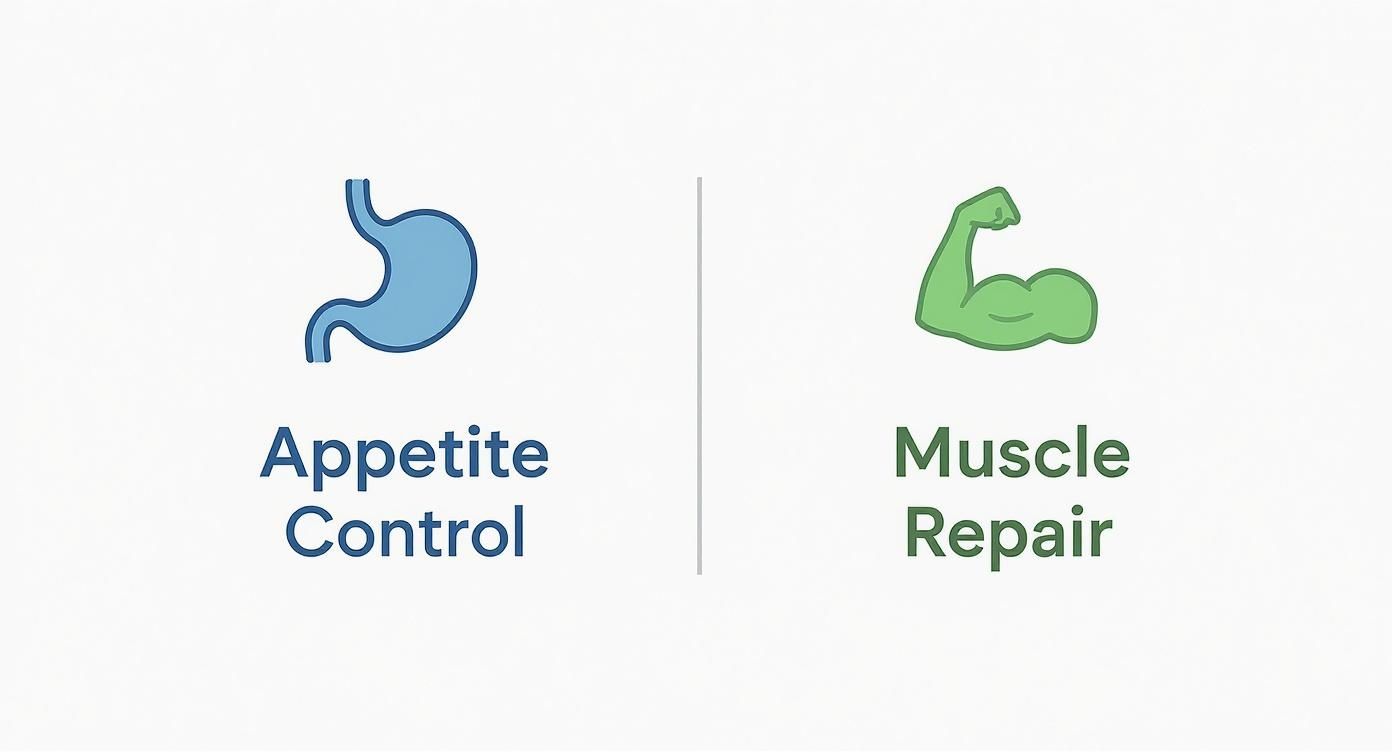
Protein works from the inside out, managing hunger cues while providing the raw materials for a stronger, leaner body.
To make things even easier, here's a quick comparison of common protein snacks to see how they stack up in terms of protein efficiency.
Comparing Popular High Protein Snack Options
This table shows you roughly how much protein you get for every 100 calories from different snack types. It’s a great way to see which options give you the most bang for your buck, calorically speaking.
| Snack Type | Average Protein (g) per 100 Calories | Common Sources | Best For |
|---|---|---|---|
| Greek Yogurt (0% Fat) | 10-12g | Dairy | A creamy, filling snack, especially for post-workout or breakfast |
| Lean Jerky | 10-15g | Beef, Turkey, Chicken | A savory, on-the-go option that satisfies cravings for something salty |
| Cottage Cheese (Low-Fat) | 12-14g | Dairy | A slow-digesting protein source, ideal for a bedtime snack |
| Plant-Based Protein Crisps | 9-11g | Pea Protein, Soy Protein | A crunchy, savory, and allergen-friendly alternative to chips |
| Hard-Boiled Eggs | 8-9g | Eggs | A simple, whole-food option perfect for meal prep |
| Typical Protein Bar | 7-10g | Whey, Casein, Soy, Pea | Convenience, but requires careful label checking for added sugars |
| Nuts & Seeds | 3-5g | Almonds, Peanuts, Pumpkin Seeds | A source of healthy fats and fiber, but less protein-dense |
As you can see, options like lean jerky and cottage cheese are incredibly protein-dense. But don't overlook modern innovations like plant-based protein crisps, which offer a satisfying crunch without the allergens or dairy.
Find Snacks for Your Specific Dietary Needs
At the end of the day, the best snack is one that works for your body. Thankfully, it's easier than ever to find great options that fit specific dietary needs without sacrificing that all-important protein.
- Gluten-Free: Look for snacks built on naturally gluten-free bases like chickpeas, nuts, seeds, or those made with certified gluten-free oats and protein powders.
- Dairy-Free & Vegan: This is where plant-based proteins shine. Roasted edamame, hummus, or savory crisps made from pea protein are fantastic alternatives to whey- or casein-based snacks.
- Allergen-Friendly: If you’re navigating sensitivities to soy or nuts, reading labels is non-negotiable. Brands that prioritize clean, simple ingredients—especially those built around a single source like pea protein—are often a much safer bet.
By using this framework—checking the protein-to-calorie ratio, looking for quality sources, dodging the junk, and honoring your own dietary needs—you can walk into any store and confidently pick a snack that fuels your goals and actually tastes great.
Quick and Easy Homemade Protein Snack Recipes
Ready to get hands-on with your nutrition? Whipping up your own low calorie high protein snacks is easily the best way to control exactly what you’re eating, use high-quality ingredients, and save a little money in the process. And don't worry—these aren't complicated kitchen projects. These mini-recipes are designed for real, busy lives and prove that healthy can be seriously delicious.
It's no secret that people are searching for better snack options. While store-bought products have their place, nothing beats the control you get from making them yourself. This isn't just a small trend, either. The global market for high-protein snacks recently hit USD 5,381.8 million, and experts expect it to more than double by 2033 as more people look for clean, effective fuel. You can see the market analysis yourself over at Grandviewresearch.com.
These simple recipes let you bring that trend right into your own kitchen.
Savory Snack Sensations
If you're over the endless parade of sweet protein bars and shakes, these savory ideas are for you. They’re perfect for hitting that salty craving head-on while still delivering a solid dose of protein.
And if you want to dive deeper, we have a whole list of other fantastic high protein savory snacks to keep things interesting.
1. Spicy Roasted Garlic Chickpeas
Think of these as a crunchy, flavor-packed alternative to potato chips that actually fills you up with plant-based protein and fiber.
- Ingredients: 1 can (15 oz) chickpeas (rinsed, drained, and patted very dry), 1 tsp olive oil, 1 tsp garlic powder, ½ tsp smoked paprika, ¼ tsp cayenne pepper, salt to taste.
- Instructions: Toss the chickpeas with oil and spices until they’re all coated. Spread them on a baking sheet and roast at 400°F (200°C) for 20-25 minutes, shaking the pan halfway through, until they're golden and crispy.
- Approx. Nutrition: Per ½ cup serving: ~150 calories, 7g protein.
2. Everything Bagel Cottage Cheese Bowl
This is almost too easy. It takes plain old cottage cheese and turns it into a creamy, savory bowl with fantastic texture and flavor.
- Ingredients: ½ cup low-fat cottage cheese, 1 tsp everything bagel seasoning, 1 mini cucumber (diced).
- Instructions: Just stir the diced cucumber into the cottage cheese, then sprinkle the seasoning on top and give it a gentle mix.
- Approx. Nutrition: Per serving: ~110 calories, 14g protein.
What I love about these recipes is how easy they are to change up. Don't be afraid to tweak the spices on the chickpeas or throw different chopped veggies into the cottage cheese. It keeps things from getting boring.
Sweet and Simple Protein Bites
For those times when a sweet craving hits, these recipes deliver without derailing your goals. They rely on whole ingredients and a scoop of protein powder to satisfy your sweet tooth, minus the sugar crash.
3. No-Bake Peanut Butter Protein Bites
These are my go-to for meal prep. They genuinely taste like a treat but are loaded with enough protein and healthy fats to keep you feeling full for hours.
- Ingredients: ½ cup rolled oats, ¼ cup vanilla or chocolate protein powder, ¼ cup natural peanut butter, 2 tbsp honey or maple syrup, 1 tbsp chia seeds, 1-2 tbsp water or almond milk (as needed).
-
Instructions:
- In a medium bowl, mix everything together except for the water.
- Keep stirring until it forms a thick, dough-like ball. If it seems too dry and crumbly, add water one tablespoon at a time until it comes together.
- Roll the mixture into 8-10 small balls.
- Pop them in an airtight container in the fridge. They'll last for up to a week.
- Approx. Nutrition: Per bite (if you make 10): ~75 calories, 4g protein.
4. Greek Yogurt Protein "Pudding"
This two-ingredient wonder creates a thick, creamy pudding that feels like a total indulgence but is packed with protein. It’s perfect for a quick post-workout recovery snack.
- Ingredients: ½ cup plain non-fat Greek yogurt, ½ scoop of your favorite protein powder (vanilla and chocolate are great here).
- Instructions: In a small bowl, slowly stir the protein powder into the yogurt until it’s completely smooth. It might get really thick, so a tiny splash of water can help get it to that perfect pudding consistency.
- Approx. Nutrition: Per serving: ~150 calories, 25g protein.
By working these simple homemade recipes into your weekly prep, you guarantee you'll always have a macro-friendly snack ready to go. A little bit of planning makes it so much easier to stick to your goals and sidestep the temptation of grabbing something less healthy when you're hungry.
Finding the Top Store-Bought Protein Snacks
While making your own snacks gives you total control, let's be realistic—life gets busy. That’s when having a go-to list of quality, store-bought low calorie high protein snacks becomes an absolute game-changer for staying on track. It's about knowing what to grab when you need something fast, without accidentally sabotaging your goals with hidden junk.
Luckily, the demand for healthier, convenient options has exploded. The global market for low-calorie foods hit USD 10.10 billion recently and is projected to more than double by 2034. This is great news for us, meaning more choices than ever before. The only downside? It's a lot of noise to cut through.
This guide will help you do just that, spotlighting the best products in a few key categories so you can make smart, quick decisions at the grocery store.
Protein Bars and Cookies
The protein bar aisle is a minefield. So many are just candy bars with a sprinkle of protein. Your mission is to find bars with a high protein-to-calorie ratio, minimal added sugar (shoot for under 5 grams), and a decent amount of fiber.
A truly great bar will pack around 20 grams of protein for under 200-220 calories. Look for options where protein is the first or second ingredient. If you need help sorting through the endless choices, check out these reviews of the best protein bars for weight loss.
Yogurts and Dairy Options
Greek yogurt and cottage cheese are the undisputed champions here. The trick is to always grab the plain, non-fat, or low-fat versions. Flavored varieties are often loaded with shocking amounts of sugar that completely defeat the purpose.
A single-serving cup of plain non-fat Greek yogurt delivers a solid 15-17 grams of protein for only about 90 calories. Cottage cheese is another powerhouse, packed with slow-digesting casein protein that keeps you full for longer. And don't forget about pre-portioned cheese sticks—they're incredibly portable and easy.
Savory Meat and Jerky Snacks
When you’re craving something salty, lean meat snacks are the perfect answer. Turkey or beef jerky offers a huge protein punch in a shelf-stable package you can throw in any bag.
Just be sure to check the nutrition label. Look for brands with low sodium content and a simple ingredient list—you want to avoid a ton of sugar or nitrates. Turkey sticks and lean deli meat roll-ups are also fantastic choices for a quick protein hit without carbs or prep time.
These savory options are clutch because they hit a different kind of craving than sweet bars or shakes. Having that variety is key to sticking with your diet long-term and preventing snack fatigue.
Plant-Based Powerhouses
The world of plant-based protein is so much more than chalky powders these days. The market is full of delicious and innovative snacks made from high-quality sources like peas, soy, and seeds.
Roasted edamame and chickpeas give you that satisfying crunch along with a good dose of fiber and protein. But if you’re looking for something new, savory plant-based protein crisps are a true game-changer. They’re specifically designed to be protein-first, offering that crunchy, satisfying texture without the common allergens like dairy, gluten, or soy.
If you’re tired of the endless parade of sweet protein bars, these savory crisps deliver bold flavor and a serious protein boost. They're a perfect example of how the market is finally catching up to what health-conscious people actually want.
For even more ideas, check out our guide to the best on-the-go protein snacks. By keeping a few of these top-tier options stocked, you'll never let a busy day get in the way of your nutrition goals.
Answering Your Top Protein Snacking Questions
When you start getting strategic about your snacks, a few questions always pop up. It's totally normal. Getting the right answers helps you feel confident about what you're eating and makes sure you're actually moving closer to your goals. Let's clear up some of the most common ones.
How Much Protein Does a Snack Really Need?
For a snack to really count as "high-protein," you'll want to see between 10 to 20 grams of protein on the label, all while keeping the total calories under 250.
But here’s the pro tip: pay attention to the protein-to-calorie ratio. A good rule of thumb is to look for at least 1 gram of protein for every 10-15 calories. So, a 150-calorie snack with 15 grams of protein? That’s the sweet spot. That kind of ratio is what delivers that satisfying, full feeling and gives your muscles the fuel they need to repair and grow.
Will I Lose Weight Just by Eating These Snacks?
High-protein snacks are an incredible tool for weight management, but they aren't a magic bullet. Think of them as a key player on your team, not the whole team itself. Real, lasting weight loss always comes back to your total daily calorie balance—burning more than you eat.
So where do these snacks fit in? They're your secret weapon for sticking to your plan. By crushing hunger pangs and keeping your energy stable, they make it so much easier to avoid overeating at your next meal. They support a healthy diet full of whole foods, they don't replace it.
What’s the Best Time for a High-Protein Snack?
Timing is everything, and it really depends on your goal for that day. There are a few key windows where a protein snack can make a huge difference:
- Between Meals: This is the classic move. A protein-packed snack mid-morning or mid-afternoon can stop that dreaded energy crash and keep you from raiding the pantry before dinner.
- Post-Workout: To kickstart muscle repair and recovery, getting some protein in within an hour or two after exercise is a game-changer.
- Before Bed: A snack with a slow-digesting protein source, like cottage cheese or Greek yogurt, can help feed your muscles and prevent breakdown while you sleep.
Are Plant-Based Protein Snacks as Effective as Animal-Based Ones?
You bet they are. A well-designed, plant-based protein snack can go toe-to-toe with any animal-based option. The trick is to look for snacks made with high-quality plant proteins that deliver a solid amino acid profile.
Today’s best plant-based snacks often feature ingredients like pea protein, which is not only easy to digest but also a great source of iron. Many products will even blend different plant sources, like pea and rice protein, to create a "complete" protein with all the essential amino acids your body needs to thrive.
Ready for a savory, plant-based snack that actually satisfies your cravings? Gym Snack delivers crunchy, chef-crafted crisps with over 15g of clean pea protein in every bag. Check out our crave-worthy Cheddar Cheeze and Jalapeño Cheddar Cheeze flavors and give your goals the fuel they deserve.