

You've finished a workout, opened your food tracker, and discovered that your plant-based meals have used most of your calorie budget without getting you close to your protein target. Rice, pasta, bread, beans, and generous portions of vegetables can fill your plate, yet the protein total still looks surprisingly modest.
That's the central challenge of low calorie high protein vegan eating. You're not just looking for foods with protein. You're looking for foods that deliver enough protein for their calorie cost, then combining them in meals and snacks that keep you satisfied. The most useful measure is protein-to-calorie efficiency, not protein grams alone.
Why Low Calorie High Protein Vegan Eating Is Harder Than It Sounds
A plant-based diet can provide meaningful protein. One large review found that vegans had a median protein intake of 71 grams per day, equal to 14.4% of energy, while another review found vegans averaged 12.9% of energy from protein, compared with 16.0% among meat-eaters (review of vegan dietary protein intake). Those findings don't mean vegan diets are automatically protein-deficient. They show why food selection matters when calories are restricted.
Many familiar vegan staples bring protein alongside substantial carbohydrate or fat. Beans are nutritious, but a bowl built mostly from beans, rice, avocado, and dressing can become energy-dense before it reaches a high protein total. Nuts and seeds offer protein too, but their calorie cost rises quickly because they contain concentrated fat.
The volume problem
The usual solution is to eat more. Add another scoop of beans, another slice of toast, another serving of pasta, or another handful of trail mix. That approach may work when calories aren't a concern, but it can undermine fat loss or weight-management goals.
A useful analogy is luggage space. Protein is the item you need to pack, while calories are the suitcase capacity. If every gram of protein arrives with a large amount of carbohydrate or fat, the suitcase fills before the essential item is packed.
The market reflects this gap. A cross-sectional analysis found that 427 of 697 vegan whole meals contained less than 15 grams of protein per meal (vegan protein food market analysis). Vegan labeling tells you what a product avoids, not whether the product has a strong protein-to-calorie ratio.
Practical rule: Build meals around a concentrated protein anchor first, then add vegetables, carbohydrates, and fats according to your training and calorie needs.
The metric that changes your choices
Instead of asking, “How much protein does this food contain?” ask, “How much protein does this food provide for the calories it uses?” That shift moves pea protein isolate, seitan, tofu, tempeh, edamame, and high-protein soy foods higher on your priority list, while treating peanut butter and large portions of nuts as flavor ingredients rather than primary protein sources.
The rest of your plan becomes simpler when each meal has a protein anchor, each snack has a deliberate purpose, and high-volume foods create fullness without crowding out your protein budget.
What Low Calorie High Protein Vegan Really Means
The phrase low calorie high protein vegan doesn't describe one universal calorie intake. A calorie level that supports fat loss for one person may be too low for another person's training, body size, daily movement, or recovery. Think of “low calorie” as a controlled intake that creates an appropriate deficit, not as the smallest number you can tolerate.
Protein targets need the same context. A commonly used fitness range is 1.6 to 2.0 grams of protein per kilogram of body weight, but the supplied evidence doesn't establish that range as a universal requirement, so treat it as a planning framework rather than a medical prescription. Your actual target should account for body size, training status, appetite, and professional guidance when needed.
Turn a daily target into manageable portions
You don't need a spreadsheet at every meal. Divide your daily protein across three meals and two snacks, giving the meals the largest share and using snacks to close gaps.
The table below is a practical planning model, not a clinical formula. The calorie bands are intentionally broad because maintenance, fat-loss, and muscle-gain needs vary substantially.
| Goal | Calories | Daily Protein | Per Meal (x3) | Per Snack (x2) |
|---|---|---|---|---|
| Maintenance | Flexible, matched to energy needs | Individualized target | 25–35 g | 10–20 g |
| Fat loss | Controlled deficit from maintenance | Individualized higher-protein target | 25–35 g | 10–20 g |
| Lean muscle gain | Small surplus or maintenance, based on training | Individualized target | 25–40 g | 15–25 g |
A sample 1,800-calorie day with 140 grams of protein could use 30 grams at breakfast, 35 grams at lunch, 35 grams at dinner, and 20 grams in each of two snacks. That distribution keeps protein present throughout the day instead of leaving most of it for one evening meal.
For a more detailed plant-based approach to distributing protein, use this plant-based protein guide as a practical reference.
Low calorie doesn't mean under-fueled
A low-calorie plan still needs enough food to support training, concentration, sleep, and normal physiological function. If you feel persistently exhausted, your workouts deteriorate, or hunger becomes unmanageable, the answer may be to adjust total calories, carbohydrate timing, meal volume, or professional support rather than just adding more protein.
The same principle applies to protein quality. A calorie-efficient food isn't automatically the best choice if it causes digestive problems or leaves meals unpleasant. The winning plan is one you can repeat, enjoy, and adjust.
The Best Plant Protein Foods Ranked by Protein per Calorie
Protein per 100 grams can mislead you because foods contain different amounts of water. A better comparison for calorie-conscious eating is grams of protein per 100 calories. The numbers below are approximate planning values and will vary by brand, preparation method, and product formulation, so check the package label before logging a serving.
| Food | Serving | Calories | Protein (g) | g Protein per 100 kcal |
|---|---|---|---|---|
| Seitan | 100 g | 140 | 24 | 17 |
| Pea protein isolate | 25 g | 100 | 20 | 20 |
| Extra-firm tofu | 150 g | 180 | 22 | 12 |
| Tempeh | 100 g | 195 | 20 | 10 |
| Edamame | 150 g | 190 | 17 | 9 |
| Cooked lentils | 1 cup | 230 | 18 | 8 |
| Unsweetened high-protein soy yogurt | 200 g | 140 | 15 | 11 |
| Peanut butter | 2 tbsp | 190 | 8 | 4 |
| Almonds | 28 g | 165 | 6 | 4 |
Because these serving figures aren't part of the supplied verified data, use the table as a comparison template rather than a guaranteed nutrition database. The ranking principle remains useful: concentrated protein ingredients usually produce more protein per calorie than high-fat whole foods.
How the categories compare
Concentrated powders are efficient because manufacturers remove much of the carbohydrate and fat found in whole foods. Pea protein isolate can make a smoothie or yogurt bowl more protein-dense without requiring a large serving.
Seitan and wheat gluten can be highly protein-dense and work well in savory meals. They aren't appropriate for people avoiding gluten, and their nutrition varies by recipe.
Soy foods offer a flexible middle ground. Tofu, tempeh, edamame, and soy yogurt can form complete meals, but tempeh and edamame carry more of the original bean's carbohydrate and fat than an isolate.
Legumes contribute protein, fiber, minerals, and carbohydrate. They're excellent meal foundations, but a low-calorie plan may need a second protein anchor, such as tofu, seitan, or a concentrated powder.
Nuts and seeds are valuable for texture and micronutrients, yet their fat content makes them less efficient as your main protein source. Use them as accents, not as the structural beam of a high-protein meal.
Protein quality matters because digestibility determines how many amino acids your body can absorb from the calories you eat. A recent review notes that even soybeans, which have relatively strong protein-quality scores, can provide equivalent protein with more calories than many animal proteins (protein quality and plant-based diets). Combining legumes with grains, soy foods, or concentrated proteins across the day can broaden your amino-acid intake without forcing every meal to contain every possible source.
If hormonal tracking is part of your broader health planning, keep nutrition changes separate from testing decisions and consider a clinically oriented resource such as at-home progesterone testing.
For a deeper look at the calculation itself, see this guide to the protein-to-calorie ratio.
A Sample Day of Low Calorie High Protein Vegan Meals
A workable plan doesn't need elaborate recipes at every sitting. The example below uses tofu, pea protein, legumes, tempeh, vegetables, and a soy yogurt, with portions that can be adjusted to your calorie needs. Because product labels differ, treat the calorie and protein totals as estimates and verify each package.
| Meal | Example foods with measured portions | Protein | Calories |
|---|---|---|---|
| Breakfast | Tofu scramble with 1 cup or 240 g silken tofu, vegetables, 2 tbsp nutritional yeast, and one slice whole-grain toast | Approx. 27 g | Approx. 350 |
| Snack 1 | 1 scoop or 25 g pea protein isolate mixed with water, plus an apple | Approx. 20 g | Approx. 200 |
| Lunch | Lentil-chickpea bowl with ¾ cup cooked lentils, ½ cup chickpeas, non-starchy vegetables, herbs, and a light dressing | Approx. 25 g | Approx. 500 |
| Snack 2 | 200 g Greek-style soy yogurt with berries and cinnamon | Approx. 15 g | Approx. 180 |
| Dinner | Stir-fry with 60 g tempeh, vegetables, shirataki rice, and a measured sauce | Approx. 24 g | Approx. 500 |
This example lands around 1,700 to 1,800 calories and roughly 110 grams of protein, depending on the brands, oil, dressing, bread, and cooking method. To move closer to a higher protein target, increase the tofu or tempeh portion, add a small amount of pea protein to the yogurt, or choose a higher-protein bread.
Why these pairings work
The tofu scramble starts the day with a concentrated anchor, while toast adds carbohydrate and satisfying bite. Nutritional yeast contributes savory flavor, helping the meal feel substantial without relying on a heavy sauce.
The lentil-chickpea bowl combines legumes with vegetables, fiber, and iron-rich ingredients. If the bowl feels too calorie-dense, reduce the chickpeas or dressing before cutting the vegetables.
Dinner uses tempeh for chew and shirataki rice for volume. The result is a meal that feels large without making rice the dominant calorie source. For more ideas when you want to browse vegan meal plans, filter the options by the ingredients and portions that fit your target.
Adjustment principle: Change one component at a time. Add protein powder to raise protein, reduce oil to lower calories, or add vegetables to increase volume.
Savory Snacks Versus Sweet Bars and Shakes
Snack formats solve different problems. A shake is fast, a bar is portable, and a savory crunchy snack can provide the sensory experience that liquid or soft foods lack. To compare them fairly, look at protein relative to calories, sweetness, chewing effort, and how well each fits the moment.
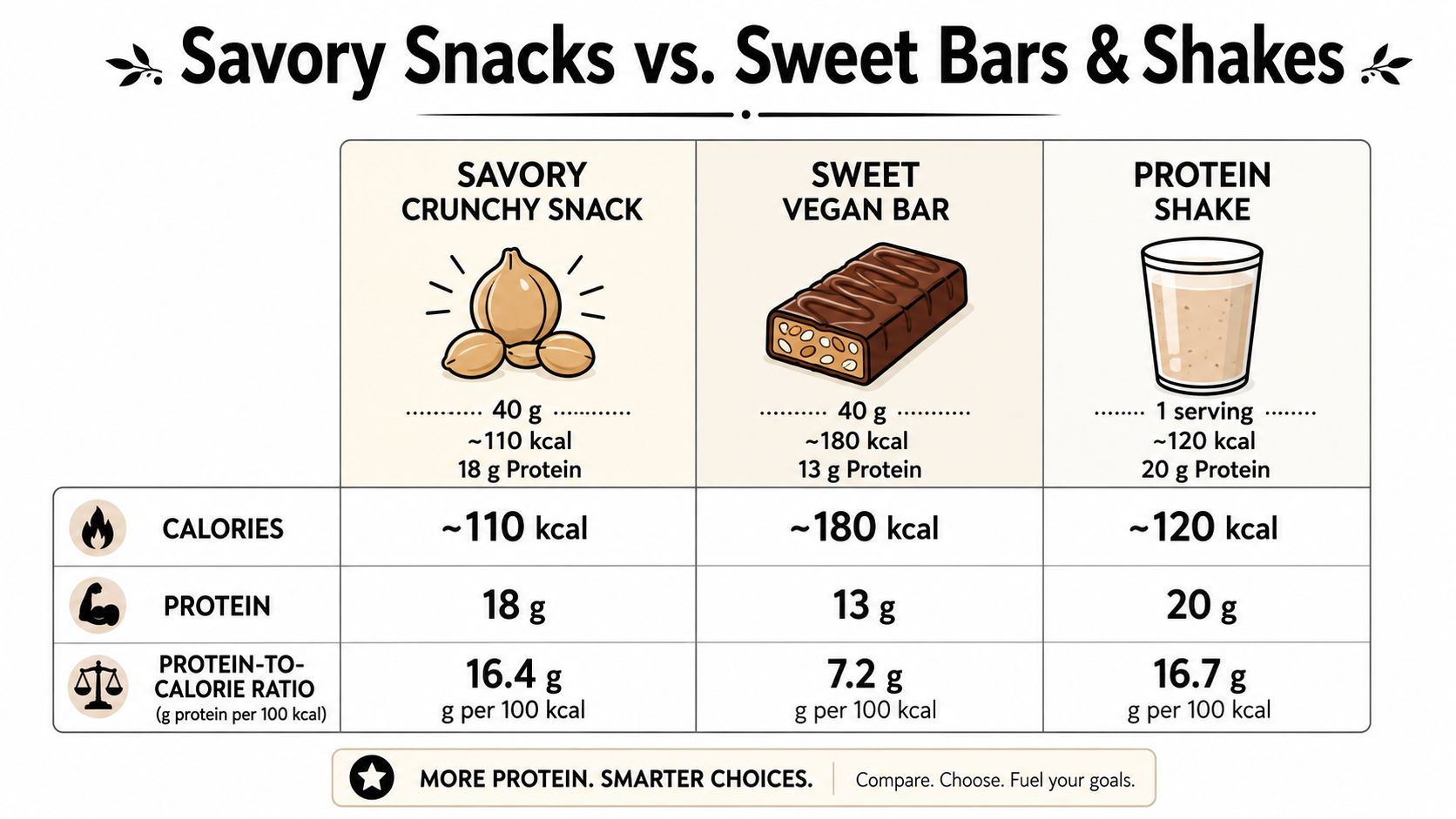
The assigned comparison uses these product examples: a 40-gram savory crunchy snack at about 110 calories and 18 grams of protein, a 40-gram sweet vegan bar at about 180 calories and 13 grams of protein, and a 300-milliliter ready-to-drink shake at about 150 calories and 20 grams of protein. These figures come from the brief's comparison data, not a universal category average.
| Format | Example calories | Example protein | Approx. protein per 100 kcal | Main strength |
|---|---|---|---|---|
| Savory crunchy snack | 110 | 18 g | 16.4 g | Chewing, portability, savory flavor |
| Sweet vegan bar | 180 | 13 g | 7.2 g | Dessert-like convenience |
| Ready-to-drink shake | 150 | 20 g | 13.3 g | Fast consumption |
Match the format to the training window
A shake can make sense immediately after training when you can't manage solid food. Its weakness is speed. You can drink it quickly, so it may not provide the same chewing and pacing cues as a crunchy snack.
A sweet bar works when you specifically want a dessert-style option, but sweetness can make some people want another sweet food. Check the label for added sugar, sugar alcohols, total fat, and serving size rather than assuming “vegan” means calorie-efficient.
A savory crunchy format fits a mid-afternoon bridge, a pre-workout snack when a heavy meal would feel uncomfortable, or a late-night craving when you want something with texture. Gym Snack is one example of this format, using pea protein in savory crisps and offering dairy-free, soy-free, and gluten-free positioning according to the publisher's product information.
An acute feeding study found that 20 grams of pea protein produced satiety effects, with no meaningful differences in hunger, fullness, desire to eat, or prospective food consumption compared with other protein sources over a four-hour period (pea protein and satiety study). That supports a practical point: you don't need a huge snack serving to make protein useful.
Two simple pairings add variety:
- Savory snack plus apple slices: Combine crunch and protein with water-rich fruit.
- Shake plus a few almonds: Add chewing and a small amount of fat when a liquid snack doesn't feel satisfying.
How to Stay Full on Fewer Calories
Fullness comes from a stack of signals, not one magic ingredient. Protein helps, but the meal also needs physical volume, fiber, water, and enough texture to slow eating. A plate of soft, sweet food can contain plenty of protein and still feel less satisfying than a smaller meal that requires chewing.
Start with the protein dose. The supplied evidence shows that 20 grams of pea protein can support satiety effects, but individual responses vary. Build meals around a meaningful protein serving, then add vegetables, legumes, fruit, or whole grains according to your calorie target and digestion.
Build the satiety stack
Chewing load changes the experience of eating. Crisp vegetables, roasted legumes, tofu with browned edges, tempeh, and savory protein crisps take longer to eat than a drink. That slower pace gives you more time to notice the meal.
Water-rich volume makes a smaller calorie budget feel less restrictive. Use leafy greens, cucumber, tomatoes, zucchini, mushrooms, berries, oranges, and broth-based meals to enlarge the plate without making every bite calorie-dense.
Fiber supports meal structure. Lentils, beans, oats, vegetables, fruit, and resistant-starch foods can help create a slower, more substantial eating pattern. Increase fiber gradually and drink enough fluid, especially if your previous diet was low in fiber.
Fat still has a place. A measured teaspoon of peanut butter, a small avocado portion, or a controlled drizzle of tahini can improve flavor and satisfaction. The key is measurement, because calorie-dense fats are easy to pour or spoon past your plan.
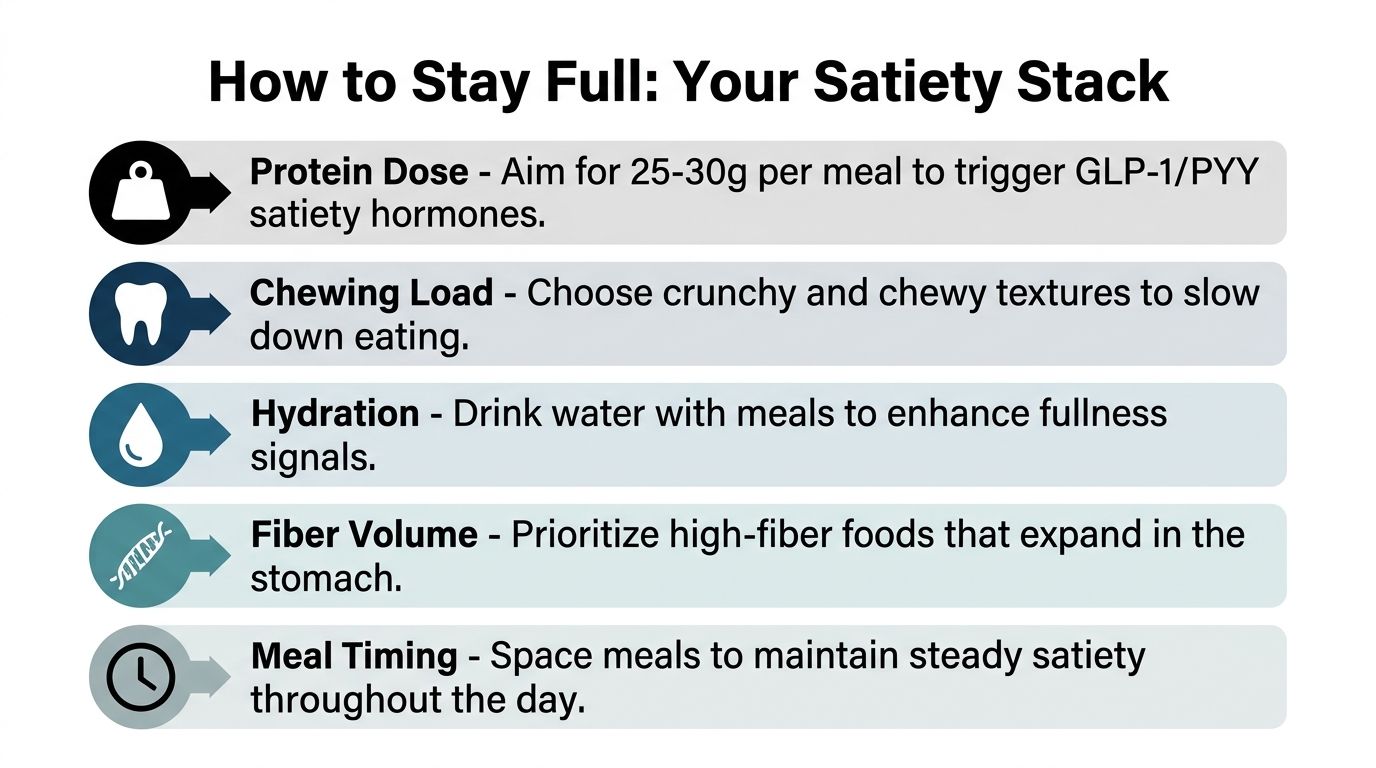
Highly sweet, soft, or liquid foods can be easy to consume quickly. That doesn't make bars and shakes bad, but it means they may need support from fruit, vegetables, water, or a crunchy side. Use the simple order protein, volume, texture at each meal and snack.
For more practical appetite-management ideas, explore this guide on how to stay full longer.
The following video offers another visual resource for thinking about satiety and meal structure:
Putting It All Together and Getting Started
The key shift is simple: stop chasing protein grams in isolation and start choosing protein efficiency. A meal with a large protein number may still work poorly for a low-calorie plan if it brings excessive sugar, fat, or total volume. Concentrated plant proteins, measured portions, vegetables, fiber, and textured snacks let you build a more satisfying day without turning every meal into a calculation exercise.
Use this checklist for the next week:
- Set a protein target: Choose a daily gram target that fits your body, training, appetite, and professional guidance.
- Create two anchor meals: Build breakfast and dinner around tofu, tempeh, seitan, legumes plus a concentrated protein, or another dependable plant protein.
- Pack one savory protein snack: Keep a crunchy option available for the gap between meals or around training.
- Add fiber and volume: Include vegetables, fruit, legumes, oats, or another fiber-rich food with each meal where tolerated.
- Track before changing: Log your food for one week, then adjust portions based on hunger, performance, digestion, and progress.
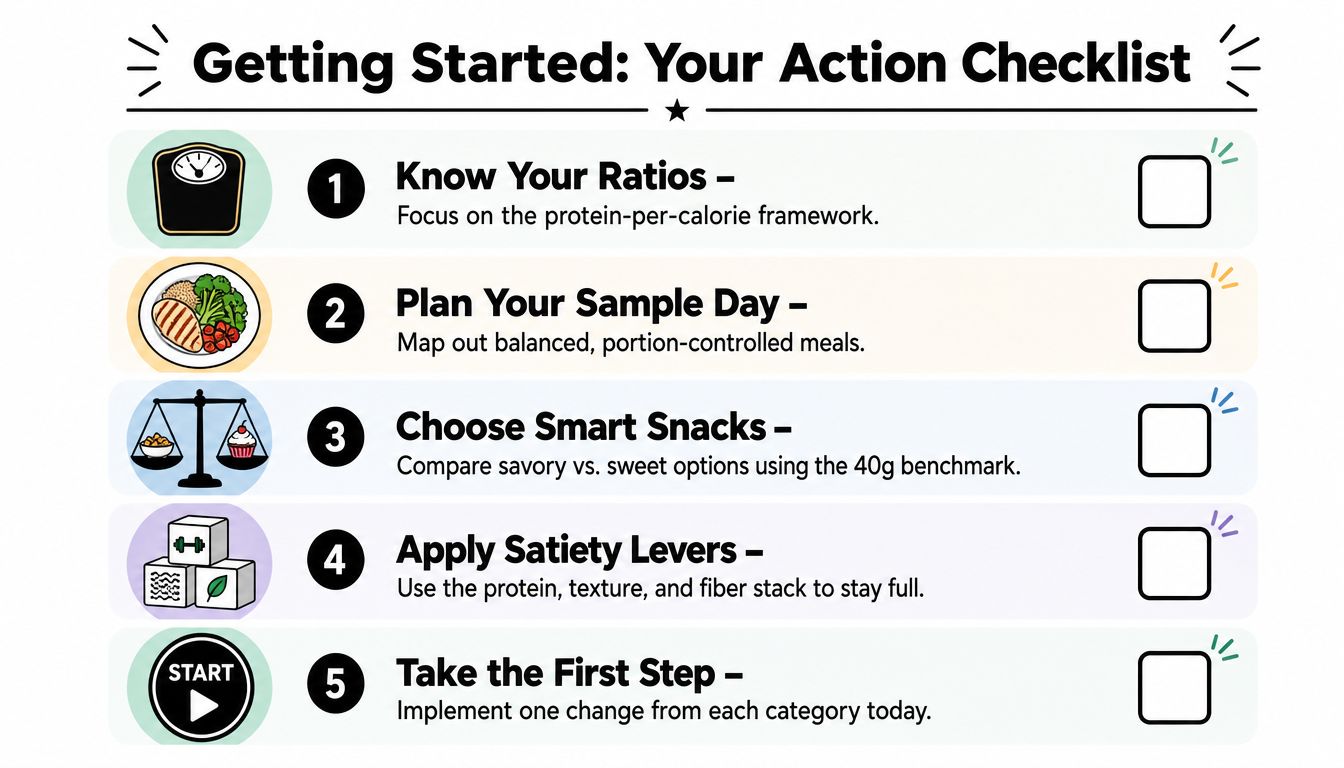
At your next grocery trip, choose one concentrated protein, one high-volume vegetable, one fiber-rich carbohydrate, and one savory snack. Put them together before you buy extra treats or meal fillers, so your calorie budget supports the protein target you care about.
Gym Snack offers plant-based savory protein crisps built around pea protein, with bold cheesy flavors and a crunchy format for between-meal or training-day use. Visit Gym Snack to compare the available options and choose a snack that fits your protein-to-calorie plan.