

Most advice about low calorie savory snacks starts with the wrong question. “How few calories can I find?” is a shopping question, not a fullness question. A snack can fit a small calorie budget and still leave you hunting through the cupboard shortly afterward.
Fullness is a design outcome. Protein density, food volume, chewing resistance, fiber, texture, and sodium all influence whether a snack feels substantial. A plain rice cake may be light, but it offers little protein and limited physical volume. A carefully built savory snack can use modest calories more intelligently, giving you something to chew, digest, and remember eating.
That distinction matters if you're managing weight, training hard, or using GLP-1 medication. The right snack isn't the smallest item on the shelf. It's the one that matches your appetite, digestion, training window, and need for protein.
Why Low Calorie Does Not Always Mean Filling
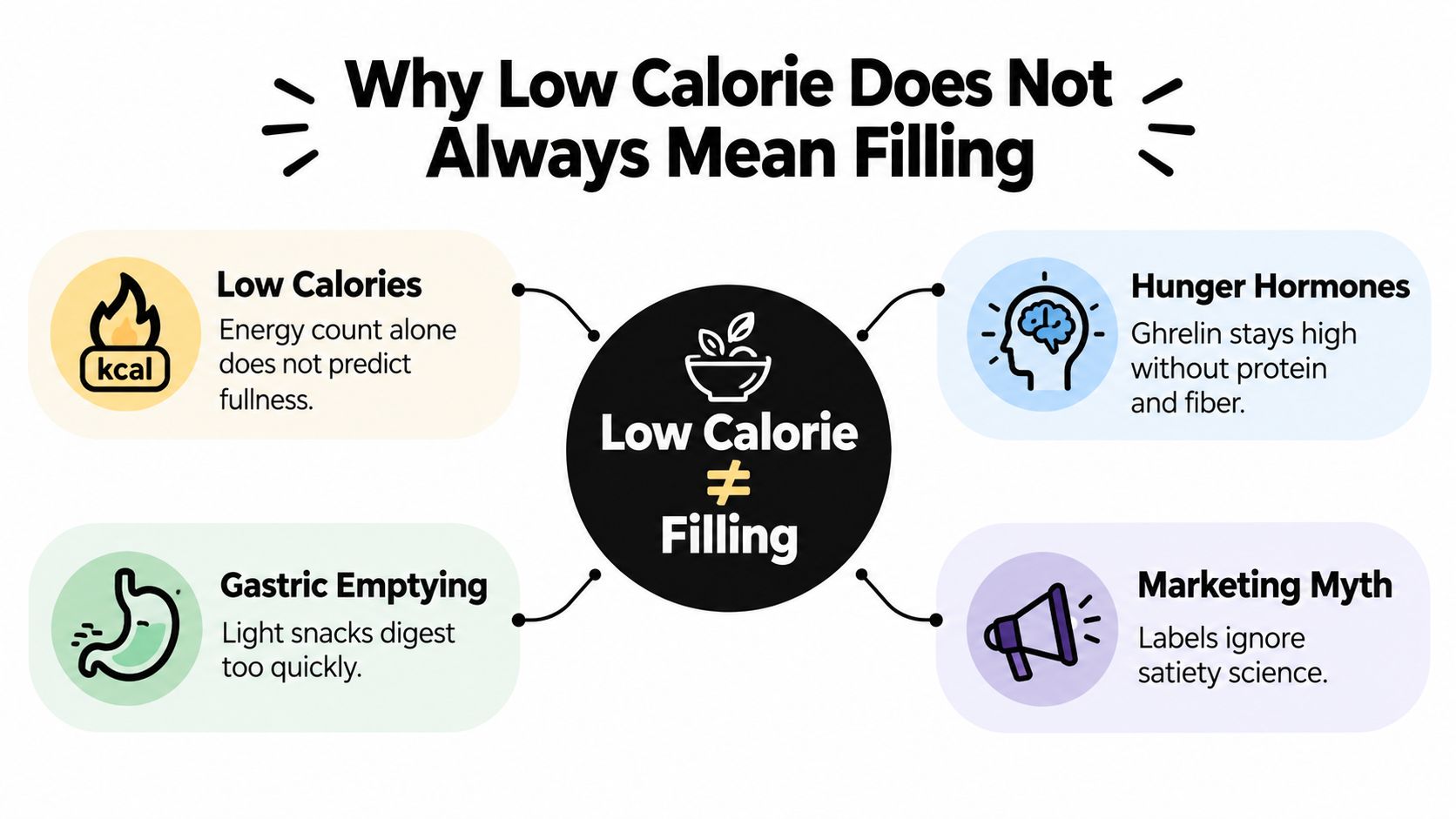
A low-calorie label doesn't guarantee satiety. Calories tell you how much energy a food contains, but they don't tell you how much protein, fiber, water, or chewing time comes with that energy. Two snacks with similar calorie counts can produce very different experiences in the stomach and over the following hours.
Protein matters because it can increase post-meal GLP-1 and PYY signaling compared with carbohydrate-heavy meals. Snack research also found that protein snacks extended perceived satiety by about 17 minutes versus control snacks (protein, appetite, and satiety evidence). That doesn't mean every protein snack prevents overeating. The food still needs enough volume and sensory substance to feel like a real eating occasion.
Coach's rule: A calorie target is the ceiling. It isn't the satiety strategy.
A small puffed-grain snack can disappear in a few bites. It may technically satisfy a calorie plan, yet provide little protein, little fiber, and almost no resistance under your teeth. A savory bowl built around a protein-rich base, crunchy vegetables, and a controlled amount of fat can feel far more complete at a higher calorie level.
The same issue appears with appetite-suppressed consumers. Clinical guidance on GLP-1 therapy describes reduced cravings across savory, salty, spicy, and high-fat foods, while also advising people to avoid ultra-processed savory snacks (clinical guidance for nutrition during GLP-1 therapy). A heavy, oily snack may be unappealing, but an extremely dry, tiny snack may also fail because it doesn't provide a tolerable, satisfying texture.
You'll get better results by checking the label in context:
- Protein density: How much protein arrives for the calories?
- Physical volume: Is the snack airy, watery, fibrous, or compact?
- Texture: Does it require chewing, or does it vanish instantly?
- Sodium and fat balance: Will the flavor stay enjoyable without making the snack feel heavy or leave you chasing thirst?
For appetite-control strategies beyond snacks, the best foods for appetite control offer a useful broader framework. The practical lesson is simple. Don't count calories in isolation. Evaluate what those calories are carrying.
What Counts as a Low Calorie Savory Snack
There isn't one universal legal definition for a low-calorie savory snack. For practical coaching, I use a working range of 100 to 180 calories per serving, provided the item is savory and contributes more than refined starch and seasoning. The best options are built around protein, vegetables, legumes, or whole grains.
That definition immediately eliminates some products that look disciplined on the front of the package. A small bag of flavored popcorn or a stack of rice cakes may fit a calorie number, but the snack can still be weak on protein and short on staying power.
Four label checks that matter
1. Read the serving, not the marketing.
Check whether the listed calories describe a single portion or only part of the package. A snack that looks light becomes a different decision when the intended eating occasion involves the entire bag.
2. Calculate protein per calorie.
A strong shelf option gives you meaningful protein without spending most of your snack budget on oil or starch. As a demanding screening tool, look for roughly 10 grams of protein per 100 calories, then adjust for your appetite and the rest of the meal plan. The broader protein-to-calorie ratio guide explains why this comparison is more useful than protein grams alone.
3. Treat sodium as a real trade-off.
One market analysis reported savory snacks at about 500 calories and 571 milligrams of sodium per 100 grams (savory snack nutrition analysis). That benchmark shows why “low calorie” doesn't automatically mean light in sodium. Compare the package's sodium with the amount you'll eat, especially if the rest of your day already contains salty foods.
4. Inspect the first three ingredients.
You want recognizable foundations such as peas, chickpeas, milk, vegetables, poultry, eggs, or whole grains. A long ingredient list isn't automatically a problem, but a product led by refined starch, added fat, and heavy flavoring deserves a skeptical look. The label should tell you what the snack is, not hide it behind seasoning.
| Snack Example | Calories | Protein (g) | Sodium (mg) | Verdict |
|---|---|---|---|---|
| Roasted seaweed | Check package | Usually modest | Check package | Good for crunch, not a complete protein snack |
| Single-serve cottage cheese | Check package | Often meaningful | Check package | Strong base, watch sodium |
| Turkey stick | Check package | Often meaningful | Check package | Portable, but sodium can be high |
| Flavored popcorn | Check package | Usually modest | Check package | Volume can help, protein may not |
| Rice cakes | Check package | Usually low | Usually variable | Calorie-light, often weak for fullness |
The category works best when you combine a protein anchor with volume or texture. Seaweed can solve a chip craving. It usually shouldn't be expected to carry the entire satiety job.
Macros and Satiety Signals Explained
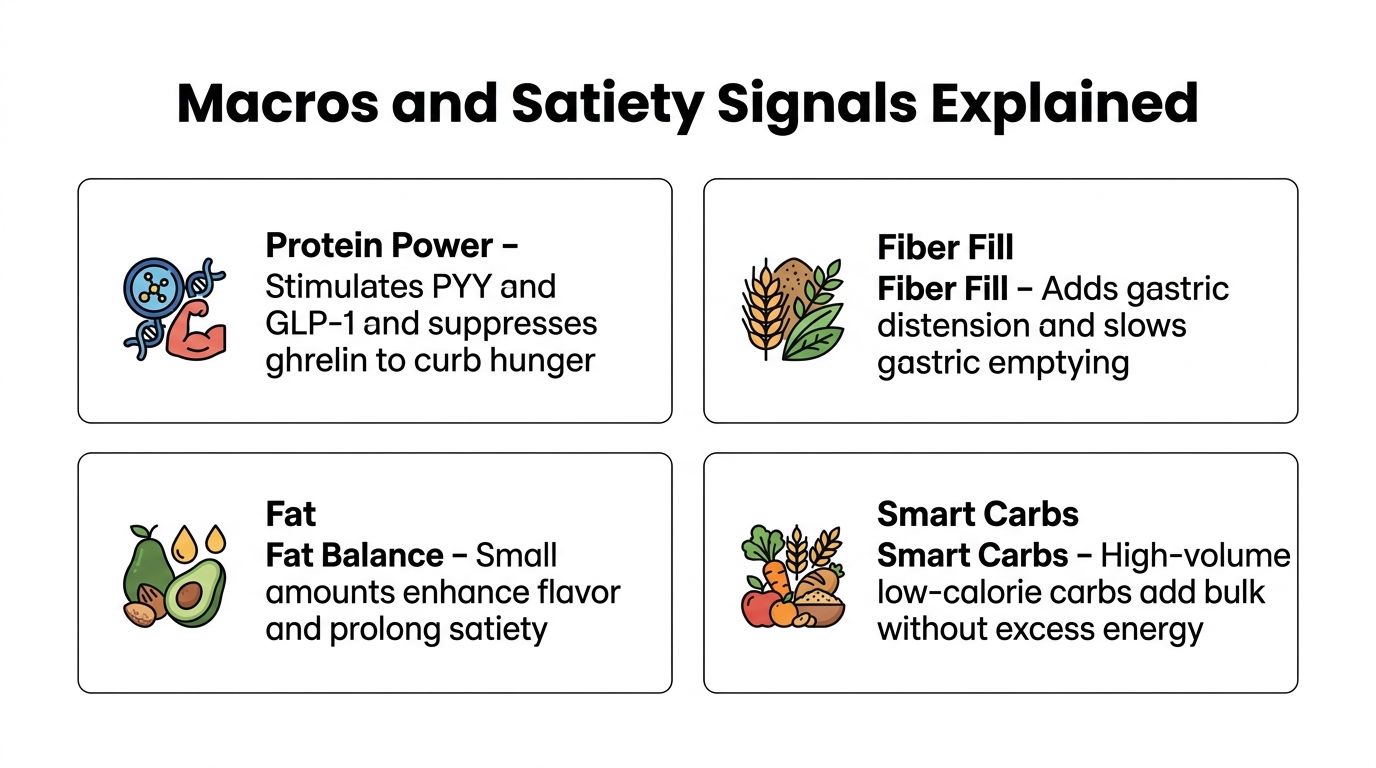
The snack aisle becomes easier to manage once you stop treating every macro as interchangeable. Protein is the primary lever for fullness, but protein alone isn't a guarantee. Fiber, water, fat, and carbohydrate form the structure around it.
Protein can increase GLP-1 and PYY signaling and suppress hunger-related signaling compared with carbohydrate-heavy meals, as described in the clinical nutrition evidence on protein and post-meal satiety responses. Fiber helps add bulk and can slow gastric emptying. Water-rich foods create more physical volume for fewer calories. A small amount of fat can improve flavor and prolong the eating experience, but too much fat makes many snacks dense and harder to tolerate.
A practical fullness formula
Use this as a shelf-screening tool, not a medical prescription:
- Protein: Aim for at least 10 grams per 100 calories when the snack's purpose is to control hunger.
- Fiber: Look for 3 or more grams when your digestion tolerates it.
- Food weight: A useful target is at least 50 grams of food for every 50 calories, which favors vegetables, fruit, legumes, and hydrated foods over tiny dense bites.
- Texture: Prefer something that takes time to chew, especially when you're eating away from a full meal.
- Flavor balance: Use umami, acidity, herbs, and spice before adding more oil or salt.
The protein target is deliberately demanding. Many products advertise protein while still delivering a mostly starch-based snack. A product can also meet a protein target and fail in practice if it comes in a tiny portion that you finish without noticing.
Fiber needs a personal adjustment. Roasted chickpeas and legumes can add useful structure, but they may cause bloating before training or on a GLP-1 medication day. Conversely, watery vegetables may feel physically generous but provide little protein unless paired with cottage cheese, yogurt dip, tofu, eggs, poultry, or another anchor.
Sodium deserves attention because salt drives flavor and can encourage thirst, but high sodium can also make an otherwise light snack feel less suitable for repeated use. Don't demonize it. Use sodium as a frequency and context check, not as the only measure of quality.
The best snack combines a protein signal with a physical signal. Hormones matter, but your stomach, teeth, and eating pace still have a vote.
Research also shows why protein marketing needs restraint. Consumer expectations often favor savory, high-protein, one-piece snacks as more filling, yet newer evidence found that switching from standard protein snacks to higher-protein snacks didn't automatically reduce energy intake or increase short-term fullness (research on protein-enriched snack expectations and intake). Food form and eating context can determine whether the macro advantage translates into a useful snack.
Matching Savory Snacks to Your Day
One snack can't perform every job. A dry, high-fiber option may work during an afternoon slump and feel terrible shortly before training. A protein-heavy snack can support recovery but offer too little carbohydrate for a demanding session. Match the design to the moment.
Pre-workout
Keep the portion modest and easy to digest if you're training soon. Prioritize moderate carbohydrate, a useful amount of protein, and limited fiber and fat. Two workable archetypes are a small cottage cheese cup with a few pretzel thins, or lean turkey with a simple cracker portion.
Don't turn pre-workout nutrition into a contest for the highest fiber label. Legumes, large raw-vegetable portions, and rich dips can sit heavily when movement starts quickly.
Post-workout
Recovery nutrition needs more protein than a casual snack. A compact protein crisp with a faster-digesting carbohydrate side, or lean turkey with crackers, can work when a full meal isn't immediate. For a deeper explanation of fueling and recovery around training, this guide to recovery nutrition for athletes provides useful context.
Post-workout doesn't mean you need a giant snack. It means the protein should be intentional, and the carbohydrate choice should match the session and your next meal.
Mid-afternoon
Volume earns its place. Use cucumber, peppers, radishes, tomatoes, or air-popped popcorn with a protein-rich dip or a lean protein side. The aim is to occupy your hands and stomach without relying on a dense, oily product.
GLP-1 medication days
Appetite suppression and delayed gastric emptying change the tolerance equation. Choose smaller portions, softer textures, and lower-fat combinations. A savory Greek yogurt dip with cucumber, a small cottage cheese portion, or a tender egg-based bite may work better than a dry, crunchy, high-fat snack.
| Eating Moment | Calorie Target | Protein Goal | Best Texture | Sample Snack |
|---|---|---|---|---|
| Pre-workout | 100 to 150 calories | Moderate | Soft and easy to digest | Cottage cheese with pretzel thins |
| Post-workout | Modest snack portion | 15 to 25 g | Crisp plus soft | Protein snack with crackers |
| Afternoon | Adjust to appetite | Meaningful | Crunchy and water-rich | Peppers with yogurt dip |
| GLP-1 day | Smaller than usual | Tolerable amount | Soft, light, low-fat | Cucumber with savory yogurt |
Use this decision rule: training soon means digestibility, recovery means protein plus carbohydrate, boredom means volume and texture, and medication day means tolerance first. A lean jerky-and-vegetable pack can flex between post-workout and afternoon use, but its sodium and chewiness may make it a poor choice on a medication day.
Store-Bought and DIY Savory Snack Ideas
The best snack choice depends on the problem in front of you. If you're commuting, portability wins. If you're grazing at home, volume wins. If you keep missing protein, build around a protein-forward packaged option instead of hoping seasoning will make vegetables filling.
When you need portable protein
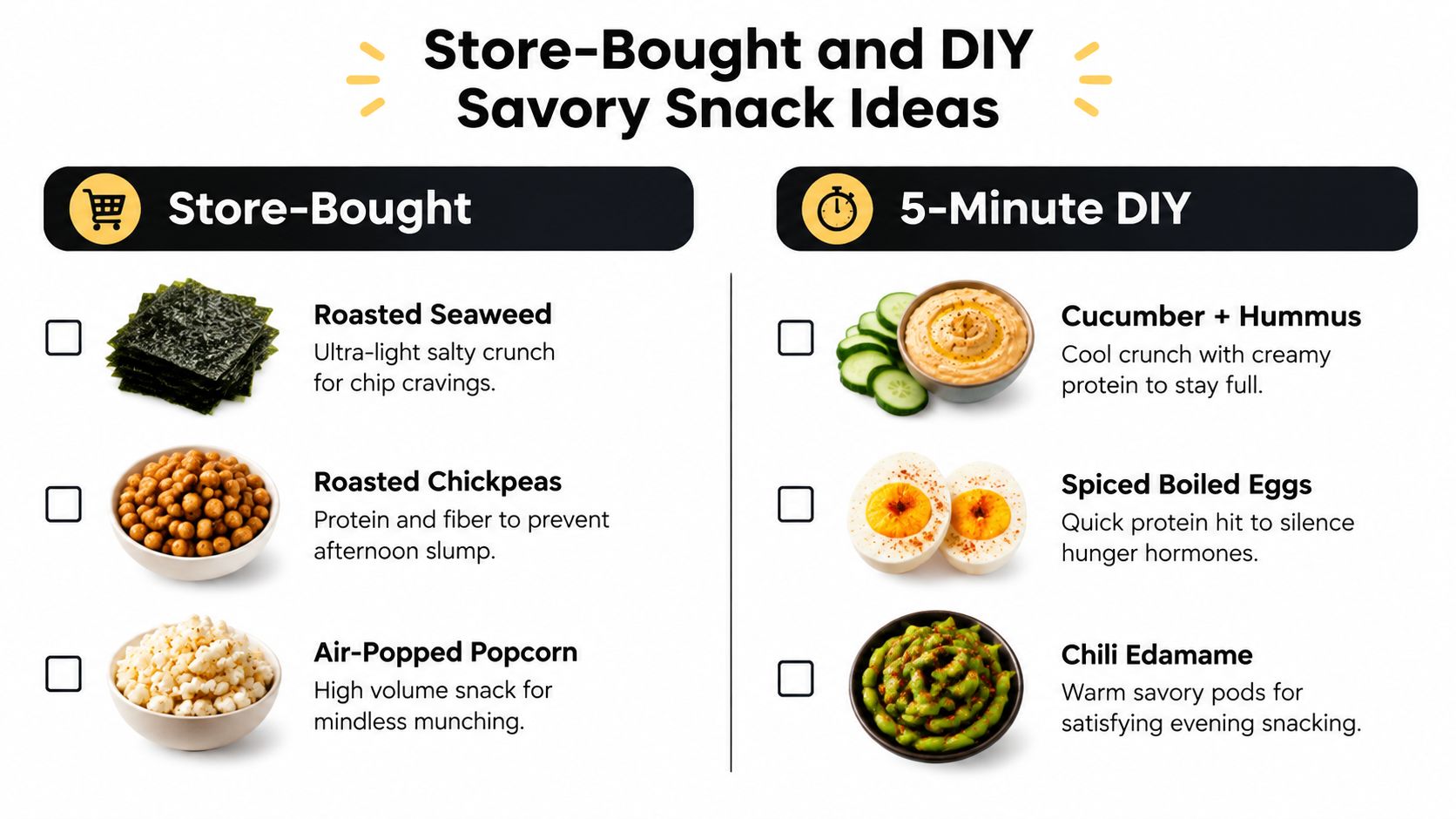
Jerky and turkey sticks travel well and give you a clear protein anchor. The trade-off is sodium, so don't stack them with several other heavily salted foods. Roasted chickpeas offer protein, fiber, and crunch, but their fiber can cause bloating for some people, especially before exercise.
Single-serve cottage cheese is a more spoonable option. It brings moisture and a softer texture, though you still need to check the label for sodium and portion size. Protein crisps can provide the crunch that yogurt and cottage cheese lack. Gym Snack fits this use case as a savory protein base that can be paired with vegetables or a controlled condiment portion.
When volume is the problem
Cucumber boats, pepper “nachos,” radishes, shaved Brussels sprouts, and tomatoes create a large visual and physical portion. Add hummus, Greek yogurt dip, cottage cheese, or lean turkey rather than pouring on dressing. Raw vegetables can be low in calories, but dressing calories accumulate quickly when you use the bottle instead of a spoon.
Air-popped popcorn can be useful for mindless evening munching because it gives you a larger handful of food than dense crackers. Its weakness is protein. Pair it with a protein side if hunger, rather than the urge to crunch, is driving the snack.
When flavor is the reason you keep overeating
Seasoning is a tool, not decoration. Everything bagel seasoning, salsa, mustard, smoked paprika, vinegar, hot sauce, and measured chili crisp can make a plain protein base easier to repeat. Chili crisp deserves portion discipline because oil makes it energy-dense even when the spoonful looks small.
Build a plate, not a pile. Choose one protein base, one high-volume produce item, and one flavor or crunch booster.
To assemble a snack plate without weighing anything, use a small deli container or side plate. Fill one section with a protein item, one with vegetables or fruit-sized produce, and one with a modest crunchy or flavorful addition. This structure keeps the snack in a controlled small-meal range without requiring constant measurement.
For a crunchy, protein-focused homemade option, use the protein chips recipe as a starting point, then pair the finished snack with cucumber, peppers, or salsa rather than eating a large serving in isolation.
Quick High-Protein Savory Snack Recipes
Batch preparation removes the most common failure point, which is having no acceptable food available when hunger arrives. These templates are flexible. Swap seasonings, vegetables, and protein sources while keeping the same structure.
Cottage cheese crunch bowl
Stir cottage cheese with halved cherry tomatoes and Everything Bagel seasoning. Add a measured portion of pretzel thins for chew and crunch. The template described here lands at about 180 calories and 22 grams of protein, based on the specified recipe formulation, not a universal value for every cottage cheese brand.
Use a small deli cup for the cheese mixture and keep the pretzels separate until eating. That preserves texture and makes portion control automatic. Prepare several vegetable portions ahead, but assemble the pretzels on the day you eat the snack so they don't soften.
Egg-white and feta muffin cups
Whisk egg whites with crumbled feta, pepper, smoked paprika, and chopped vegetables. Pour the mixture into a six-cup muffin tin and bake until set. Portion two cups per snack, then add hot sauce after reheating.
Refrigerate the cooked cups and reheat gently so the egg doesn't become rubbery. You can replace feta with another strongly flavored cheese, but keep the cheese measured because it contributes both fat and sodium. Add a soft vegetable side if the muffins feel too compact.
Savory yogurt dip plate
Blend plain Greek yogurt with ranch seasoning, garlic powder, lemon juice, and chopped herbs. Serve it with cucumber rounds and lean deli turkey rolled around a pickle. The yogurt supplies the creamy element, while the cucumber adds water and crunch and the turkey makes the protein more obvious.
Prepare the dip for several days and store the cucumber separately. On a GLP-1 medication day, reduce the portion rather than forcing yourself to finish a standard container. Use softer vegetables, skip the pickle if salt feels unpleasant, and keep the dip low in added fat.
Portioning that survives a busy week
Use silicone molds, small deli cups, or divided containers. You don't need to weigh every ingredient if the container itself limits the portion. Keep most snack builds in the 150 to 200 calorie range when that range fits your plan, but adjust upward or downward based on the next meal, training demand, and appetite.
A snack should solve a problem without creating another one. If your batch recipe causes digestive discomfort, reduce fiber or fat first, then test a softer texture.
Your Weekly Savory Snack Plan and FAQ
A rotation works because it removes decision fatigue. Keep the basic formats consistent, then change seasonings so the plan doesn't feel repetitive.
| Day | Pre-Workout | Post-Workout | Afternoon | Evening |
|---|---|---|---|---|
| Monday | Cottage cheese with pretzel thins | Protein snack with crackers | Cucumber and yogurt dip | Air-popped popcorn with turkey |
| Tuesday | Turkey roll-up with a simple crisp | Egg-white muffin cups | Peppers with cottage cheese | Roasted seaweed with edamame |
| Wednesday | Greek yogurt savory dip with cucumber | Lean turkey and a carbohydrate side | Roasted chickpeas with vegetables | Cucumber boats with tuna |
| Thursday | Cottage cheese and tomatoes | Protein snack with salsa | Popcorn with a protein side | Egg-white muffin cups |
| Friday | Turkey with pretzel thins | Cottage cheese bowl with crackers | Pepper nachos with yogurt dip | Edamame with cucumber |
| Saturday | Use leftovers based on training | Batch-prepped protein option | Vegetable plate with dip | Choose the most tolerable light option |
| Sunday | Rest or train based on schedule | Match portion to the session | Batch-prep tasting portion | Prepare Monday's containers |
Prepare the eggs, dip, chopped vegetables, and portioned dry items on the weekend. Keep wet and crunchy components separate. That small step makes the snacks easier to eat and keeps the plan realistic.
Frequently asked questions
How many calories should a snack contain?
Use the meal schedule and purpose to decide. A working range of 100 to 180 calories suits many low-calorie snack occasions, while post-workout needs may justify a more substantial protein serving.
How much protein helps fullness?
Start with protein density rather than chasing a large absolute number. The practical screening target is at least 10 grams per 100 calories, but a higher-protein snack still needs volume, texture, and a tolerable portion to work well.
When should I eat around a GLP-1 medication dose?
Don't force a snack around the dose itself. Follow your prescriber's instructions, then eat when you can tolerate food. Choose a smaller, softer, lower-fat option if delayed digestion or nausea makes dense snacks uncomfortable.
Are savory snacks better than sweet snacks for hunger control?
Not automatically. Savory formats often make it easier to use protein, vegetables, legumes, and umami flavors, but the ingredients and portion determine the outcome. A sweet snack with strong protein and fiber can outperform a salty refined-starch snack.
Should rest-day portions be smaller than training-day portions?
Often, yes, if your appetite and energy needs are lower. Keep the protein anchor, then reduce the carbohydrate or crunchy add-on rather than removing the entire snack structure.
Consistency beats novelty. Pick a few formats you tolerate, prepare them before hunger takes over, and adjust portions based on the day you're having.
Gym Snack offers plant-based savory protein crisps built around pea protein, with 15 grams or more of protein per serving and 30 grams or more per bag, plus no cholesterol and no seed oils. Visit Gym Snack to explore the savory options and build a practical protein base for your snack rotation.