

The most popular advice about low calorie snacks under 100 calories is also the least useful: just choose anything that fits the number. A rice cake, a few pieces of fruit, or a small packet of crackers may satisfy a calorie target, but that doesn't mean it will satisfy you.
A better question is, “How much fullness do I get for those calories?” Protein, fiber, food volume, and texture can make two snacks with similar energy feel completely different. That matters for lifters trying to support training, busy people bridging long gaps between meals, and GLP-1 users who need small portions that still provide meaningful nutrition.
The familiar 100-calorie benchmark remains useful. Consumer health guidance has long used examples such as 1/2 cup of fat-free frozen yogurt, 14 almonds, or 6 cups of microwave popcorn at 100 calories to show how portion size turns an abstract calorie target into something practical (WebMD's 100-calorie snack guide). But the number should be your starting filter, not your final test.
Why Most Under 100 Calorie Snack Lists Leave You Hungry
A snack under 100 calories isn't automatically filling. That assumption fails because calories measure energy, not the combination of protein, fiber, volume, chewing resistance, and appetite response that determines whether you'll feel comfortable until your next meal.
Many snack roundups repeat the same low-energy choices, such as fruit cubes, plain rice cakes, a few vegetables, or light yogurt. Those options can be perfectly reasonable, especially when you want hydration, sweetness, or volume. They can also fall short when the gap before your next meal is long or when you've just finished training.
The number doesn't describe the eating experience
A crunchy, airy food may disappear quickly. A protein-rich food may take longer to digest. A high-volume food may occupy more space in the stomach even when it contributes relatively little energy. Two snacks can share the same calorie ceiling and create very different levels of satisfaction.
That's why mainstream lists often miss the question fitness and GLP-1 audiences care about most: does the snack help manage appetite, or does it delay hunger for a short time? The Clemson guidance on snacks with 100 calories or less also emphasizes that a low-calorie choice is more useful when it includes nutritional value rather than functioning as a tiny serving of refined carbohydrates.
Practical rule: Judge a snack by its satiety per calorie, not by its calorie count alone.
Protein deserves special attention because it can support fullness signaling and help a small snack contribute more than quick energy. Fiber adds another advantage through volume and slower digestion. Texture matters too. A snack that takes time to chew can feel more substantial than a soft food consumed in a few bites.
Use a better scorecard
When you encounter a packaged snack or social media recommendation, ask four questions:
- Where is the protein? Look for a meaningful protein contribution rather than assuming a “light” label means satisfying.
- Where is the fiber? Fruit, vegetables, legumes, and some whole-grain foods can add volume and digestive support.
- How long will it take to eat? Crunch, chew, and portion size influence the sensory experience.
- What problem am I solving? A pre-workout snack, a post-workout protein bridge, and an evening craving need different formats.
A snack can be under 100 calories and still be nutritionally weak for a lifter or someone managing appetite. The strongest choices make the calorie ceiling work harder by combining at least one substantial satiety feature with a portion that feels intentional.
What Counts as a Low Calorie Snack Under 100 Calories
A low-calorie snack under 100 calories is a single portion that provides enough energy to bridge hunger without becoming a full meal. The 100-calorie ceiling isn't a biological law. It's a practical convention that makes portions easy to recognize, compare, and plan.
Consumer health publishers keep returning to this benchmark because it's simple to understand and easy to apply. WebMD's examples show how different foods can fit the same limit, from popcorn's large volume to almonds' compact portion. NHS snack guidance also uses familiar foods such as fruit, yogurt, and rice cakes to demonstrate how people can build small portions around a clear calorie boundary (NHS snacks under 100 calories).
Start with the portion, not the package
A package may contain multiple servings even when it looks like one snack. Check the nutrition panel before eating, then decide whether the listed portion matches what you'll consume.
| Snack | Typical Portion | Approx. Calories |
|---|---|---|
| Fat-free frozen yogurt | 1/2 cup | 100 |
| Almonds | 14 almonds | Below 100 |
| Microwave popcorn | 6 cups | 100 |
| Plain fruit or vegetables | Small, measured portion | Varies |
| Plain yogurt | Measured single portion | Varies |
The examples above come from established 100-calorie snack guidance, but exact calories vary by brand, preparation, and serving size. Treat the label as the final authority for packaged products.
Why the category needs context
The phrase “under 100 calories” tells you the energy boundary, not whether the snack is high in protein, rich in fiber, easy to digest, or likely to feel satisfying. A small portion of popcorn may provide useful volume. A serving of almonds may offer a compact combination of nutrients, but its volume is limited. Fruit may provide water and fiber without delivering much protein.
For GLP-1 users, smaller portions can be easier to tolerate, especially when appetite is reduced or gastrointestinal symptoms affect meal size. That doesn't mean every snack should be tiny or that calorie restriction alone protects health. People using semaglutide, tirzepatide, or another medication should follow individualized guidance from their prescribing clinician or dietitian, particularly when nausea, vomiting, dehydration, or difficulty meeting protein needs is present.
A useful definition is therefore more specific: a low-calorie snack under 100 calories is a measured bridge between meals that earns its place through protein, fiber, volume, texture, convenience, or a combination of these.
The Three Building Blocks of a Filling 100 Calorie Snack
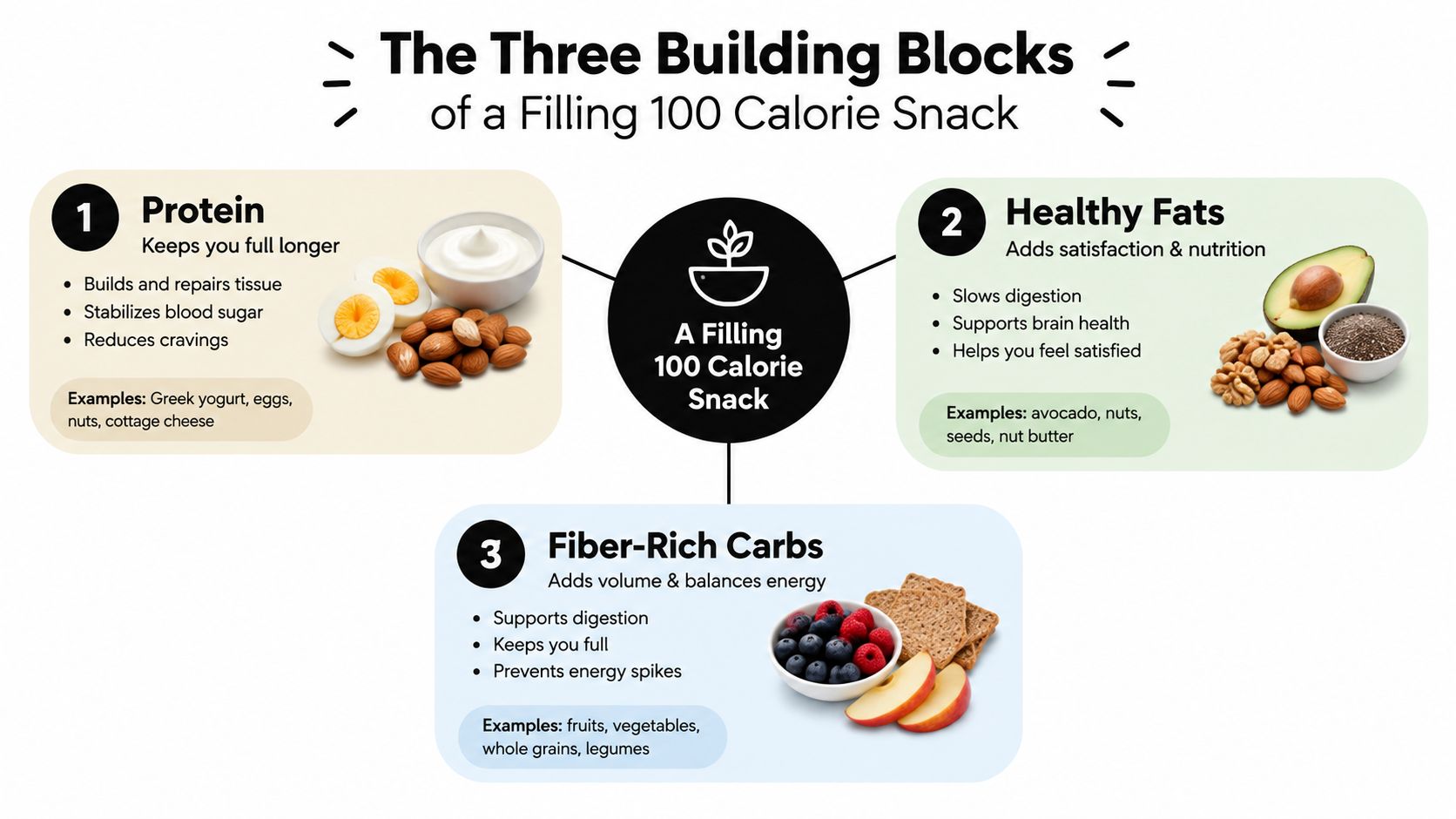
A filling snack usually relies on three design features: protein, fiber, and a sensible fat profile. They don't all need to appear in equal amounts, and a 100-calorie limit makes trade-offs unavoidable. The goal is to select the combination that fits your situation.
Protein creates the strongest anchor
Protein is often the most efficient way to make a small snack more useful. Plain Greek yogurt, egg whites, lean poultry, cottage cheese, and protein powders can provide more protein per calorie than chips, crackers, or fruit alone. For a practical snack target, many people find it useful to look for roughly 6 to 10 grams of protein, while recognizing that exact needs depend on body size, training, total diet, and medical context.
Protein also interacts with appetite biology. A controlled study found that a high-protein meal increased circulating GLP-1 and PYY, hormones associated with appetite regulation, but those hormone changes didn't automatically reduce later intake when meals were matched for volume, appearance, and calories (controlled study on protein, GLP-1, and PYY). That finding matters because protein isn't a magic switch. The dose, texture, volume, and overall formulation still count.
Fiber adds volume and staying power
Fiber can make a small serving feel larger, especially when it comes from vegetables, fruit, legumes, or whole grains. A practical target might be 2 to 4 grams of fiber when the food and calorie budget allow it, but forcing fiber into a very small snack can be counterproductive for someone with a sensitive stomach.
Cucumber, berries, popcorn, edamame, and vegetables can provide volume. They often work better when paired with a protein anchor rather than eaten alone during a long gap between meals.
Fat needs a deliberate role
A little unsaturated fat can improve flavor and satisfaction, but calorie-dense foods make the 100-calorie ceiling disappear quickly. Nuts, seeds, and nut butter may fit when measured carefully, yet they don't provide the same volume as vegetables or popcorn.
Low saturated fat is a useful quality check, especially in highly processed snacks. Don't assume that a low-calorie label makes a product nutritionally balanced. Read the serving size, protein, fiber, saturated fat, and ingredient list together.
How Protein and Fiber Trigger GLP-1 and PYY for Real Satiety
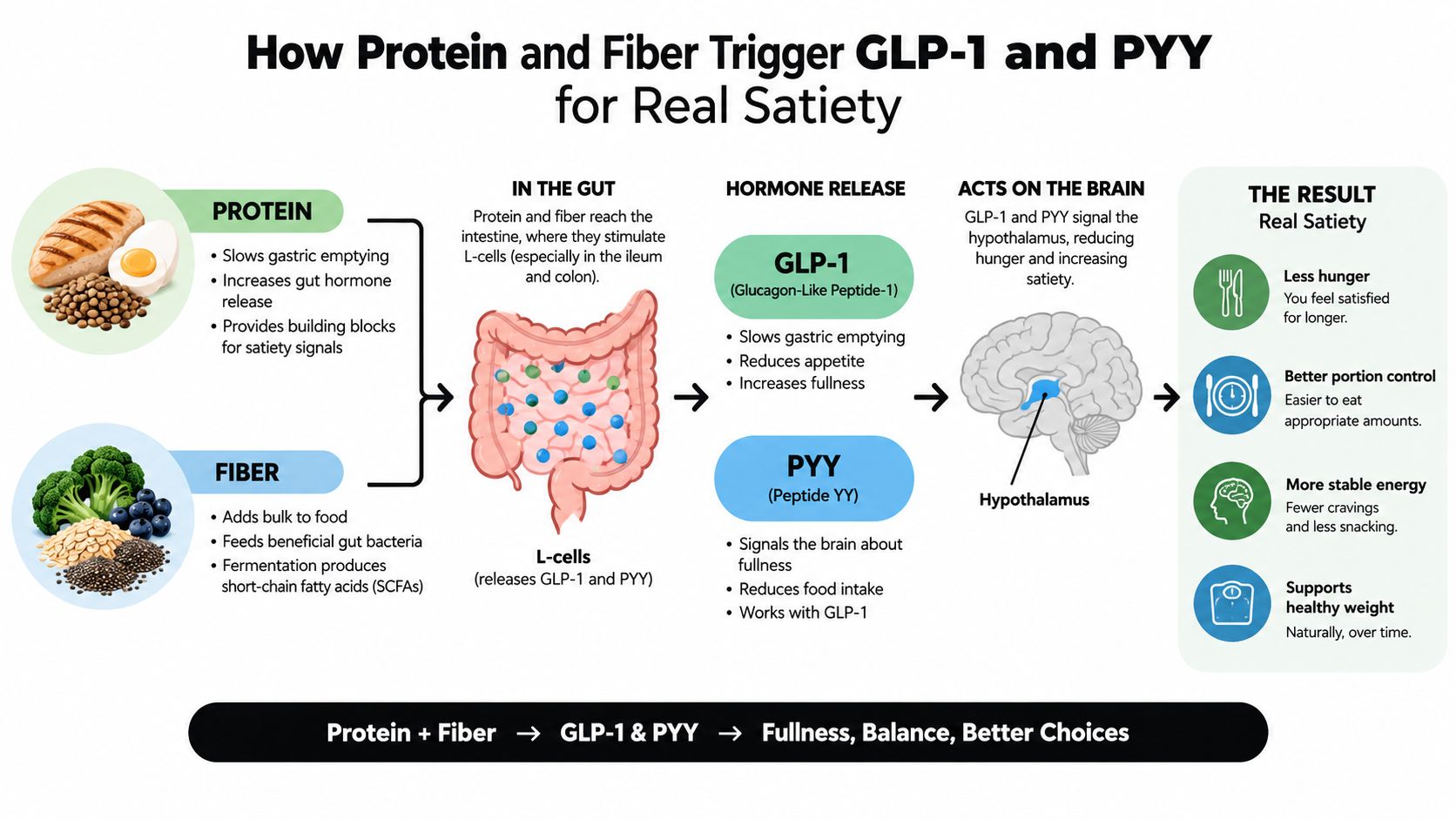
GLP-1 and PYY are gut hormones involved in appetite regulation, but readers don't need to memorize a complicated signaling pathway to use the science. The practical takeaway is simple: protein and fiber can provide a stronger satiety signal than calories alone, especially when the snack also has enough volume and texture to feel like food.
Protein-rich meals can stimulate GLP-1 and PYY after eating. The controlled evidence is more nuanced than many social media claims, though. In the study cited earlier, increased hormone levels didn't necessarily lead to lower later intake when the meals were carefully matched for volume, appearance, and calories. That means a protein number on a label isn't the whole story.
Turn hormone science into a snack test
Use this sequence when choosing between two options:
- Find the protein source. A snack built around yogurt, egg, lean meat, edamame, or a measured protein serving may provide a more useful appetite signal than a refined starch alone.
- Check for fiber or volume. Vegetables, fruit, legumes, and popcorn can make the portion more physically satisfying.
- Consider texture. Crunch and chewing can slow the eating experience, while a soft snack may be consumed quickly.
- Match the snack to the gap. A small fruit portion may work before a nearby meal, while a longer gap calls for a stronger protein anchor.
A reasonable design target is roughly 8 to 12 grams of protein and at least 3 grams of fiber when a product can deliver those amounts within the calorie budget. Those are practical benchmarks, not guarantees, and many foods under 100 calories won't reach both.
The same principle applies to people researching evidence-based peptide protocols. Hormone terminology can sound persuasive, but food choices still need to be evaluated by protein dose, tolerance, texture, and total dietary context. For more ideas focused specifically on appetite-aware protein choices, see these GLP-1 protein snacks.
Fiber adds a different pathway. It can contribute to stomach distension, slow the movement of food, and support fermentation in the gut. Yet suddenly increasing fiber may worsen bloating or discomfort, so GLP-1 users should increase it gradually and prioritize fluids as advised by their care team.
A Real Day of Low Calorie Snacks Under 100 Calories
A snack plan works better when it follows the rhythm of the day. You don't need five identical mini-meals. You need different tools for the desk, the gym, the afternoon slump, and the evening period when appetite can become more emotional than physical.
Mid-morning at the desk
Start with cucumber rounds seasoned with smoked salt, vinegar, or herbs. This is a volume-first choice, useful when you want something crisp and refreshing but expect lunch relatively soon. If your next meal is several hours away, add a measured protein side rather than assuming the cucumber alone will carry you.
For more workplace-friendly ideas, use this guide to healthy snacks to keep at work. The key is keeping portions visible and ready, so the decision doesn't happen when you're already ravenous.
Before training
A plain rice cake with a thin layer of turkey can provide a light carbohydrate base with a little protein. Keep the portion modest and avoid turning it into a heavy meal right before lifting. If you tolerate fruit well, a small apple portion can also work, but nut butter should be measured because it uses the calorie budget quickly.
The pre-workout snack has a different job from the post-workout snack. It should feel comfortable while you move, not compete with your training session for digestive attention.
After training
A plain nonfat Greek yogurt portion or a yogurt tube can provide protein in a soft, portable format. Choose a product whose label confirms the serving size and protein content. If you're using a GLP-1 medication and large meals feel difficult, a small protein-focused option may be easier to manage than trying to force a substantial meal immediately.
Afternoon and evening
Cottage cheese with everything seasoning gives the afternoon snack a savory profile and a protein anchor. Later, a warm portion of shelled edamame can provide plant protein, fiber, and a more substantial chewing experience than a sweet, airy snack.
Don't force every option to stay under 100 calories if you're hungry and your overall plan allows more. A strict ceiling can become counterproductive when it pushes you into repeated grazing. Use the benchmark to create deliberate portions, then adjust with a dietitian if training demands, medication effects, or recovery needs aren't being met.
Sweet Versus Savory Snacks That Stay Under 100 Calories
A snack under 100 calories can still leave you hungry. The ceiling matters less than how well those calories support fullness. Protein, fiber, and enough chewing can encourage signals linked with satiety, including GLP-1 and PYY. That makes a protein-first savory snack useful when you need a longer bridge between meals, while a sweet option may fit better when the craving is the main issue.
Sweet snacks offer convenience and quick carbohydrate. Savory snacks often make protein easier to include through eggs, cottage cheese, turkey, edamame, or a measured plant-based protein product. Choose based on the job: quick fuel, a post-workout contribution, or appetite control until the next meal.
| Snack Option | Calories | Protein (g) | Fiber (g) | Satiety Score | Best Timing |
|---|---|---|---|---|---|
| Berries with plain yogurt | Label-dependent | Moderate | Moderate | Moderate | Mid-morning |
| Measured almonds with cocoa | Label-dependent | Low to moderate | Moderate | Moderate | Short gap |
| Cinnamon cottage cheese | Label-dependent | High for portion | Low | High | Afternoon |
| Turkey roll-ups | Label-dependent | Moderate to high | Low | High | Longer gap |
| Miso egg cup | Label-dependent | Moderate | Low | Moderate to high | Savory craving |
| Portion of Gym Snack | 150 calories per 30 g serving | Product-label amount | Product-label amount | Moderate for measured portion | Portable use |
Recipes and brands change the exact numbers, so use the package label for the portion you eat. A full bag of Gym Snack is above the under-100-calorie range. Treat the listed serving as a measured portion rather than assuming the whole package fits the limit.
Choose sweet when the craving is the problem
Berries, a measured fruit portion, or plain yogurt with cinnamon can provide sweetness without relying on candy or highly refined snacks. The British Heart Foundation includes fruit and yogurt among its snack ideas, including 40 grams of blueberries with 125 grams of plain low-fat yogurt (British Heart Foundation snack ideas).
Sweet formats suit a short gap before the next meal or a specific craving. If hunger returns quickly, add protein rather than increasing the fruit portion. This keeps the snack focused on fullness as well as taste.
Choose savory when staying power matters
Turkey roll-ups, seasoned cottage cheese, egg-based snacks, and edamame make the protein source visible and usually require more chewing than airy sweet foods. These features can make a small portion feel more substantial, particularly for someone whose appetite is reduced on a GLP-1 medication.
Lead with savory when the next meal is not soon, or pair a sweet food with protein. The goal is not to ban sweet snacks. It is to choose a portion that addresses hunger, not only the immediate craving.
How to Read Snack Labels and Stock a Smart Snack Drawer
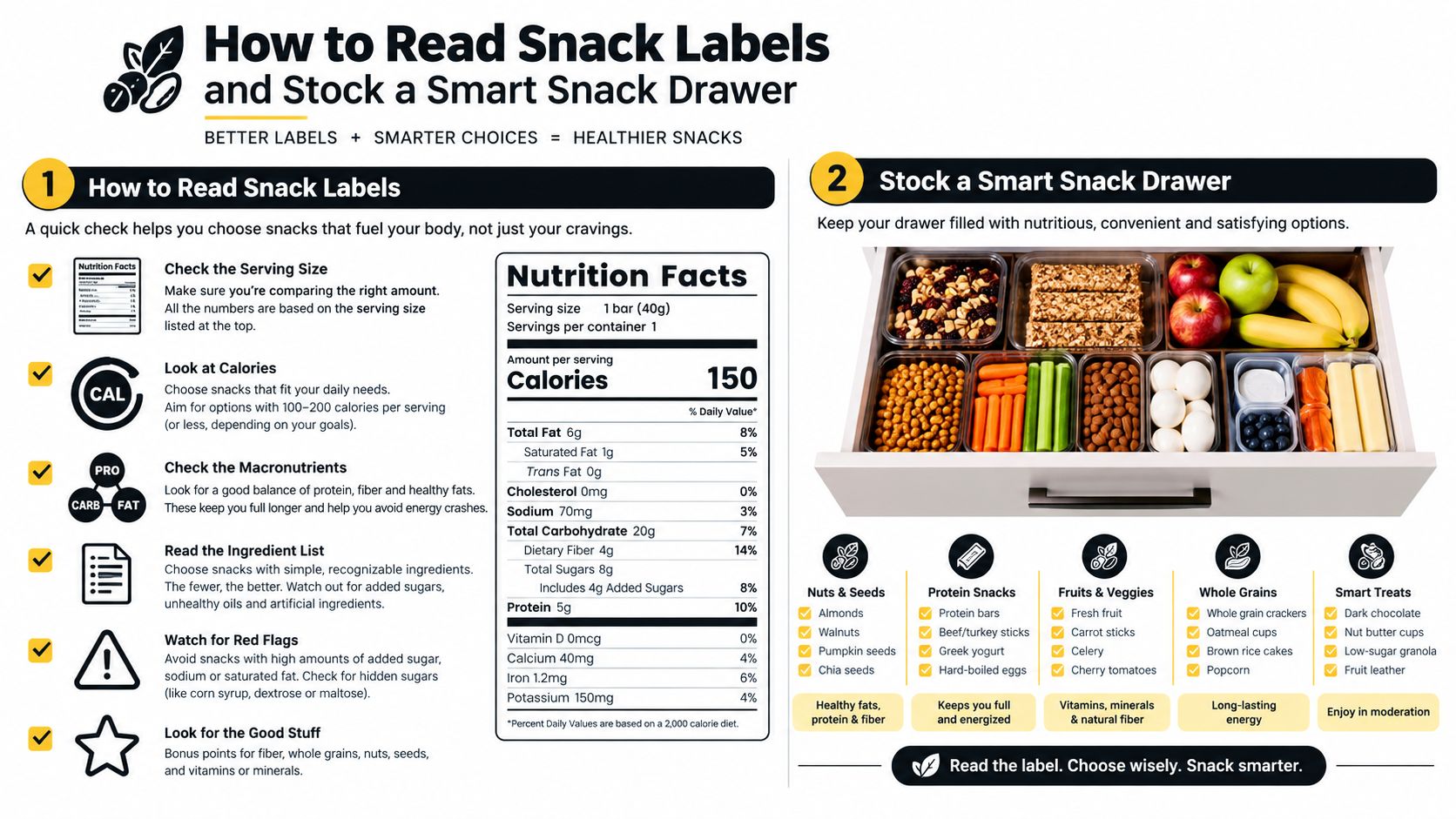
A nutrition label can function as a satiety scorecard if you read it in the right order. The front of the package may highlight calories, but the back tells you whether those calories come with protein, fiber, and a portion you can realistically control.
Five label checks
- Confirm the serving size. Make sure the listed portion matches what you'll eat. A snack isn't under 100 calories if you routinely consume several servings.
- Divide protein by calories. A protein-to-calorie ratio above 0.07 can help you identify more protein-dense options, but it's a screening tool, not a guarantee of fullness.
- Check saturated fat. Flag products with more than 2 grams of saturated fat per 100 calories when you're comparing otherwise similar options.
- Look for fiber. At least 2 grams of fiber can make a small snack more useful, particularly when the food also provides volume.
- Scan the first ingredients. Sugar can appear as maltodextrin, dextrose, or fruit concentrate. If these appear near the top of the ingredient list, the product may be primarily sweetened carbohydrate.
These thresholds are practical filters, not medical rules. A snack can miss one target and still fit your diet. For a fuller walkthrough, use this guide on how to read nutrition labels.
Build the drawer around use cases
Stock categories rather than buying every product that carries a “light” claim:
- Single-serve proteins: Greek yogurt, cottage cheese, lean jerky, or pre-portioned egg options.
- Produce for crunch: Cucumber, bell pepper, radish, cherry tomatoes, and berries.
- Shelf-stable choices: Tuna pouches, roasted chickpeas, and portioned edamame products.
- Flavor boosters: Mustard, vinegar, herbs, smoked salt, and chili-based seasonings.
Refresh perishable protein and produce regularly, then audit pantry snacks for drifting sodium, added sugar, or oversized portions. A drawer that contains only sweet bars and crackers will make the easy choice predictable. A drawer with protein, crunch, and flavor gives you more control when you're tired.
Timing Your Snacks Around Workouts and GLP-1 Appetite Windows
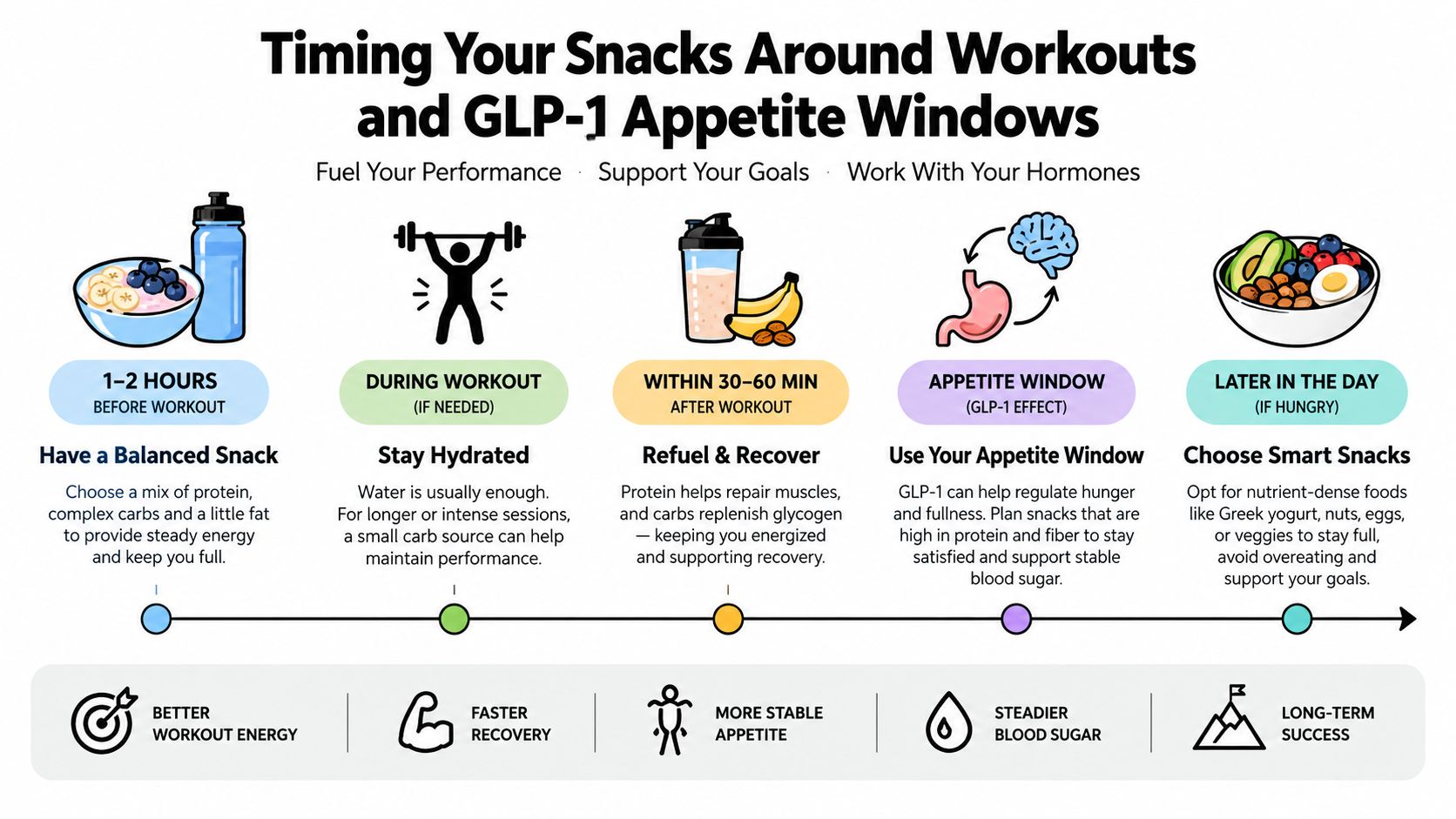
Timing changes what a snack needs to do. Before training, comfort and accessible energy matter. After training, protein becomes more important. With GLP-1 medications, tolerance and appetite can vary across the dosing cycle, so the safest plan is the one that follows your own symptoms and your clinician's guidance.
Before and after lifting
Around 45 to 60 minutes before a workout, choose an easy-to-digest carbohydrate with a small protein contribution if you tolerate it. A small apple portion, a plain rice cake with thin turkey, or another low-fat option may feel better than a dense, high-fat snack.
Within 60 to 90 minutes after training, prioritize a protein source that you can comfortably consume. A measured whey isolate shake, egg-based snack, or plain nonfat Greek yogurt can work, but check the label rather than assuming a product fits the calorie ceiling. Recovery needs depend on your full day of eating, not one snack.
For GLP-1 users, appetite and gastrointestinal symptoms can change during the days following an injection. Don't assume a universal “best” medication window. If nausea eases and appetite returns later in your cycle, a savory, protein-forward snack may be easier to tolerate than a highly sweet option. Contact your prescribing clinician for persistent nausea, vomiting, dehydration, or difficulty eating enough.
Use a flexible weekly rhythm
- Monday: Pre-workout carbohydrate and a light protein option.
- Tuesday: Desk snack built around vegetables and a measured protein side.
- Wednesday: Post-training yogurt or another tolerated protein source.
- Thursday: Savory snack during the afternoon appetite window.
- Friday: Portable option prepared before leaving work.
- Saturday: Edamame, fruit, or yogurt based on training and meal timing.
- Sunday: Portion and stock snacks for the week ahead.
The schedule is a template, not a prescription. Medication timing, training load, appetite, and gastrointestinal tolerance should determine the final choice.
This video can add another visual explanation of workout nutrition and snack timing:
Gym Snack offers plant-based savory protein snacks built around crunchy pea protein, with Cheddar Cheeze and Jalapeño Cheddar Cheeze flavors. If you want a portable savory option to compare against fruit, yogurt, or homemade snacks, visit Gym Snack and review the serving information before choosing your portion.