

You're standing in front of a wall of bars that all claim to be clean, natural, high-protein, and healthy. Flip one over and it reads like a chemistry set. Grab another and it's just a candy bar wearing gym clothes. At that point, “no BS” starts sounding less like branding and more like a survival skill.
That's how you should treat no BS protein bars. Not as a trendy label, but as a filter. If a snack is supposed to support your training, appetite control, or daily energy, it needs to do that job without junk ingredients, fake health language, or a nutrition panel that collapses under scrutiny.
A lot of advice stops at “read the ingredients.” That's incomplete. Two bars can both look clean and still be wrong for your goal. One might be decent for a casual snack but weak for muscle recovery. Another might be sweet enough to keep you chasing cravings when what you need is something filling and steady. The smart move is to match the product to the person.
Decoding the No BS Protein Bar Promise
The original appeal of no BS protein bars is obvious. You want food you can recognize. You want labels that don't play games. You want to know what you're eating without needing a degree in food manufacturing.
That's why RXBAR caught people's attention in the first place. Its Chocolate Sea Salt bar keeps the formula blunt: 12 grams of complete protein, 210 calories, 1 gram of sugar, and five ingredients from pasteurized egg whites, almonds, dates, cocoa, and sea salt, with no artificial sweeteners or preservatives, according to this RXBAR nutrition breakdown.
That's a strong standard for transparency. It's also where most shoppers stop thinking.
No BS means more than a short ingredient list
A short ingredient list is a good start. It isn't the whole job.
If you lift hard and need a more substantial protein hit, a minimalist whole-food bar may still come up short. If you're trying to control appetite and avoid the sweet-snack cycle, a dessert-style bar can work against you even if the ingredients are tidy. “Clean” doesn't automatically mean “right for you.”
Practical rule: A no BS bar should pass two tests. First, the ingredients make sense. Second, the bar actually fits your goal.
That second part matters because the protein bar aisle is full of products built to sound healthy for everyone while serving almost no one particularly well.
The better question to ask
Don't ask, “Is this bar clean?”
Ask these instead:
- Training question: Will this give me enough usable protein for the situation I'm in?
- Satiety question: Will this keep me full, or will it wake up more cravings?
- Digestive question: Can I eat this before work, before training, or between meals without regretting it?
- Ingredient question: Would I still trust this product if the front-of-pack marketing disappeared?
If the answer to any of those is no, it's not no BS. It's just good packaging.
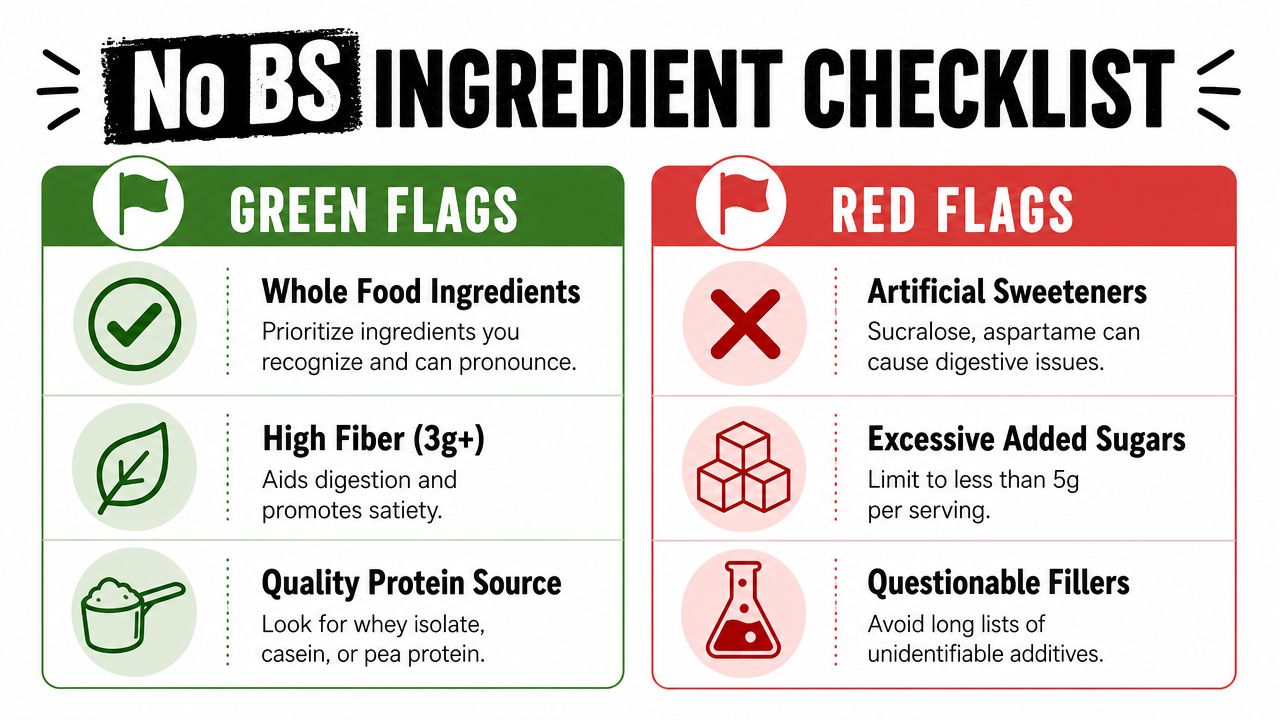
Your No BS Ingredient Checklist
You don't need to memorize every nutrition buzzword. You need a fast filter. If a bar fails this checklist, put it back.
Green flags worth paying for
Start with ingredients that look like food, not a formulation exercise.
- Recognizable protein sources. Egg whites are a solid example. So are straightforward plant proteins such as pea protein when the rest of the formula stays clean.
- Simple binders. Dates and nut butters make sense. They hold a bar together and you know what they are.
- Short, readable ingredient lists. Fewer ingredients won't guarantee quality, but they make it easier to spot nonsense fast.
- A formula that doesn't need artificial sweeteners. If the product has to prop itself up with lab-made sweetness, that's usually a warning sign.
RXBAR remains the clean-label reference point because one bar gives 12 grams of complete protein from pasteurized egg whites, 210 calories, 1 gram of sugar, and just five ingredients, as shown in this nutrition listing for RXBAR Chocolate Sea Salt.
If you want more examples of what clean snacking should look like in practice, this guide to clean protein snacks is a useful next read.
Red flags that usually mean marketing is doing the heavy lifting
Here, most bars fall apart.
- Artificial sweeteners. If the bar leans on sucralose or aspartame, I'd skip it.
- Sugar alcohol heavy formulas. These often promise low sugar while creating a digestive mess.
- Long filler lists. If the label runs on with gums, syrups, fibers, and mystery texture agents, that's not no BS.
- Seed oils. If a brand is selling itself as clean while using inflammatory industrial oils, it's talking out of both sides of its mouth.
- Protein sources that feel more engineered than food-based. You're buying a snack, not a lab project.
A clean label should lower your cognitive load. If you have to decode it ingredient by ingredient, the product already failed the test.
The checklist I'd actually use in a store aisle
Use this quick screen:
| Check | What you want |
|---|---|
| Ingredient list | Short, readable, familiar |
| Protein source | Egg whites or clean plant protein |
| Sweetness | Real-food sweetness or restrained flavoring |
| Fats | Nuts or similarly recognizable sources |
| Additives | Minimal |
If the package screams “natural” but the ingredient list says otherwise, trust the back, not the front.
How to Read a Protein Bar Label Like a Pro
The ingredient list tells you what's inside. The nutrition panel tells you whether the bar earns its spot in your bag.
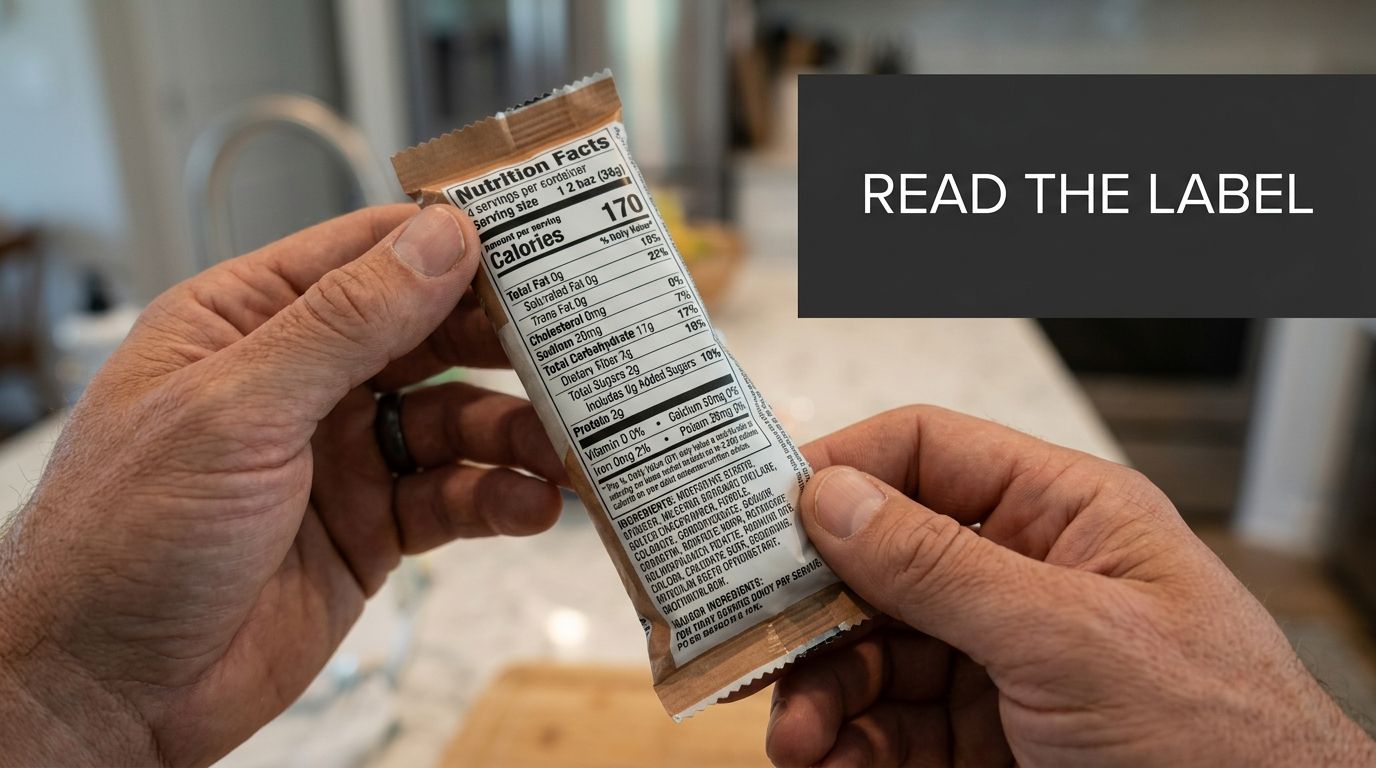
Most shoppers make one mistake. They jump straight to protein grams, then stop. That's how weak bars get a pass.
Read the panel in this order
Use this sequence every time:
- Protein first. Decide whether the amount matches your need.
- Calories second. Ask whether the calorie cost makes sense for that protein return.
- Sugars next. Look at total sugars, then check whether the product is clearly built around sweetness.
- Fiber last. A useful number matters, but not if the product is stuffed with processed bulk just to game the panel.
This is the difference between reading a label and understanding one.
What a better bar looks like on paper
A simple whole-food bar like RXBAR gives you a clean baseline because the numbers and ingredients tell the same story. A dessert-style bar often doesn't. The front says “healthy.” The back shows a formula designed to imitate candy while borrowing credibility from added protein.
That doesn't mean every sweet bar is bad. It means you shouldn't reward a product for one strong macro while ignoring everything else.
For a solid refresher on the basics, this breakdown of how to read nutrition labels is worth bookmarking.
If the product needs aggressive flavor engineering to make you forget it's a protein bar, that's a clue. Real food doesn't need that much costume.
The side-by-side mindset that works
When you compare two bars, ask:
- Does the ingredient list support the nutrition panel
- Is the sweetness level helping satiety or encouraging another snack
- Would I eat this because it serves a purpose, or because it feels like a treat with macros
That last question matters more than people admit. If your so-called healthy bar behaves like dessert, it can steer your appetite in the wrong direction.
Protein Bars for Gym Fuel vs GLP-1 Support
Here, generic protein bar advice breaks down. A gym-goer and a GLP-1 user are not shopping for the same outcome.
Gym-goers need a stronger protein answer
If you train seriously, you probably want a bar to do one of two jobs. Help you bridge a meal gap, or support recovery when whole food isn't practical. In both cases, many classic whole-food bars don't hit hard enough on protein.
That gap is real. The no BS protein bar space, dominated by whole-food bars like RXBAR at around 12 grams of protein, often fails to answer the question of how to get 18 grams or more without processed isolates or seed oils, according to this discussion of the no BS concept and its limits. That same source points to an underserved opening for plant-based savory options using ingredients like pea protein that can deliver 15 grams to 30 grams while staying aligned with a clean-label promise.
If you're trying to support training output, don't settle for a bar that's mostly there. Buy for the job.
GLP-1 users need satiety, not dessert cosplay
If your main goal is appetite control, stable energy, and fewer cravings, your priorities shift.
You want protein-first structure. You want less sweetness. You want a snack that feels more like a small meal signal than a candy replacement. That's one reason understanding your body's metabolic engine can help. If you know how your body responds to fuel intake and energy demand, you make better snack decisions instead of blindly copying athlete advice.
A lot of bars miss this because they're still built around sweet flavors and indulgence cues. That can be fine for some workouts. It's not ideal when fullness and restraint are the priority.
A quick comparison
| User | What matters most | What to avoid |
|---|---|---|
| Gym-goer | Enough protein to justify the snack | Underpowered bars dressed up as performance fuel |
| GLP-1 or weight-management user | Satiety, steadiness, lower craving potential | Sweet bars that act like dessert |
| Busy professional | Convenience without a crash | Bars that spike appetite or upset digestion |
If you're shopping with a lower-carb or lower-sugar priority, this guide to low-carb and sugar protein bars can help narrow the field.
Beyond the Sweet Bar The Rise of Savory Protein
The protein snack market has a blind spot. It assumes protein must come wrapped in chocolate, cookie dough, peanut butter, or some other dessert flavor. That's lazy product design.
For a lot of people, especially those focused on fullness and controlled eating, sweet bars solve one problem and create another. You get protein, but you also keep your palate locked into treat mode. That can make the next craving easier, not harder.
Why savory changes the game
A frequently ignored issue in no BS protein bar coverage is the lack of savory, non-dessert options that support satiety hormones like GLP-1 and PYY for weight management. The absence of savory, crunchy, meal-signal alternatives leaves a major opportunity for people who want protein-first snacks without triggering sugar cravings, as argued in this analysis of the no BS bar gap.
That tracks with what many people feel in real life. A sweet bar often reads as a treat. A savory, crunchy protein snack reads more like food.
Sweet bars can keep you mentally stuck in snack mode. Savory protein has a better chance of ending the conversation.
Who should think beyond bars
Savory protein is especially worth considering if you fall into one of these groups:
- You're tired of dessert-flavored everything. Not every snack needs to taste like brownie batter.
- You struggle with cravings after sweet bars. That's a sign the flavor profile may be working against your goal.
- You want a more meal-like signal between meals. Savory and crunchy usually feel more substantial.
- You're plant-based and ingredient-conscious. Clean savory formats can open up options beyond dense, sticky bars.
The bigger point
The best no BS protein snack might not be a bar at all.
That's the market gap most guides miss. They keep ranking sweet bars against other sweet bars. A better move is to ask whether the format itself makes sense for your goal. If your priority is satiety, steadier energy, and less interest in sugary flavors, a savory protein snack can be the smarter tool.
Finding Your Perfect Protein-First Snack
You don't need a perfect brand. You need a better standard.
Start with ingredients. If the label looks engineered, skip it. Then read the nutrition panel like an adult, not like a marketer wants you to. Finally, match the snack to the job. Training support, appetite control, or just emergency convenience are different use cases, and they deserve different choices.
Keep this framework simple
- Check the ingredient list first. Short, readable, and food-based wins.
- Make the nutrition panel prove itself. Protein alone doesn't excuse a weak formula.
- Buy for your goal. Gym fuel and GLP-1 support are not the same purchase.
- Stay open to savory options. The best answer may not come in a sweet bar format.
No BS protein bars are useful when they're honest, functional, and aligned with what your body needs. That's the standard. Everything else is aisle noise.
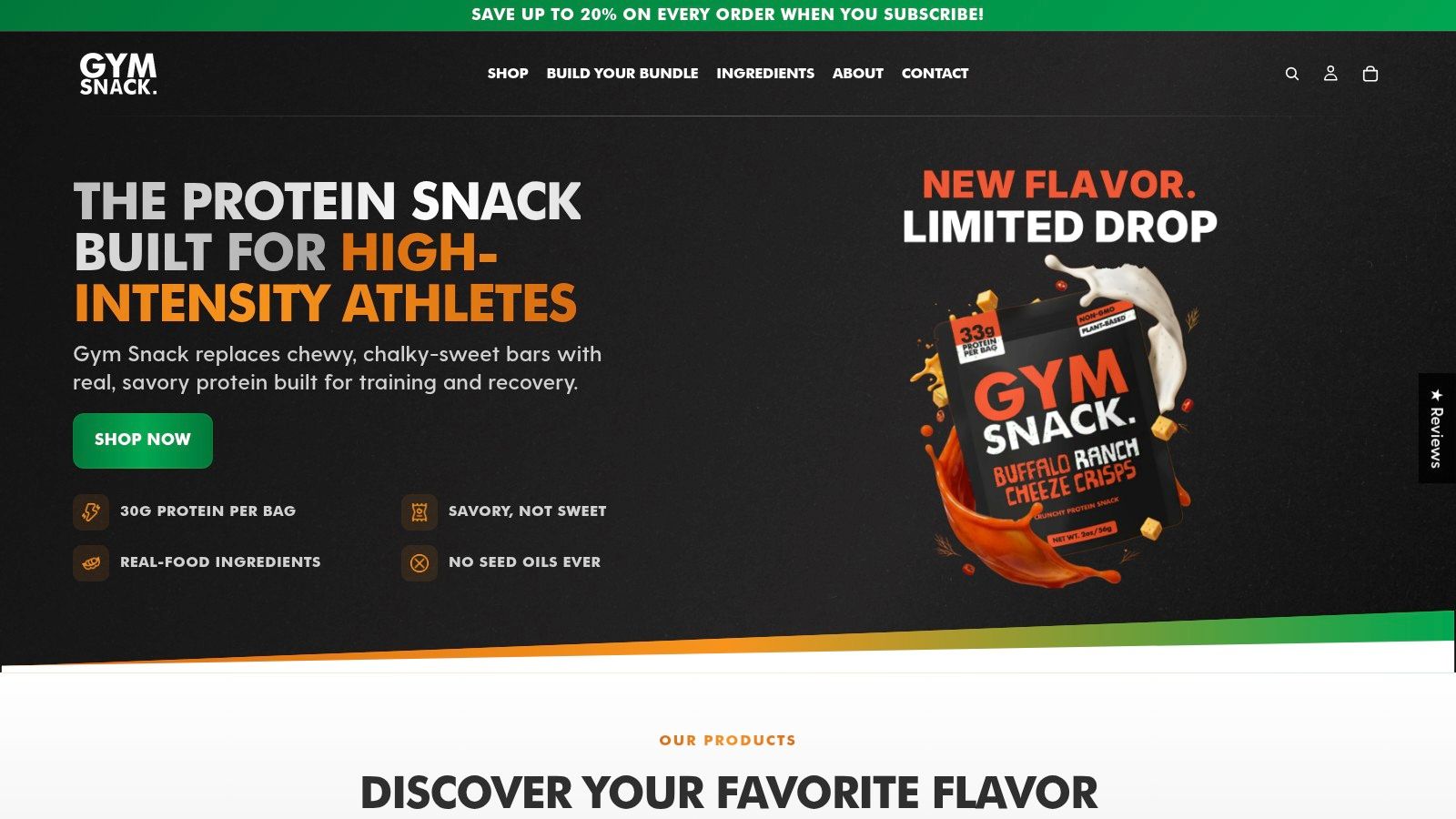
If you want a protein-first snack that breaks away from the usual sweet-bar formula, Gym Snack is worth a look. It focuses on chef-inspired, plant-based savory protein snacks with crunchy texture, bold flavor, and transparent ingredients, which makes it a strong option for people who want clean fuel without the dessert-bar routine.