

You grab a protein bar because you need fuel, not frosting. Then you open it and get another sticky, chocolate-coated brick that tastes like a diet candy bar. If you've hit that point where every “healthy” bar feels too sweet, too dessert-like, or too fake, you're not being picky. You're noticing a real gap in the category.
A lot of active people want protein that feels like food, not a substitute brownie. They want something that works before a workout, after a lift, between meetings, or on a long drive without making their taste buds feel like they've eaten Halloween leftovers at 10 a.m. That's where non chocolate protein bars and savory high-protein snacks start to make sense.
Beyond the Candy Bar Disguise
You open a protein bar between meetings because lunch is still an hour away. One bite in, it tastes like frosting with whey mixed into it. By the end, you have eaten plenty of sweetness, but you do not feel as settled as you expected.
That reaction is part of a larger shift in the category. The global protein bar market, valued at USD 5.47 billion in 2025, is projected to reach USD 10.59 billion by 2034, according to Fortune Business Insights' protein bar market analysis. Growth is being driven in part by shoppers who want options beyond the standard chocolate-dessert formula, including savory and plant-based formats.
Why dessert-style bars stop working
A sweet bar can be useful. The problem shows up when every option starts to taste like the same product wearing a different label. Brownie, cookie dough, chocolate mint, peanut butter cup. Different branding, same sensory lane.
That sameness creates flavor fatigue. Your protein target may still matter, but your appetite starts pushing back. Savory protein snacks help because they reset your palate. Salt, herbs, nuts, seeds, cheese notes, and toasted grains register more like real food, which makes repeat use easier across a full week of training, work, and errands.
It works like playlist burnout. If every song has the same beat, you stop hearing the music. If every protein bar tastes like dessert, you stop wanting the bar.
Why savory options often feel more satisfying
Sweetness can blur the line between a snack and a treat. For some people, that makes it harder to notice when hunger has settled down. Savory snacks often create a clearer stop signal because the flavor profile matches what your brain expects from food with substance.
That matters for satiety cues, including GLP-1 related signaling, which helps regulate fullness and appetite after you eat. No single bar magically controls hunger, but a savory, protein-rich snack can feel more aligned with fullness than a candy-like bar that keeps the reward circuitry turned up. In plain terms, sweet bars can invite another bite. Savory formats are more likely to say, "meal-like snack accomplished."
This is one reason interest keeps growing in products that look less like dessert and more like compact food. Bars built around nuts, seeds, grains, legumes, or savory seasonings can give you protein without the sugary aftertaste that makes daily use tiring. If you also want alternatives made from simpler plant ingredients, this guide to plant-based protein bars can help you compare options.
The bigger point is simple. A protein snack should help you hit your macros and calm your hunger. It should not feel like you ate a holiday candy stash at 10 in the morning.
Exploring the Non Chocolate Protein Bar Universe
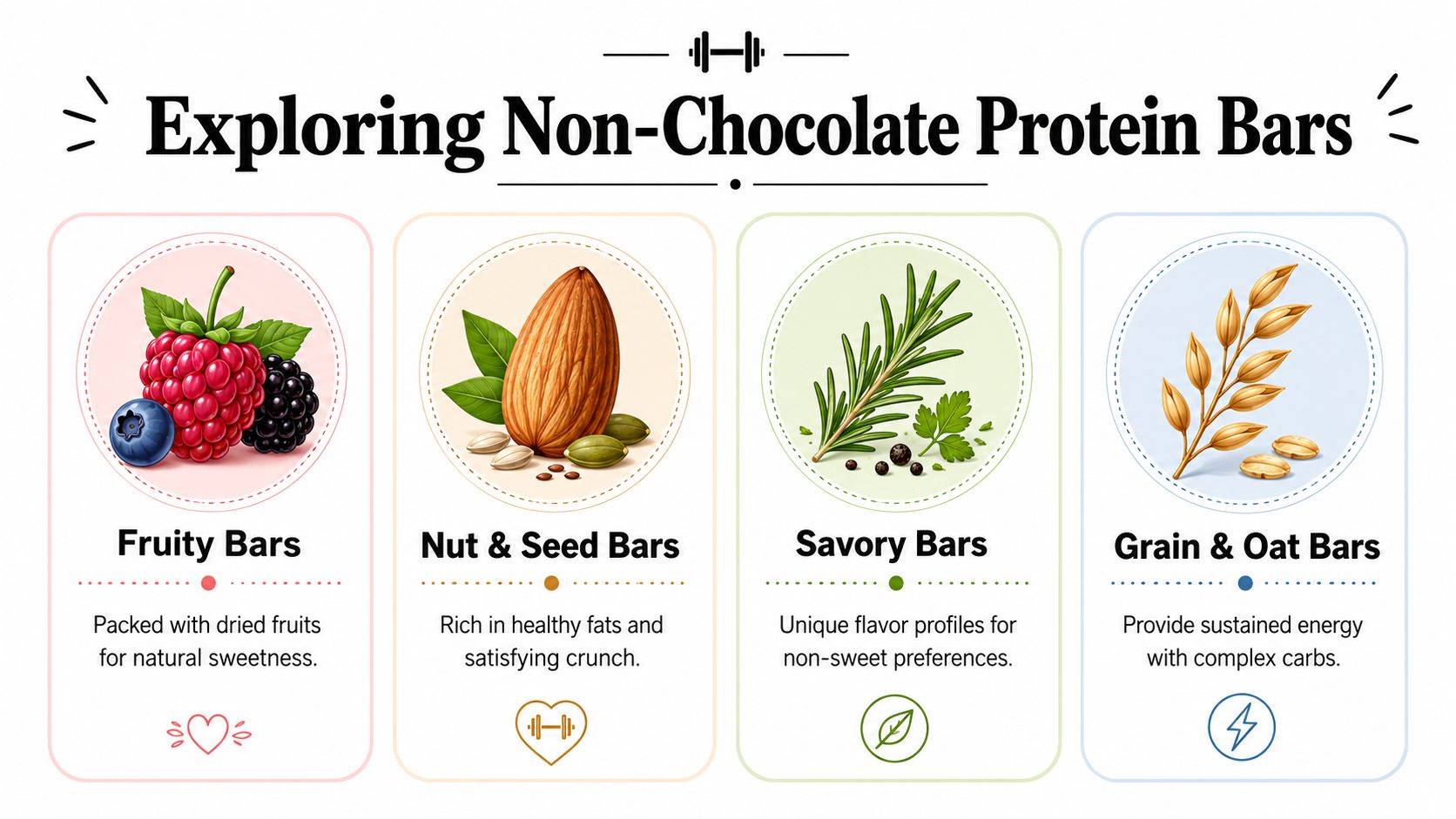
Non chocolate protein bars aren't one thing. They're a whole shelf of options that happen to skip the chocolate-first formula. Once you know the main types, shopping gets a lot easier.
Fruit and nut bars
This is the category often recognized first. These bars often lean on dates, dried fruit, almonds, peanuts, or cashews for structure, sweetness, and chew. They tend to feel closer to trail mix pressed into bar form.
The category is large for a reason. In 2025, nut-based protein bars accounted for 42.53% of the global protein bar market, showing strong consumer preference for whole-food style ingredients, according to Mordor Intelligence's protein bar market report.
Almonds are especially common because they bring texture and natural richness. They also contribute 6 grams of protein per ounce, which is part of why nut-based bars can feel more substantial than airy cereal-style bars.
Seed-based bars
Seed-based bars are useful when nuts are off the table or when you want a different fat and texture profile. Think sunflower, pumpkin, chia, sesame, or flax. These bars often taste earthier and less dessert-like, especially when brands don't overload them with syrups or coatings.
They can be a smart fit for people who want:
- A nut-free direction that still offers crunch
- A more neutral flavor base for spices or savory seasonings
- Ingredient simplicity with recognizable whole-food components
If you're comparing plant-forward options more broadly, this roundup of plant-based protein bars can help you spot the common ingredient patterns.
Savory bars and crunchy protein snacks
The category gains intrigue. Savory bars and bar-adjacent protein snacks move away from “healthy dessert” and toward actual snack food. Instead of cocoa, caramel notes, and sweeteners, you get cheese-inspired flavors, herbs, spices, roasted notes, or salty crunch.
For many gym-goers, this solves two problems at once:
| Type | Typical taste | Typical texture | Best for |
|---|---|---|---|
| Fruit bars | Naturally sweet | Soft, chewy | Quick snack when you want sweetness |
| Nut and seed bars | Toasted, rich, lightly sweet or neutral | Dense, crunchy or chewy | Longer-lasting satisfaction |
| Savory bars/snacks | Salty, cheesy, herby, spiced | Crunchy, crisp, or firm-chewy | Breaking sweet cravings and reducing flavor fatigue |
| Grain and oat bars | Mild, cereal-like | Soft-baked or chewy | Everyday convenience |
First, savory profiles can reduce that repetitive dessert feeling. Second, the crunch and seasoning often make the snack feel more meal-like, which can improve satisfaction.
Practical rule: If you're tired of sweet bars, don't buy a “less sweet chocolate” bar. Switch categories entirely.
Grain and oat-based options
Oat and grain bars sit in the middle. They're familiar, portable, and often easier on the palate than hyper-sweet bars. Some are protein-forward, while others are really just snack bars with a little protein added. That's why label reading matters.
These bars can work well if you want something softer and more neutral, but they vary a lot. One oat bar may feel balanced and sturdy. Another may be little more than syrup and cereal with a protein sprinkle.
The big takeaway is simple. Non chocolate protein bars include multiple formats, and each one solves a different problem. Some satisfy a sweet tooth. Some give you a nutty whole-food feel. Some finally let your snack taste salty and grown-up.
How to Decode a Protein Bar Label
The front of the wrapper is advertising. The back is evidence. If you want to choose smarter, read the label like a food detective.
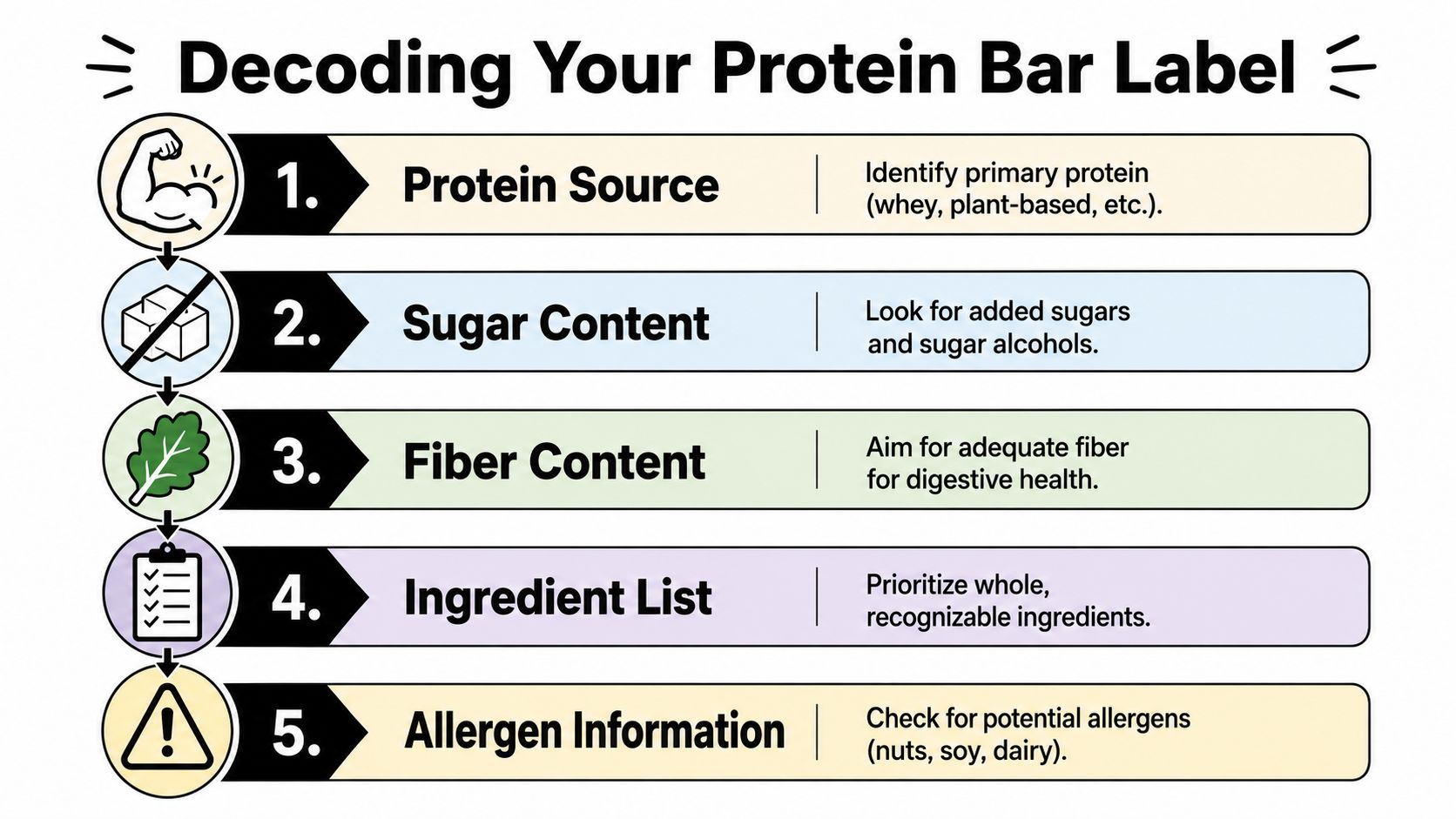
Start with the protein source
Flipping straight to the protein grams is common. That's useful, but it doesn't tell the whole story. Protein type affects texture, digestibility, and how the bar eats.
Research on high-protein bars found that pea protein produced significantly lower hardness, measured at 13.62 N in non-coated samples, than whey protein concentrate, which helps improve chewability and shelf-life stability, according to this study on protein bar formulation and texture.
That sounds technical, but the practical meaning is simple. Two bars can list similar protein totals and still feel completely different in your mouth. One bites cleanly. The other fights back like a drywall sample.
Then check sugar and sweetener style
A non chocolate bar can still be sugary. “No chocolate” doesn't automatically mean “better built.” Look for whether sweetness comes mostly from fruit, added sugars, sugar alcohols, or a mix.
A few questions help:
- Is the ingredient list front-loaded with syrups? That usually tells you sweetness is doing a lot of the heavy lifting.
- Are multiple sweeteners stacked together? That can create the classic overly sweet aftertaste.
- Does the bar still sound like food? Nuts, seeds, oats, pea protein, spices, fruit, and grains are easier to evaluate than a list built around syrups, isolates, and flavor systems.
If you're trying to sharpen your nutrition-label habits in general, this guide to protein bar nutrition facts is a useful companion.
Fiber and ingredient quality matter more than the packaging
Fiber helps slow the eating experience and often makes a bar feel less like empty flavor. It also tends to show up in bars built around nuts, seeds, oats, and whole-food ingredients instead of purely engineered sweetness.
This same mindset helps with other convenience foods too. If you're balancing blood sugar and still want practical meal ideas, a thoughtful guide to low carb chicken for diabetics can show the same principle in meal form: keep ingredients clear, build around protein, and avoid letting hidden extras run the show.
Here's a simple label-reading checklist:
- Find the first real protein source. Pea, whey, egg, soy, nuts, or seeds.
- Scan the first five ingredients. That usually reveals the bar's true identity.
- Check for stacked sweeteners. Multiple syrups or sweeteners often predict a dessert-like experience.
- Look at allergen fit. Nuts, dairy, soy, and gluten can all matter depending on your needs.
- Ask if the texture will match your goal. Soft and chewy isn't always better. Crunchy can feel more satisfying.
A quick video walkthrough can help if nutrition labels still feel cluttered:
The best bar for you isn't the one with the loudest claim. It's the one whose label matches how you actually want to feel after eating it.
Matching the Right Bar to Your Fitness Goal
A protein bar isn't a single-purpose object. It can act like a bridge snack, a pre-workout top-up, a recovery backup, or a craving-management tool. The trick is to match the bar to the job.
For pre-workout energy
Before training, it's beneficial to consume something that digests comfortably and is desirable to eat. If a bar feels too heavy, too sweet, or too sticky, it becomes a chore. A lighter non chocolate option with a cleaner ingredient list often works better than a dense dessert-style block.
Texture matters here more than people think. If you're forcing down a chalky bar on the way to the gym, compliance drops fast.
For post-workout recovery
After training, convenience counts. You need something easy to carry, easy to eat, and pleasant enough that you won't skip it. This is one reason the sensory side of bars matters. Industry analysis puts it bluntly: “the primary challenge... isn't the protein, it's the texture.” The same analysis notes that savory, crunchy formats can reduce the dryness and chalkiness common in sweet bars, which can improve satisfaction and adherence, as discussed in Prolactal's texture analysis of high-protein bars.
That idea matters in real life. A snack only helps if you'll consistently eat it.
For appetite control and sweet-craving management
Savory options often shine. If you're always using sweet bars, you may never get out of the dessert loop. A savory or crunchy non chocolate protein bar can act more like a small meal cue than a treat cue.
That can help with satiety in a practical sense. Protein-rich savory snacks often feel more grounding because the flavor profile tells your brain “food” instead of “reward.” For people focused on body recomposition, a broader guide to building muscle and losing fat can help you fit these snack choices into the bigger picture.
A simple matching guide
| Goal | Best bar style | What to prioritize |
|---|---|---|
| Pre-workout | Lighter fruit, oat, or mild savory option | Easy digestion and moderate texture |
| Post-workout | Protein-forward bar or crunchy savory snack | Pleasant texture and convenience |
| Midday appetite control | Nut, seed, or savory bar | Satisfaction and reduced sweet fatigue |
| Replacing a random vending snack | Any cleaner-label non chocolate option | Ingredients you recognize and enjoy |
The key is to stop asking, “What's the healthiest bar?” and start asking, “What bar fits this moment?” That single shift makes buying decisions much easier.
Beyond the Wrapper Practical Tips and Serving Ideas
You open your bag at 3 p.m., feel real hunger, and the only option is another sticky sweet bar. By the third or fourth one that week, even a decent macro profile can start to feel like dessert homework.
A better system is to give your protein snacks different jobs. Sweet bars can still have a place, but savory options deserve a bigger role than many shoppers give them. They break up flavor fatigue, and they often line up better with true hunger because the taste signals “meal” instead of “treat.” For many people, that creates a fuller, more settled stopping point, which is exactly what you want from a protein snack.
Build a rotation your appetite will actually want
Buying one giant box because it was on sale often backfires. The nutrition label may look fine, but your appetite gets bored long before the box is empty.
Variety works like a balanced training plan. You would not do the same lift every day and expect your body to stay fresh. Your taste buds work similarly. Rotate across a few lanes, such as nut and seed bars, fruit and oat bars, and savory protein snacks with herbs, spices, or crunch. That mix lowers the odds that every snack starts tasting like a copy of the last one.
This also helps with satiety cues. Sweet flavors can keep nudging you toward “something else sounds good too.” Savory snacks often create a cleaner finish, which makes it easier to notice when you have had enough.
Use bars like building blocks, not stand-alone rescues
A bar does not always need to act as a full snack by itself. Sometimes it works better as one part of a small meal, the same way a scoop of protein powder works better once you decide whether it belongs in oatmeal, yogurt, or a shake.
Try a few practical pairings:
- With produce for a steadier snack. Pair a savory or lightly sweet bar with sliced cucumber, grapes, or an apple.
- As a crunchy topping. Crumble a savory bar over soup or salad in place of crackers or croutons.
- For a desk lunch backup. Add a bar to yogurt, cottage cheese, or a boiled egg so the snack feels more like actual food.
- For long outings. Pack a savory option for hikes, travel days, or tournament weekends when repeated sweet flavors get old fast.
If you want more ideas beyond the standard sweet bar format, these protein bar alternatives show other practical ways to keep protein convenient without turning every snack into candy.
The best protein snack is the one that fits your routine and still sounds good when you're genuinely hungry.
Match storage to real-life hunger
Keep different types in different places. A fruit-forward bar in your gym bag, a savory option at work, and a nut or seed bar at home gives you better odds of choosing something that fits the moment.
Context changes appetite more than people expect. After a workout, you may want something simple and easy to chew. During a long afternoon at your desk, a savory snack can feel far more satisfying because it meets meal-like hunger instead of adding another sweet note to the day.
That small shift matters. It turns protein bars from backup candy into useful tools.
Your Questions on Non Chocolate Bars Answered
Are non chocolate protein bars automatically healthier?
No. “Non chocolate” tells you the flavor direction, not the nutrition quality. Some are built around nuts, seeds, oats, or cleaner protein sources. Others are still heavily sweetened. The label decides the quality, not the absence of cocoa.
Are savory protein bars better for cravings?
For many people, yes. Savory options can interrupt the cycle where every snack feels like a treat. That doesn't mean sweet bars are wrong. It means savory choices may be more useful if you're tired of dessert-style eating or trying to reduce constant sweet cues.
What if I need a nut-free option?
Look closely at seed-based bars or bars using proteins like pea or egg. Nut-free shoppers often get stuck because many non chocolate bars are almond- or peanut-based by default. Allergen information matters just as much as macros.
Do sugar alcohols make a bar a bad choice?
Not automatically. The issue is tolerance and taste. Some people handle them fine. Others notice bloating, a cooling aftertaste, or that familiar “diet candy” flavor. If a bar looks good on paper but leaves you regretting it later, that's not a good fit for your body.
Why does texture matter so much?
Because eating is physical, not theoretical. A bar can have a nice macro profile and still fail if it's hard, chalky, sticky, or weirdly dry. Texture influences whether you'll buy it again, finish the box, and keep using it consistently.
Can a savory protein bar help with satiety?
It can. Protein already supports fullness, and savory flavor profiles often feel more meal-like than sweet ones. That combination can make a snack feel more satisfying and less like a teaser for more snacks.
Are homemade bars better?
Sometimes. Homemade bars give you control over ingredients and flavor. Store-bought bars give you convenience and portability. The better option is the one you'll prepare or consistently keep on hand.
What's the simplest way to choose one?
Use this filter:
- Do I enjoy the flavor profile?
- Does the ingredient list make sense to me?
- Does the texture fit when I plan to eat it?
- Does it support my allergies, preferences, and goals?
If the answer is yes across those four questions, you've probably found a good candidate.
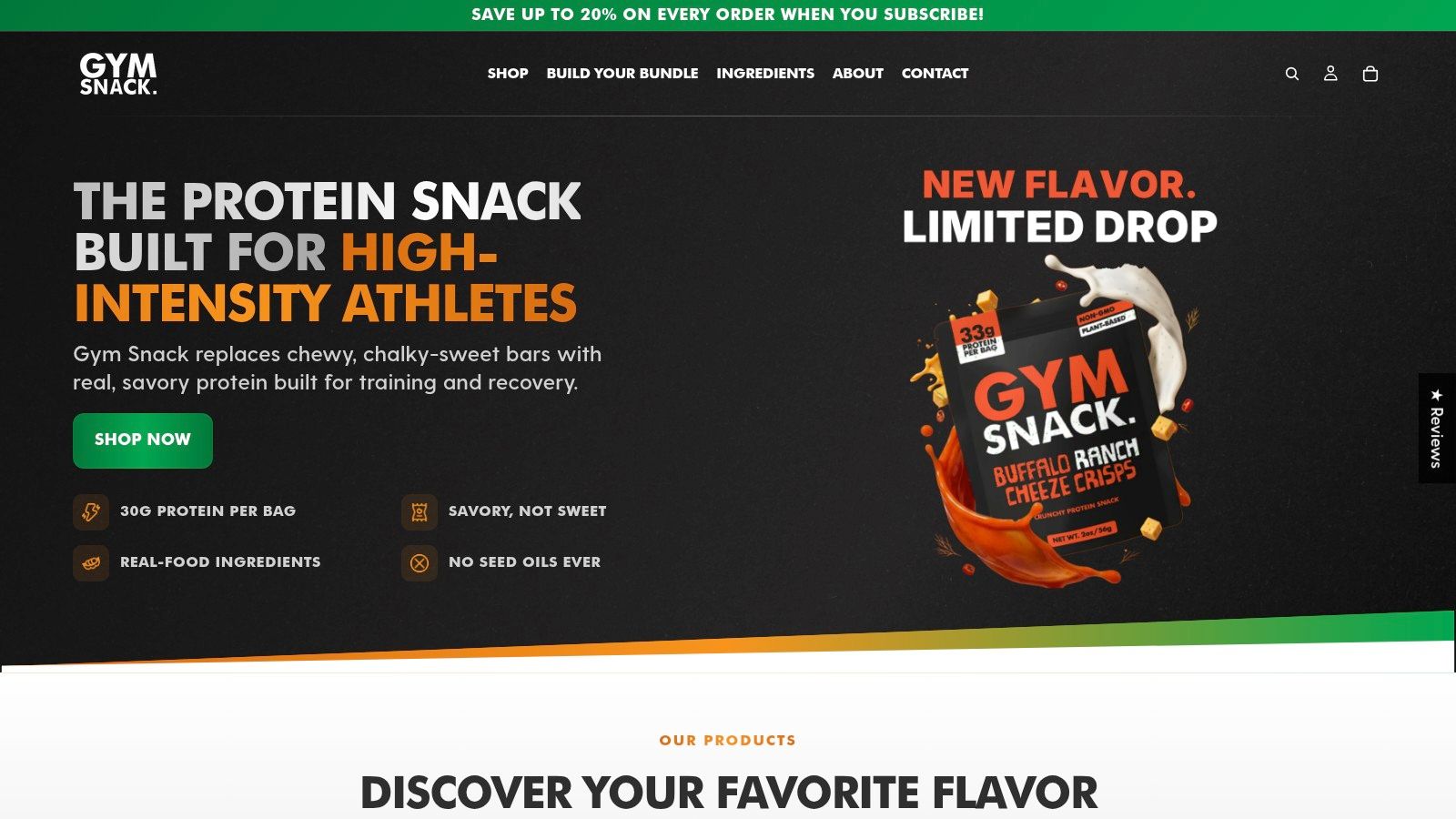
If you're ready to try a different kind of protein snack, Gym Snack is worth a look. It focuses on chef-inspired, plant-based savory protein snacks with bold cheesy flavors, crunchy texture, and transparent ingredients, which makes it a strong option for people who are done with sugary, dessert-like bars and want something that feels more like real fuel.