

You finish a workout, open your gym bag, and stare at the snack you packed. Another cookie-dough bar. Another chocolate brownie flavor. Maybe a strawberry bar that tastes more like candy than food. You want protein, but you also want something that feels satisfying, sits well, and helps you stay on track.
That’s why the pb&j protein bar keeps showing up. It feels familiar. It taps into the comfort of a classic sandwich, but in a smaller, gym-friendly format. For a lot of people, it sounds like the perfect middle ground between nostalgia and nutrition.
The trouble is that “PB&J” on the wrapper doesn’t tell you much. One bar might be a practical snack with balanced macros and decent ingredients. Another might be mostly sweeteners, syrups, and fillers with a little protein added for marketing. If you’re managing hunger carefully, trying to avoid dairy, or burned out on dessert-style snacks, the choice gets more complicated.
If you’ve been trying to increase protein intake without feeling like every snack has to taste like a frosted treat, you’re not alone. A lot of active people are asking the same question: is a sweet PB&J-style bar still the smartest option, or has the better answer changed?
The Modern Fitness Dilemma The PB&J Comeback
A common scene plays out after training. You’re hungry enough that a plain shake won’t cut it, but you don’t want a heavy meal yet. You want something portable, easy to digest, and comforting.
That’s where PB&J has always had an advantage. The flavor is widely understood. Peanut butter brings richness. The fruit layer adds sweetness and familiarity. As a concept, it feels less clinical than many sports nutrition products.
Why this flavor keeps working
PB&J hits an emotional nerve. It reminds people of lunchboxes, quick breakfasts, and simple food that didn’t need a wellness label to feel good. Turning that flavor into a protein bar makes sense because it solves a real problem. You can carry it anywhere, eat it quickly, and get some protein without preparing a full meal.
But convenience can hide trade-offs.
A bar can look wholesome because it says “peanut butter” and “jelly,” while still leaning heavily on sweeteners and ultra-processed texture systems. That doesn’t automatically make it bad. It just means you have to read beyond the front of the package.
A familiar flavor can make a product easier to eat consistently. It doesn’t automatically make the product well formulated.
Why people are second-guessing sweet bars
Many active adults now have a different goal than they did a few years ago. They’re not only chasing protein. They’re also trying to manage appetite, reduce crashes, avoid digestive irritation, and get away from constant sweetness.
That matters even more for people using GLP-1 medications, or for anyone who notices that dessert-like snacks can keep the “I want something sweet” loop going. A PB&J protein bar may still fit your routine. But it’s worth asking whether it’s helping you feel done eating, or just giving you a protein-flavored version of the same old craving.
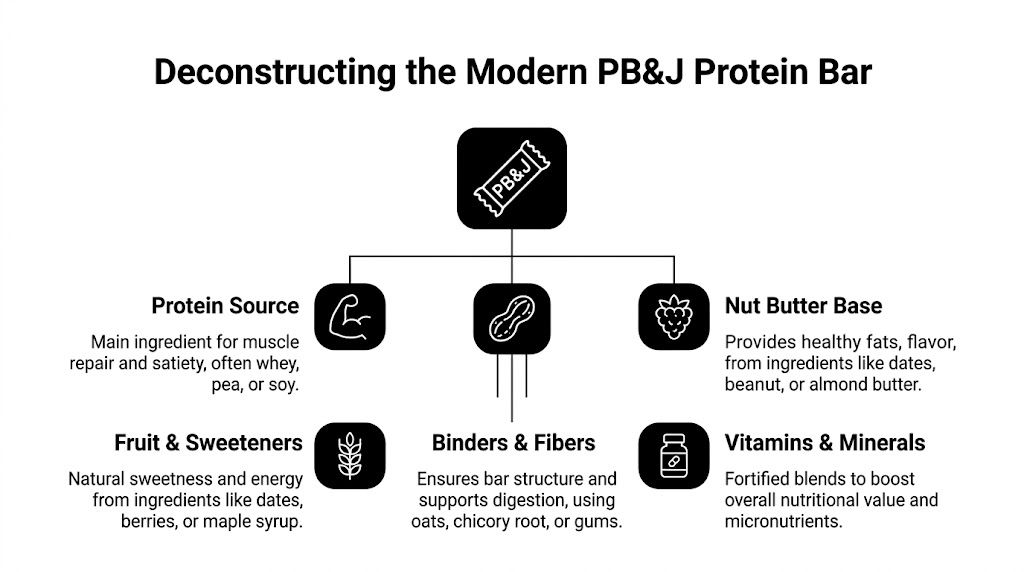
Deconstructing the Modern PB&J Protein Bar
Many consumers flip a bar over, glance at protein grams, then decide in about five seconds. That’s understandable, but it misses what shapes how the bar feels in your body.
A PB&J protein bar usually has five moving parts. Once you understand those, labels become much easier to read.
The protein source
This is the backbone of the bar. Common options include whey, milk protein, soy, and pea protein.
Each behaves differently. Whey tends to be common in mainstream bars. Pea protein is often used in vegan products. If you want a better primer on complete protein sources, that guide is useful because it helps explain why some brands combine proteins rather than relying on one alone.
What matters in practice is this: the source affects texture, digestibility, allergy fit, and how filling the bar feels.
The peanut butter part
This layer does more than provide flavor. Nut butter helps bind the bar, softens texture, and adds fat, which can make the product more satisfying.
A peanut base usually gives you the “real food” impression people expect from PB&J. But it can also make the bar denser and richer. For some people, that’s a plus. For others, especially before training, it may feel a little heavy.
The jelly element
Labels can become deceptive.
In one product, the jelly note may come from real fruit powders or freeze-dried berries. In another, it may come mostly from sweetened fruit paste, flavored syrup, or a gel center designed to mimic jam. The flavor can be similar, but the eating experience can be very different.
If the fruit component is mostly there for taste, the bar may lean more candy-like. If it includes real berry ingredients, the flavor often tastes less sharp and more natural.
The binders and fibers
Bars need structure. That usually comes from ingredients like oats, chicory root fiber, gums, syrups, or similar binding agents.
These ingredients do a lot of behind-the-scenes work:
- Shape and stability: They stop the bar from crumbling in the wrapper.
- Texture control: They create chewiness, crispiness, or softness.
- Digestive effect: Some fibers help fullness. Others can leave sensitive people bloated or gassy.
Many readers often become confused. “More fiber” sounds automatically better, but type matters. A bar that feels fine for one person may cause discomfort for another.
Sweeteners and finishing ingredients
The final layer is what often determines whether the bar feels balanced or overly dessert-like. Some use sugar. Some use sugar alcohols. Some use low-calorie sweeteners. Many use a blend.
A sweet bar isn’t automatically a poor choice. But the more a bar chases candy-bar flavor, the more likely it is to appeal to your sweet tooth instead of helping you move past it.
Practical rule: Read the ingredient list like a recipe. The first few items usually tell you whether the bar is built around protein and whole-food style ingredients, or around sweeteners and texture tricks.
Pros and Cons for Your Specific Goals
A PB&J protein bar can be helpful, neutral, or frustrating depending on who’s eating it. The same wrapper can solve one person’s problem and create another person’s.

For general fitness enthusiasts
If you lift, run, or train around a busy workday, these bars can be useful because they’re portable and predictable. You know what you’re getting. You don’t need refrigeration. You can keep one in a bag or car for backup.
The downside is that some bars feel more like a treat than a recovery tool. If you finish one and still want “something else,” the bar may not be matching your real need for fullness.
A good fit:
- Busy schedule: You need a shelf-stable option for pre- or post-workout.
- Taste compliance: You’re more likely to eat something familiar than a plain protein drink.
- Portion control: A wrapped bar can be easier to manage than grabbing random snacks.
A less ideal fit:
- Sweet fatigue: You’re tired of dessert flavors.
- Digestive sensitivity: Chewy bars with certain fibers or sweeteners may not sit well.
- Low-appetite phases: Dense bars can feel like work to eat.
For plant-based eaters
This group has a more specific challenge. Many mainstream PB&J bars still rely on dairy proteins. That limits options if you’re vegan or avoiding milk.
One product page often cited in this space shows how common that pattern is. Quest’s PB&J-style bar uses milk and whey, and the broader category still leans heavily dairy-based. The same discussion around that market points to a notable gap: plant-based protein snacks grew 18% in 2025 and vegan shoppers still face limited clean PB&J-style choices free of dairy, soy, and seed oils (Quest Nutrition product page).
That doesn’t mean plant-based PB&J bars don’t exist. It means you may have to search harder and read labels more carefully.
For weight management and GLP-1 users
Nuance is especially important.
A sweet protein bar may technically fit your macros and still not be your best practical option. If you’re trying to calm appetite signals, reduce grazing, or avoid foods that keep dessert cravings alive, a PB&J bar can be hit or miss.
Some people do well with them because the portion is controlled and the flavor is satisfying enough. Others find that a sweet bar keeps the palate looking for more sweetness later.
Here’s the simplest way I’d frame it:
| Goal | Potential benefit | Potential drawback |
|---|---|---|
| Convenience | Easy to carry and eat fast | Easy to over-rely on instead of building fuller meals |
| Protein support | Can help close a daily gap | Protein alone doesn’t guarantee satiety |
| Craving control | Familiar flavor may prevent random snacking | Sweet taste can keep the reward loop going |
If your main struggle is hunger, don’t judge a bar only by protein grams. Judge it by what happens an hour later.
How to Choose a Genuinely Healthy PB&J Bar
If you want a simple filter, ignore the front label first. The essential information is on the nutrition panel and ingredient list.
Start with balance, not branding
One useful real-world example is the dotFIT PB&J dotBAR. It provides 15g protein per 50g bar, 6g total sugars, and 2g sugar alcohols, and the company describes the formulation as having a low glycemic impact because soluble fibers and protein slow carbohydrate digestion. It also states this combination can reduce postprandial blood glucose spikes by 25 to 35% compared with high-sugar bars (dotFIT dotBAR PB&J).
That kind of profile gives you a practical model. You’re looking for a bar where protein, sugars, fiber, and sweetener load feel intentional rather than random.
If you want a broader shopping framework, this guide to the healthiest protein bar can help you compare products with a more critical eye.
A label-reading checklist that actually works
Use this quick screen in the aisle:
- Check the protein first. If the flavor sounds indulgent but the protein is modest, it may be acting more like candy with a health halo.
- Look at sugar next. A PB&J flavor will naturally include sweetness, but that sweetness shouldn’t overwhelm the rest of the formula.
- Scan for the source of sweetness. Fruit powders and nut butter read differently from syrups layered with multiple sweeteners.
- Read the protein type. Whey, milk protein, soy, and pea each have different implications for digestion and dietary fit.
- Notice the texture ingredients. A long list of gums, syrups, and coating agents usually tells you the product is chasing a very engineered mouthfeel.
Questions that prevent impulse buys
Ask yourself three things before you toss a bar into your cart:
- Will this fit my stomach? Some people handle bars well. Others do better with simpler ingredient lists.
- Will this keep me full? If you tend to stay hungry after sweet snacks, be honest about that pattern.
- Am I buying it because it sounds healthy or because it is balanced? Those are not always the same thing.
A healthy bar should make your day easier. It shouldn’t create a second round of cravings, bloating, or label confusion.
The Rise of Savory Protein and The End of Flavor Fatigue
A lot of active people don’t need another bar that tastes like jam-filled candy. They need a snack they can eat regularly without feeling like they’re forcing down dessert after dessert.
That’s where flavor fatigue comes in. Even if you liked sweet protein products at first, constant exposure can make them less appealing. Some people keep buying them anyway because they assume protein snacks are supposed to be sweet.
Sweet isn’t always the most functional choice
A savory snack can do something sweet products often don’t. It can signal “meal-like” rather than “treat-like.”
That matters if you’re trying to feel settled after eating. For many people, crunchy and savory foods create a stronger sense of completion than soft, sweet bars. They also fit more naturally into the middle of the day, when you may want fuel without triggering a dessert mindset.
Why the category is starting to shift
The current market still over-represents dairy-based bars. As noted earlier, plant-based shoppers often find fewer clean options in PB&J formats. That mismatch is one reason savory protein is becoming more interesting. It doesn’t have to imitate candy to be enjoyable.
For vegan eaters, dairy-free shoppers, and people avoiding soy or seed oils, a savory option can feel less like a compromise and more like a modern answer to an old problem.
You can see that shift in the growing interest around savory high-protein snacks. The appeal isn’t only novelty. It’s function.
When a PB&J bar still makes sense, and when it doesn’t
There’s still a place for the classic flavor. It can work well when you want convenience and comfort. But it may not be the best everyday anchor snack if:
- You’re burned out on sweet products
- You’re trying to manage appetite tightly
- You avoid dairy or other common allergens
- You want crunch instead of chew
A smart nutrition routine doesn’t need to be anti-PB&J. It just shouldn’t assume that sweet is the default.
Some people don’t need a sweeter protein bar. They need a different sensory experience entirely.
Use Case A Better Allergen Conscious Gym Snack
Consider the athlete who trains early, works all day, and has a sensitive stomach. They want protein before or after the gym, but many bars contain dairy, soy, gluten, or a mix of ingredients that leave them feeling off.
For that person, the usual PB&J protein bar can become a frustrating compromise. The flavor may be fine, but the formula may not be.
Where standard bars fall short
Many sweet bars are built around chewiness and indulgence. That often means dense binders, layered sweeteners, dairy proteins, or highly engineered fillings.
That combination can create several problems at once:
- Allergen friction: Milk-based proteins immediately narrow who can use the product.
- Texture monotony: Soft, sticky, chewy bars all start to feel the same.
- Palate burnout: Repeated sweet flavors can make protein eating feel repetitive.
- Poor situational fit: A dessert-like snack doesn’t always sound good after a hard session.
What a better option looks like
A more functional gym snack for this person would be:
| Need | Better snack characteristic |
|---|---|
| Protein support | Built around a clear plant protein source |
| Allergen awareness | Free from common triggers the person knows they don’t tolerate |
| Satisfaction | Crunchy enough to feel like real eating |
| Satiety support | Savory flavor that doesn’t push the sweet-craving cycle |
This is especially relevant for GLP-1 users and anyone in a calorie-aware phase. A snack that feels savory and complete may work better than one that tastes like a controlled dessert.
Why crunch and savory can matter more than people realize
Texture changes behavior. A crunchy snack slows you down. It often feels more substantial than a soft bar eaten in four bites. Savory flavor can also help mark the end of eating, rather than nudging you toward a sweet follow-up.
That doesn’t mean everyone should stop buying PB&J bars. It means the “best” protein snack depends on more than macros. It depends on the full eating experience.
If a snack checks the nutrition box but leaves you unsatisfied, it’s only doing half the job.
Craft Your Own Clean PB&J Protein Bars at Home
Homemade bars are worth it if you want control. You choose the protein, the sweetness, the texture, and the ingredients your stomach likes.
That’s especially helpful if store-bought PB&J bars taste too sweet or rely on proteins you avoid.

A simple clean formula
Try this no-fuss approach:
Base
- Peanut butter: Use a drippy style with minimal ingredients
- Pea protein powder: Keeps the recipe dairy-free
- Rolled oats: Adds structure
- A pinch of salt: Brings out the PB&J flavor
- A small amount of liquid sweetener if needed: Just enough to help bind
Jelly layer
- Freeze-dried strawberries or blueberries, crushed
- A little warm water to make a spread
- Optional chia seeds if you like a thicker texture
Press half the base into a lined pan, spread the fruit layer thinly, then add the remaining base on top. Chill until firm and slice into bars.
Why these ingredients work
A recipe built around pea protein can be more than a vegan substitute. In homemade vegan PB&J bars, pea protein isolates can provide 85 to 90% protein bioavailability, and a freeze-dried berry layer can deliver 50 to 100mg anthocyanins per bar, with support for GLP-1 activity and satiety hormones rising 15 to 25% over two hours (Purely Kaylie PB&J protein bars).
In plain language, that means your homemade version can do more than taste good. It can be designed to feel more filling and gentler for people who want a dairy-free option.
If you like experimenting with portable snacks beyond PB&J, this raw chocolate protein bar recipe is another helpful example of how simple ingredient builds can work well.
Keep the recipe practical
Homemade bars don’t need to be perfect. They need to be repeatable.
A few ways to make them easier:
- Keep sweetness modest: Let the fruit do most of the flavor work.
- Make a small batch first: That helps you test texture before scaling up.
- Use parchment: It makes slicing and storing much easier.
- Store in the fridge: The bars hold shape better and taste cleaner cold.
If you’d rather watch the process before trying it, this video gives a useful visual reference:
Homemade PB&J bars are a solid option when you want familiarity without the ingredient list getting away from you. They also teach you something valuable. Sometimes the best protein snack isn’t the sweetest one. It’s the one built to match your appetite, your digestion, and your actual routine.
If you’re ready to move beyond dessert-style bars, Gym Snack offers a different kind of protein option. Their chef-inspired, plant-based savory snacks are built around clean pea protein, crunchy texture, and bold flavor, with allergen-conscious ingredients that fit real training days. It’s a smart choice for anyone who wants satisfying protein without the candy-bar vibe.