

For athletes, switching to a plant-based diet isn't just about ethics or the environment—it's a serious performance strategy. Done right, a plant-based approach can sharpen your competitive edge, help you recover faster, and support your long-term health in ways that traditional athletic diets often miss. It’s not a compromise; it’s a tool for excellence.
Can Athletes Really Excel On a Plant-Based Diet?
Let's clear the air on the biggest question right away: Can you actually crush your goals and dominate your sport without eating meat? Absolutely. We're seeing more and more elite athletes, from record-breaking runners to tennis superstars, not just surviving but thriving on plants. For them, a well-executed plant-based diet for athletes is a game-changer.
Think of your body like a high-performance race car. You wouldn't put dirty, low-grade fuel in it and expect peak performance. A plant-based diet is like premium, clean-burning fuel. It's loaded with the antioxidants and anti-inflammatory compounds your body needs to minimize muscle soreness, slash recovery time, and keep your cardiovascular system running smoothly. The result? You can train harder, more often, and with greater intensity.
The Plant-Powered Performance Edge
The discussion isn't about whether a plant-based diet works for athletes anymore. We're past that. Now, the real question is how to use it to unlock your full potential. The proof isn't just in the pudding (or the protein shake); the science is backing it up. Studies consistently show that plant-based athletes tend to have healthier hearts and leaner body compositions.
Here’s where you’ll see the difference:
- Less Inflammation: Plants are bursting with phytonutrients that naturally cool the inflammation that causes post-workout pain and can lead to nagging injuries.
- Better Blood Flow: Because plant-based diets are typically low in saturated fat and cholesterol, they help keep your arteries clear and flexible. This means more oxygen gets delivered to your hardworking muscles, which directly translates to better endurance and power.
- Quicker Recovery: The massive antioxidant load from fruits, vegetables, and whole grains fights the oxidative stress caused by tough workouts. This lets your body get down to the business of repairing and rebuilding muscle tissue much faster.
A common myth is that you'll lose power if you ditch animal products. But the evidence actually points in the other direction, especially for endurance athletes. One major meta-analysis found that while strength and power held steady, plant-based diets gave a distinct advantage in aerobic performance.
This completely turns the old-school thinking on its head. This guide is your roadmap to building a powerful, plant-fueled foundation for your sport, leaving the myths behind. To dig deeper into the science, check out the findings published in the British Journal of Nutrition.
Building Your Plant-Powered Engine
To get the most out of your body, you have to fuel it with intention. A plant-based diet for athletes isn't about restriction; it's about strategically building a high-performance engine with the right mix of macronutrients—protein, carbohydrates, and fats. It's time to move past the old, tired questions about protein and create a real, practical blueprint for your nutrition.
Think of your macros as the core components of high-octane fuel. Carbohydrates are your immediate energy source, fats provide that long-haul power and help fight inflammation, and protein is the non-negotiable building block for repairing and growing muscle. Each one plays a make-or-break role in how you train, perform, and bounce back.
The Power of Plant Protein
Let's get this out of the way first: the myth that you can't get enough high-quality protein from plants is just that—a myth. Plant sources absolutely can provide all the essential amino acids your muscles are crying out for after a tough session. The real secret isn't some magic food, but consistency and variety in what you eat.
When you're building your plant-powered engine, a big part of the puzzle is understanding protein sources. Many athletes actually discover that plants give them a unique edge. Unlike animal products, plant proteins come naturally packaged with fiber, antioxidants, and anti-inflammatory compounds that boost your overall health and recovery.
For a deeper dive into hitting your protein goals, our guide on how to get enough protein on a plant-based diet breaks it all down.
Here are some of my go-to plant protein powerhouses:
- Lentils: A fantastic workhorse for protein and fiber. They're perfect for hearty soups, stews, or a quick salad. Just one cooked cup gives you about 18 grams of protein.
- Tofu and Tempeh: These soybean-based staples are incredibly versatile and soak up any flavor you throw at them. A single serving of tempeh can easily deliver over 20 grams of protein.
- Seitan: Known as "wheat meat," seitan is a protein monster. Its chewy, meat-like texture is satisfying, and it can pack 25 grams of protein or more into a serving.
- Beans and Chickpeas: Don't overlook these budget-friendly heroes. Kidney beans, black beans, and chickpeas offer a solid one-two punch of protein and carbs, which is ideal for sustained energy.
Your protein needs are personal. An ultra-runner's fuel plan will look very different from a powerlifter's, but both can absolutely crush their goals with a well-designed, plant-based approach.
Fueling Performance With Carbohydrates And Fats
Carbohydrates are what make your engine go. For any serious athlete, focusing on complex carbohydrates is key to avoiding the dreaded energy crash. Simple sugars give you a quick spike and an even quicker drop, but complex carbs from sources like oats, quinoa, brown rice, and sweet potatoes deliver a steady, reliable stream of fuel to power you through.
Healthy fats are just as critical, especially when it comes to taming inflammation and keeping your joints happy. An anti-inflammatory diet is like a secret weapon for faster recovery.
Make sure you're getting these healthy fats in daily:
- Avocados: Loaded with heart-healthy monounsaturated fats and potassium.
- Nuts and Seeds: Walnuts, chia seeds, and flaxseeds are fantastic sources of omega-3 fatty acids, which are famous for their inflammation-fighting power.
- Olive Oil: A kitchen staple for good reason—it’s great for your heart and helps keep inflammation in check.
This infographic breaks down some of the key performance perks that come with a nutrient-rich, plant-forward diet.
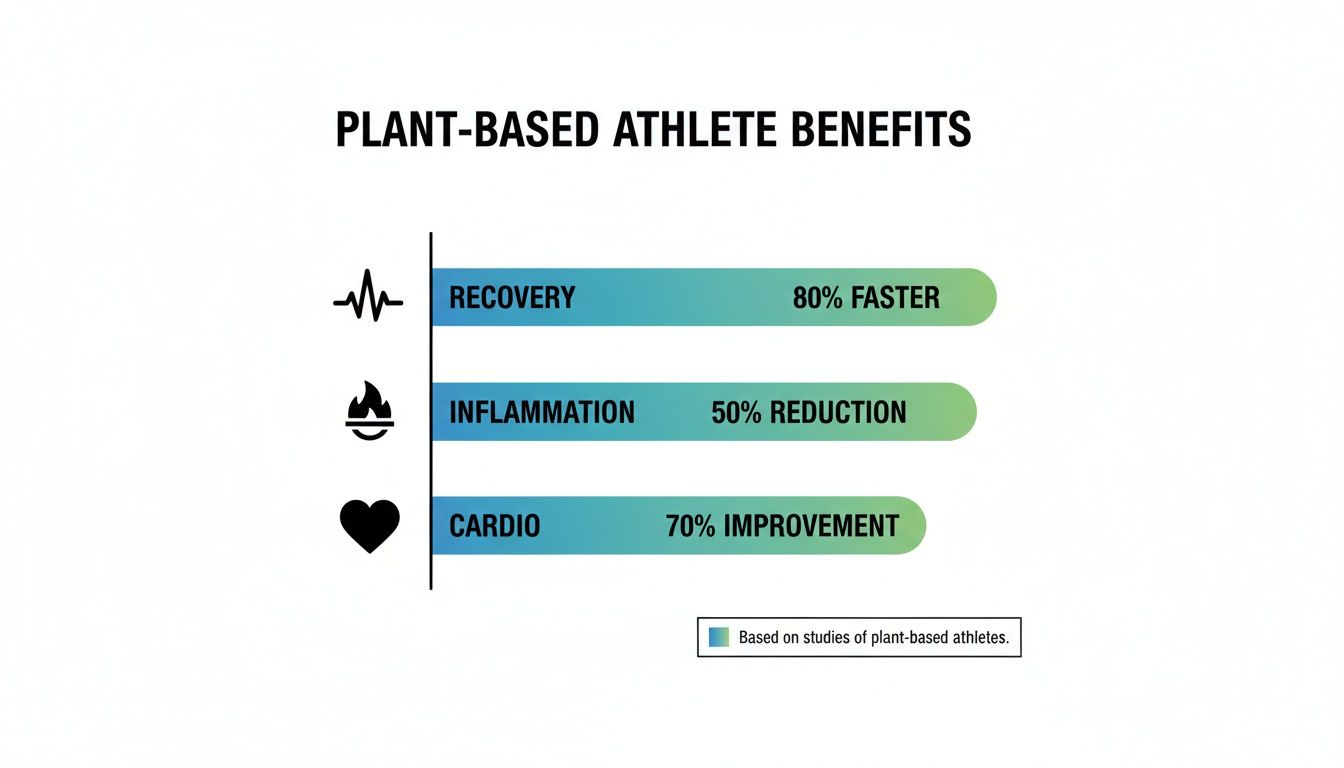
The numbers really speak for themselves. This kind of eating can directly impact how well you recover, manage inflammation, and maintain cardiovascular health—all essential for staying in the game long-term.
Calculating Your Macronutrient Needs
So, what does this all mean for your plate? While everyone’s needs are a bit different based on their metabolism, training load, and goals, we can use some solid guidelines as a starting point. The most important thing is to listen to your body and be ready to tweak things as you go.
Here's a handy table to help you dial in your protein targets.
Plant-Based Protein Needs for Different Athlete Types
This table gives you a starting point for daily protein intake based on your sport, plus some real-world examples of how to get there with plant-based foods.
| Athlete Type | Protein Requirement (g/kg body weight) | Example Daily Protein Sources for a 75kg Athlete |
|---|---|---|
| Endurance Athlete | 1.2–1.4 g/kg (90–105g) | Breakfast smoothie with protein powder (25g), large lentil salad for lunch (20g), tofu stir-fry for dinner (25g), and snacks like nuts and seeds (20g). |
| Strength Athlete | 1.6–2.2 g/kg (120–165g) | Seitan and black bean burrito for lunch (40g), tempeh and quinoa bowl for dinner (40g), two protein shakes (50g), plus high-protein snacks like roasted chickpeas (15g). |
| Team Sport Athlete | 1.4–1.7 g/kg (105–128g) | Oatmeal with nuts and seeds for breakfast (15g), chickpea curry for lunch (20g), lentil pasta for dinner (25g), a protein bar (20g), and a protein shake (25g). |
Treat these numbers as your nutritional framework. When you pair powerful plant proteins with energy-sustaining carbs and anti-inflammatory fats, you’re not just eating—you’re building a body engineered for peak performance.
Micronutrients: The Unsung Heroes of Performance
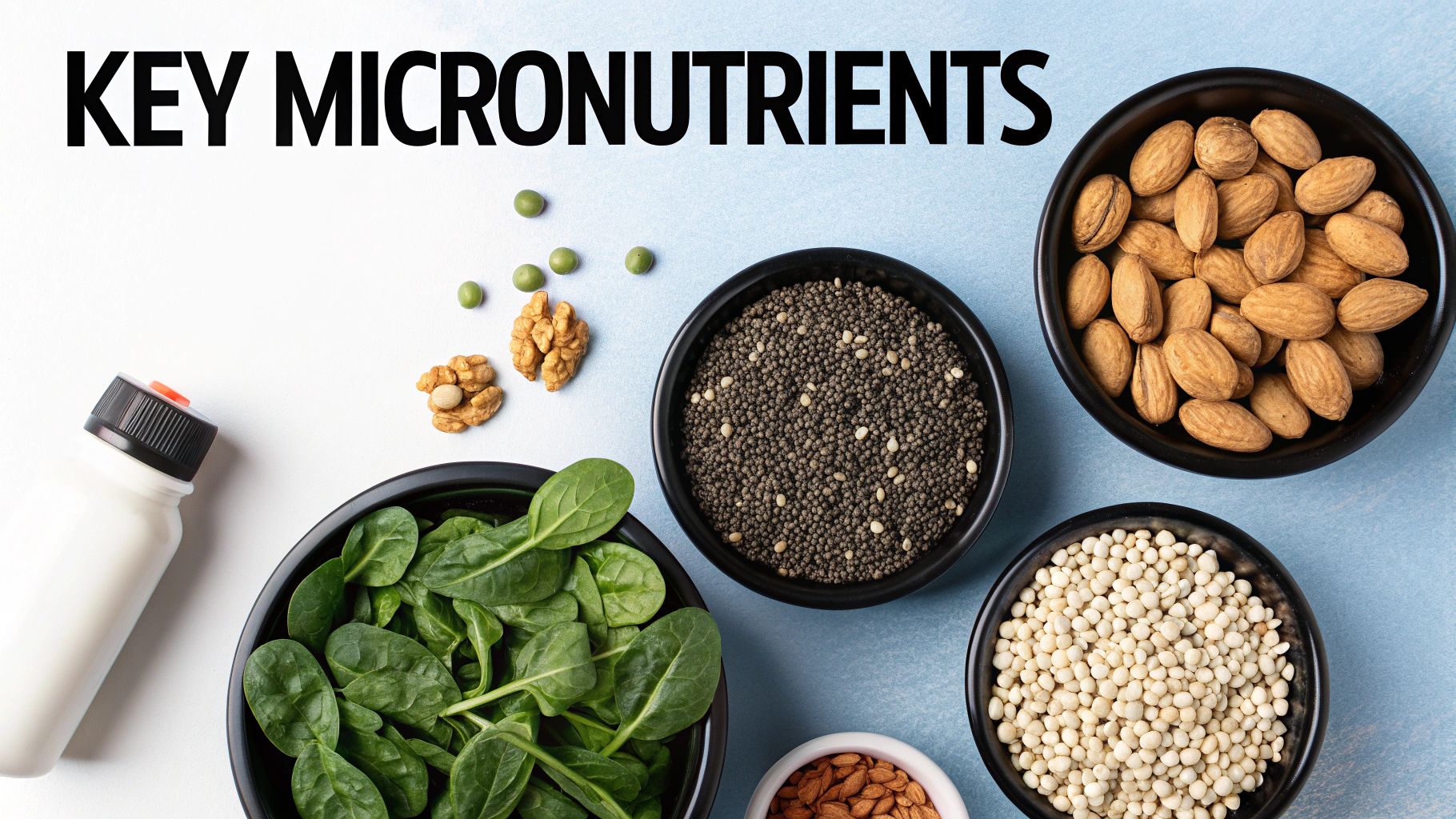
While everyone talks about protein and carbs, micronutrients are the secret MVPs of your athletic performance. They’re the spark plugs in your engine. Without them, all that high-quality fuel you're taking in—the protein, carbs, and fats—just can't be used properly. For any athlete on a plant-based diet, mastering your micronutrient intake is what separates feeling good from feeling unbeatable.
These vitamins and minerals are involved in literally everything: turning food into energy, getting oxygen to your muscles, even the firing of every muscle contraction. If you neglect them, you’re looking at fatigue, sluggish recovery, and a higher risk of getting sidelined by an injury. A well-planned plant-based diet has you covered, but it definitely requires being strategic.
The Essential Role of Iron
Iron is a total game-changer for athletes. Its main job is to help create hemoglobin, the protein in your red blood cells that acts like a delivery truck, shuttling oxygen from your lungs to your hard-working muscles. Run low on oxygen, and you hit that wall. Hard.
Plant-based diets provide non-heme iron, which the body doesn't absorb as easily as the heme iron found in meat. But don't worry, this is a simple fix with a bit of kitchen smarts.
Here’s how to get the most out of your iron:
- Pair with Vitamin C: This is the golden rule. Eating iron-rich foods like lentils, spinach, or tofu alongside something high in Vitamin C—think bell peppers, broccoli, or a squeeze of lemon—can seriously boost absorption.
- Watch for Blockers: The tannins in coffee and tea can get in the way of iron absorption. Try to enjoy them an hour or so before or after your iron-rich meals, not during.
- Cook in Cast Iron: It might sound old-school, but cooking in a cast-iron pan can actually add a small amount of usable iron to your food.
Want to dive deeper? Our complete guide to iron-rich plant-based foods has a full list and more practical tips.
Why Vitamin B12 is Non-Negotiable
Vitamin B12 is critical for a healthy nervous system and making red blood cells. A deficiency can lead to crippling fatigue and even neurological damage—a disaster for any athlete. Here’s the catch: B12 is made by bacteria, not plants, making it nearly impossible to get enough from a plant-based diet alone.
For plant-based athletes, B12 supplementation isn't just a good idea—it's an absolute necessity. There’s no natural B12 in plant foods, so a supplement or fortified foods are the only reliable ways to meet your body's needs.
Don’t gamble on this one. While you can find it in fortified foods like nutritional yeast or plant milks, the safest bet for consistent intake is a simple, reliable B12 supplement.
Building Stronger Bones with Calcium and Vitamin D
Athletes put a ton of stress on their skeletons, so bone health has to be a top priority. Calcium is the building block for strong bones, but Vitamin D is the key that unlocks the door, allowing your body to absorb that calcium. They have to work as a team.
You don't need dairy to get enough calcium. Plenty of plants are loaded with it:
- Fortified Plant Milks: Soy, almond, and oat milks are often fortified with even more calcium than dairy milk.
- Leafy Greens: Collard greens, kale, and bok choy are fantastic sources.
- Tofu and Tempeh: Look for calcium-set tofu to get a one-two punch of protein and bone-building minerals.
Your best source of Vitamin D is direct sunlight. But depending on where you live and the time of year, getting enough can be tough, so a supplement is often a smart move to support both your bones and your immune system.
Omega-3s: The Anti-Inflammatory Powerhouse
Intense training naturally causes inflammation. While a little bit is necessary for your muscles to adapt and grow stronger, chronic inflammation will sabotage your recovery and pave the way for injury. Omega-3 fatty acids are incredibly powerful anti-inflammatories that help you cool down and bounce back faster.
On a plant-based diet, you’ll focus on ALA (alpha-linolenic acid), which your body then converts into the active forms, EPA and DHA.
- Flaxseeds: Just one tablespoon of ground flaxseed a day is a game-changer.
- Chia Seeds: These little guys are packed with omega-3s and are perfect for smoothies or puddings.
- Walnuts: The perfect snack for a dose of healthy fats and anti-inflammatory power.
For those looking to optimize recovery, many athletes also turn to the best supplements for endurance athletes to complement their diet and cover all their bases.
Mastering Your Meal Timing for Fuel and Recovery
Becoming a high-performing athlete isn't just about what you eat, but when you eat. For anyone on a plant-based diet, getting your meal timing right is like having a perfectly synchronized pit crew for a race car. It ensures you have the exact fuel you need, right when you need it, to perform at your best, recover faster, and come back even stronger.
Think of your nutrition strategy in three key windows: the pre-workout fuel-up, mid-workout energy maintenance, and the all-important post-workout recovery phase. Each one serves a unique purpose and calls for a different mix of nutrients to get the most out of your training.
Pre-Workout: Fueling the Right Way
Before a workout, the goal is straightforward: top off your muscle glycogen—your body’s main energy tank—and make sure you have fuel that's ready to go. The trick is to consume carbohydrates that are easy to digest so you don't end up with an upset stomach mid-session.
Ideally, you'll eat a solid meal about 2-3 hours before you start. This meal should be packed with complex carbs and have a moderate amount of protein. It's your foundational fuel for the work ahead.
But we all know life gets in the way. If you’re short on time and training in the next hour, a smaller, simpler snack is the way to go. Focus on carbs that act fast to give you that immediate pop of energy without weighing you down.
- 2-3 Hours Before: Think a bowl of oatmeal with berries and a scoop of plant-based protein, or maybe a quinoa bowl with roasted sweet potatoes and chickpeas.
- 30-60 Minutes Before: A banana, a few dates, or a small glass of fruit juice will do the trick.
The last thing you want is a heavy meal sitting in your stomach. Steer clear of high-fat or high-fiber foods right before you train, as they slow down digestion and can leave you feeling sluggish or crampy.
Intra-Workout: Fueling for Endurance
For most workouts under 60-75 minutes, you probably don’t need to eat anything during the session itself. A good pre-workout meal and proper hydration should be enough. But if you're tackling something longer, like a marathon, a long bike ride, or an all-day tournament, fueling mid-workout becomes absolutely critical to avoid hitting "the wall."
The goal here is to keep your blood glucose levels stable so you don't burn through your stored muscle glycogen too quickly. You'll want simple, fast-absorbing carbohydrates that are easy to get down while you're on the move.
For any prolonged activity, your target should be 30-60 grams of carbohydrates per hour. This isn't the time for a full meal—think liquid or gel-based fuel for quick absorption with minimal fuss.
- Energy Gels: These are a super convenient, concentrated shot of simple carbs.
- Sports Drinks: They pull double duty, giving you carbs, fluids, and electrolytes all at once.
- Easy-to-Eat Fruits: A banana or a few orange slices can work great if your stomach tolerates them during exercise.
Don't forget about hydration, either. Sipping on water and electrolyte drinks is non-negotiable to prevent dehydration, which can absolutely tank your performance.
Post-Workout: Recovery and Rebuilding
This is it—the post-workout window. It's arguably the most important time for making progress. After you've pushed your body to its limits, your muscles are like sponges, primed and ready to soak up nutrients to repair all that microscopic damage and restock your energy stores. Your two main jobs are replenishing glycogen and delivering protein to kickstart the muscle-building process.
Try to get a meal or snack in within 30-90 minutes of finishing your workout. The perfect recovery meal has both carbs and protein, typically in a 3:1 or 4:1 ratio (carbs to protein). The carbs rush to refill your glycogen tanks, while the protein provides the essential amino acids for muscle repair.
This is a great opportunity to dive deeper into what foods help muscle recovery and really dial in your strategy.
Here are a few powerhouse plant-based recovery options:
- Chocolate Soy Milk: It has a nearly perfect carb-to-protein ratio and is great for rehydration.
- Protein Smoothie: Just blend some plant-based protein powder with a banana, a handful of spinach, and some almond milk. Easy.
- Lentil and Rice Bowl: A fantastic whole-food meal that delivers complex carbs and complete protein for sustained recovery.
By mastering these three windows, you're no longer just eating. You're using food as a strategic tool to unlock your peak performance.
Your Daily Plant-Based Meal Plan
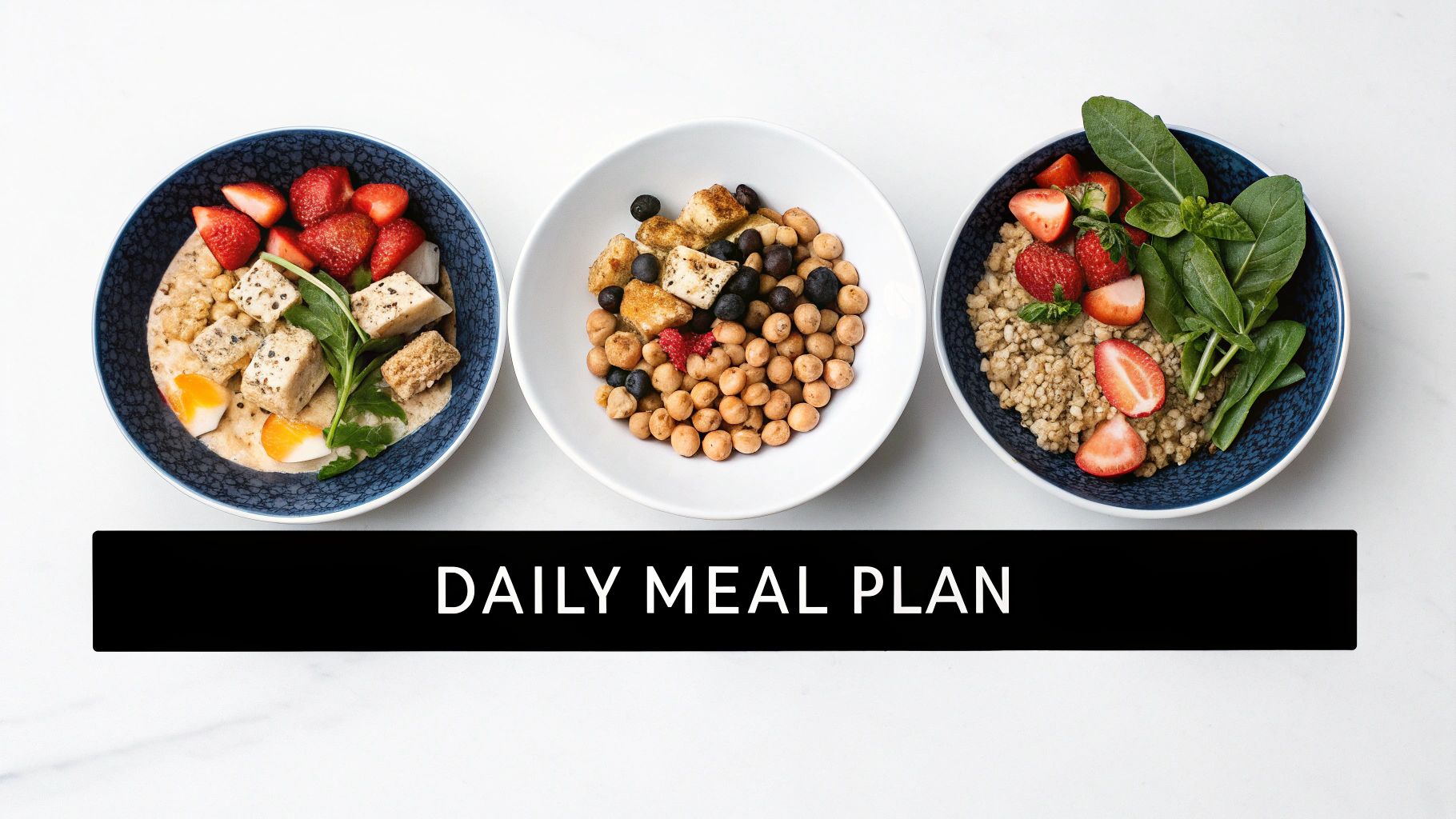
This is where the theory hits the plate. A successful plant-based diet for athletes isn’t about a single magic meal. It’s about creating a flexible, consistent framework you can rely on day in and day out, no matter what your training schedule throws at you.
Think of the following plans as starting blocks, not rigid prescriptions. Use them for inspiration, but always listen to your body’s hunger signals. You’ll need to adjust portion sizes based on your training intensity, body weight, and specific goals. Each plan is built around whole foods to give you that powerful one-two punch of macronutrients and micronutrients.
The Endurance Athlete
If you’re logging long miles, you need a steady drip of complex carbs to fuel your engine. You also need plenty of protein to repair muscle breakdown and healthy fats to keep inflammation in check.
- Breakfast: A big bowl of oatmeal made with soy milk, topped with a sliced banana, a tablespoon of chia seeds, and a handful of walnuts. This combo provides a slow, sustained energy release perfect for long efforts.
- Lunch: A hearty quinoa bowl is your best friend. Load it up with roasted sweet potatoes, black beans, corn, and avocado, then drizzle with a lime-tahini dressing to restock glycogen and deliver quality protein.
- Dinner: Think lentil pasta with a rich marinara sauce packed with veggies like zucchini and bell peppers. Serve it with a side of steamed broccoli for a boost of iron and vitamin C.
- Snacks: Dates stuffed with almond butter are a perfect pre-run fuel source. Post-workout, a smoothie with plant-based protein powder, spinach, and mixed berries is ideal for recovery.
The Strength Athlete
For strength and power, the game changes. Your focus shifts to a higher protein intake to drive muscle protein synthesis and support growth. Carbs are still crucial, but they’re used more strategically to fuel those intense lifting sessions.
- Breakfast: A tofu scramble is a classic for a reason. Cook it with turmeric and black salt, mix in some onions and spinach, and serve it with whole-grain toast and avocado.
- Lunch: Go big with a burrito stuffed with seasoned seitan, brown rice, pinto beans, salsa, and guacamole. It’s a massive protein and calorie punch to fuel gains.
- Dinner: A baked tempeh steak marinated in tamari and ginger is a fantastic centerpiece. Pair it with mashed sweet potatoes and roasted asparagus.
- Snacks: A post-workout shake with 30g of pea protein is non-negotiable for many. A bowl of Greek-style soy yogurt with high-protein granola also works great.
A well-structured plant-based diet also offers a significant advantage for body composition. Research involving over 9,600 people found that those following a plant-based diet saw the greatest reductions in BMI, waist circumference, and body fat percentage. This leaner profile can be a major asset in any sport. Discover more insights about these performance benefits.
The Team Sport Athlete
Team sports demand the best of both worlds: explosive power and sustained endurance. Your meals need to reflect this reality, providing a mix of quick energy and long-term recovery fuel.
- Breakfast: Whole-wheat pancakes topped with fresh berries and maple syrup, with a side of plant-based sausage patties. This gives you a great mix of quick-burning carbs and steady protein.
- Lunch: A massive salad built on a base of mixed greens, topped with grilled tofu strips, chickpeas, cucumber, tomatoes, and a light vinaigrette.
- Dinner: A flavorful chickpea and spinach curry made with coconut milk is both satisfying and nutrient-dense. Serve it with a generous portion of brown rice.
- Snacks: It doesn't get much easier than an apple with peanut butter. A handful of edamame is another fantastic option for a quick protein boost between meals or after practice.
Quick and Easy On-the-Go Snacks
Let’s be real—life gets busy. Your schedule won’t always accommodate a perfectly prepped meal, so having some grab-and-go options in your back pocket is key to staying fueled.
- Roasted Chickpeas: Toss a can of chickpeas with smoked paprika and garlic powder, then bake until they’re crispy. They’re a crunchy, savory snack packed with protein and fiber.
- Homemade Energy Balls: In a food processor, blitz together oats, dates, nut butter, and chia seeds. Roll them into bite-sized balls for a super-fast fuel source.
- Savory Protein Snacks: For a high-protein option that isn't another sweet bar, something like Gym Snack is a great choice. It delivers over 15g of plant protein per serving to keep you full and fueled.
- Trail Mix: Make your own! Combine almonds, walnuts, pumpkin seeds, and a little dried fruit for a balanced mix of healthy fats, protein, and carbs.
Got Questions About Going Plant-Based? We've Got Answers.
Making the leap to a high-performance, plant-based diet can feel like stepping into a whole new world. It's totally normal to wonder how this shift will impact your strength, your wallet, and even how you feel day-to-day. Let’s tackle some of the most common hurdles and clear the air so you can make the transition with confidence.
Think of this as your practical, no-nonsense guide. We're here to bust the myths and get straight to what actually matters: fueling your body to be its absolute best.
"Will I Lose My Hard-Earned Muscle and Strength?"
This is almost always the first question athletes ask, and I get it. The good news is, the answer is a resounding no—as long as you’re smart about it. The old-school idea that you need meat for muscle is one of the most stubborn myths in sports nutrition, but both science and countless real-world examples have proven it wrong.
The formula for building and maintaining muscle is the same for everyone: you need enough total calories to fuel your training and enough high-quality protein to repair and rebuild your muscle fibers. A well-designed plant-based diet for athletes can easily deliver on both fronts. By pulling from a wide variety of protein-packed plants, you'll cover all your essential amino acid bases.
Don't just take my word for it. Look at the elite athletes—from Olympic weightlifters to NFL linemen—who are crushing it on a plant-based diet. Their success is living proof that where your protein comes from matters far less than getting enough of it.
"Is This Going to Be Way More Expensive?"
It really doesn't have to be. In fact, many athletes I've worked with actually find they save a good bit of money. Sure, if you fill your cart with specialty vegan meats and cheeses, the bill can add up fast. But those are processed extras, not the foundation of a powerful diet.
The true workhorses of a plant-based athletic diet are some of the most affordable foods in the entire grocery store.
- Pantry Powerhouses: Legumes like beans and lentils, whole grains like oats and brown rice, and humble potatoes are incredibly cheap and nutrient-dense.
- Bulk-Buying Savings: Grabbing these staples from the bulk bins can drop the cost even more.
- Seasonal Smart Shopping: Sticking to fruits and veggies that are in-season is a simple trick to keep your grocery bill down.
Ultimately, the cost comes down to your choices. A diet built on whole foods will almost always be cheaper than one that relies on regular purchases of meat and dairy.
"How Do I Deal With All the Bloating at First?"
Ah, yes. The "fiber effect." It's incredibly common to feel a bit gassy or bloated when you first switch things up. Your digestive system is basically getting a complete overhaul as it adjusts to a massive increase in fiber. It's just your gut microbiome recalibrating—it needs a little time to adapt to the new normal.
The good news is that this is almost always temporary and usually settles down within a couple of weeks. You can make the transition much smoother with a few simple strategies.
- Go Slow with Fiber: Don't go from zero to one hundred overnight. Gradually increase your intake of high-fiber foods like beans, lentils, and whole grains over a few weeks.
- Water is Your Best Friend: Staying well-hydrated is key. Water helps all that new fiber move through your system smoothly and prevents things from getting "backed up."
- Prep Your Legumes: If you're using dried beans, soaking them overnight and giving them a good rinse before cooking can wash away some of the compounds that cause gas.
"Where Do I Get Enough Iron?"
Iron is non-negotiable for athletes. It’s the mineral that helps carry oxygen to your hard-working muscles. Athletes, particularly those focused on endurance, have higher iron needs, and it's true that the type of iron in plants (non-heme) isn't absorbed as easily as the iron from meat.
But getting enough is totally manageable once you know the strategy. You'll find great sources in lentils, chickpeas, tofu, spinach, and fortified cereals.
Here's the real pro tip: it's not just what you eat, but what you eat it with. The golden rule for plant-based iron is to pair it with a source of Vitamin C. This one simple trick can massively boost how much iron your body actually absorbs. Think adding bell peppers to a tofu stir-fry or squeezing fresh lemon juice over a big lentil salad. It makes a world of difference.
When you're racing between the gym and the rest of your life, you need a protein source that keeps up. Gym Snack delivers. Our savory, crunchy snacks pack over 15g of plant protein per serving, making it simple to nail your macros on the go without junk ingredients. Fuel your performance the right way at https://gymsnack.com.