

Are you still treating breakfast as an afterthought, then wondering why your hunger is loud by mid-morning and your protein target slips out of reach by dinner? That's the gap I see most often with active plant-based eaters. They'll build solid lunches and dinners, then start the day with toast, fruit, or a smoothie that tastes good but doesn't hold them.
A smarter plant based protein breakfast starts with one clear benchmark. A registered-dietitian guideline is to aim for 25 to 30 grams of protein at the first meal of the day, with protein and fiber working together to support satiety and long-term weight-loss efforts. The same guidance points toward practical staples like oats, quinoa, buckwheat, chickpeas, lentils, tofu, tempeh, nuts, and seeds, and notes that soy- and pea-based foods are among the highest-quality plant proteins per 100 g.
That matters in real life. If your breakfast clears that threshold, you're usually in a better position to manage appetite, recover from training, and avoid chasing protein later with random snacks. If it doesn't, even a “healthy” breakfast can leave you underfueled.
Variety is often needed beyond sweet bowls and shakes. You can absolutely boost metabolic health with oatmeal, but oatmeal isn't the whole category. Savory, portable, crunchy options deserve more attention, especially if you train early or need to eat on the move.
1. Protein-Packed Tofu Scramble with Nutritional Yeast
Need a breakfast that carries you through training, meetings, or a long stretch without food? Tofu scramble is one of the most practical answers I use with active plant-based clients because it gives you a savory, high-protein meal that is fast to cook, easy to batch, and simple to adjust around allergies, appetite, and schedule.
A strong version starts with firm or extra-firm tofu, pressed well and crumbled into a hot pan with turmeric, black pepper, nutritional yeast, and a spoonful of miso or soy sauce for depth. Add mushrooms, onions, spinach, or peppers for more volume and fiber. Done well, this breakfast usually lands in the protein range that makes mornings easier to manage, especially if you pair it with quinoa, potatoes, or toast.
What works best
Pressing tofu changes the result more than people expect. Skip that step and the tofu releases water into the pan, which gives you a softer, steamed texture instead of browned edges and concentrated flavor.
Practical rule: Press the tofu first, then cook it in a wide pan so moisture can escape. Better texture improves repeatability, and repeatability is what gets breakfast protein intake up over time.
Nutritional yeast is not there just for a cheesy note. It adds savory depth and bumps protein a little higher without extra prep. In my practice, many clients do better with more breakfast variety than sweet bowls and shakes alone, and this is one of the easiest ways to build that variety without making the meal complicated.
For a more complete plate, serve the scramble over roasted potatoes or cooked quinoa, then add avocado, salsa, herbs, or a spoonful of beans. If you want a broader list of vegan protein sources that work well in breakfast prep, use that as your swap guide.
Meal prep and swaps
This is one of the better batch-cook breakfasts in a sports nutrition routine. Cook a double batch, cool it quickly, and portion it with starch and vegetables so breakfast is already built. Reheat in a skillet if possible. The microwave is fine, but a pan brings back some texture.
A standard serving built with tofu, vegetables, and nutritional yeast can give you roughly 20 to 25 grams of protein before sides. Add quinoa, high-protein toast, edamame, or a side of soy yogurt and you can push it higher without relying on powders.
- If you avoid soy: Use chickpea flour batter and cook it scramble-style with the same seasonings.
- If you need more crunch: Add a handful of Gym Snack Cheddar Cheeze right before eating.
- If you want to improve total daily intake: Build from practical strategies for getting enough protein on a plant-based diet.
This breakfast also scores well for satiety. Protein, fiber, and chew all help, and savory meals often feel more substantial than a quick shake. If your goal is better fullness and fewer random snacks later in the morning, tofu scramble earns its spot in the rotation.
2. Pea Protein Overnight Oats with Hemp Seeds
Need a breakfast that is ready before your brain is fully online, but still gives you enough protein to matter? Pea protein overnight oats solve that problem well, especially for early training days, office mornings, or any stretch when cooking is not realistic.
Build the jar with rolled oats, fortified plant milk, pea protein powder, hemp seeds, cinnamon, and berries. A solid serving usually lands around 25 to 35 grams of protein, depending on the powder and milk you choose, which makes this far more useful than the low-protein oat cups that pass as convenience food.
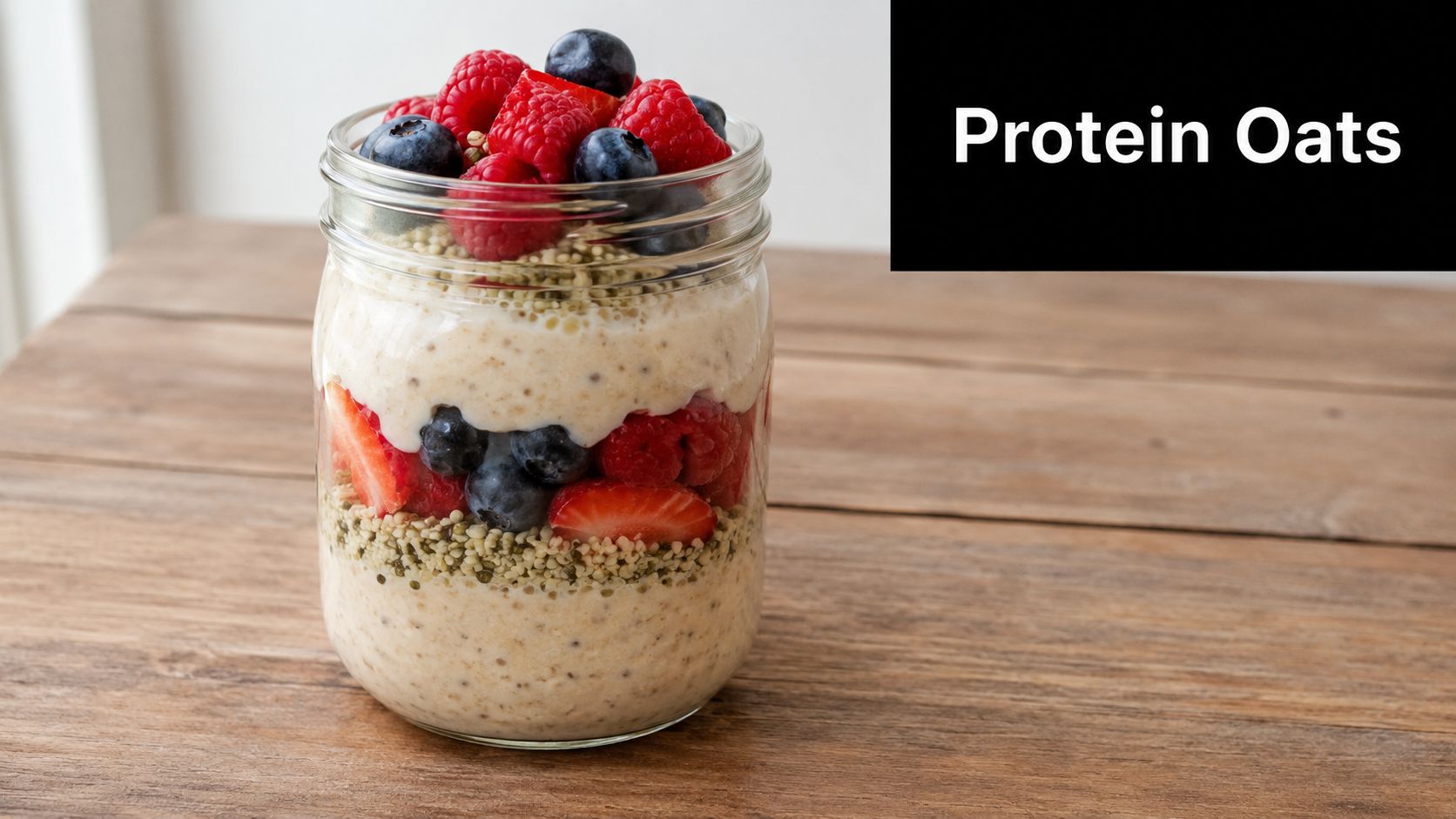
The smart way to build it
Texture decides whether people keep making overnight oats. Whisk the pea protein into the milk first, then stir in the oats and seeds. That order prevents chalky pockets and gives you a thicker, more even set by morning.
Hemp seeds do more than add a little protein. They improve mouthfeel, add fat that slows digestion, and help the bowl eat like a real meal instead of a cold snack. Oats plus protein plus fat plus fiber is also a strong satiety setup, which is part of why this breakfast works well for appetite control and fewer mid-morning vending machine decisions.
Use the same quality filter noted earlier for fortified plant-based dairy alternatives. Prioritize options with meaningful protein, solid fortification, and restrained added sugar, as outlined in this plant-based breakfast guidance from Rutsu Nutrition.
Meal-prep notes, swaps, and flavor strategy
This is one of the easiest breakfasts to batch for several days, but there is a trade-off. Day one and day two usually have the best texture. By day four, many versions get too thick. If you prep multiple jars, leave a little extra milk in the container or stir in a splash before eating.
A neutral base gives you more range across the week:
- Classic sweet: vanilla, cinnamon, berries, and hemp seeds
- Higher chocolate appeal: cocoa powder, chia, and a pinch of salt
- Savory-leaning option: keep sweetener low and add a small handful of Gym Snack Cheddar Cheeze for contrast and crunch
- Nut-free version: use pumpkin seeds instead of almond toppings
- Soy-free version: choose pea milk or oat milk instead of soy milk
- Gluten-free version: use certified gluten-free oats
This breakfast also works well for people who are plant-curious rather than fully vegan. Mintel found that many U.S. adults buy plant-based proteins on an occasional basis, and health is a common reason for increasing those purchases, according to its U.S. plant-based proteins market report. Overnight oats fit that behavior pattern because they ask for very little behavior change. Prep takes a few minutes, the ingredients are familiar, and the protein target is easy to hit without a skillet or blender.
3. Tempeh Bacon and Avocado Toast on Sprouted Bread
If tofu scramble is the weekday workhorse, tempeh toast is the breakfast that wins over skeptics. It's familiar, savory, and texturally satisfying. That matters for people who miss the chew and salt hit of traditional breakfast foods.
Start with tempeh sliced into thin strips and marinated in soy sauce, a little maple, smoked paprika or liquid smoke, and black pepper. Pan-sear until the edges caramelize, then layer over sprouted toast with smashed avocado, lemon, and chili flakes.
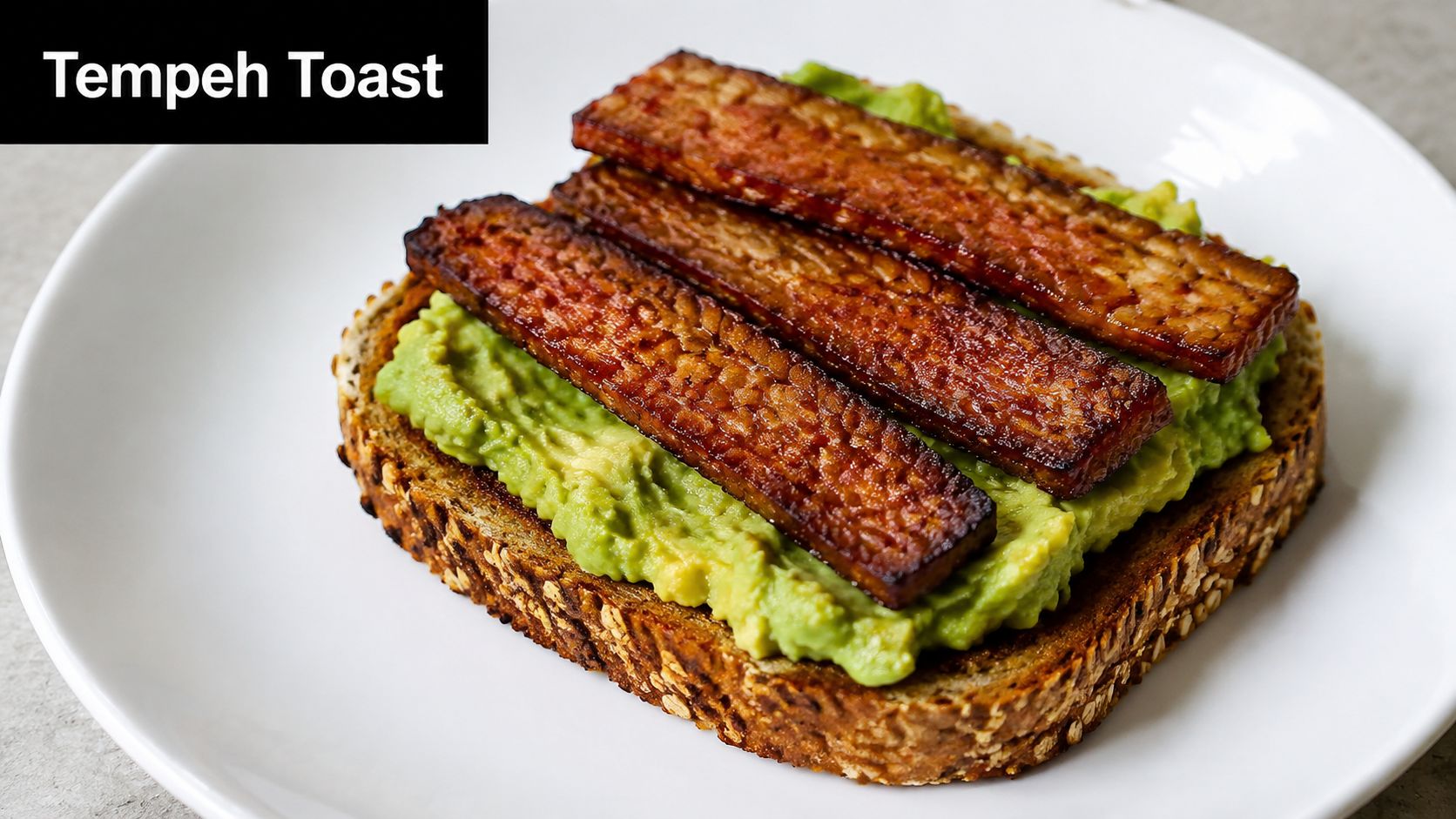
Why this one works
Tempeh has a firmer bite than tofu, so it does a better job of replacing the sensory experience of bacon or sausage. That alone makes it useful for clients who say they can eat plant-based at lunch and dinner, but breakfast still feels like a compromise.
The avocado helps with staying power, but the bread choice matters too. Sprouted or dense whole-grain bread generally holds up better under toppings and gives you a more meal-like result than airy white toast.
A savory breakfast often solves a compliance problem, not just a nutrient problem. If the meal tastes like real food, people keep making it.
For portable use, turn the same components into an open-faced sandwich wrap. Wrap tempeh, avocado, greens, and hot sauce in a whole-grain tortilla and eat it on the go.
Prep once, use twice
Make a larger batch of tempeh bacon than you need for breakfast. It works in lunch bowls, wraps, and post-workout snack plates. That kind of overlap is one of the best meal-prep strategies because it reduces decision fatigue.
If you want a visual guide for texture and browning, this demo is useful before you cook your first batch:
If soy isn't an option, swap the tempeh for a lentil-walnut patty or chickpea mash. If you want a spicy, crunchy finish, Gym Snack Jalapeño Cheddar Cheeze fits the flavor profile well.
4. Chickpea Flour Savory Pancakes (Socca) with Vegetable Mix-ins
Need a savory breakfast that packs well, holds its texture, and still gives you meaningful protein? Socca is one of the most practical options in a plant-based rotation.
Chickpea flour gives you a batter that cooks into something between a thin pancake and a sturdy flatbread. A standard serving made with about 1 cup of chickpea flour lands around 20 to 21 grams of protein before toppings, which makes this more useful than many grain-based breakfasts. The fiber helps with fullness, and the savory format tends to slow eating and improve meal satisfaction, which matters if appetite control is part of the goal.
How to get the texture right
Rest the batter before it hits the pan. That gives the flour time to hydrate and improves structure.
Heat matters too. Use a properly hot skillet or oven-safe pan so the edges set fast and the center does not stay gummy. I cook watery vegetables like mushrooms, zucchini, onions, or spinach first, then add them to the top or fold them in lightly right before the finish. If they go in raw, they release moisture and the pancake steams instead of browning.
A few upgrades work especially well here:
- For more savory depth: Add garlic, rosemary, black pepper, cumin, or nutritional yeast.
- For a higher-protein finish: Top with a spoonful of unsweetened soy yogurt sauce, edamame, or a side of seasoned tofu.
- For extra crunch: Crumble Gym Snack over the top after slicing.
- If you're soy-free: Use a white bean spread or tahini-lemon sauce instead of soy yogurt.
- If you're gluten-free: This option already fits well, just check any toppings and seasonings.
Where this breakfast earns its spot
Socca works well for clients who are burned out on sweet breakfasts but do not want another shake. It also travels better than many scrambles or oat bowls. Cut it into wedges, fold it around greens, or use it as a wrap with roasted vegetables and a spread.
That portability fills a real gap. The Vegan Society's breakfast guidance highlights balanced plant-based choices with protein, fiber, and iron, but practical savory formats still need to be built intentionally for busy mornings, as noted in their article on healthy plant-based breakfasts to fuel your day. For a broader look at how these meals support training, recovery, and satiety, see the benefits of plant-based protein for active lifestyles.
For meal prep, mix the batter the night before and keep cooked vegetables separate. Cook one large socca in a skillet or sheet pan in the morning, then portion it for two breakfasts. That setup saves time and keeps the texture much better than fully assembled reheated pancakes.
5. Lentil and Walnut-Based Breakfast Sausage Patties
Some breakfasts are best built around a component you can batch-cook once and reuse all week. Lentil and walnut patties fit that model perfectly. They freeze well, reheat well, and give plant-based eaters a savory anchor that's easy to pair with toast, potatoes, or fruit.
The flavor profile matters more than people expect. Use fennel, sage, thyme, garlic, black pepper, and a little smoked paprika so the patties read as breakfast sausage rather than generic bean cakes.
What separates a good batch from a bad one
The lentils should be cooked until tender, not mushy. If they're overcooked, the patties turn pasty. Toast the walnuts before pulsing them into the mix so the final texture feels hearty and savory.
Ground flax works well as a binder. Chill the mixture before shaping, then pan-sear until the outside develops a crust. That crust is what makes these satisfying.
Keep breakfast patties small and consistent. Even sizing cooks more evenly and makes it easier to combine them with other items when you need a fast meal.
Where they fit in a training week
These patties are ideal for mornings when you don't want to cook from scratch but still want something warm and substantial. Pair them with a piece of whole-grain toast and fruit on lower-intensity days, or with roasted potatoes and greens when you need a larger breakfast.
They're also a useful transition food for people moving gradually toward more plant-based meals. The format is familiar, which lowers resistance. That's one reason the broader category keeps expanding. The global plant-based protein market is projected to grow from USD 23.89 billion in 2025 to USD 34.97 billion by 2030, a 7.9% CAGR, with North America expected to hold 32.5% of the market in 2025. Convenience formats are a major reason that momentum continues.
For a broader performance angle, plant-based protein benefits in active lifestyles pair well with this kind of batch-cooked breakfast component.
6. Hemp Seed and Pumpkin Seed Granola Clusters with Chia Pudding Base
This is the breakfast for people who want texture. Chia pudding alone can feel too soft. Granola alone can become a calorie-heavy topping situation with not much staying power. Together, they work much better.
The base is a thick chia pudding made with plant milk, vanilla, and a pinch of salt. The topping is a seed-heavy granola with hemp seeds, pumpkin seeds, and coconut flakes, plus plant-based protein powder if you want to push the bowl toward a more athletic breakfast.
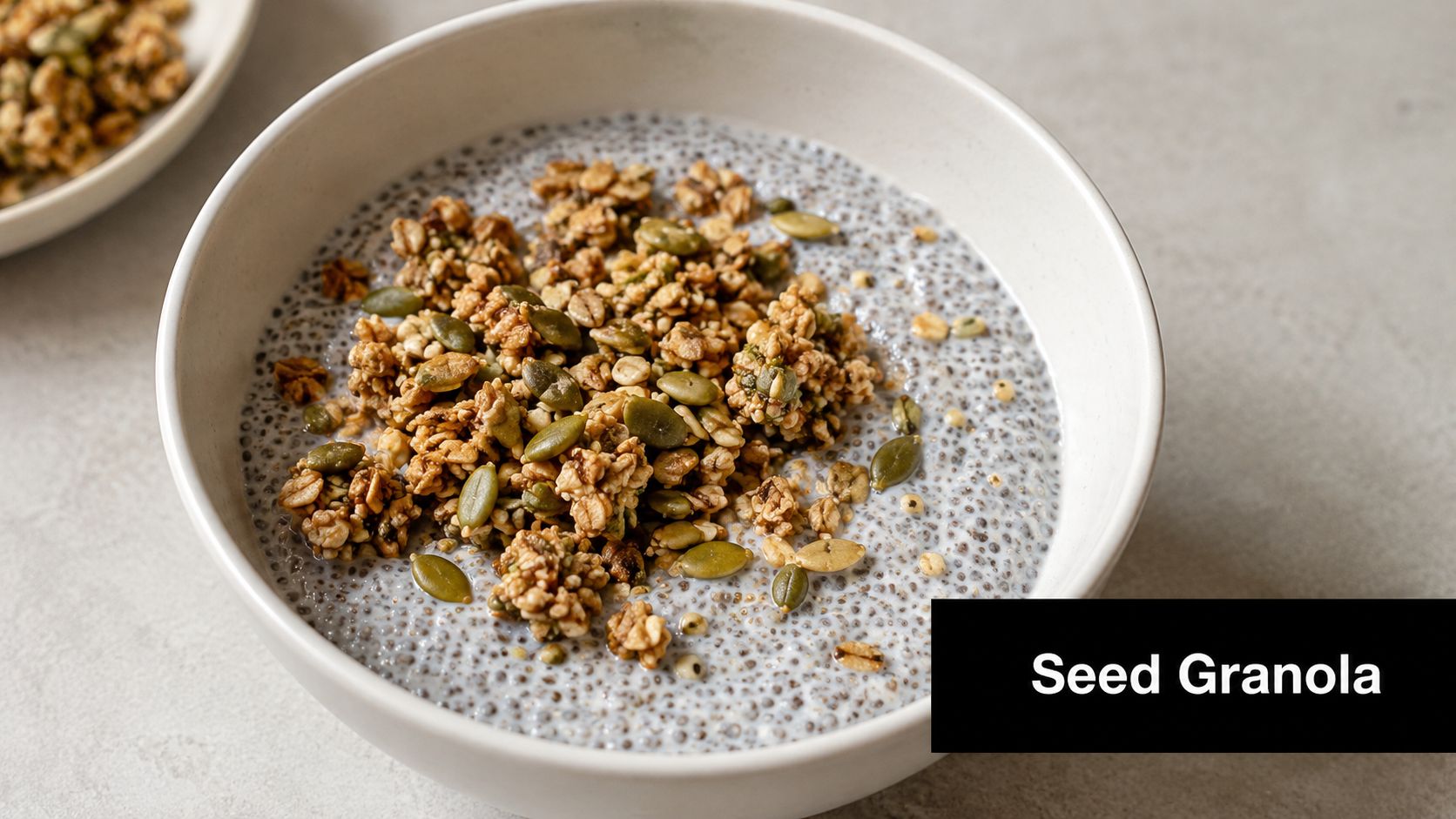
Keep the crunch separate
The biggest mistake here is storing everything together. If the granola sits on the pudding overnight, you lose the contrast that makes the meal worthwhile.
Store the pudding and granola separately, then layer them right before eating. Add berries or sliced fruit at the end so the bowl feels fresh rather than dense.
Best for appetite control
Seed-based breakfasts can be very effective when someone wants a smaller volume meal that still feels satisfying. The combination of protein, fiber, and fat tends to slow down the urge to snack immediately after breakfast.
That doesn't mean every version is ideal. If the granola is heavily sweetened, it stops behaving like a performance meal and starts behaving like dessert with seeds on top. Keep the sweetness modest and the salt visible. That's what balances the flavor.
- If you're soy-free: This is an easy category to build without soy.
- If you're nut-free: Stick with seeds and coconut, and double-check your protein powder choice.
- If you prefer savory-sweet combinations: A small handful of Gym Snack Cheddar Cheeze on top creates a surprisingly good crunchy contrast.
This is also one of the easiest breakfasts to prep in multiples without getting bored. Change fruit, spice, or protein powder flavor, and the whole bowl shifts.
7. Nutritional Yeast and Miso-Seasoned Quinoa Breakfast Bowl with Roasted Vegetables
Quinoa belongs in more breakfast rotations than it gets credit for. It's one of the easiest ways to move away from the sweet-breakfast default while still keeping prep practical. If you already batch-cook grains for lunch, breakfast quinoa is almost effortless.
Cook the quinoa in broth if you want more flavor, then fold in nutritional yeast and a little miso thinned with warm water. Add roasted vegetables such as broccoli, Brussels sprouts, or sweet potato, then finish with herbs and seeds.
The savory bowl advantage
This breakfast works well for people who train later in the morning or who prefer a meal that feels grounded. It has more chew than porridge and usually keeps appetite steadier than toast-based breakfasts.
It's also useful for athletes who want breakfast to double as recovery support. A bowl that combines grain, vegetables, and concentrated savory flavor often lands better after hard training than a sweet smoothie, especially when appetite is moderate rather than high.
Build it like a real meal
Roast the vegetables separately and store them apart from the quinoa if you're meal-prepping. That keeps textures intact. Add seeds or a crunchy topping only at the end so the bowl doesn't go soft in the fridge.
The broader shift toward plant-based eating supports why breakfasts like this have become more common. A NIH/PMC review reports that the number of Americans following a vegan diet increased 600% from 2014 to 2018. The same review summarizes associations between plant-based protein intake and improved body-composition and metabolic markers, including decreased BMI, lower visceral fat, and improved insulin resistance.
For a gym-going audience, the lesson isn't that quinoa is magic. It's that a savory, protein-aware breakfast can align with both performance goals and long-term health goals without feeling restrictive.
8. Buckwheat Groat Porridge with Spirulina and Plant-Based Protein Powder
Buckwheat is the porridge option I bring in when someone is bored with oats but still wants a hot breakfast. It has a nuttier flavor, a different texture, and it pairs surprisingly well with both sweet and lightly savory additions.
Soak the groats if you want faster cooking and a softer texture. Then simmer them with plant milk, cinnamon, vanilla, and a pinch of salt. Stir in protein powder near the end, and use spirulina carefully so it supports the bowl without overwhelming it.
Where this shines
Buckwheat porridge is good for colder mornings, post-workout breakfasts, and anyone who wants a spoonable meal that isn't standard oatmeal. It also works well in a thermos, which makes it useful for early lifters who eat after the session rather than before.
The trade-off is flavor. Spirulina can dominate if you use too much. Start light, mix it with a bit of warm liquid first, and pair it with berries or citrus on the side to brighten the bowl.
A breakfast doesn't have to be exciting on paper. It has to be repeatable, digestible, and strong enough to hold your appetite until the next meal.
Fine-tuning the bowl
If you want creaminess, use a richer plant milk. If you want more texture, top with pumpkin seeds or chopped nuts. If you're pushing this into savory territory, a crunchy topper such as Gym Snack can work, but use it sparingly so it complements rather than clashes.
This bowl also fits the larger pattern behind why plant-based breakfasts now matter commercially and nutritionally. The breakfast category has moved from niche to mainstream alongside broader plant-based adoption, and practical options that support satiety and training are part of why people stick with it.
8-Item Plant-Based Protein Breakfast Comparison
| Recipe | 🔄 Implementation Complexity | ⚡ Resource & Prep (time / ingredients) | 📊 Expected Outcomes (protein & key nutrients) | 💡 Ideal Use Cases | ⭐ Key Advantages |
|---|---|---|---|---|---|
| Protein-Packed Tofu Scramble with Nutritional Yeast | 🔄 Medium, pan-cook technique; texture skill needed | ⚡ Very fast (~10 min); common pantry items; tofu pressing advised | 📊 15–20g protein; B vitamins (incl. B12 via nutritional yeast), iron; low cholesterol | 💡 Savory quick breakfast, post-workout satiety, 4–5 day meal prep | ⭐ Customizable, affordable, high satiety; dairy-free |
| Pea Protein Overnight Oats with Hemp Seeds | 🔄 Low, no-cook assembly; minimal technique | ⚡ Very convenient (5 min prep, overnight); needs pea protein powder & jars | 📊 20–25g protein; oats for carbs/fiber; omega‑3 from hemp | 💡 Pre/post-workout portable meal, busy schedules, grab-and-go | ⭐ Portable, complete amino profile (pea+hemp), low-skill |
| Tempeh Bacon & Avocado Toast on Sprouted Bread | 🔄 Medium, marinate & pan-fry; texture practice | ⚡ Quick assembly (10–15 min); requires tempeh, sprouted bread, avocado | 📊 18–22g protein; probiotics from tempeh; healthy fats & fiber | 💡 Satisfying savory breakfast, brunch alternative to bacon | ⭐ Smoky, crispy texture; fermentation enhances nutrient absorption |
| Chickpea Flour Savory Pancakes (Socca) with Veg Mix-ins | 🔄 Medium, batter rest and skillet technique for crispness | ⚡ Moderate (15 min cook; ~30 min rest); chickpea flour & skillet needed | 📊 12–15g protein with veggies; gluten‑free; iron & folate | 💡 Novel savory option, budget-friendly meal prep, gut-friendly starch | ⭐ Budget-friendly, gluten-free, distinctive savory profile |
| Lentil & Walnut Breakfast Sausage Patties | 🔄 High, food processor, binding, shaping; technique-heavy | ⚡ Labor-intensive prep; yields many portions; freezer‑friendly | 📊 8–10g protein per serving; high fiber; omega‑3s from walnuts | 💡 Batch meal prep, meat-alternative for savory breakfasts | ⭐ Whole-food ingredients, meat-like texture, cost-effective in bulk |
| Hemp & Pumpkin Seed Granola Clusters with Chia Pudding | 🔄 Low, assembly-based; cluster making optional | ⚡ Moderate prep; chia needs setting time; higher ingredient cost | 📊 18–22g protein; high healthy fats (20–22g) and 7–8g fiber | 💡 Textural breakfast bowls, make-ahead bowls, gluten-free diets | ⭐ Creamy + crunchy contrast; nutrient-dense seeds; vegan |
| Nutritional Yeast & Miso-Seasoned Quinoa Bowl with Roasted Veg | 🔄 Medium, multiple components (cook quinoa, roast veg, mix miso) | ⚡ Moderate (30–40 min); needs quinoa, miso, roasting time | 📊 16–19g protein; complete amino acids from quinoa; high fiber & B vitamins | 💡 Savory recovery bowl, meal-prep for strength training | ⭐ Complete protein from single grain; versatile and nutrient-dense |
| Buckwheat Groat Porridge with Spirulina & Protein Powder | 🔄 Medium, overnight soak + careful spirulina dosing | ⚡ Moderate (soak overnight; ~15 min cook); specialized ingredients (spirulina) | 📊 20–25g protein; high bioavailable iron & B12 (spirulina); resistant starch | 💡 Ideal for endurance athletes and those needing plant-based iron/B12 | ⭐ Superior iron/B12 availability; supports endurance and recovery |
Build Your Ultimate Breakfast Rotation
A strong plant based protein breakfast routine doesn't come from finding one perfect recipe. It comes from building a rotation that matches your real schedule, appetite, and training demands. That usually means choosing two or three weekday staples and one or two options for slower mornings.
I'd suggest keeping the system simple. Use overnight oats or chia pudding when convenience matters most. Use tofu scramble, quinoa bowls, or chickpea pancakes when you want savory breakfasts that feel like actual meals. Keep lentil-walnut patties or tempeh bacon prepped so you can upgrade toast or wraps without starting from zero.
The first filter is protein. The second is satiety. The third is whether you'll make it again next week. That sounds obvious, but it's where many breakfast plans fail. They look nutritionally impressive and collapse in real life because they take too long, require too many ingredients, or lean too heavily on sweetness.
I also recommend paying attention to texture. A lot of plant-based breakfasts are soft. That's one reason people end up unsatisfied even when the ingredient list is “healthy.” Crunch, chew, and savory depth can make a big difference in how complete a meal feels. Tempeh toast, chickpea pancakes, and quinoa bowls solve that better than smoothie-heavy routines.
If you're active, breakfast should also support the rest of the day instead of forcing catch-up later. Starting with a protein-aware meal makes lunch and dinner easier. It reduces the odds that you'll spend the afternoon chasing energy with low-protein snacks. And if your goal includes weight management, the protein-plus-fiber structure matters because it helps keep hunger more manageable.
Don't overlook portability either. A breakfast can be excellent in theory and still useless if you can't eat it on a workday. Overnight oats, breakfast patties, thermos porridge, and savory handhelds all solve different versions of that problem. The best breakfast is the one that survives your morning.
If you want to sharpen the savory side of your rotation, Gym Snack can fit as a crunchy add-on for bowls, toast, and snack-style breakfasts. It's especially relevant if you're tired of dessert-style bars and shakes and want a plant-based protein option that leans savory.
Start with one recipe this week, not all eight. Pick the option that removes the biggest barrier you have right now. If mornings are rushed, make oats or chia pudding. If sweet breakfasts leave you hungry, make tofu scramble or quinoa bowls. Consistency beats novelty, and the right breakfast makes the rest of your nutrition plan easier to execute.
If you want a savory plant-based protein option that can round out breakfast bowls, toast, or on-the-go mornings, take a look at Gym Snack. It's a practical fit for active people who want crunchy, portable protein without defaulting to another sweet bar or shake.