

You know the moment. It's mid-afternoon, lunch is fading, and you want something salty and crunchy, not another sweet protein bar that tastes like dessert when you're not in the mood for dessert. Or maybe you just finished training, you're heading home, and a cold shake sounds fine in theory but not appealing in practice.
That's where pop protein chips fit. They try to solve a simple problem: how to get meaningful protein in a snack that feels like a savory chip instead of a liquid supplement or candy-style bar. For a lot of people, that makes them easier to use consistently.
They're also easy to misunderstand. Some products are smart, protein-forward snacks. Others are regular chips with a protein halo. The difference usually comes down to how they're made, what provides the crunch, and what the label looks like once you move past the front-of-bag claims.
What Pop Protein Chips Actually Are
You notice pop protein chips when a sweet bar sounds tiring and a shake feels like homework. They are built for the same job, which is to add protein between meals or after training, but they do it in a salty, crunchy form that feels closer to regular snack food.
Pop protein chips are savory chips made from a protein-forward dough, usually a blend of concentrated protein, starches or flours, and seasonings. Manufacturers shape that mixture, then use heat and pressure so moisture inside turns to steam and expands the structure. The result is a crisp, airy chip that is quite different from a sliced potato chip dropped into hot oil.
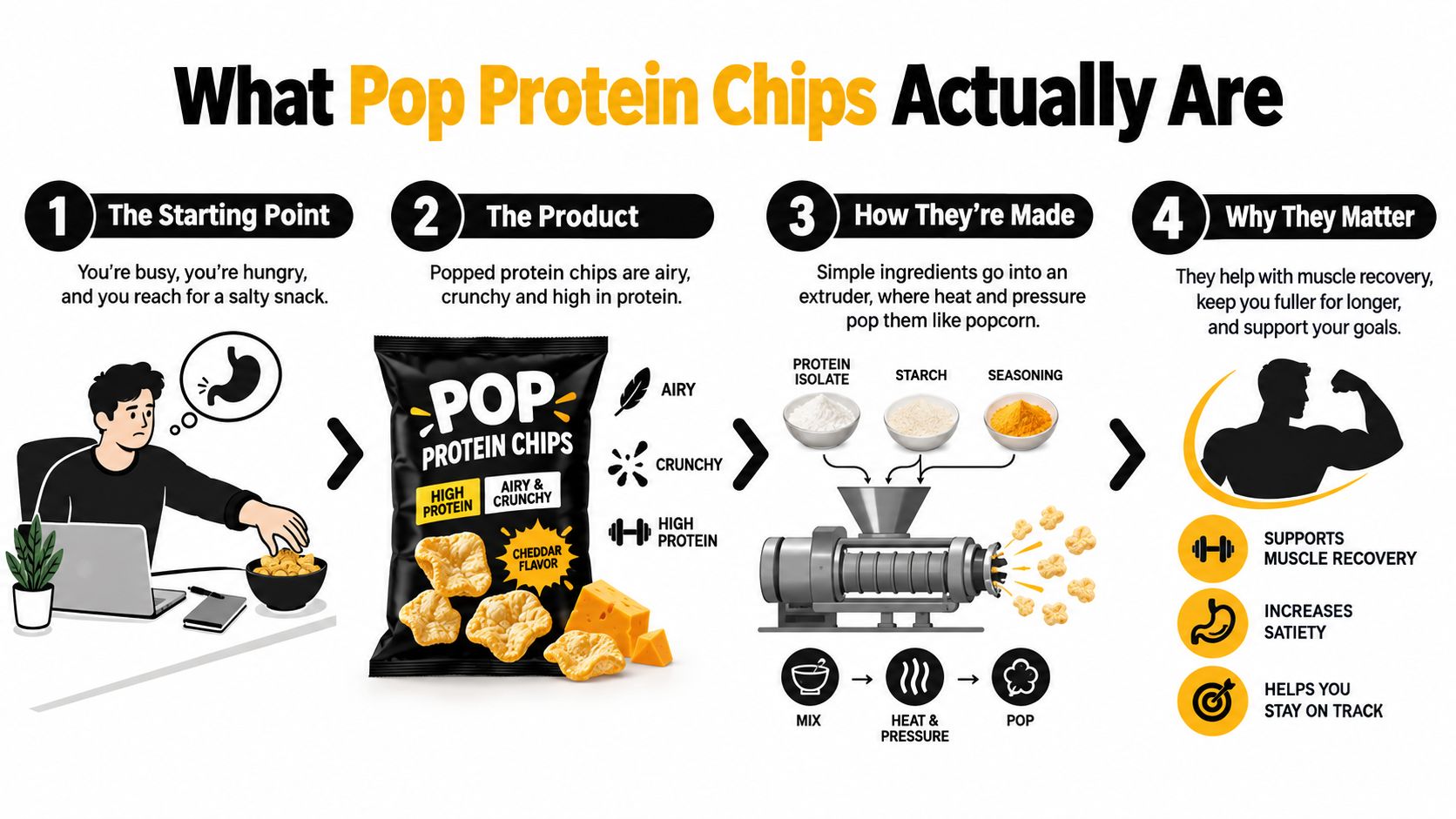
How the popping part works
The word popped refers to the way the chip gets its texture. As the dough heats up, trapped water becomes steam and pushes outward, a bit like popcorn opening up, though the ingredients and machinery are different. That quick expansion creates little air pockets, which is why the chip feels lighter than a dense cracker.
Texture matters more than it may seem.
A savory snack that is crunchy and protein-based can be easier to keep using than yet another sweet bar, especially for people who want something pre-workout that sits lighter or something post-workout that does not taste like dessert. For some GLP-1 users, that savory format can also feel more manageable on days when large meals or thick shakes seem unappealing.
Popped and puffed are close cousins
Shoppers often treat popped and puffed as near synonyms, and on store shelves they often overlap. In plain language, both usually describe a snack with an expanded structure instead of a thin fried slice. The label may stress one term over the other, but the practical takeaway is simple. You are looking at a formed protein snack, not a modified potato chip.
One quick visual test helps. If it looks airy and sculpted rather than flat and sliced, it usually belongs in the popped or puffed group.
Why “protein chips” can mislead people
The phrase can create confusion because it sounds broader than it is. On a shelf, protein chips may refer to several different products: popped chips, puffed crisps, baked lentil snacks, or even regular chips with some extra protein added. Those products do not all work the same nutritionally or practically.
That difference matters if you are using them with a purpose. Someone choosing a pre-workout snack may want a lighter chip with moderate fat. Someone watching blood pressure may care less about the front-of-bag protein number and more about sodium per serving. Someone on a GLP-1 medication may prefer a smaller serving that still gives a useful amount of protein without the sweetness of a bar or shake.
So the clearest definition is this: pop protein chips are savory, expanded snack chips built around a protein-containing dough and designed to deliver crunch plus more protein than ordinary chips. The bag shape, brand, and marketing matter less than that basic structure.
Ingredients and Nutrition Behind the Crunch
A good label reads like a recipe with a purpose. In most pop protein chips, the ingredient list has three jobs: provide protein, create structure, and deliver flavor.
The three layers of the formula
The protein base is what sets the product apart from ordinary chips. Common options include pea protein, whey, and soy. Pea protein works well for plant-based products. Whey usually has a familiar dairy profile. Soy often offers a neutral manufacturing base but can be an allergen concern for some buyers.
The structural layer often includes starches or flours such as rice flour or tapioca starch. These help the dough expand and hold shape during processing. Without them, the product can turn dense or chalky.
The flavor system does more than add taste. Seasonings, oil, salt, and acidity all affect how crisp the chip feels and whether it leaves a heavy coating on your tongue.
Why texture gets harder as protein goes up
Food science matters here. In extruded snack systems, protein can improve nutrition while making texture trickier. Research on pea-protein-fortified rice snacks found that around 13% pea protein produced the highest expansion and crispness, while 45% pea protein made the product hard, crunchy, and lacking crispness. A related review of legume chips reported protein ranges of 21.39 to 34.17 g/100 g, with the highest-protein formulation reaching 34.17 g/100 g protein, 11.53 g/100 g fiber, and 3.52 g/100 g lipids, as described in this ScienceDirect research summary on legume and pea-protein snack extrusion.
That's why the best products rarely chase maximum protein at any cost. They balance protein with expansion, crispness, and bite.
What a label usually tells you
You'll often see labels that include:
- A clear protein source like pea protein, whey protein concentrate, or soy protein isolate
- A starch or flour that helps the chip pop and stay crisp
- An oil source that supports mouthfeel and seasoning adhesion
- Seasonings and salt that can drive sodium upward
A practical way to compare products is to line them up against regular chips.
| Nutrient (per 28-35g serving) | Pop Protein Chips | Regular Potato Chips |
|---|---|---|
| Protein | Usually meaningfully higher | Usually low |
| Carbohydrates | Often lower to moderate | Usually starch-dominant |
| Fat | Often moderate, depends on oil and process | Often driven by frying oil |
| Fiber | Sometimes included in useful amounts | Usually low |
| Sodium | Can range from moderate to high | Often moderate to high |
| Satiety value | Often stronger if protein is substantial | Usually lower for the same portion |
If you want a label-by-label breakdown of common chip claims, the Gym Snack guide to protein chips nutrition facts is a useful companion.
A protein chip isn't “healthier” just because the bag says protein. You still need to check what supplies the crunch, how much sodium comes with it, and whether the serving is realistic.
Health and Fitness Benefits That Matter
The main reason people buy pop protein chips isn't novelty. It's function. A savory chip that carries real protein can be easier to stick with than a sweet bar when you're trying to manage hunger, train regularly, or avoid random snacking.
Why protein changes the snack experience
Controlled studies summarized by NIH found that protein-rich snack formats tend to be more satiating than higher-carbohydrate or higher-fat snacks, and that higher-protein snacks produced the strongest reductions in hunger and increases in fullness, according to this NIH summary on protein intake and satiety.
That helps explain why some people feel better after a savory protein snack than after standard chips. Crunch alone doesn't do much. Protein content is what drives the satiety effect.
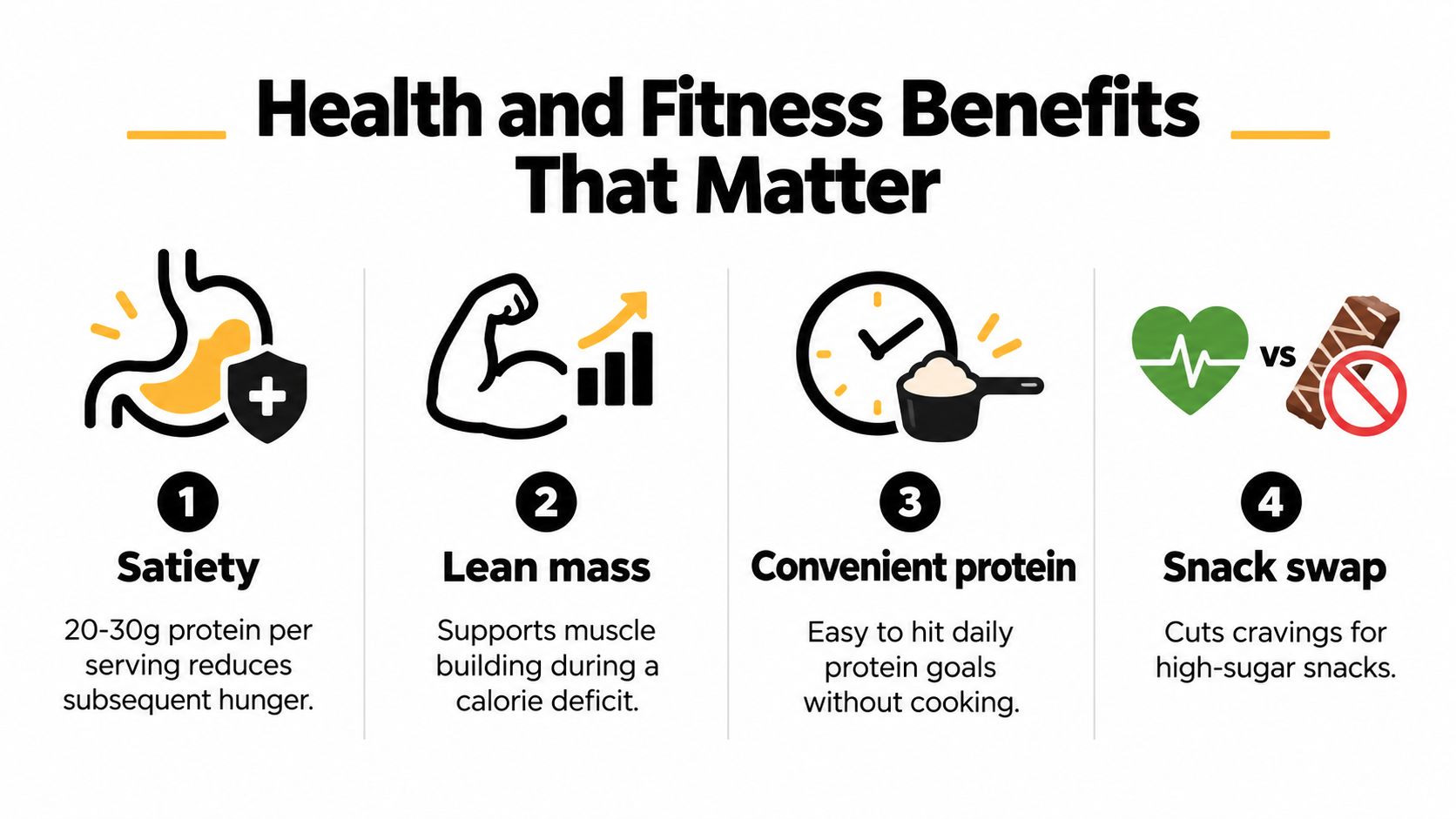
Where they fit for training and weight control
For gym-goers, these chips can work in three common situations:
- Before training: A lighter savory snack can feel easier to tolerate than a dense bar, especially if you don't like lifting on a full stomach.
- After training: They can add convenient protein and crunch when paired with another recovery food.
- Between meals: They can bridge the gap when lunch was too small and dinner is still hours away.
People trying to lose weight often do better when snacks reduce the urge to keep eating. That's one reason savory protein snacks have appeal. If you want a practical breakdown of that angle, this guide to protein chips for weight loss is worth reading alongside your own label checks.
Later in the day, some people don't want one more sweet product. That's where chips can beat bars on adherence, not because they're magically superior, but because they match what you're craving.
Here's a quick visual summary before getting more practical.
The GLP-1 and blood-pressure angle
This is the part most reviews skip. People using GLP-1 medications often struggle with reduced appetite. When eating volume goes down, protein density starts to matter more. A small savory portion can be easier to finish than a larger whole-food meal or a rich shake.
For blood-pressure-aware diets, sodium is the main caution point. One mainstream popped protein chip product provides 20g protein but also about 420 mg sodium, 7 to 8g fat, and only 4g carbs per bag, according to this nutrition entry for ranch popped protein chips. That doesn't make it a bad product, but it does mean the whole bag needs to fit your day.
Practical rule: Use pop protein chips as a targeted snack, not as unlimited “healthy chips.” Protein helps, but sodium and calories still count.
If you're trying to match food choices with training goals and appetite control, the Gym Membership Tips coaching guide gives useful context on how coaches think about snack timing, recovery, and consistency.
When and How to Use Them
A good snack becomes more useful when you assign it a job. Pop protein chips can play several different roles depending on timing and portion.
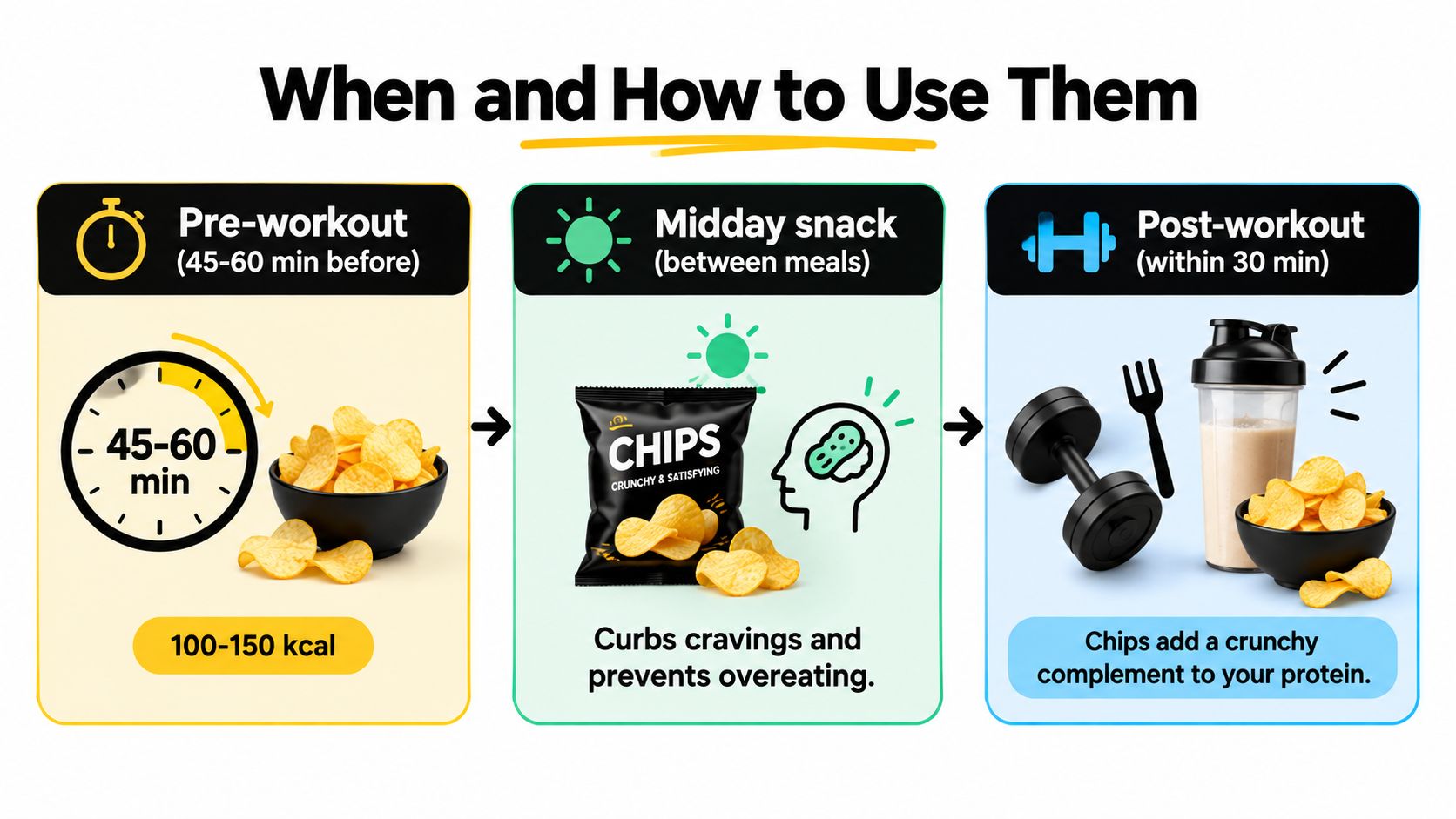
Before a workout
A moderate serving works best when you want something savory but don't want a heavy stomach. Eat them far enough before training that the salt and protein settle comfortably. That means using them as a light bridge instead of a last-second mouthful in the parking lot.
If the product is very salty or very dense, pair it with water and keep the portion modest. You want steady energy and comfort, not thirst during your session.
After training and between meals
Post-workout, chips work best as part of recovery, not the entire recovery plan. If the bag doesn't provide enough total protein for your needs, add yogurt, milk, tofu, or another protein source.
Between meals is where they often shine. They're shelf-stable, easy to keep at work, and less messy than a shake. That makes them useful for the late-afternoon stretch when hunger tends to push people toward vending-machine snacks.
Travel, office, and GLP-1 use
For commuting, travel days, and long work blocks, crunchy protein snacks solve a portability problem. Bars can melt or feel overly sweet. Shakes need a bottle, refrigeration, or cleanup. Chips are simpler.
For GLP-1 users, the best approach is usually slower eating and smaller portions. Try a serving with water or another fluid and pay attention to comfort. Because appetite can be unpredictable, a product that's savory and easy to nibble may go down better than a dense meal.
A simple way to use them well:
- Pre-workout use: Choose a lighter portion and avoid flavors that feel greasy or heavily coated.
- Post-workout use: Pair with another protein food if you need a more complete recovery snack.
- Desk or travel use: Keep single portions nearby so you don't end up buying random snacks.
- Evening use: Choose lower-sodium options if nighttime salt intake is something you monitor.
How Pop Protein Chips Compare to Other High-Protein Snacks
Pop protein chips rarely compete with plain potato chips alone. They usually compete with bars, shakes, jerky, and roasted legumes. Each option solves a different problem.
Where chips tend to win
Chips often win on savory satisfaction. If you're tired of sweet flavors, that matters more than people admit. They also deliver crunch, which changes the pace of eating and can make a snack feel more complete.
Portability is another strength. A bag is easy to throw into a work bag or gym tote. There's no shaker bottle, no refrigeration during a short carry, and usually less stickiness than bars.
Where bars, shakes, and jerky still have an edge
Shakes can be the fastest way to get a larger dose of protein. Bars can be more compact and meal-like. Jerky can work well for very savory eaters who want minimal bulk.
Roasted chickpeas and similar snacks can appeal to people who prefer a more whole-food feel, though texture is different and some products are more crumbly or dry.
| Snack Type | Protein per Serving | Satiety Score | Portability | Blood-Sugar Impact |
|---|---|---|---|---|
| Popped Protein Chips | Moderate to high, varies by product | Often strong when protein is substantial and the crunch slows eating | Excellent | Often steadier than sweet snack formats |
| Protein Bars | Moderate to high, varies widely | Can be good, but sweetness and density don't suit everyone | Excellent | Often depends on added sugars and syrups |
| Protein Shakes | Moderate to high | Useful, but liquids don't always feel as satisfying as chewable foods | Fair to good | Depends on formula and sweetness |
| Jerky | Moderate | Good for savory snacking, but texture is tougher and less chip-like | Very good | Often fairly steady, though sodium can be high |
| Roasted Chickpeas | Moderate | Good for some people, especially those who like legume snacks | Good | Often moderate and depends on seasoning |
If your biggest problem is sweet-snack fatigue, pop protein chips fill a gap that bars and shakes often miss.
There's also a larger behavior trend behind that. Savory products are projected to dominate 60% of flavor demand in plant-based snacks in 2026, and the broader savory-snack market is projected to reach $461.6B by 2035, according to Future Market Insights on plant-based snacks. That doesn't prove any one chip is better for you, but it does explain why savory protein snacks keep showing up in more categories.
Allergen, Digestion, and Label Reading
A fast label scan can save you from buying a bag that looks perfect on the front and doesn't fit you at all once you check the back.
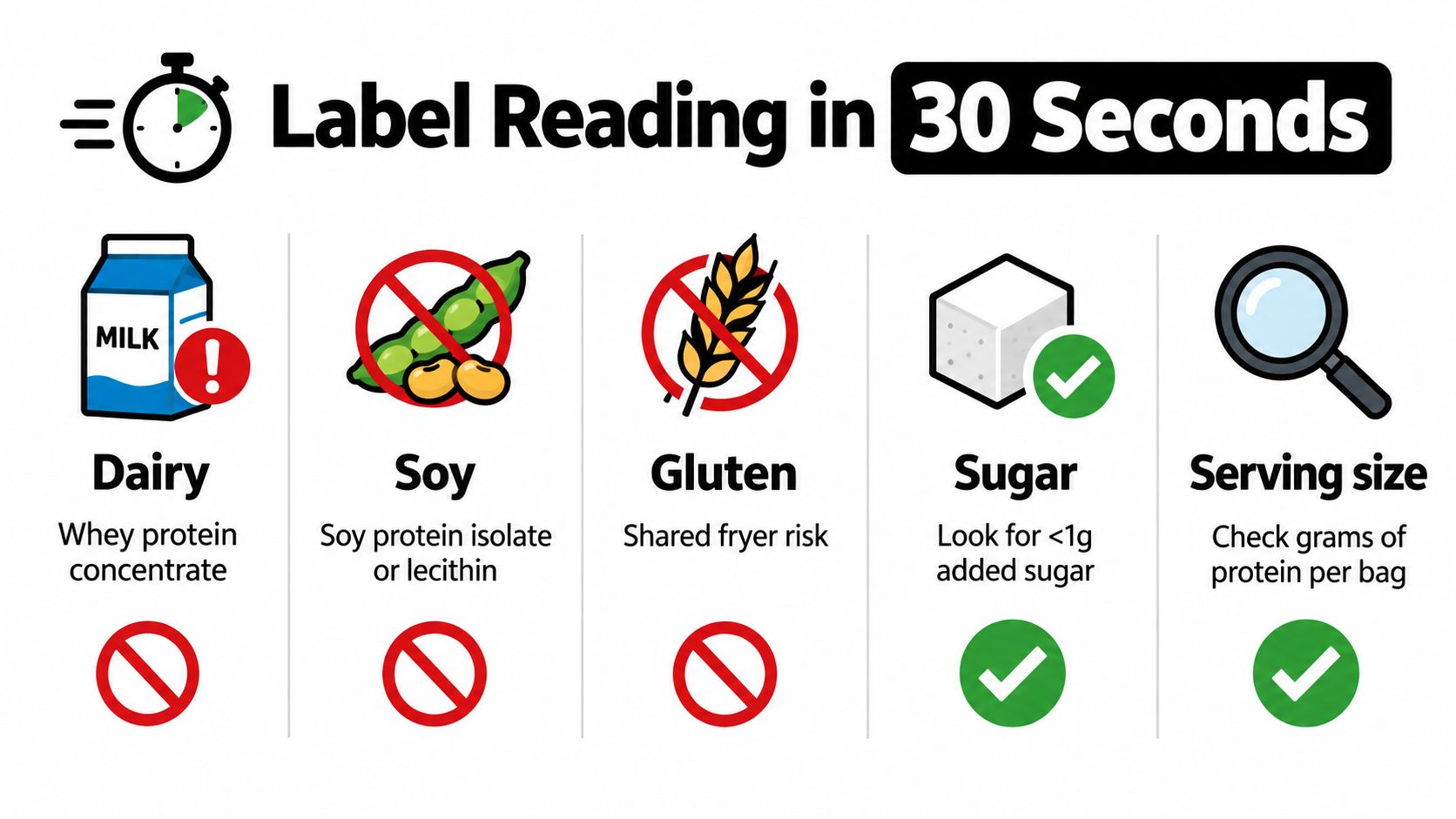
What to scan first
Start with the protein source. Whey points to dairy. Soy protein isolate or soy lecithin matters if you avoid soy. Some seasoning blends can also bring in dairy even when the base protein doesn't.
Then check the allergen statement and any shared-facility note. Gluten-free eaters should pay attention to seasoning systems and manufacturing language, not just the front label.
Common digestion problems
Digestive issues often come from the extras, not the protein itself. Ingredients like inulin, chicory root, garlic powder, and onion powder can bother sensitive stomachs. Some people also notice that highly seasoned products feel heavier than simpler flavors.
If you're trying a new brand, start with a smaller portion. That's especially helpful if you're using GLP-1 medication, adjusting to higher protein intake, or already know you're sensitive to fiber additives.
A quick 30-second checklist helps:
- Protein first: Make sure the protein source is clearly named near the top.
- Allergens next: Check for dairy, soy, gluten risk, and sesame in seasoning blends.
- Sodium after that: Compare bags, especially if this will be a daily snack.
- Fiber additives: Watch for ingredients that tend to trigger bloating.
- Serving size reality: Decide whether you'll eat the listed serving or the whole bag.
Some people tolerate a simple pea-protein chip very well and struggle with a “healthier” version loaded with extra fibers, gums, and flavor boosters.
Buying and Serving Tips That Actually Work
A smart purchase starts with a short filter. Don't overcomplicate it.
What to look for in the store
First, look for a product where the protein source is easy to identify. Second, compare sodium across flavors because barbecue, ranch, and cheese-style seasonings often differ more than people expect. Third, make sure the texture style matches what you want. Some bags are closer to airy crisps. Others are more like compact extruded bites.
If you want a plant-based option with a protein-first setup, Gym Snack is one example in this category. The brand makes savory plant-based protein chips built around pea protein rather than dairy-based formulas.
Serving ideas beyond eating them from the bag
Pop protein chips also work as an ingredient. Crushing them into a topping or coating can add crunch without needing breadcrumbs.
A few easy uses:
- On yogurt-based dips: Crumble a handful over a savory dip for texture.
- As a coating: Press crushed chips onto baked chicken, fish, or tofu.
- Over bowls: Use them like crunchy toppers on grain bowls or salad bowls.
- With a mini-meal: Pair them with cottage cheese, edamame, or sliced vegetables.
If you want more meal-style ideas, the Gym Snack protein chips recipe guide shows practical ways to use chip-style protein snacks outside straight bag snacking.
Storage matters more than people think
Keep opened bags sealed and dry. Humidity ruins texture fast, and texture is half the point of the product. If a bag goes stale, it usually won't taste bad, but it stops delivering the crisp experience that makes it satisfying in the first place.
Common Questions and Final Takeaways
People usually end up with the same four questions after trying pop protein chips for the first time.
Are they actually good for weight loss
They can be, if they replace a less satisfying snack and help you stay on track between meals. They're not weight-loss food by default. A bag still has calories, and some products are easy to overeat if the flavor is strong and the texture is light.
What helps is the combination of protein, crunch, and convenience. If that mix keeps you from chasing more snacks an hour later, the product is doing its job.
How much sodium is reasonable
There isn't one universal answer because the rest of your diet matters. If you're blood-pressure-aware, compare flavors carefully and think in terms of your full day, not a single bag in isolation.
The practical takeaway is simple. A high-protein chip can fit just fine, but it shouldn't get a free pass because it's marketed for fitness.
Is there a daily limit
There's no fixed rule for everyone. Daily use might work well for an athlete with high protein needs and a well-managed diet. For someone with kidney disease, a prescribed low-sodium diet, or multiple food sensitivities, the same habit might not fit at all.
If you regularly eat the entire bag, treat the bag as the serving that matters. Don't pretend you're only eating the smaller panel amount if that's not how you snack in real life.
Who should be more cautious
A few groups should slow down and read carefully:
- People on sodium-restricted diets: Seasoned savory snacks can add up quickly.
- Anyone with dairy or soy allergies: Many products rely on those proteins or flavor systems.
- People with sensitive digestion: Fiber additives and seasoning powders can be the bigger issue than the protein itself.
- Those with kidney disease or medical protein limits: This is the group that should ask a clinician what fits.
One more point matters in the background. The broader protein chips market is projected to grow substantially. One forecast estimates about USD 1.8 billion in 2025 rising to roughly USD 4.2 billion by 2034, while another puts it at USD 3.5 billion in 2025 rising to USD 7.1 billion by 2034, with estimated CAGR ranges around 8.2% to 9.8% depending on methodology, according to Growth Market Reports on the protein chips market. Growth doesn't make every product good, but it does show that more shoppers want savory protein options than bars and shakes alone can provide.
The bottom line is clear. Pop protein chips fill a real gap. They give you a crunchy, savory, protein-forward snack that can work before training, after training, between meals, or on appetite-suppressed days. They work best when you read the label, watch the sodium, and use them as part of your routine instead of treating them like unlimited “healthy chips.”
If you want a savory protein option that fits the ideas in this article, Gym Snack offers plant-based protein chips built for people who want crunch, convenient protein, and cleaner ingredient choices without defaulting to sweet bars or shakes. It's a practical place to compare flavors, macros, and formats if you're trying to make protein snacking feel more like real food.