

You're in the snack aisle, gym bag over one shoulder, trying to solve a very modern problem. You want something crunchy and salty, but you also don't want a snack that works against your lifting goals, your appetite control, or the effort you put into the rest of your day.
That's where protein chips get interesting. They promise the experience of chips with a nutrition label that looks more like a fitness snack. The problem is that the front of the bag usually tells a simple story, while the back of the bag tells the complete one.
If you've ever picked up a bag and wondered whether the macros matter, whether protein chips will keep you full, or whether they're just regular chips with gym branding, you're asking the right questions. The useful part of protein chips nutrition facts isn't just the protein number. It's what that label means for satiety, training, recovery, and how easy the snack is to fit into real life.
The Savvy Snacker's Dilemma
Most gym-goers don't struggle because they don't know protein matters. They struggle because cravings don't care that leg day is tomorrow. Crunch, salt, convenience, and portability all matter too.
Protein chips sit right in that tension. They're built for the person who doesn't want another sweet bar or thick shake, but still wants a snack that feels like it belongs in a fitness-focused routine. That's why reading protein chips nutrition facts well matters. You're not just checking whether something is “healthy.” You're checking whether it helps you hit your goal today.
For some people, that goal is staying full between meals. For others, it's getting more protein in without adding much sugar. And for low-carb eaters, it often comes down to understanding whether a crunchy snack really fits their approach. If that's your lens, this breakdown of the truth about low carb rice cakes is a useful comparison because it shows how easy it is for “light” snacks to sound better than their labels are.
Protein chips make the most sense when they replace a less useful snack, not when they get treated like a free extra.
That's the mindset to keep. A good bag can be a smart trade. A random bag with a shiny claim can still be a detour.
How to Read a Protein Chip Nutrition Label
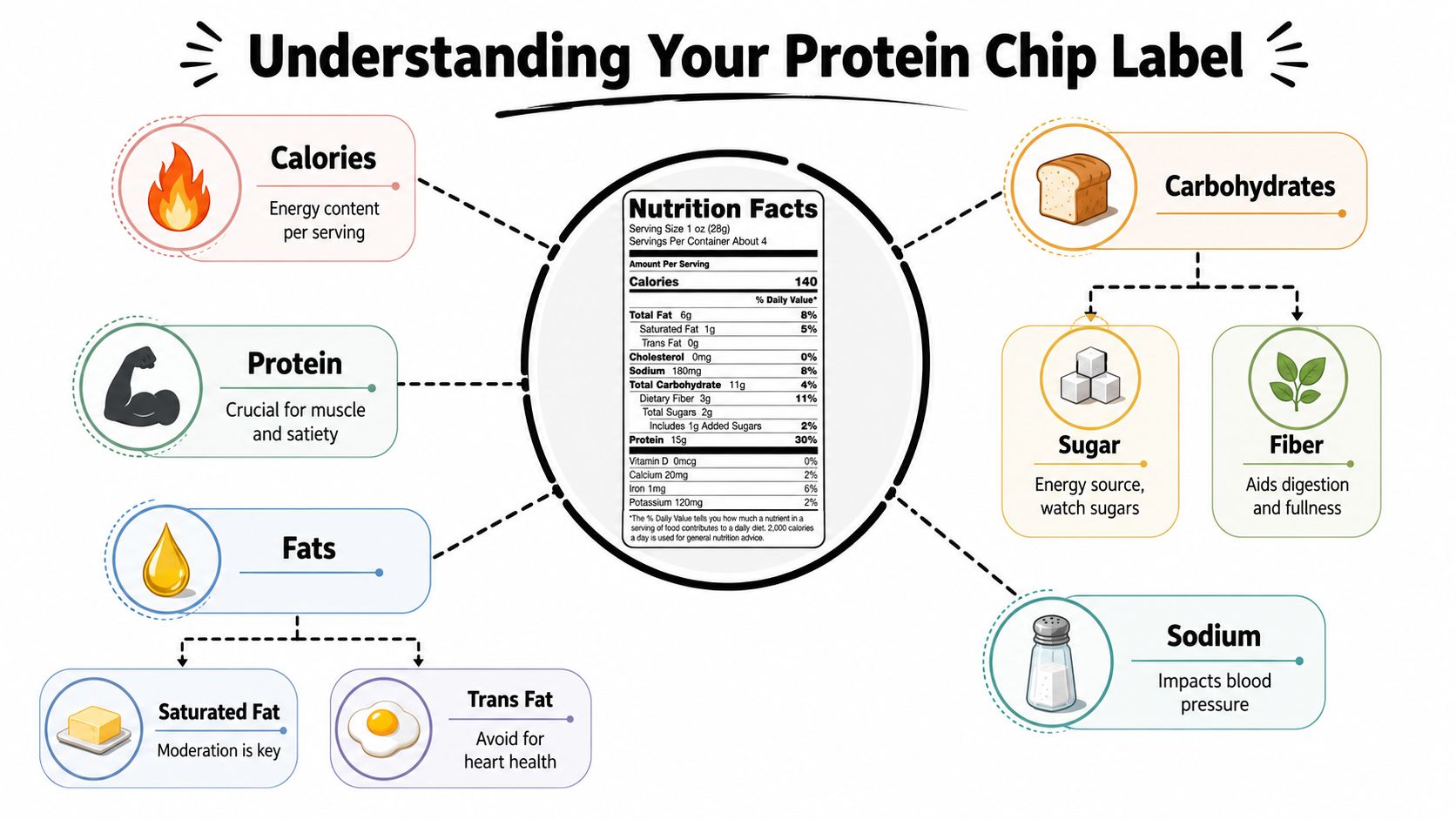
A protein chip label works a lot like a dashboard in your car. You don't stare at one gauge and ignore the rest. You glance across the whole panel to understand how the snack will perform.
Start with calories and protein
Calories tell you the snack's total energy cost. Protein tells you whether that cost is doing useful work for your goals.
A common benchmark is a 32g bag with 130 calories and 23g protein, plus 4g carbs, 2g fiber, 2g net carbs, 0g sugar, and 2.5g fat. That one bag gives about 46% of a 50g daily protein reference, while keeping carbs and sugar very low, according to this Quest Protein Chips nutrition listing.
That's why protein chips catch people's attention. For the calories, the protein load can be unusually high for a savory snack.
Read carbs like a second layer
Carbs on a label aren't all doing the same job. Some act more like quick fuel, some support fullness, and some mainly affect taste.
Look at these parts:
- Total carbs tell you the broad carb load.
- Fiber can help the snack feel more filling and changes how “light” or “empty” the bag feels in practice.
- Sugar matters because some snacks stay savory but still sneak in sweetness.
- Net carbs are often highlighted on packaging, but they're only one part of the story.
If you cook often and want a better sense of how labels translate outside packaged snacks, tools that calculate nutrition details for any recipe can help you compare homemade options with store-bought ones.
Don't skip fat and sodium
Fat affects taste, crunch, and satisfaction. It also changes how calorie-dense a snack feels. A little can improve texture. Too much can turn a “macro-friendly” idea into a less efficient pick.
Sodium is where a lot of shoppers get lazy. They see the protein and stop reading. That's a mistake, especially if you eat multiple packaged foods in a day or you're trying to manage appetite carefully.
Practical rule: If the protein number grabs you, make yourself read one line lower and one line lower again. That usually means checking carbs, then sodium.
Use a quick label scan
When you pick up a bag, scan in this order:
-
Serving size first
Make sure the numbers apply to the whole bag and not a smaller serving. -
Protein next
Ask whether the bag is acting like a meaningful protein snack or just borrowing the word “protein.” -
Calories after that
Protein only matters in context. You want to know what you're paying for that protein. -
Carbs and sugar
These tell you whether the snack fits your eating style, especially for low-carb or appetite-control goals. -
Sodium last
This is the quiet line item that often changes whether the snack works well daily or only occasionally.
If you want a broader refresher on packaged food labels, this guide on how to read nutrition labels complements the chip-specific approach well.
Protein Chips vs Regular Chips and Protein Bars
Protein chips live in a middle lane. They aren't trying to be a whole meal, and they aren't trying to be a classic party snack either. They're trying to give you crunch with a macro profile that leans more toward performance.
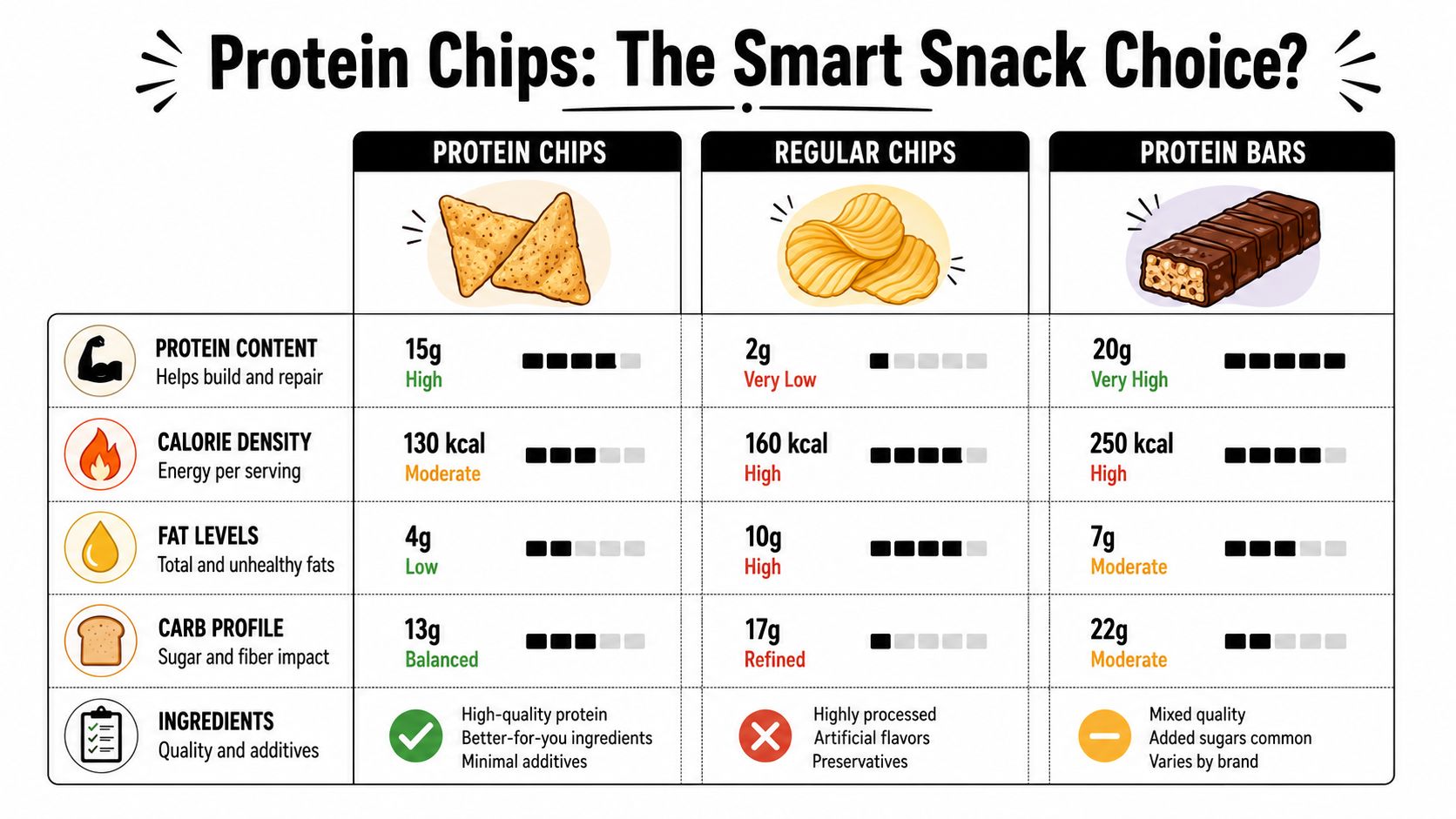
One useful benchmark comes from a mainstream tortilla-style option. Quest's Hot & Spicy Tortilla Style Protein Chips are listed at 19g protein and 140 calories in a 32g bag, with 5g total carbohydrate, 1g fiber, 1g sugar, and 5g fat on the product page. That's the kind of profile that makes protein chips feel very different from carb-led snack foods.
Three snack personas
Think of these snacks like three different training partners.
| Snack | Best use | Main upside | Main limitation |
|---|---|---|---|
| Protein chips | Savory snack gap | Crunch plus meaningful protein | Can still be easy to overeat if you treat them casually |
| Regular chips | Pure craving food | Familiar taste and texture | Usually don't contribute much to protein goals |
| Protein bars | Portable protein backup | Convenient and often more meal-like | Sweet, dense, and not always satisfying if you want something salty |
Regular chips usually win on nostalgia and simplicity. If your goal is pure enjoyment at a social event, that can be enough. But for a lifter or someone trying to manage hunger, they often don't move the day forward much.
Protein bars solve a different problem. They're convenient when you're rushing, but many people get tired of sweet flavors. If you're craving something crunchy and savory, a bar won't scratch that itch no matter how good the macros look.
A quick video comparison can help if you like seeing snack categories discussed side by side.
Which one fits which moment
Choose based on the job you need the snack to do.
-
After training and tired of sweets
Protein chips can make sense because they give you a salty option with a more useful macro profile than standard chips. -
Midday emergency in your backpack
A protein bar may be better if you need something more meal-like and less snack-like. -
Movie night or social snacking
Regular chips may still be the honest choice if your priority is pleasure, not performance.
For a deeper look at bar labels and how they compare with savory protein snacks, this guide to protein bar nutrition facts is worth reading.
The right snack isn't the one with the biggest claim on the front. It's the one that matches the reason you're eating.
Understanding Protein Sources and Ingredients
The protein number matters, but the ingredient list tells you how the company got there. That's where many of the substantive differences show up.
A dietitian review summarized a broad category pattern. Most protein chips land around 120 to 170 calories per serving, with plant-based versions often providing 5 to 8g of protein per serving, while milk-, whey-, or soy-based products commonly exceed 10g per serving, according to Hone Health's review of protein chips.
Dairy-based formulas
Whey and milk protein usually make it easier for brands to push protein higher without losing the chip texture people expect. That's part of why many of the highest-protein bags on shelves rely on dairy ingredients.
The trade-off is obvious if you don't tolerate dairy well. A technically strong macro profile won't help much if the snack leaves you feeling heavy, bloated, or generally off.
Plant-based formulas
Plant-based chips often come with a different balance. You may get a cleaner allergen profile or a formula that fits vegan eating, but some products land lower on protein concentration.
That doesn't make them worse. It just means you should judge them by your actual priority. If ingredient simplicity, dairy avoidance, or plant-based eating is your anchor, a lower protein number may still be a fair trade.
Some shoppers also get confused about where protein comes from in foods that sound wholesome. For example, olive oil has a health-focused reputation, but it isn't a meaningful protein source. This breakdown of the truth about olive oil protein is a useful reminder that “healthy-sounding” and “protein-rich” aren't the same thing.
What to scan on the ingredient list
When you flip the bag over, look for these signals:
-
Protein source first
Is it whey, milk protein, soy, pea, lentil, or another base? That tells you a lot about digestibility and fit. -
Allergen fit
Dairy and soy matter for many people. Even if your macros are solid, an ingredient mismatch can make the snack a poor repeat purchase. -
Flavor support ingredients
Savory chips often rely on seasonings and starches to hold texture and taste together. That's normal. The question is whether the total package still aligns with your goal. -
Your own digestion history
This isn't on the label, but it's real. If a certain protein source never sits well with you, the label is only half the story.
The Real Impact on Fullness and Weight Management
Fullness is where protein chips either earn their place or lose it. A snack can look impressive on the label and still fail in real life if it leaves you rummaging through the pantry an hour later.

One reason people buy protein chips is simple. Protein tends to support fullness better than a standard crunchy snack. That's especially relevant if you're trying to control appetite, maintain a calorie deficit, or work with reduced appetite and slower eating while using GLP-1 medications.
But nuance matters. A mainstream protein chip bag can still contain 18 to 19g of protein, 140 to 150 calories, and 290 to 340mg of sodium, as shown on Quest's Nacho Cheese Protein Chips product page. That's a useful profile for many situations, but it isn't a free snack.
Why protein density matters
Protein density means how much protein you get for the snack's calorie cost. That's often more practical than obsessing over the absolute protein number alone.
For weight management, a crunchy snack with solid protein density can help in a few ways:
-
It can slow the “bottomless snack” effect
Chips that contribute meaningful protein may do a better job of closing the hunger loop than snacks built mostly around starch and fat. -
It can support meal spacing
If you need to bridge breakfast and lunch or lunch and dinner, a higher-protein snack may keep the next meal more controlled. -
It can fit reduced-appetite strategies
GLP-1 users often need foods that count nutritionally without requiring large volume. A savory protein snack can sometimes fit better than a heavier meal or another sweet shake.
Where people still get tripped up
Crunchy foods have a behavioral advantage. They're easy to eat fast, easy to pair with screens, and easy to mentally classify as “just a snack.” That can blur your awareness of calories and sodium.
If a snack is easy to inhale, the label matters even more, not less.
That's why fullness isn't only about protein. It's also about pace, context, and whether the snack replaces something or adds to the day.
If appetite control is a major goal, pairing a protein-forward snack with a slower eating routine often works better than relying on macros alone. This article on how to stay full longer gives practical ways to think beyond label reading.
A better question to ask
Don't ask only, “Is this healthier than regular chips?” Ask, “What happens after I eat this?”
If the answer is that you feel steady until your next planned meal, the snack did its job. If the answer is that you crushed the bag and immediately wanted more food, the issue may not be the product alone. It may be the portion, the timing, or the fact that you needed a more complete snack.
A Practical Guide to Choosing Your Chips
You are standing in the snack aisle after training. One bag says 20 grams of protein. Another says plant-based. A third looks lower in calories. The right choice depends on the job you need that bag to do.
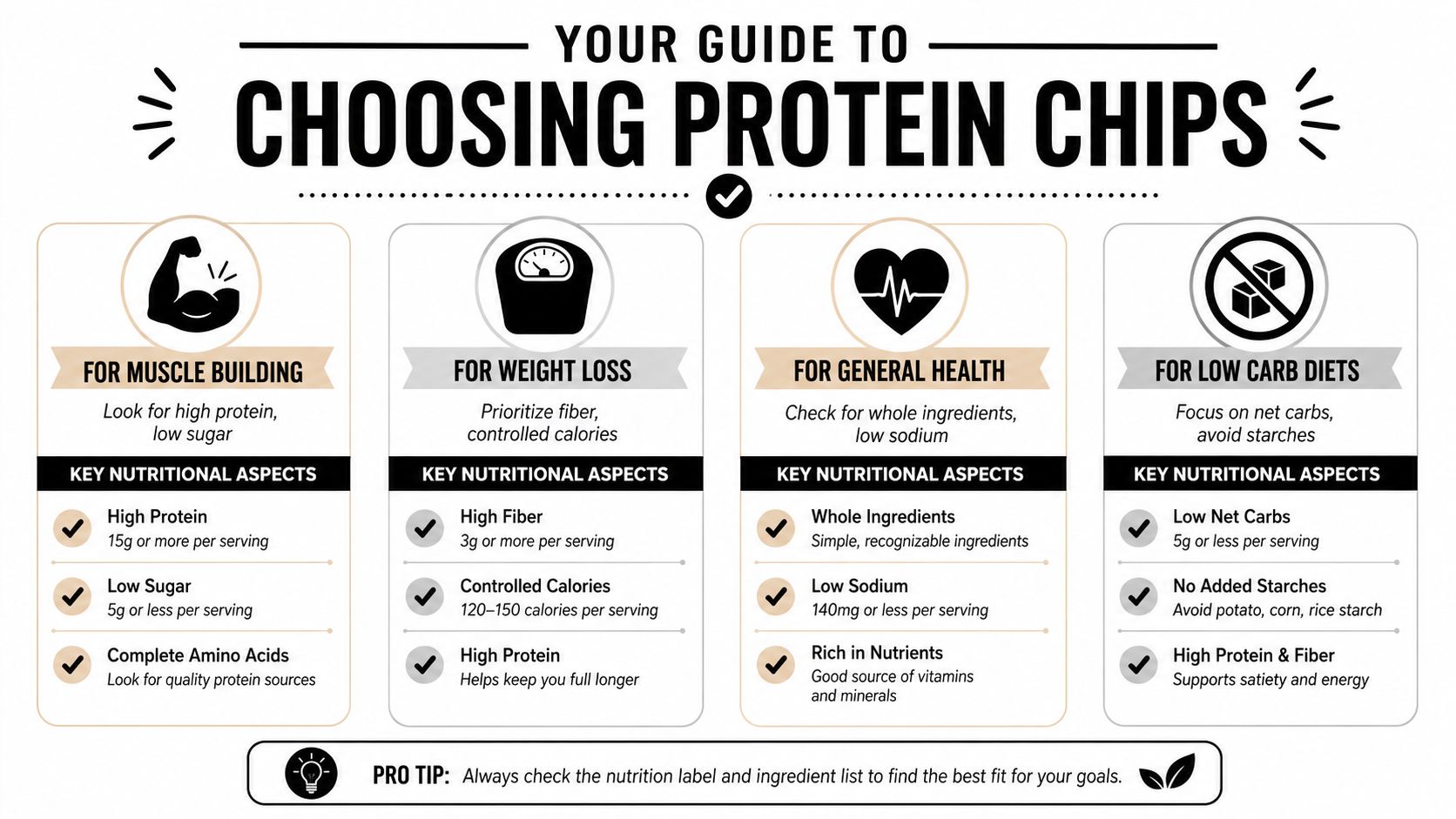
A useful shortcut is to treat the label like a scorecard with three columns: protein, calories, and how satisfied you are likely to feel after eating it. A bag can look impressive on the front and still miss your goal if the protein is modest, the calories climb fast, or the serving is so small that it barely dents hunger.
If your goal is muscle building
Choose a bag that makes protein the main event, not a side note. You want enough protein per serving to meaningfully support your daily intake, with calories that still fit your total plan.
Look for:
- A clear protein payoff for the amount you are eating
- Calories that make sense for a between-meal snack or post-workout add-on
- Lower sugar if you want more of the bag's calories coming from protein rather than sweeteners
This matters most for lifters who already hit training hard but fall short on total daily protein. In that situation, protein chips work like a savory bridge between meals. They are not a substitute for a full meal, but they can help close the gap without another shake.
If your goal is weight management
Start with the protein-to-calorie relationship. A bag with decent protein and controlled calories usually gives you a better chance of staying on track than one that only sounds healthy from the front label.
Then ask a more practical question. Will this portion leave you reasonably satisfied, or will it just wake up your appetite?
Focus on:
- Protein first
- Calories second
- Fiber and sodium after that
That last step matters for real-world results. Higher sodium can make a snack feel harder to read because thirst and “I want something else” can blur together. For GLP-1 users, this is especially relevant. If appetite is lower, each snack needs to count, so a bag that delivers solid protein without using up too many calories can fit better than a random handful of regular chips.
If your goal is clean ingredients or plant-based eating
Read the ingredient list with the same attention you give the macros. Protein quality matters, but so does whether the product fits your preferences, digestion, and routine.
Ask:
- Does the protein source match how I eat?
- Is the ingredient list simple enough for my comfort level?
- Will this flavor and texture make me want to keep it on hand?
Some shoppers specifically want a pea-protein-based savory snack with an allergen-conscious profile. Gym Snack is one example of a plant-based option built around pea protein in a crunchy, savory format.
A quick shopping checklist
Use this when you compare bags side by side:
-
For gym performance
Pick the option where protein is doing real work, not one where the number looks good only because the serving is large. -
For low-carb eating
Check total carbs, fiber, sugar, and serving size together. Those numbers make more sense as a group than on their own. -
For appetite control
Look beyond the protein claim. Calories, portion size, and sodium all shape how that snack feels an hour later. -
For digestion and allergies
Read the ingredient list before you commit. The best macros on the shelf do not help if the product does not sit well.
A good bag is the one that fits the outcome you want after you eat it: steadier energy, better protein intake, or a snack that does not push the rest of your day off course.
Smart Snacking with Protein Chips
The smartest way to use protein chips is as a role player. They work best when they solve a specific problem.
Good times to use them
Mid-afternoon is a common one. That's when many people want something salty, portable, and more satisfying than a low-protein snack.
They can also work well after training if you want savory food and don't feel like drinking another shake. For travel, they're useful because they're easy to carry and don't require refrigeration.
Make them more effective
Protein chips can stand alone, but sometimes they work better as part of a small snack plate.
Try pairing them with:
-
A dip or side that slows you down
Eating from a bowl with a side can make the snack feel more deliberate. -
A produce add-on
Crunch plus volume often works better for fullness than crunch alone. -
A planned eating window
If you know why you're eating them, you're less likely to turn one bag into a grazing trigger.
Don't use protein chips to “be good.” Use them because they fit the moment better than the alternative.
Keep your expectations realistic
Protein chips are still chips. That matters. They can absolutely be part of a fitness-focused routine, but they shouldn't carry the burden of fixing an under-protein day, replacing balanced meals, or masking mindless snacking habits.
Think of them as a strategic swap. If they replace a lower-protein, less filling salty snack, they can help your day. If they become an excuse to add extra packaged food on top of everything else, the label won't save the decision.
The big win is clarity. Once you know how to read protein chips nutrition facts, you stop shopping by buzzword and start shopping by outcome. You can tell whether a bag supports muscle gain, appetite control, low-carb goals, or simple convenience. That's what turns a snack from a random craving into a useful tool.
If you want a savory protein snack that fits training goals without leaning on dessert-style flavors, take a look at Gym Snack. It offers a plant-based, crunchy option for people who want protein in a chip-style format and prefer to compare snacks based on both ingredients and real-world use.