

Absolutely—eating a protein bar before a workout can be a brilliant move to power your performance and protect your muscles. It's a super convenient way to get the protein you need to prevent muscle breakdown and the carbs required for sustained energy, making sure you crush your training session.
Why a Pre-Workout Bar Makes Sense
Think of your body as a high-performance engine getting ready for a big race. You wouldn't start a road trip with an empty gas tank, right? Your workout is the same deal. Giving your body the right fuel beforehand is about more than just staving off hunger; it’s a strategic play to maximize your output, endurance, and even your recovery later on.
A well-formulated protein bar gives you a one-two punch of two critical nutrients:
- Protein: This delivers the amino acids that act as a shield for your muscles, preventing them from being broken down for energy when you're going hard.
- Carbohydrates: These are your body's go-to, most accessible fuel source. They give you the actual power to push through those last few reps.
The Science of Pre-Workout Fueling
Getting your nutrition timing right can completely change the game. The whole idea is to give your muscles a steady supply of amino acids (from protein) and glucose (from carbs) right when they need it.
This isn't just bro-science; it's backed by real data. For example, research has shown that consuming 20-40 grams of protein one to two hours before you train can boost amino acid delivery to your muscles by a whopping 132%. That means significantly less muscle breakdown while you're working out.
The right pre-workout snack isn’t just about calories—it’s about providing targeted nutrients that prepare your muscles for stress and give you the clean-burning fuel needed for peak performance.
Quick Guide to Pre-Workout Protein Bars
So, when is grabbing a protein bar a great idea, and when might you want to think twice? Here's a quick rundown to help you decide.
| Benefit (Why You Should) | Drawback (When to Be Cautious) |
|---|---|
| Provides sustained energy for your entire workout. | Can cause digestive discomfort if eaten too close to exercise. |
| Helps prevent muscle breakdown during intense activity. | Some bars are high in sugar, leading to an energy crash. |
| Convenient and easy to consume on the go. | May contain artificial ingredients or allergens for some people. |
| Can improve overall workout performance and endurance. | Not all bars have the right balance of protein and carbs. |
Ultimately, it comes down to picking the right bar and timing it correctly. For a deeper dive into fueling for cardio, this ultimate guide to pre-run fueling is an excellent resource. You can also explore our own guide on the best pre-workout snacks for muscle gain for more ideas.
How Pre-Workout Fuel Actually Works in Your Body
Ever wondered what's really happening in your body when you eat a protein bar before a workout? It’s more than just putting something in your stomach to stop it from growling. You're actually kicking off a strategic process that gets your muscles primed and ready for action. Knowing how it works is the key to making smarter choices.
Let's think of your muscles like a construction site. To get anything built, the crew needs two critical things: the raw building materials (like bricks and lumber) and a powerful generator to run all the heavy equipment. Your pre-workout snack is what delivers both.
The Role of Protein as Building Blocks
First up, the building materials. The protein you eat gets broken down into amino acids, which are literally the building blocks for muscle tissue. This is a big deal because when you exercise, especially with weights, you’re creating tiny micro-tears in your muscle fibers. Don't worry, that's a good thing—it's how you get stronger.
By having a supply of amino acids already in your system before you even start, your body's "construction crew" has the materials it needs right on hand. This helps prevent your body from breaking down existing muscle for fuel, a state called catabolism. You're essentially stocking the site with supplies before the demolition begins.
How Carbohydrates Power the Machinery
So, protein provides the materials, but what about the power? That's where carbohydrates come in. Carbs are the high-octane fuel that runs the whole operation.
Your body converts carbs into glucose, which then gets stored in your muscles and liver as glycogen. This is your number one, most easily accessible energy source for any kind of intense effort. If you don't have enough glycogen, your performance tanks. You'll feel tired, weak, and just won't be able to push as hard. A well-chosen pre-workout bar tops off those glycogen stores so your internal engine can run at full tilt.
Think of it this way: protein protects your muscles from breaking down, while carbohydrates give you the energy to do the work. The perfect pre-workout snack delivers both, making sure you’re building up, not just tearing down.
Why Fat and Fiber Timing Matters
Now, what about the other things on the nutrition label, like fat and fiber? While both are incredibly important for your overall health, having a lot of them right before a workout can really slow you down.
That’s because fat and fiber take much longer for your body to digest. This sluggish digestion can leave you feeling heavy, full, or even cause cramps during your workout. The energy from these nutrients just doesn't get released quickly enough to help you out.
This is why the ideal pre-workout protein bar has a specific profile:
- Rich in protein to get those amino acids ready.
- A good source of carbohydrates for that immediate energy boost.
- Lower in fat and fiber to avoid digestive slowdown.
When you pick a bar that fits this description, you're giving your body exactly what it needs, right when it needs it. You get the muscle-sparing benefits of protein and the instant power from carbs, all without the digestive drag. It’s a simple shift in thinking that can turn your snack into a serious performance tool.
Decoding the Nutrition Label for Peak Performance
Walking down the snack aisle can feel like a pop quiz you didn't study for. So many bars look healthy, but are really just candy bars in a clever disguise, loaded with ingredients that will absolutely sabotage your workout. Learning to read a nutrition label is the single best skill you can develop to tell a real performance-booster from a sugary pretender.
The first place my eyes go is the protein-to-carb ratio. For a pre-workout snack, you're not looking for a solo superstar; you need a balanced team. I always suggest looking for a bar with at least 15-20 grams of protein to support your muscles, paired with a similar amount of carbohydrates for that quick-but-steady energy. A ratio of around 1:1 or 1:1.5 (protein to carbs) is usually the sweet spot.
But the numbers only tell half the story. You have to play detective and figure out where those macros are coming from.
What to Look For (And What to Avoid)
Not all protein is created equal, and the same goes for carbs and fats. Some ingredients will power you through that last set, while others will have you heading for the locker room with a stomach ache.
Here's a quick cheat sheet to help you sort the good from the bad.
Pre-Workout Protein Bar Ingredient Checklist
| Green Light Ingredients (Fuel Your Workout) | Red Light Ingredients (Hold You Back) |
|---|---|
| High-Quality Proteins: Whey, casein, pea protein, or brown rice protein offer complete amino acids for muscle support. | Sugar Alcohols: Erythritol, sorbitol, and xylitol are notorious for causing bloating, gas, and digestive upset mid-workout. |
| Complex Carbohydrates: Oats, quinoa, or sweet potatoes provide a slow, steady release of energy without the crash. | Excessive Added Sugars: High-fructose corn syrup and cane sugar lead to a brief energy spike followed by a hard crash. Keep it under 10g. |
| Natural Sweeteners: A little bit of maple syrup, honey, or dates offers sweetness without the gut-wrenching side effects of artificial options. | High Saturated & Trans Fats: Palm oil and hydrogenated oils slow digestion to a crawl, leaving you feeling sluggish and heavy. |
| Healthy Fats: Nuts and seeds provide quality fats that won't weigh you down. | Artificial Ingredients: If the list includes artificial flavors, colors, or preservatives you can't pronounce, it's a hard pass. |
Think of the "Green Light" column as your all-star team. These are clean, effective ingredients that get the job done. With the global demand for plant-based protein growing by 15% each year since 2020, it’s easier than ever to find great vegan options. Pea protein, like the kind in Gym Snack bags (30g+ per bag), is a perfect example of a high-quality, plant-based fuel source that fits this bill.
A great pre-workout bar should have a short, recognizable ingredient list. If it reads like a chemistry textbook, it’s probably not the clean fuel your body needs to perform at its best.
On the other hand, the "Red Light" ingredients are performance killers. Spotting them on a label is your cue to put that bar right back on the shelf.
By keeping these simple guidelines in mind, you can confidently choose a protein bar before a workout that actually helps you reach your goals. If you want to dive even deeper, check out our guide on how to read nutrition labels.
Finding Your Perfect Pre-Workout Timing
You’ve got the right bar in hand, but the big question is, when should you actually eat it? Nailing the timing of your pre-workout protein bar is just as critical as picking the right one. It's a bit like a theatrical performance—even the best actors can't save the show if they miss their cue.
Eat too close to your workout, and you might get that dreaded heavy feeling, bloating, or cramps. That's your body trying to digest food and power your muscles at the same time. On the flip side, eat too far in advance, and you could burn through all that good energy before your workout even gets interesting, leaving you hitting a wall mid-set.
The real goal is to find that personal sweet spot where the nutrients are fully absorbed and ready to go when you need them most.
Your Pre-Workout Timing Timeline
To get the most bang for your buck without any digestive drama, you'll want to adjust your timing based on how soon you plan to hit the gym. Each window serves a different purpose.
-
90-120 Minutes Before: This is your prime time for a more balanced, substantial protein bar. Giving your body this much of a heads-up allows it to properly digest the protein, carbs, and fats. The result is a slow, steady stream of energy perfect for powering through a long, tough session, like a heavy leg day.
-
45-60 Minutes Before: For most people, this is the sweet spot. Eating a standard protein bar before a workout in this window gives your body just enough time to start breaking everything down without making you feel weighed down. It's the ideal timing for a typical hour-long workout.
-
30 Minutes or Less Before: Cutting it close? You need something that digests fast. Look for a smaller, carb-forward bar with just a bit of protein and very little fat or fiber. A dense, heavy bar this close to go-time is a recipe for a sluggish, uncomfortable workout.
Ultimately, your own digestion is the final boss here. A good starting point is the 60-minute window. From there, listen to your body. If you feel heavy, try eating a little earlier next time. If you feel your energy dip, try eating a bit closer to your session.
This simple timeline is all about matching your fuel to your schedule.
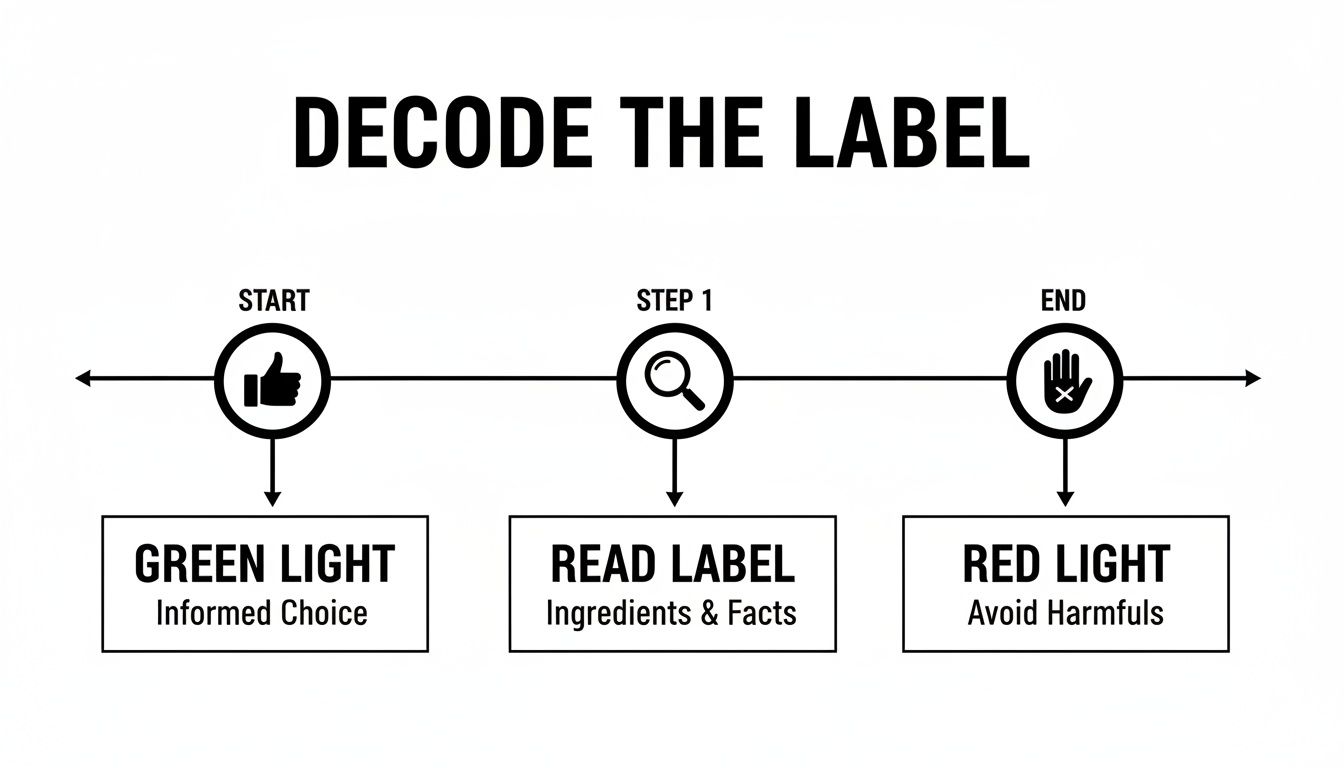
This chart helps break down what to look for on a label, making it easier to make a quick, smart choice. Once you get these timing principles down, you can walk into every workout knowing your body is fueled and ready for whatever you throw at it.
Customizing Your Snack to Your Fitness Goals
There's no such thing as a "perfect" pre-workout snack, mainly because there's no single fitness goal. What works for a powerlifter chasing a new PR is going to be completely different from what a plant-based marathon runner needs. Your specific goal really dictates your nutritional needs, so matching your snack to your workout is the key to unlocking your best performance.
Think of it like putting the right tires on a car. You wouldn't use slick racing tires for a muddy off-road trail, and knobby tires would just slow you down on a smooth highway. The same principle applies here: you have to match your fuel to your activity to get the job done right.
Fueling for Strength and Power
If you're looking to build muscle fast, the right pre-workout protein bar is a serious asset in your nutritional toolbox. For anyone focused on strength, the game is all about preserving muscle and maximizing power. That means you need a snack packed with high-quality protein to feed your muscles a steady stream of amino acids, which helps prevent them from breaking down during those heavy lifts.
Your go-to bar should have around 20-30 grams of protein and an equal or slightly higher amount of complex carbs. The carbohydrates are there to top off your glycogen stores, giving you the sustained energy you need to push through tough sets without hitting a wall too early.
Plant-Based Performance
For those on a plant-based diet, the challenge is a little different. You need to make sure you're getting a complete amino acid profile along with key micronutrients. While many plant proteins are "incomplete" on their own, smart blends—like pea and rice protein—can deliver all the essential amino acids your body needs to repair and build muscle.
When you're picking a plant-based bar, keep an eye out for these things:
- A blend of protein sources to make sure it's a complete protein.
- Clean, recognizable ingredients without a bunch of weird fillers or soy.
- Iron-rich components, since iron is absolutely essential for transporting oxygen and keeping your energy levels up.
A well-made vegan bar can give you powerful, effective fuel that doesn't force you to compromise on quality. It lets you train hard while sticking to your dietary principles.
Weight Management and Satiety
When managing your weight is the main goal, your pre-workout snack has to pull double duty. It needs to give you energy, but it also has to keep hunger in check so you don't find yourself raiding the pantry after your workout. A protein-forward approach is a game-changer here. Forget those sugary, candy-like bars that just spike your blood sugar; a savory protein snack gives you a much more stable and sustained energy release.
A savory, high-protein bar works with your body's hunger cues, not against them. It helps you feel full and satisfied, keeping your energy steady and your mind on your workout instead of on your stomach.
This is why busy professionals and people using GLP-1 medications often find that savory, non-dessert bars are so effective. They help trigger fullness hormones that curb hunger and keep you going. Choosing the right low-calorie protein bars can be a smart way to fuel up while staying within your daily calorie targets.
By matching your bar to your specific goals, you're not just eating a snack—you're using a precision tool for success.
Common Questions About Pre-Workout Protein Bars
When it comes to fueling up before a workout, there's a lot of conflicting advice out there. Let's cut through the noise and tackle some of the most common questions about using a protein bar to get the most out of your training.
Can I Eat a Protein Bar Before Cardio?
You absolutely can. For longer cardio sessions like a run or a bike ride, a protein bar can be a fantastic way to get sustained energy. The trick is to find one with a good mix of carbohydrates for that initial fuel and protein to help prevent muscle breakdown during the long haul.
Just make sure you give your body time to digest it. Eating a bar at least 45-60 minutes before you start should help you avoid any stomach issues. And it’s probably a good idea to go for a lighter, easier-to-digest bar so you don’t feel weighed down.
Is a Bar Better Than a Shake Before My Workout?
This one really boils down to personal preference and how much time you have. A liquid protein shake is built for speed. Your body absorbs it quickly, making it a great option if you're in a time crunch and only have about 20-30 minutes before you hit the gym.
A solid protein bar, on the other hand, takes longer to break down. That means you get a much more gradual, steady stream of energy, which is perfect if you're eating 60-90 minutes before your workout. Plus, let's be honest, sometimes chewing on a solid bar just feels more satisfying and does a better job of keeping hunger at bay.
Will a Pre-Workout Protein Bar Make Me Gain Weight?
It's a common fear, but no single food will make you gain weight. It always comes back to your total daily calorie intake versus what you burn. A well-chosen protein bar can actually be a great ally in managing your weight.
Here’s why:
- It keeps you full. The protein and fiber help you feel satisfied, which can stop you from overeating later.
- It powers your workout. Better fuel means you can train harder and burn more calories.
- It builds muscle. Protein provides the raw materials for muscle growth, and having more muscle mass naturally increases your metabolism.
Think of a pre-workout protein bar as a tool. Used correctly within a balanced diet, it helps you perform better and build muscle—two of the most important factors for healthy weight management.
What if My Bar Has Too Much Sugar?
This is a really important one. A super sugary bar might give you a quick jolt of energy, but the inevitable crash that follows can leave you feeling sluggish and unmotivated right in the middle of your workout. It's a classic recipe for a lackluster session.
You’re much better off choosing a bar that gets its energy from complex carbohydrates, like oats. This will give you steady, reliable fuel that lasts your entire workout, helping you finish as strong as you started. My advice? Always check the label and aim for a bar with minimal added sugar.
Ready to fuel your workouts with a snack that’s as delicious as it is effective? Gym Snack offers savory, plant-based protein snacks with over 30g of protein per bag to power you through any session. Discover your new favorite pre-workout fuel at Gym Snack.