

Low-calorie protein bars are designed to be a quick, convenient snack that packs a solid protein punch without a ton of calories—usually staying under the 200-calorie mark. A good one will give you at least 15g of protein, keep the sugar low, and use quality ingredients. This makes them a pretty handy tool if you're trying to manage your weight or hit your fitness targets.
Why Not All Low Calorie Protein Bars Are Created Equal
Ever walk down the snack aisle and feel completely overwhelmed by the wall of protein bars? They all scream "healthy," but that's often just clever marketing. The phrase "low calorie" can be a bit of a trap.
The reality is, a lot of these bars are basically candy bars in disguise. They might have a bit of protein thrown in, but they’re also loaded with fillers, sugar alcohols, and artificial sweeteners that do you no favors.
A truly great low-calorie protein bar is a different beast entirely. It's not just about the numbers on the label, but what's behind those numbers. People grab them for all sorts of reasons—to crush a craving while dieting, to feed their muscles after a workout, or just to have a decent option when they're on the run.
Understanding Their Role in Your Diet
To really get why some bars are worth your money and others aren't, you have to think about where they fit in with other best foods for weight loss. A high-quality bar should actually help you, not just fill a void.
Here’s what a good one should do for you:
- For Weight Management: High protein and fiber are key. They work together to make you feel full and satisfied, which helps kill the urge to snack on junk later.
- For Muscle Support: To repair and build muscle, you need protein—specifically, complete protein with all the essential amino acids. If you're curious about the differences, we break it all down in our guide to pea protein vs. whey.
- For Convenience: Let's face it, life gets busy. A well-made protein bar is a much smarter choice than hitting the drive-thru or the office vending machine when you're in a pinch.
It's no surprise that the demand for these convenient snacks is exploding. The global protein bar market was valued at around $5.15 billion and is expected to climb to $7.33 billion by 2029. That's a lot of protein bars. At the end of the day, think of a protein bar not as a magic fix, but as a smart supplement to a diet based on whole foods.
How to Decode a Nutrition Label Like an Expert
Staring at a protein bar's nutrition label can feel like trying to crack a code. It's a wall of text and numbers, but learning to read it is the single most important skill you can develop for picking a snack that actually helps, not hurts, your goals. Think of the label as the bar's resume—you're the hiring manager, and you need to see if it's qualified for the job.
Sure, your eyes probably jump straight to the calories and protein. Those are the big headlines, but the real story is in the fine print. A bar might shout about its 20 grams of protein, but if it's also hiding an equal amount of sugar, it’s not really supporting your goals, is it? It's time to look past the marketing and understand the full picture.
Look Beyond Just Protein and Calories
The first gut check is the protein-to-calorie ratio. This tells you if you're getting a worthwhile dose of protein for the energy you're consuming.
A great rule of thumb is to look for at least 10 grams of protein for every 100 calories. So, if you pick up a 180-calorie bar, you’ll want to see a minimum of 18 grams of protein. This simple check ensures the bar is focused on muscle support and keeping you full, not just delivering empty calories.
This little map breaks down the three main things to look for.
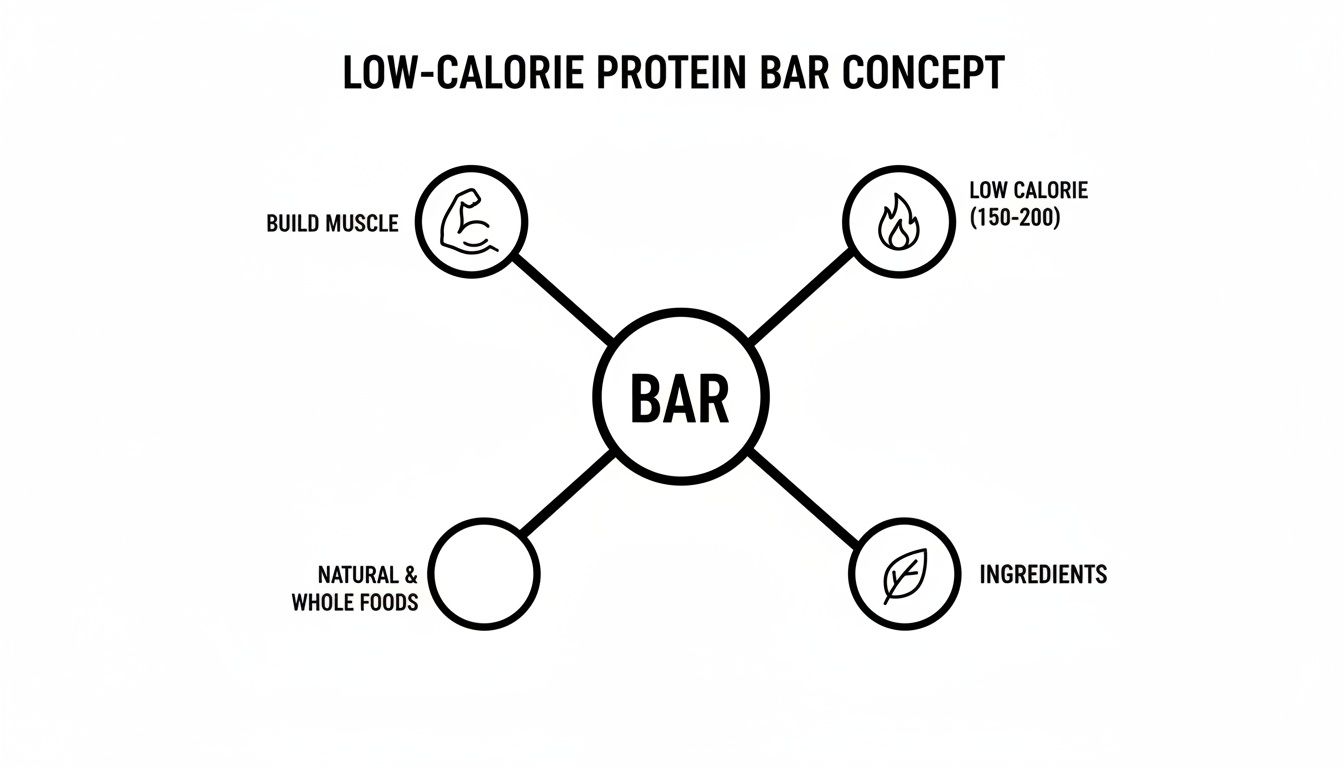
As you can see, the best bars strike a perfect balance between high protein, a low calorie count, and clean ingredients. It's a powerful trio.
Once you’ve checked that ratio, your next move is to scan down to the carbohydrates section. This is where you separate the good from the junk.
The Truth About Sugar and Fiber
This is where so many brands pull a fast one. The sugar content is a dealbreaker. You want to see a low number here, ideally under 5 grams. But don’t stop there—look specifically for the "added sugars" line. This tells you exactly how much sugar was dumped in during processing, as opposed to what’s naturally present from ingredients like fruit.
Expert Tip: Many bars swap out real sugar for sugar alcohols—things like maltitol, sorbitol, and erythritol. They keep the calorie count down, but for a lot of people, they bring on bloating, gas, and an upset stomach. If a bar tastes ridiculously sweet but the label shows low sugar, flip it over and check the ingredients for these culprits.
On the flip side, fiber is your best friend when it comes to staying full. It slows everything down, keeps your blood sugar from spiking, and helps you feel satisfied long after you've finished eating.
- What to look for: A solid 3-5 grams of fiber is a great target. It's enough to help with satiety without going overboard.
- What to be wary of: Watch out for bars packed with extremely high fiber (10+ grams), often from synthetic sources like corn fiber or chicory root. While not necessarily bad, these can cause the same kind of digestive trouble as sugar alcohols for some people.
Getting a handle on these details transforms you from a casual snacker into someone who knows exactly what they're putting into their body. If you’re ready for an even deeper dive, our full guide on how to read nutrition labels has even more pro tips. By analyzing the macros, sugars, and fiber, you can see right through the flashy packaging and pick a bar that genuinely fuels you.
Spotting the Best and Worst Ingredients on the List
The nutrition label gives you the numbers, but the ingredient list tells the real story. Think of it like looking under the hood of a car—the shiny exterior might catch your eye, but the engine is what determines performance. This is where you cut through the marketing fluff and figure out if you're holding a genuinely nutritious snack or just a candy bar in disguise.
Remember, ingredients are listed by weight, from most to least. The first few items on that list make up the bulk of what you're eating. If sugar, corn syrup, or a bunch of chemical names you can't pronounce are at the top, that’s a huge red flag. A quality low-calorie protein bar should always lead with a solid protein source.
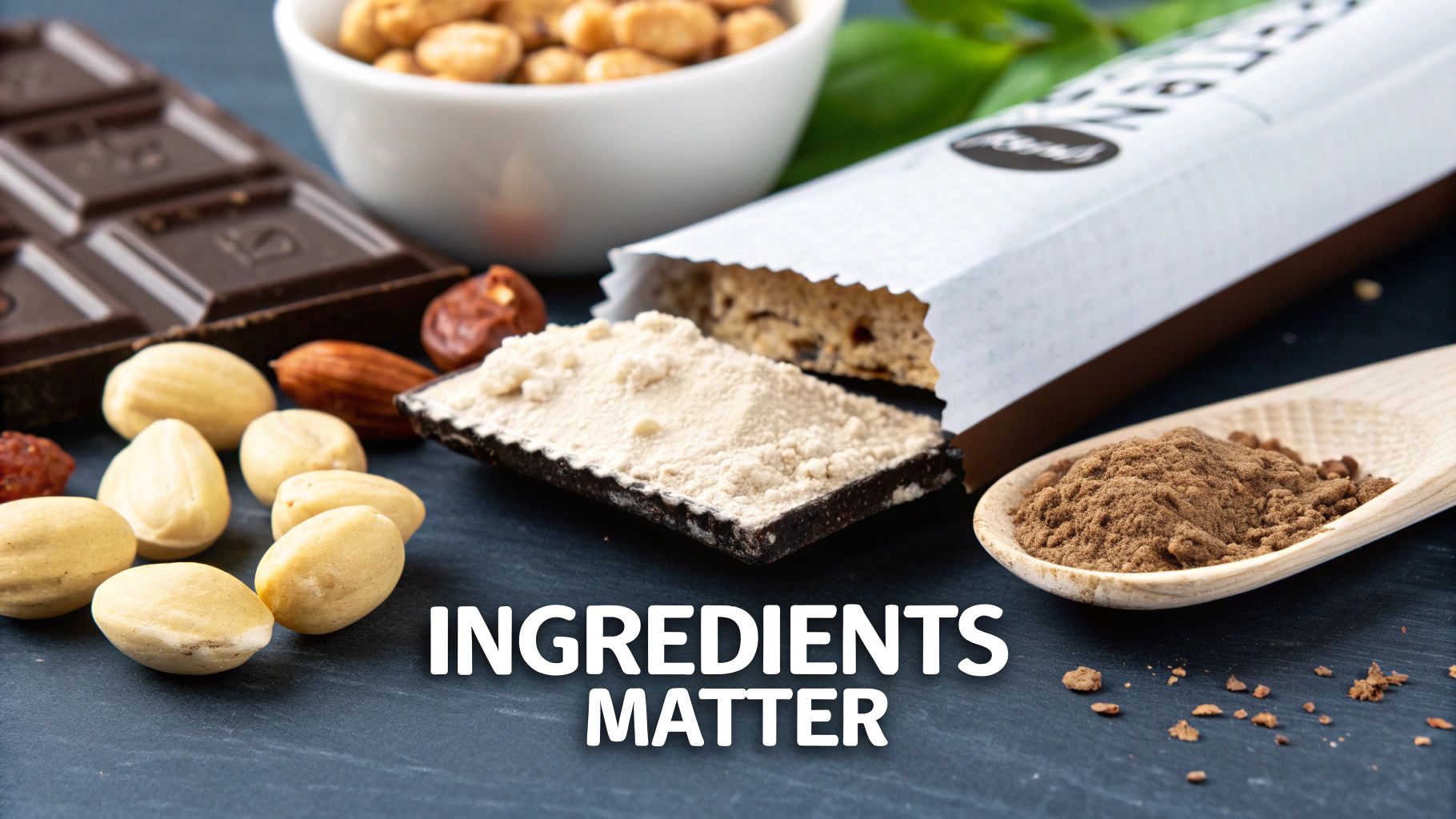
Green Light Ingredients to Look For
When you scan the label, you want to see things you recognize: whole foods and high-quality components. These are the ingredients that signal you’re making a smart choice, one that actually supports your health goals by providing real nutritional value your body knows what to do with.
Here’s a quick checklist of the good stuff:
- Complete Protein Sources: Look for whey protein isolate, casein, or a smart plant-based blend like pea and brown rice protein. These deliver all the essential amino acids your muscles crave for repair and growth.
- Natural Sweeteners: Stevia and monk fruit are excellent choices. Even small amounts of natural sugars from whole foods like dates are far better than a chemical cocktail.
- Healthy Fats: Ingredients like almond butter, chia seeds, flax seeds, or cocoa butter provide valuable nutrients and, just as importantly, help you feel full and satisfied.
- Whole Food Carbs: Things like oats, quinoa, or bits of real fruit offer sustained energy and natural fiber, which is much kinder to your digestive system than synthetic fillers.
Red Light Ingredients to Avoid
Knowing what to look for is only half the battle; knowing what to avoid is just as crucial. Many bars are packed with cheap fillers, preservatives, and sketchy sweeteners that do nothing for you nutritionally and can actually work against your goals.
Be especially wary of bars that hit their low-calorie targets with a one-two punch of artificial sweeteners and massive amounts of fiber. The nutrition panel might look perfect, but the bloating, gas, and stomach upset that often follow are anything but.
Keep an eye out for these red flags on the ingredient list:
- Artificial Sweeteners: Sucralose, aspartame, and acesulfame potassium are common culprits. They’re calorie-free, sure, but they can mess with your gut health and, for some people, even trigger more sugar cravings.
- Sugar Alcohols: Maltitol is notorious for causing digestive distress. While erythritol is often better tolerated, it can still cause bloating for many, especially in large amounts.
- Unhealthy Fats and Oils: Palm oil, hydrogenated oils, and soybean oil are often thrown in to improve texture and extend shelf life, but they offer zero health benefits.
- Soy Protein Isolate: While not automatically "bad," it's a heavily processed ingredient and a common allergen. You'll notice that most top-tier bars have moved on to higher-quality sources like whey or pea protein.
Once you get the hang of spotting these key ingredients, you can confidently pick a bar that actually fuels your body instead of just tricking your taste buds.
How to Match a Protein Bar to Your Fitness Goals
Think of a protein bar as a tool in your fitness toolbox. You wouldn't use a hammer to drive a screw, right? The same logic applies here. The "best" low-calorie protein bar isn't a one-size-fits-all product; it's the one that's built for the job you need it to do.
Picking the right bar means aligning its nutritional profile with your specific goals. Do that, and your snack goes from a simple convenience to a strategic part of your plan, making sure every calorie and gram of protein is pulling its weight.
If Your Goal Is Weight Loss and Staying Full
When you're trying to lose weight, your secret weapon is satiety—that feeling of being full and satisfied. A good protein bar can be a game-changer, helping you crush cravings and avoid reaching for the office donuts or a bag of chips.
Your mission is simple: find the most protein bang for the fewest calorie bucks.
- Look for a high protein-to-calorie ratio: A good target is 15-20 grams of protein for under 200 calories.
- Don't forget the fiber: Aim for at least 3-5 grams of fiber. It slows down digestion, which is key to feeling full for longer.
This combination turns a snack into a satisfying mini-meal, making it so much easier to stick to your calorie deficit without feeling like you're starving all the time.
If Your Goal Is Muscle Building and Recovery
Now, if you're hitting the gym to build or maintain muscle, your needs are a bit different. Calories are still part of the equation, but protein quality and timing become the real stars of the show, especially right after a workout when your muscles are screaming for nutrients to repair and grow.
Here’s what to look for in a post-workout bar:
- A complete protein source: Whey isolate is a classic choice because it absorbs quickly, but a well-designed plant-based blend can work just as well.
- All essential amino acids (EAAs): These are the non-negotiable building blocks your body absolutely needs to kickstart muscle protein synthesis.
Grabbing a bar with 20+ grams of high-quality protein within an hour of your last rep can be a huge help for recovery. It's the perfect quick substitute when you can't get to a protein shake right away.
This idea of targeted, convenient nutrition is catching on everywhere. The global demand for these kinds of snacks is booming, with a projected growth rate of 6.52% through 2034 as more people focus on fitness and proactive health. If you're curious, you can explore more about this market trend on Precedence Research.
At the end of the day, whether you're trying to manage your weight or build muscle, choosing a bar that actually lines up with your goal is what makes every bite count.
Breaking Free from Sweet Snacks with Savory Protein
If you’ve been on the fitness wagon for any length of time, you’ve probably noticed something. Almost every high-protein snack on the market tastes like dessert. Chocolate fudge, cookie dough, birthday cake… you name it. And while they can be a lifesaver, they also lead to what I call flavor fatigue—that feeling when the thought of another sweet, chalky bar makes you want to run for the hills.
This is a huge, often unspoken, roadblock for people trying to hit their protein macros. You're craving something salty and savory, but your only "healthy" option is another candy bar imposter. What happens next? You end up grabbing a bag of chips or crackers, and suddenly your goals feel a little further away. All because your taste buds needed a break.
But what if your protein snack felt more like a real-deal, satisfying bite instead of a dessert? That’s exactly where savory protein snacks come into the picture.
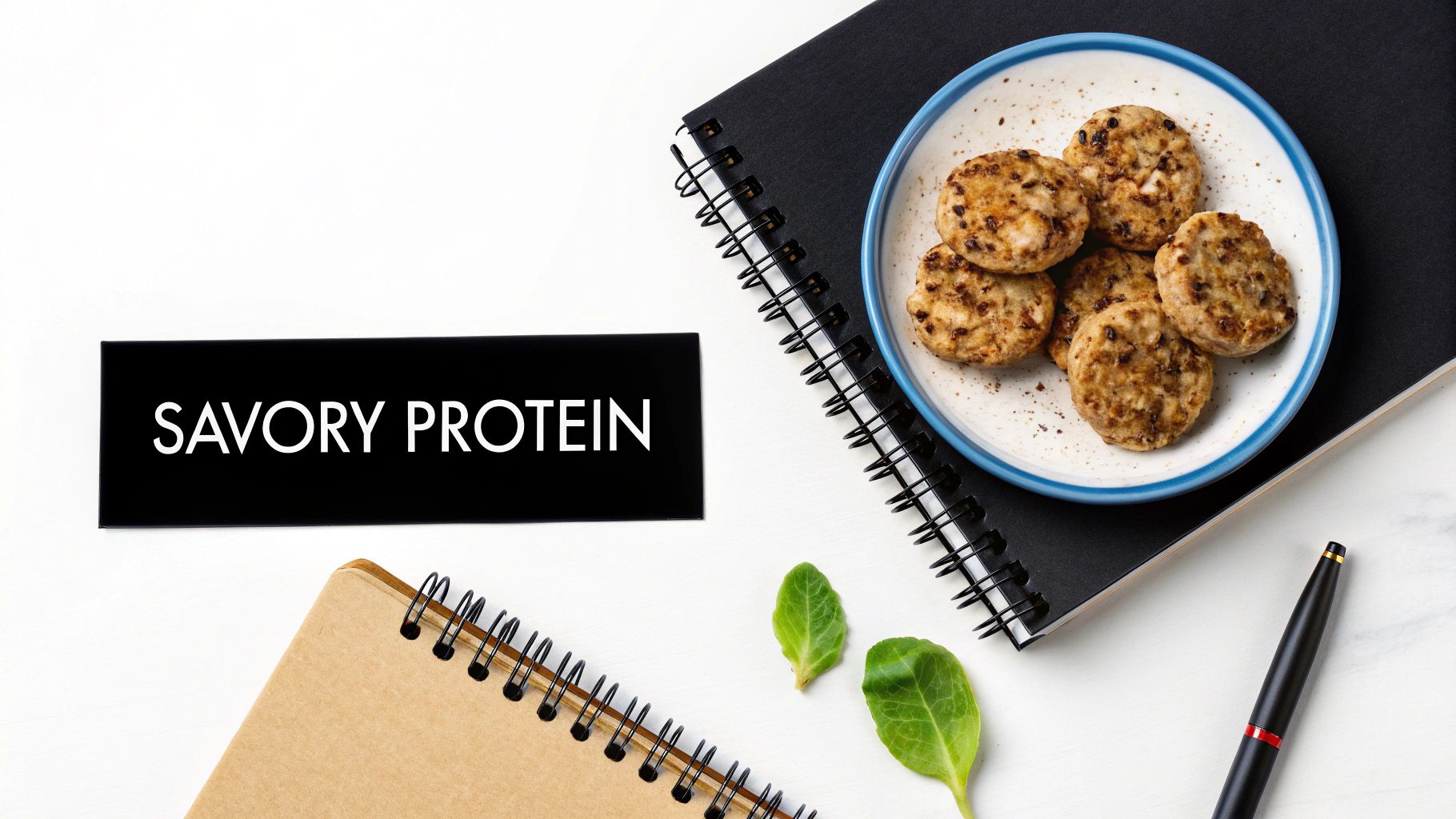
The Power of a Savory and Crunchy Alternative
Picture this: you get to crush that craving for something cheesy and crunchy while still packing in 15 grams of protein. That’s the real magic of a savory alternative. Instead of piling more sugar into your day, you get to tackle that completely different craving that always seems to strike mid-afternoon or late at night.
A crunchy, savory protein snack just hits different. The satisfying crunch and bold flavor can feel way more fulfilling when you're simply not in the mood for sweet. This variety is the secret weapon for long-term consistency. When you actually enjoy your snack options, sticking to your nutrition plan feels less like a chore and more like a choice you’re happy to make.
There's a huge psychological win with savory snacks, too. They feel more like substantial food and less like a "treat," which helps shift your mindset from indulgence to fuel. That shift supports both your physical and mental game.
Choosing Clean Ingredients for Better Fuel
When you start looking at savory options, the same rule applies: ingredients are king. You want a snack that not only tastes great but is built on a foundation of clean, high-quality stuff. A truly top-tier savory snack doesn't just copy the old low-calorie protein bar formula.
Keep an eye out for products that are transparent about what's inside. Here’s what separates the good from the great:
- Allergen-Friendly Protein: I’m a big fan of high-quality plant-based sources like pea protein. It’s easy on the gut and naturally free from common troublemakers like dairy and soy.
- No Seed Oils: Healthy fats are crucial, but a lot of snacks are loaded with cheap, inflammatory seed oils. Look for snacks that skip them entirely.
- A Clean and Simple List: The best snacks have ingredients you can actually recognize and pronounce. It’s the easiest way to know you’re not getting a bunch of weird fillers or artificial junk.
By making the switch to a savory snack with clean ingredients, you're doing more than just beating flavor fatigue—you're giving your body better fuel to work with. For a closer look at savory options that can help you nail your goals, check out our guide on high-protein savory snacks. Trust me, this simple swap can be a powerful way to stay on track and actually enjoy the food you eat.
Got Questions About Low-Calorie Protein Bars? We've Got Answers.
Even with all the info, a few common questions always seem to surface when people are trying to pick the right low-calorie protein bar. Let's tackle these head-on so you can feel 100% confident when you're navigating the snack aisle.
Think of this as your final checklist. Getting these last few details sorted out will ensure the bar you choose is actually helping your health goals, not just acting as a convenient (and potentially problematic) bite.
So, Can I Eat a Low-Calorie Protein Bar Every Day?
Absolutely, you can have a bar every day, but there's a big "if" attached: it has to be part of a diet that's already built on real, whole foods. See it as a helpful tool in your nutritional toolkit, not the star of the show.
A daily bar can be a lifesaver for hitting your protein goals, especially on those super busy days. The key to making this a healthy habit is choosing bars with very little added sugar and a short list of ingredients you can actually recognize. Build your meals first, then use the bar to fill in any gaps.
What's the Deal with Sugar Alcohols? Are They Bad for Me?
"Bad" isn't the right word, but for some people, they can be a real nightmare. Ingredients like erythritol, xylitol, and especially maltitol are what manufacturers use to make bars sweet without adding the calories of regular sugar.
The catch? They're famous for causing digestive chaos—think bloating, gas, and an upset stomach. If you have a sensitive gut, sugar alcohols might not be your friend.
The Takeaway: If a protein bar consistently leaves you feeling bloated, flip it over and check for sugar alcohols. You might find that bars sweetened with stevia or monk fruit are a much happier choice for your digestive system.
It all boils down to what your body can handle. Pay close attention to how you feel after eating one.
When Is the Best Time to Eat a Low-Calorie Protein Bar?
Honestly, the "best" time is whenever it serves your goals for that day. There isn't a single magic window. It’s all about being strategic.
- For Post-Workout Recovery: Tucking into a bar within 30-60 minutes of finishing your workout is a great way to kickstart muscle repair. It gives your body the quick shot of protein it's craving.
- To Keep Hunger at Bay: A bar between meals can be a game-changer. It crushes those midday cravings and stops you from showing up to your next meal absolutely starving.
- As a Quick-Fix Breakfast: On mornings when you're sprinting out the door, a well-chosen bar can give you that essential protein boost to get your day started right.
The trick is to view your low-calorie protein bar as a functional food. Use it to plug nutritional holes, manage your appetite, or support your energy in a way that fits your schedule and your fitness goals.
Tired of the same old sweet, chalky protein bars? Gym Snack offers a savory, crunchy, plant-based alternative that crushes cravings while packing 15g of clean pea protein. Discover a better way to snack at https://gymsnack.com.