

Most advice about protein bars and cookies gets one thing wrong. It treats them like interchangeable fitness snacks, when a lot of them are built more like shelf-stable desserts with a protein badge on top.
That matters because the market has grown fast around convenience and taste, not around strict nutrition quality. The U.S. protein bar market reached $4.03 billion in 2024, with about 3.0 billion bars sold, and the high-protein bar slice, defined as bars with at least 15 grams of protein, reached nearly $1.5 billion in sales, up 8% year over year, with more than 650 million bars, up 3% (Glanbia's 2024 U.S. nutrition bar market trends). That growth doesn't mean every bar or cookie deserves a place in your bag.
The useful question is simpler. Does the product support your training, your stomach, and your appetite, or is it just a sweet, expensive way to hit a protein number on paper?
Why Most Protein Bars and Cookies Fail the Health Test
Many shoppers buy protein bars and cookies because the wrapper says high protein, low sugar, or fitness fuel. That's not enough. The issue is that many of these products are engineered to feel indulgent first, then retrofitted with protein second, which is why they can land closer to dessert than recovery food.
Independent consumer guidance has warned for years that many protein bars are still high in sugar, calories, total fat, and saturated fat, so the protein claim can hide a nutrient profile that doesn't match the health halo. One survey also found protein bars had the highest mean energy per serving and per 100 g, plus the highest mean total fat and saturated fat per serving among high-protein snacks, which is a brutal reminder that “high protein” doesn't automatically mean “smart choice” (Safefood protein bar report).
Read the back panel, not the slogan
If a bar or cookie tastes like a candy bar, check whether it behaves like one in the ingredient list. Sugar, syrups, chocolate coatings, and fat systems can make the product easier to eat but harder to use as a real training snack.
Practical rule: if the protein claim is loud but the ingredient list reads like a confectionery formula, treat it like a treat, not a performance staple.
The category has also spread into everyday snacking, which makes the confusion worse. People reach for these products between meetings, before training, after training, and even as meal replacements, but the food itself hasn't changed just because the use case has.
That's why I don't start with taste rankings. I start with purpose. If you need a snack that supports satiety, stable energy, and decent digestion, you have to judge the bar or cookie by its actual composition, not by the number on the front.
Ingredient and Nutrition Breakdown of Bars Versus Cookies
Protein bars and cookies look simple from the outside. Inside, they're usually built around a balancing act between protein load, sweetness, moisture control, and texture. That balance is why the same category can produce a bar that's firm and useful, or one that's sticky, crumbly, or gut-unfriendly.
Commercial cookies-and-cream or cookie-dough bars often deliver about 20 to 21 g protein per bar, but the formulation usually depends on protein blends plus glycerin, maltitol, polydextrose, erythritol, and similar ingredients to keep sugar low while preserving chew and shelf stability (Target product example). Those ingredients are not neutral. They change sweetness, mouthfeel, and digestion as much as they change the macro label.
What the label is really telling you
Protein dose matters, but the rest of the formula tells you how the product will behave in your body. Sugar alcohols and soluble fibers can help lower net sugar, but they can also create a slow, dense chew or cause gastrointestinal discomfort in some people, especially when used around training.
| Format | Protein (g) | Sugar (g) | Sugar Alcohols (g) | Common Binders |
|---|---|---|---|---|
| Cookies-and-cream style bar | 20 | Low, usually reduced through substitution | Often present | Milk protein blend, glycerin, maltitol, polydextrose, sucralose |
| Cookie-dough style bar | 21 | 1 | 6 | Protein blend, fiber system, sugar alcohols, softening agents |
| Homemade-style date cookie bar | Not standardized | Naturally sweetened | None listed | Dates, almond flour, nut or seed butter, chocolate |
The comparison matters because water activity, fat phase management, and ingredient functionality drive shelf life and texture. USDA specifications for some protein bars set water activity at no more than 0.55, trans fat at 0 g, and a minimum shelf life of 6 months at 80°F, which shows how tightly these products have to be engineered to survive ambient distribution (USDA ration bar guidance). That same technical tightness is why overmixing or a poorly managed fat phase can make a bar dense, sticky, or brittle.
If you want a simple label check, start with the ingredient list and use this protein bar nutrition guide as a reference point, then compare it to what you need.
Which Format Works Best for Your Specific Goals
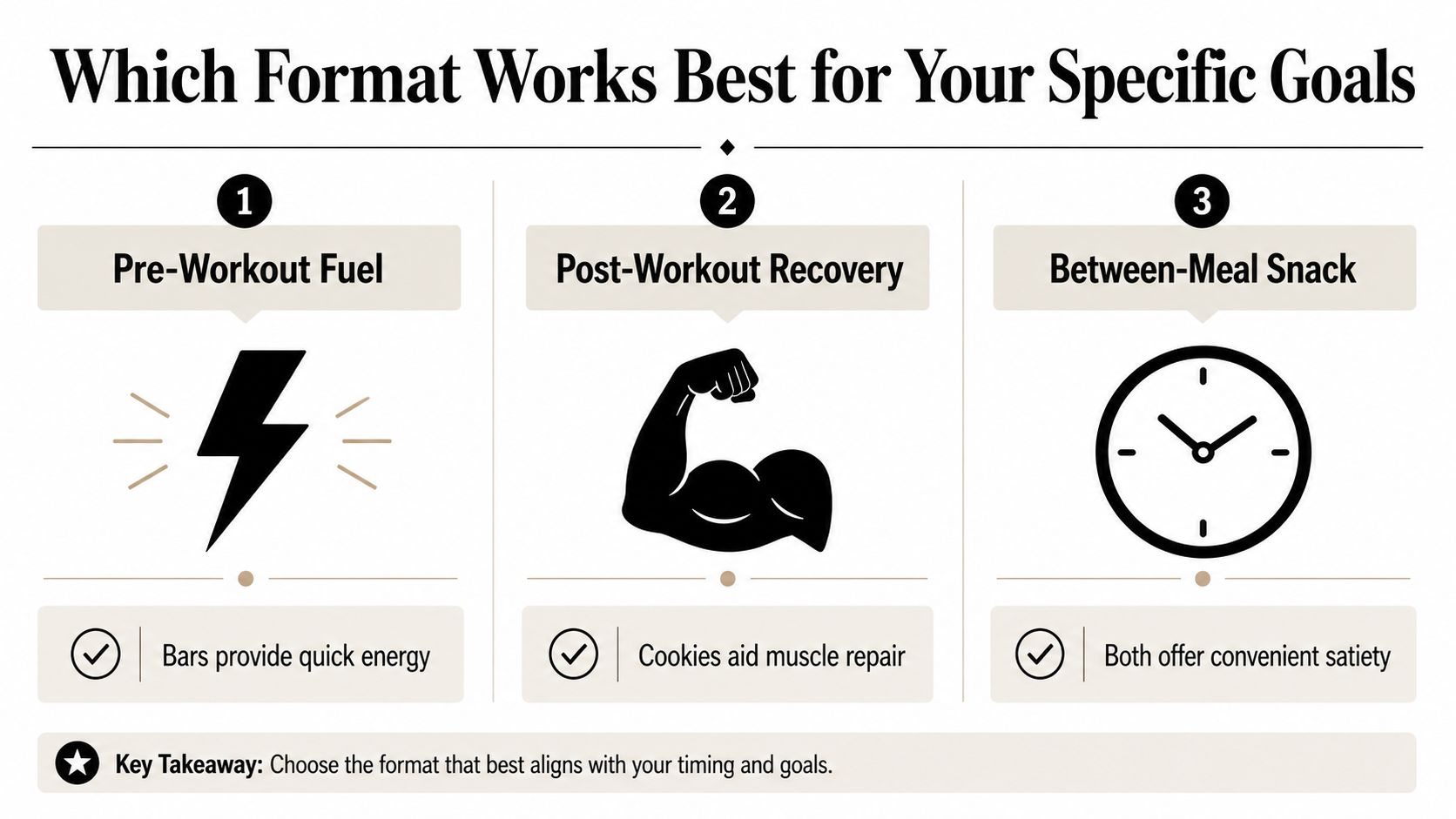
The right choice depends on the job you want the snack to do. A pre-workout snack should sit differently in the stomach than a between-meal snack, and a recovery snack doesn't need the same texture or sweetness level as something you eat at your desk.
Match the format to the moment
For pre-workout fuel, I lean toward the option that digests predictably and doesn't sit heavy. That usually means fewer sticky fats, fewer heavy coatings, and less sugar alcohol load. If the product causes bloating, it's already failed before the workout starts.
For post-workout recovery, the main question is whether you can tolerate the texture and still eat it consistently. Bars can work well here because they're portable and convenient, but sweet cookie-style products can also fit if the rest of the formula is controlled and you're not using them as a dessert excuse.
For between-meal hunger control, the most important variable is satiety, not novelty. Protein bars and cookies can work, but the best choices are the ones you can eat without rebound cravings or stomach drama.
If your snack leaves you hungrier an hour later, it didn't solve anything. It just delayed the problem.
There's also a weight-management angle. People using GLP-1 medications or chasing tighter appetite control usually need snacks that feel satisfying without pushing sugar or fat too high, and that's where formulation quality matters more than flavor category. A product that seems “clean” on the front can still be a poor fit if it's engineered around sweetness and softness instead of fullness.
For protein target planning, this protein needs calculator guide is a better starting point than guessing based on hunger alone.
How to Choose by Allergies and Dietary Restrictions
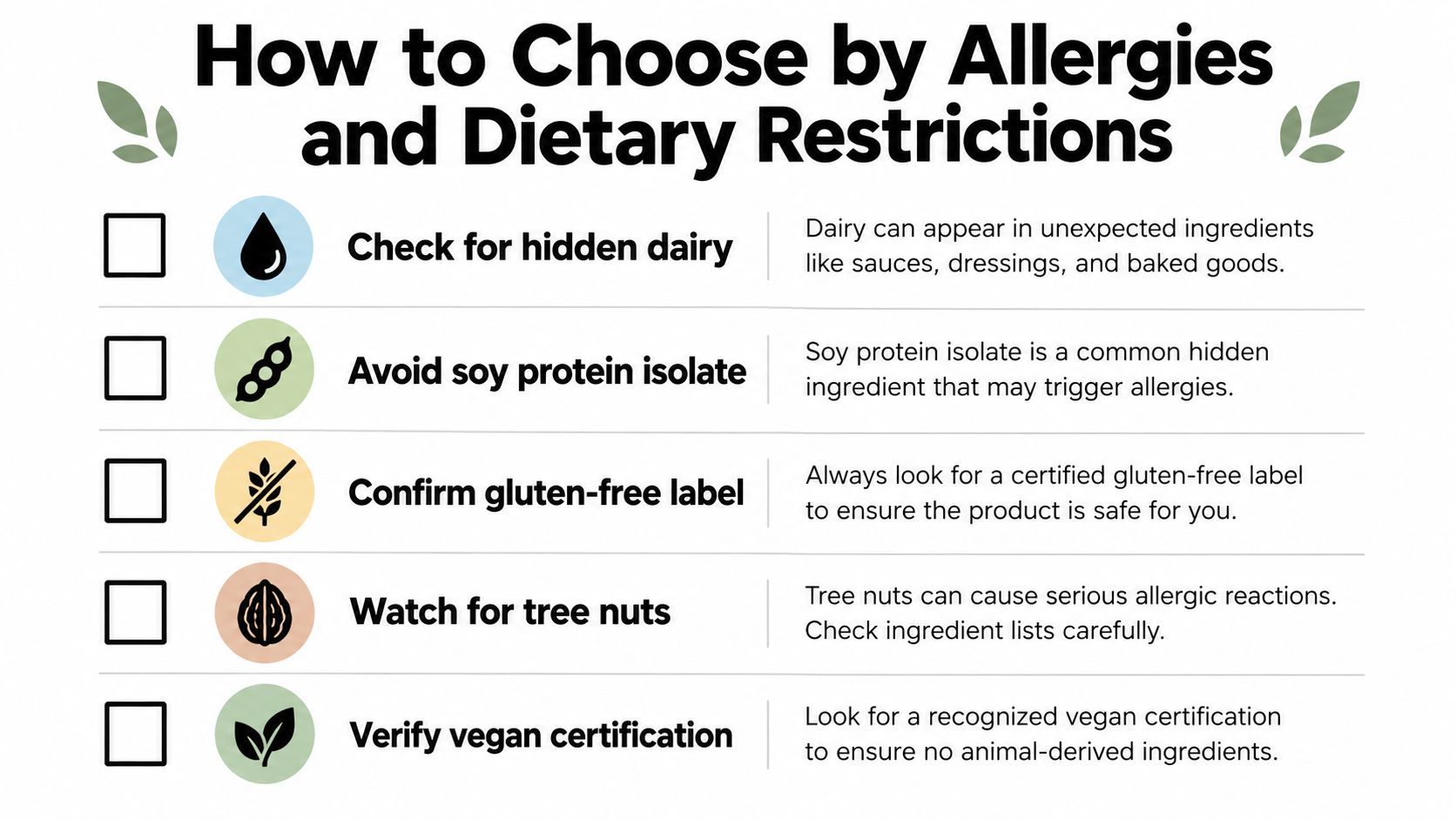
If you have allergies or a strict dietary pattern, protein bars and cookies can become a minefield fast. The front of the package might say vegan, gluten-free, or high protein, but the back label is where hidden dairy, soy, gluten cross-contact, and nut exposure usually show up.
Use a hard filter before you compare flavors
Start with the allergen list, not the protein claim. Many bars depend on milk protein blends, whey, or casein for texture and protein quality, while many cookies use flour systems, nut butters, or chocolate inclusions that can trigger a separate set of concerns.
Plant-based buyers need to go further than the vegan label. A product can be vegan and still be heavy on refined starches, oils, or fiber additives that don't help digestion or satiety. The central question is whether the protein source is useful, the ingredient list is transparent, and the format matches your stomach.
Use this checklist:
- Check for hidden dairy. Look for whey, casein, milk protein isolate, or milk chocolate.
- Avoid soy if it bothers you. Soy protein isolate shows up in many shelf-stable snacks.
- Confirm gluten-free status. Don't assume a cookie-style product is safe just because it sounds wholesome.
- Watch tree nuts. Almond flour, almond butter, and mixed nut coatings are common.
- Verify vegan certification if needed. “Plant-based” and “vegan” don't always mean the same thing in practice.
Sugar alcohols matter here too. If you already know your gut reacts to maltitol, erythritol, or similar ingredients, don't gamble on a bar or cookie just because the macro line looks cleaner. The same is true for high fiber blends built from polydextrose or inulin-like systems, especially if you're using the snack before training.
For people who want a no-nonsense way to screen options, the rule is simple. If the ingredient list is built around your intolerance, skip it, even if the protein count is attractive.
Timing and Portion Strategies for Maximum Benefit
Many individuals don't require additional protein snacks. They need better timing and smaller, more deliberate portions. A bar or cookie can support training and appetite control, but only if you stop treating it like an all-day grazing food.
Build the snack around the gap
Use a bar or cookie when there's a real reason to eat it. That might be a long gap between meals, a commute before training, or a recovery window when you can't sit down for a full meal.
For pre-workout, keep it light enough to digest cleanly. For post-workout, eat it when you know you won't get to a balanced meal right away. For between meals, use it as a bridge, not a second lunch.
One mistake I see constantly is people choosing a very sweet bar, then pairing it with coffee, then wondering why their appetite rebounds hard. Another is choosing a high-fiber cookie right before lifting and blaming the workout when the issue is the snack sitting in the gut.
Don't let convenience turn into overuse
Protein timing works best when the snack fills a real need instead of replacing structure. If you're already eating enough protein across the day, the snack should solve a practical problem, not become a habit because it tastes good.
Simple rule: convenience should support your routine, not hijack it.
Portion control matters too. The more dessert-like the product feels, the easier it is to overeat. That's especially true with cookie-style products that are designed to be soft, sweet, and easy to finish in a few bites. If you need a longer-lasting snack, choose one that forces a slower pace and doesn't disappear in 30 seconds.
A solid routine is boring in the best way. Same timing cues, same purpose, fewer impulse choices. That's what keeps snacking useful.
The Case for Savory Plant-Based Protein Snacks
Sweet bars and cookies dominate the aisle, but they're not the only answer. Savory, plant-based protein snacks solve a problem the sweet formats keep creating, which is palate fatigue.
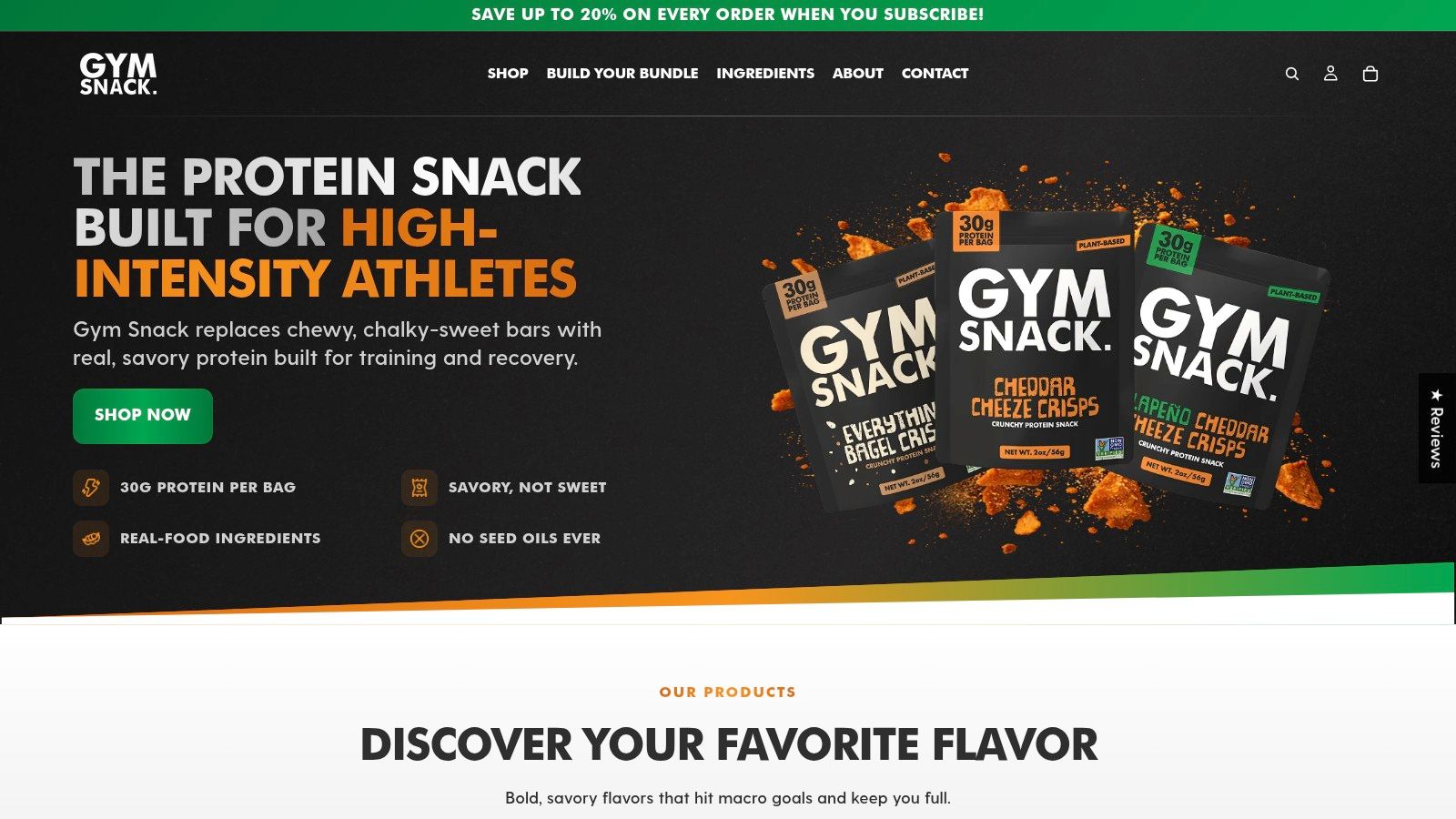
A savory option built around pea protein can deliver the protein-first profile many active people want without leaning on a dessert structure. That matters for anyone who wants a snack with no dairy, soy, or gluten, plus a cleaner fit for people who don't want their training fuel to taste like candy. Gym Snack is one example in this category, and it's worth looking at alongside more traditional bars if you're tired of sweet formats and want a crunchy, savory option with transparent ingredients.
The practical advantage is simple. Crunch and bold seasoning can make a snack feel more satisfying without the sugar-alcohol aftertaste that some bars and cookies leave behind. That's especially relevant for people trying to keep energy steady between meals and avoid the “I need something sweet again” loop.
A useful resource on this broader category is Gym Snack's savory protein snack guide, because the conversation shouldn't stop at sweet snacks with protein added.
The other advantage is use case flexibility. Savory snacks fit the same commuting, desk, and post-training moments, but they don't force you into dessert flavor fatigue. If your goal is consistent protein intake with fewer gut surprises and less sugar-driven snacking, savory belongs in the rotation.
I'd still keep bars and cookies around for specific situations. But if you're building a routine from scratch, don't overlook the third option. A savory, allergen-conscious snack often solves the everyday problem better than another chocolate-coated bar.
For a concrete example of how people use savory options in everyday routines, this matcha recipe from Pep Tea shows how flexible protein-oriented snacking can be when the ingredients are chosen for function, not just sweetness.
Building Your Sustainable Protein Snacking Routine
The best routine I've seen with clients is the one that rotates. One snack for pre-workout, another for long workdays, and a third option for the days when sweet food starts to feel repetitive. That rotation keeps protein bars and cookies useful instead of turning them into background calories.
A simple routine that holds up
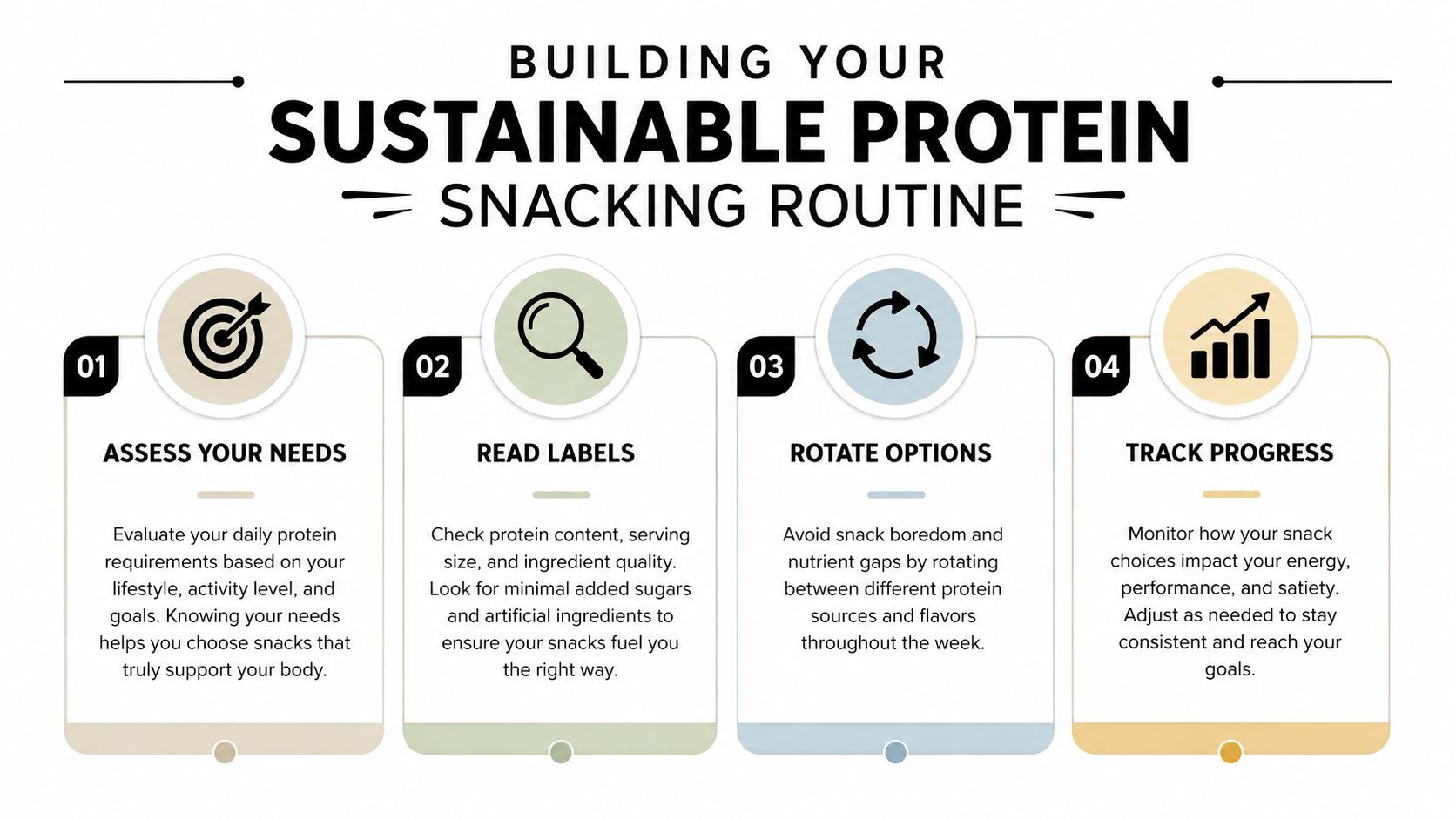
Start by deciding what the snack has to do. Read the label with your gut, allergies, and training schedule in mind. Then rotate formats so you're not forcing the same sweet profile every day.
That's where smart choices beat hype. A bar can be the right answer on a rushed afternoon, a cookie-style product can work when you want something more indulgent, and a savory snack can break the cycle when sweet options start to feel stale.
If you want a durable routine, use this sequence:
- Assess your need. Hunger, training, or convenience.
- Read the label. Protein source, sweeteners, allergens, and fiber system.
- Rotate options. Don't lock yourself into one format.
- Track response. Energy, fullness, and digestion matter more than marketing.
The goal is consistency, not novelty. If a snack helps you hit protein targets, respects your stomach, and fits your day, it earns a place in the rotation. If it doesn't, move on.
Gym Snack is built for people who want a savory protein snack instead of another dessert-style bar or cookie, with crunchy pea-protein bags that fit training days and busy schedules. If you want to compare options with a more practical lens, visit Gym Snack and judge the format by how it performs, not by how loudly it markets protein.