

When you're searching for protein bars without added sugar, it's easy to get tripped up by the labels. Here's the most important thing to know right away: "no added sugar" and "sugar-free" are not the same thing. Not even close.
A "no added sugar" claim simply means the manufacturer didn't dump in extra sweeteners during production. The bar can, and often does, still contain natural sugars from its ingredients, like fruit or milk.
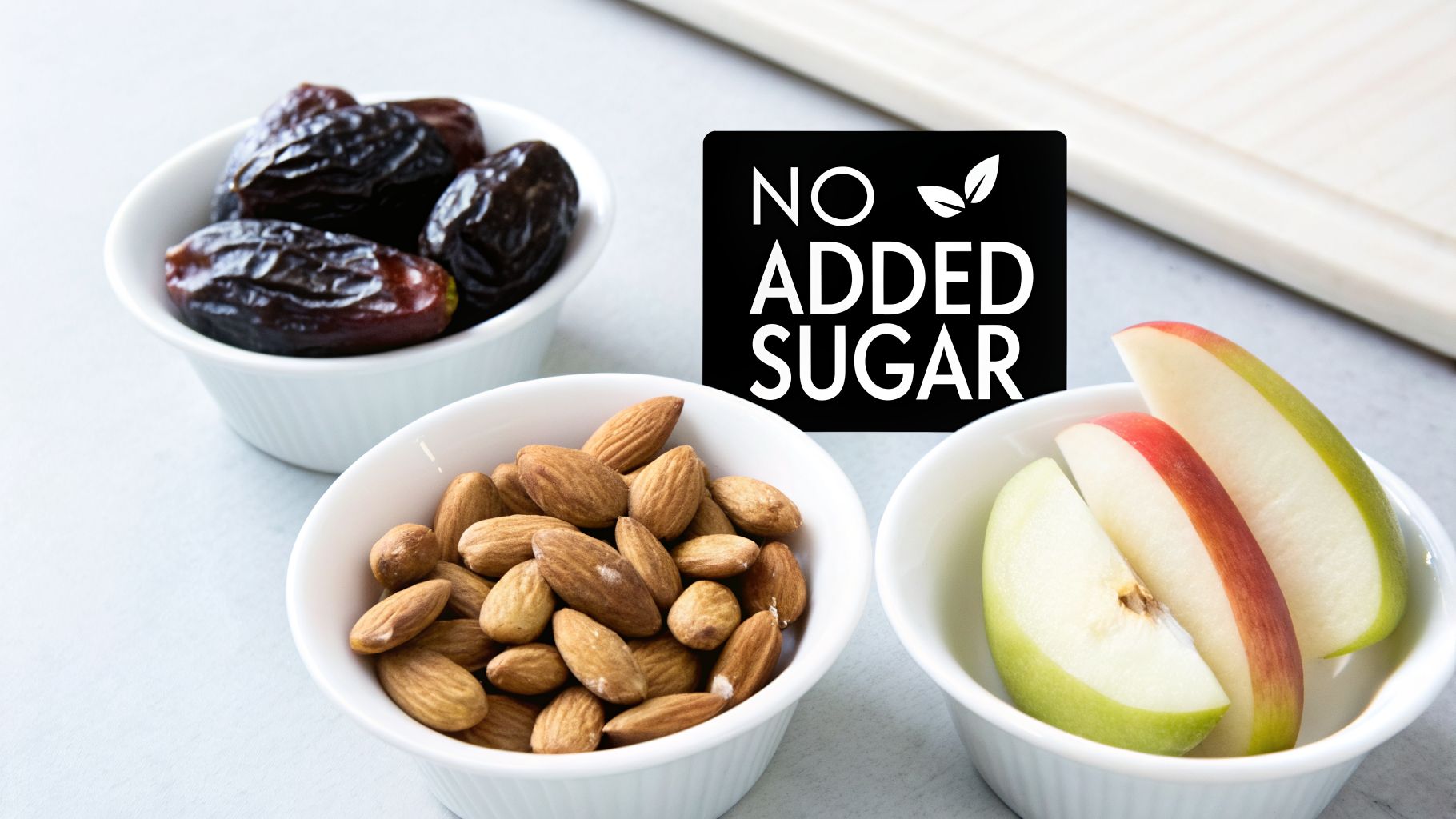
What 'No Added Sugar' Really Means
Seeing "no added sugar" on a label is a huge clue about the quality of a protein bar. It’s the difference between sugars that are naturally part of a whole food and those added purely for taste or texture. This distinction can make or break your health goals.
Here’s a simple way to think about it: an apple is sweet because of the sugars that grew inside the fruit. Those sugars come bundled with fiber, vitamins, and water. If that same apple is pureed and used to sweeten a protein bar, the sugar is considered naturally occurring.
On the flip side, a bar sweetened with things like high-fructose corn syrup, cane sugar, or dextrose has had sugar added to it. These are precisely the kinds of sugars most of us are trying to limit.
Natural Sugars vs Added Sugars
So, why is this difference so critical? Added sugars are often called "empty calories" for a good reason—they offer sweetness but virtually no nutritional backup. They can send your blood sugar on a rollercoaster, leading to that all-too-familiar energy crash and a new wave of cravings. That’s the last thing you want if you're fueling for a workout or trying to manage your weight.
As a rule of thumb: If a sweetener was put in while making the bar, it’s an added sugar. If the sweetener was already part of a whole-food ingredient, it's a natural sugar.
This knowledge helps you become a much smarter shopper. For example, one bar sweetened only with dates might have 12 grams of total sugar but 0 grams of added sugar. Another bar could have the exact same 12 grams of total sugar, but all of it comes from added brown rice syrup. The first bar gives you nutrients with its sweetness; the second just gives you sugar.
By choosing protein bars without added sugar, you can:
- Maintain stable energy levels and avoid that dreaded post-snack slump.
- Support weight management by steering clear of empty calories that trigger more hunger.
- Make cleaner eating choices that prioritize whole, nutrient-dense ingredients.
Ultimately, learning to look past the flashy claims on the front of the box is the first real step toward finding a protein bar that truly works for your body, not against it.
How to Read Labels and Uncover Hidden Sugars
If you want to find protein bars that are genuinely clean and free of added sugar, you have to learn how to see past the flashy marketing on the front of the box. The real story is always on the back, printed on the Nutrition Facts panel and in the ingredient list. That's where the truth lies.
The first place I always look is the Nutrition Facts panel. Thanks to some much-needed updates to labeling laws, companies now have to call out added sugars specifically. You'll want to find the line that says "Includes Xg Added Sugars." Honestly, this is the most direct clue you'll get. If that number is zero, or very low, you're off to a great start.
Decoding the Ingredient List
After you've checked the numbers, it's time to play detective with the ingredients. They're always listed by weight, starting with the most prominent. If any type of sugar is in the top three, you're likely holding what's essentially a candy bar with some protein thrown in.
Here's a simple rule of thumb: if a sweetener was added to the product during manufacturing, it's an added sugar. It doesn't matter if it's "natural" like honey or sounds healthy. Its job is to sweeten the bar beyond what its core ingredients provide.
This is where companies get clever, using dozens of different names for sugar to make their ingredient list look healthier than it is. It's a common tactic. For example, many commercial peanut butters have added sugar, which is why making your own homemade peanut butter is a great way to control what you eat.
Common Names for Hidden Sugar
Get to know sugar's favorite disguises so you can spot them instantly. A good trick is to look for anything ending in "-ose" or any ingredient with the word "syrup" in it.
- Syrups: Brown rice syrup, corn syrup, agave syrup, maple syrup, tapioca syrup
- "Healthy" Sounding Sugars: Coconut sugar, fruit juice concentrate, honey, molasses, organic cane juice
- Scientific Names: Dextrose, fructose, glucose, sucrose, maltodextrin
Maltodextrin is a big one to watch out for. It's a highly processed powder that can spike your blood sugar even faster than regular table sugar, but it often slips by unnoticed. If you really want to become a pro, we break down every part of a protein bar nutrition facts label in our complete guide.
By mastering the "Added Sugars" line and learning to recognize these sneaky aliases, you can confidently tell the difference between a truly clean protein snack and a sugar bomb in disguise. It’s a skill that puts you back in control of your health goals.
Choosing the Right Sweetener for Your Body
When you start looking for protein bars without added sugar, you'll quickly meet a whole new cast of characters: the sweeteners that stand in for sugar. Getting to know these ingredients is the real secret to finding a bar that not only tastes good but also works with your body, not against it. Think of it like building a toolkit—each sweetener is a different tool, and you need to find the right one for the job.
Let's break down the main players you'll see on ingredient lists.
Sugar Alcohols: The Good and The Gassy
First up are sugar alcohols. You’ll recognize them by their "-ol" endings, like erythritol, sorbitol, and xylitol. These are interesting hybrids that are chemically similar to both sugar and alcohol, but don't worry—they won't get you drunk.
Their biggest selling point is that they deliver sweetness with fewer calories and don't send your blood sugar on a rollercoaster. Why? Because our bodies don't fully absorb them. But that's also their biggest downside.
Since they aren't completely digested, they can ferment in your gut. For a lot of people, this leads to uncomfortable bloating, gas, or even a laxative effect, especially in larger amounts. If you've ever eaten a "sugar-free" bar and felt your stomach start rumbling an hour later, a sugar alcohol was probably the culprit.
Natural vs. Artificial Sweeteners
Next, you have natural zero-calorie sweeteners. The two most common are stevia and monk fruit, both derived from plants. They pack an intensely sweet punch, so manufacturers only need a tiny bit. This means you get the sweetness with virtually no calories or carbs, making them a favorite in "clean label" products.
The main trade-off? Some people notice a distinct aftertaste, which can range from slightly bitter to metallic.
Finally, there are the lab-created artificial sweeteners like sucralose and aspartame. They're also intensely sweet with zero calories. While regulatory bodies like the FDA have approved them as safe, there's a lot of consumer debate around their long-term health effects. If you're someone who prefers to stick to whole-food ingredients, you might want to learn more about protein bars without artificial sweeteners.
To help you sort through it all, here's a quick comparison of the most common options.
Sweetener Showdown: Sugar Alcohols vs. Natural Sweeteners
| Sweetener Type | Examples | Pros | Cons |
|---|---|---|---|
| Sugar Alcohols | Erythritol, Xylitol, Sorbitol, Maltitol | • Low-calorie • Minimal blood sugar impact |
• Can cause digestive issues (gas, bloating) • Less sweet than sugar, so more is needed |
| Natural Sweeteners | Stevia, Monk Fruit | • Zero-calorie • Plant-derived • No blood sugar impact |
• Can have a bitter or metallic aftertaste • Very intense sweetness isn't for everyone |
Ultimately, this table shows there's no single "best" sweetener—it all comes down to what works for you.
The goal is to find a balance. You want the sweetness that makes a snack enjoyable without the blood sugar spike of added sugars or the potential side effects of certain alternatives.
This flowchart is a great mental model for how to look past the marketing claims and become your own detective.
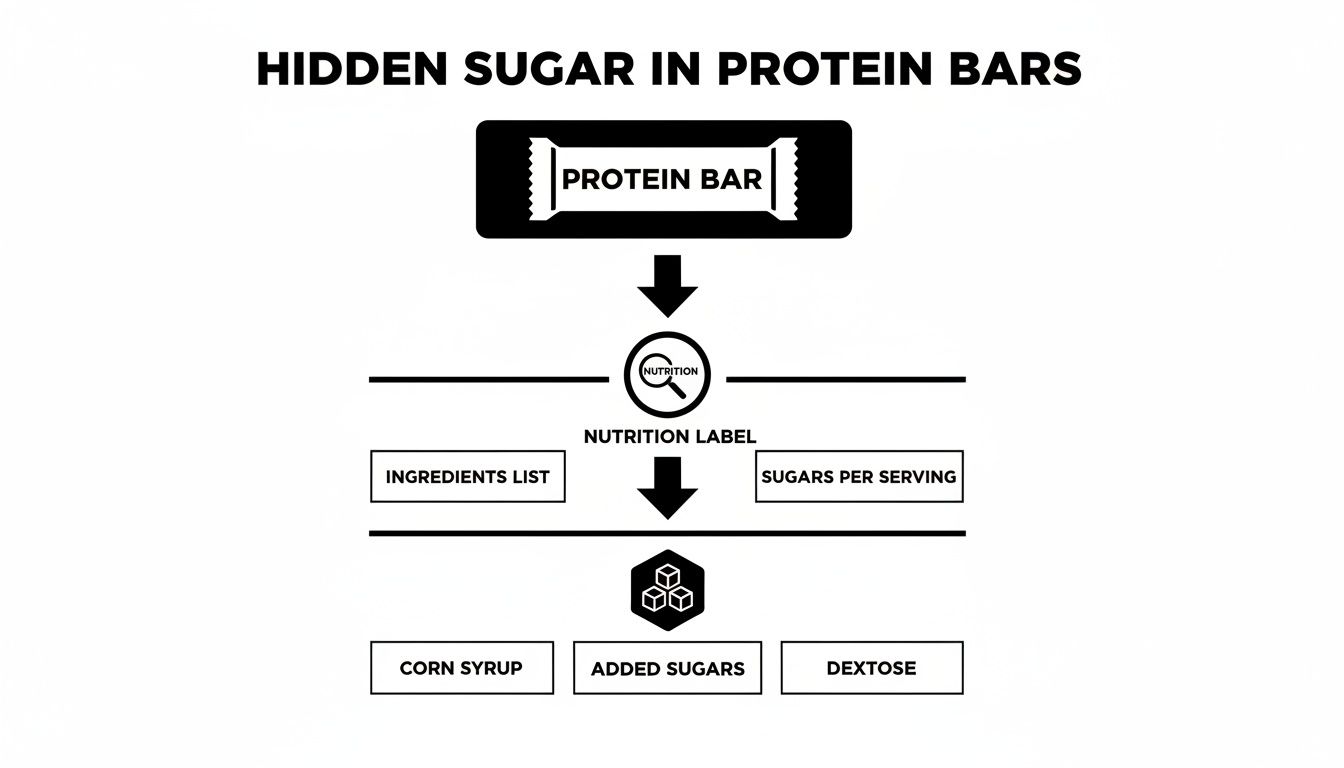
As you can see, it always starts with the nutrition label. Ignore the front of the box and go straight to the facts to check that added sugars line.
Finding the right bar is a personal journey of trial and error. Pay close attention to how your body feels after you eat a new bar. If you notice any weird aftertastes or digestive trouble, flip it over, check the ingredients, and make a mental note to try a bar with a different sweetener next time.
The Growing Demand for Low Sugar Protein Snacks
It seems like everyone is on the hunt for protein bars without added sugar these days, doesn't it? You're not just imagining it. There's a real movement happening as people turn away from sugary, short-lived energy boosts and look for snacks that offer clean, sustained fuel instead. This isn't just another diet trend—it’s a basic shift in how we approach nutrition on the go.
Health-conscious folks, from serious gym-goers to people just trying to manage their weight, are leading the charge. The old-school approach of grabbing a sugary snack for a quick pick-me-up just doesn't work anymore. We've all been there: the brief high followed by that all-too-familiar energy crash. People are tired of it and are now actively looking for snacks that keep them full and their energy levels stable.
A Market Responding to New Priorities
This shift in what we want from our snacks is making serious waves in the food industry. The global protein bar market isn't just getting bigger; it's evolving. A huge part of this growth is coming from the demand for low-sugar and no-added-sugar options, which are already a major slice of the pie. In fact, some reports project the market's value will nearly double in the next few years, with this health-first mindset being a primary reason. You can dig into the numbers in this in-depth protein bar market analysis.
Of course, brands are scrambling to keep up. The result? A flood of new, interesting products designed for a smarter consumer.
The modern snacker is looking for more than just a quick bite. They want snacks with solid macros and clean ingredients—something that actually keeps them feeling full and focused, not sluggish and wanting more sugar a half-hour later.
What’s really exciting is the creativity this has sparked. Two of the biggest developments we're seeing are:
- The Rise of Savory Snacks: For a long time, protein snacks were all about chocolate, peanut butter, and cookie dough flavors. Now, innovative brands are finally rolling out savory options. It's a welcome relief for anyone dealing with "flavor fatigue" from all the dessert-like bars.
- The Boom in Plant-Based Protein: With more people leaning into plant-forward eating, the need for quality, plant-based protein has gone through the roof. Companies are answering with clean, effective snacks using protein from peas, seeds, and other non-animal sources.
Ultimately, this whole movement is about finding convenient foods that work for our bodies, not against them. People are choosing snacks that align with their bigger goals, whether that's building muscle, managing weight, or just getting through the afternoon without hitting a wall. The search for protein bars without added sugar is just the beginning.
Rethinking Your Snack Game with Savory Protein
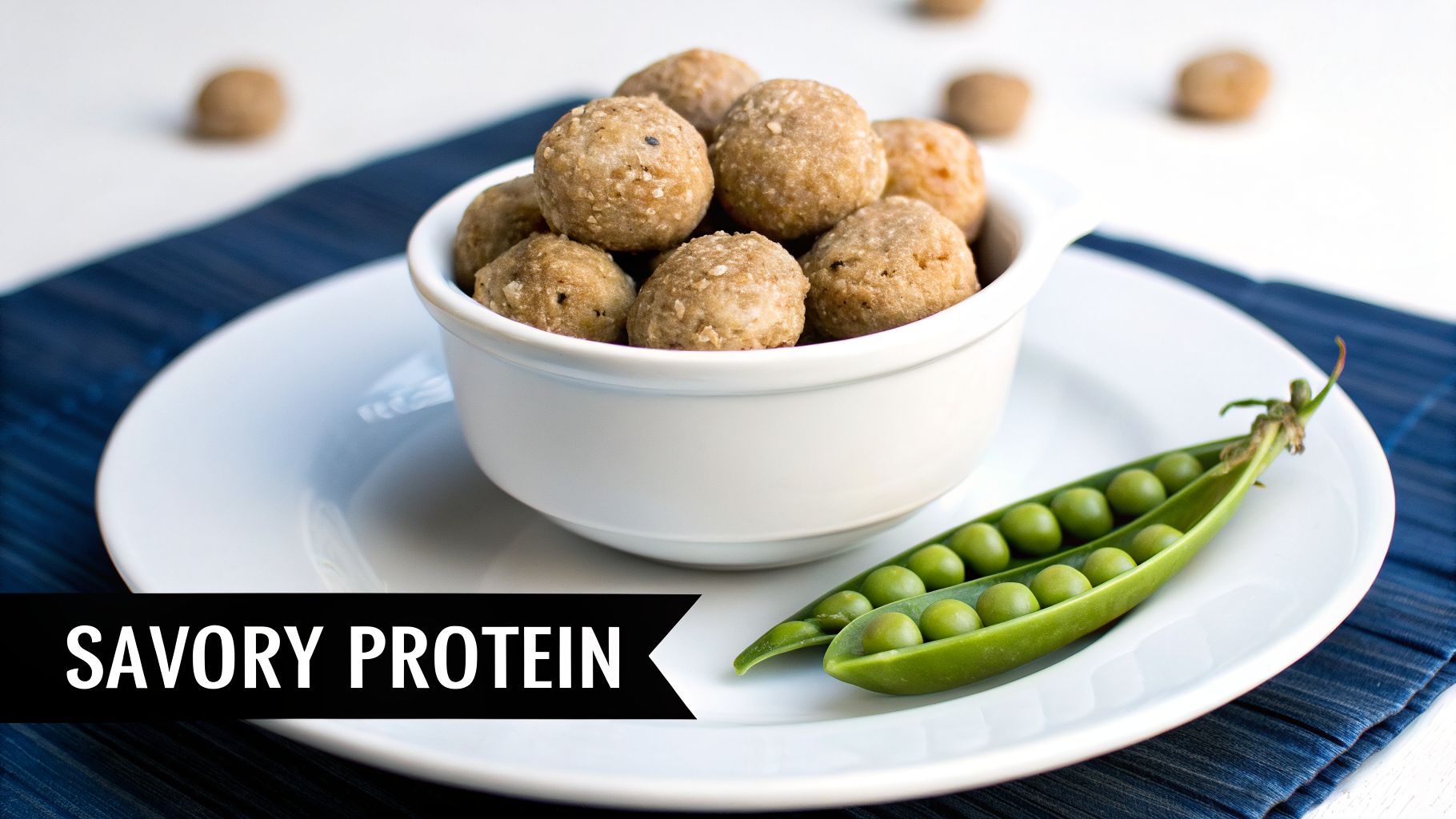
If you've ever hunted for protein bars without added sugar, you know the drill. You sift through dozens of options, and almost every single one tastes like dessert. Chocolate, cookie dough, peanut butter cup... it's a sweet-tooth's paradise, but it can get old fast. It's easy to hit "flavor fatigue" when every protein boost feels like you're eating candy.
But what if your protein snack didn't have to be sweet at all? Thankfully, the market is finally catching on to the demand for savory options. This opens the door to hitting your protein targets without the overwhelming sweetness.
Breaking Free from the Sweetness Trap
Imagine grabbing a crunchy, cheesy snack that crushes your salt cravings and delivers a serious dose of protein. That’s exactly where some forward-thinking brands are headed. A great example is a product like Gym Snack, which was specifically designed to be a crunchy, savory alternative packing over 15 grams of clean pea protein into every serving.
The real magic is what’s missing from the bag. These savory snacks are built from the ground up to be completely free of:
- Added sugars
- Sugar alcohols
- Artificial sweeteners or flavors
This clean ingredient list means you get all the upsides of a high-protein snack—like feeling fuller longer and supporting muscle repair—without the funky aftertaste that often tags along with stevia or the digestive upset that sugar alcohols like erythritol can cause.
A great savory snack delivers on both macros and satisfaction. It should quiet your hunger with high-quality protein and provide a genuinely enjoyable flavor experience that isn’t just another variation of dessert.
For many of us, a savory snack just feels more substantial and satisfying, making it easier to stay full between meals. It’s a much-needed break for your palate, especially if you’re looking for a pre-workout boost or a mid-afternoon pick-me-up that doesn't taste like a brownie. If you want to see what's out there, you can explore more of these savory high-protein snacks.
Why Savory Makes Sense for Your Goals
Making the switch to a savory protein source is a smart move whether you're a serious athlete or just managing your weight. We know protein is the most satiating macronutrient, which is key for keeping hunger and cravings at bay. When that protein comes in a savory form, it often feels more like a mini-meal, which can make that feeling of fullness even more powerful.
And as you're dialing in your nutrition, it's worth understanding how timing impacts performance, like knowing what to eat before running. A high-protein, no-sugar-added snack is a fantastic choice to fuel your body without the energy spike and subsequent crash from sugar.
At the end of the day, having savory options gives you the freedom to match your snack to your actual craving. Instead of forcing down another sweet bar, you can reach for something crunchy, cheesy, and deeply satisfying that still helps you get closer to your goals. It’s all about making your nutrition work for you, one delicious and savory bite at a time.
Your Smart Shopper's Checklist for Protein Snacks
Walking down the snack aisle can feel like a pop quiz you didn't study for, especially when you're looking for genuinely healthy protein bars without added sugar. So let's cut through the noise.
I've put together a simple, actionable checklist you can use every time you shop. Think of it as your personal four-point inspection for any protein snack you pick up. It'll help you quickly spot the fakers and find the options that actually support your goals.
Your Four-Point Snack Inspection
Ready to shop like a pro? Before any protein snack lands in your cart, run it through this quick mental checklist.
-
Check the "Added Sugars" Line First. This is your first and most important stop. Before you look at anything else, flip over the package and find the "Includes Xg Added Sugars" line. For a truly sugar-free choice, this number needs to be as close to zero as possible.
-
Scan the Ingredient List for Sweeteners. Just because a bar has no added sugar doesn't mean it isn't sweet. Check the ingredients for sugar alcohols (like erythritol or sorbitol) or high-intensity sweeteners (like stevia or sucralose). If you've ever had a protein bar that upset your stomach or had a weird aftertaste, this step will help you identify—and avoid—the likely culprit.
The goal isn't just to dodge sugar. It's about finding a snack with ingredients you actually recognize and feel good about eating. A shorter, cleaner ingredient list is almost always a better sign.
-
Consider the Protein Source. What's fueling your snack? Take a peek at the ingredient list to see if it’s whey, casein, or a plant-based source like pea or soy protein. If you have any dietary restrictions or sensitivities (like to dairy), this is a crucial step to match the bar to your body's needs.
-
Match the Snack to Your Goal. Why are you reaching for a snack in the first place? A heavy, 300-calorie bar might be exactly what you need for post-workout muscle recovery. But if you just need something to beat that 3 p.m. hunger pang, a lighter, savory option like Gym Snack might be a much better fit to keep you full without ruining your dinner.
Frequently Asked Questions
Let's tackle some of the common questions that pop up when you're navigating the world of protein bars without added sugar. Getting clear answers can help you make much smarter choices at the grocery store.
Are Protein Bars Without Added Sugar Completely Sugar-Free?
This is a great question, and the short answer is: not always. The label "no added sugar" just means the manufacturer didn't pour in any extra sugar, like cane sugar or high-fructose corn syrup, during the production process.
The bar can, however, still contain natural sugars from its ingredients. Think about a bar made with dates or fruit puree—it will have sugar on the nutrition label, but that sugar comes packaged with fiber and other nutrients. Always check both the "Total Sugars" and "Added Sugars" lines on the label to understand the full picture.
What Are Sugar Alcohols and Are They Healthy?
You've probably seen ingredients ending in "-ol," like erythritol and xylitol, on "sugar-free" labels. These are sugar alcohols, a type of low-calorie sweetener. They're popular because they don't spike your blood sugar the way regular sugar does.
While they are generally considered safe, they have one major downside: for some people, they can cause digestive trouble. If you’ve ever felt bloated or gassy after eating a protein bar, it’s worth checking the label for sugar alcohols. You might just be sensitive to them.
For anyone with a sensitive stomach, choosing a snack that avoids sugar alcohols altogether is often the safest bet for keeping your gut happy.
Why Choose a Savory Protein Snack Instead of a Sweet One?
Honestly, a lot of people just get sick of sweetness. It's a real thing called "flavor fatigue," where every protein bar starts to taste like another candy bar or brownie. A savory snack is a fantastic way to break that cycle.
Instead of another dose of sweet, you get something crunchy, cheesy, or salty that feels more like a satisfying mini-meal. This can make a huge difference in feeling full and actually enjoying your snacks, which helps you stick with your nutrition goals long-term.
Tired of overly sweet snacks packed with ingredients you can't pronounce? Gym Snack is a crunchy, savory alternative loaded with over 15g of clean pea protein and absolutely zero added sugar. Ditch the dessert bars and discover a smarter way to snack at https://gymsnack.com.