

When it comes to weight loss, protein snacks are your secret weapon. They're a powerful tool because they help you feel full longer, give your metabolism a little nudge, and protect your hard-earned muscle while you're dropping fat. It all comes down to managing hunger and naturally reducing how much you eat throughout the day.
Your Secret Weapon for Weight Loss
Think about your daily diet like building a wall against hunger. Those high-sugar, low-nutrient snacks you grab on the go? They're like handfuls of sand. They might fill a gap for a moment, but they offer zero support and crumble quickly, leaving you hungry and shaky just a short while later.
On the other hand, a good protein snack is like a solid brick. It provides a sturdy, lasting foundation that keeps hunger from breaking through for hours.
This "hunger-halting brick" effect isn't just a nice idea; it's grounded in real science. Protein is hands-down the most satiating macronutrient. That just means it helps you feel satisfied with less food and keeps that feeling going for much longer. This is exactly why adding protein-rich snacks into your day is such a game-changing strategy for anyone trying to lose weight without fighting constant cravings.
Why Protein Is a Weight Loss Game-Changer
When you reach for a protein-packed snack, you're not just quieting a rumbling stomach. You're actually kicking off a series of events in your body that directly support your fat-loss goals. The benefits are clear and make a real difference:
- Sustained Satiety: Protein simply takes longer for your body to break down compared to carbs. This keeps you feeling full and prevents the wild blood sugar swings that trick you into snacking again and again.
- Metabolic Boost: Your body has to work harder—and burn more calories—to digest protein. This is called the thermic effect of food (TEF), and it gives your metabolism a small but significant boost every time you eat protein.
- Muscle Preservation: When you're in a calorie deficit, you want to lose fat, not muscle. Getting enough protein helps protect your lean muscle mass, which is critical for keeping your metabolism running strong.
It’s clear people are catching on to these benefits. The demand for convenient, high-protein options is exploding, with the protein snacks market projected to be worth around US$ 4,796.3 million in 2025. This isn't just a fad; it's a sign that more and more of us understand how smart snacking can be a key part of managing our weight.
To see just how these benefits stack up, here’s a quick overview:
How Protein Snacks Transform Your Weight Loss Journey
The table below breaks down the core advantages of making protein a priority in your snacking habits. It's a simple look at how this one change can create a powerful ripple effect for your weight loss efforts.
| Benefit | How It Works | Impact on Weight Loss |
|---|---|---|
| Crushes Cravings | Protein reduces the "hunger hormone" ghrelin and increases satiety hormones like PYY and GLP-1. | You feel fuller for longer, leading to less mindless eating and fewer total calories consumed. |
| Boosts Metabolism | Your body burns more calories digesting protein (the Thermic Effect of Food) than it does for fats or carbs. | A slightly higher metabolic rate helps you burn more calories around the clock, even at rest. |
| Protects Muscle | Provides the essential amino acids your body needs to repair and maintain lean muscle tissue during a calorie deficit. | Preserving muscle ensures that the weight you lose is primarily from fat, keeping your metabolism strong. |
| Stabilizes Energy | Slows down the absorption of sugar into the bloodstream, preventing energy spikes and subsequent crashes. | You experience steady, consistent energy levels, which reduces the urge to grab sugary snacks for a quick fix. |
By focusing on these four areas, high-protein snacks do more than just fill a gap—they actively support the biological processes that make losing weight and keeping it off more manageable.
For those who need a more structured plan, exploring the best high-protein meal delivery services can be a great way to complement a smart snacking strategy. Ultimately, mastering your snack choices is about seeing the bigger picture. You can get a better handle on this by understanding macros for weight loss.
The Science of Feeling Full Longer
Ever notice how you can crush a whole bag of potato chips and still feel hungry, but a small portion of Greek yogurt or a handful of nuts keeps you going for hours? That’s not just in your head. It's your body's biology at work, and understanding it is the key to making protein snacks for weight loss work for you.
Think of your metabolism like a campfire. Simple carbs and fats are like throwing paper and twigs on the fire—they burn up fast and leave you needing more fuel quickly. Protein, on the other hand, is like a solid, dense log of oak. Your body has to work a lot harder and expend more energy just to break it down.
This extra work is called the thermic effect of food (TEF). Protein has the highest TEF of all the macronutrients, which means you’re actually burning more calories just by digesting it. It’s a small but meaningful metabolic advantage you get every time you reach for a protein-rich snack.
Taming Your Hunger Hormones
But the real magic happens at the hormonal level. Protein acts like a master conductor for the hormones that signal hunger and fullness, making it easier to manage cravings.
First, protein dials down ghrelin, which is often nicknamed the "hunger hormone." Think of ghrelin as the little gremlin in your stomach that starts yelling "Feed me!" when it’s empty. Protein quiets that voice, keeping those sudden, intense hunger pangs at bay.
At the same time, protein ramps up the production of your "I'm full" hormones, like Peptide YY (PYY) and Glucagon-like peptide-1 (GLP-1). When these are released, they send a clear signal to your brain that you've had enough. This powerful one-two punch is why a high-protein snack can leave you feeling genuinely satisfied for hours.
It's not just about filling your stomach. Protein actually speaks to your brain's appetite control center, making it a science-backed tool for managing hunger and naturally reducing how much you eat overall.
Putting the Science into Practice
Once you get this, it’s easy to see why smart snacking is so powerful. Study after study confirms that higher protein intake leads to greater feelings of fullness, which helps people eat less throughout the day. A common benchmark from research is that aiming for 30% of your daily calories from protein can be a game-changer for weight loss. If you’re eating 2,000 calories a day, that's about 150 grams of protein—and high-quality snacks are a huge help in hitting that number. You can read more about how protein supports weight loss on Healthline.com.
You don't have to obsessively track every gram, though. The goal is to make simple, strategic swaps. Here’s what happens when you trade your usual carb-heavy treat for a protein-forward option:
- You crush the afternoon slump. Protein helps stabilize your blood sugar, preventing that dreaded 3 p.m. energy crash that sends you running for the candy jar.
- You eat a smaller dinner. A satisfying protein snack in the afternoon means you won’t show up to dinner absolutely starving and ready to overeat.
- You protect your muscle. Giving your body a steady supply of protein helps preserve lean muscle, which is your metabolic engine. The more muscle you have, the more calories you burn, even at rest.
By leaning into the science of satiety, you’re no longer fighting against your body's cravings. Instead, you're giving it exactly what it needs to feel satisfied, turning every snack into a strategic move on your weight loss journey.
How to Choose the Best Protein Snacks
Let’s be honest, the snack aisle can be a confusing place. Every package screams "healthy," "natural," or "high-protein," but a quick look at the back label often tells a different story. It’s easy to accidentally grab something that derails your progress.
The secret isn't avoiding snacks altogether; it's learning how to read a nutrition label like a pro. Think of the label as the snack's real story, not the marketing fantasy on the front. Your mission is to find snacks that hit a powerful trifecta for weight loss: high protein, low sugar, and healthy fats. This is the combination that keeps you full, stable, and satisfied.
What Makes a Great Protein Snack?
When you’re staring down your options, you're looking for a few key things. This isn't about perfection, but about consistently making smart choices that move you closer to your goals.
A truly effective protein snack will generally have:
- Protein Content: The sweet spot is somewhere between 15 and 25 grams of protein per serving. That's enough to genuinely kickstart those fullness hormones and help maintain muscle, which is crucial when you're in a calorie deficit.
- Low Added Sugar: This one is non-negotiable. Flip the package over and find the "Added Sugars" line. You want to see less than 5 grams. So many "healthy" bars, yogurts, and drinks are just candy in disguise, leading to an energy spike followed by a crash.
- Healthy Fats: Look for fats from whole foods—think nuts, seeds, and avocados. Be wary of snacks loaded with inflammatory seed oils like soybean, corn, or sunflower oil.
- Whole-Food Ingredients: Can you pronounce everything on the ingredient list? A shorter, more recognizable list is almost always a sign of a cleaner, more nourishing product.
To make it even simpler when hunger strikes, use this decision-making flowchart to guide your choice.
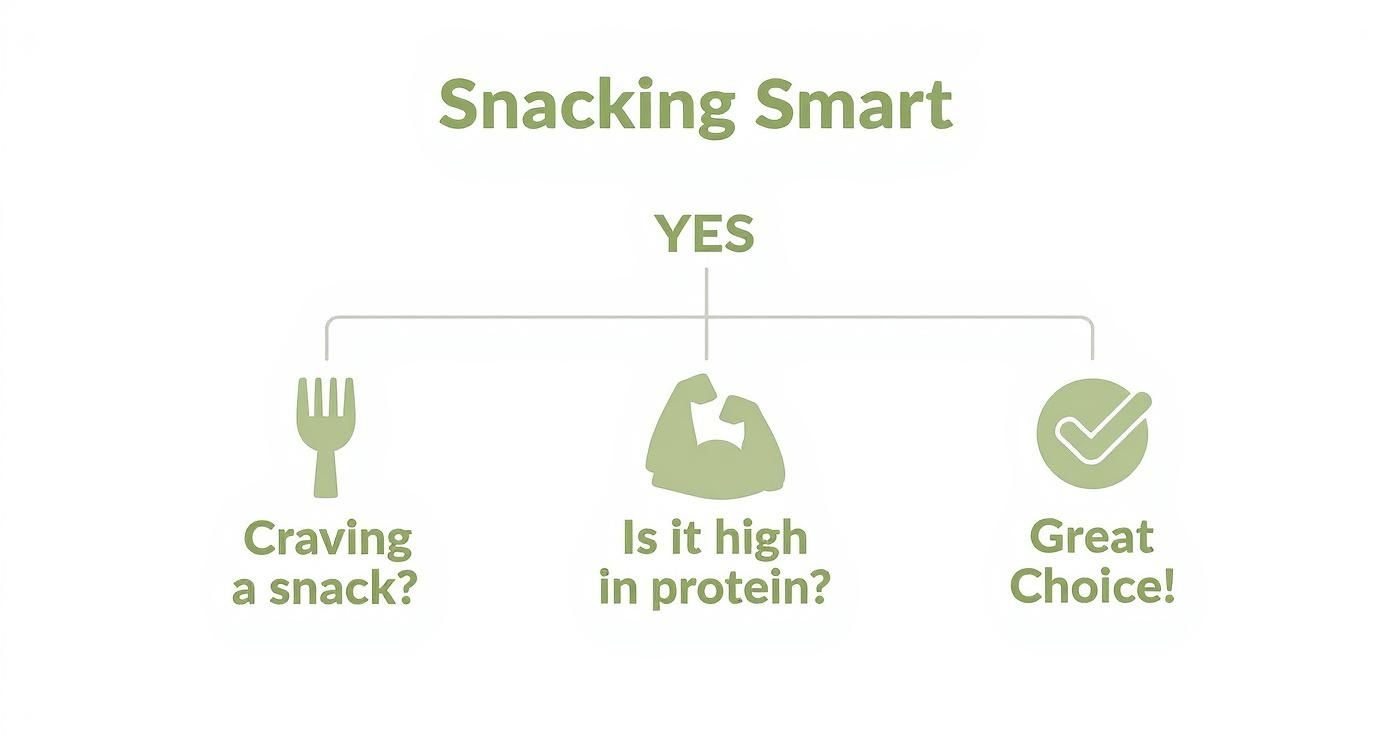
As you can see, the first question is always about protein. Make that your priority, and you're already halfway to a better snacking habit.
Your Protein Snack Label Decoder
Becoming a label detective is easier than you think. This little cheat sheet breaks down what to look for (the good stuff) and what to run from (the deal-breakers) when you're comparing snacks.
| Nutrient or Ingredient | Green Flag (Ideal Target) | Red Flag (What to Avoid) |
|---|---|---|
| Protein | 15-25g from a quality source | Less than 10g, or from low-quality fillers |
| Added Sugar | Under 5g per serving | High amounts of sugar, corn syrup, or cane juice |
| Fats | Sourced from nuts, seeds, avocado | Processed seed oils (soybean, corn, canola) |
| Fiber | 3g or more for extra satiety | Little to no fiber content |
| Ingredients List | Short, recognizable, whole foods | Long list with artificial sweeteners, colors, preservatives |
Think of this table as your pocket guide. A quick scan using these green and red flags will help you make a confident choice in seconds.
Comparing Different Protein Sources
It’s also worth knowing that not all protein is created equal. The source matters for digestion, nutrient profile, and how it fits into your diet.
- Whey and Casein: Found in many traditional bars and shakes, these dairy proteins are classics for a reason. Whey hits your system fast, which is great for right after a workout. Casein is the opposite—it digests slowly, releasing amino acids over hours and making it a fantastic choice for a snack that needs to hold you over until your next meal.
- Plant-Based Proteins: Options like pea, soy, hemp, and nut proteins are fantastic alternatives. Pea protein, which we use in Gym Snack, is a real standout. It’s easy on the stomach, loaded with iron, and naturally hypoallergenic, making it a safe bet for anyone with dairy or soy sensitivities.
At the end of the day, the best protein source is the one that works for your body, your lifestyle, and your preferences. Whether you go for dairy or plant-based, the goal remains the same: get that high-quality protein without all the junk.
The more you practice, the easier it gets. By knowing your protein targets and what to watch out for, you can turn the snack aisle from a minefield into your own personal fuel station. For even more ideas, check out our in-depth guide to high-protein, low-calorie snacks.
Top Protein Snacks for Any Lifestyle
Knowing what to look for on a nutrition label is a great start, but having a mental list of go-to snacks you actually enjoy is what makes all the difference. The best protein snacks for weight loss are the ones that slot right into your daily routine, no matter how chaotic it gets.
Whether you have two minutes before a meeting or twenty minutes to prep something at home, there's always a satisfying, high-protein choice ready to keep you on track. Think of this as your practical toolkit—a collection of ideas you can start using today.
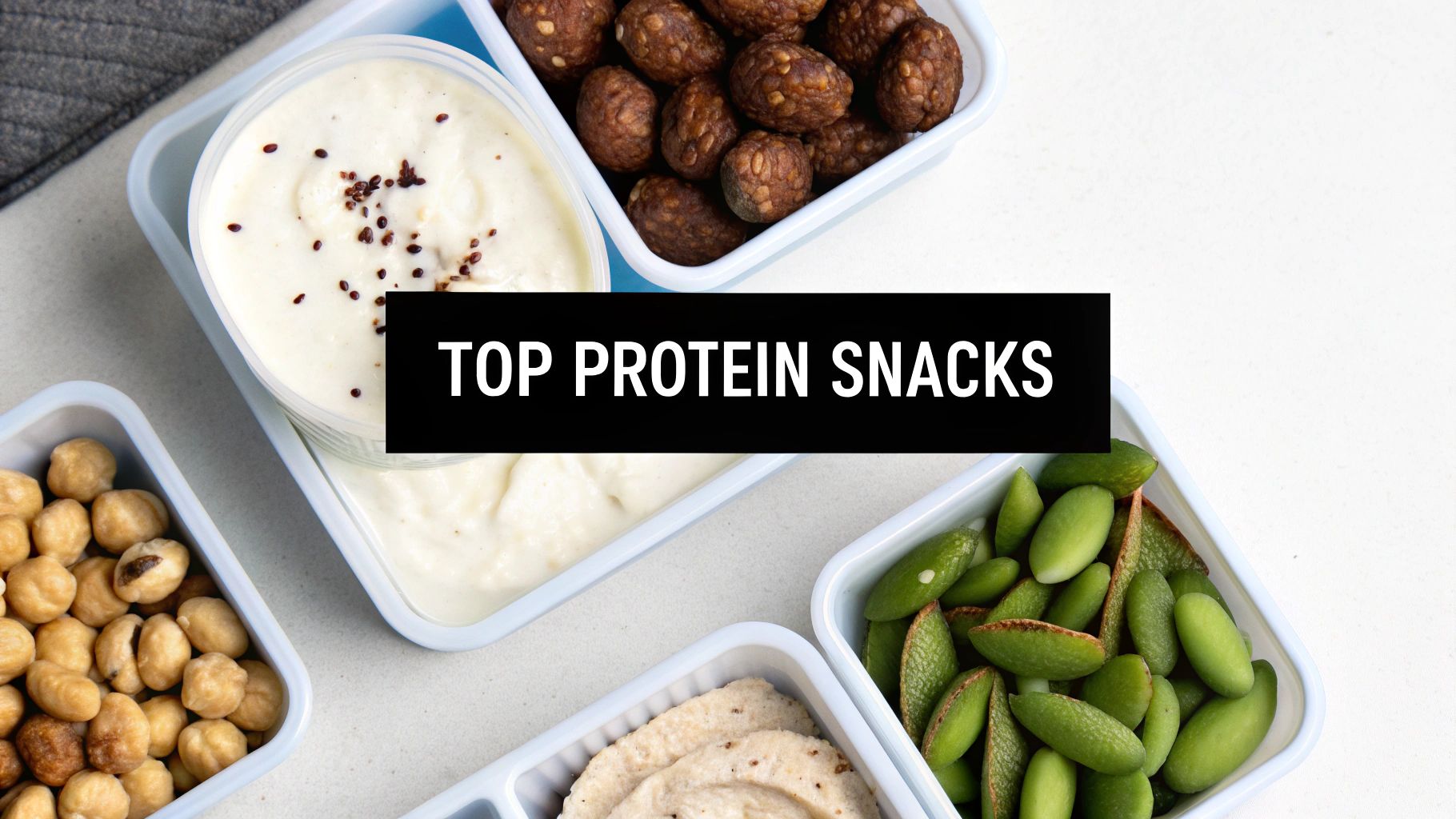
Quick Grab-and-Go Options
For those moments when you're rushing out the door, these snacks require zero prep but deliver serious staying power.
- Greek Yogurt Cup: A single-serve container is an absolute powerhouse, packing 15-20 grams of protein. Its creamy texture is incredibly satisfying and can crush a sugar craving in its tracks.
- High-Quality Protein Bar: Not all bars are created equal. Aim for one with at least 15 grams of protein and keep the added sugar under 5 grams. They're the perfect emergency snack for your gym bag or desk drawer.
- Hard-Boiled Eggs: So simple, yet so effective. Two large eggs give you about 12 grams of high-quality protein and healthy fats, making them a budget-friendly way to stay full.
Simple Homemade Snacks
When you have a few minutes to spare, whipping up your own snack is a great way to control the ingredients and keep things fresh.
- Cottage Cheese with Berries: Just a half-cup of low-fat cottage cheese provides 14 grams of slow-digesting casein protein, which is fantastic for keeping you full for hours. Top it with some berries for a hit of fiber and natural sweetness.
- Roasted Chickpeas: A cup of these crunchy little guys gives you around 15 grams of plant-based protein plus a healthy dose of fiber. They're perfect when you're craving something salty and crispy.
The key is to have these components ready. Pre-boil a batch of eggs for the week or keep single-serve cottage cheese cups on hand. A little planning makes healthy snacking feel effortless.
Plant-Based Powerhouses
Whether you're fully vegan or just trying to eat more plants, these options are loaded with the protein and nutrients you need to hit your goals.
- A Handful of Almonds: An ounce of almonds (that's about 23 nuts) offers 6 grams of protein, healthy fats, and fiber. They're a classic for a reason—perfectly portioned and easy to take anywhere.
- Edamame: One cup of steamed edamame serves up an impressive 17 grams of complete protein. It's a fantastic savory option that actually feels like a substantial snack.
- Savory Pea Protein Crisps: Products like Gym Snack were designed for this exact purpose. They give you over 15 grams of clean pea protein per serving with a bold, cheesy flavor and that crunch we all crave.
It's clear that snacks like these are more than just a passing trend. The weight management part of the protein snack market is expected to grow at a compound annual rate of 9.2% between 2025 and 2030. This boom is fueled by more people like you understanding just how critical protein is for preserving muscle while losing fat.
For more plant-based inspiration, check out our guide on high-protein vegan snacks or discover even more tasty high protein vegan snacks that can help you stay satisfied.
When to Eat Protein for Maximum Benefit
Knowing what to snack on is half the battle. Knowing when to snack is how you really start to see results. Don't worry, timing your protein intake isn't about following some rigid, complicated schedule. It's more about strategically using your snacks to manage hunger, fuel your workouts, and work with your body’s natural rhythm.
Think of your daily energy as a rollercoaster. A snack loaded with simple carbs sends you on a sharp climb followed by a sudden, jarring drop—leaving you shaky and hunting for your next fix. A well-timed protein snack, on the other hand, smooths out that track. It provides a gentle, steady ride that keeps you feeling balanced and in control. This simple shift turns your snacks from random bites into powerful tools on your weight loss journey.
The whole point is to anticipate your body's needs before hunger and cravings have a chance to take over. By eating protein at a few key moments, you stay ahead of the game.
The Mid-Afternoon Hunger Crusher
For so many of us, the hours between 2 PM and 4 PM are a nutritional black hole. It’s that time when your energy naturally dips, your focus starts to fade, and the siren song of the vending machine gets louder. This is precisely when a protein snack acts as your secret weapon.
Grabbing a protein-rich snack around 3 PM accomplishes two critical things:
- It stabilizes your blood sugar, which helps you sidestep that classic energy crash that sends you scrambling for sugary, high-calorie junk.
- It takes the edge off your dinner appetite. When you sit down for your evening meal feeling balanced instead of ravenous, it’s a million times easier to make smart choices and stick to reasonable portions.
This one small habit can make a huge dent in your total daily calories without ever making you feel like you're dieting.
A mid-afternoon protein snack isn't just about quieting a craving. It's a strategic play to finish your day strong and avoid the overeating that happens when you let yourself get way too hungry.
Fueling Your Fitness Before and After
If you’re working out, timing your protein becomes even more important for both your performance and your recovery. Syncing your snacks with your exercise helps you squeeze the most benefit out of every single session.
Pre-Workout Fuel (30-60 minutes before):
Having a light protein snack before you train gives your muscles a steady drip of amino acids. This can help minimize muscle breakdown while you're exercising and provide the sustained energy you need to push through that last set. Think of it as giving your muscles a head start.
Post-Workout Recovery (Within 60 minutes after):
You’ve probably heard this called the "anabolic window," and there's a good reason for it. After you exercise, your muscles are like sponges, primed to soak up nutrients to repair and rebuild. Getting 20-25 grams of protein during this window kickstarts that muscle repair process, which is absolutely vital for holding onto lean muscle while you lose fat. That recovery is key to keeping your metabolism humming along.
Got Questions? Let's Talk Protein Snacks
Starting a new eating plan always brings up questions. It's totally normal. When it comes to using protein snacks for weight loss, a few common ones tend to pop up time and again. Let's clear the air so you can move forward with confidence.
Think of this as your go-to cheat sheet for snacking smart.
How Much Protein Should My Snack Actually Have?
This is probably the most common—and most important—question. The simple answer? Aim for 15 to 25 grams of protein.
That range isn’t just a random number; it’s the sweet spot for telling your body you're full. If you get less than 15 grams, you might not fully silence ghrelin, the "hunger hormone." Any more than 25 grams is usually better reserved for a full meal. A snack in this protein window gives you enough substance to feel satisfied for hours, which is key to preventing overeating later on.
Is All This Protein Going to Hurt My Kidneys?
This is a stubborn myth that worries a lot of people, so let's set the record straight. For the vast majority of people with healthy, functioning kidneys, a high-protein diet is perfectly safe.
The concern originally stemmed from studies on people who already had kidney disease, where a lower-protein diet is often recommended. But for healthy adults, major studies have failed to show a link between high protein intake and kidney damage. Your body is built to handle it. Of course, if you have any pre-existing kidney conditions, you should always talk to your doctor first.
Can I Really Lose Weight With Only Plant-Based Protein Snacks?
You absolutely can. At the end of the day, weight loss comes down to a calorie deficit, and high-quality plant-based proteins are fantastic for helping you get there.
Snacks made from sources like peas, soy, nuts, and seeds can be just as filling and effective as animal-based options. For instance:
- Roasted Edamame: A cup packs about 17 grams of complete protein.
- A Handful of Almonds: A classic for a reason, delivering protein, fiber, and healthy fats.
- Savory Pea Protein Crisps: A product like Gym Snack is a great example, designed specifically to deliver over 15 grams of clean, plant-based protein in one go.
The trick is to choose high-quality sources that fit your daily goals and keep you genuinely satisfied.
Are Protein Bars Just Candy Bars in Disguise?
Honestly, some of them are. That’s why you have to become a label detective. The protein bar aisle is a minefield of choices, and many are loaded with sugar, questionable fats, and a long list of artificial ingredients that will do you no favors.
A good protein bar—one that actually supports weight loss—should meet the same criteria as any other smart snack. Flip it over and look for:
- 15-25 grams of protein.
- Less than 5 grams of added sugar.
- A short ingredient list you can actually recognize.
A protein bar should be a convenient tool, not a nutritional compromise. If sugar is one of the first few ingredients and the list looks like a science experiment, put it back.
When you choose wisely, a protein bar can be a lifesaver on a busy day. But when in doubt, sticking to snacks made from whole-food ingredients is always a safe bet.
Ready to upgrade your snack game with something savory and crunchy that hits all the right notes? Gym Snack packs over 15 grams of clean, plant-based pea protein into every serving, with zero added sugar or junk. Build your custom snack pack on gymsnack.com and find out how good hitting your protein goals can taste.