

Let's be honest: for years, the hunt for protein snacks that taste good felt like a cruel joke. We were all stuck in a world of chalky bars, gritty powders, and sickly-sweet shakes that you had to choke down for the sake of your macros. It was a choice between what your body needed and what your taste buds could tolerate.
Thankfully, that era is over.
The End of Bland Protein Has Finally Arrived
If you’ve ever found yourself wincing your way through a post-workout snack, you're definitely not alone. The first wave of functional foods was obsessed with the nutrition panel, leaving flavor as a complete afterthought. The result was a market full of products that technically did the job but offered zero actual enjoyment.
That shared frustration is exactly what kicked off the revolution we’re seeing today. Thanks to smarter food science and a massive shift in what we expect as shoppers, bland is no longer acceptable. We want snacks that work hard and taste great, turning a quick protein hit into a moment you actually look forward to.
Why Taste Is the New Priority
It’s not just a feeling; the numbers prove it. The global protein snacks market was valued at around USD 4.92 billion in 2025 and is on track to more than double, hitting a projected USD 10.83 billion by 2035. You can explore the market trends and drivers in more detail on Future Market Insights.
This incredible growth comes down to one simple, human truth:
When a healthy habit tastes good, you're more likely to stick with it. The best protein snacks are the ones you actually look forward to eating.
The industry has gotten the message loud and clear, pouring resources into perfecting flavor and texture. Food scientists are now using clever techniques to mask the weird, bitter aftertaste of many protein isolates. They're swapping out the tired, super-sweet profiles for genuinely craveable savory options, like sharp cheddar and spicy jalapeño.
Just as important, they're focused on creating a satisfying crunch and mouthfeel that feels like you're eating real food—not a science experiment. In this guide, we'll break down exactly what makes a modern protein snack delicious and show you how to find the perfect one for your goals.
The Science of Delicious Protein Snacks
Ever wonder why some protein snacks are genuinely delicious, while others taste like chalky cardboard? It’s not magic; it’s a careful science. The secret to making a protein snack you actually want to eat comes down to nailing three key elements: flavor, texture, and satiety. Get that trifecta right, and you’ve got a winner.
The biggest hurdle is often the protein itself. Many protein isolates—especially from plant sources like soy and pea, but even milk-based ones like whey and casein—come with their own unique, sometimes unpleasant, background tastes. These can range from "grassy" or "beany" to slightly bitter or "milky." The first job for any food creator is to make those off-notes vanish.
Masking Unwanted Flavors
This isn't about just dumping in sugar to cover things up. Modern snack makers use far more sophisticated techniques. They often lean on powerful, savory ingredients that do more than just add their own flavor; they cancel out the bad ones. For example, the rich, complex taste of umami—that savory fifth taste found in things like nutritional yeast and tomato powder—is brilliant at neutralizing the subtle bitterness of pea protein.
Think of it like cooking a complex stew. A dash of a bold spice, like smoked paprika, doesn't just make the dish smoky. It rounds out the other ingredients and creates a more balanced, cohesive flavor. This is exactly why so many of the best savory protein snacks have a "cheesy" or "spicy" profile. Those big, robust flavors are fantastic at creating a clean, craveable foundation. For those of us making our own snacks, understanding how to use protein powder in cooking can make all the difference between a gritty shake and a delicious, nutritious meal.
The Critical Role of Texture and Mouthfeel
Flavor is only half the story. The texture of a snack—what food scientists call mouthfeel—sends powerful messages to your brain about how satisfying it is.
A snack's texture is a silent messenger of quality. A satisfying crunch is interpreted by our brains as fresh and rewarding, while a soft or gummy texture can signal staleness or a less-than-premium experience.
This shift away from the dense, chewy bars of yesterday toward today’s crispy, crunchy snacks isn't an accident. It's a direct response to what we all instinctively look for in a good snack.
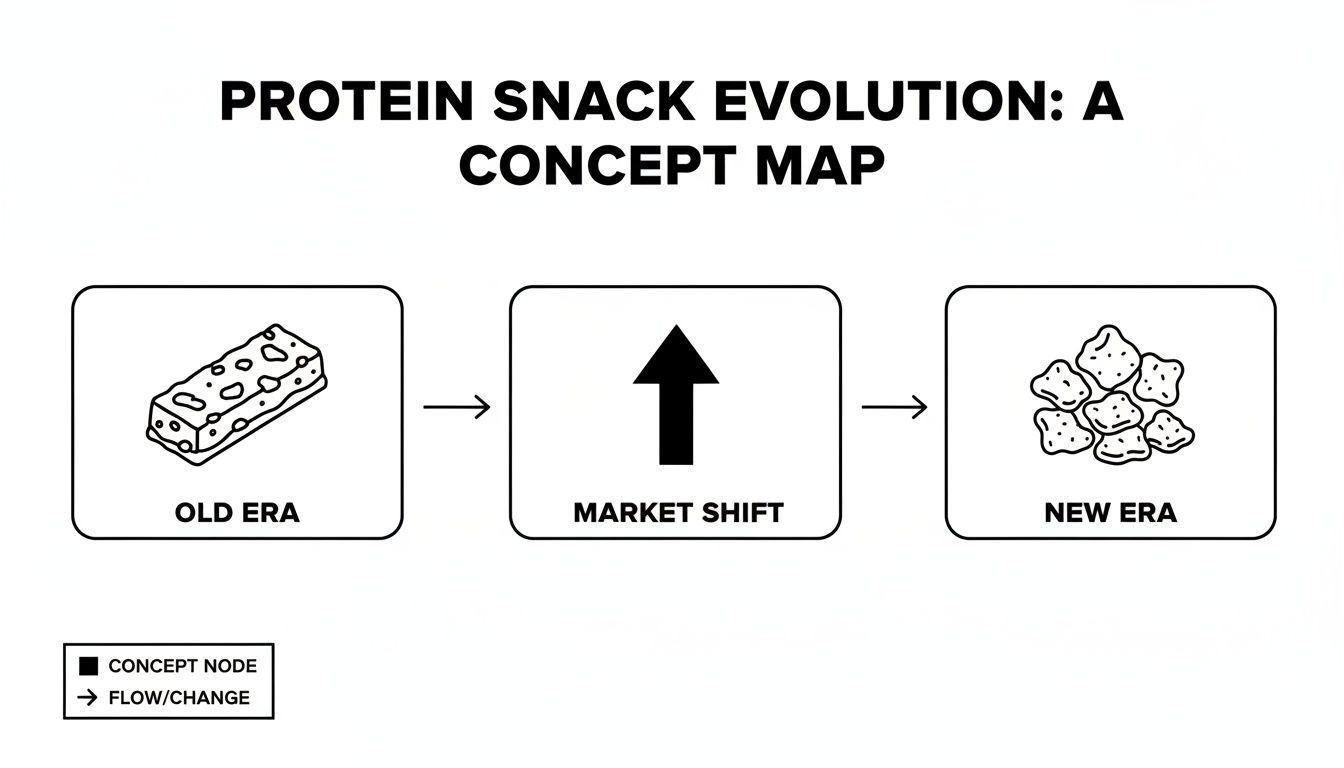
As you can see, the market has moved from the "Old Era" of chalky, dense products to the "New Era" of light, airy, and crunchy snacks. It proves just how much we value an enjoyable eating experience. After all, a soggy potato chip is a letdown, but a perfectly crisp one is pure gold. The same rule applies here.
The Power of Protein and Satiety
Finally, a truly great protein snack has to leave you feeling genuinely satisfied. This is where satiety—that feeling of fullness—comes into play, and it’s where protein really shines. When you eat protein, your body releases hormones like PYY and GLP-1, which are natural, powerful appetite suppressants.
This hormonal response accomplishes two crucial things:
- It signals to your brain that you're full, which helps curb overeating.
- It provides sustained energy, helping you sidestep that awful energy crash you get from sugary, carb-heavy snacks.
This biological feedback loop is the final piece of the puzzle. When a snack tastes fantastic, has a satisfying crunch, and actually keeps you full for hours, it stops being just fuel. It becomes a reliable and rewarding part of your day.
Why Savory Protein Beats Sweet Every Time
It’s 3 PM. You’re hungry. You reach into your bag for that protein bar you packed, and it's another variation of chocolate, caramel, and peanut butter. If you’ve ever felt your enthusiasm sink at the thought of another dessert-like snack, you’re not alone.
There’s a name for that feeling: flavor fatigue. While sweet treats definitely have their place, our brains are often hardwired to seek out savory, more substantial flavors, especially during the main stretches of our day.
This is exactly why the boom in savory protein snacks isn't just some passing trend. It's a direct response to what our bodies are actually asking for. A snack with a bold, cheesy, or spicy kick just feels more like real food. It satisfies a genuine hunger cue, not just a craving for something sweet.
Responding to Your Body's Cravings
Think about it this way: when you're truly hungry for lunch, do you crave a cookie or a sandwich? For most of us, the answer is something substantial and savory. The same logic holds true for snacking. Flavors like sharp cheddar, smoky barbecue, or a zesty chili lime signal to our brain that we’re getting something nutritious and filling.
This is a game-changer for anyone trying to stick to a fitness plan. Choking down a dessert-flavored bar when you’re craving something salty can feel like a chore, making it that much harder to stay on track. But when you have a delicious protein snack that actually hits the spot, getting your macros in suddenly feels effortless—even enjoyable.
The market data tells the same story. Savory options are quickly becoming the go-to choice.
- Meat-based snacks are projected to hold a commanding 55.02% market share by 2025.
- A massive 65% of gym enthusiasts say they prefer savory snacks over sweet ones to help them stick to their protein goals.
- This preference is fueling the rise of segments like protein crisps, which are on track to become a USD 7.4 billion market by 2035.
You can dig deeper into these trends by checking out market analyses from sources like Mordor Intelligence.
When to Choose a Savory Protein Snack
Of course, any time is a good time for a snack you genuinely love. But there are specific moments when a savory option is simply the smarter, more satisfying choice. It’s all about matching the right fuel to the right situation.
Here are a few times when savory really shines:
- Post-Workout Recovery: After a tough session, your body is screaming for protein to repair muscle. But the last thing you might want is something sugary. A savory snack delivers the nutrients you need without the sweetness, making it the perfect refuel.
- The Mid-Afternoon Slump: This is prime time for flavor fatigue to strike. A savory, crunchy snack can cut through the monotony of the workday and give you a steady stream of energy, all without the risk of a sugar crash.
- On-the-Go and Traveling: Sweet snacks can sometimes leave a sticky, lingering aftertaste and don't always sit well when you're in transit. A savory option often feels more settling and substantial, almost like a portable mini-meal.
Ultimately, the best protein snacks are the ones that work with your body's natural hunger cues, not against them. By embracing savory flavors, you can turn a daily nutritional requirement into a genuinely satisfying part of your day.
Choosing Your Fuel: Plant-Based vs. Animal-Based
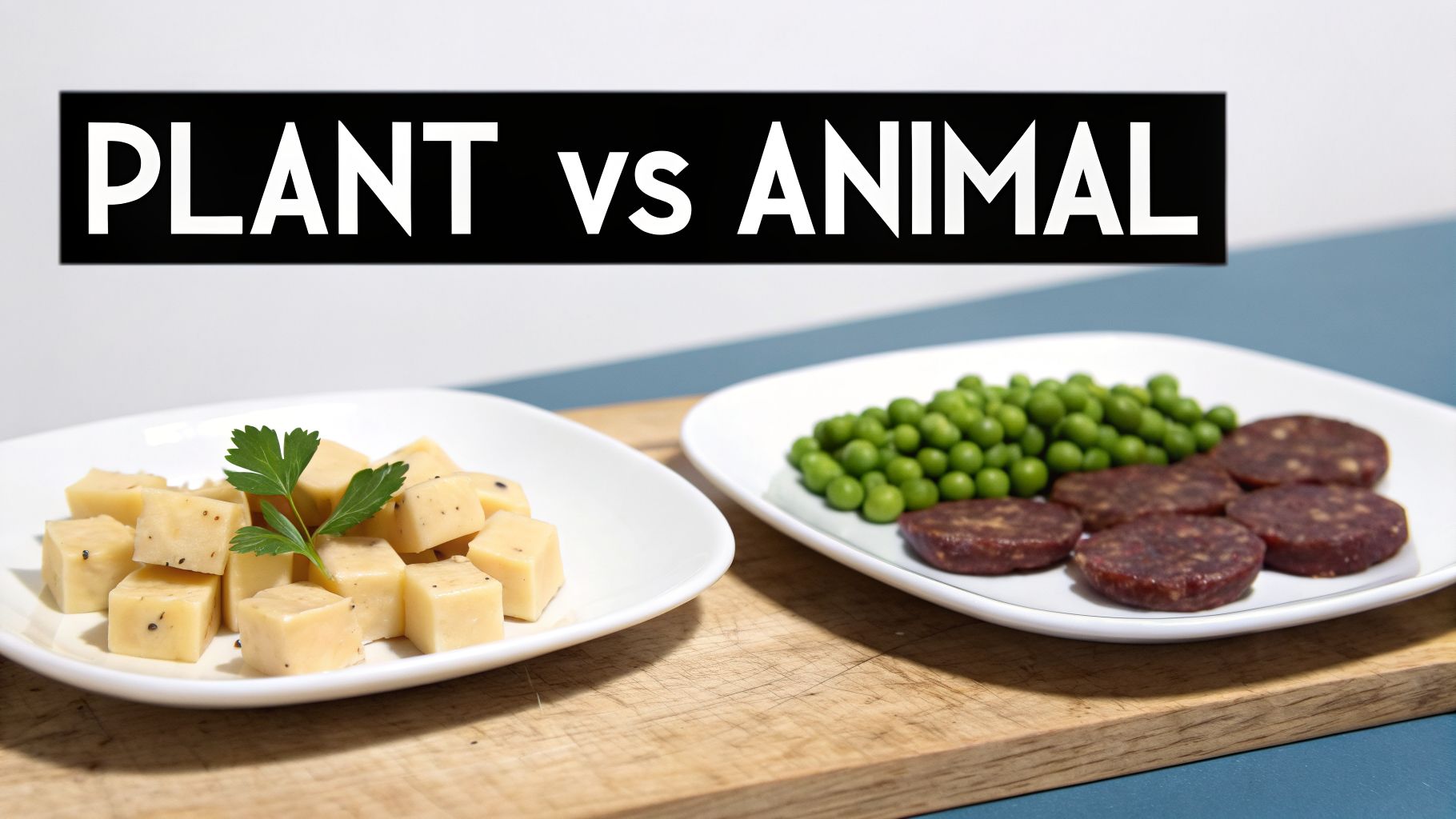
When you're on the hunt for a protein snack that actually tastes good, one of the first questions you'll hit is a big one: plant or animal? There's no single right answer. The best choice really comes down to your body, your lifestyle, and what you’re trying to accomplish.
For a long time, animal-based proteins like whey, casein, and meat jerky were the undisputed kings of the fitness world. It makes sense—they're complete proteins, which means they contain all nine essential amino acids your body needs to build and repair muscle. Whey, in particular, gets all the attention for its quick absorption, which is why you see it in so many post-workout shakes.
But here's the thing: those traditional sources aren't perfect for everyone. Dairy-based proteins can be a real problem for people with lactose intolerance, often leading to bloating, gas, and general digestive unease. And while meat jerky is packed with protein, it's often loaded with sodium and can have a tough, leathery texture that's more of a workout for your jaw than a convenient snack.
The Rise of High-Quality Plant Protein
If you've ever tried plant-based proteins from a decade ago, you might remember them as gritty, earthy, and frankly, a chore to eat. That reputation is officially a thing of the past. Thanks to huge leaps in food science, sources like pea protein have been totally transformed. We now have isolates that are impressively smooth and have a neutral flavor, making them the perfect base for delicious savory snacks.
This innovation is a huge part of why plant-based snacking has exploded. More and more people are embracing vegan or flexitarian diets, and the demand for high-protein healthy snacks is soaring. The market, which hit USD 5.86 billion in 2025, is projected to rocket to USD 11.91 billion by 2033. This growth is being driven by the 55% of consumers actively seeking out clean, allergen-free options. If you're interested in the data, you can explore detailed market statistics on healthy snacks to see just how fast things are changing.
One of the most noticeable benefits I've seen with modern plant-based snacks is just how easy they are on the gut. They're naturally free from the most common allergens, which is a game-changer for so many people.
Plant-based protein snacks offer a powerful combination of benefits: they're typically free from dairy, soy, and gluten, making them a fantastic choice for anyone with sensitivities or those simply looking for a "cleaner" fuel source.
To help you visualize the differences, let's compare some of the most popular snack protein sources head-to-head.
Comparing Plant-Based and Animal-Based Protein Sources
| Feature | Pea Protein | Whey Protein | Meat Jerky |
|---|---|---|---|
| Protein Type | Plant-Based | Animal-Based (Dairy) | Animal-Based (Meat) |
| Allergen Profile | Naturally free from dairy, soy, gluten | Contains dairy (lactose) | Typically allergen-free, but check for additives |
| Digestibility | Generally easy to digest | Can cause bloating/gas for many | Can be tough to chew and digest |
| Amino Acids | Near-complete; often blended for a full profile | Complete (all 9 essential amino acids) | Complete (all 9 essential amino acids) |
| Best For | Clean eating, digestive comfort, allergies | Rapid muscle recovery post-workout | High-protein, on-the-go snacking |
| Common Texture | Smooth in isolates, crunchy in puffs | Powdery, mixes into liquids | Chewy, sometimes tough or dry |
This table gives a good snapshot, but the real test is how these options fit into your life and what your body tells you.
Making the Right Choice for You
So, with all this information, how do you decide? It's less about which is "better" and more about which is better for you.
Think about these key factors:
- Digestibility: If whey or casein leaves you feeling bloated, a plant-based option like pea protein is probably a much better fit. Your gut will thank you.
- Allergies and Sensitivities: For anyone managing dairy, soy, or gluten allergies, plant-based snacks are often the safest and most reliable choice.
- Nutritional Profile: While animal proteins are naturally complete, many high-quality plant snacks are formulated to provide a complete amino acid profile. A bonus with pea protein is that it's often a good source of iron.
- Taste and Texture: At the end of the day, you have to actually enjoy what you're eating. Don't be afraid to experiment. You might be surprised to find that the satisfying crunch of a plant-based puff is exactly what you were looking for instead of a chewy jerky stick.
Getting to know the fundamental differences is the first step. If you want to dive even deeper into this topic, we've put together a complete guide on plant-based protein vs animal protein that breaks it down even further.
How to Read Labels for Snacks That Taste Good
To find a protein snack that actually tastes good and won't disappoint, you have to learn how to be a bit of a label detective. All the flashy claims on the front of the package are just marketing—they're designed to grab your attention. The real truth is always found on the back.
Think of the nutrition label as your secret weapon. It lets you cut through the noise and see what a snack is really made of, which is the key to predicting its flavor and how satisfying it will be. Your first move is simple: ignore the front and flip the package over.
Look Past the Marketing Hype
That bright, shiny wrapper might be screaming "high protein," but the numbers tell the whole story. A genuinely high-protein snack isn't just about the total grams of protein; it's about how that protein stacks up against the total calories. It’s all about nutrient density.
A fantastic rule of thumb is to check the protein-to-calorie ratio. You want to find snacks that offer at least 1 gram of protein for every 10-15 calories. For instance, a 150-calorie snack that packs in 15 grams of protein hits that sweet spot with a 1:10 ratio. This quick math is the fastest way to tell if you're holding a truly protein-rich option or just a glorified candy bar.
Spotting Red Flags for Bad Taste and Bloating
Once you've checked the numbers, the ingredient list is your next stop. This is where you uncover the secrets to a snack's taste and, just as importantly, how it's going to make you feel later. Two of the biggest culprits for ruining a good snack experience are hidden sugars and sugar alcohols.
-
Hidden Sugars: You'd be surprised how many creative names there are for sugar. Keep an eye out for things like dextrose, maltose, or fruit juice concentrate. If you spot several types of sugar near the top of the list, that’s a dead giveaway that the snack will be overly sweet and probably lead to a crash.
-
Sugar Alcohols: These are ingredients like erythritol, xylitol, and sorbitol. Companies use them to add sweetness without calories, but for many people, the trade-off isn't worth it. They're notorious for causing uncomfortable bloating and gas, not to mention a weird, chemical aftertaste that just won't go away.
The best-tasting protein snacks often have the shortest ingredient lists. If you can't pronounce half the ingredients, it might be a sign that the snack relies on artificial additives rather than real food for its flavor.
Becoming a pro at decoding these labels puts the power back in your hands. For an even deeper dive, our complete guide on how to read nutrition labels will give you more expert tips. Once you know what to look for, you can be confident that every protein snack you choose is one you’ll actually enjoy.
Our Top Picks for Savory Protein Snacks in 2026
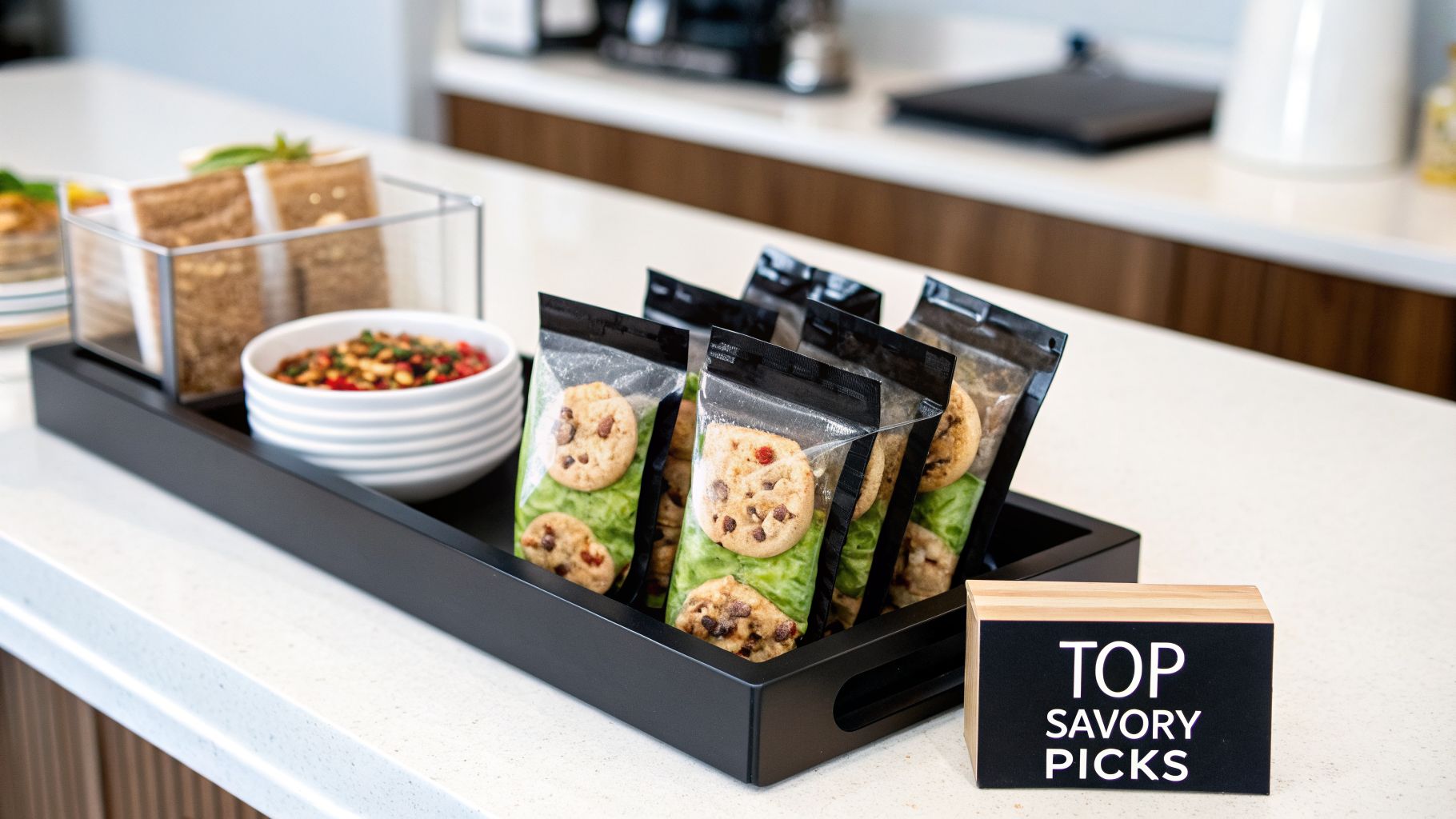
Alright, we’ve covered the science behind what makes a protein snack genuinely satisfying. Now, let's get to the good stuff—our top recommendation. After tasting more savory snacks than we can count, we found a few that truly deliver on flavor, texture, and nutrition.
The one that consistently came out on top? Gym Snack’s Cheddar Cheeze Puffs. These are a game-changer. Forget what you think you know about plant-based snacks; these are chef-crafted, and you can taste the difference. Each bag packs a whopping 30g of high-quality pea protein, which is a serious contribution to your daily goals.
Why They Top Our List
What blew us away with Gym Snack puffs was the perfect marriage of health and taste. The cheesy flavor is bold, sharp, and deeply satisfying—it’s the kind of snack you’d reach for even if you weren't looking for a protein boost. They also managed to create an incredible crunch while keeping the puffs completely free of dairy, soy, and gluten.
Customer reviews consistently praise the authentic cheddar taste and the fact that it feels like a real, indulgent snack—not a compromise for health. This proves you don't have to sacrifice flavor for fitness.
Here's exactly where Gym Snack’s puffs hit the mark:
- High Protein: The impressive protein content helps activate fullness hormones like PYY and GLP-1, keeping you satisfied for hours.
- Clean Ingredients: The ingredient list is refreshingly short and easy to understand. No artificial junk or seed oils here.
- Amazing Texture: They absolutely nailed the light, crispy crunch that your brain associates with a fresh, high-quality snack.
If you’re tired of sweet bars and shakes, diving into the world of high-protein savory snacks is a great move. It makes hitting your protein targets feel less like a chore and more like a treat.
For anyone ready to see what the hype is about, you can build a custom pack of Gym Snack puffs and find your own favorite. It’s a smarter, more delicious way to fuel your body.
A Few Common Questions, Answered
Even with all this info, you might still have a few questions floating around. That’s completely normal. Let's clear up some of the most common things people ask when they're trying to find protein snacks that actually taste good and work for their lifestyle.
Are Savory Protein Snacks Actually Healthy?
Without a doubt. When you find savory snacks made from clean, whole-food ingredients, they are a fantastic part of a healthy diet. They're a world away from typical junk food, which is often packed with artificial flavors and unhealthy fats. Quality savory snacks deliver vital nutrients without asking you to compromise on taste. They feel like real food for a simple reason: they are.
Will Plant-Based Protein Help Me Build Muscle?
Yes, absolutely. High-quality plant-based proteins are more than capable of helping you build muscle. The trick is to look for snacks that use complete protein sources, which contain all the essential amino acids your body needs to repair and grow muscle tissue.
Many modern snacks, for instance, use pea protein, which is rich in those necessary building blocks your muscles crave after a tough workout.
One of the biggest questions I get is about overall protein intake. Knowing your own body's needs is the first step to making smart choices. For a deep dive, this guide on how much protein do you need daily is an excellent resource.
How Can I Fit High-Protein Snacks into My Busy Day?
This is where the convenience factor really shines. Fitting protein snacks into a hectic schedule is much easier than you might think.
- Pre-Workout: Grab a bag about 30-60 minutes before you train. It's the perfect way to get some sustained energy without feeling weighed down.
- Workday Fuel: Keep a stash in your desk drawer. It’s the ideal fix for that afternoon slump, helping you power through without the sugar crash.
- On the Go: Toss a bag in your car or carry-on. It's a satisfying, non-messy option that will keep you feeling full between destinations.
Ready to stop compromising and start enjoying snacks that are both nutritious and genuinely delicious? Explore Gym Snack's chef-inspired, plant-based puffs and taste the difference for yourself. Build your custom pack today at https://gymsnack.com.