

You finish a workout, reach into your bag, and tear open a protein bar because it feels like the responsible move. Then the first bite tastes like dessert. The second sticks to your teeth. Half an hour later, you are still hungry, and now you want something salty.
That experience is common for a reason. A lot of snacks sold as “fitness food” are built to feel indulgent first and nourishing second. They lean hard on sweetness, syrupy binders, and a health halo that makes people ignore what the label states.
If you are looking for protein snacks without sugar, the goal is not just to avoid candy disguised as wellness food. The goal is to find snacks that help with recovery, appetite control, steady energy, and convenience when real life gets busy. For many people, that means moving away from the usual sweet bar and toward cleaner, more savory options that satisfy like food, not like a treat pretending to be food.
The Problem with Your Protein Bar
You finish training, need something fast, and grab the bar in your bag. It promises protein, energy, and recovery. Then it eats like a candy bar, sits heavy in your stomach, and leaves you wanting chips an hour later.
Protein bars are typically bought in three situations: after training, during a long gap between meals, or when breakfast got skipped and convenience won. The problem is that a big share of the category is built around sweetness first. Protein gets added, but the product still relies on dessert-style flavors, syrupy binders, coatings, and a health halo on the wrapper.
That mismatch matters.
A snack can hit your protein target on paper and still do a poor job with appetite control. Sweet bars often keep the reward loop switched on. You ate, but you do not feel done. From a coaching standpoint, that is the core issue. A snack should settle hunger, not keep your palate asking for the next bite.
Why the experience feels off
The texture tells you a lot. Soft, sticky, chewy bars usually need binders and sweeteners to hold together and stay palatable. That can make them easy to market and hard to stop thinking about.
Savory protein snacks tend to work better for many people because they feel like food. They also fit better with what newer satiety discussions around GLP-1 have pushed into the mainstream: fullness is not only about calories. It is about whether a snack helps shut down the urge to keep grazing. Sweetness often works against that. A clean, savory option often supports it.
If you want a practical wrapper check, this guide to protein bars nutrition facts is useful because it shifts your attention from front-of-pack claims to what is really in the product.
What works better than blind trust
Use a stricter filter. Check the ingredient list before the protein number. Look at how the product is sweetened, how long the ingredient panel runs, and whether the flavor profile sounds more like candy aisle food than real food.
That is also why guides on no added sugar protein bars help. They give you a better starting point than marketing copy.
My practical rule is simple. If a protein snack mainly satisfies a sweet tooth, it is usually a weak tool for recovery, appetite control, and clean eating. Savory options do a better job for many active people because they create a cleaner stop signal, and that is often what you wanted in the first place.
Why Sugar-Free Protein Is a Performance Upgrade
Removing sugar from a protein snack is not just a dieting move. It changes how that snack behaves in your day.
A better snack should help you stay steady between meals, train without feeling weighed down, and recover without setting off another round of cravings. That is where protein snacks without sugar earn their place.
Fullness is not just about calories
Protein changes the way a snack lands. According to Primal Krisp, protein slows digestion and activates satiety-signaling hormones, creating prolonged fullness. The same source notes that plant-based proteins like pea protein offer lasting energy without the heaviness of animal proteins, which makes them useful before or after training. It also states that formulations delivering 15g+ protein per serving significantly amplify this effect by supporting GLP-1 and PYY hormone signaling (Primal Krisp on high-protein snacks and satiety).
That matters because hunger is not just about an empty stomach. It is also about signaling. A snack that supports fullness signals can reduce the urge to keep grazing after you already ate.
Why sweet protein snacks often disappoint
Sweetness can keep the appetite conversation going. Even when the package says “fit,” the experience can still feel like having a treat. Some people do fine with that. Many do not.
The practical issue is not moral. It is functional. If you eat a snack for stable energy and appetite control, a dessert-style product often sends the wrong cue. You may hit your protein target and still feel mentally unsatisfied.
Better pre-workout and post-workout use
Sugar-free protein snacks can be easier to place around training because they create fewer extremes.
Before a workout, you want something that feels light enough to move with and substantial enough to keep you from fading. After a workout, you want protein that supports recovery without making you want another snack immediately after. Cleaner, lower-sugar options usually handle both jobs better than candy-style bars.
A few patterns tend to work well:
- Pre-workout: A lighter portion with protein and a simple ingredient list tends to sit better than a sticky, ultra-sweet bar.
- Post-workout: A more substantial protein serving helps with recovery and can reduce the “I trained, now I deserve sugar” spiral.
- Workday snacking: Savory or neutral flavors often shut down repeat cravings better than sweet flavors.
Why plant-based protein deserves a harder look
A lot of people still assume plant protein is only for people avoiding dairy. That is too narrow.
Pea-based formulas are often easier for people who do not tolerate whey well, and they can fit better into a daily routine when you want something convenient without the heaviness some animal-based snacks bring. That makes them useful for gym-goers, busy professionals, and people trying to keep digestion calm while still getting meaningful protein.
If you want a solid refresher on why protein quality and timing matter in the first place, Protein 101: The Foundation of Performance is a helpful primer.
The best snack is not the one with the loudest claim on the wrapper. It is the one that keeps you fed, focused, and done thinking about food for a while.
How to Decode Snack Labels and Find Hidden Sugars
You grab a protein bar between meetings because the wrapper says “20g protein” and “no junk.” Thirty minutes later, you want coffee and something else to eat. That is usually not a protein problem. It is a label-reading problem.
Brands design packaging to pull your eyes to the front panel first. The useful information is usually on the back.
Start with the ingredient list, not the slogan
Front-of-pack claims like “high protein,” “keto,” “natural,” or “plant-based” do not tell you whether the snack is basically dessert with protein added. A bar can hit a protein target and still push sweetness hard enough to keep your appetite switched on.
Read the ingredient list before you look at the macros. If the first few ingredients are syrups, sweeteners, fruit concentrates, chocolate coatings, or sticky binders, you are looking at a sweet product wearing fitness branding. “No added sugar” can be a useful filter, as noted earlier, but it still does not guarantee a better snack. You still need to check what is doing the sweetening and what the bar is made from overall.
The fastest hidden-sugar scan
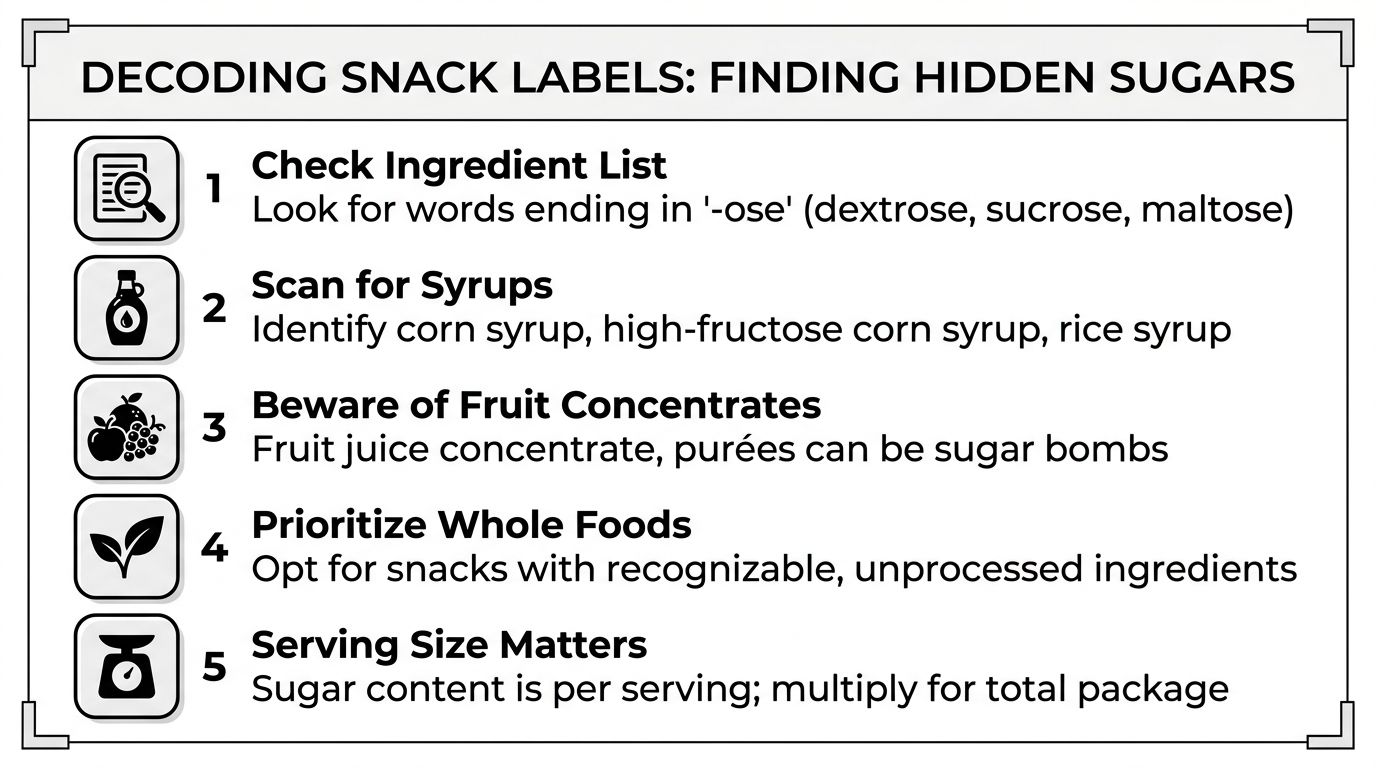
In a store aisle, I use a simple five-point check:
- Scan for sugar names Words like dextrose, sucrose, fructose, maltose, cane sugar, and evaporated cane juice all count. If several show up, the product is built to taste sweet first.
- Check for syrups Brown rice syrup, tapioca syrup, corn syrup, and similar binders do more than improve texture. They make the snack easier to overeat.
- Watch fruit purées and concentrates These sound cleaner than table sugar, but they still push the product toward a candy profile.
- Look for sweetener stacking Brands often combine small amounts of several sweeteners so no single one looks dominant.
- Check the serving size against the package size If the label says one serving but the packet is clearly meant to be eaten in one go, judge the whole package, not the technical serving.
If you want a sharper system for comparing products side by side, this guide on how to read nutrition labels is a practical one to keep handy.
Know what the claims mean
These terms get treated like they mean the same thing. They do not.
| Claim | What it usually signals | What to watch for |
|---|---|---|
| Sugar-free | No sugar added in the conventional sense | May rely heavily on sugar alcohols or other sweeteners |
| No added sugar | No sugar ingredients added during formulation | Can still contain concentrated fruit ingredients or naturally occurring sugars |
| Unsweetened | No sweeteners added for taste | Usually less dessert-like, which can be a benefit if you want fewer cravings |
For many active people, “unsweetened” or lightly seasoned savory snacks are easier to manage than bars engineered to mimic brownies or cookie dough. That matters for satiety. Sweet taste can keep appetite engaged, while savory protein snacks often shut the eating loop down faster.
Sweetener trade-offs are real
Low sugar on the label does not always mean better in your body.
- Sugar alcohols can reduce sugar grams, but they often cause gas, bloating, or urgent bathroom trips in people who eat them regularly.
- Stevia and monk fruit work for some people, but certain formulas leave a strong aftertaste that keeps the sweet signal hanging around.
- Artificial sweeteners are tolerated fine by some lifters and not well by others. The common complaints are appetite drift, GI discomfort, and a lingering sweet taste that makes savory food less appealing.
That last point gets overlooked. If your snack keeps reinforcing a dessert palate, it can work against clean eating habits and against the satiety response you want. People using higher-protein diets to stay fuller, including those paying attention to GLP-1 related satiety effects, usually do better with foods that feel like real food, not candy with macros.
A clean-label checklist that works in real life
Use these three filters before you buy:
- Protein-first: Is the snack built around a clear protein source, or is protein sprinkled into a sweet base?
- Low sweetness pressure: Does it rely on multiple sweeteners, syrups, or concentrates to make the product appealing?
- Would you eat it if it were savory? If the answer is no, it is probably a treat with protein attached.
That is one reason savory snacks deserve more respect. Jerky, roasted edamame, seasoned chickpeas, meat sticks with a clean ingredient list, and crunchy pea-protein snacks usually ask less from the label reader because they are not trying to imitate dessert in the first place.
Front-of-pack claims are sales copy. Ingredient lists show what you are putting in your body.
Choosing the Best Ingredients for Clean Protein Snacking
Once you stop getting distracted by sugar claims, the next question is simple. What should a clean protein snack is made from?
The answer starts with protein source, but it does not end there. Fat quality, allergen load, texture, and digestibility all matter. A snack can look solid on macros and still be a poor fit if it leaves you bloated, sluggish, or unsatisfied.
Protein source changes the whole experience
A lot of mainstream advice still treats whey as the default and plant protein as the backup plan. That view is outdated.
Healthline-based background in the verified material points out that mainstream snack guides often overlook performance-focused, allergen-conscious formulations, and that modern pea protein concentrates deliver complete amino acid profiles comparable to whey, without the associated dairy, soy, and gluten allergens that can hinder recovery and gut health for sensitive individuals (Healthline on healthy high-protein snacks).
That does not mean whey is always bad. It means whey is not automatically best for everyone.
If you train hard but deal with digestive issues, dairy sensitivity, or post-snack heaviness, a well-formulated plant-based snack can be a better tool.
What a stronger ingredient deck looks like
Clean protein snacks usually share a few traits:
- Protein-first structure: The snack is built around a meaningful protein source, not coated in one.
- Recognizable whole-food support ingredients: Nuts, legumes, seeds, and seasonings make more sense than a long list of binders.
- Lower allergen burden: This can matter a lot for people eating around training.
- Better texture: Crunch often satisfies more than sticky chewiness.
Fats matter more than people think
Many shoppers focus so hard on sugar and protein that they ignore the fat source completely. That is a mistake.
A snack can be low in sugar and still rely on oils or heavy additives that make it feel greasy or sit poorly. You want fats that support the eating experience, not fats that make the snack feel processed.
As a practical rule, cleaner snacks tend to feel cleaner too. The ingredient list is shorter. The seasoning tastes like food. The finish is not oily, waxy, or oddly sweet.
Here is a useful explainer on ingredient quality and performance nutrition:
Gut comfort is part of performance
People often treat digestion as a side issue. It is not. If your snack leaves you bloated before training or uncomfortable at your desk, it failed.
That is why allergen-conscious formulations matter. For some people, removing dairy, soy, or gluten from snack choices makes pre-workout fueling easier and post-workout eating more comfortable. The best plan is not the most impressive on paper. It is the one your body handles well enough to use consistently.
A practical ingredient hierarchy
When comparing two protein snacks, I would rank the decision like this:
- Protein quality and digestibility
- Added sugar and sweetener load
- Allergen profile
- Fat quality
- Texture and flavor satisfaction
That last point is not cosmetic. If the snack is unpleasant, you will not keep it around. If you do not keep it around, you will default to whatever is easiest, which is often a sugary bar or vending machine food.
Embrace Savory Snacks for Superior Satiety
Savory protein snacks are still underrepresented in a category dominated by bars, brownies, cookies, and shakes. That is strange, because many people are not looking for another sweet thing. They are looking for relief from hunger.
The sweet bias is real. Verified material notes a significant content gap regarding savory protein snacks, with most guides dedicating 70-80% of recommendations to sweet options, even though protein-rich savory foods may trigger stronger fullness signals through GLP-1 and PYY and may be especially useful for appetite control in weight-management and GLP-1 users (Virta Health on high-protein snack ideas).
Why savory often works better
Savory snacks behave more like food and less like dessert. That sounds obvious, but it changes the whole result.
Sweet snacks can keep your palate chasing more sweetness. Savory snacks usually do the opposite. They close the loop. Salt, crunch, and umami can make a smaller portion feel more complete.
That is one reason people often feel more satisfied after something crunchy and savory than after a soft sweet bar with similar protein.
The texture advantage nobody talks about enough
Texture matters for satiety. Crunch forces a slower eating pace and makes the snack feel substantial. Soft bars disappear fast and often leave little sensory satisfaction behind.
If you are trying to reduce mindless snacking, crunch is useful. You notice the snack more. You feel like you ate something real.
On-the-Go Savory Protein Snack Ideas
| Snack Idea | Approx. Protein (per serving) | Portability | Best For |
|---|---|---|---|
| Roasted chickpeas | Moderate | High | Desk drawer, afternoon snack |
| Plain jerky with no added sugar | High | High | Travel, post-workout backup |
| Nuts and seeds mix | Modest | High | Long meetings, steady grazing |
| Savory pea-protein puffs | High | High | Gym bag, commute, cravings control |
| Hard-boiled eggs with salt and paprika | High | Medium | Morning snack, quick recovery |
| Edamame, dry roasted | Moderate | High | Plant-based snacking on the go |
The exact best choice depends on context. A pre-workout snack needs different qualities than a road-trip snack or a late-afternoon snack.
Savory options that fit real life
Here are a few practical patterns that work:
- For the car or gym bag: Shelf-stable options like jerky or crunchy pea-protein snacks travel better than refrigerated dairy.
- For desk snacking: Dry roasted edamame, roasted chickpeas, and savory puffed snacks are easier to portion and less messy.
- For after training: A higher-protein savory snack can feel more restorative than another sweet bar when you are already tired of shakes.
If you want more ideas in this category, this roundup of high-protein savory snacks is useful because it focuses on the category most brands and publishers still under-serve.
Simple no-sugar savory combinations
You do not need recipes in the formal sense. You need combinations that work.
Try these:
- Roasted chickpeas plus a few olives: Salty, crunchy, travel-friendly.
- Unsweetened jerky plus cucumber slices: Good when you want something light but solid.
- Hard-boiled eggs with chili flakes: Basic, effective, and filling.
- Savory protein puffs with a piece of fruit on the side: A practical balance when you want protein first without making the snack feel like a dessert.
What does not work as well
Some “savory” snacks are just chips with a little protein added. Others use sweet marinades, glazes, or flavor dusts that bring you right back to the same problem in a different wrapper.
Watch for snacks that are:
- Mostly starch with a protein claim
- Sweetened under savory flavor names
- So greasy they feel like junk food
- Too low in protein to matter
If a snack leaves you wanting dessert after you finish it, it probably did not solve the main problem.
The Ultimate Savory Solution A Clean Protein Crunch
A good protein snack should check more than one box. It should satisfy hunger, support your training, travel well, and fit clean eating standards without tasting like punishment.
That is why the market is moving in this direction. According to Trax Retail, 71% of Americans reported gravitating toward healthier snacks in 2025, and 55% prioritized protein. The same source says the U.S. protein snacks market was valued at USD 1.8 billion in 2025 and is projected to reach USD 4.2 billion by 2035, while plant-based snacks hold a 62.6% market share in 2025 (Trax Retail on less sugar and more protein).
That combination tells you something important. People are not just asking for more protein. They are asking for protein in forms that feel cleaner, steadier, and more useful in daily life.
What a strong solution looks like
The ideal savory protein snack has a few defining traits:
- Enough protein to matter
- No reliance on sugar for taste
- Crunch and seasoning that satisfies
- Plant-based digestibility for people who want alternatives to dairy-heavy snacks
- An allergen-conscious build for better day-to-day consistency
When a snack hits those marks, it stops being a compromise food. It becomes part of a workable routine.
Why crunch is a big deal
Shakes are efficient but not very satisfying. Soft bars can feel repetitive fast. Crunch fixes a lot of that.
A crunchy savory snack gives people something many performance foods do not. It feels like eating. That matters when you are trying to stay consistent without feeling trapped in a cycle of powders, puddings, and sticky bars.
The clean-label edge
People shopping for protein snacks without sugar are usually looking for more than low sugar alone. They also care about what is absent.
They want fewer junk ingredients. Fewer digestive surprises. Fewer fake-health products with fitness branding. A cleaner, plant-based, savory profile lines up with that demand far better than the average dessert-style bar.
For busy professionals, students, and gym-goers, that combination is practical. It works in a backpack, desk drawer, or gym bag. It can fit before training, after training, or between meals without feeling like a cheat snack.
Your New Strategy for Smart Snacking
The smartest shift is not “eat fewer snacks.” It is “stop treating all protein snacks as equal.”
A lot of bars earn trust with branding, not formulation. That is why label reading matters. It is why sweet taste should raise questions instead of confidence. It is also why savory protein snacks deserve much more attention than they get.
Use a simple strategy from here:
- Replace one candy-like bar with a savory option this week
- Read the ingredient list before the protein claim
- Choose snacks that make you feel done eating, not primed for more cravings
- Prioritize protein sources and formulations that your body handles well
Snacking is not a problem when the snack does its job. The right one can support recovery, steady your appetite, and make it easier to hit your protein target without turning every break in the day into a sugar event.
Rethink your snack drawer. Your gym bag too. The fastest upgrade is often not more discipline. It is a better default.
If you want a savory option built for this exact job, Gym Snack offers plant-based crunchy protein snacks with 15g+ protein per serving and 30g+ per bag, bold cheesy flavors, and a formula made without dairy, soy, gluten, or seed oils. It is a practical swap for anyone tired of sweet bars and looking for a cleaner way to snack around training, work, or travel.