

You’re probably standing in one of two places right now. You’re either in the snack aisle staring at bars, chips, cookies, and shakes with “protein” stamped across the front, or you’ve already bought Quest protein snacks and you’re wondering whether they’re a smart choice or just clever packaging.
That confusion makes sense. Quest sits in a strange middle ground. It’s not candy, but it’s also not the same as a bowl of Greek yogurt, eggs, or a homemade meal. Some people love Quest because the macros look clean. Other people reject it because the ingredient list looks engineered. Both reactions miss the bigger point.
The useful question isn’t “Is Quest good or bad?” It’s why Quest is formulated the way it is, who that formulation helps, and when a totally different style of snack makes more sense.
The Role of Quest Protein Snacks in Modern Diets
Quest protein snacks became popular because they solve a real problem. Consumers seek something portable, filling, and easy to fit into a busy day. They also want it to feel more satisfying than plain jerky or a basic protein shake.
Quest built its brand around that gap. Instead of asking people to choose between “healthy” and “tasty,” it offered familiar snack formats like bars, chips, and cookies with a nutrition profile aimed at higher protein and lower sugar. That matters in real life. A lot of healthy eating falls apart not at meals, but between meals.
By the time many shoppers noticed Quest everywhere, the company had already become a major force. Quest Nutrition reached $127.1 million in Q3 2021 net revenues, up 45.7% year over year, and its business had expanded beyond bars. Bars had once made up 80% of the business, but by 2021 they were about 60%, while categories like protein chips and cookies made up the remaining 40%, according to Accio’s Quest market overview.
Why Quest stands out
That growth tells you something important. Quest didn’t win just because people wanted more protein. It won because people wanted convenient versions of foods they were already craving.
A protein bar can act like a desk drawer backup. Protein chips can scratch the crunchy, salty itch that a sweet bar can’t. Cookies target the person who wants something dessert-like without going straight to a bakery item.
Here’s the deeper insight: Quest protein snacks aren’t really trying to replace whole foods. They’re trying to replace the moments when people would otherwise grab something with less protein and more sugar.
Quest makes the most sense when convenience and craving control matter as much as nutrition.
Why people feel torn about them
Quest is also a brand that creates strong opinions because it sits at the intersection of sports nutrition and packaged food engineering. That can feel impressive or off-putting, depending on your priorities.
If you care most about hitting protein goals, Quest can look practical. If you care most about minimally processed ingredients, it can look less appealing. Both views are reasonable. The label only makes sense once you understand what each ingredient is doing.
Decoding the Quest Nutrition Label Ingredients
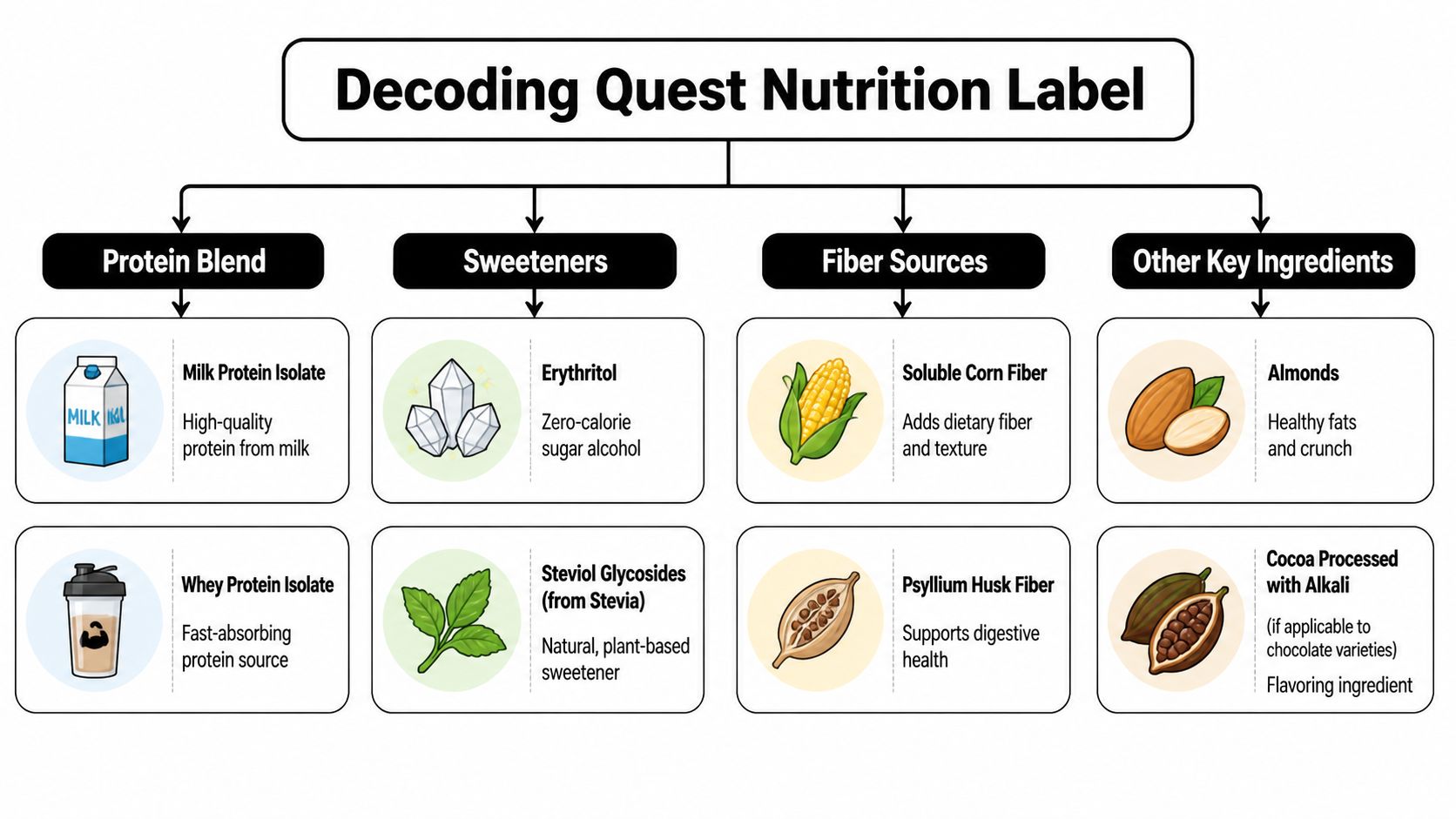
A Quest label gets easier to read once you stop seeing it as a list of chemicals and start seeing it as a recipe built around a few jobs. The formula usually needs to do four things at once:
- Deliver a lot of protein
- Keep sugar low
- Create sweetness and texture
- Make the product shelf-stable and portable
That’s why the label often looks more technical than a homemade snack.
The protein blend
The core of many Quest bars is a blend of milk protein isolate and whey protein isolate. That matters because isolates are filtered to remove much of the non-protein material. In practical terms, they’re used because they pack a lot of protein into a smaller space without bringing along much lactose, sugar, or fat.
According to NutriScan’s breakdown of a Quest bar, Quest Protein Bars provide 21g of complete protein from milk protein isolate and whey protein isolate. Those isolates are described as over 90% protein by weight, with less than 1% lactose, and they achieve a PDCAAS of 1.0, which is equivalent to eggs.
That sounds technical, so here’s the simple version:
- Whey protein isolate is commonly used because it digests relatively quickly.
- Milk protein isolate contains casein and digests more slowly.
- Together, they help a snack feel more substantial than a product built mostly around carbs.
Fiber and sweetness
Quest products also lean on added fiber and non-sugar sweeteners, a combination that often confuses many readers. People often assume these ingredients are there only for marketing, but they also help build the product itself.
Consider baking without regular sugar. Sugar usually adds sweetness, bulk, moisture, and structure. If a brand removes most of that sugar, it has to rebuild the texture another way.
A practical way to read the label
When you scan a Quest ingredient list, use this quick framework:
| Label part | What it does | Why it’s there |
|---|---|---|
| Protein isolates | Supplies dense protein | Helps keep protein high without much sugar or fat |
| Fiber sources | Adds bulk and chew | Helps texture and may increase fullness |
| Sweeteners | Adds sweetness without regular sugar | Makes the product taste more like a treat |
| Fats and flavor ingredients | Improves mouthfeel and taste | Makes the snack feel less like a supplement |
A lot of shoppers also want to know whether “isolate” means “bad” or “fake.” It doesn’t. It means the protein has been refined to concentrate the protein portion. That can be useful if your goal is high protein in a compact serving.
For a product-specific ingredient walkthrough, this detailed look at Quest Protein Chips ingredients can help you compare how the formula shifts across formats.
Practical rule: The shorter question isn’t “Is this processed?” The better question is “Processed for what purpose?”
Identifying the Ideal User for Quest Products
Not every high-protein snack is built for every person. Quest protein snacks tend to fit best when someone values convenience, a dessert-style experience, and a concentrated hit of protein.

The low-carb snacker
Some people don’t struggle with meals. They struggle at 3 p.m. or late at night, when they want something sweet and easy. For that person, a Quest bar or cookie can be useful because it feels closer to a treat than a plain protein source.
This type of eater usually wants:
- Sweetness without much sugar
- A portable option for commuting, travel, or office life
- Predictable macros instead of grabbing whatever is nearby
Quest is especially appealing when someone wants structure. They don’t want to guess what’s in the snack. They want the front label to do part of the decision-making for them.
The gym-goer who needs convenience
The second strong fit is the lifter or active person who wants an easy protein option after training or between meals. They may not have time to cook immediately, and they may be tired of drinking another shake.
For that person, Quest can work because it’s compact, shelf-stable, and built around complete dairy proteins. It gives them a more chewable, satisfying option than liquid protein alone.
The busy professional
Then there’s the person who isn’t chasing perfect nutrition. They’re trying to avoid the vending machine spiral. They need something that can live in a backpack, desk drawer, or car and feel more intentional than random snack food.
A few situations where Quest may fit well:
- Back-to-back meetings: You need something fast that holds you over.
- Travel days: Airport food is limited and often low in protein.
- Craving management: You want something sweet without turning snack time into a full dessert.
If a product helps you stay consistent on your worst days, that matters. Nutrition isn’t only about ideal meals. It’s also about better backup plans.
Navigating Common Concerns with Quest Snacks
The same features that make Quest protein snacks useful also create the most common complaints. If someone says, “Quest works great for me,” and another person says, “Quest destroys my stomach,” both experiences can be true.
Digestive issues are a real concern
Some people do fine with protein isolates, added fiber, and sugar substitutes. Others don’t. Quest’s style of formulation can be hard on sensitive digestion because it concentrates ingredients that don’t bother everyone equally.
According to Health Digest’s discussion of Quest Nutrition, a key limitation is Quest’s heavy reliance on dairy proteins like milk and whey isolate, which excludes plant-based consumers. The same source notes that reliance on isolated protein and fiber can lead to digestive issues, and it points to the plant-based protein market being projected to grow at 8.5% CAGR from 2023 to 2028.
That doesn’t mean Quest is necessarily unhealthy. It means tolerance matters. A snack can have strong macros and still be a poor fit for your gut.
Dairy limits who can use it comfortably
Another issue is simpler. Quest is heavily dairy-based. That creates a clear boundary.
If you’re vegan, Quest usually won’t fit your diet. If you avoid dairy for ethical, digestive, or personal reasons, the brand’s main protein strategy won’t line up with your needs either.
Even people who aren’t fully dairy-free sometimes notice that concentrated dairy proteins feel different from eating a traditional dairy food. That’s not unusual. Whole foods and engineered snack products often land differently in the body.
Processed does not mean worthless
The word “processed” tends to flatten the conversation. A protein bar is processed. So is protein powder. So is Greek yogurt. The better question is whether the processing helps solve a problem you have.
A few honest tradeoffs to keep in mind:
- Convenience goes up. You can throw it in a bag and eat it anywhere.
- Whole-food simplicity goes down. The ingredient list is more engineered.
- Macro control improves. The label is designed around a specific nutrition target.
- Digestive tolerance becomes more individual. Some bodies handle it fine, others don’t.
If you’re sorting through ingredient concerns, this guide on whether Quest bars are gluten free is useful for understanding one more layer of compatibility.
A food doesn’t need to be perfect to be useful. It does need to agree with your body.
Exploring Savory Plant-Based Protein Alternatives
One reason people burn out on Quest protein snacks has nothing to do with nutrition science. They get tired of sweet things. Bar after bar, cookie after cookie, shake after shake, everything starts tasting like a variation of dessert.
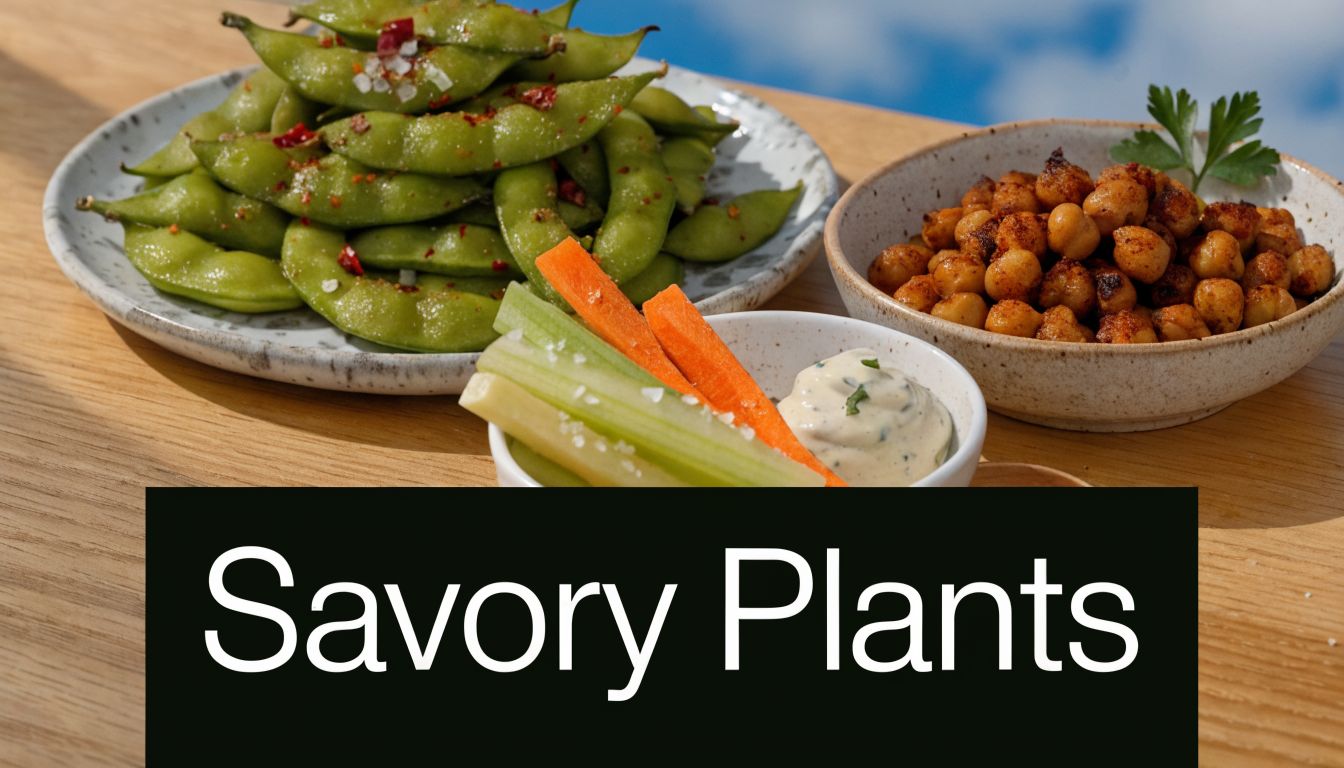
That’s where a different category becomes interesting: savory, plant-based protein snacks.
Why savory changes the experience
Sweet protein snacks try to imitate cookies, candy bars, and treats. Savory protein snacks solve a different craving. They target crunch, salt, cheese-style flavors, and that “I want chips” moment.
That matters more than people think. Food choice isn’t just about macros. It’s also about flavor fatigue. If your snack plan only works when you’re in the mood for sweet foods, it won’t carry you through every day.
Savory options can feel more natural for:
- Afternoon snacking
- Post-workout hunger when you want real food energy
- People who don’t enjoy dessert-style products
- Anyone tired of bars
Why plant-based changes the formulation
Plant-based protein snacks also open the door for people who don’t tolerate or want dairy. Instead of relying on milk and whey isolates, they often use proteins such as pea protein.
From a coaching perspective, that changes the decision from “Which Quest flavor should I buy?” to “Do I even want a dairy-based, sweet snack format in the first place?”
Here’s a simple comparison:
| Preference | Quest-style fit | Savory plant-based fit |
|---|---|---|
| Sweet taste | Strong match | Usually not the focus |
| Dairy-based protein | Strong match | Usually avoided |
| Vegan lifestyle | Poor fit | Better fit |
| Crunchy salty craving | Available in some formats | Often the main appeal |
| Dessert fatigue | Can become an issue | Often solves it |
If you’re curious about this category, this roundup of high-protein plant-based snacks gives a good sense of what these alternatives look like in practice.
Who might prefer this category
Plant-based savory snacks often appeal to people who want a snack that feels less like a supplement and more like actual food. That doesn’t automatically make them “better.” It just makes them a better match for certain priorities.
Those priorities usually include:
- avoiding dairy
- wanting something salty instead of sweet
- preferring a simpler-feeling ingredient philosophy
- looking for a snack that feels easier on digestion
That last point matters. If Quest hasn’t worked for you, the answer may not be “stop snacking.” The answer may be “choose a different style of snack entirely.”
A Framework for Choosing Your Ideal Protein Snack
Choosing between quest protein snacks and another option gets easier when you stop asking which snack is best in general and start asking which snack fits your real life.
Start with your body, not the brand
Use these filters in order.
- If you tolerate dairy well and you want a sweet, convenient, protein-forward snack, Quest may be a solid fit.
- If dairy gives you trouble or you follow a plant-based diet, a dairy-based bar or chip probably isn’t your best starting point.
- If you crave sweet foods, a Quest-style product may help you stay on track better than forcing yourself to eat something you don’t enjoy.
- If you want salty crunch, look at savory alternatives instead of trying to make a sweet bar solve the wrong problem.
Then look at the job the snack needs to do
A protein snack can play different roles. It might be a post-workout bridge. It might be an office emergency option. It might be a replacement for chips during a busy afternoon.
That’s why context matters more than internet arguments about “clean” eating.
Coach’s shortcut: Match the snack to the craving, your digestion, and your diet style. When those three line up, compliance gets easier.
A short visual explanation can help if you’re comparing convenience, ingredients, and fit for different lifestyles.
The simplest decision tree
- Choose Quest if you want sweet, portable, dairy-based protein and your stomach handles that style well.
- Choose a savory plant-based option if you want crunch, avoid dairy, or feel done with dessert-like snacks.
- Choose whole foods first when you have the time, access, and appetite for them.
That’s the essential framework. Not brand loyalty. Fit.
Frequently Asked Questions About Quest Snacks
Are Quest snacks good for weight loss
They can be, but only if they help you manage appetite and stay consistent. A Quest bar or chips can be useful when they replace a less filling or more impulsive snack choice. They’re less helpful when they become an “extra” on top of meals you were already going to eat.
The key question is behavioral: does the snack reduce mindless eating, or does it just make it easier to keep snacking?
Can I eat Quest snacks every day
Some people can include them regularly without issues. Others do better using them as a convenience tool rather than a daily staple. If you eat them often, pay attention to two things: digestion and food variety.
If your stomach feels fine and the rest of your diet still includes whole-food protein sources, produce, and balanced meals, regular use may work. If you notice bloating, discomfort, or heavy reliance on packaged foods, it’s worth rotating in other options.
Are Quest bars and Quest chips the same kind of snack
Not really. They belong to the same brand family, but they often serve different purposes. Bars are usually chosen by people who want something denser, sweeter, and more meal-like. Chips tend to appeal to people chasing crunch and a more savory experience.
That means your best option may depend less on macros and more on the moment you need it for.
Are Quest snacks healthy or just processed
They can be both processed and useful. Processing tells you how a product was made. It doesn’t automatically tell you whether it fits your needs.
A better test is this:
- Does it help you hit protein goals?
- Does it sit well in your stomach?
- Does it support your eating pattern instead of derailing it?
- Can you still build most of your diet around whole foods?
If the answers are mostly yes, a Quest product may have a place in your routine. If the answers are no, the issue isn’t morality. It’s mismatch.
If you’ve realized you want a protein snack that’s savory instead of sweet, plant-based instead of dairy-based, and built for crunch rather than dessert vibes, take a look at Gym Snack. It offers a different path for people who want protein support that feels more like a craveable snack and less like a candy bar with added macros.