

A typical slice of red velvet cake delivers only about 4 to 7 grams of protein while packing roughly 320 to 370 calories, making it a poor protein source by any fitness standard. Standard red velvet cake is dessert, not a meaningful protein serving, even when its color and cocoa flavor make it feel more substantial.
The popular advice is to treat any cake made with protein powder as a smart fitness food. That advice skips the most important question: how much protein do you get for the calories you eat? A dessert can include whey, collagen, or egg white and still be a weak choice if the serving is small, the calorie load is high, or the texture depends on a long ingredient list of sweeteners and fillers.
Red velvet cake protein makes sense only when the formula has been deliberately rebuilt around protein. Conventional cake doesn't qualify.
The Real Protein Content in Red Velvet Cake
A standard slice looks rich, dense, and filling, but those qualities don't indicate meaningful protein. Nutrition databases place ordinary red velvet cake at roughly 3.4 to 6.8 grams of protein per 100 grams, with about 367 calories per 100 grams. One reference lists 6.81 grams of protein, 17.18 grams of fat, and 46.81 grams of carbohydrates per 100 grams in its red velvet cake nutrition listing.
That protein contributes only about 4% to 7% of total calories, according to the verified nutrition data. The rest comes primarily from carbohydrate and fat, which is exactly what you'd expect from flour, sugar, oil or butter, cocoa, and frosting.
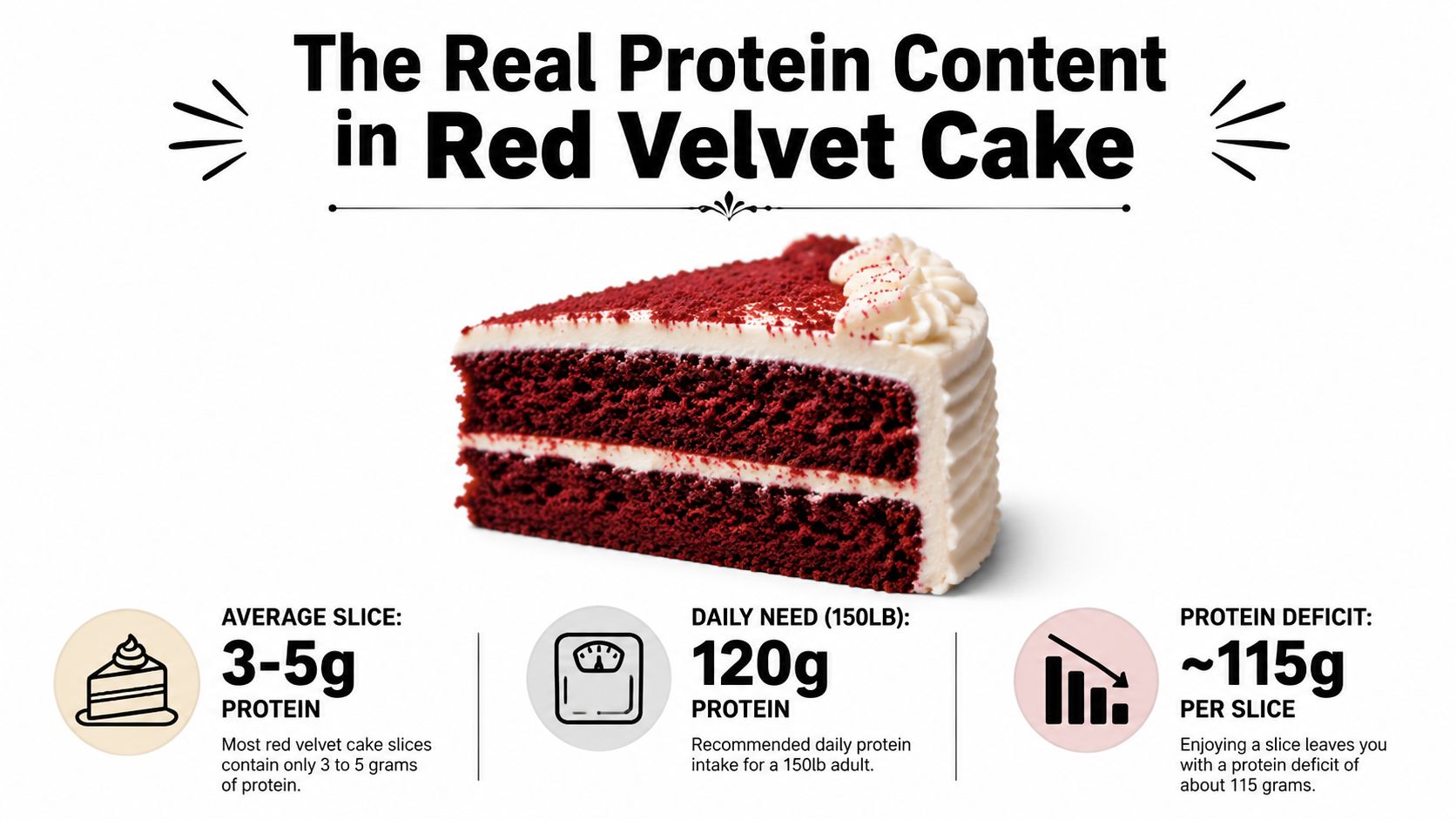
What a slice actually gives you
Serving size changes the result, but not the conclusion. One database reports 4 grams of protein in an 87-gram slice. Other entries report 5 grams per two-layer slice and 7 grams in a larger serving, showing that recipes and portions matter while the protein contribution remains modest. The independent red velvet cake nutrition data also show examples ranging from about 2.1 grams per 100 grams to roughly 5.45 grams per slice.
That variation is normal. A bakery slice with generous cream cheese frosting won't match a smaller homemade portion. Neither version becomes a serious protein food.
Practical rule: Judge dessert-style protein by protein relative to calories, not by the word “protein” on the label.
For someone trying to improve recovery, preserve muscle, or make daily protein intake easier, conventional red velvet cake is a poor foundation. It may fit as an enjoyable dessert, but it shouldn't replace eggs, Greek yogurt, tofu, legumes, fish, lean meat, or a purpose-built protein snack.
The label needs to show a materially higher protein contribution before “red velvet cake protein” deserves a fitness claim. Otherwise, you're buying cake with a marketing angle.
Why Red Velvet Cake Is Naturally Low in Protein
Red velvet cake's ingredient architecture explains the numbers. Flour provides structure, but the recipe also relies on sugar for sweetness, butter or oil for tenderness, cocoa for flavor, and frosting for richness. Those ingredients create a soft, indulgent crumb without making protein the central nutrient.
The historical recipe tradition followed the same priority. Red velvet developed from the Victorian-era velvet cake tradition, in which bakers used cocoa, almond flour, or cornstarch to create a finer crumb. Sources trace a direct “velvet cocoa cake” relative to modern red velvet to 1911, while the famous Waldorf-Astoria association places commercial popularity in the 1930s, although historians debate how literal that hotel-origin story is. The history of red velvet cake supports a simple conclusion: the cake was engineered for texture and appeal, not protein density.
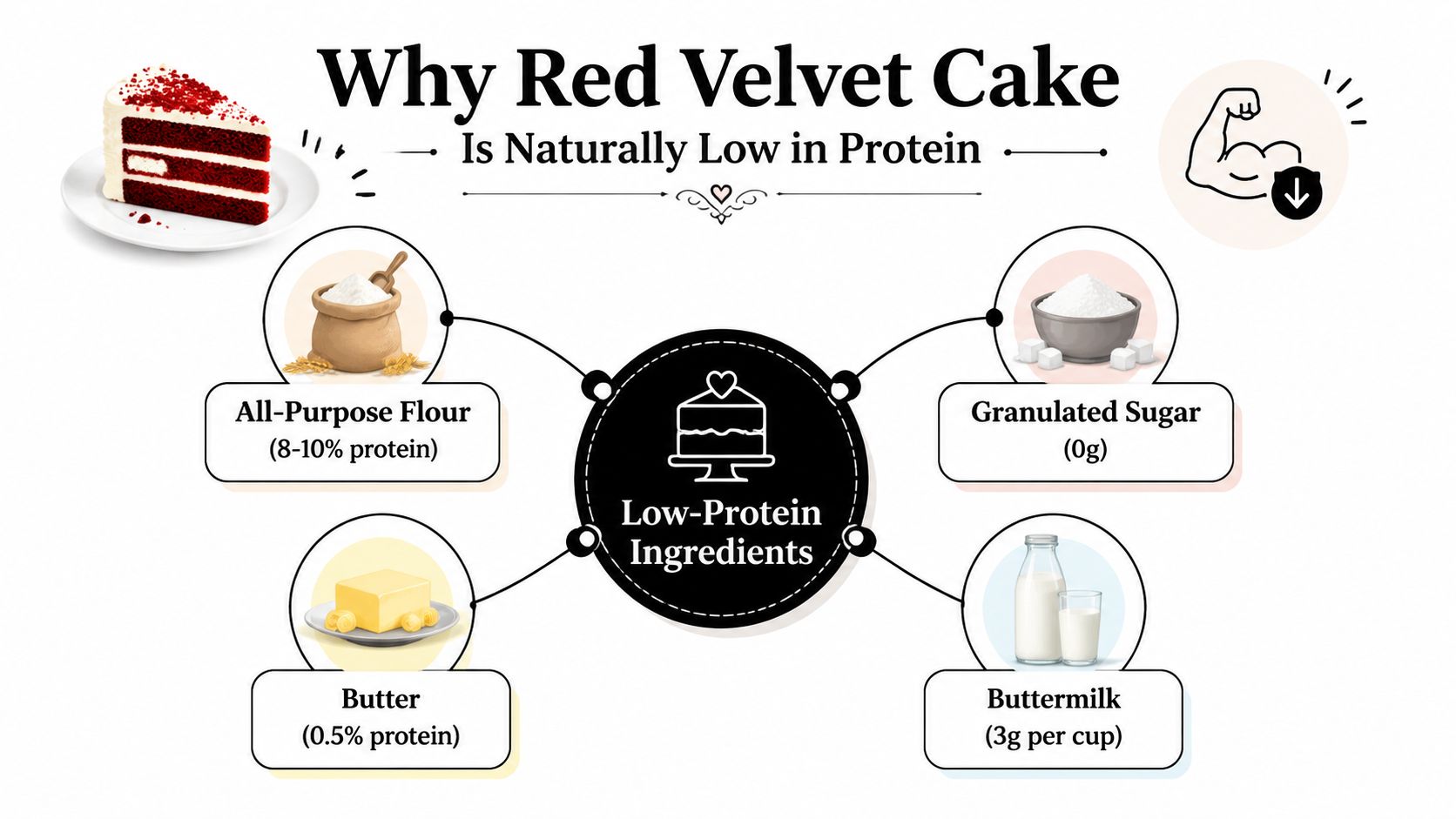
The chemistry works against easy protein upgrades
Classic red velvet depends on the interaction of cocoa, acidic dairy, and leavening. That combination helps create the characteristic tender texture and subtle tang. The same tenderness comes from a batter designed around starch, sugar, fat, and moisture, not a concentrated protein matrix.
Protein powders behave differently in a batter. Whey and milk proteins bind water, tighten as they heat, and can leave a baked product dry or rubbery when the formula doesn't provide enough moisture and fat. Add too much powder without changing the liquid and flour balance, and the cake loses the soft crumb people expect from red velvet.
That's why “just add a scoop” is weak recipe advice. A successful high-protein cake needs moisture-management ingredients that buffer the powder. Greek yogurt, egg whites, applesauce, and fiber-rich flours can help, but each changes the batter's density and baking behavior.
The color also has no protein significance. Historically, cocoa and ingredient chemistry influenced the cake's appearance, while modern versions often use added coloring. Beet-based color can be useful in a homemade formula, but it doesn't transform the cake into a high-protein food.
Commercial Protein Cakes Versus Homemade High-Protein Recipes
Commercial products and homemade recipes solve the same problem differently. A commercial powder or cake mix is formulated around a protein blend, sweetener system, flavoring, color, and bulking ingredients. A homemade recipe gives you more control over ingredients and texture, but it demands more precision.
One commercial example lists milk protein isolate, collagen, whey protein concentrate, and egg white alongside soluble corn fiber and a cocoa-based flavor system. Its label delivers 28 grams of protein at 150 calories with 0 grams of sugar, according to the commercial red velvet protein formulation. That's a completely different product from ordinary cake because protein is the foundation rather than an afterthought.
| Option | Protein per serving | Calories | Key protein sources |
|---|---|---|---|
| Standard red velvet cake | About 4 to 7 grams | Roughly 320 to 370 calories | Flour and modest amounts from dairy or egg ingredients |
| Commercial red velvet protein product | 28 grams | 150 calories | Milk protein isolate, collagen, whey concentrate, egg white |
| Homemade high-protein cake example | 23 grams per slice | 210 calories | Whey protein, Greek yogurt, egg whites, fiber-rich ingredients |
| Homemade protein cheesecake example | 16 grams | 189 calories | Protein powder and dairy-based ingredients |
The homemade examples come from independent high-protein red velvet recipe data. One formula combines whey powder, Greek yogurt, liquid egg whites, beet, coconut flour, and oats or buckwheat. Another reports 23 grams of protein per slice at 210 calories, while a protein cheesecake version reports 16 grams at 189 calories.
Convenience versus control
Commercial products win on consistency. The manufacturer can combine several protein sources with fiber and sweeteners to create predictable mixing and baking behavior. You still need to inspect the label for allergens, artificial colors, sweetener tolerance, and whether collagen makes up a meaningful part of the protein blend.
Homemade recipes win on ingredient control. You can choose Greek yogurt, egg whites, oat flour, coconut flour, or beet instead of relying on a premixed flavor system. You can also adjust sweetness and frosting, which often determines whether the final product remains a useful snack or becomes another calorie-heavy dessert.
Neither option deserves automatic health status. The serving size, protein quality, total calories, and ingredient fit matter more than the red velvet name.
How to Boost Protein in Red Velvet Cake Recipes
High-protein red velvet cake succeeds through controlled substitution, not by dumping in more powder. Replace some flour with protein powder, then protect the starch, moisture, and fat that create a tender crumb. Push protein too far and the result becomes dry, rubbery, or dense.
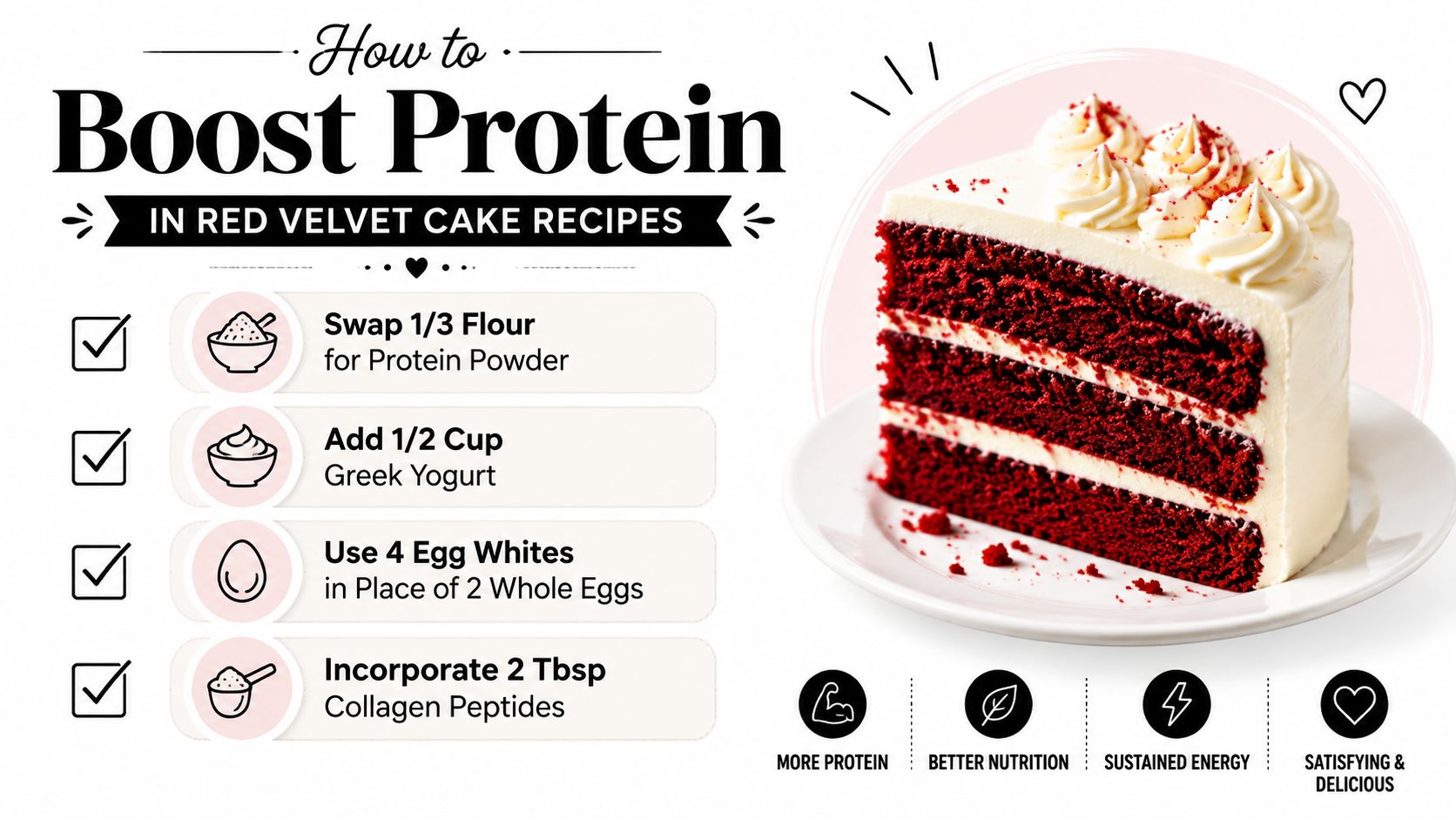
Build the batter around moisture
Use these ratios as a controlled starting point:
- Replace part of the flour: Swap one-third of the flour for protein powder. This raises protein while retaining enough starch for a softer crumb.
- Add Greek yogurt: Half a cup of Greek yogurt supplies moisture, acidity, and dairy protein, helping loosen the batter.
- Use egg whites strategically: Replace two whole eggs with four egg whites to support a protein-focused structure while reducing some fat.
- Add collagen carefully: Two tablespoons of collagen peptides can raise the protein blend, but collagen does not replace a varied protein strategy.
These ratios align with the formulations documented in the independent recipe testing linked in the earlier comparison. They are not a universal formula. Protein powder type, flour, pan size, and oven temperature all affect the outcome, so adjust from this baseline rather than treating it as a guarantee.
Whey protein absorbs moisture and firms during baking, so whey alone commonly dries cake. Greek yogurt and egg whites help offset that effect, while coconut flour and oats or buckwheat alter water retention and crumb density. Successful high-protein formulas combine several of these ingredients instead of relying on powder alone.
Fix the common failures
Dryness usually signals too much protein powder or too little moisture. Reduce the powder, add yogurt or another suitable liquid, and remove the cake from the oven once the center is set.
Rubbery texture often follows excessive whey and overmixing. Stir only until the dry ingredients disappear, then bake until the center has set. A completely dry toothpick usually means the cake has gone too far.
Dense cake can result from excess liquid, insufficient leavening, or a heavy fiber flour. Keep the acidic component that supports the red velvet profile, then change the dry ingredients gradually.
Apply the same discipline to protein drinks and other desserts. This coffee and protein powder recipe provides a useful reference for flavor balance and powder integration. Before revising a recipe, check these protein powder nutrition facts, including the powder's protein, sweetener, and calorie contribution.
Why Savory Protein Snacks Outperform Dessert-Style Options
Dessert-style protein products can solve a craving, but they're a poor default for daily protein. Their flavor systems often prioritize sweetness, cocoa, frosting notes, and a cake-like mouthfeel. That makes them enjoyable, yet it also encourages you to evaluate them as treats first and training fuel second.

Savory snacks fit more naturally into the spaces where people miss protein. A crunchy option can work between meals, in a work bag, or around training without making every protein decision taste like dessert. Plant-based formulas built around pea protein also give dairy-free shoppers a route that red velvet powders and cakes often don't provide.
The product category has other practical advantages. A savory snack can deliver a sense of crunch and saltiness, which dessert powders can't reproduce. It can also make your overall diet less dependent on sweet flavors, especially if breakfast, bars, shakes, and post-workout foods already lean sugary.
Flavor variety improves consistency
Consistency matters more than novelty. A red velvet protein mug cake may feel exciting once, but it's unlikely to become the most dependable protein source in your diet if you don't want dessert at that moment. Savory foods work with lunch, afternoon hunger, and post-training routines without requiring a sweet craving.
Gym Snack is one example of this approach. Its plant-based savory snacks use pea protein and provide 15 grams or more per serving, with 30 grams or more per bag, while being described as free of dairy, soy, and gluten and available in Cheddar Cheeze and Jalapeño Cheddar Cheeze flavors.
A protein strategy should make the next serving easier, not make every meal feel like a reward.
The high-protein savory snacks guide gives more ideas for building that rotation with non-dessert foods. Use cake when you want cake. Use savory protein when your objective is to make protein intake steady and repeatable.
This video offers another visual way to think about practical gym snacking:
Building a Practical Protein Strategy for Fitness Goals
Start with a blunt classification. Standard red velvet cake is a treat. A commercial protein cake or powder can be a convenient dessert-style protein option. A homemade high-protein recipe can work if its label or calculated recipe data supports the calories and protein you need.
Use this checklist before buying or baking:
- Check the protein-to-calorie relationship. Don't compare protein grams alone. A product that delivers a high protein amount at a controlled calorie level is different from a conventional slice.
- Read the full ingredient list. Look for the main protein sources, sweeteners, colors, fibers, and allergens. Milk protein, whey, egg white, and collagen each serve different formulation roles.
- Evaluate texture. If a cake is dry, rubbery, or heavily frosted, you may eat it less consistently or add extra ingredients that change the nutrition.
- Match the format to the moment. Cake works as an occasional dessert. Savory snacks, yogurt, eggs, tofu, legumes, fish, and lean meats are more practical foundations for regular intake.
- Respect dietary constraints. Dairy-heavy formulas don't suit everyone, and many red velvet recipes use artificial coloring. Plant-based and allergen-conscious shoppers need to verify the formula instead of assuming the flavor tells them anything.
The guide to increasing protein intake can help you build a broader routine instead of depending on one novelty food. Your best plan combines reliable whole-food meals with convenient options you can tolerate, enjoy, and repeat.
Red velvet cake protein has a legitimate place, but only as a formulated product or carefully built recipe. Conventional cake remains low in protein relative to its calories. Keep the slice for enjoyment, and reach for a purpose-built protein food when the goal is training support.
Gym Snack offers plant-based savory protein snacks built around pea protein, with Cheddar Cheeze and Jalapeño Cheddar Cheeze options for people who want crunch without another sweet shake or dessert bar. Visit Gym Snack to explore savory protein options for between meals, pre-workout, or post-workout routines.