

Ever stood in the protein aisle feeling completely overwhelmed? You're not alone. Staring at a wall of tubs, trying to decipher the protein powder nutrition facts panel can feel like reading a foreign language.
But here’s the secret: that label is your single best tool. It’s a straightforward guide telling you exactly what’s inside—from calories and protein per serving to sneaky carbs and sugars. Think of it as the nutritional blueprint for hitting your fitness goals.
Decoding Your First Protein Powder Label

The global protein powder market has absolutely exploded, now valued at over USD 46.2 billion, all thanks to a massive cultural shift toward health and wellness. This boom gives us incredible variety, but it also makes understanding what you’re actually buying more important than ever. You can learn more about this growth in recent industry analysis.
The trick is to ignore the flashy marketing claims on the front of the tub. All the crucial information you need is on the back. That nutrition label isn't a list of rules; it's your personal toolkit. Each number helps you match the product to your goals, whether that’s packing on muscle, managing your weight, or just filling a nutritional gap.
The Starting Point Serving Size and Calories
First things first: find the serving size. This is the most critical line on the entire label because every other number—calories, protein, fat—is based on it. Is a serving one scoop or two? 30 grams or 45 grams? This detail changes everything.
Next, look at the calories. This tells you the total energy you’ll get from that single serving. A mass gainer designed to help you bulk up might have 300+ calories, while a lean protein isolate for weight management will be much lower, often around 100-120 calories.
Understanding the relationship between serving size and calories is the foundational step. It ensures you're comparing products accurately and consuming the right amount for your goals.
Getting comfortable with these two basics gives you a solid foundation for understanding the rest of the label. If you want a more general primer, our guide on how to read nutrition labels is a great place to start.
Understanding the Macronutrients: Protein, Carbs, and Fats
Alright, let's get into the heart of the matter: the macronutrients. Once you've looked past the calories and serving size, the real story of any protein powder is told by its "macros"—the protein, carbohydrates, and fats that fuel your body. Think of them as the primary drivers of your performance. They dictate how well a supplement will actually work for you.
Each macro has a specific job. Protein is obviously the star of the show for muscle repair, but the amount of carbs and fats tagging along can either boost your recovery or totally derail your diet if you aren't paying attention. Learning to read this part of the protein powder nutrition facts is the key to picking a product that pushes you toward your goals, not away from them.
Protein: The Quality Behind the Quantity
That big number splashed across the front of the tub—"25g Protein"—is just the starting line. The real value is found in the quality and source of that protein, which all comes down to its amino acid profile. Amino acids are the literal building blocks of protein, and a "complete" protein gives you all nine essential amino acids your body can't make itself.
This is why the source matters so much. Animal-based proteins like whey and casein are naturally complete, making them powerhouses for building and repairing muscle. Plant-based proteins can be just as potent, especially when smart formulators create a blend. For instance, mixing pea and rice protein creates a complete amino acid profile that stands toe-to-toe with whey.
So, always check the ingredient list. It tells you whether you're getting a premium source like whey isolate or a thoughtfully crafted plant blend, which is a much better sign of a good product than just the gram count alone.
Carbohydrates: Fuel, Fiber, and Hidden Sugars
Carbs often get a bad rap, but in a protein powder, they can be a huge asset. They're your body's go-to energy source and are critical for refilling your muscle glycogen stores after a tough workout. The trick is knowing which carbs you're getting, and the nutrition panel breaks it all down for you.
Here’s what to look for:
- Total Carbohydrates: This is just the big-picture number. The details are what count.
- Dietary Fiber: More fiber is almost always a good thing. It helps with digestion, keeps you feeling full, and slows the absorption of sugar, which prevents energy crashes.
- Total Sugars: This is the one to watch closely. Some brands load up on sugars like maltodextrin to make their powder taste better, but this just adds empty calories. A top-tier powder will have 1-2 grams of sugar or less per scoop.
Think of it this way: when you subtract the fiber and sugar from the total carbs, you see what's left. A low-sugar, moderate-fiber powder is always the smart play for sustained energy and better results.
Fats: The Good, The Bad, and The Barely There
Last up is fat, and its presence—or lack thereof—is usually very deliberate. Most protein powders, especially isolates, are designed to be almost fat-free. This keeps the calorie count low and puts the focus squarely on the protein, which is perfect if you’re aiming for lean muscle or managing your weight.
On the other hand, some powders will strategically include healthy fats for added benefits. You might spot ingredients like MCTs (Medium-Chain Triglycerides), a type of fat that your body can quickly convert into energy. These are common in meal replacement shakes or keto-friendly powders.
The key is making sure any fat included is a high-quality, functional fat, not just a cheap filler. A quick glance at the ingredients will tell you if it's from a good source, like coconut oil for MCTs, or if it's an additive you don't need.
If you really want to understand how your body’s engine runs on these fuels, exploring metabolic testing can provide incredible insight, helping you tailor your nutrition to your own unique metabolic rate.
Decoding the Fine Print: Additives and Micronutrients
Once you’ve scanned the big three—protein, carbs, and fats—it's time to put on your detective hat and investigate the "other ingredients" list. This is the fine print, the part most people glance over, but it’s where a powder's true personality shines through. This section tells you everything about its flavor, texture, and ultimately, its quality.
Learning to read this list is what separates a casual buyer from an informed one. It helps you spot the difference between genuinely helpful additions, like digestive aids, and cheap fillers that do nothing for you. Think of it as your secret weapon for finding a truly clean and effective product.
Sweeteners and Flavors: The Good and The Unnecessary
The first thing you’ll probably notice in the ingredient list is the sweetener. Let's be honest, unflavored protein can be an acquired taste, so most powders add something to make them more enjoyable. But not all sweeteners are created equal, and this detail is a huge part of the overall protein powder nutrition facts.
- Natural Sweeteners: Look for names like stevia (from a plant leaf) and monk fruit. These are zero-calorie, plant-based options that you'll often find in more premium, clean-label products.
- Artificial Sweeteners: Sucralose and acesulfame potassium are incredibly common. While they're generally considered safe, some people steer clear because of a distinct aftertaste or potential digestive upset.
- Sugar Alcohols: Erythritol and xylitol are other low-calorie sweeteners. They work well for many, but for some, they can lead to bloating and digestive discomfort.
A top-tier protein powder usually sticks with natural sweeteners to keep the entire ingredient profile clean. If you're paying for pure protein, it doesn't make much sense to add highly processed artificial ingredients just for flavor.
The goal here is simple: find a powder that tastes great without a laundry list of synthetic compounds or hidden sugars that work against your health goals.
Thickeners and Emulsifiers: The Texture Team
Ever wonder how your protein shake gets that perfectly smooth, creamy texture without a drop of cream? The credit goes to thickeners and emulsifiers. These are functional ingredients, added specifically to improve how the powder mixes and feels in your mouth.
You’ll almost certainly see xanthan gum, which is a soluble fiber that works wonders as a thickening agent. Guar gum or carrageenan are other common ones. They're used in tiny amounts, but if you have a sensitive gut, it's good to know they're there.
Another key player is lecithin, which usually comes from soy or sunflower. Lecithin is an emulsifier, meaning it helps the powder dissolve into water or milk instead of forming those nasty, undrinkable clumps. For anyone avoiding soy, a powder using sunflower lecithin is a fantastic find.
Beneficial Extras: Digestive Enzymes and Fortification
This is where the best protein powders really separate themselves from the pack. Some brands go the extra mile by adding ingredients that not only boost nutritional value but also help your body absorb and use the protein more effectively. These are the additives that are actually on your team.
For instance, you might spot a blend of digestive enzymes like protease, amylase, or lactase. Protease gets to work breaking down protein, while lactase is a huge help in dairy-based powders because it helps digest lactose (the natural sugar in milk). For anyone who feels bloated after a shake, these can be a total game-changer.
Beyond enzymes, take a look at the micronutrients. You'll often see key electrolytes like sodium and potassium. These aren't just filler; they are critical for hydration, muscle function, and nerve signaling. A powder with a solid electrolyte profile is especially great for post-workout recovery. A thoughtfully formulated product, like the plant-based Gym Snack, uses clean pea protein that is naturally high in iron—an essential mineral for energy. It's this kind of detail that shows a real commitment to your overall nutrition, not just hitting a high protein number.
Comparing Whey and Plant-Based Protein Labels
Walking down the protein aisle can feel like picking a side in an epic battle. In one corner, you have the long-reigning champion: dairy-based whey. In the other, the powerful and ever-growing army of plant-based proteins. To choose the right one for your body, you need to look past the marketing and get straight to the protein powder nutrition facts.
It’s about more than just animal versus plant. Each type brings a totally different nutritional game plan to the table.
At first glance, a high-quality whey isolate and a top-shelf plant-based blend can look almost identical. Both might proudly advertise 20-25 grams of protein per scoop. But the real story is in the fine print—the amino acid profile, the micronutrient content, and how your body actually digests it. That's where you find what really matters.
Nutrition Fact Showdown: Whey vs. Soy vs. Pea Protein
To really see the differences, let's put the most popular options side-by-side. This table gives you a snapshot of what you can typically expect from a single serving of whey, soy, and pea protein isolates.
| Nutrient | Whey Isolate (Typical) | Soy Isolate (Typical) | Pea Isolate (Typical) |
|---|---|---|---|
| Serving Size | 30g | 30g | 30g |
| Calories | 110-120 | 100-110 | 115-125 |
| Protein | 25g | 25g | 23g |
| Carbohydrates | 1-2g | 1-2g | 2-3g |
| Fat | 0.5-1g | 1g | 2g |
| Fiber | 0g | 1g | 2g |
| Key Amino Acids | Very high in Leucine (BCAA) | Complete profile, high in Arginine | High in BCAAs (Leucine, Isoleucine, Valine) |
| Allergens | Dairy (Lactose) | Soy | Generally allergen-free |
As you can see, the numbers are close, but the small differences in fat, fiber, and amino acids can have a big impact depending on your goals and dietary needs.
The Whey Protein Advantage
For years, whey protein—especially whey isolate—has been the go-to for muscle building, and its nutrition label tells you exactly why. It’s a complete protein, packing all nine essential amino acids your body can't make on its own. Critically, it’s loaded with leucine, the specific amino acid that basically flips the "on" switch for muscle growth.
A standard whey isolate label usually highlights:
- High Protein Efficiency: You'll often see 25 grams of protein crammed into a small 30-gram scoop.
- Minimal Carbs and Fats: The "isolate" process filters out most of the lactose and fat, leaving an incredibly lean powder.
- Rapid Absorption: Your body can digest and use it almost immediately, which is why it's so popular for post-workout shakes.
This fast-acting, high-leucine combination makes whey a powerhouse for anyone laser-focused on muscle recovery. But, since it comes from dairy, it’s a non-starter for a lot of people.
The Rise of Plant-Based Proteins
Plant-based proteins aren't just a trend; they're a movement. People are actively seeking out clean, sustainable, and allergen-friendly options, and the market reflects that. In fact, the natural protein powder market, valued at USD 6.33 billion, is on track to more than double as consumers flock to choices like pea protein.
Pea, soy, and rice protein are leading the pack. While a single plant source might not have the perfect amino acid profile on its own, modern blends are expertly crafted to fix that. For example, by combining pea protein (rich in lysine) with rice protein (rich in methionine), you get a complete protein that can stand toe-to-toe with whey. We dive deeper into these nuances in our full pea protein vs. whey protein comparison.
When you look at the protein powder nutrition facts of a top-tier plant-based blend, you’ll notice it’s designed to deliver more than just protein. These formulas often prioritize gut health, micronutrients, and clean ingredients, appealing to a broader wellness-focused audience.
No matter which you choose, you'll likely find other ingredients added to improve taste, texture, or digestibility. This is where things like natural sweeteners and digestive enzymes come in.
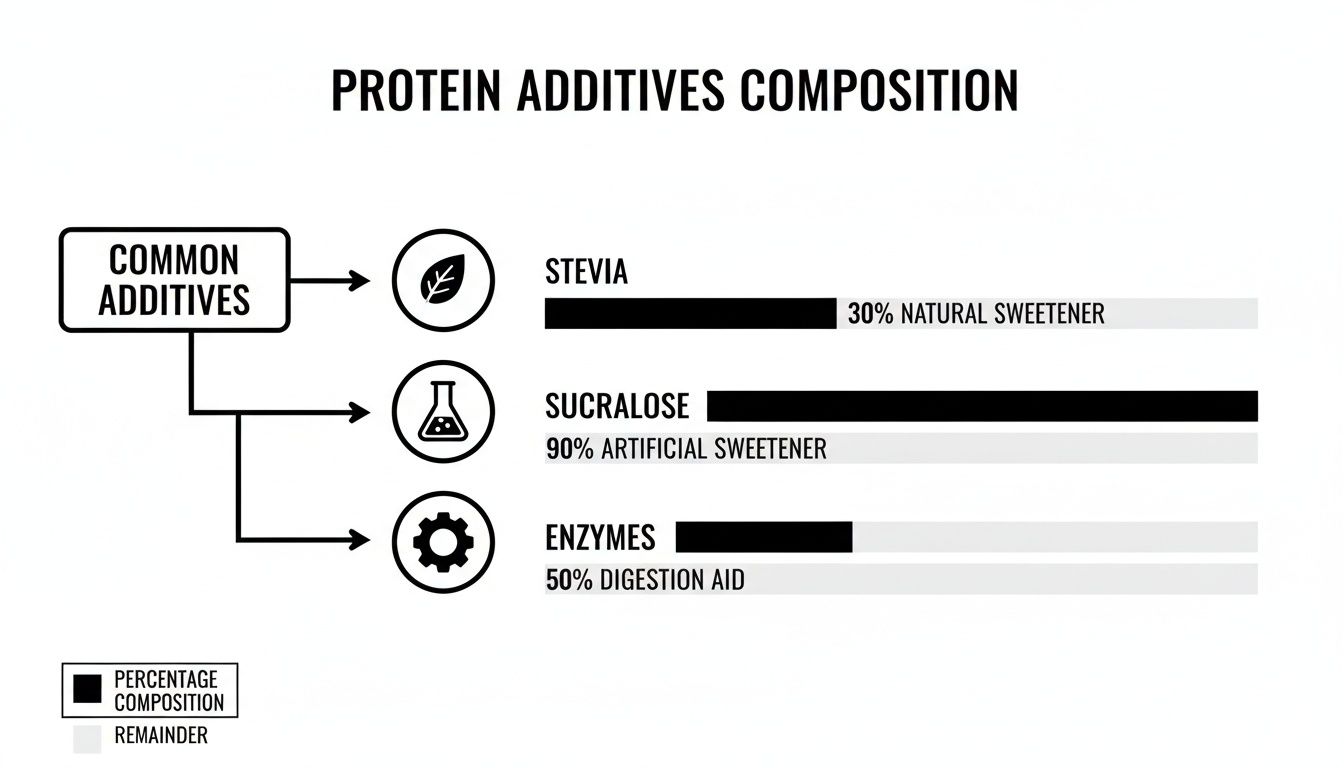
As the visual shows, brands might use natural stevia, an artificial sweetener like sucralose, or helpful enzymes to make their product more effective and enjoyable.
So, what's the bottom line? Neither type is universally "better." The best protein powder is the one that aligns with your personal goals, your body’s needs, and what you believe in.
Choosing the Right Protein Powder for Your Goal
Knowing how to read a nutrition label is half the battle. The other half? Applying that knowledge to your actual goals. There's no single "best" protein powder—the best one is the one that fits what you're trying to accomplish.
Whether you're packing on muscle, managing your weight, or just trying to find something that doesn't upset your stomach, the label is your roadmap. It's time to connect the dots between the numbers on the tub and the results you want to see.
For Building Muscle Mass
When your primary focus is building lean muscle, it all comes down to two things: protein quality and speed. You need a powder that gives your body the building blocks for repair and gets them there fast, especially right after a workout when your muscles are primed for recovery.
Here’s what to look for on the protein powder nutrition facts panel:
- High Protein per Serving: Aim for a powder that packs 20-30 grams of protein into a single scoop. This tells you it's a concentrated source without a bunch of fillers.
- Rich in Leucine: Think of leucine as the master switch for muscle growth. Whey protein is naturally loaded with it, which is why it has long been the gold standard for athletes.
- Fast-Digesting Source: Whey isolate and hydrolysate are the champions of speed because they're absorbed almost immediately. This makes them perfect for that post-workout window to kickstart the repair process.
Your goal is to flood your muscles with high-quality amino acids as efficiently as possible. A fast-absorbing whey isolate is like sending in an elite repair crew the moment the work is done.
For Weight Management and Satiety
If you're using protein powder to help manage your weight, its job changes. Now, it needs to keep you feeling full and satisfied without piling on extra calories. It becomes a tool to curb hunger and protect your lean muscle while you're in a calorie deficit.
The numbers you'll focus on are a bit different here:
- Low in Calories, Carbs, and Sugars: Look for powders with around 100-120 calories per serving and keep the carbs and sugar down to just 1-3 grams.
- High in Fiber: This is where plant-based proteins often shine. Pea protein, for instance, typically has more dietary fiber, which slows down digestion and boosts that feeling of fullness.
- Slower-Digesting Options: While not a hard-and-fast rule, slower-releasing proteins like casein or a balanced plant-based blend can keep hunger at bay for longer. For a broader look at how this fits into a bigger picture, you can explore sustainable weight loss strategies to complement your efforts.
For Allergies and Digestive Sensitivities
For a lot of people, the real challenge isn't finding enough protein—it's finding a powder that doesn't leave them feeling bloated, gassy, or dealing with an allergic reaction. This is where reading the entire ingredient list is absolutely non-negotiable.
You'll want to find clean, simple formulas that steer clear of common irritants:
- Dairy-Free and Soy-Free: Plant-based proteins are the clear winners here. A high-quality pea protein, like the one in Gym Snack, is a fantastic choice because it's naturally free of both dairy and soy.
- No Artificial Sweeteners or Sugar Alcohols: Ingredients like sucralose or erythritol can cause digestive issues for some people. Powders sweetened with natural options like stevia or monk fruit are often much better tolerated.
- Added Digestive Enzymes: Keep an eye out for protease or other enzymes on the ingredient list. These can make a huge difference in how well your body breaks down and absorbs the protein, leading to far less discomfort.
While whey protein still holds a huge slice of the market, the industry's explosive growth tells a bigger story. The global protein sector is set to jump from USD 28.8 billion to USD 59.9 billion, but a huge part of that growth is coming from plant-based options as people hunt for cleaner, allergen-friendly choices.
Ultimately, your personal needs dictate what's best. You can learn more about figuring out your specific targets in our guide on how to calculate your daily protein needs.
Your Protein Powder Questions, Answered
Alright, we've gone deep into protein powder labels, but it's totally normal to still have a few questions buzzing around. Let's tackle some of the most common ones head-on. Think of this as a quick chat to clear up any lingering confusion and make sure you feel 100% confident in picking and using your protein powder.
My goal here is to give you clear, no-nonsense answers that you can actually use. Let's get these last few pieces of the puzzle in place.
How Much Protein Do I Actually Need Per Day?
This is the big one, isn't it? The truth is, there’s no single magic number. Your ideal protein intake is personal and really hinges on your body weight and how active you are.
A great way to get a solid estimate is with a simple calculation. Here’s a quick guide to get you started:
- For General Health (Mostly Sedentary): Shoot for about 0.8 grams of protein per kilogram of your body weight (that's 0.36 grams per pound).
- For Active People & Fat Loss: You’ll want to bump that up to 1.2 to 1.8 grams per kilogram (or 0.54 to 0.82 grams per pound).
- For Serious Muscle Gain: Aim for the higher end, somewhere around 1.6 to 2.4 grams per kilogram (or 0.7 to 1.1 grams per pound).
Just remember, protein powder is a supplement. Its job is to fill the gaps and make it easier to hit your daily protein goal. It’s not meant to replace quality whole foods like lean meats, fish, eggs, and beans, which should always be your foundation.
Are Expensive Protein Powders Worth the Money?
It’s easy to get sticker shock and wonder if that premium price tag is just marketing hype. While a higher price doesn’t automatically guarantee a better product, it often points to a few key differences in how the powder is made.
Here’s what you’re often paying for with a more expensive powder:
- Purity and Processing: Getting a whey isolate or hydrolysate requires extra filtering to strip out lactose and fat, leaving you with a more concentrated protein. That extra processing costs money.
- Third-Party Testing: The best brands voluntarily pay for independent labs to test their products. This ensures what’s on the label is actually in the tub and that it’s free of contaminants. Look for seals like NSF Certified for Sport or Informed-Choice—they’re a solid sign of quality.
- Cleaner Ingredients: Pricier options are far more likely to use natural sweeteners like stevia or monk fruit and skip the artificial colors, flavors, and junky fillers.
An expensive powder isn't always better, but a cheap one is often cutting corners somewhere. Investing a little more can buy you peace of mind, better digestion, and a cleaner product that truly supports your health.
Can I Use Protein Powder If I Am Not Building Muscle?
Absolutely. The idea that protein powder is only for bodybuilders is one of the biggest myths out there. Protein is a vital nutrient for everyone, and a supplement can be a fantastic tool for a lot more than just building muscle.
For one, protein is a game-changer for weight management. It’s incredibly satiating, meaning it helps you feel full and satisfied for longer. A quick protein shake can be the perfect thing to curb cravings and stop you from reaching for less-healthy snacks.
On top of that, as we get older, we naturally start to lose muscle mass—a process called sarcopenia. Getting enough protein every day is essential for holding onto that lean muscle, which helps keep your metabolism humming, your body strong, and your mobility intact. A protein powder can make hitting those daily targets a whole lot easier.
What Is the Difference Between Concentrate, Isolate, and Hydrolysate?
These terms sound super technical, but they just refer to how much a whey protein has been filtered. Think of it like sifting flour—each step refines the final product, making it purer.
Here’s the simple breakdown:
- Concentrate: This is the most basic form. It’s about 70-80% protein and still has some of the natural carbs (lactose) and fat from milk. It's a fantastic, budget-friendly choice if you tolerate dairy well.
- Isolate: This version goes through an extra filtration step that removes most of the lactose and fat. The result is a much purer protein—typically over 90%—with very few carbs. It’s the go-to for anyone who is lactose intolerant or on a strict low-carb plan.
- Hydrolysate: This is the most highly processed form. The protein chains have been broken down, or "pre-digested," into smaller pieces for incredibly fast absorption. Athletes sometimes use it for immediate post-workout recovery, but it’s also the priciest of the three.
Knowing the difference lets you look at the protein powder nutrition facts and pick the perfect type for your budget, digestion, and goals. It’s all about empowering you to choose what works best for your body.
Ready to fuel your fitness with a snack that’s as delicious as it is nutritious? Gym Snack offers crunchy, savory, plant-based protein snacks packed with 15g+ of clean pea protein per serving. Say goodbye to chalky shakes and sugary bars, and hello to a satisfying crunch that supports your goals.