

You unzip your gym bag between meetings or right after a lift, reach for a savory protein snack, and find a mess. The crunch is gone. The seasoning has perfumed everything around it. Half the bag has spilled into the bottom seam near your straps and chalk.
That's usually not a snack problem. It's a bag problem.
For anyone who relies on high-protein snacks to bridge meals, hit macros, or avoid grabbing whatever's available after training, resealable snack bags are part of the system. They protect texture, limit waste, control portions, and make it easier to keep food safe when your day includes commuting, work, class, and the gym.
Why Your Snack Bag Choice Matters for Fitness
A stale sweet snack is disappointing. A stale high-protein savory snack is usually worse. Once the crunch softens and the oils and seasonings start picking up moisture or outside odors, the whole point changes. You packed something satisfying and portable. You end up with crumbs or a limp backup snack you don't want to eat.
That's one reason resealable formats keep expanding. The global resealable snack pouch market was valued at $6.2 billion in 2025 and is projected to reach $9.6 billion by 2034, with the snacks and confectionery segment accounting for 28% of global demand, according to resealable snack pouch market data from Market Intelo. People keep buying these formats because they solve everyday problems. You open the bag, eat part of it, close it again, and expect the rest to hold up.
Texture matters more than most people think
For fitness-focused eating, consistency matters. If you carry the same snack often, you want it to taste the way you expect every time. A reliable seal helps preserve crunch, keeps seasonings where they belong, and reduces the odds that your snack absorbs the smell of pre-workout powder, coffee, or whatever else lives in your bag.
Practical rule: If a bag can't survive being squeezed between shoes, a shaker cup, and a laptop, it's not gym-bag ready.
It also affects your budget and routine
Spoiled or stale food doesn't just waste calories. It wastes money and convenience. The bag that performs well lets you portion once, pack fast, and trust that your food will still be worth eating later that day.
The right resealable snack bag isn't fancy gear. It's one of those small choices that makes your nutrition plan easier to follow.
Choosing Your Material Reusable vs Disposable
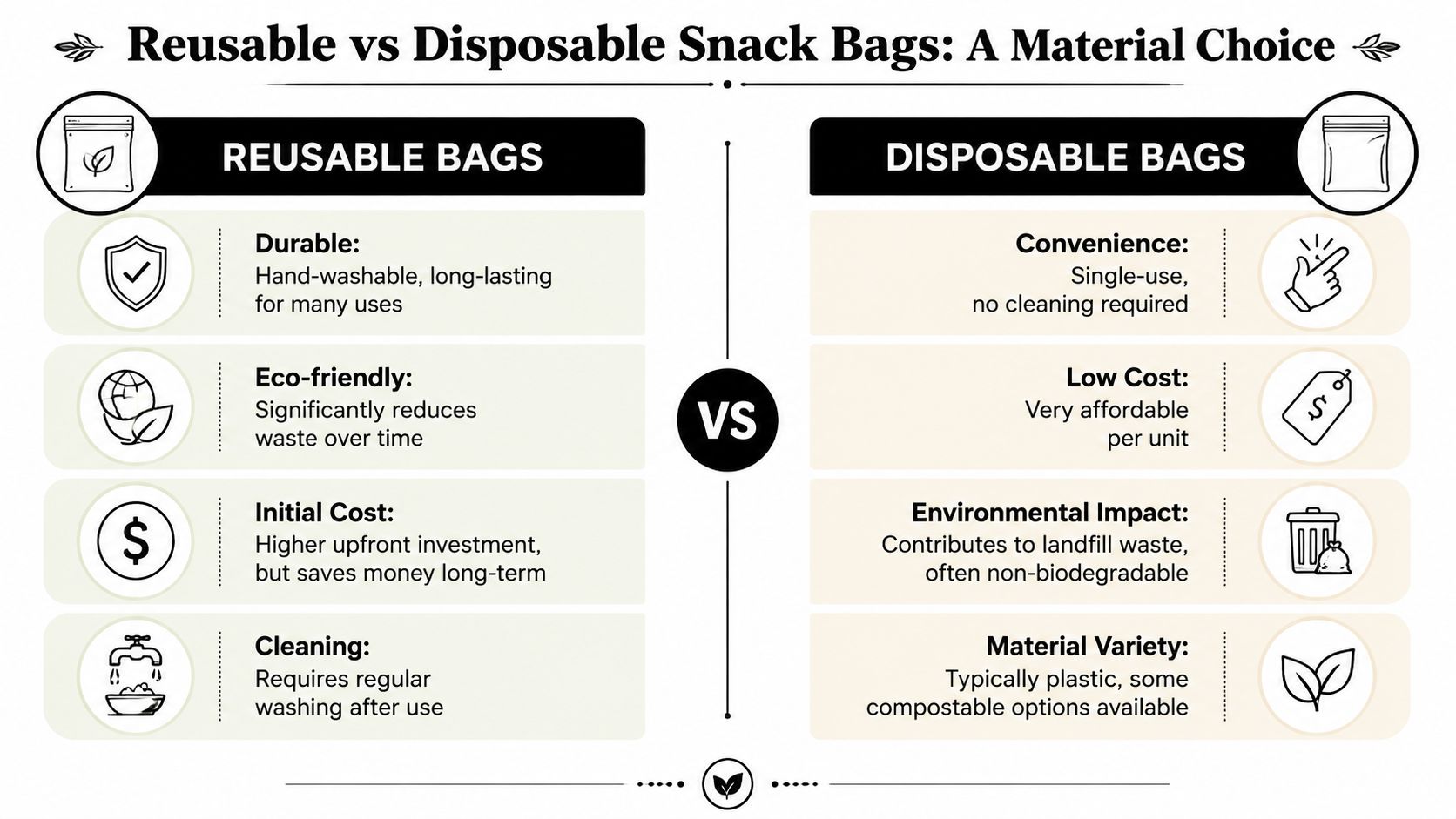
The first real decision is simple. Do you want a disposable bag for speed or a reusable bag for repeat use? Neither is perfect. The better option depends on what you carry, how often you snack on the go, and how much cleanup you'll do.
Disposable bags for convenience
Disposable resealable bags still make sense in a lot of real routines. They're light, cheap per use, and easy to toss in a locker, glove box, or desk drawer. For dry snacks, they're often the lowest-friction option.
Their weakness is durability. In a packed gym bag, thin disposable bags can crease, puncture, or pop open if the seal isn't pressed fully. They also tend to hold odor less gracefully over repeated partial openings if you try to stretch them past one intended use.
A disposable bag works best when:
- You're packing once: Use it for a single day, then replace it.
- The snack is dry and low-mess: Crackers, roasted chickpeas, or protein crisps travel better than oily or heavily seasoned snacks.
- You need backup storage: Keep a few flat in your backpack for emergency portioning.
Reusable silicone bags for toughness
Reusable bags are gaining traction fast. The reusable snack bag market is growing at a 12% CAGR, compared with 5.8% for the broader resealable market, and silicone bags dominate this segment, according to HTF Market Insights on reusable snack bags.
That tracks with what holds up in daily use. Silicone bags usually feel sturdier in hand, stand up better to compression, and handle repeated opening and closing without getting flimsy. They're especially useful for savory snacks because they resist wear better than many thin plastic alternatives.
Still, silicone has trade-offs. It costs more upfront, and if you don't wash and fully dry it, lingering seasoning or oil film can transfer flavor to the next snack.
| Bag type | Where it works well | Main drawback |
|---|---|---|
| Disposable plastic | Fast packing, dry snacks, one-day use | Lower puncture resistance |
| Reusable silicone | Frequent use, gym bags, savory snacks | Higher upfront cost, more cleaning |
| Reusable PEVA-style plastic alternative | Lighter reusable option | Cleaning and seam longevity vary |
PEVA and similar reusable plastic alternatives
If silicone feels bulky, PEVA-style reusable bags can be a middle ground. They're often lighter and easier to stack than thick silicone, which matters if you prep several portions at once. For dry snacks, that lighter structure can be plenty.
The catch is maintenance. Some reusable plastic alternatives stain faster with bold seasonings and can be harder to dry fully around the seal.
Buy for your actual habit, not your ideal habit. If you know you won't wash bags promptly, a high-maintenance reusable option won't stay in rotation long.
Mastering the Seal for Maximum Freshness
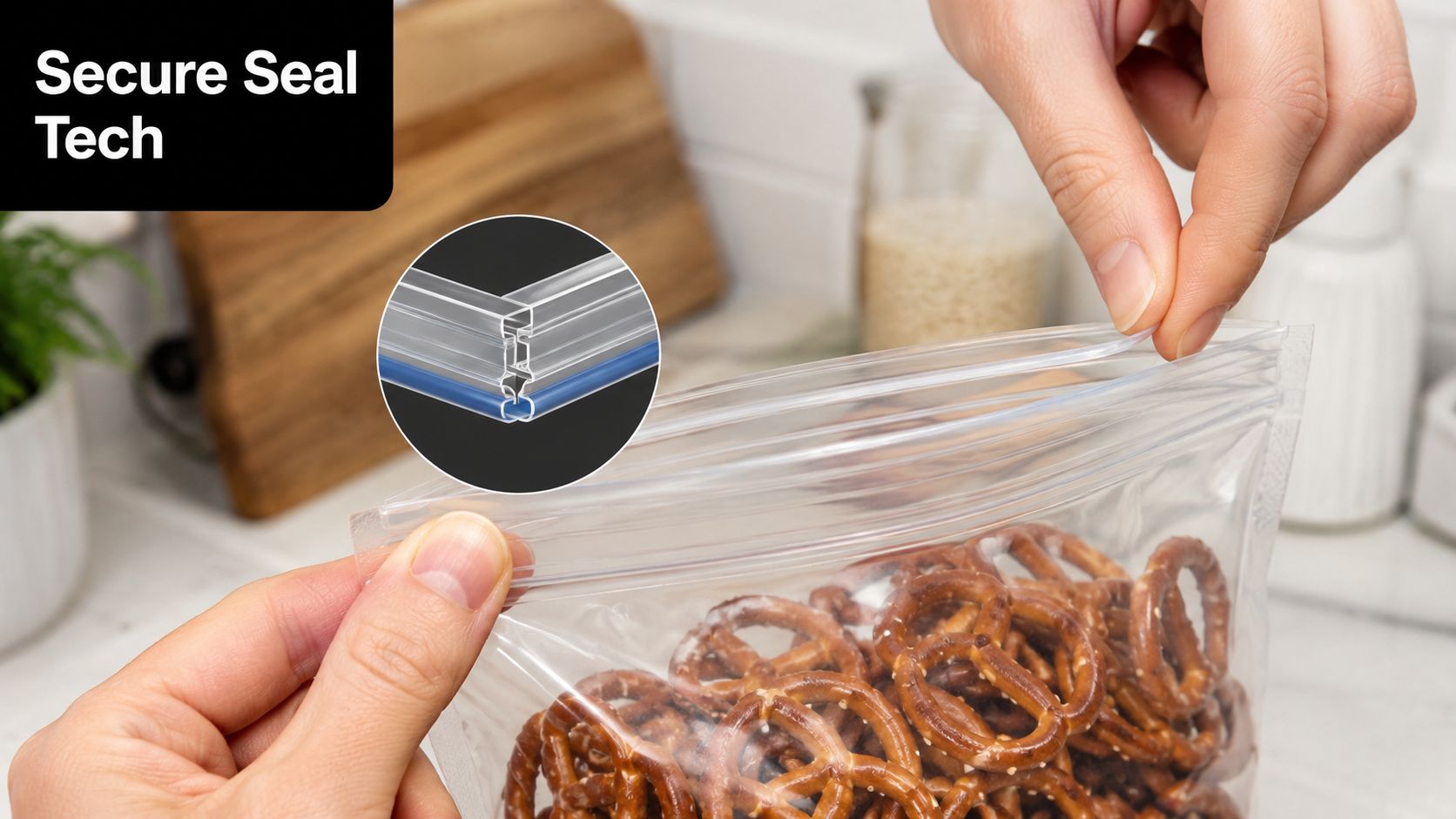
Material gets most of the attention, but the seal does the work. A bag can feel sturdy and still fail if the closure lets in moisture, releases aroma, or opens under pressure when it gets tossed beside lifting straps and headphones.
Why zip closures beat makeshift fixes
For crunchy snacks, moisture control is the issue. Resealable bags made from 2 to 3 mil LDPE can achieve an MVTR of less than 1 g/m²/day, and zip-lock designs provide seal integrity three times greater than twist-tie bags, according to this breakdown of reclosable bag freshness performance. In practice, that's the difference between a snack that still snaps when you bite it and one that starts tasting tired by the end of the day.
Press-to-close zippers are usually enough for dry snacks if the track lines up cleanly. Double zippers give more reassurance when you're carrying seasoned or fragile snacks in a crowded bag. Slider closures can be convenient, but they only work well when the track is well-made and free of crumbs.
What usually fails:
- Crumbs in the zipper track: They create tiny gaps.
- Overfilled bags: The seal strains and opens at the corners.
- Folding the top and hoping for the best: That protects from spills poorly and freshness even worse.
What to check before a bag earns a spot in your gym setup
Pinch the seal from one end to the other. Then run your fingers back across it. You should feel one continuous closure with no loose spot near the edges. If the seal needs multiple tries when the bag is clean and empty, it won't improve once seasoning dust gets involved.
For anyone who also ships or separates delicate items, it helps to notice how closure systems differ across storage types. Looking at products like secure bubble bags for shipping can sharpen your eye for what a dependable self-seal feels like, even though cushioning mailers and food bags serve different jobs.
Here's a quick visual on sealing technique and closure feel:
If a bag opens when you squeeze air out, don't trust it in a backpack.
Freshness is also about odor control
Savory snacks don't just need crunch. They need flavor separation. A good seal limits the migration of cheesy, spicy, or smoky aromas into everything else you packed. That matters more than people expect when your bag also carries gum, fruit, supplements, or clothes.
Perfect Portions for Peak Performance
The smartest use of resealable snack bags isn't only freshness. It's portion timing.
A lot of active people do better when they split snacks across the day instead of eating one large serving at a random time. A resealable bag makes that easy. Open it before training, have a controlled portion, close it, and keep the rest for later without turning the second half into stale leftovers.
A practical way to divide your day
Say you've got a savory protein snack with two servings in one bag. One common move is to treat the first serving as a bridge between meals before training and save the second for the gap after training when you're heading home, back to work, or into errands.
That works especially well when your day looks like this:
- Late afternoon lift: Eat part of the bag before leaving work so you don't walk into the gym hungry.
- Post-workout commute: Finish the rest after training instead of raiding a vending machine.
- Long campus or office day: Pair a portioned bag with fruit or nuts and keep another serving sealed for later.
Build a grab-and-go system
Different sizes help. Smaller bags work for nuts, roasted edamame, or dried fruit. Medium bags are better for crunchy protein snacks that you don't want crushed. If you prep several bags for the week, labels are remarkably helpful, especially when flavors or macro targets are different. A good reference for that is this roundup of the best name labels for meal prep.
You can also match bag portions to your overall intake plan. If you're unsure how much protein you need across a training day, this guide on how to calculate daily protein needs gives a useful starting point.
Pack the portion you want to eat, not the portion you hope you'll stop at.
Prevent crush and flavor transfer
Don't stuff portioned bags loosely into the bottom of a duffel. Stand them upright in a side pocket or place them flat against something rigid like a notebook or meal container. That small change protects crunch and keeps strong savory seasoning from rubbing onto other gear.
The Sustainability and Safety Equation
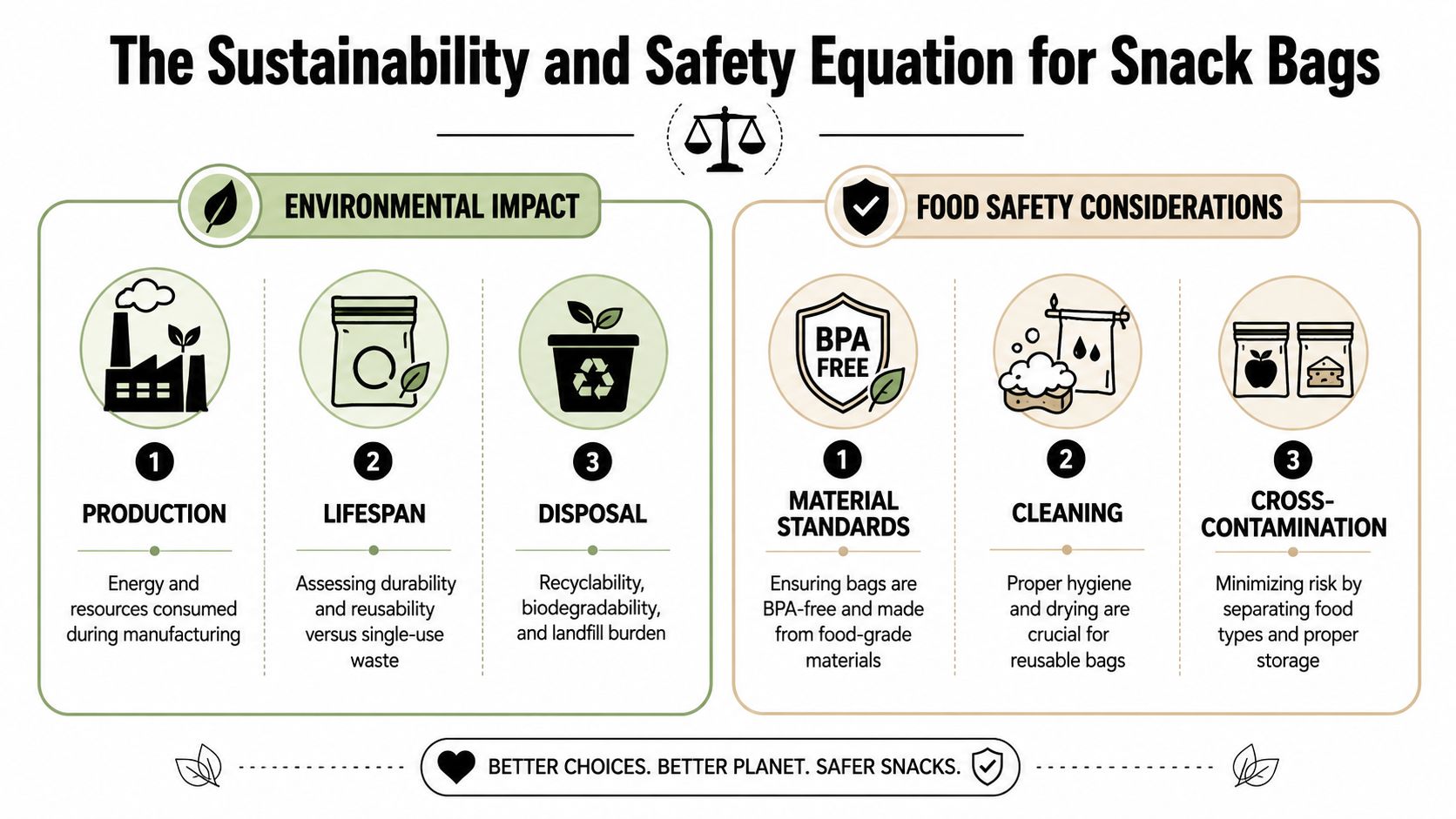
A lot of advice on resealable snack bags gets too simple. Reusable is presented as automatically better. Compostable is treated like an upgrade by default. Viral hacks make unsafe shortcuts sound clever. Real life is messier than that.
Sustainability depends on performance too
A bag that sounds greener on paper but performs poorly for oily, crunchy, protein-rich snacks may create a different problem. Many compostable pouches and similar eco-focused formats lack the high-barrier metallized laminates needed to block moisture and oxygen ingress, which can shorten shelf-life for snacks sensitive to oxidation, according to this look at resealable kraft packaging trade-offs.
That doesn't mean sustainable packaging is pointless. It means you should judge it by use case. For dry snacks eaten quickly, a lower-barrier option may be fine. For snacks you'll open repeatedly and carry through a long day, barrier performance matters more.
Food safety beats internet hacks
A bad cleaning routine can undo the benefits of a reusable bag fast. Savory snacks leave behind seasoning dust, oil residue, and tiny particles that collect in seams and zipper tracks. If you reuse the bag without washing and drying it thoroughly, you're inviting off smells and contamination.
A few practical habits help:
- Wash soon after use: Don't let oily residue sit overnight if you can avoid it.
- Open the bag fully to dry: Moisture trapped in the corners is the usual problem.
- Separate uses when needed: Keep one set for savory snacks and another for sweeter foods if you notice flavor carryover.
If you want a broader refresher on safe food handling habits at home, this guide to preventing foodborne illness is a helpful companion read.
Skip unsafe resealing tricks
One hack deserves a hard no. Baby wipes are not a food-safe resealing method. The background material provided on this topic points out that baby wipes can contain non-food-grade preservatives and surfactants, and they don't provide a real hermetic barrier. Even when a trick looks tidy on social media, that doesn't make it safe or effective for food contact.
Clean closure and dry storage beat clever hacks every time.
If clean ingredients and food contact standards matter to you, it's worth thinking about the container as part of the product. That same mindset applies when choosing snacks. This article on clean-label snacks is useful if you want to line up packaging choices with ingredient standards.
Your Quick Guide to Buying and Organizing
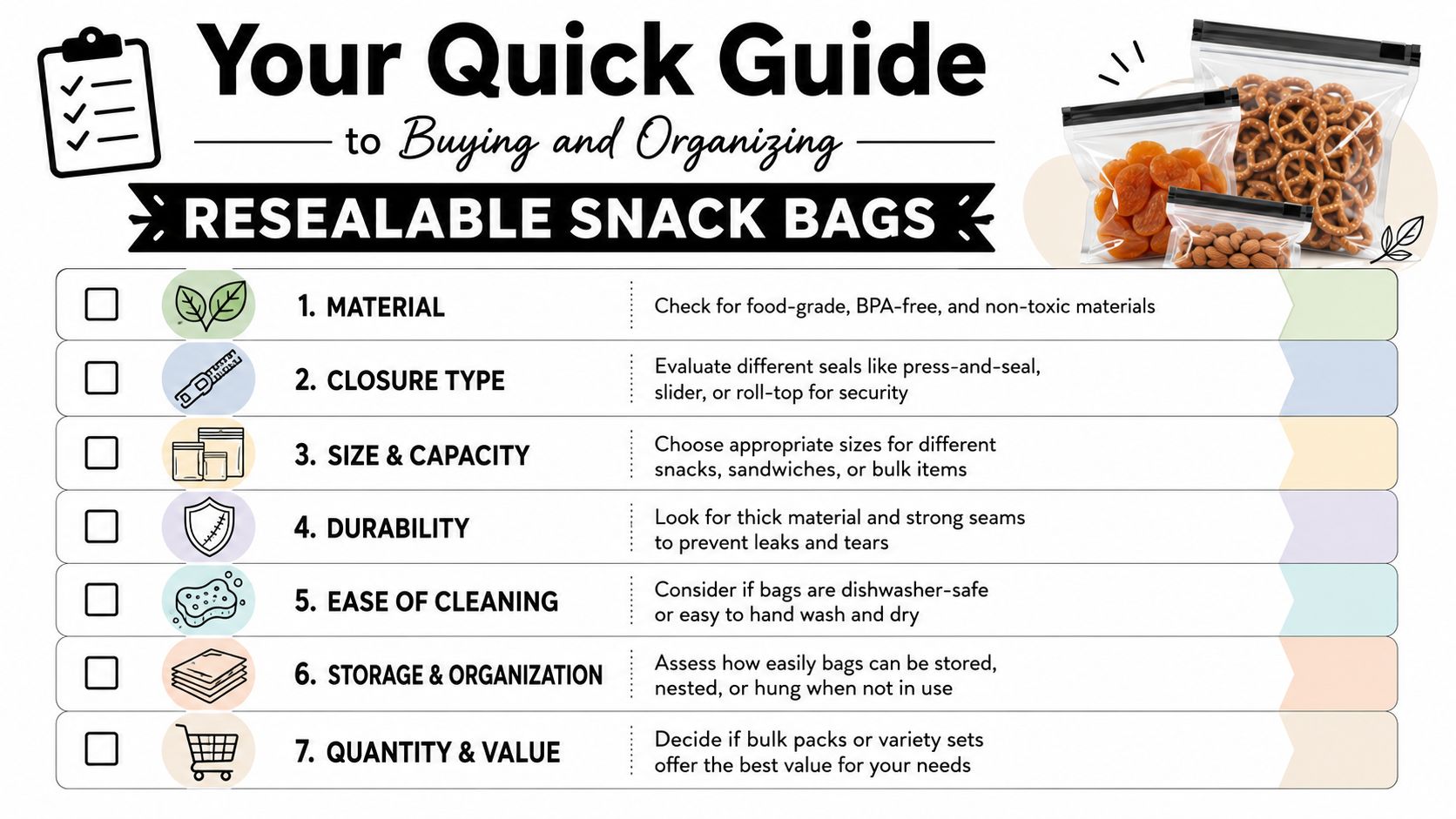
If you want a simple buying rule, choose the bag that matches your most common use, not the bag that seems best in theory. Daily commuters need durability. Meal preppers need repeatable cleaning. Anyone carrying crunchy savory snacks needs a trustworthy seal first.
Buying checklist
- Material: Pick disposable for speed or reusable for routine use.
- Closure quality: Test the zipper track edge to edge before trusting it in a gym bag.
- Bag shape: Flat bags pack easily. Structured reusable bags are easier to fill and wash.
- Snack type: Dry crunchy snacks need moisture protection more than leak resistance.
- Cleanup reality: If you hate hand-washing, keep your reusable collection small and practical.
Organizing tips that actually help
Store disposable bags upright by size so you don't grab a giant bag for a small portion. For reusable bags, dedicate one drying zone in the kitchen and don't put them away until the seal area is fully dry.
It also helps to keep a small snack-kit area near your meal prep supplies. Put bags, labels, and shelf-stable snacks in one place. That lowers friction and makes portioning fast. Better organization also supports less waste, which matters because preserving food freshness can help reduce part of the estimated $1,600 families lose annually to spoiled groceries, as noted in this resealable packaging market report on food waste and convenience.
For more shelf-stable snack ideas that fit this kind of setup, this guide to non-refrigerated protein snacks is worth bookmarking.
If you want a savory protein snack that's built for real life and easy to portion into your routine, Gym Snack is worth a look. It delivers chef-inspired, plant-based crunch with strong protein, clean ingredients, and bold flavors that make your snack bag worth opening.