

You're in the snack aisle after a hard session, one hand on a bag of chips, the other reading the back like it's a contract. The front says high protein or keto, but the ingredient list still throws in canola, sunflower, or a vague vegetable oil blend, and that's where the whole thing gets annoying. If you care about macros, training recovery, and not wasting calories on junk crunch, you need a better filter than “seed oil bad, everything else good.”
The right question isn't whether a snack contains a seed oil. The question is whether the snack gives you enough protein, satiety, and ingredient clarity to earn a place in your routine. A bag of broccoli crisps from Vitamin Planet can look cleaner than a standard chip, but you still have to judge what's in it, what it costs you in macros, and whether it helps between meals. That's the lens I'd use every time.
Standing in the Snack Aisle Overthinking the Oil
You know the move. You grab a bag, turn it over, and suddenly you're playing detective under bad grocery-store lighting. One bag of crunchy puffs says “plant-based.” Another says “protein.” Then the panel lists canola oil, sunflower oil, or just vegetable oil, and the whole front-of-pack promise starts feeling slippery.
That moment matters because it exposes the problem with most snack marketing. A snack can look gym-adjacent and still be mostly starch, oil, and salt. If you train seriously, that's not a minor detail. It means you're paying for crunch when you wanted fuel.
The aisle test I use
Practical rule: if the front of the bag sounds disciplined but the back hides the fat source, I assume the snack was built for shelf appeal first.
The better mindset is simple. Judge the bag by macro quality and label transparency, not by one scary ingredient in isolation. A snack that avoids seed oils but delivers almost no protein still won't help much after training, and it won't keep hunger quiet for long.
That's why a “cleaner” product isn't automatically a smarter one. Some seed-oil-free snacks are just different versions of the same problem, still light on protein and easy to overeat. The label is the truth, not the branding. If you want a shortcut, start with the ingredient list, then ask whether the snack supports the way you eat, lift, and recover.
What Seed Oil Free Means
Seed oils are fats pressed from crop seeds, not fruits or nuts. The common ones you'll see are canola, sunflower, safflower, soybean, corn, cottonseed, grapeseed, and rice bran oil. These oils showed up in packaged food because industrial processing made them cheap, scalable, and useful in shelf-stable snacks, especially after hydrogenation helped create solid or semi-solid fats for products that had to sit on a shelf. An independent historical summary says seed oils were about 1% of added fat in the American diet in 1900 and roughly 85% by the end of the 20th century; that shift helps explain why packaged snacks still rely on them so often (ANSI historical overview of the seed oil shift).
What counts and what doesn't
If you're checking a label, olive oil, avocado oil, coconut oil, palm oil, ghee, and tallow sit outside the seed-oil bucket. That boundary matters because it stops you from guessing in the aisle.
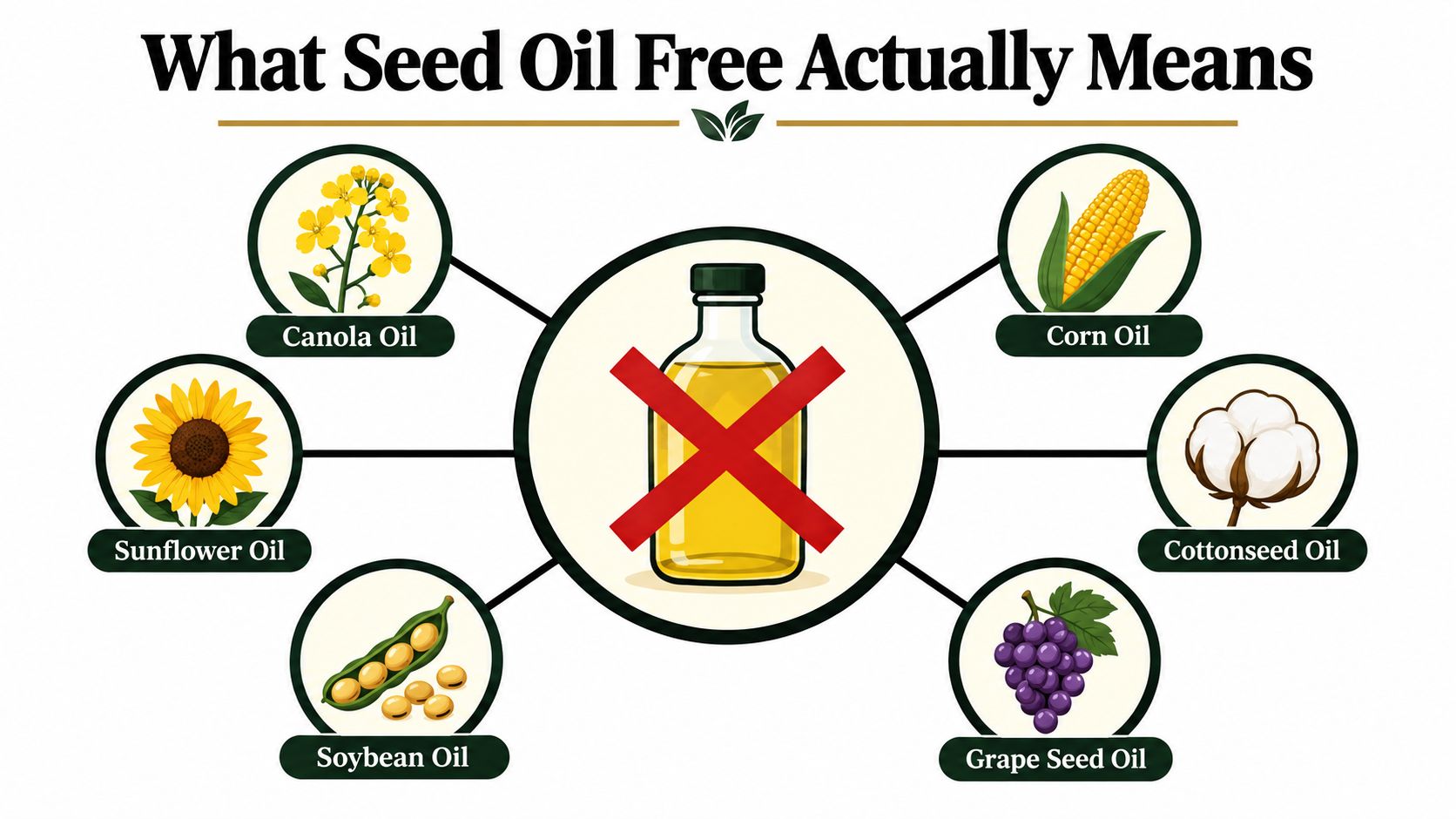
The problem is that “seed oil free” isn't a regulated promise. Brands use the phrase loosely, and snack formulas change fast. A bag of seed-oil-free crackers can still be mostly refined flour, starch, and salt, which means the snack is easy to mow through when you wanted something that helps with satiety or post-workout recovery. The same issue shows up in puffed chips and pretzel snacks, where removing one fat source does nothing to improve the macro profile.
Read the back first. If the fat source is vague, the snack is probably trying to hide something.
Why Seed Oil Free Is Not Automatically Healthier
A seed-oil-free chip is not automatically a better chip. That's the part people skip because the label feels morally cleaner, but your body doesn't reward labels. It rewards useful macros, sensible calories, and food that fits the job you need it to do.
The fat swap can go sideways fast
If a brand removes canola or sunflower oil, it often replaces it with something else that brings its own trade-off. Palm oil usually means more saturated fat. Coconut oil can push a strong flavor that crowds out the seasoning profile. Avocado oil may keep the label cleaner, but it can raise cost without adding protein, fiber, or any special satiety advantage by itself.
Here's the bigger point. A seed-oil-free snack that's still built on starch and salt can be just as easy to overeat as the standard version. You may have changed the oil, but you didn't change the eating experience in a meaningful way.
| Fat Used | Saturated Fat (per tbsp) | Typical Snack Cost | Flavor Profile |
|---|---|---|---|
| Palm oil | Higher than most liquid oils | Usually lower | Neutral to mildly savory |
| Coconut oil | High | Moderate | Distinct coconut note |
| Avocado oil | Lower than palm, higher than many seed oils | Usually higher | Mild, clean |
| Olive oil | Lower than palm, more character | Moderate to higher | Peppery, fruity |
| Tallow | High | Varies by brand | Rich, savory |
That's why I care more about the full macro profile than the oil headline. If a snack is seed-oil-free but still low in protein and fiber, it's not a serious recovery snack. It's just a different bag of crunch.
How to Spot Hidden Seed Oils on Any Label
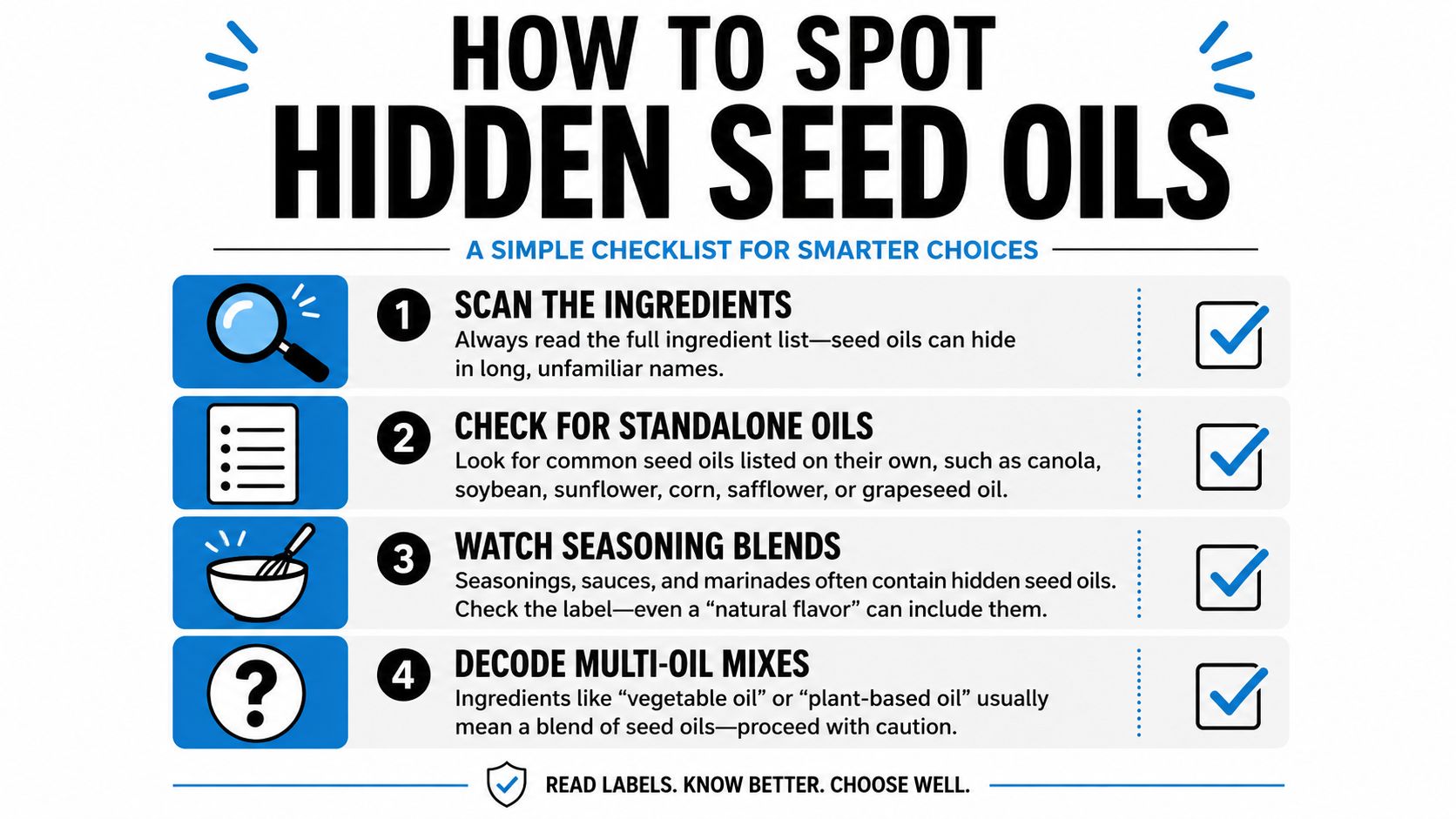
The first pass is easy. If you see soybean, corn, cottonseed, sunflower, safflower, grapeseed, canola, or rice bran oil in the ingredient list, you're done. If one of those shows up in the top three lines of a savory snack, especially chips, puffs, crackers, or crisps, that bag is built around oil as a core ingredient, not as a tiny helper.
The sneaky part is the middle and end of the panel. Seed oils can hide inside seasoning systems, coatings, fillings, marinades, and vague phrases like vegetable oil blend. You'll also want to stay alert for “clean-sounding” extras that don't tell you much, like natural flavors or unspecified spice systems, especially in products that are fried or coated.
The quick scan I'd actually use
- Look for the first named fat. If it's a seed oil, move on.
- Check coatings and fillings. Trail mix clusters, yogurt shells, chocolate coats, jerky marinades, and protein bar centers are common hiding places.
- Watch for high oleic. It still means a seed oil is present, just a different version of it.
- Reject vague blends. If the label says vegetable oil and won't name the source, assume it's not helping your standards.
If you want a more detailed consumer-facing walkthrough, the practical label guide at how to avoid seed oils is worth keeping open while you shop. It's also smart to google the exact brand name plus “seed oil free” before checkout, because legit cleaner-label brands usually say it loudly.
Why Savory Protein Snacks Hit Different
A salty crunch can scratch the itch for five minutes and then leave you hunting the pantry again. That's the problem with most chip-style snacks. They're built for texture first, not for keeping you full or helping you recover.
Protein changes the whole snack experience
Protein matters because it shifts fullness signaling. A 2024 review reported that protein-rich breakfasts increased GLP-1 and PYY while reducing hunger more than carbohydrate-rich meals (MDPI review on protein, GLP-1, and PYY). A pea-protein study in the same review space found that pea-protein meals triggered gastrointestinal satiety hormones comparably to whey, which is exactly why pea protein is such a useful ingredient for savory snack design.
That's the macro lens you want. A 150-calorie snack with 12 grams of protein behaves very differently from a 150-calorie snack with 3 grams of protein. One supports the hunger curve. The other mostly just delays the next snack attack.
Savory also matters because it reduces the dessert vibe that makes people overeat mindlessly. If you're trying to manage appetite on a tighter intake, or you want something practical after a workout, you don't need another sweet bar pretending to be dinner.
Here's the kind of lineup I respect: jerky, smoked salmon, roasted edamame, frico-style cheese crisps, and yogurt-based dips with vegetables. Those are snacks that bring actual structure to the plate. If you want a formula reference, the high protein savory snack playbook points in the right direction, and a high protein digital cookbook can help if you'd rather make the whole thing at home.
| Snack Option | Calories (approx) | Protein (g) | Fat Source |
|---|---|---|---|
| Jerky | Varies by serving | High relative to volume | Often beef or none added |
| Roasted edamame | Moderate | Solid plant protein | Usually minimal added oil |
| Cheese crisps | Low to moderate | High for size | Dairy fat |
| Popcorn | Low to moderate | Low | Often seed oil or air-popped |
| Pretzels | Moderate | Low | Usually little to no fat |
The takeaway is blunt. Oil avoidance and protein density have to rise together. If only one changes, the snack probably isn't doing enough for gym-goers.
Smart Swaps and DIY Snack Ideas Worth Trying
Store shelves are full of snacks that look disciplined but fall apart on macros. I'd rather have a short list that works than a giant list of “clean” compromises. The goal is simple, crunch, salt, and enough protein to matter.
The off-the-shelf picks I'd reach for
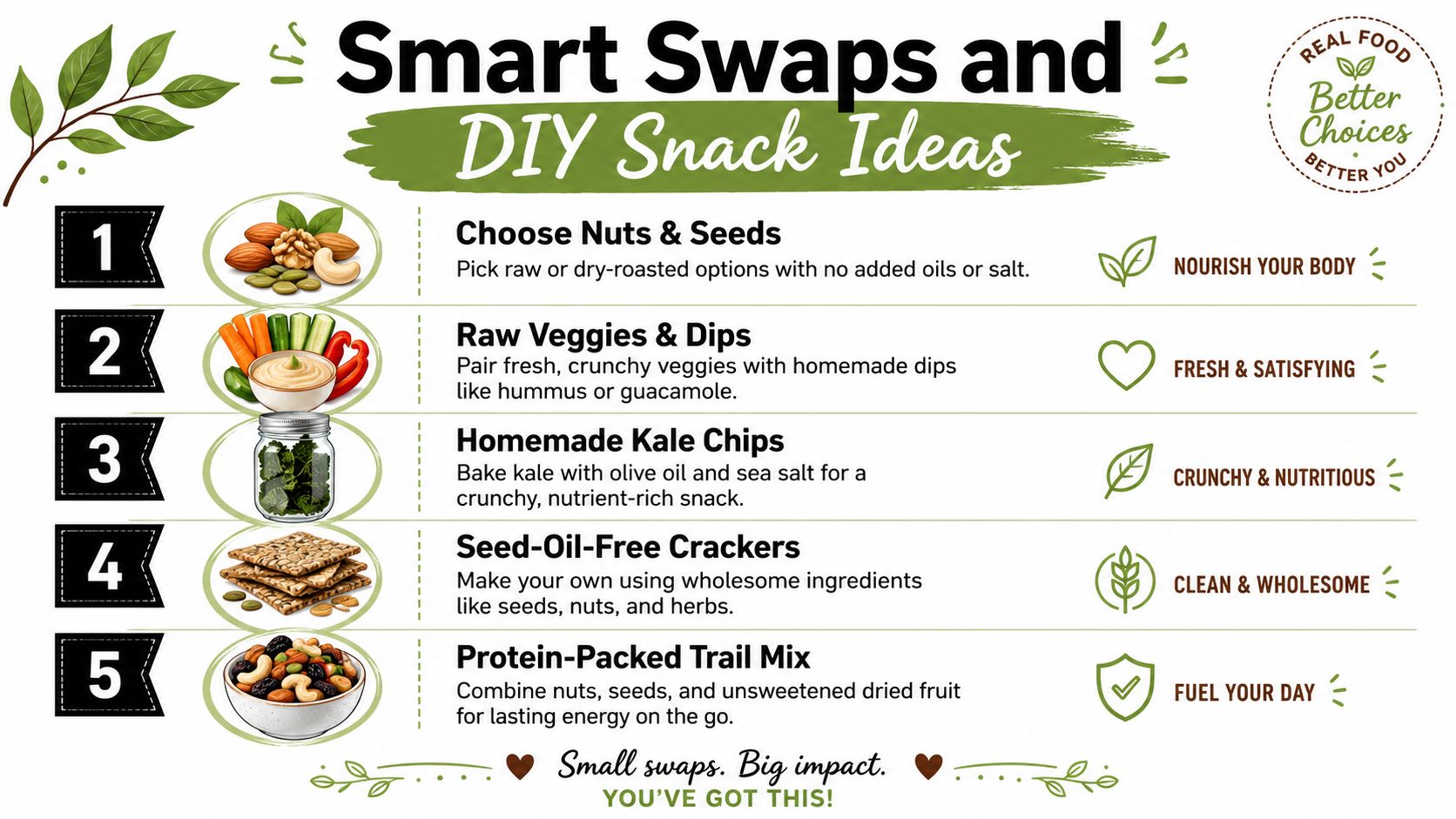
- Beef sticks or biltong made with straightforward fats like beef tallow or avocado oil. These usually give you more protein per bite than a chip bag and don't rely on starch to feel substantial.
- Olive-oil-routed plant chips when the rest of the label stays short and the serving size is sane.
- Roasted chickpeas for a crunchy, fiber-forward option when you want something shelf-stable.
- Hemp-seed trail mixes if the serving doesn't get buried under candy pieces.
- Cheese crisps baked with coconut oil or just baked dry. They're blunt, salty, and hard to beat for crunch.
- Protein crackers built with whey or egg whites when you want a more deliberate macro profile.
A single-serving snack from Gym Snack is one practical example in this category, because its savory crisps are built around pea protein and are sold as no seed oils. That matters only if the rest of your day needs a portable protein hit, not because a label says “clean.”
The DIY versions that save you when stores fail
- Chicken-skin chips baked until crisp, then salted hard.
- Egg-white bites cooked in a silicone mold with herbs and cheese.
- Frico-style cheese crisps from shredded parmesan or cheddar.
- Spiced lupini beans roasted until they snap.
- Kale chips rubbed lightly with olive oil and salt.
- Greek yogurt ranch dip with veggie crudités for a lower-mess, higher-protein snack plate.
Don't get fooled by plain rice cakes or low-fat popcorn dressed up as discipline. They're fine if all you want is volume, but they don't deliver the same satiety or recovery value. If you want a weekend prep move, batch one protein snack and one crunchy vegetable-based snack, then stop chasing novelty.
For quick-home ideas that stay on the right side of the macro line, the easy high protein snack recipes page is a useful reference before you start improvising.
Your Seed Oil Free Snack Checklist
When you're standing in front of the shelf, keep this simple. Don't ask, “Is it seed-oil-free?” first. Ask whether it supports your day.
The one-minute filter
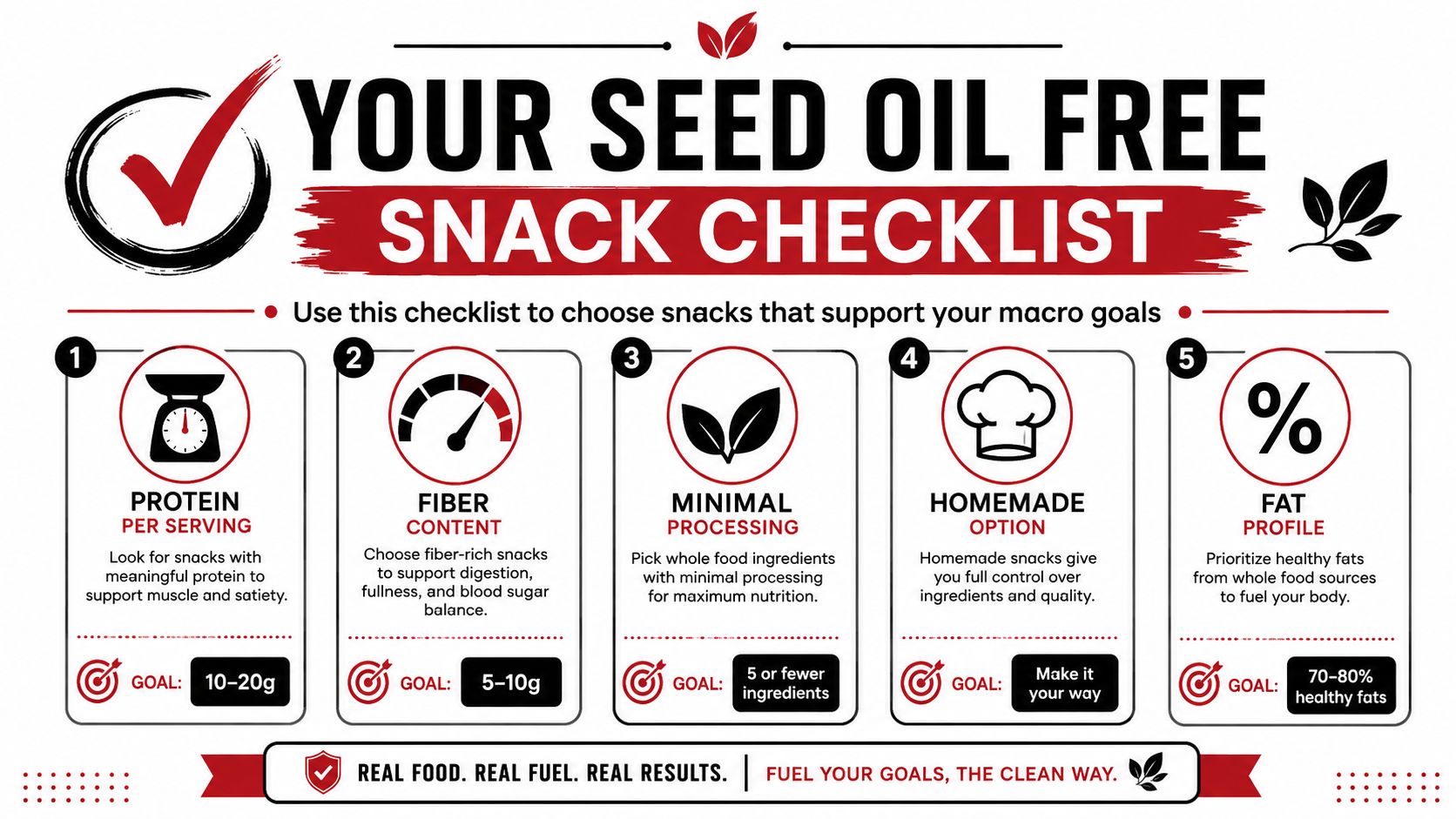
- Protein per serving: Choose snacks that give you a meaningful protein hit, not just a token gram count.
- Fiber content: Favor options that slow you down a little instead of disappearing in three bites.
- Minimal processing: Short ingredient lists usually mean fewer hidden oils and less weird filler.
- Named fat source: Prefer snacks that clearly say olive, avocado, coconut, tallow, or no added oil.
- Savory over sweet: Savory usually does a better job of keeping appetite steady and supporting training-day eating.
- Homemade option available: If the packaged version looks weak, make it once at home and stop guessing.
- Fat profile that fits the goal: Seed oil free is useful, but it's not the whole story. You still need a snack that fits your calorie target and recovery needs.
If you're using snack time to help with appetite control, the same logic applies outside the gym. A better bedtime choice usually avoids sugar spikes and random snacking, which is why the guide to better sleep without sugar is relevant if your late-night eating tends to go sideways.
Pick one protein-forward, savory option this week, then use it as the baseline every other bag has to beat.
Gym Snack exists for the exact kind of buyer who wants crunchy, savory, protein-first snacks without seed oils and without a long ingredient maze. If you want a cleaner benchmark for what a gym-friendly bag should look like, go check out Gym Snack, then compare every other snack against that standard before you buy.