

Most vegan snack lists are too soft. They hand you fruit, hummus, and a sweet bar, then act like that's enough to carry a lift, a commute, and a long afternoon without your appetite turning feral. It isn't. Snacks for vegans need to do a job, and for gym-goers that job is simple, keep you full, keep you focused, and give your training something real to work with.
The better question isn't whether a snack is vegan. The better question is whether it has protein, fiber, fat, and enough bite to stop you from reaching for another one twenty minutes later. The plant-based category is clearly not a niche anymore, either. The global vegan snacks market was estimated at USD 51.14 billion in 2024 and is projected to reach USD 109.89 billion by 2035, with a 7.2% CAGR (market report). That kind of scale tells you one thing. Vegan snacking is now a major packaged-food category, not a side note.
Why Most Vegan Snack Lists Miss the Mark
Most vegan snack roundups still think like a dessert cart. They pile up fruit cups, crackers, hummus, and candy-like bars, then call it balance. That works if you want something light. It fails if you want a snack that gets you through a training day, a desk marathon, or a long gap between meals.
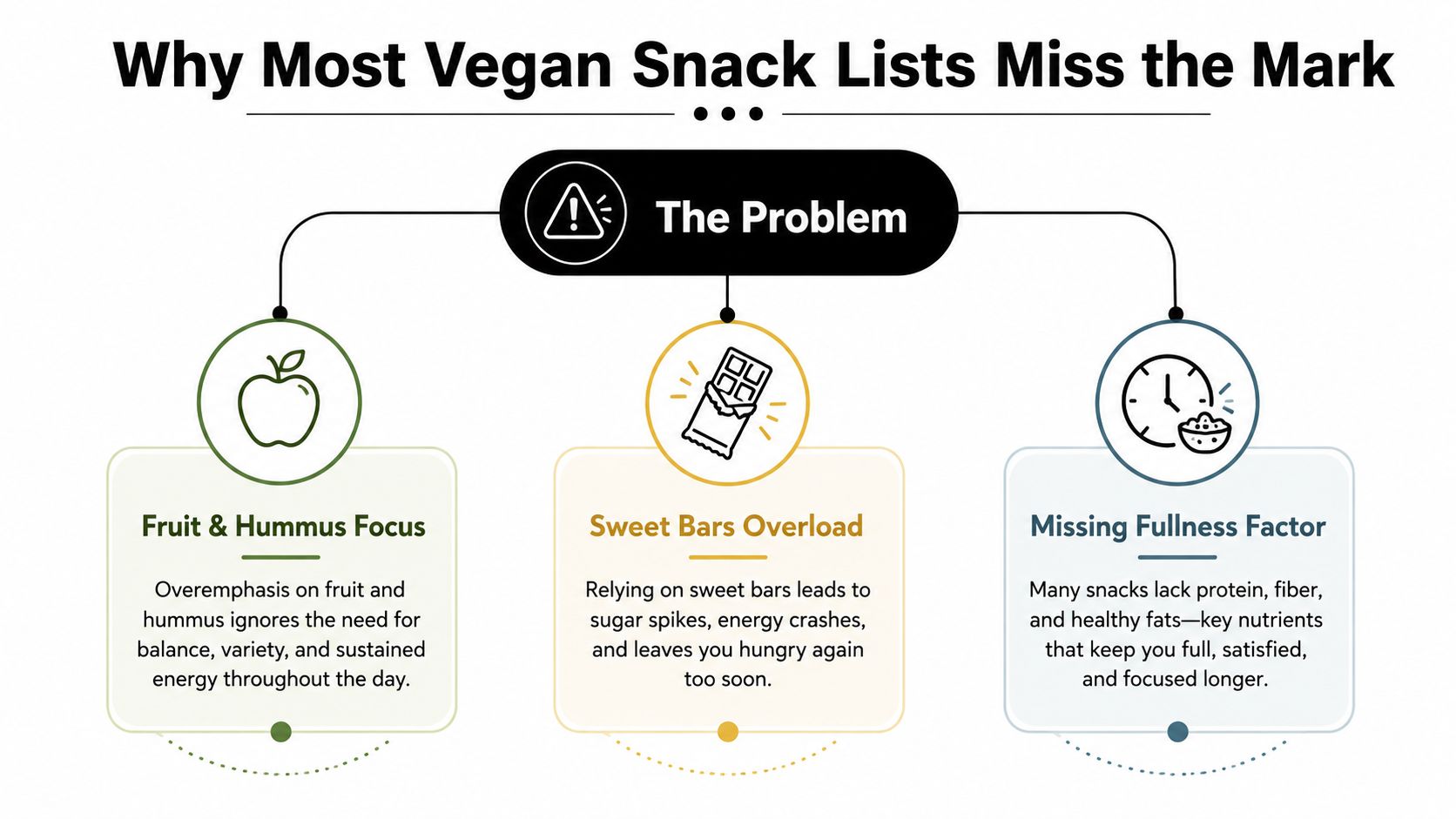
The real problem is fullness
Fruit is fine. Hummus is fine. Sweet bars are fine. None of them is automatically enough on its own. If a snack doesn't bring protein, fiber, or fat, it tends to disappear fast in your system, and then you're back in the snack drawer again.
Practical rule: If the snack feels like a side dish, it usually won't behave like a real snack.
That's why the best vegan snacking strategy looks more like a small meal than a dessert aisle. A snack should bridge the gap between meals, not create another one. For gym-goers, that means you want something that helps with satiety and supports recovery instead of a sugar-forward nibble that leaves you hungry and distracted.
Savory beats sweet when you train
Sweet bars can be useful in a pinch, but they're not my first choice for people who lift, run, or live on their feet. Savory options usually feel more satisfying because they lean into crunch, salt, and protein instead of a candy profile. That matters when you're trying to stay consistent, especially in the second half of the day when cravings get louder.
The larger market picture backs that up. In the U.S. plant-based retail market, sales reached USD 7.9 billion in 2025, with 60% of U.S. households buying plant-based foods and 78% of those households buying them more than once (GFI market research). Even with sales and unit declines, the slowdown was smaller than the prior year, which points to a category that's settling into routine use, not fading away. That's exactly how I think about vegan snacks now, as repeat-use fuel, not novelty food.
The Four Nutrient Pillars Every Vegan Snack Needs
A vegan snack needs to earn its place, and the best ones do that by covering more than one job at once. Protein helps you stay full and supports muscle repair. Fiber slows digestion and keeps appetite steadier. Healthy fats make a snack feel complete and give it staying power. Iron matters too, because a snack lineup that ignores it can leave you dragging later in the day.
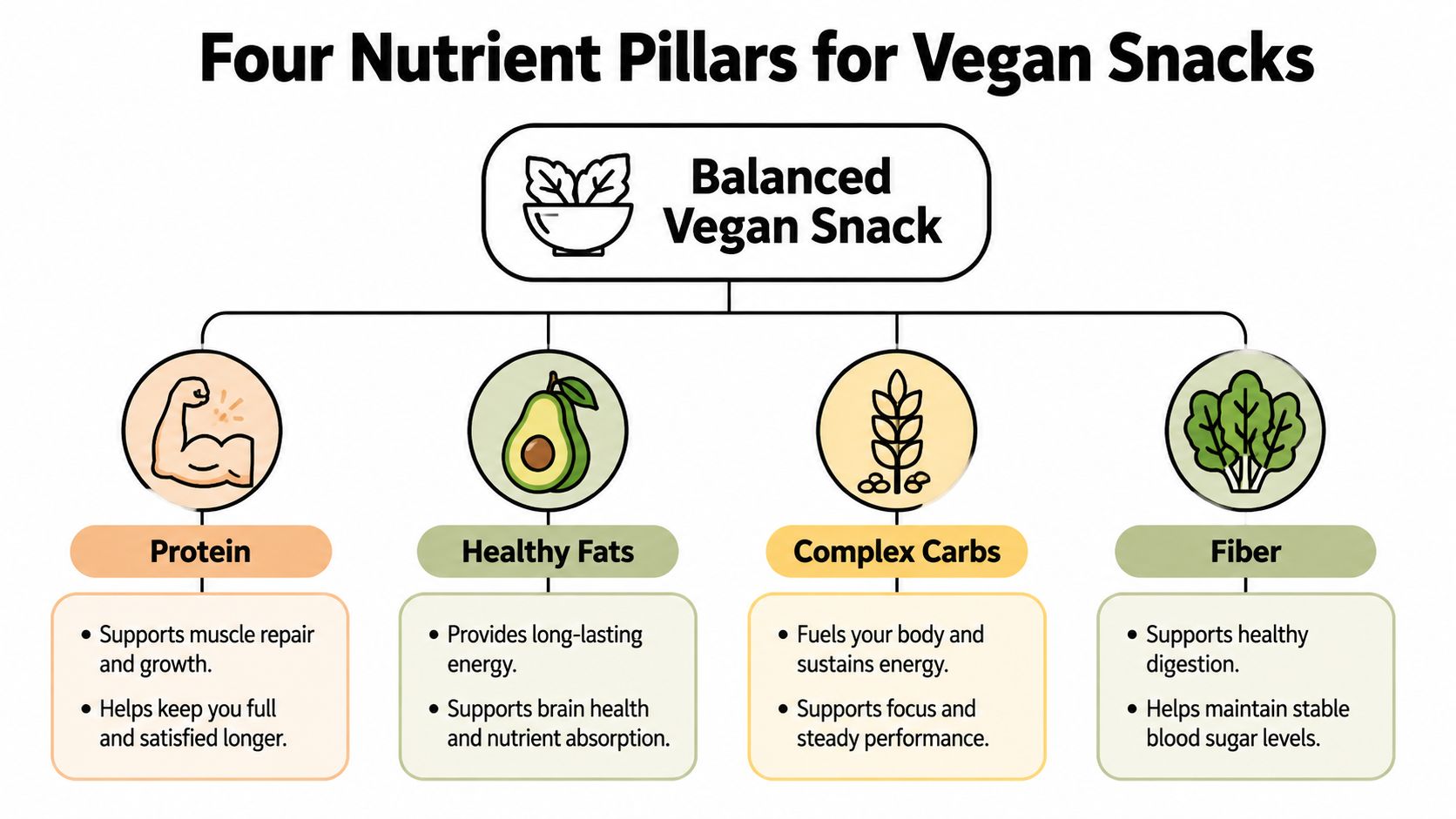
Protein is the required base
A lot of vegan snacks miss here. Plant proteins can work well, but they have to be built carefully because many ingredients are lower in one or more essential amino acids, and some products end up with rough texture unless formulators use concentrates, hydrocolloids, or extrusion to improve bite and crunch (plant-based vegan snacks review). That is why some protein snacks taste chalky, dry, or oddly chewy instead of something you want to keep eating.
If you want a practical guide to hitting protein targets on a plant-based diet, save this internal breakdown on how to get enough protein on a plant-based diet. It gives you the context you need for choosing better snacks, especially if you train hard.
Protein also matters for another reason people overlook, it helps separate real food from candy dressed up as a fitness product. If the label is weak on protein, the snack usually behaves like a quick bite, not fuel.
The problem is fullness
Iron, fat, and fiber each solve a different problem. Iron matters because a snack that ignores mineral density can leave you feeling flat, especially when your day is long and your training is demanding. Fat adds richness and makes portable snacks feel more satisfying. Fiber slows the pace of digestion so the snack lasts longer instead of disappearing in ten minutes.
That is why I would take a savory, protein-forward option over another sweet bar almost every time. Even a simple snack with real texture and a useful nutrient profile beats something that reads well on the wrapper but does nothing for appetite.
If you want a sweet backup for travel days or off-hours, high potency hemp gummies can fit that role, but they are not a replacement for a snack that covers protein and staying power.
A gym-friendly vegan snack should pass a simple test:
- Protein present: It should do more than taste good.
- Fiber included: It should not be pure starch or candy in disguise.
- Fat or crunch factor: It should feel worth eating, not airy and forgettable.
- Label clarity: It should look like food, not a chemistry project.
That is the checklist I use when I am standing in a store aisle or packing food for a training day. If a snack misses two of those four pillars, I skip it.
Store-Bought Versus Homemade Snacks
I don't pretend homemade always wins. It doesn't. Homemade wins when you want control. Store-bought wins when you need speed. The smartest vegan snack plan uses both, because relying on only one side usually makes you either overbooked or underfed.
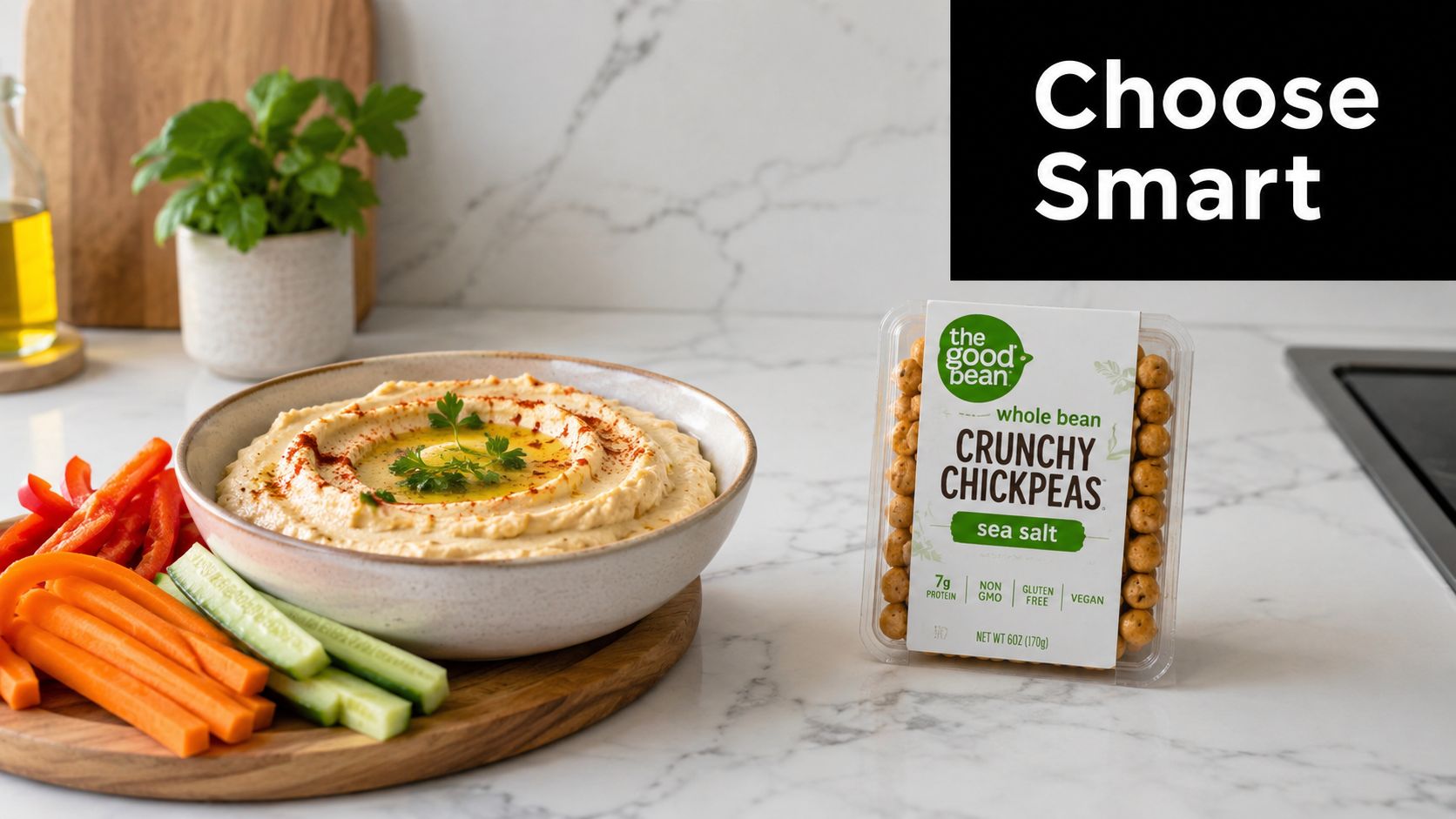
Homemade gives you control
When I batch prep at home, I know exactly what I'm eating. That matters if I'm managing allergens, watching oil quality, or trying to keep the ingredient list simple. Roasted chickpeas, baked tofu bites, and edamame bowls are hard to beat because you can season them the way you like them.
Homemade also makes it easier to build around texture. If you want more crunch, you can bake longer. If you want more protein density, you can adjust the base. If your gut doesn't love one ingredient, you can swap it out without asking a manufacturer to redesign the product.
Store-bought wins on convenience
Packaged snacks matter because life doesn't always give you a prep window. A shelf-stable bag beats a sad vending machine run, especially when you're heading to the gym, commuting, or trying to keep food in your bag all day. That's where simple, protein-forward packaged snacks earn their keep.
If you want a sweet backup for a non-training moment, VitzAi.com protein chocolate range is the kind of option people usually reach for when they want dessert style convenience. I still prefer savory for training days, but I respect having a cleaner sweet option around when the day calls for it.
The rule I use is blunt. Prep homemade when your week is predictable. Buy packaged when your schedule isn't. If you can do both, even better. Keep a batch of roasted snacks in the fridge and a few sealed options in your gym bag so you're never forced into empty calories because you forgot lunch.
High-Protein Savory Snack Ideas Worth Making
The best vegan snacks I've eaten around training all had one thing in common. They tasted like food I'd want even if I wasn't counting macros. Roasted chickpeas, tofu bites, seitan jerky, and edamame bowls all work because they lean savory, not sugary. That changes how satisfying they feel.
Quick hits and prep-ahead wins
If you want a no-drama snack, start with roasted chickpeas. They're crunchy, portable, and easy to season with salt, paprika, garlic, or chili. Baked tofu bites are better when you have a fridge nearby and need something more protein-forward. Seitan jerky is the most “grab and go” of the bunch if gluten works for you.
For people who want something closer to a meal, edamame bowls with sea salt or soy sauce are hard to beat. They bring the kind of chew and savoriness that sweet bars can't touch. Savory protein muffins are another solid option if you want to batch bake once and eat all week.
| Snack | Protein per serving | Prep time | Best use case |
|---|---|---|---|
| Roasted chickpeas | Qualitatively high for a legume-based snack | Short batch prep | Desk drawer, travel, mid-afternoon crunch |
| Baked tofu bites | Qualitatively high for a soy-based snack | Moderate batch prep | Post-lift or next-day lunchbox |
| Seitan jerky | Qualitatively high and very portable | No prep if store-bought | Gym bag, commute, long errands |
| Edamame bowl | Qualitatively high and filling | Short batch prep | Home snack, work-from-home break |
| Savory protein muffin | Depends on recipe, usually substantial | Moderate batch prep | Breakfast-style snack, school, office |
The sweet-versus-savory split is easy for me. Sweet snacks are fine when I want a treat. Savory snacks are what I reach for when I want to stay on task. If you care about training, appetite control, or just not crashing before dinner, that difference matters.
A lot of people ask whether plant protein snacks can feel satisfying enough without turning into candy. The answer is yes, but only when the texture is there. Crunch does real work. So does salt. So does a snack that doesn't taste like a protein bar pretending to be a dessert.
How to Read Labels Like a Vegan Insider
Labels are where good intentions get ambushed. A package can look plant-based and still hide dairy, honey, or some vague ingredient name that sends you back to the shelf. That's why label-reading is a skill, not a vibe.
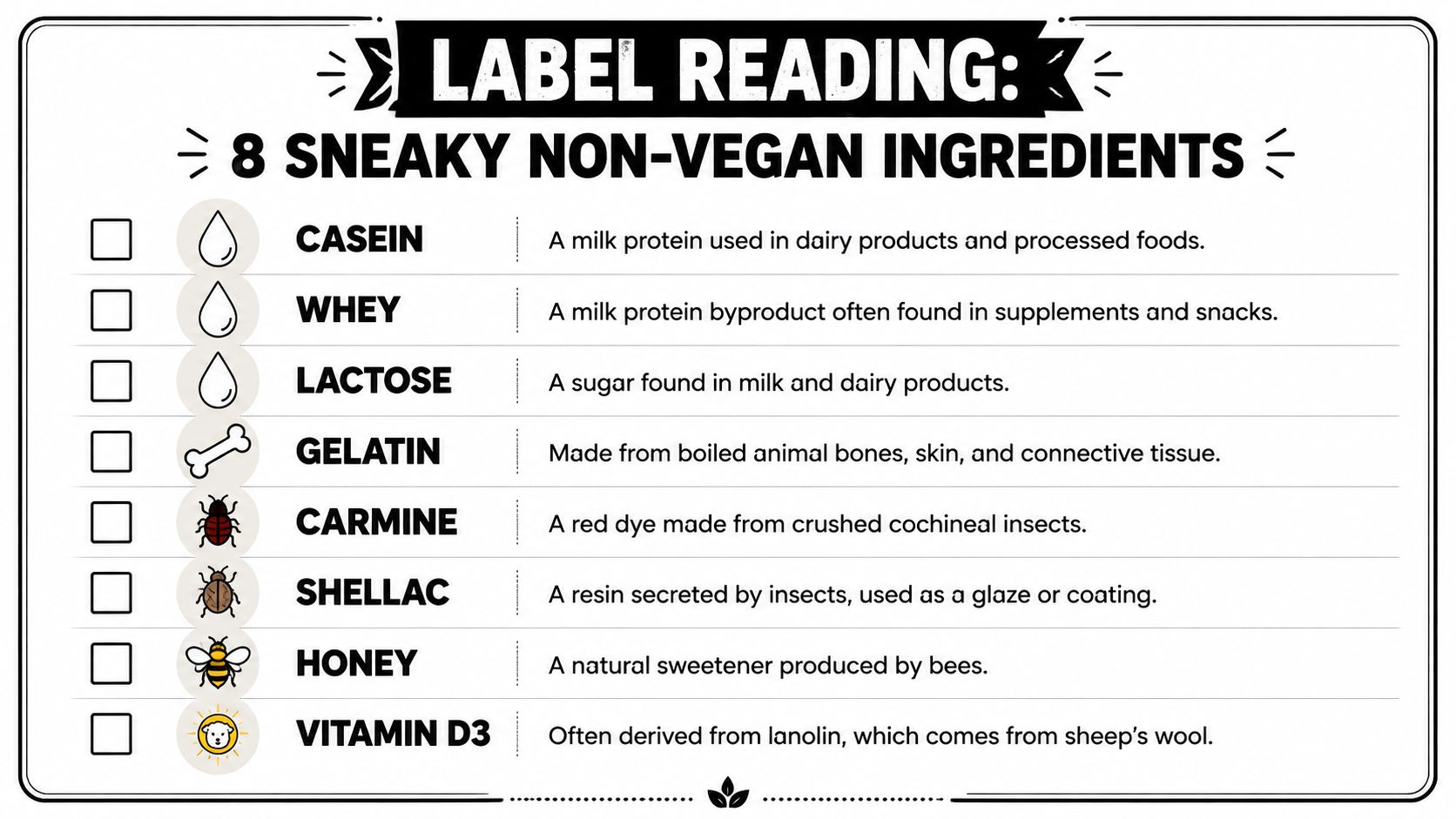
The sneaky ingredients I always check first
The obvious ones are still the ones that trip people up. Watch for whey, casein, milk solids, butterfat, gelatin, carmine, honey, and the annoyingly vague term natural flavorings. That list covers most of the label traps I've seen in real life, especially in products that look vegan at a glance.
The wording on the front of the package doesn't mean much if the ingredient panel tells a different story. “Plant-based” can still be messy. “Vegan-friendly” can be a marketing choice, not a guarantee. “Natural” tells you almost nothing on its own.
If the label needs a translator, I usually pass.
What I check beyond the vegan claim
I also look at protein content, added sugar, and whether the fat source feels intentional or just cheap. A snack can be vegan and still be a poor fit if it's basically refined starch with a glossy label. The better products are transparent about what they're trying to do, and they don't hide behind word salad.
If you want a tighter walkthrough of label basics, this guide helps as a companion reference: how to read nutrition labels. I still read it the same way every time. Front of pack first, ingredient list second, marketing claims last.
The easiest habit is also the most effective. Scan for the non-vegan ingredients first, then decide whether the rest of the product earns your money. That one habit saves time, lowers mistakes, and keeps you from buying snacks that are vegan in theory but annoying in practice.
Timing Snacks Around Workouts and Weight Goals
Snack timing matters because your body uses snacks differently depending on the moment. A pre-workout snack should stay light and easy to digest. A post-workout snack should help recovery. A snack between meals should keep hunger steady without turning into a second lunch.
Before training
For the workout window, I want a snack with a little protein and something that sits well. Go too heavy and you feel flat. Go too light and you spend the workout thinking about food instead of training. That is why savory, compact snacks usually beat giant sweet bars right before you lift.
If you want a beginner-friendly primer on what to eat before exercise, pre workout nutrition for beginners is a useful starting point. My blunt take is simple, pre-workout food should help your session, not sit in your stomach like a brick.
For a tighter look at practical gym snack ideas, I also like this guide to workout snacks. It keeps the focus on food that fits training, not on treats dressed up as fuel.
For weight management and satiety
Protein-first snacks usually work better for appetite control because they feel more complete. Pair protein with fiber or fat, and the snack is more likely to hold you over between meals, which is the whole point if you are trying to stay consistent. That is also why savory crunch beats a sweet bar so often. It satisfies the urge to eat without sending your brain straight toward dessert.
Plant-based buying habits back that up. 60% of U.S. households purchased plant-based foods in 2025, and 78% of those households bought them more than once. Recurring purchase is a key signal. People keep buying what they can live with.
For a practical framework, I use three rules:
- Before training: small, easy, and protein-aware.
- After training: protein-forward and satisfying.
- Long gaps between meals: something with fiber and fat so hunger does not spike.
If a snack does all three jobs well, I keep it around. If it only tastes good for five minutes, it is a treat, not a tool. That difference saves money and keeps your routine cleaner.
Allergy Considerations and Smart Substitutions
Vegan doesn't automatically mean allergen-friendly. A lot of the best plant-based snacks lean on soy, gluten, nuts, or sesame, and that matters if your body draws a line there. Read the full panel, not just the vegan claim.
Swap the base, keep the structure
If you avoid soy, go for chickpea-based or pea-protein snacks instead of tofu or edamame. If gluten is off the table, skip seitan and look for crunchy legume snacks. If nuts are a problem, seed-based options or bean snacks can still give you fat and crunch without the trigger.
For people watching iron intake, pair iron-rich snacks with vitamin C foods when you can. That can be as simple as adding citrus, berries, or peppers on the side. If you need fortified products, check the label carefully and keep the rest of the snack short and clean.
Build a repeatable shopping list
A good starter list keeps you from winging it when you're hungry. I'd stock roasted chickpeas, edamame, tofu, seed crackers, hummus, sea salt, and one or two shelf-stable protein snacks you like. That covers prep days, travel days, and the days when your fridge is nearly empty.
The main point is simple. Don't build your snack plan around someone else's tolerance. Build it around your own. The best vegan snack routine is the one you can repeat without second-guessing every label or every bite.
Gym Snack is built for exactly this kind of routine, savory, protein-first fuel that fits training days without feeling like dessert in disguise. If you're tired of bland sweet bars and want a cleaner way to snack like someone who lifts, visit Gym Snack and see what real gym-ready vegan snacking looks like.