

Tired of “healthy” vegan snacks that turn out to be sweet balls, sticky bars, or dessert with a wellness label? That's the gap. Plenty of vegan healthy snacks recipes look good on paper, but they don't always help when you want crunch, real satiety, and something that feels closer to a savory training snack than a treat.
That's also why savory plant-based snacking has become more interesting over the last several years. A widely cited market report valued the global vegan food market at about USD 15.4 billion in 2018 and projected it to reach roughly USD 31.4 billion by 2026, showing strong expansion over that span, which helped normalize ingredient patterns like legumes, nuts, seeds, oats, and plant protein powders in everyday snack recipes (vegan snack market context from LVJ Co.). If you're building snacks for performance, those ingredients work because they're simple, portable, and easy to batch prep.
The other missing piece is quality. Dietitian-led guidance for vegan snacks often points people toward modest sugar and sodium while prioritizing protein and fiber, with one guide recommending fewer than 5 grams of added sugar per serving and less than 140 mg of sodium per serving while centering peas, beans, lentils, nuts, and seeds (dietitian guidance on vegan snack choices from Delish Knowledge). That standard rules out a lot of fake-health snacks fast.
If you want one underrated green to pair with savory snack plates, Shopifarm's guide to watercress is worth a read. Now let's get into the recipes.
1. Crispy Roasted Chickpea Snack with Savory Spices
This is the cleanest entry point into savory vegan healthy snacks recipes. Roasted chickpeas are familiar, cheap, and easy to flavor hard without turning greasy. They also line up with the broader push toward high-protein savory vegan snacks that fit a gym-focused routine instead of tasting like repurposed dessert.
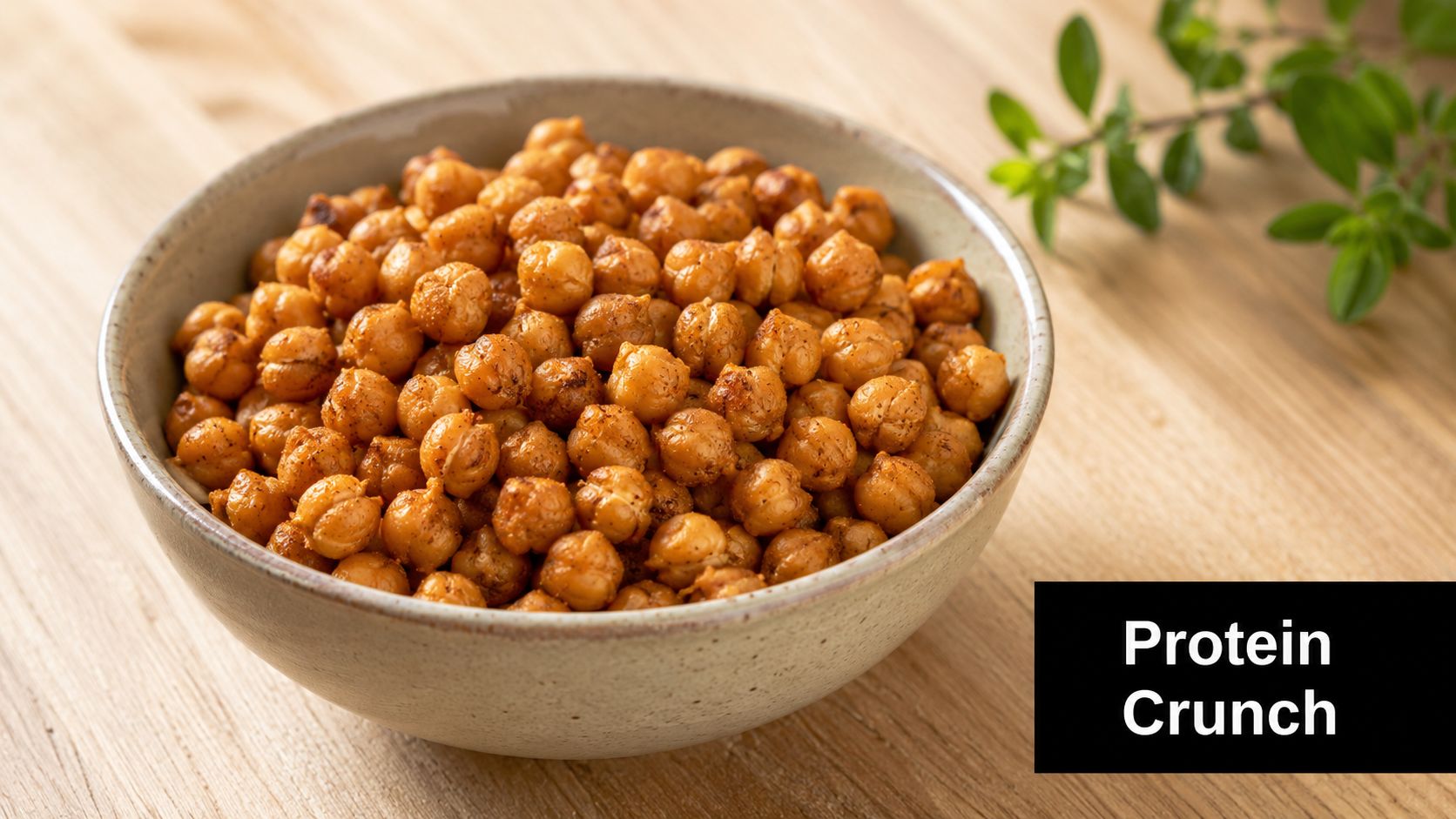
The basic version is simple. Dry cooked chickpeas thoroughly, toss with a light coating of oil, then add nutritional yeast, garlic powder, smoked paprika, black pepper, and a little cumin. Roast until the shells feel dry and the centers lose their softness. If they're still chewy after cooling, they needed either more drying before the oven or a bit more roasting time.
What makes this one work
Crunch depends more on moisture control than seasoning. Pat the chickpeas dry, let them air out a bit, and don't crowd the sheet pan. If you pile them together, they steam.
A good batch works in real life because it survives being tossed into a work bag or gym bag. If you like packaged savory protein snacks, you'll probably also like Gym Snack's take on high-protein savory snacks, because the flavor direction is similar. Bold, cheesy, spicy, and meant to satisfy a crunchy craving.
Practical rule: Season more aggressively than you think. Chickpeas mute flavor once they crisp.
- For cheddar-style flavor: Use extra nutritional yeast with garlic powder and smoked paprika.
- For smoky heat: Add cumin and a pinch of cayenne.
- For weekly prep: Cool fully before storing or you'll trap steam and lose crunch.
2. Pea Protein Energy Bites with Savory Umami Flavors
Most energy bites are sweet. That's exactly why a savory version stands out. If you need something compact and easy to eat before a commute, between meetings, or on the way to training, these work much better than another date-heavy dessert ball.
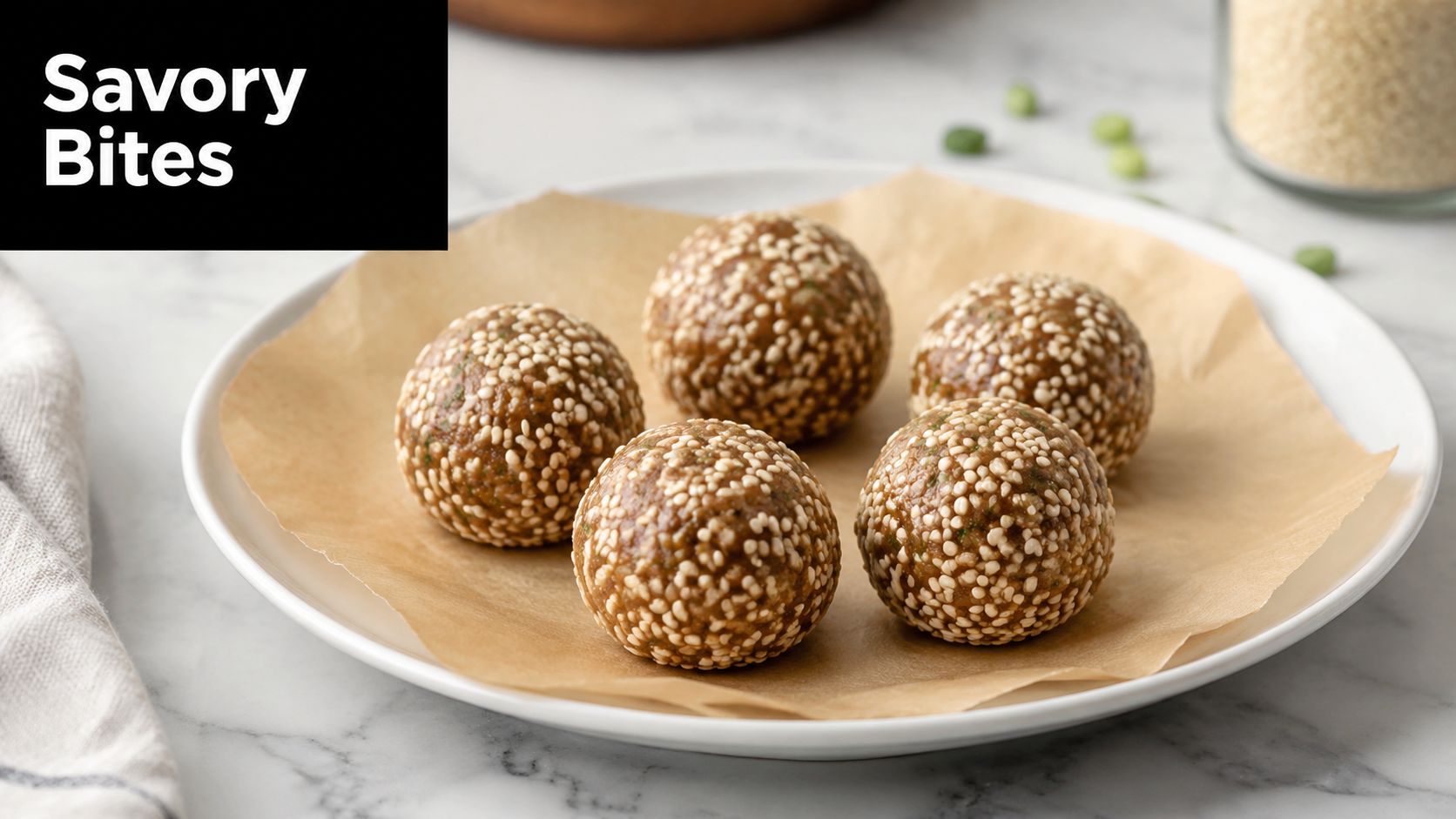
Start with pea protein powder, a small amount of dates for binding, tahini or almond butter, white miso, nutritional yeast, sesame seeds, and enough water to bring it together. The dates shouldn't dominate. They're there to hold texture and take the edge off the miso, not turn the bite into candy.
Best texture strategy
The biggest mistake here is using too much liquid or too much sticky sweetener. That creates a paste instead of a bite. You want a dense dough you can roll, then coat in sesame seeds or finely chopped pumpkin seeds for a dry exterior.
These are especially useful for people who don't want a full crunchy snack right before movement. The bite is softer, but still savory and protein-forward. I'd keep the seasoning profile simple on the first batch. Miso, garlic powder, black pepper, and nutritional yeast are usually enough.
- Use unflavored protein if possible: Vanilla can fight the umami profile.
- Keep portions small: Rich savory bites eat better in compact portions.
- Freeze individually: The texture holds well, and you can thaw only what you need.
A savory bite should taste like a concentrated snack, not like frosting with garlic added.
3. Crispy Seaweed and Pea Protein Chips
If your weak spot is salty, ultra-savory packaged snacks, make this first. Seaweed gives you immediate depth, and pea protein helps the chip eat like more than a flavored cracker. The result lands closer to a proper performance snack than most homemade chips.
Blend pea protein with a little oat flour or tapioca flour for structure, then add crushed nori or dulse flakes, nutritional yeast, garlic powder, and enough water to make a spreadable batter. Spread it thin on parchment. Thin matters. Thick batter gives you leathery sheets, not chips.
How to avoid a weird chalky finish
Pea protein can go powdery if you use too much or under-season the batch. Seaweed fixes part of that because it adds umami and salinity, but you still need fat and heat. A light brush of oil on top helps the surface brown and crisp.
If you want ideas on flavor profiles built around this ingredient, these pea protein snack concepts from Gym Snack are useful inspiration. The key is the same in both homemade and packaged formats. Push flavor toward cheesy, spicy, or intensely savory instead of trying to make pea protein disappear.
Here's a visual if you want to see the style of chip-making process in action.
- For the thinnest chips: Offset spatula beats a spoon.
- For better breakability: Score lightly before baking.
- For storage: Cool completely, then seal fast so ambient moisture doesn't soften them.
4. Spiced Tofu Crumble Snack Mix with Nuts and Seeds
This one eats like a hybrid between trail mix and crispy taco filling. It's one of the smartest options when you want multiple textures in one container and don't want to rely on flour-based snacks all week.
Press extra-firm tofu well, crumble it small, then toss with smoked paprika, garlic powder, onion powder, black pepper, and nutritional yeast. Bake until the tofu firms up and dries at the edges. Separately toast nuts and seeds, then combine everything after cooling so each component keeps its own texture.
Why this beats standard trail mix
Traditional trail mix often leans sweet and fat-heavy. This version shifts the center of gravity toward savory protein. The tofu brings chew and crisp edges, while pumpkin seeds, sesame seeds, or almonds add crunch that lasts.
The trade-off is shelf life. This isn't the snack I'd leave in a hot car all day. It's better for same-week meal prep, office fridge storage, or home snacking after training.
- Press tofu hard: Wet tofu gives you soft crumbles.
- Toast separately: Nuts and seeds brown faster than tofu.
- Season after cooling if needed: Sometimes the mix needs one extra dusting of nutritional yeast to pop.
A practical use case is packing this with sliced cucumbers or bell peppers. That turns a handful of snack mix into a mini meal without much effort.
5. Lentil and Herb Cracker Crisps
If you want something that feels structured and polished, lentil crackers are hard to beat. They're also a good answer for people who like store-bought crackers but want cleaner ingredient control and more staying power.
Use red lentil flour as the base, then add flax, sesame seeds, dried rosemary or thyme, olive oil, and enough water to make a rollable dough. Roll it thinner than you think. The line between crisp cracker and dense biscuit is mostly thickness.
Best use in a training-focused routine
These shine because they're versatile. Eat them plain, pair them with hummus, or use them as a vehicle for a tofu dip or white bean spread. They're one of the easiest vegan healthy snacks recipes to batch prep if you want a neutral savory base that doesn't get boring.
This also fits a broader demand trend. The gluten-free vegan snacks market has been measured in the multi-billion-dollar range, with Data Bridge Market Research estimating USD 6.09 billion in 2024 and USD 8.86 billion by 2032, while another forecast places it at USD 5,813.6 million in 2023 growing to USD 8,456.9 million by 2031 at a 4.8% CAGR (gluten-free vegan snacks market outlook from Data Bridge Market Research). Homemade lentil crisps sit right in that allergen-conscious lane.
Thin dough fixes most cracker problems. Thick dough creates disappointment.
- For cleaner snap: Score before baking.
- For deeper flavor: Let the dough rest so herbs hydrate.
- For cheesy effect: Add nutritional yeast, but don't let it dominate the herb blend.
6. Hemp Seed and Pea Protein Granola Clusters
Granola usually means sweet. Savory granola clusters are a different animal. They're crunchy, snackable, and easy to portion, but they don't trigger the same dessert expectations.
Mix rolled oats with hemp seeds, pea protein powder, tahini, a small amount of oil, nutritional yeast, garlic powder, and smoked paprika. Press small clumps onto a lined pan instead of spreading one big sheet. That gives you better cluster formation and more even crisping.
Where these fit best
These work well for desk drawers, post-work snacks, and road trips because they hold together better than delicate crackers. Hemp seeds also soften the texture of pea protein and make the clusters feel less dry.
The common mistake is overloading them with wet binders. Too much tahini or too much oil makes clusters that toast unevenly and go stale fast. You want just enough to hold small chunks together.
- Bake low and patient: Moderate heat dries them without scorching the edges.
- Use broad seasoning: Garlic, black pepper, and nutritional yeast give the cleanest base.
- Pair smart: These are great with crunchy raw vegetables instead of fruit.
For people who usually buy savory crunchy mixes, this is the homemade version that comes closest in feel.
7. Roasted Nutritional Yeast and Pea Protein Popcorn
Popcorn is one of the easiest savory snacks to upgrade. It's already light, crunchy, and portion-friendly. The trick is getting a protein coating to stick without turning the bowl dusty.
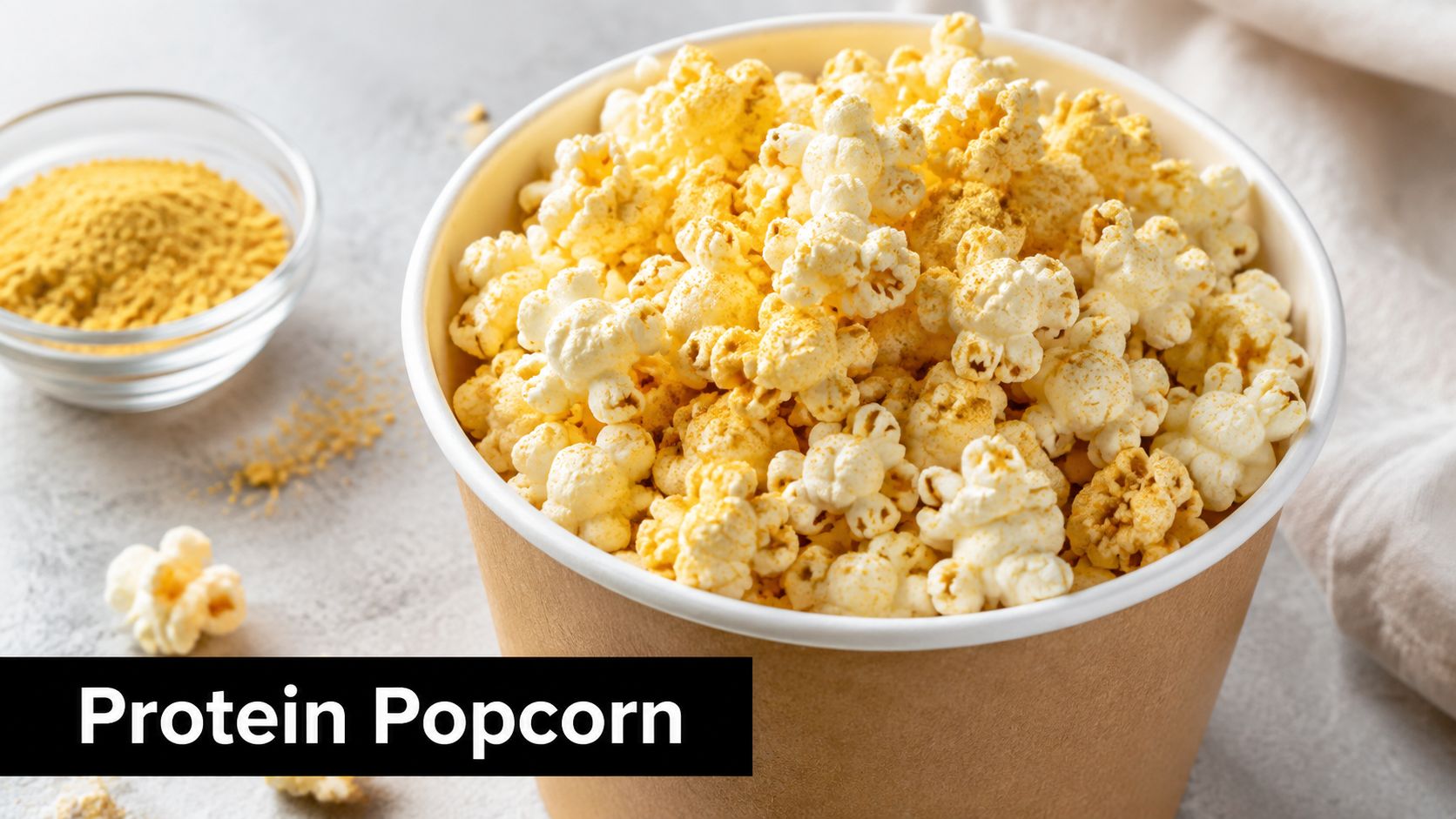
Air-pop the popcorn first. While it's still warm, toss it with a small amount of melted oil, then shake on a seasoning blend of nutritional yeast, pea protein powder, garlic powder, smoked paprika, and salt. Warm popcorn grabs the coating much better than cooled popcorn.
How to keep it from tasting dusty
Use less pea protein than nutritional yeast. That's the key. Nutritional yeast carries flavor, while pea protein should mostly ride along in the background. If you reverse that balance, you get coating fallout at the bottom of the bowl and a dry mouthfeel.
This one is especially good for evenings when you want volume and crunch without reaching for sugary bars. It also proves a useful point from mainstream recipe culture. A lot of vegan snack content still skews toward sweet bites, bars, and fruit-driven formats, which leaves a real gap for savory, gym-friendly options built around satiety and portability (The Vegan Society's budget vegan snacks examples highlight how common sweet formats still are).
- For better adhesion: Use a large bowl with a lid and shake.
- For a cheddar-style profile: Increase nutritional yeast before increasing salt.
- For meal prep: Store only fully cooled popcorn or it'll soften.
8. Sprouted Pea and Bean Snack Crisps
Sprouted flours are worth using when standard legume snacks feel heavy on your stomach. They tend to produce a lighter, cleaner crisp, especially when you keep the ingredient list tight.
Mix sprouted pea or bean flour with herbs, nutritional yeast, a little olive oil, and enough water to make a thin dough or spreadable paste, depending on the texture you want. Bake on parchment and break into irregular shards after cooling. Rustic shapes are part of the appeal here.
When these make the most sense
These are excellent for people who want a legume-based snack without whole legumes. Some athletes love roasted chickpeas. Others find flour-based crisps easier to eat around training because the texture is more consistent and less dense.
The downside is ingredient sourcing. Sprouted flours aren't as common as oat flour or chickpea flour, so this isn't always the cheapest recipe on the list. But if digestibility and texture matter to you, it's a smart option.
Some snacks look healthy but eat like a chore. A good crisp should disappear from your hand, not sit in your stomach.
Try basil and oregano for an Italian direction, or jalapeño powder with nutritional yeast for something more aggressive. Keep the seasoning dry and the dough thin.
9. Herb-Infused Pea Protein Snack Bars with Savory Crust
Savory bars sound odd until you remember how many people are tired of sweet bars. If you need something portable and compact, this is one of the most practical vegan healthy snacks recipes in the whole list.
Pulse nuts and seeds until they're fine but not buttery. Mix with pea protein powder, herb-infused olive oil, nutritional yeast, garlic powder, and just enough binder to press firmly into a pan. For a firmer, drier texture, bake lightly, then cool before slicing.
What separates a good savory bar from a bad one
Texture. That's everything here. Bad bars are either gummy in the center or so dry they crumble into dust. The fix is balancing fine particles with a few coarse bits. Ground pumpkin seeds plus chopped walnuts or almonds usually gives better structure than using only powdery ingredients.
This recipe also matches a clear category tailwind. The vegan snacks market is projected to grow at a 7.2% CAGR from 2025 to 2035, with one estimate placing the category at about $51.14 billion in 2024 and projecting $109.89 billion by 2035 (vegan snacks market projection from Market Research Future). Savory protein-forward bars and bites make sense inside that larger shift because not everyone wants another dessert-style option.
- Infuse the oil first: Rosemary, thyme, or oregano taste stronger when warmed into the fat.
- Press hard: Loose bars fall apart in bags.
- Cool before cutting: Warm bars won't set cleanly.
10. Crispy Baked Fava Bean and Herb Snack Chips
Fava bean flour gives you a chip with a different personality than chickpea or lentil flour. It's earthy, sturdy, and especially good with Italian herbs. If you like the idea of a protein chip that doesn't lean sweet, this is one of the best formats to keep in rotation.
Combine fava bean flour with a smaller amount of oat or tapioca flour for texture, then add olive oil, garlic powder, oregano, thyme, basil, and salt. Roll very thin, score lightly, and bake until the edges turn dry and firm. The chips crisp further as they cool, so don't rush to judge them straight from the oven.
Best flavor direction
Mediterranean seasoning works because it complements the earthiness of fava instead of covering it up. Nutritional yeast can be added, but I prefer using it lightly here. Too much can blur the herb profile and make every flour-based snack start tasting the same.
If you like packaged crunchy formats with a stronger protein lean, Gym Snack's roundup of crunchy high-protein snacks is a useful reference point for what people crave. Crunch first, bold flavor second, clean ingredients always near the top of the list.
A simple way to serve these is alongside white bean dip, olive tapenade, or a thick edamame spread. That turns a chip into something more filling without much prep.
Comparison of 10 Savory Vegan Snack Recipes
| Snack | Implementation Complexity 🔄 | Resource Requirements ⚡ | Expected Outcomes 📊 | Key Advantages ⭐ | Insights / Tips 💡 |
|---|---|---|---|---|---|
| Crispy Roasted Chickpea Snack with Savory Spices | Moderate, active roasting and monitoring | Low–Medium: canned/dried chickpeas, oven, seasonings, storage jars | High protein (15–18g/cup); shelf-stable crunchy snack | Affordable, fiber & iron-rich, customizable flavors | Toss evenly with oil; roast 375°F 25–30m; store airtight with desiccant |
| Pea Protein Energy Bites with Savory Umami Flavors | Low, no‑bake, simple assembly | Low: pea protein, dates, miso, fridge/freezer | Moderate protein (8–12g/bite); portable pre‑workout fuel | Quick prep, allergen‑friendly, stable energy release | Use unflavored pea protein; refrigerate or freeze; roll in sesame for texture |
| Crispy Seaweed and Pea Protein Chips | High, precise moisture control and thin baking | Medium–High: pea protein, seaweed powder, oven; specialty seaweed sourcing | High protein (12–15g/serving); umami and iodine benefits | Rich umami, thyroid‑supporting iodine, chip‑like crispness | Use nori/dulse powder; spread batter thin; cool before storing |
| Spiced Tofu Crumble Snack Mix with Nuts and Seeds | Moderate, baking tofu crumbles plus toasting nuts | Medium: tofu, nuts/seeds, oven; potential allergen considerations | High protein (16–18g/serving); multi‑textured snack mix | Versatile flavors, omega‑3s from seeds, whole‑food ingredients | Press tofu well; toast nuts/seeds separately; season boldly |
| Lentil and Herb Cracker Crisps | Medium, precise dough hydration and rolling thin | Medium: red lentil flour, supporting flours, oven | Moderate protein (8–10g/serving); thin, crispy crackers | Fiber‑rich, iron dense, allergen‑conscious base | Blend flours for texture; roll thin and score before baking |
| Hemp Seed and Pea Protein Granola Clusters | Moderate, baking and cluster cohesion control | Medium–High: hemp seeds, pea protein, oats, coconut oil; costlier hemp | High protein (12–15g/serving); complete amino acid profile | Superior protein quality, omega‑3s, post‑workout recovery support | Toast at 300°F; bind with tahini/almond butter; use virgin coconut oil |
| Roasted Nutritional Yeast and Pea Protein Popcorn | Low, quick air‑pop and toss | Low: popcorn, pea protein, nutritional yeast, coconut oil | Moderate protein (8–10g per 3 cups); high‑volume satiety | Extremely cost‑effective, portable, fast prep | Toss warm with oil then season; store with desiccant for crispness |
| Sprouted Pea and Bean Snack Crisps | High, sprouting process + careful drying/baking | Medium–High: sprouting equipment or specialty flours, oven | Moderate protein (10–12g/serving); enhanced digestibility & mineral uptake | Higher bioavailability, gentler on digestion, nutrient dense | Source sprouted flours or sprout yourself; bake at 350°F; add herbs |
| Herb-Infused Pea Protein Snack Bars with Savory Crust | Moderate, formula balancing for binding and texture | Medium: pea protein, ground nuts/seeds, herb oils; press or oven | High protein (15–18g/bar); shelf‑stable savory bar option | Sugar‑free, satiating, portable pre/post‑workout solution | Grind nuts for binding; infuse oil with herbs; press and bake 325°F 15–20m |
| Crispy Baked Fava Bean and Herb Snack Chips | Medium–High, hydration control and thin rolling | Medium: fava bean flour (less common), olive oil, oven | High protein (12–15g/serving); Mediterranean flavor profile | Unique amino acid profile, L‑dopa benefits, distinctive taste | Combine with oat/tapioca for texture; roll thin; bake 375°F 12–15m |
Your Ultimate Savory Snack Playbook
You don't need more sweet “healthy” snacks. You need options that solve the problem. Crunch, protein, portability, and flavor that doesn't feel like a compromise. That's what these recipes are built to do.
The easiest place to start is roasted chickpeas, protein popcorn, or lentil crackers. They use accessible ingredients, the techniques are forgiving, and they teach the core principles that make savory vegan snacking work. Dry ingredients thoroughly, season harder than you think, and cool everything fully before storage. Those three habits fix most homemade snack failures.
The next level is matching the recipe to the moment. Roasted chickpeas and fava chips are great for mindless crunchy snacking. Savory pea protein bites and herb bars work better when you need something compact and intentional on the go. Tofu crumble mix and sprouted crisps fit the middle ground, where you want more substance but still want snack energy, not a full meal.
There are trade-offs, and they matter. Flour-based crisps usually travel better than fresh tofu mixes. Popcorn gives great crunch but needs careful seasoning to avoid a powdery finish. Seed- and nut-heavy recipes can become calorie-dense quickly if you free-pour ingredients. Homemade snacks also don't have the same shelf life as sealed packaged products, so batch size matters. Make enough for the week, not enough for the month.
If I were helping someone clean up their snack routine, I'd tell them to build a small rotation, not a huge one. Pick one roasted legume snack, one cracker or chip, and one compact protein option like bars or bites. That covers most cravings and keeps prep realistic. It also helps you notice what works for your appetite, schedule, and training window.
For extra inspiration around crisp, savory snack formats, these homemade dried vegetable crisps are another useful idea to pair into your rotation. They won't replace protein-forward snacks, but they can add variety and texture to the same prep system.
And for the days when you don't want to soak, blend, roast, cool, and store anything, convenience matters. If you still want the same savory crunch and protein-first profile, Gym Snack is the obvious shortcut. Keep the homemade recipes for prep days. Keep a ready-to-go option for real life.
When you want chef-inspired savory crunch without the kitchen work, Gym Snack makes the gap disappear. Their plant-based pea protein snacks are built for training, busy schedules, and anyone who's done with sugary bars and wants a cleaner, bolder way to hit protein goals.