

Let's be honest, the word "snack" used to mean something you grabbed between meals, usually packed with sugar or salt and not much else. But that's changing. Pea protein snacks are a whole different ballgame. They’re built from the ground up to be functional fuel, made from high-quality protein extracted from yellow split peas.
Think of them less like a temporary fix for hunger and more like a tool to help you hit your goals—whether that’s recovering from a workout, staying full and focused, or just keeping your energy stable throughout a busy day. They're the smart, plant-forward answer to modern nutritional needs.
The Smart Shift to Functional Snacking
Take a walk down any health food aisle and you'll see it. The snack world has evolved far beyond greasy chips and candy bars. These days, people—from serious athletes to on-the-go parents—expect more from their food. We're all looking for functional snacks that do more than just fill a gap; they need to actively support our health and performance.
This whole movement is really a response to our collective search for nutrition that's clean, convenient, and actually works. Pea protein snacks have quickly become a go-to in this new era. They solve a very real problem by offering an incredibly simple way to increase your daily protein intake, which is absolutely essential for building and repairing muscle.
Fueling a Growing Demand
This desire for smarter snacking isn't some fringe trend; it's a massive shift in how we eat. The global protein snacks market is on a tear, projected to rocket from US$ 4,796.3 million in 2025 to a staggering US$ 8,624.3 million by 2032. This explosive growth is happening because people are consciously swapping out junk food for high-protein alternatives. You can learn more about this market shift and its drivers.
The plant-based corner of this market is where the real action is. In fact, plant-based options are expected to grab nearly 62.6% of the protein snack market share in 2025 alone. A few key things are pushing this forward:
- Allergy-Friendly Needs: Pea protein is a safe harbor for many, as it’s naturally free from common troublemakers like dairy, soy, and gluten.
- Clean Eating Priorities: More and more, people are scanning labels for cholesterol-free snacks without a bunch of artificial junk.
- Ethical and Sustainable Choices: As awareness around veganism and environmental impact grows, plant-based proteins just make more sense to more people.
Pea protein snacks aren't just for vegans. They represent a smarter, more efficient way to fuel your body, providing the powerful benefits of protein without the common allergens or heavy feeling associated with other sources.
At the end of the day, these snacks are an intelligent choice for anyone living a health-conscious lifestyle. They deliver sustained energy and powerful nutrients in a format that’s both convenient and genuinely tasty.
What Exactly Is Pea Protein?
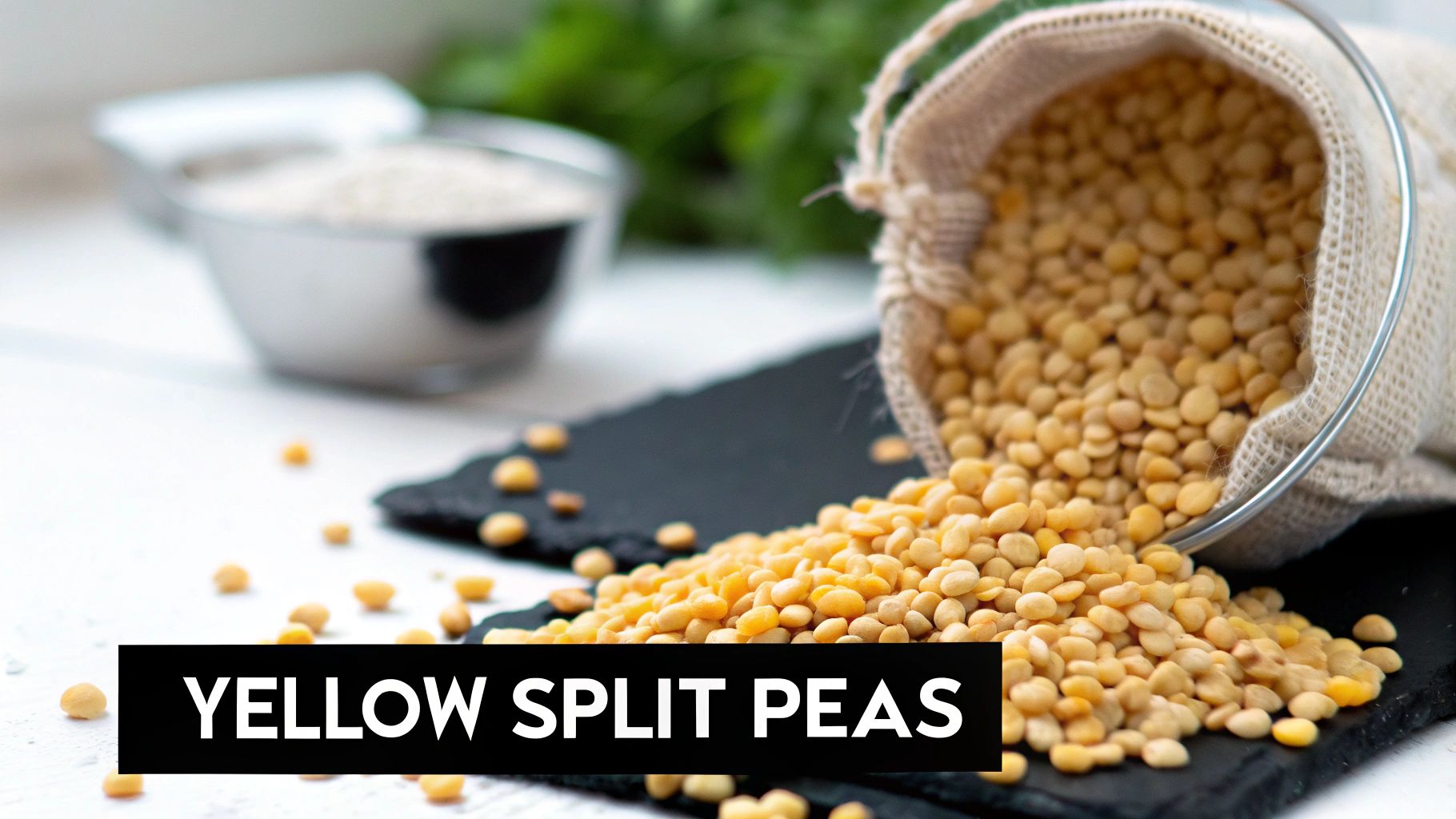
When someone mentions "pea protein," your mind probably jumps to the little green peas you’d find in a dinner salad. But the real workhorse behind high-quality pea protein snacks is actually the yellow split pea. These are the nutritional heavyweights of the pea family.
To turn them into a protein powder, they’re first dried and then put through a simple mechanical process. Think of it like making flour, but instead of trying to get the starch, the goal is to carefully separate out the protein. The peas are ground into a fine powder, mixed with water, and then the fiber and starch are filtered away, leaving a concentrated, clean protein isolate behind.
What you're left with is a pure, powerful building block for your body. It’s an ideal ingredient for snacks meant to fuel performance without any of the junk, which is exactly why it's become such a go-to in modern sports nutrition.
The Nutritional Resume of Pea Protein
Not all plant proteins are created equal, and pea protein has a particularly impressive profile. One of its biggest claims to fame is that it’s a complete protein. This means it packs all nine essential amino acids—the ones your body can't make on its own and absolutely needs for everything from building muscle to producing hormones.
But it gets even better. Pea protein is especially loaded with the specific amino acids that anyone serious about fitness is looking for.
- Branched-Chain Amino Acids (BCAAs): This group—leucine, isoleucine, and valine—is famous for its direct role in muscle protein synthesis. They’re basically the light switch that tells your body to get to work repairing and rebuilding muscle tissue after you train.
- Arginine: This amino acid is a rockstar for promoting healthy blood flow. Better circulation means more oxygen and nutrients can get to your muscles right when they need them most.
Pea protein delivers a powerful, muscle-supporting amino acid profile comparable to many animal-based sources but in a plant-based, allergen-friendly format. It’s the best of both worlds for clean, effective nutrition.
This solid nutritional foundation explains why its popularity has exploded. The global pea protein market, valued at around USD 331.1 million in 2025, is projected to hit an incredible USD 609.2 million by 2032. According to market analysis, this boom is happening because it's seen as a non-GMO, sustainable, and incredibly versatile ingredient—perfect for today's snacks. You can learn more about pea protein's market growth and drivers in recent industry reports.
Because it’s naturally free from common allergens like dairy, soy, and gluten, pea protein is a fantastic gut-friendly choice for almost anyone. This clean profile allows brands to create crunchy, savory pea protein snacks that truly deliver on both nutrition and taste, with no compromises.
The Real Benefits of Fueling with Pea Protein
It’s one thing to know what pea protein is, but it’s another to see how it actually works in the real world. That's where the magic really happens. Choosing a pea protein snack isn't just about ticking the "plant-based" box—it's a smart, strategic move to fuel your body for peak performance, faster recovery, and better overall health. The payoff goes way beyond just hitting your daily protein target.
These snacks offer real advantages that support an active lifestyle. Whether it's rebuilding muscle more efficiently or keeping you full and focused for hours, pea protein has unique properties that directly help you crush your fitness goals. Let's dig into the three biggest benefits you can expect.
Supercharge Muscle Growth and Recovery
Think of your muscles after a tough workout: they're like a construction site, broken down and ready to be rebuilt stronger. The high concentration of Branched-Chain Amino Acids (BCAAs) in pea protein is like the crew chief, showing up and telling your body to kickstart muscle protein synthesis—the actual process of repairing and growing muscle fibers.
Grabbing a savory pea protein snack right after you train is one of the best things you can do. It floods your system with these crucial building blocks precisely when your muscles are primed to use them. This immediate fuel helps cut down on soreness and speeds up your recovery, so you can come back to your next workout feeling strong and ready to go. To see how it stacks up against other options, check out our guide to the best plant protein for muscle gain.
Master Appetite and Weight Management
We've all been there. That 3 PM slump hits, and suddenly all you can think about are the vending machine snacks that will derail your whole day. This is where pea protein is an absolute game-changer for appetite control. Of all the macronutrients, protein is by far the most satiating, keeping you feeling full and satisfied much longer than carbs or fats.
Research shows that pea protein can help reduce how much you eat in later meals, making it a powerful ally in managing your weight. It does this by helping your body release satiety hormones like GLP-1, which are the signals that tell your brain, "Hey, we're full."
Keeping a bag of crunchy pea protein snacks in your desk or gym bag is the perfect defense against those cravings. Unlike sugary bars that send you on a rollercoaster of energy spikes and crashes, these snacks deliver steady energy and genuine fullness, keeping you on track without making you feel like you're missing out.
Promote Excellent Digestive Wellness
Feeling good on the inside is just as important as looking strong on the outside. One of the best things about pea protein is how easy it is on your gut. It's naturally free from the most common things that cause digestive upset, which makes it a fantastic choice for almost everyone.
- Dairy-Free: A lifesaver for anyone with lactose intolerance who gets bloated or uncomfortable from whey or casein.
- Gluten-Free: A safe, go-to option if you have celiac disease or a sensitivity to gluten.
- Soy-Free: Helps you avoid potential allergens or hormonal issues that some people associate with soy proteins.
Because it's so easy to digest, you get all the muscle-building, appetite-crushing benefits without the stomach trouble that can come with other protein sources. This makes pea protein snacks a clean, comfortable, and reliable way to fuel up, day in and day out.
To put it all together, here's a quick look at why pea protein is such a powerful addition to your routine.
Key Benefits of Pea Protein Snacks
| Benefit | How It Works | Ideal For |
|---|---|---|
| Muscle Building & Repair | Rich in BCAAs (leucine, isoleucine, valine) that trigger muscle protein synthesis. | Athletes, bodybuilders, and anyone looking to build or maintain lean muscle mass post-workout. |
| Satiety & Weight Control | High protein content signals fullness to the brain and helps stabilize blood sugar, curbing cravings. | Individuals focused on weight management or anyone needing a satisfying snack to avoid unhealthy options. |
| Hypoallergenic Profile | Naturally free from dairy, gluten, soy, and other common allergens, making it easy on the digestive system. | People with food sensitivities, lactose intolerance, or anyone seeking a clean, bloat-free protein source. |
In short, these snacks are designed to work with your body, not against it, providing clean fuel that supports your goals from the inside out.
Pea Protein Vs Other Protein Sources
Walk down any supplement aisle, and you’ll see the protein options are endless. Whey, soy, collagen, casein… it’s a lot to take in, and every single one claims to be the best. To really get why pea protein snacks are becoming so popular, it helps to put them side-by-side with the heavy hitters.
Think of it like picking a car. You don't just look at horsepower. You consider fuel efficiency, safety ratings, and how it handles. The same goes for protein—you have to look at the whole picture, from its amino acid profile and allergen potential to how easily your body can actually use it.
Let's break down how pea protein stacks up.
Pea Protein Vs Whey Protein
For years, whey has been the undisputed king, especially in the bodybuilding world. It’s made from milk, absorbs quickly, and is packed with Branched-Chain Amino Acids (BCAAs), which are crucial for muscle recovery. That's all great, but its dairy-based nature is also its biggest weakness. If you're lactose intolerant or even just sensitive to dairy, whey can lead to serious bloating and digestive upset.
This is where pea protein really shines. It delivers a BCAA profile that's remarkably similar to whey's and studies show it's just as good for building muscle mass. The key difference? It does it all without the dairy. This makes it a powerful, gut-friendly option that a much larger group of people can use without worrying about those nasty side effects. We go way deeper on this in our full breakdown of pea protein vs whey protein.
Pea Protein Vs Soy and Collagen
Soy is another big name in the plant-based space, but it's not without its baggage. For starters, it’s one of the most common allergens. Plus, there are ongoing debates about its phytoestrogens and potential hormonal effects, which makes some people hesitant.
Collagen is a different beast entirely. While it’s fantastic for supporting healthy skin, hair, and joints, it's what we call an "incomplete" protein. It’s missing tryptophan, one of the nine essential amino acids your body needs to build muscle, making it a poor choice for post-workout recovery.
Pea protein neatly avoids both of these problems. It's hypoallergenic, so you don't have the allergen or hormonal concerns tied to soy. And unlike collagen, it provides the complete amino acid profile your muscles need to repair and grow, making it a far more versatile and reliable choice for anyone focused on fitness.
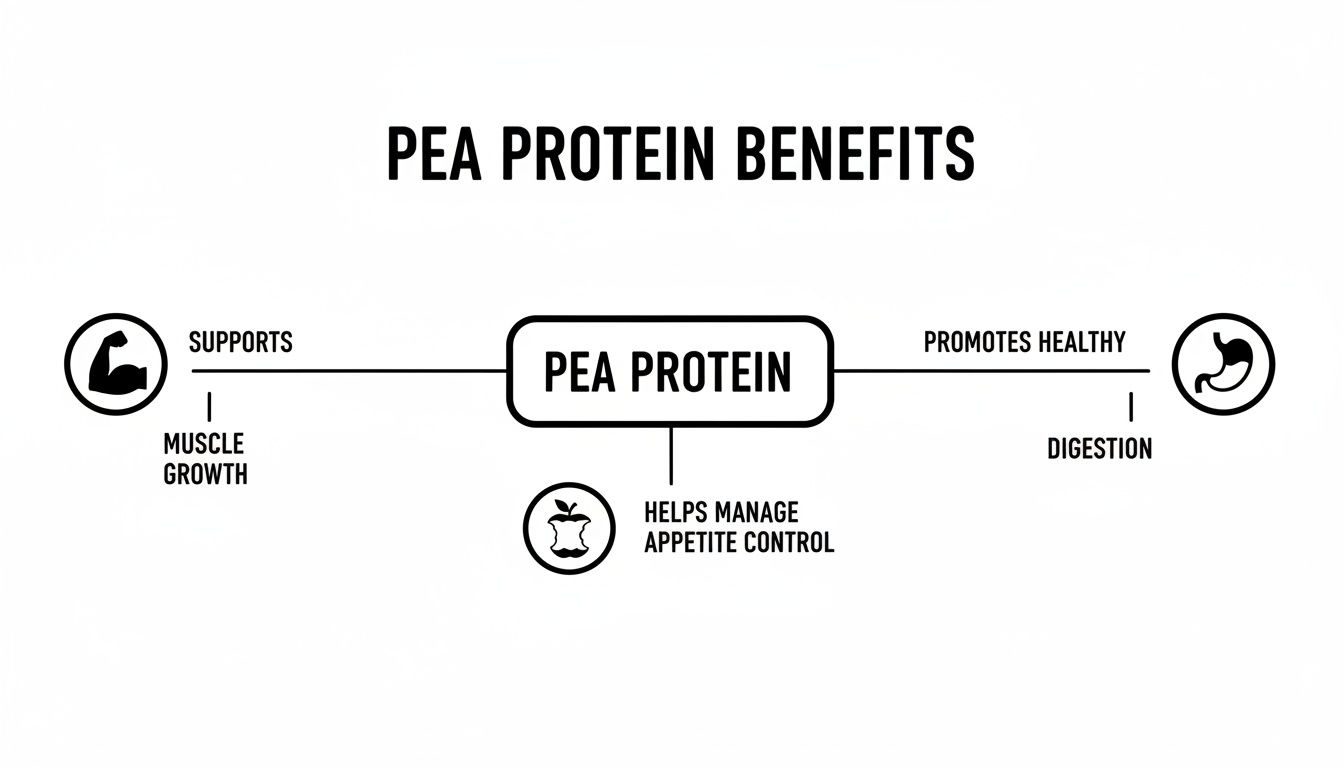
This chart really puts the major benefits of pea protein into perspective, from muscle growth to keeping you full.
Pea Protein Vs Other Popular Protein Sources
To make it even clearer, here’s a quick side-by-side look at the top contenders.
| Protein Source | Amino Acid Profile | Digestion Speed | Common Allergens | Best For |
|---|---|---|---|---|
| Pea Protein | Near-complete (rich in BCAAs) | Medium | None | Plant-based muscle building, sensitive stomachs, satiety |
| Whey Protein | Complete (high in BCAAs) | Fast | Dairy, Lactose | Fast post-workout recovery (if you can tolerate dairy) |
| Soy Protein | Complete | Medium-Fast | Soy | Plant-based diets (if no soy sensitivity or concerns) |
| Collagen | Incomplete (lacks tryptophan) | Fast | None | Supporting skin, joint, and connective tissue health |
As you can see, each one has its place, but pea protein holds a unique position as a powerful, versatile, and inclusive option.
Pea protein stands out as the all-rounder. It delivers the muscle-building force of animal proteins with the clean, hypoallergenic, and sustainable profile that modern consumers demand.
To get a better handle on the building blocks of protein, it's worth reading up on topics like BCAA vs Protein Powder. In the end, pea protein's strength is its incredible balance, which is what makes pea protein snacks such a smart and effective choice for just about anyone.
How to Choose the Best Pea Protein Snacks
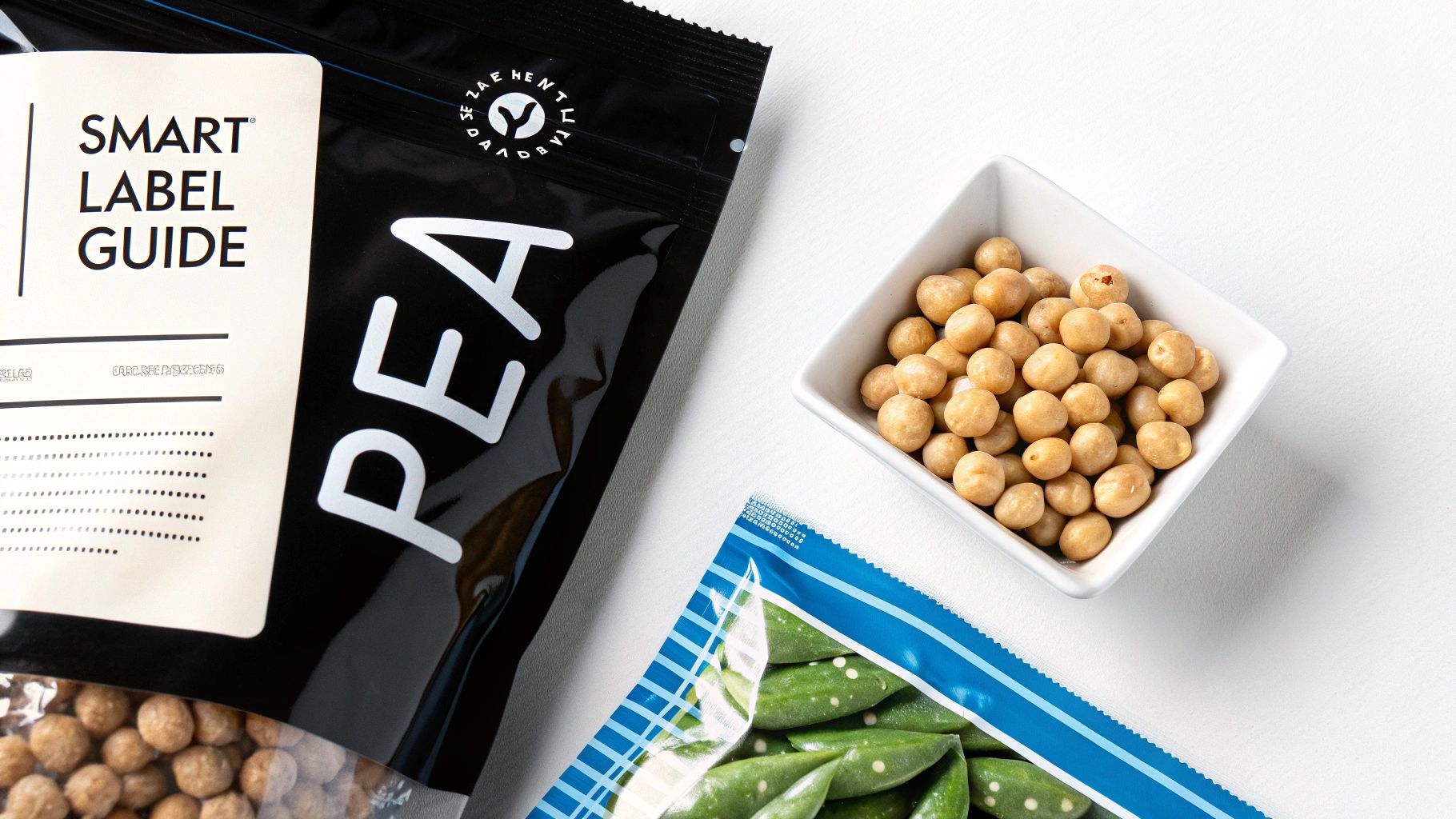
Let's be honest, not all pea protein snacks are made the same. The grocery aisle is a minefield of options that scream "healthy" on the front but are secretly loaded with sugar, cheap fillers, and inflammatory oils—basically, candy bars in disguise.
To make sure your snack is actually working for you and not against you, you need to learn how to read the label like a pro. Think of it as your cheat sheet. By looking at a few key things, you can instantly tell the difference between high-performance fuel and junk food.
Decode the Ingredient List
Your first stop should always be the ingredient list. It’s ordered by weight, so whatever is listed first is what you're getting the most of. For a real protein snack, pea protein should be the first or second ingredient. This is non-negotiable. It proves the snack is built around protein, not just dusted with it for marketing buzz.
Next, check out the fats. Many brands cut corners by using cheap seed oils like canola, sunflower, or soybean oil. A truly premium snack will use a higher-quality fat, like olive oil, which offers stable monounsaturated fats and avoids the issues tied to highly processed vegetable oils.
The golden rule is simple: if the ingredient list is a mile long and reads like a chemistry experiment, put it back. Your body runs best on real food.
Finally, be on the lookout for sneaky sugars and artificial junk. A major goal for many health-conscious people is finding the best protein powder without artificial sweeteners, and the same logic applies to snacks. Look for snacks with minimal added sugar—ideally under 5 grams per serving—and steer clear of artificial sweeteners, colors, and preservatives.
Green Flags Vs. Red Flags
To simplify things, here's a quick checklist you can use at the store. Hunt for the green flags and run from the red flags. It’s the easiest way to make a smart choice for your health.
Green Flags (What to Look For):
- High Protein: Aim for 15g of protein or more per serving. This is the sweet spot for muscle support and keeping hunger at bay.
- Minimal Sugar: Less is always more. A great savory snack doesn't need to be sweetened to taste incredible.
- Clean Fat Source: Seeing olive oil or another high-quality oil is a great sign of a premium, health-first product.
- Simple Ingredients: The shorter the list, the better. You should recognize everything on it.
- Good Fiber: Look for at least 3g of fiber to aid digestion and boost that feeling of fullness.
Red Flags (What to Avoid):
- Seed Oils: If you see canola, soybean, sunflower, or a generic "vegetable oil," it's a hard pass.
- Artificial Additives: Ditch anything with artificial sweeteners (like sucralose or aspartame), colors, and chemical preservatives.
- Hydrogenated Oils: These are just trans fats. They have absolutely no place in a healthy diet.
- Excessive Sugar: If sugar is one of the first few ingredients, it’s a dessert, not a protein snack.
- Vague "Natural Flavors": This term can be a Trojan horse for all sorts of processed junk.
With these guidelines, you can confidently pick pea protein snacks that properly fuel your body. You'll recover faster, stay energized, and get closer to your fitness goals without having to compromise on quality.
When to Use Pea Protein Snacks for Maximum Impact
Knowing that pea protein is powerful is one thing. Knowing exactly when to use it to get the best results is how you actually start seeing progress. Think of your nutrition as a strategy—the right fuel at the right time can completely change the game for your workouts and daily energy levels.
The good news is that pea protein snacks are incredibly versatile, making them a perfect fit for a few key moments. By timing your snack correctly, you can unlock specific benefits, from getting that extra push on leg day to speeding up recovery so you can get back in the gym faster.
Pre-Workout Fuel
That window about 30 to 60 minutes before a workout is crucial. A big meal will leave you feeling sluggish and bloated, but training on an empty stomach is a recipe for a weak performance. This is where a crunchy, savory pea protein snack comes in.
It gives you that ideal mix of protein and carbs for both quick and sustained energy, fueling your muscles without weighing you down. For a perfectly balanced boost, try pairing it with a simple carb source like an apple. If you want more ideas, check out our full guide on the best pre-workout snacks for muscle gain.
Pro Tip: The goal before a workout is fuel that’s easy to digest. A snack with around 15g of protein delivers the amino acids your muscles need to prevent breakdown during your session, setting you up for a much stronger workout.
Post-Workout Recovery
That hour right after your workout is often called the "anabolic window" for a reason. Your muscles are like sponges, primed to soak up nutrients to repair the micro-tears from training and start rebuilding stronger.
A high-protein snack is your first line of defense here. It immediately kickstarts the recovery process by supplying the essential amino acids needed for muscle protein synthesis. Tossing a bag of pea protein snacks in your gym bag means you never miss this critical window to maximize your gains and cut down on soreness.
All-Day Hunger Control
Outside of the gym, these snacks are a secret weapon for staying on track. Keep a bag in your car or at your desk to shut down hunger pangs before they send you running for the vending machine. The high protein and fiber content work together to keep you feeling full, focused, and energized for hours.
Answering Your Top Questions About Pea Protein Snacks
As pea protein snacks start showing up everywhere, you’re bound to have some questions. The world of protein can get confusing, fast. Let's cut through the noise and tackle some of the most common things people ask.
Is Pea Protein Actually A Complete Protein?
You bet it is. Pea protein delivers all nine essential amino acids your body can't make on its own, which are the non-negotiable building blocks for muscle repair and growth. That’s the very definition of a complete protein source.
While it's a little lower in one amino acid, methionine, this is hardly a concern. Your daily diet easily fills that tiny gap with foods like rice, oats, nuts, or seeds. When it comes to building and maintaining lean muscle, pea protein is a proven winner.
Will Pea Protein Snacks Make Me Feel Bloated?
This is a big one, especially for anyone who's had a bad experience with whey. The good news is that for most people, pea protein is incredibly easy to digest. It’s naturally free from lactose and dairy, which are the usual suspects behind the bloating and discomfort many feel with whey or casein.
Top-tier pea protein snacks go a step further by using protein isolates. This process removes most of the fiber and starches from the pea, leaving behind pure protein that's even gentler on your gut.
What does this all mean? Pea protein is one of the most hypoallergenic and gut-friendly options out there. You get all the powerful nutrition without the common digestive downsides.
Are Savory Protein Snacks A Better Choice?
While taste is always personal, savory snacks have a few clear advantages. For starters, they're the perfect antidote to "flavor fatigue"—that feeling you get from one too many sweet, chalky shakes and bars.
More importantly, savory options are usually much lower in sugar and artificial sweeteners. They satisfy that craving for something salty and crunchy without derailing your nutrition goals, making it far easier to stay on track without feeling like you're missing out.
Ready to upgrade your snack game with a savory, high-protein crunch? Gym Snack delivers over 30g of clean pea protein per bag with zero seed oils and chef-inspired flavor. Discover the difference and build your custom pack today.