

Pea protein can help you eat less within 30 to 120 minutes of consuming it, which makes its most useful role surprisingly practical: it can shape what happens at your next meal, not just help you reach a protein target. A 2022 literature review found that pea protein consumed before a meal increased satiety and lowered food intake, with one human study identifying 15 grams of pea protein hydrolysate as the strongest tested dose for fullness and hunger suppression. The review's findings point to a better question than “Is pea protein as good as whey?”: When, in what form, and for what job should you use it?
A shake after training is useful. But a crunchy, savory pea-protein snack between lunch and dinner may work better for someone whose real problem is grazing, not recovery. Pea protein can build, fill, replace, and fit. It supplies concentrated protein for muscle repair, supports fullness, offers a dairy-free option, and works in formats that feel like food rather than another sweet drink.
What Pea Protein Does for Your Body
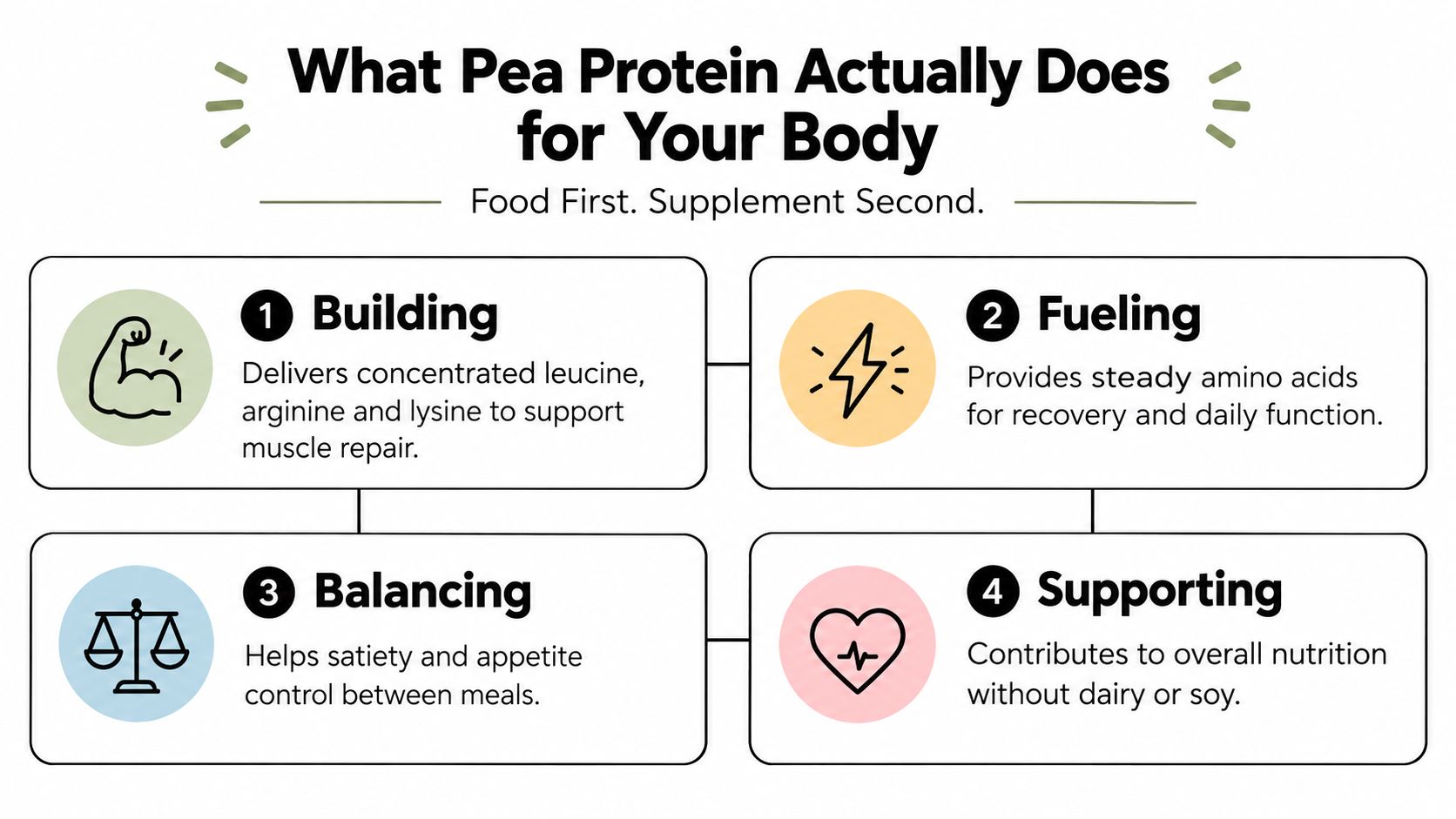
Pea protein works like a compact protein tool. It starts with yellow peas, then processing concentrates it into something you can add to a meal, shake, or savory crunchy snack. The format matters because a sweet shake may suit post-workout recovery, while a crisp can help manage the hungry stretch between lunch and dinner.
Four jobs explain most of its value
Building: Resistance training gives muscles a reason to adapt, while amino acids provide the raw materials for repair. Pea protein supplies essential amino acids, including leucine, lysine, and arginine. Its balance differs from whey, so total daily intake still matters. A complementary protein such as rice can also round out the amino-acid profile. This plant-protein review reports pea-protein concentrate PDCAAS values around 0.78 to 0.91, a DIAAS around 0.66, and optimized pea-and-rice blends reaching a PDCAAS of 1.00.
Filling: Protein can make the gap between meals easier to manage. A measured pea-protein preload increased satiety and reduced later intake in human research. In practice, that may make a savory crisp more useful than skipping protein and then grabbing crackers.
Replacing: Pea protein contains no dairy protein, giving dairy-free and plant-based eaters another way to build a high-protein routine without whey, casein, eggs, or soy. Pea products are not automatically comfortable for everyone, so tolerance still deserves attention.
Fitting: Texture influences whether a food matches the moment. A creamy shake is easy after training. A crunchy, savory option provides salt and bite when another sweet drink sounds unappealing.
For its macronutrient and amino-acid details, review these pea protein nutrition facts.
Practical rule: Match the format to the problem. Choose a shake when recovery is the priority. Choose a savory snack when between-meal hunger and repeated grazing are the priority. Pea protein supplies concentrated protein, but its value depends on how consistently and appropriately you use it.
Where Pea Protein Comes From and How It's Made
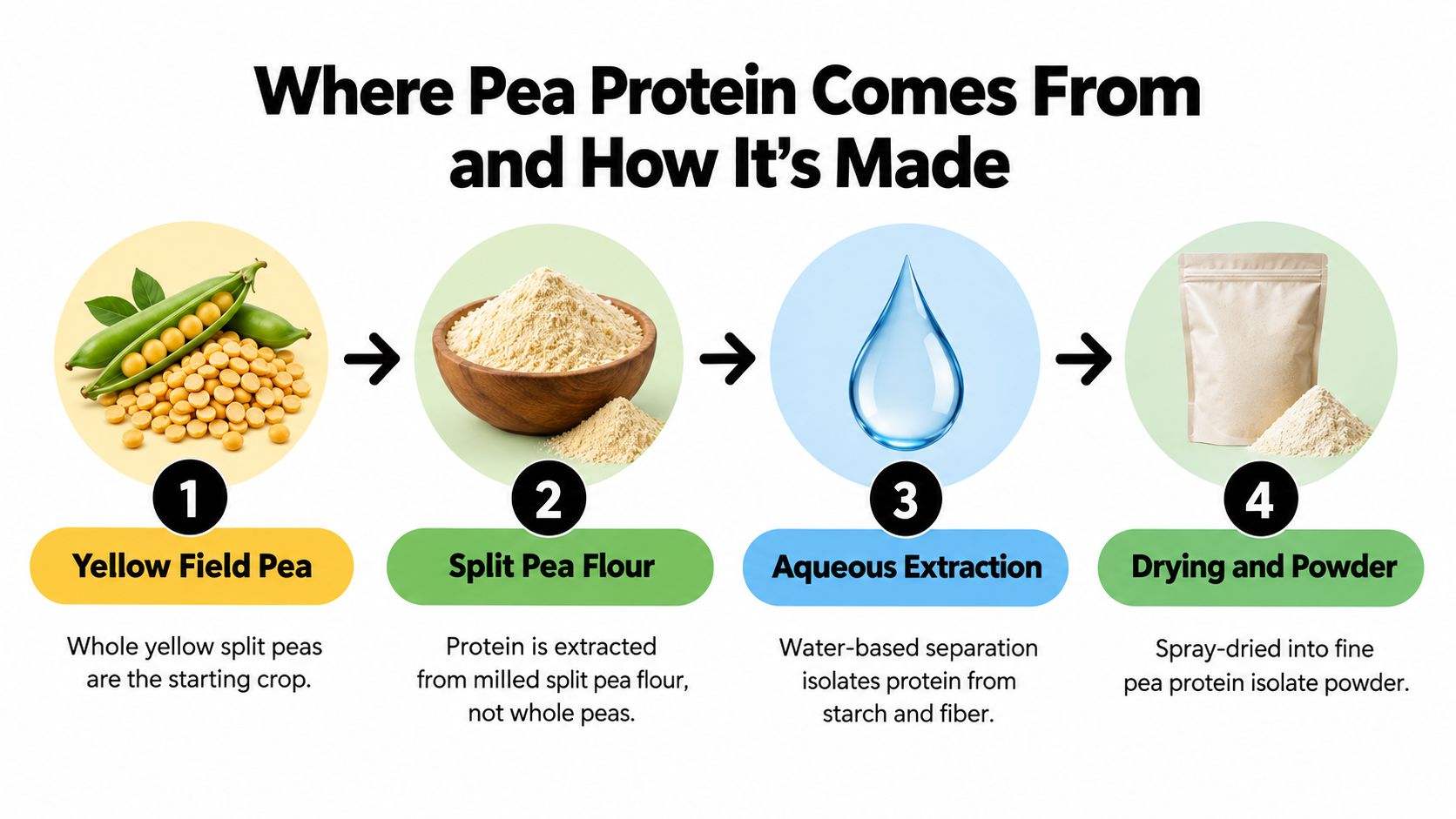
Pea protein begins as a yellow field pea, then becomes a concentrated ingredient through separation. Manufacturers usually mill the peas into flour before removing portions of the starch, fiber, and other components. The final powder therefore differs from a whole pea in both protein concentration and eating experience.
Concentrate and isolate are different ingredients
Water-based processing can separate protein from much of the pea's starch and fiber. A concentrate keeps more of the original non-protein material. An isolate receives further purification, so protein makes up a larger share while carbohydrate and fat make up less.
That choice changes how the product behaves. Isolate suits a protein-dense shake with a cleaner texture. Concentrate may retain more of the legume's original character, including a fuller taste or thicker mouthfeel. The ingredient list and nutrition panel matter more than the word “pea” on the front.
Processing can also reduce naturally occurring compounds in raw legumes that may interfere with digestion. Powdered pea protein will not feel identical to eating a large bowl of whole split peas, although individual tolerance still varies.
A savory crisp creates another useful format. Instead of turning the ingredient into a sweet drink, manufacturers can build pea protein into a crunchy, seasoned snack. That texture supplies bite and makes a small protein serving easier to use before hunger turns into grazing between meals.
You can compare ingredient quality, sourcing, testing, and flavoring with this guide to what to look for in raw protein. For a closer explanation of what pea protein isolate is, check how the extra purification affects the finished product.
Pea protein provides all the essential amino acids, though sulfur-containing amino acids and tryptophan can be limiting. Formulas may pair it with rice or another complementary plant protein to create a more balanced amino-acid pattern.
How Pea Protein Drives Satiety and Appetite Control
Pea protein can help control appetite before hunger dictates your next food choice. Taken as a preload, it gives your body protein ahead of the meal, allowing fullness signals time to develop. The timing matters because a serving consumed between meals may shape what you eat later, rather than adding protein after hunger has peaked.
A 2022 review found that pea protein consumed before eating increased satiety and lowered food intake within 30 to 120 minutes. Effects appeared as early as 30 minutes in some studies. One cited human study found that 15 grams of pea protein hydrolysate produced the greatest fullness and the strongest suppression of hunger, desire to eat, and thirst. Later trial summaries reported satiety effects with 20 grams, while 30 grams of pea protein isolate increased perceived satiety and reduced caloric intake over a 4-week period. These findings are summarized in the literature review.
Dose matters, and texture changes the experience
| Dose | Reported satiety finding | Reported intake effect |
|---|---|---|
| 15 g | Greatest fullness in one cited human study | Lower intake after the preload |
| 20 g | Satiety effects reported in later trial summaries | Intake effects varied by study |
| 30 g | Increased perceived satiety | Reduced caloric intake over a 4-week period |
These amounts are study findings, not a promise that every person will respond identically. Sleep, stress, training load, meal composition, and personal tolerance can all affect appetite. The practical lesson is simpler: a measured serving can create a noticeable fullness response, so appetite control does not have to rely on willpower alone.
Pea protein appears to stimulate gut signals linked with fullness. Its digestion is slower than whey but faster than casein, giving it a middle position between those familiar protein formats. A mechanistic study found that pea-protein meals produced satiety signaling comparable to dairy-protein meals. The human preload and digestion findings are discussed here.
Format can change how useful the preload feels. A sweet shake may be easy to drink quickly, while a crunchy, savory pea-protein snack takes more bites and offers a clear portion between lunch and dinner. That combination of timing, texture, and flavor can make it easier to stay full longer. Test one serving before your usual hunger window, then observe your next meal rather than assuming the same response every day.
Muscle Building, Iron, and Allergen Advantages
Pea protein supports different goals through different features. Amino acids matter for muscle repair, mineral content depends on the product, and tolerance depends on both the person and the formula.
Muscle support depends on the whole protein pattern
Pea protein supplies essential amino acids used in muscle repair after resistance training. Its amino-acid profile is useful, although methionine and tryptophan can be limiting and digestibility varies by product. Combining pea with rice protein helps cover those gaps, much like pairing two incomplete puzzle pieces to create a more balanced plant-based blend.
A controlled study found that breakfasts containing pea protein isolate or whey protein isolate produced comparable effects on appetite, energy expenditure, and 24-hour energy intake in healthy adult men. Cleveland Clinic's explainer summarizes the practical nutrition context and notes that one scoop of pea protein isolate provides about 15 to 20 grams of protein per 100 calories.
For training results, the protein source is only one part of the plan. A pea-based snack or shake works best when it helps you meet your overall protein intake consistently, alongside progressive resistance training and adequate food.
Iron and tolerance require label awareness
Some pea products contain iron, but the amount changes with the raw material and processing. Pea protein is not automatically an iron supplement. Check the Nutrition Facts panel instead of assuming that every powder, crisp, or snack offers the same mineral content.
Pea protein is naturally free of lactose and dairy proteins, so it can suit people who avoid milk. It also avoids soy and egg when those ingredients are absent from the formula. Plant-based labeling does not guarantee that a product suits everyone, however. People with a pea allergy should avoid it, and anyone managing allergies should read the full ingredient and allergen statements.
| Nutrient or feature | Pea isolate | Whey isolate | Soy isolate |
|---|---|---|---|
| Protein source | Yellow peas | Milk | Soybeans |
| Dairy-free | Yes | No | Yes |
| Lactose-free | Yes | Usually very low, but check the label | Yes |
| Plant-based | Yes | No | Yes |
| Amino-acid consideration | Methionine and tryptophan can be limiting | Strong amino-acid profile | Complementary plant option |
| Best fit | Dairy-free, plant-based, savory or sweet formats | Dairy-tolerant recovery routines | Plant-based routines that include soy |
The practical takeaway is to judge pea protein by protein density, amino-acid design, ingredients, and tolerance, not by the “plant” label alone. A savory, crunchy format may also be easier to portion between meals than a sweet drink, because chewing slows the snack and gives fullness a clearer physical signal.
Serving Size, Timing, and Practical Mixing Tips
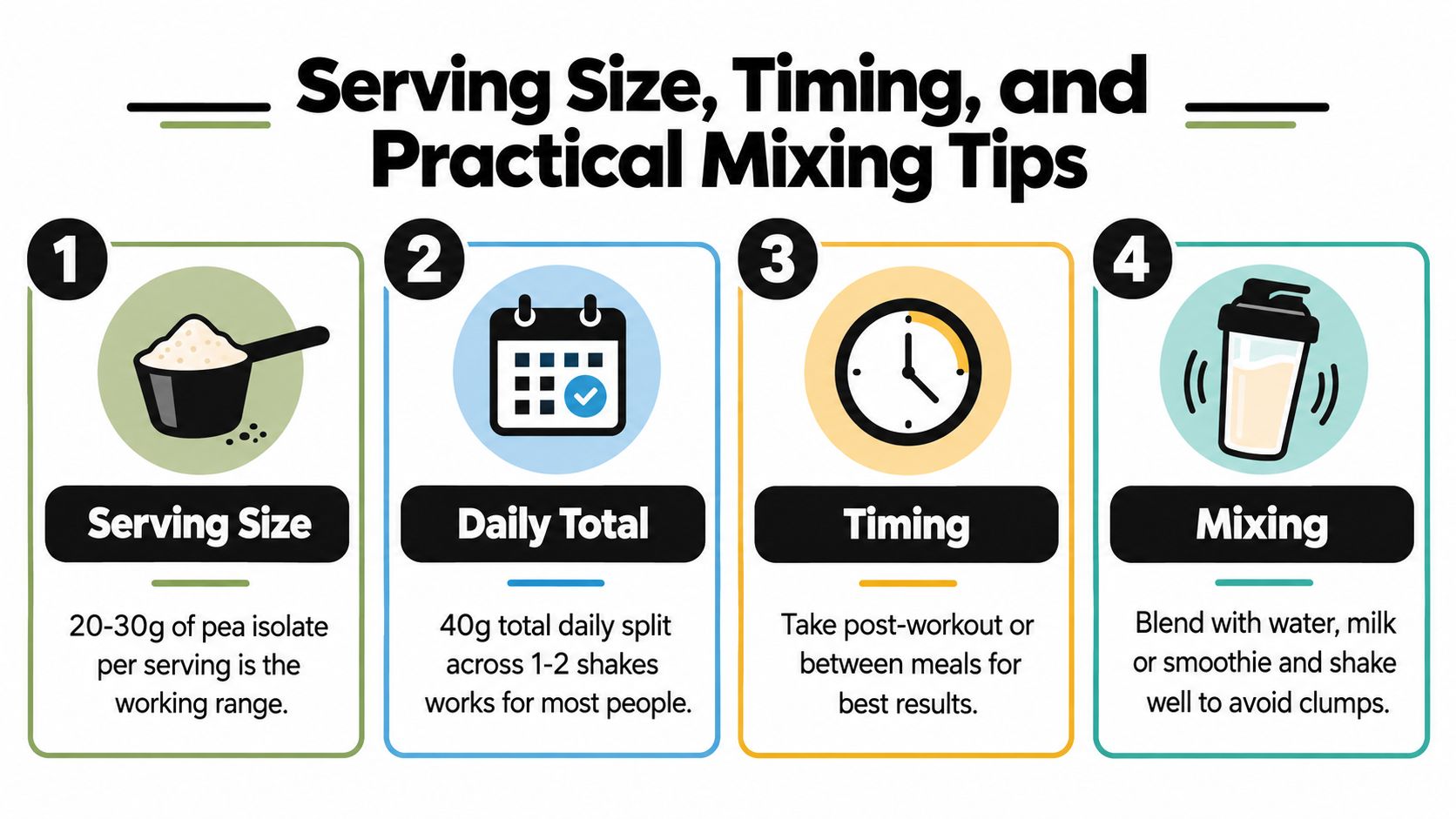
A repeatable serving gives pea protein a clear job. As covered in the satiety section above, trial findings used 20 grams, while another study found greater perceived satiety with 30 grams. For many adults, 20 to 30 grams per serving is a practical working range, adjusted for the product label and the rest of the day's diet.
Match the timing to the job
After training: Add pea protein to a shake or meal after lifting when convenience matters. The exact minute matters less than reaching a consistent daily protein intake.
Before training: A smaller serving can help if you train hungry or need a steadier snack. Use familiar ingredients and portions before demanding sessions, since a new, thick drink may feel heavy.
Between meals: An afternoon serving can reduce casual grazing between lunch and dinner. A measured, savory crunch may work better than another sweet shake when you want to chew, pause, and feel that you ate something substantial.
Pea protein usually tastes earthier and feels thicker than whey. Start with cold liquid, shake it with a whisk ball, and let it rest briefly before shaking again if the texture stays grainy. Banana, cocoa, vanilla, or frozen fruit can soften the flavor. Smoked paprika, nutritional yeast, garlic, or chili can make an unflavored powder suit a savory snack.
Try three formats:
- Recovery shake: Pea protein, cold liquid, cocoa, and frozen banana.
- Breakfast blend: Stir unflavored powder into cooked oats, then add cinnamon and fruit.
- Savory crunch: Scatter pea-protein crisps over soup, salad, or hummus.
The useful format is the one you can portion and use when hunger arrives. A crunchy savory preload also gives pea protein a different role from a quick drink, especially between meals.
Pea Protein Forms Compared and Where Crisps Fit In
The format can change how well pea protein manages hunger. A shake prioritizes speed after training, a bar prioritizes portability, and a crisp adds portion control with the chewing and crunch that a liquid serving cannot provide. That difference matters between meals, when appetite may reflect both hunger and the desire to eat something substantial.
| Format | Typical protein per serving | Typical calories | Texture | Best use case |
|---|---|---|---|---|
| Pea-protein crisps | About 10–15 g per 1 oz serving | About 100–150 | Crunchy | Savory preload, desk snack, or portable option |
| Pea-protein shake | About 20–30 g per scoop | About 100–160 before added ingredients | Creamy or thick | Post-workout protein and quick meal support |
| Pea-protein bar | About 10–20 g per bar | About 150–250 | Chewy | Travel or emergency fuel |
A crisp may work better than a sweet bar for someone who wants to avoid making every protein serving taste like dessert. A measured savory portion also creates a clearer stopping point than eating a large bar or drinking a shake quickly. Earlier satiety findings support testing pea protein before a meal, with servings of 15, 20, or 30 grams selected according to the product and purpose. That does not mean every crisp will outperform every bar. It means a crunchy preload deserves a practical trial when fullness between meals is the goal.
Match the format to the eating window
Use crisps in the afternoon or before training when you want a dry, savory snack that is easy to portion. Choose a shake after training when liquid, a shaker, and quick preparation are available. Keep bars for travel or situations where mixing and refrigeration are inconvenient, while checking for added sweeteners and texture agents.
Read the label before buying:
- Protein density: Compare protein with calories, not the protein number alone.
- Ingredient clarity: Look for a short list of recognizable ingredients.
- Protein source: Pea protein should be a meaningful ingredient rather than a minor addition.
- Salt and flavoring: Savory products can differ substantially, so check the Nutrition Facts panel.
- Texture fit: Choose the format you will want when hunger usually appears.
For fullness, timing and texture can matter as much as the powder itself. A crunchy savory preload gives pea protein a role beyond the usual quick drink.
Safety, Side Effects, and Common Misconceptions
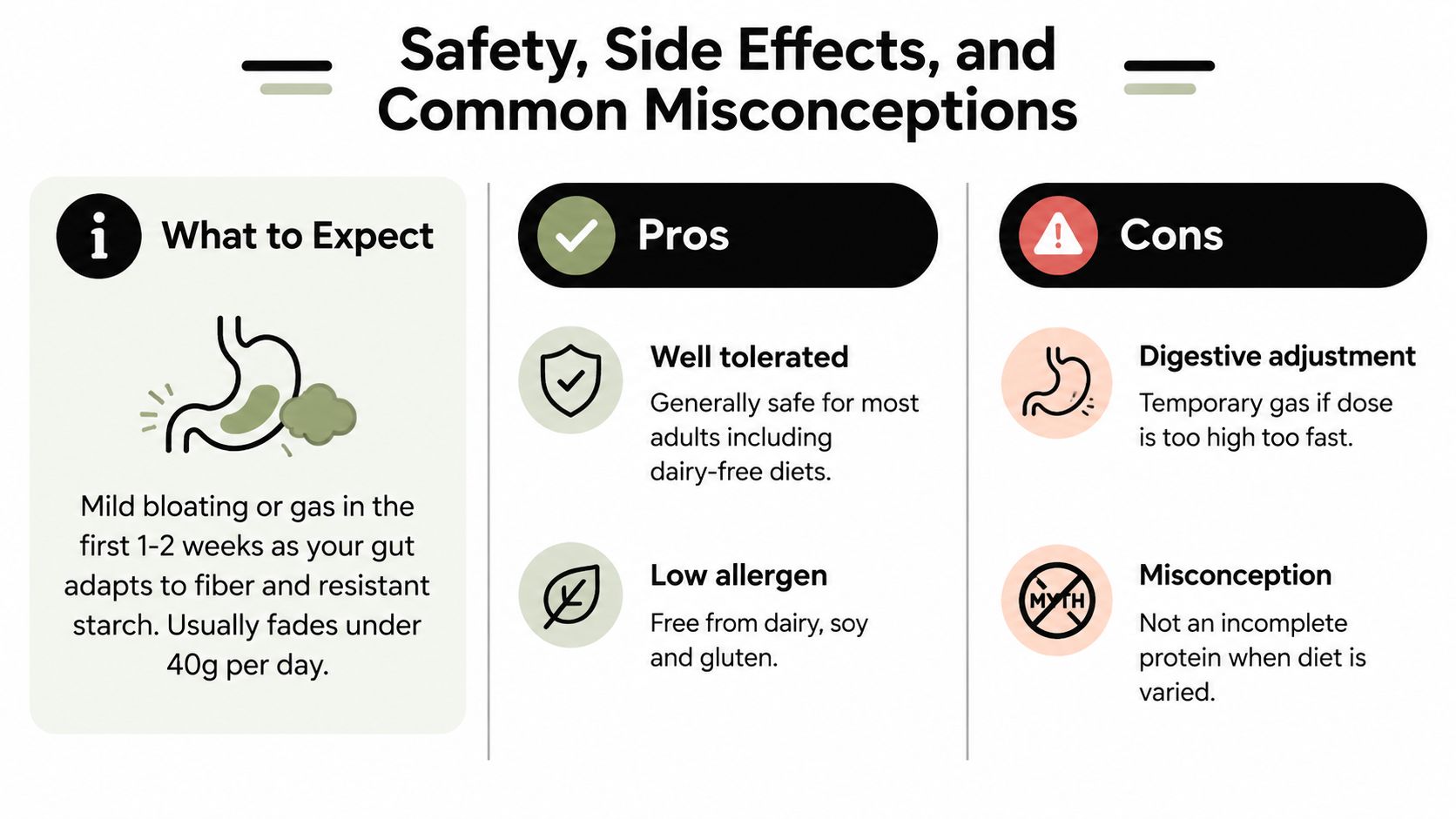
Pea protein is generally practical for many adults, but a plant source can still cause digestive symptoms. Gas, bloating, or heaviness may appear after introducing a new powder, particularly when the formula also contains added fiber, sugar alcohols, gums, or other texture ingredients. A sweet shake is not automatically easier to tolerate than a crunchy savory preload. The full ingredient list and the eating speed both matter.
Start with a smaller portion, sip it slowly, and assess the complete formula before blaming pea protein alone. If symptoms continue, stop using that product and discuss recurring digestive problems with a qualified healthcare professional.
The “incomplete protein” label needs context
Pea protein supplies all the essential amino acids, yet its proportions and digestibility differ from whey. In practice, that means a person training without a blend may still use pea protein effectively, while paying attention to total daily protein and variety across meals. Rice, oats, beans, nuts, seeds, and dairy or other animal proteins can provide complementary amino-acid patterns when included in the broader diet. The review of plant-protein quality supports this practical view: pea protein has a place in muscle-supporting eating patterns, and blending can improve amino-acid balance.
Lectins deserve a measured response. Raw legumes contain compounds that processing can reduce, and commercial pea-protein production processes the ingredient into a functional powder. Product quality still varies, so warnings about raw legumes should not be applied automatically to a properly manufactured protein product.
Heavy-metal concerns call for careful selection, not blanket fear. Look for transparent testing and reputable third-party certification when available, especially if powder is part of your daily routine.
Label reality: The ingredient list and independent testing reveal more than claims that every pea protein is easy, perfect, or dangerous.
A Simple Weekly Routine to Put Pea Protein to Work
Pea protein works best when it has a clear place in your day. Use it around training, breakfast, or the afternoon hunger window, then adjust the format to what helps you eat with control.
A flexible seven-day pattern
Day 1: After resistance training, include a pea-protein shake with your recovery meal. Keep the recipe familiar so the habit takes little effort.
Day 2: Try a savory, crunchy pea-protein snack in the afternoon, before you usually graze. Eating it as a preload gives protein and texture time to help you reach dinner with steadier hunger.
Day 3: Stir pea protein into oats or pancake batter. Breakfast becomes more protein-centered without adding a separate shake.
Day 4: If you lift again, repeat the post-training shake. A repeatable option is easier to follow than changing flavors every session.
Day 5: Use the savory snack between lunch and dinner. Compare your hunger and later food choices with days when you skipped the preload.
Day 6: Start with a protein-rich breakfast. Add a shake only when your meals are unlikely to cover your daily target.
Day 7: Leave the routine unstructured. Notice hunger, energy, digestion, and training readiness, then compare the day with your planned routine.
The goal is a useful pattern, not a perfect seven-day protocol.
At the store, check protein per serving, the named protein source, and whether the label avoids a proprietary blend. Review the ingredient and allergen information, and look for independent testing when available. If you have a medical condition, take appetite-affecting medication, are pregnant, or have a diagnosed allergy, ask a clinician or dietitian how pea protein fits your situation.
Texture can decide whether a plan survives real life. A sweet shake may become tiring, while a savory crunch can make an afternoon preload feel like food rather than another dessert. That difference may help you stay satisfied between meals and follow the routine more consistently.
Gym Snack makes plant-based savory protein snacks with textured pea protein for crunchy eating between meals or around training. To try the timing-and-texture approach without another dessert-style shake, visit Gym Snack and choose a savory option that fits your routine.