

It’s no accident that the term "30 gram protein bar" has become the new gold standard for functional snacking. This isn't just about packing in protein for the sake of it; this specific amount is incredibly effective for kickstarting muscle repair and keeping you feeling full for hours. It’s a powerful tool for anyone serious about their fitness or weight management goals.
Why 30 Grams Is the New Gold Standard
Take a walk down the snack aisle, and you'll see a quiet revolution happening. Those old-school, candy-like "energy" bars are being pushed aside for cleaner, more powerful options. The 30 gram protein bar is leading this charge, evolving from a niche product for bodybuilders into a mainstream nutritional staple.
So, what’s so special about 30 grams?
Think of your muscles after a workout. They're broken down and screaming for resources to rebuild. The science shows that consuming around 20-40 grams of high-quality protein in one sitting is the sweet spot for maximizing Muscle Protein Synthesis (MPS)—the biological process that repairs and builds new muscle tissue. Getting this right gives your body the exact building blocks it needs to recover and get stronger. Some great research-backed resources explain which supplements for gaining muscle mass work best alongside a solid diet.
To put that 30 gram number into perspective, let's see how it stacks up against other common "high-protein" snacks.
Quick Guide to High-Protein Snacks
This quick comparison shows just how significant a 30 gram serving of protein really is for meeting your daily goals.
| Snack Type | Typical Protein Content (per serving) | Best For |
|---|---|---|
| Greek Yogurt | 15-20 grams | A light meal or breakfast base |
| Handful of Almonds | 6-8 grams | A quick, low-impact crunch |
| Hard-Boiled Egg | 6 grams | A simple, whole-food option |
| Cottage Cheese (1 cup) | 25 grams | A substantial, slow-digesting snack |
| 30g Protein Snack | 30 grams | Max muscle synthesis & strong satiety |
As you can see, while other snacks contribute, a dedicated 30 gram option is in a class of its own for delivering a truly impactful dose of protein.
The Sweet Spot for Satiety and Goals
Beyond building muscle, 30 grams of protein is a powerhouse for fighting off hunger. Of the three macronutrients, protein is by far the most satiating. It simply makes you feel fuller for longer than carbs or fats do.
For anyone managing their weight—including those on GLP-1 medications—a high-protein snack can be a total game-changer. It helps crush cravings, stabilize energy, and prevent that afternoon slump that usually ends with a trip to the vending machine.
This isn't just a trend; it's a reflection of people getting smarter about nutrition. We want snacks that do more than fill a temporary void—we want food that actively works toward our health goals.
The market backs this up. What was a $6.7 billion global protein bar market in 2026 is on track to hit $9.7 billion by 2030. That growth is fueled by people just like you, who are looking for reliable ways to support muscle recovery and manage hunger.
To see how a 30g snack could fit into your routine, it helps to know your targets. You can learn more about how to calculate your personal protein needs and make every gram count.
How to Read a Protein Bar Label Like a Pro
Walking down the protein bar aisle can be overwhelming. The packaging is loud, the claims are bold, and it's tough to tell what's actually good for you and what’s just a glorified candy bar. If you want to make a smart choice, you have to learn to see past the flashy front-of-box marketing and get straight to the facts on the back.
Think of the nutrition label as the bar's real story. It’s where you’ll find out if that 30 gram protein bar is truly built to support your goals or if it’s secretly packed with junk that will derail them.
This simple decision tree is a great mental shortcut for sorting through your options on the fly.
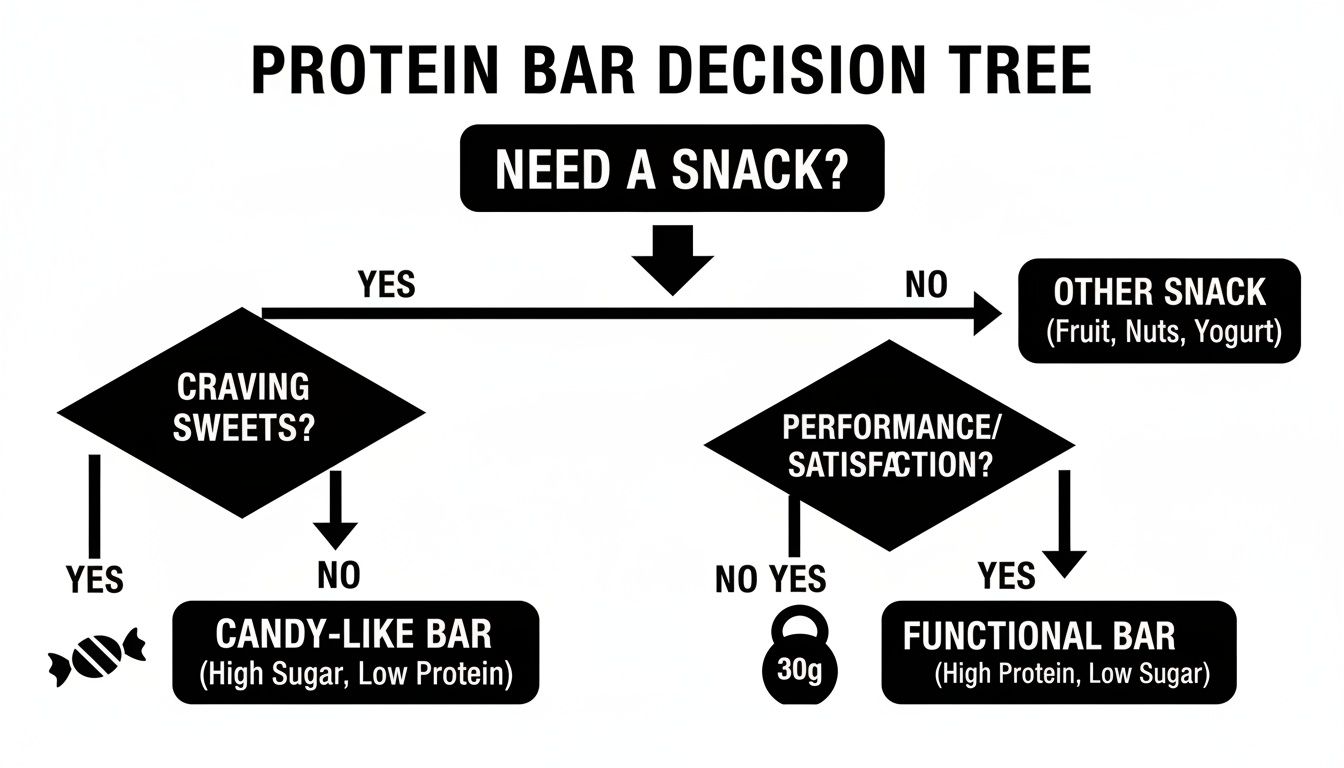
It boils down to a simple question: are you looking for a treat or for functional fuel? Getting clear on that first makes every other decision easier.
Start with the Protein Source
First things first, let's talk about where that protein is coming from. Not all protein sources are the same, and the type used will affect how your body digests it and the kinds of amino acids you get.
- Whey and Casein: These are the old-school dairy proteins. They’re both "complete," which means they have all nine essential amino acids your body needs. Whey is famous for being fast-digesting, making it a go-to for post-workout recovery. Casein, on the other hand, is a slow-and-steady protein, perfect for keeping you full for hours.
- Plant-Based Proteins: If you're avoiding dairy, you've got great options like pea, soy, or rice protein. Pea protein has really come into its own recently; it packs a complete amino acid profile and is generally very easy to digest.
While you're at it, double-check the total protein. If you're specifically seeking a 30 gram protein bar, make sure the label backs that up. It's amazing how many bars shout "high protein" on the front but only deliver 10-15 grams. To really master this, our guide to protein bar nutrition facts breaks it all down.
Watch Out for Red Flags
Once you’ve confirmed the protein is solid, it's time to play detective and look for the deal-breakers. This is where so many well-intentioned bars go wrong.
A truly functional protein bar should fuel your body, not just satisfy a sweet tooth. High sugar and unhealthy fats are the most common culprits that turn a good-intentioned snack into a nutritional liability.
Keep an eye out for these red flags on the ingredient list and nutrition panel:
- High Added Sugar: Find the "Added Sugars" line on the label. If you see a number higher than 10 grams, you're definitely wandering into dessert territory. Also, scan the first few ingredients for things like corn syrup, cane sugar, or fruit juice concentrate.
- Sugar Alcohols: To keep sugar low, many brands use sugar alcohols like erythritol, sorbitol, and maltitol. They have fewer calories, but for a lot of people, they come at the cost of major bloating and digestive issues.
- Saturated and Trans Fats: A little saturated fat is okay, but you want to keep it low. The real enemy is trans fat. If you see the words "hydrogenated oils" anywhere on the list, put the bar back. That's a non-negotiable.
- Seed Oils: A growing number of health-conscious people are actively avoiding industrial seed oils—think canola, sunflower, and soybean oil—because of concerns about inflammation. I personally look for bars made with cleaner fat sources.
Who Really Needs a 30 Gram Protein Bar?

When you hear "30 gram protein bar," it's easy to picture a pro bodybuilder in the middle of a heavy lifting session. But the reality is, you don't need to be an elite athlete to benefit. These powerful snacks are surprisingly versatile tools for all sorts of people with different goals.
Think of it this way: a high-protein snack isn't just about building muscle. It's a functional food that helps you manage hunger, stabilize your energy levels, and give your body the essential resources it needs to repair and run efficiently. Let's break down who really gets the most out of them.
Athletes and Fitness Enthusiasts
For anyone who moves their body, protein is your best friend. It’s the fundamental material your body uses to patch up the muscle fibers that are broken down during a workout. Downing a 30 gram protein bar within an hour or so after you exercise is a fantastic way to jump-start that recovery. You're giving your tired muscles exactly what they're crying out for, right when they need it most.
This is especially true if you’re into serious resistance training, where muscle repair and growth are the name of the game. To really maximize your gains, a good strategy is to aim for 20-30g of protein every three to four hours. It keeps your body in a constant state of muscle-building.
Individuals Managing Weight
When it comes to feeling full and satisfied, protein is the undisputed champ. A high-protein snack slows digestion and helps keep your hunger hormones in check, which is a game-changer for anyone trying to manage their weight. That's why a 30 gram protein bar can be such a powerful tool, even for those using GLP-1 medications to help control appetite.
A high-protein snack isn't just a way to curb hunger—it's a proactive strategy to prevent overeating at your next meal. By keeping you full and satisfied, it empowers you to make more mindful food choices.
This powerful sense of fullness is a major reason protein bars have become so popular. The global market is expected to jump from $5.18 billion in 2026 to $9.55 billion by 2034. It's the medium-protein bars—the category a 30g bar fits into perfectly—that are driving a lot of that growth. And increasingly, people are turning to plant-based proteins, which are great at supporting those fullness signals. You can dive deeper into these trends in this comprehensive report.
Busy Professionals and Students
Let’s be honest, life gets hectic. Between meetings, classes, and deadlines, a proper sit-down meal isn't always in the cards. In a pinch, a 30 gram protein bar can be an effective stand-in. It provides the kind of sustained energy you need to stay sharp and power through your day.
Unlike a sugary donut or candy bar that gives you a quick high followed by a miserable crash, a snack rich in protein helps keep your blood sugar stable. That means better focus, more productivity, and no 3 p.m. slump.
Vegans and Plant-Based Eaters
If you're following a plant-based diet, getting enough protein every day can sometimes feel like a puzzle. A well-made vegan 30 gram protein bar is a simple and reliable piece of that puzzle.
Today’s plant-based bars have come a long way. Many use high-quality protein sources like pea protein isolate, which delivers a complete profile of essential amino acids and is generally quite easy to digest. Better yet, they are often fortified with other nutrients that can be tricky to get on a vegan diet, like iron, making them a smart and convenient choice.
Strategic Timing for Maximum Results
So, you've got your hands on a 30 gram protein bar. Great. But to really unlock its power, you need to think about when you eat it. It’s not just about the protein; it's about the timing.
Think of it like this: your body has specific windows of opportunity when it’s ready to put nutrients to work. Nailing the timing turns a simple snack into a precision tool for building muscle, recovering faster, or just keeping hunger at bay.
The Workout Windows
For anyone who trains, the hours surrounding your workout are prime time for protein. A 30 gram protein bar is perfectly built to support you before you start and after you finish.
-
Pre-Workout Fuel: Hitting the gym on an empty stomach can backfire. Having a bar about an hour or two before you train gives your body a steady drip of amino acids to protect your muscles from breaking down. You also get a dose of carbs for quick energy, powering you through your session without that heavy, bogged-down feeling.
-
Post-Workout Recovery: You’ve probably heard of the "anabolic window." It’s that golden 30-60 minute period right after a workout when your muscles are screaming for nutrients to start the repair process. A 30-gram protein snack is exactly what they need to kickstart muscle protein synthesis, helping you recover faster and build back stronger.
Beyond the Gym
But these bars aren't just for gym rats. Their ability to promote fullness and provide steady energy makes them a secret weapon for navigating a busy life. As a general rule, if you're going more than four hours between meals, a smart snack can be a game-changer for your energy and focus.
A well-timed protein snack is your best defense against the 3 p.m. vending machine raid. It manages hunger and stabilizes your energy, keeping you in control and on track.
Think about these all-too-common situations:
-
Crushing Afternoon Cravings: We all know that mid-afternoon slump where a sugary disaster seems like a good idea. A 30 gram protein bar provides real, lasting satisfaction that crushes those cravings and helps you avoid overeating at dinner.
-
A Balanced Breakfast on the Go: When you're rushing out the door, it’s a much smarter choice than a sugary muffin or donut. It delivers the protein you need to feel full and focused all the way until lunch.
-
Boosting a Low-Protein Meal: Let's say lunch is just a simple salad or a veggie soup. A high-protein snack on the side can easily help you reach that ideal 30-gram protein goal for the meal, ensuring your body gets what it truly needs.
A Savory Solution to Sweet Snack Burnout
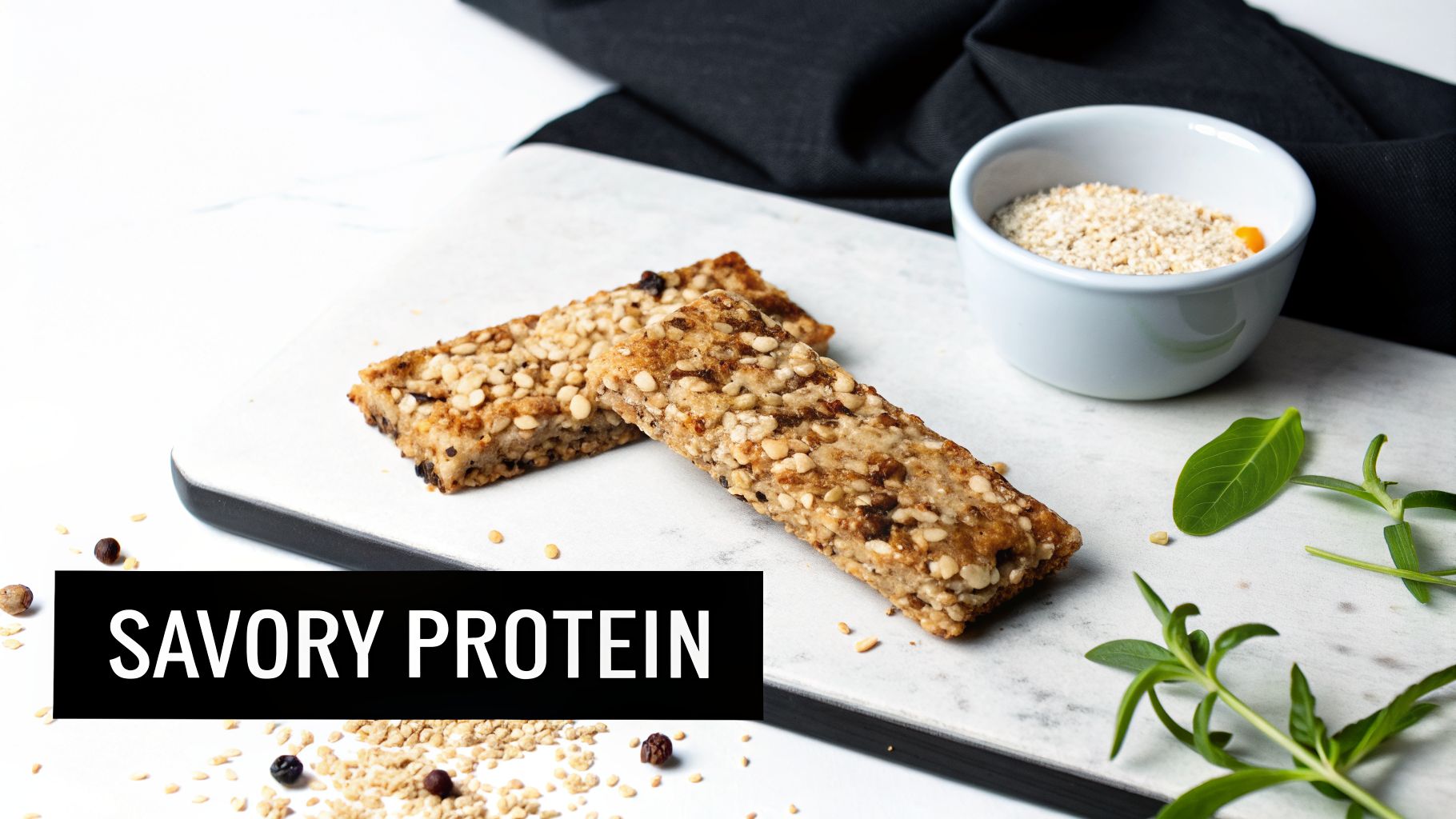
Let's be honest. If you've had to force down one too many chalky, sickeningly sweet protein bars, you know the feeling. It's a real problem we call flavor fatigue. For too long, the only high-protein options have been disguised as dessert, leaving many of us tired of snacks that taste like a candy bar but feel like an obligation.
This has created a real demand for something different. People are tired of the sweet-and-chewy routine and are actively looking for savory alternatives that hit the spot—something salty, crunchy, and genuinely satisfying. We want a snack that feels like a real treat, not another chore on our fitness checklist.
The Market is Craving Savory Protein
It's no surprise, then, that the market is finally catching up. This isn't just a fleeting trend; it's a direct response to what consumers want. The global protein bar sector, valued at $6.05 billion in 2026, is on track to more than double, hitting a projected $12.13 billion by 2035. A huge part of that growth is driven by people wanting less sugar—with 40% of consumers actively trying to avoid it—which clears the path for savory snacks to shine.
And that's where the next wave of protein snacks is making its mark. Brands are finally realizing that a 30 gram protein bar doesn't have to be another chocolate-coated brick.
The future of protein isn't just about hitting your macros. It’s about delivering an enjoyable eating experience with clean ingredients and flavors you actually look forward to.
This new mindset moves away from the old formula of whey protein and artificial sweeteners. Instead, the focus is on whole-food ingredients, clean plant-based proteins, and the kind of bold, savory flavors you'd find in your favorite pantry snacks.
Gym Snack: A New Way to Snack
Gym Snack was born from this exact frustration. We looked around and saw a huge gap in the market: where was the snack that packed a serious protein punch, tasted amazing, and wasn't filled with sugar, common allergens, or other junk?
So, we made it. But it's not a bar. It’s a bag of unbelievably crunchy, savory, cheesy-flavored bites that delivers over 30 grams of protein per serving. This isn't just an alternative; it's a complete redefinition of what a high-protein snack can be.
To see just how different it is, let's put it head-to-head with the standard protein bar.
Traditional Protein Bar vs. Gym Snack Savory Protein
| Feature | Typical 30g Protein Bar | Gym Snack (30g+ Protein per Bag) |
|---|---|---|
| Flavor Profile | Sweet, often with a chalky aftertaste | Savory, with bold cheddar cheeze flavors |
| Texture | Dense, chewy, sometimes tough | Crunchy, light, and satisfying |
| Protein Source | Often whey (dairy) or soy | Clean, plant-based pea protein |
| Allergens | Frequently contains dairy, soy, gluten | Free from dairy, soy, and gluten |
| Fats | May contain seed oils (canola, sunflower) | No seed oils |
| Sugar Content | Varies, can be high or use sugar alcohols | Low sugar, no artificial sweeteners |
As you can see, the differences are night and day.
Gym Snack is built on total ingredient transparency and, most importantly, incredible taste. Using a clean pea protein base and craveable flavors like Cheddar Cheeze and Jalapeño Cheddar Cheeze, we created the perfect solution for anyone who wants to meet their protein goals with a snack they genuinely love. It's time to learn more about our mission to create protein snacks that actually taste good.
Frequently Asked Questions About 30 Gram Protein Bars
When you see a 30 gram protein bar on the shelf, it's natural to have some questions. It's a big jump from the usual 15-20 gram snacks, and you want to make sure you're using it right. Let's clear up a few of the things people ask me about all the time.
Are 30 Grams of Protein Too Much at Once?
This is probably the number one question I get. People worry their body can't handle that much protein in one go, or that it will somehow go to waste.
For most active adults, the short answer is no, it's not too much. In fact, it’s often the perfect amount. Think of it this way: if you're trying to build muscle, you need to send a strong signal to your body. A tiny sprinkle of protein won't do much. You need a solid dose, and research shows that 20-40 grams is the sweet spot for triggering muscle protein synthesis—the actual process of repairing and growing muscle. A 30-gram bar lands right in the middle of that effective range.
For the average person, there's no harm in consuming 30 grams of protein in one sitting. It's a highly effective dose for kickstarting muscle recovery, crushing hunger, and helping you hit your daily nutrition goals.
Your body is incredibly efficient. It will absorb those amino acids and get them right where they need to go, whether that's to your biceps after a workout or to support your immune system.
Can I Eat a 30 Gram Protein Bar Every Day?
Absolutely, as long as it’s part of a balanced diet. The key is to think of a protein bar as a convenient supplement to your meals, not a replacement for whole foods like chicken, fish, beans, or tofu.
If you plan on making it a daily habit, you have to be picky about the bar you choose. We’ve already talked about how many are just candy bars in disguise, loaded with sugar and weird ingredients. A daily bar needs to be clean.
Here’s what to check for if you're eating one every day:
- Minimal Added Sugar: This isn't your daily dessert. Look for bars with very few grams of added sugar.
- Real Ingredients: If you can't pronounce half the ingredient list, put it back. You want to avoid fillers, sugar alcohols, and artificial junk.
- Fits Your Macros: Remember to account for the bar's calories, protein, carbs, and fat in your overall daily intake.
When you find a good one, a daily 30 gram protein bar can be a lifesaver for hitting your protein target, especially on those chaotic days when a proper meal just isn't happening.
Are Plant-Based 30g Protein Snacks as Effective as Whey?
This is a great question, and I'm happy to say that the old myth that plant protein is "inferior" is just that—a myth. The science is clear: high-quality plant proteins are just as effective for building muscle as whey.
Today's top-tier plant snacks often use pea protein, which is a powerhouse. It's a "complete" protein, which means it contains all nine essential amino acids your body needs to build muscle but can't make on its own. Functionally, this makes it just as good as whey for muscle repair and growth.
On top of that, plant-based options have some real perks. They're naturally lactose-free, so they're much easier on the stomach for people who get bloated from dairy. From an environmental standpoint, they're also a more sustainable choice. So yes, a well-formulated, plant-based 30 gram protein bar or snack gives you all the muscle-building benefits of whey, often without the digestive side effects.
Tired of the same sweet, chalky protein bars? Gym Snack offers a savory, crunchy alternative that delivers over 30 grams of clean, plant-based protein per bag without the junk. Check out our chef-inspired flavors and redefine your snack game at GymSnack.com.