

You’re standing in front of a shelf full of protein snacks, or scrolling through a dozen tabs online, trying to answer a few simple questions. Which one will help your goals? Which one tastes good enough that you’ll want to eat it again? Which one fits your stomach, your schedule, and your budget?
That’s where the barebells variety pack tends to catch people. It promises convenience, dessert-style flavor, and a protein hit that feels easier than mixing a shake or prepping food. For a lot of gym-goers, that combination is hard to ignore.
But a good-looking box isn’t the same thing as a good fit. Some people need a post-lift option they can keep in a backpack. Some want a midday snack that doesn’t lead to a sugar crash. Others are burned out on sweet bars entirely and want something savory instead. If you’re comparing options, it helps to look past the front label and understand what you’re getting.
Your Guide to Navigating the Protein Snack Aisle
A common scene goes like this. You finish training, you’re hungry, and you need something now. The gym smoothie bar is crowded, your next meal is hours away, and the snack shelf gives you too many choices at once.
One bar says “low sugar.” Another says “clean ingredients.” A third leans hard on flavor. Then you find Barebells, and the pitch is obvious. It looks like a treat, but it’s sold as a functional snack.
That appeal makes sense. People don’t just want protein. They want something they’ll eat consistently. The best plan on paper falls apart if the snack feels like punishment.
If you’re trying to compare products beyond branding, it helps to look at a broader list of best portable protein snacks so you can see where bars fit compared with jerky, dairy options, and other grab-and-go choices. It also helps to think in packs rather than single items, because variety changes how people use a snack over a week. A mixed option like a protein snack pack guide can make planning easier when you don’t want the same flavor every day.
Protein snacks work best when they solve a real problem. Missed meal, post-workout hunger, travel, or a hard-to-control craving.
Barebells variety packs are popular because they reduce one type of friction. You don’t have to commit to a full box of one flavor before knowing what you like. You can test several bars, figure out which ones fit your taste, and keep a few on hand for busy days.
That said, popularity doesn’t answer the important questions. You still need to know what’s in the box, what the macros mean, how the ingredients may affect you, and when a sweet dairy-based bar makes sense versus when another kind of protein snack might fit better.
What's Inside a Barebells Variety Pack
You are standing in a store after training, hungry enough to want something sweet but still trying to keep the day’s protein target on track. A Barebells variety pack is built for that exact moment. It gives you several dessert-style bars in one box, so you can match the bar to the situation instead of forcing one flavor to do every job.
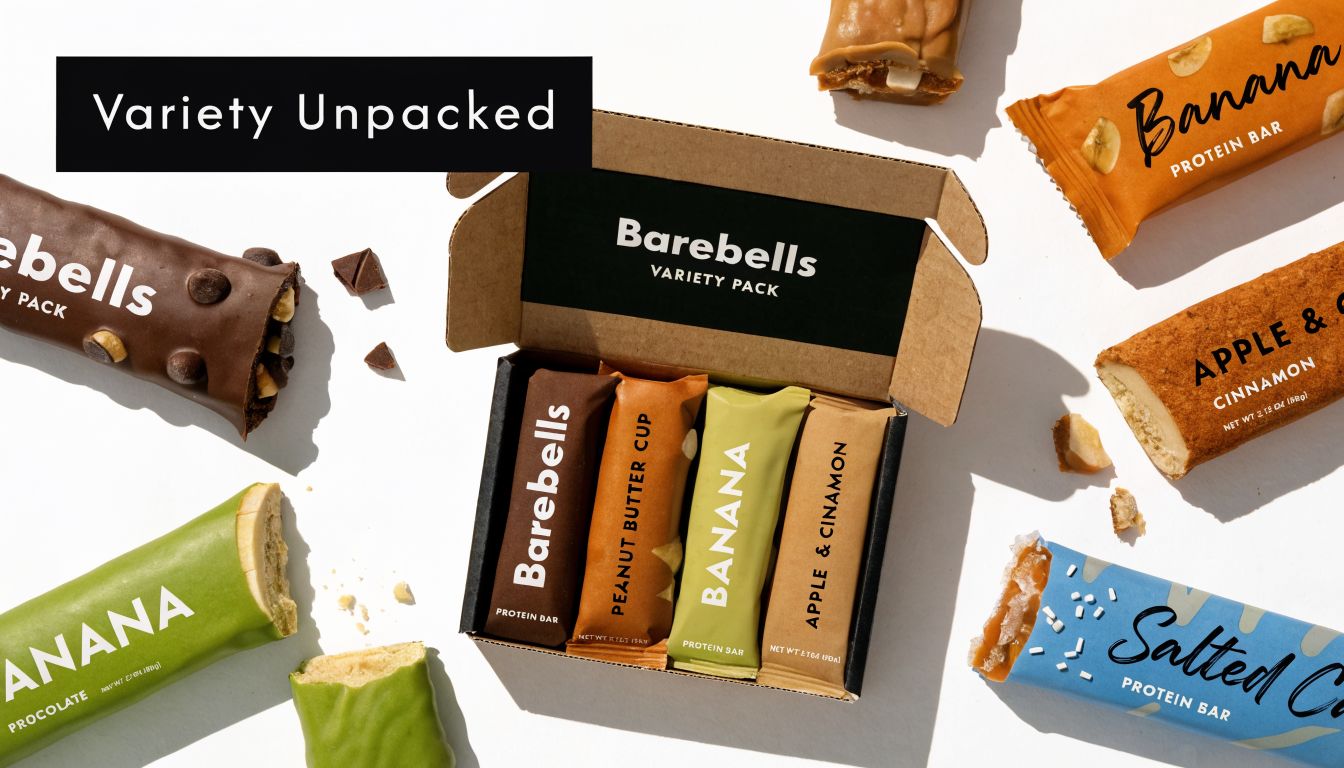
The standard setup most shoppers recognize is simple. You get 12 bars total, usually split across four flavors with three bars of each. The familiar mix includes Cookies & Cream, Caramel Cashew, Salty Peanut, and Chocolate Dough. Each bar uses the same 55g serving size and is positioned as a high-protein, no-added-sugar snack.
That consistency matters more than it may seem at first. A variety pack works like a meal-planning sampler. The flavors change, but the format stays stable, which makes it easier to use the box as part of a routine rather than as a random treat purchase.
The flavor mix is part of the strategy
Each flavor tends to fill a slightly different role over the week:
- Cookies & Cream suits people who want the safest, most familiar sweet option
- Caramel Cashew often appeals to buyers who like a softer candy-bar style texture
- Salty Peanut can satisfy the sweet-salty craving that sends many people toward vending machine snacks
- Chocolate Dough fits the richer dessert mood, especially later in the day
This is one reason variety packs can help with nutrition management. Repetition is useful for tracking macros, but too much repetition can make people abandon the plan altogether. A mixed box gives you controlled variety. You still know roughly what kind of snack you are reaching for, but you are less likely to get bored by the third or fourth bar.
What you are buying beyond the bars
A Barebells variety pack is not just a bundle discount or a first-time trial box. For many active people, it is a way to organize snack decisions in advance.
Here is the practical value:
- One box, several flavor moods
- Portions that are easy to carry in a gym bag, desk drawer, or car
- A predictable bar size that helps with daily intake planning
- A sweet option for days when fruit, yogurt, or jerky will not satisfy the craving
That last point is where context matters. Barebells solves a very specific problem. It gives you a convenient, sweet, dairy-based protein snack that feels closer to a candy bar than to traditional sports nutrition.
That does not make it the universal answer.
Some people do better with savory snacks because sweet bars can start to blur into dessert. Others want plant-based protein, or need a different texture entirely. In that case, products such as Gym Snack meet a different need. They are useful for people who want a crunchy, savory, plant-based option rather than a coated bar. The choice is less about which brand is “better” and more about which craving pattern you are trying to manage.
Why the variety format works for comparison
Buying a single-flavor box answers one question. Buying a variety pack answers several.
It helps you test which flavors work best:
- after training, when appetite is high
- between meals, when you need something steady but portable
- at night, when a dessert-style bar may keep you from raiding the pantry
If you are still learning how to read nutrition labels for protein snacks, the variety format also gives you a useful practice set. You can compare several bars from the same brand and notice what stays the same and what changes from flavor to flavor. That is especially helpful for understanding sugar content, sweetener choices, and how a “treat-like” bar can still fit into a structured eating plan.
If you want a quick visual of the product lineup and presentation style, this walk-through helps:
The short version is straightforward. A Barebells variety pack gives you predictable portions, multiple dessert-style flavors, and an easier way to test whether this type of protein bar fits your routine. For people managing sweet cravings while trying to keep protein intake steady, that can be very useful. For people who want savory or plant-based protein, it is often a sign to compare it with alternatives instead of treating it as a one-size-fits-all snack.
Deconstructing the Nutrition Label and Ingredients
You grab a bar because the wrapper promises protein. The label decides whether it fits your plan.
With a Barebells variety pack, the useful part is not just the protein number. It is the pattern. Across flavors, the bars stay broadly similar enough to make tracking easier, but the details still matter if you care about digestion, calories, ingredients, or how “dessert-like” the bar feels in your day.
Start with the job this bar is built to do. Barebells is a sweet, convenience-first protein snack. It works like a pre-portioned backup meal component. You get a meaningful protein dose in a small package, but you do not get the micronutrient range, volume, or ingredient simplicity of a whole-food meal.
Read the label in the right order
A lot of shoppers start with sugar because the front of the package pushes that message. A better order is protein first, total calories second, ingredients third, then the carbohydrate details.
That sequence keeps you from getting distracted by marketing language.
If you want to get faster at spotting what matters, this guide on how to read nutrition labels is a good refresher. Protein bars often look simple from the front and get more complicated once you turn them over.
Protein is the anchor
As noted earlier, Barebells keeps protein fairly consistent across flavors. That consistency is useful if you plan snacks the same way you plan training sets. You want fewer surprises.
For someone trying to hit a daily protein target, a variety pack can work like a controlled test kit. You can swap flavors without changing the main nutrition role of the snack. That makes it easier to use the bars strategically instead of randomly.
Calories and macros still shape the decision
A protein bar can be high in protein and still miss the mark for your goals if the rest of the label does not line up.
Barebells sits in the middle ground. It is more substantial than a light snack, but it is still narrower than a meal. That matters for people who buy bars with two very different expectations. One group wants appetite control between meals. Another wants a low-calorie add-on. Those are not the same use case.
Flavor differences also matter. Some bars run a little higher in calories, fat, or sodium than others. The gap may be small, but small differences add up if you eat the product often. If you use a variety pack a few times per week, that variation probably matters less. If you use it daily, it is worth checking each flavor instead of assuming every bar is identical.
Low sugar does not mean low impact
This is the label area that confuses people most.
A bar can be low in sugar and still taste very sweet because sweetness can come from sugar alcohols and other sweeteners rather than from sugar alone. That is why “1 gram of sugar” does not automatically mean “light” or “simple.” You still need to look at total carbohydrate and the ingredient list.
For some people, sugar alcohols are no big deal. For others, they are the reason a bar tastes fine but sits badly. If you have ever felt bloated after a protein bar, this is one of the first places to look.
If you need a simple primer on understanding sugar content, that background helps clarify why a product can be marketed as low sugar while still tasting like a candy bar.
Ingredients explain texture, tolerance, and fit
Macros tell you what the bar does on paper. Ingredients tell you how it may feel in real life.
Barebells uses dairy-based protein sources and includes collagen-based ingredients in some bars. That helps explain the soft, chewy texture people often like. It also tells you the product is not vegan and may not work well for people avoiding dairy or animal-derived ingredients.
Common watch-outs include:
- Dairy ingredients for people with milk sensitivity
- Peanuts or flavor-specific allergens for people who need strict avoidance
- Sugar alcohols for people with sensitive digestion
- Sweetener-heavy formulas for people who prefer less processed snacks
The variety pack becomes more than a flavor sampler. It becomes a tolerance test. One flavor may fit you well, while another may not, even if the overall macro profile looks similar.
Use the ingredient list to compare categories, not just brands
This is also the point where market context matters.
Barebells is trying to solve a sweet craving while keeping protein high. That is a very specific job. A savory, plant-based option such as Gym Snack solves a different one. It may appeal more to someone who wants a whole-food-leaning snack profile, avoids dairy, prefers savory over dessert-style bars, or wants protein support without the candy-bar format.
So the better question is not “Which snack is healthiest?” The better question is “What craving, dietary need, and routine problem am I trying to solve?”
Use this quick filter:
- Choose Barebells if you want a sweet, portable protein bar with predictable macros.
- Compare plant-based or savory options if dairy, sweetness, or sugar alcohol tolerance is a problem.
- Read ingredients as carefully as protein grams if digestion and food preference matter to you.
That is how the label becomes useful. A Barebells variety pack is not just a box of flavors. It is a nutrition management tool for sweet-snack moments, and it makes the most sense when you compare it with the alternatives built for different cravings and dietary needs.
How Barebells Supports Your Fitness and Diet Goals
You finish a lift, head straight into meetings, and realize dinner is still hours away. That is the kind of moment a Barebells variety pack can solve well. It gives you a ready protein option before hunger turns a small gap in your plan into a full detour.
Used well, the pack works less like a treat box and more like a control panel for your routine. You can keep a few bars at work, one in a gym bag, and one in the car, then use them for the specific problem in front of you. Recovery. A long afternoon. A dessert craving that could easily turn into several hundred unplanned calories.
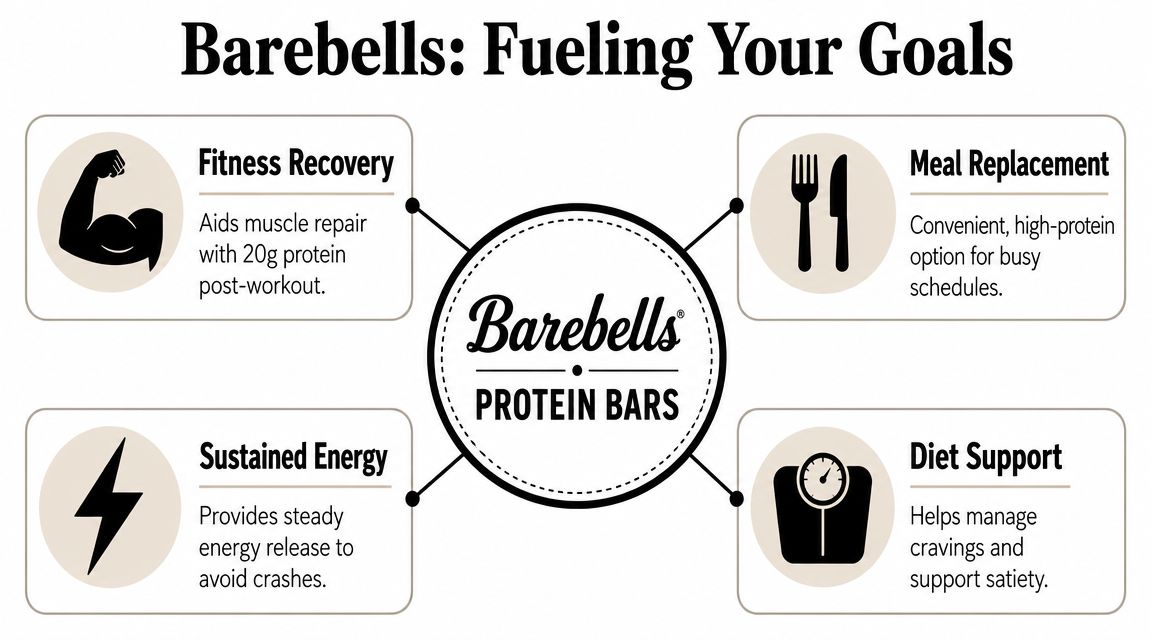
After lifting
Post-workout is one of the clearest fits.
As noted earlier, Barebells gives you a meaningful serving of protein in a format that travels easily and needs no prep. If you cannot get to a full meal soon after training, that can help close the gap. Protein timing is often less about chasing a perfect anabolic window and more about making sure your day does not drift too far without a solid protein feeding.
The practical point is simple. A good option you have with you beats an ideal option sitting in your fridge at home.
Before training
Some people also use Barebells before a workout, but this takes a little more trial and error. A sweet, chewy bar can feel satisfying if you train after work and need something structured first. For someone with a sensitive stomach, the same bar may sit too heavy before squats, running, or high-intensity intervals.
That is why the variety pack can be useful for more than flavor testing. It lets you test timing. One person may do well eating a bar 60 to 90 minutes before lifting, while another may save it for afterward and choose fruit or toast before training instead.
During busy workdays
A lot of nutrition plans fail in the middle of ordinary life, not in the gym.
If lunch was light and dinner is late, a protein bar can act like a bridge between meals. The goal is not to turn bars into the center of your diet. The goal is to prevent the kind of hunger that makes portion control feel impossible. In that role, mixed flavors help with adherence because repeated intake gets easier when every bar does not taste the same.
Here is where the variety pack earns its keep:
- Post-workout: covers a missed meal window
- Mid-afternoon: reduces the urge to raid the vending machine
- Travel days: gives you a predictable backup when options are weak
- Sweet cravings: offers a more structured choice than dessert grazing
For weight management
Barebells can support fat loss, but only in the same way a good meal container or food scale can. It is a tool, not a result.
Its main advantage is appetite management with a dessert-style profile. For people who struggle most with sweet cravings, that matters. A bar that feels satisfying can make a calorie target easier to stick to than a snack that looks better on paper but leaves you hunting for cookies an hour later.
The bigger skill is building a repeatable system. Snack choice is one part of that system, along with meal timing, total intake, and consistency across ordinary days. If that is your focus, this overview of a smarter weight loss technique is useful because it focuses on habits and method rather than product hype.
Where Barebells fits, and where it does not
Barebells works best as support. It can help you hit protein targets, smooth out long gaps between meals, and replace some less structured sweets. It is less useful if your main issue is wanting savory food, avoiding dairy, or preferring a less processed snack style.
That distinction matters. Barebells solves a sweet-snack problem. A savory or plant-based option solves a different problem entirely. If you want examples outside the candy-bar style format, these high-protein plant-based snacks show how different the category can look when the craving is salty, crunchy, or dairy-free.
A good nutrition strategy matches the snack to the situation. Barebells can be a strong choice for convenient, sweet protein support. It should sit alongside, not replace, other options that meet different cravings, digestion needs, and food preferences.
Exploring Plant-Based and Savory Snack Alternatives
A lot of people assume the protein-snack category is basically one thing. Sweet bars in different wrappers. That’s not true, and it’s one reason many lifters eventually hit flavor fatigue.
If you’ve been eating chocolate, cookie, brownie, peanut butter, and caramel flavored products for weeks, your body may still want protein while your palate wants something completely different. That’s often when savory snacks start making more sense.
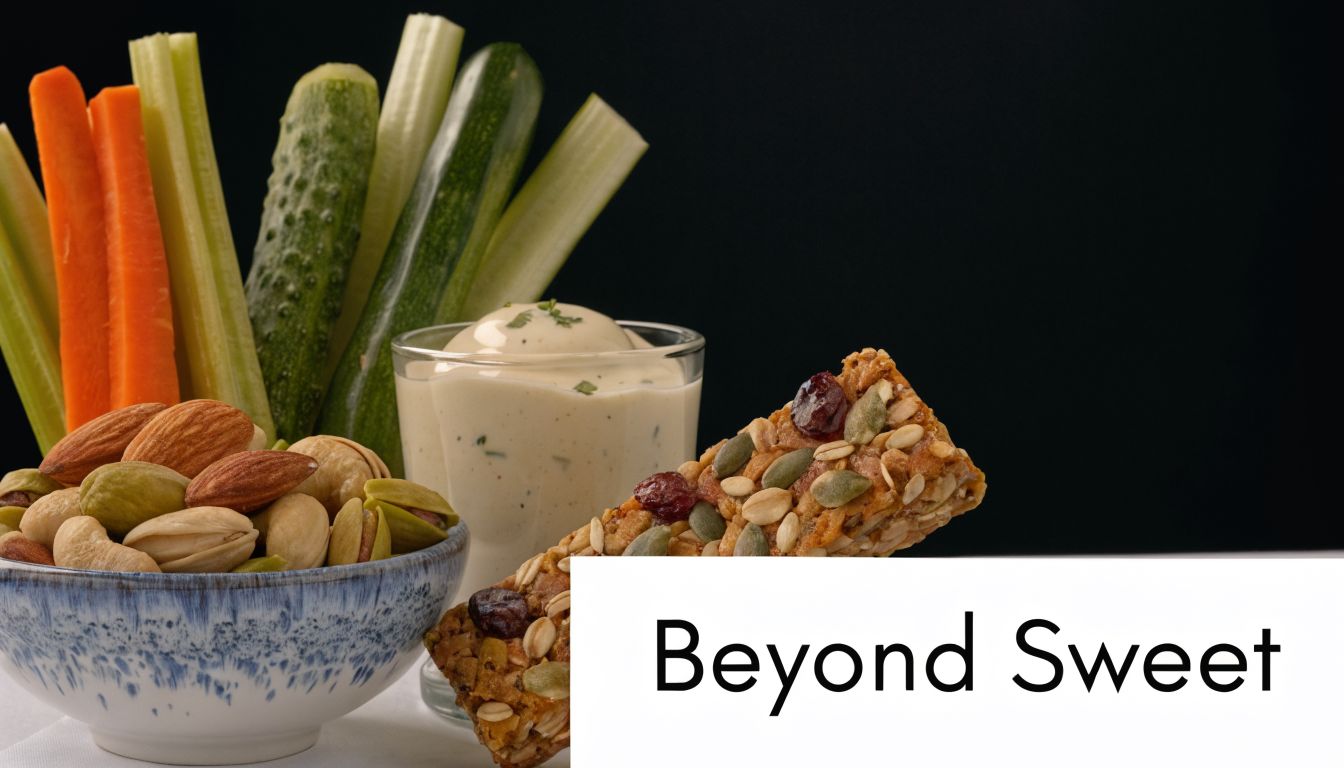
Sweet bar fatigue is real
Barebells leans into indulgent flavor. For many people, that’s the whole appeal. It can feel like a candy-bar substitute with better macros.
But the same feature can become the downside. If every protein product in your routine tastes like dessert, you may stop wanting dessert-style protein altogether. That doesn’t mean you need less protein. It means you need a different sensory experience.
Savory snacks solve a different problem:
- Craving relief: not everyone wants sweet after a workout
- Texture contrast: crunch can feel more satisfying than chew
- Meal compatibility: savory snacks often fit better alongside lunch-type foods
Plant-based changes the decision
The bigger divide isn’t just sweet versus savory. It’s also dairy-based versus plant-based.
Barebells uses dairy and collagen-based ingredients. That works for many omnivores, but not for people who avoid animal-derived ingredients or who don’t tolerate dairy well. For those people, the right comparison isn’t “Which Barebells flavor should I buy?” It’s “Should I be using this category at all, or do I need another format?”
Plant-based protein snacks can fill that gap. They may suit people who want:
- No dairy
- No collagen
- A different ingredient profile
- A less candy-like eating experience
If you want a broader look at options in that category, this guide to high-protein plant-based snacks is a useful place to compare formats and see how bars differ from crunchy savory choices.
Texture matters more than people expect
Comparing snacks by protein number first is common. That’s logical, but incomplete.
Texture changes satiety and satisfaction. A soft, chewy bar and a crunchy savory snack may both fit a high-protein eating pattern, but they don’t scratch the same itch. One feels like a treat or dessert replacement. The other feels closer to chips, crackers, or a snack mix.
That matters in actual situations. If your biggest challenge is late-night sweets, a dessert-style bar may help. If your problem is that you want something salty and crunchy in the afternoon, a sweet bar may technically fit your macros but still leave you unsatisfied.
A protein snack should match the craving you’re actually having. Otherwise, you may eat the bar and keep searching the pantry.
Building a mixed snack strategy
You don’t need to pick one forever snack and force every craving into it. A smarter approach is to build a small rotation.
A useful rotation often looks like this:
- Sweet bar option for dessert-like cravings or post-lift convenience
- Savory protein option for saltier moods and crunch cravings
- Whole-food backup like yogurt, eggs, or leftovers when you have time
That approach helps prevent burnout. It also makes your plan more sustainable because it reflects how people really eat. Appetite isn’t identical every day.
For someone who enjoys Barebells, the main question isn’t whether alternatives exist. They do. However, the question is whether a sweet dairy-based bar covers all your snack situations. For many people, it doesn’t. That’s why looking at plant-based and savory alternatives isn’t about replacing Barebells. It’s about filling the gaps Barebells doesn’t cover.
Making the Right Protein Snack Choice for You
You don’t need a universal winner. You need the option that fits your body, your cravings, and the way your week goes.
The easiest mistake is treating all protein snacks as interchangeable. They’re not. A sweet, chewy dairy-based bar serves a different purpose than a savory, crunchy plant-based snack. Once you accept that, the decision gets simpler.
Choose a Barebells variety pack if
A barebells variety pack makes sense when flavor is a major factor in adherence. If you’re the kind of person who skips protein snacks because they taste dry or artificial, Barebells may feel easier to stick with.
It’s also a practical fit if you:
- Want dessert-style flavors: Cookies & Cream, Caramel Cashew, Salty Peanut, and Chocolate Dough give you range.
- Prefer simple tracking: the consistent protein amount across bars makes planning straightforward.
- Need convenience: bars are easy to keep in a gym bag, desk drawer, or car.
- Like trying before committing: the mixed box helps you find favorites without buying a single-flavor case first.
This is often the right choice for omnivores who tolerate dairy well and want a snack that feels more like a treat than a chore.
Look elsewhere if
Barebells won’t fit everyone, and that’s normal.
You may want another option if:
- You avoid dairy or animal-derived ingredients
- You don’t tolerate sugar alcohols well
- You’re tired of sweet flavors
- You prefer a crunchy, savory snack over a soft bar
- You want your protein snack to feel closer to food than dessert
That last point matters. Some people love the candy-bar style experience. Others find it satisfying for a week and then want something salty, crisp, and less sweet.
Use your real-life test
If you’re stuck deciding, ask yourself these four questions:
-
When will I eat this most often
After training, between meetings, during travel, or at night? -
What craving am I trying to solve
Sweet, salty, creamy, crunchy, or pure hunger? -
What ingredients do I need to avoid or limit
Dairy, collagen, peanuts, sweeteners, or sugar alcohols? -
Will I still want this after the fifth time
Sustainability matters more than the first impression.
The most useful mindset
Protein snacks work best as part of a system, not as nutrition superheroes. You can use a variety pack strategically for sweet cravings and busy days, while still keeping other options available for different situations.
That’s usually the most realistic answer. Not “this snack is best,” but “this snack is best for this job.”
If Barebells matches your taste, your digestion, and your routine, it can be a very useful tool. If it doesn’t, that’s not a failure. It just means your ideal snack lives in a different category.
If you’ve realized you want a savory, crunchy, plant-based option instead of another sweet bar, take a look at Gym Snack. It’s built for people who want chef-inspired protein snacks with bold cheesy flavor, clean pea protein, and a different kind of satisfaction than dessert-style bars.