

Finding the best dairy free protein bars is about more than just grabbing the first one you see. It's about finding clean ingredients, a taste you actually enjoy, and high-quality, plant-based protein that works for your body. The best ones usually feature sources like pea or brown rice protein, keep the sugar low, and steer clear of additives that can irritate your gut.
If you're just looking for a quick answer, brands like Aloha, GoMacro, and savory options like Gym Snack consistently hit the mark with their balanced nutrition and allergen-conscious formulas.
Why Dairy-Free Protein Bars Are More Than a Trend
Walk down any grocery aisle these days, and it's impossible to miss—dairy-free protein bars have officially gone mainstream. They’ve moved from a tiny corner in the health food section to a prime spot, and for good reason. This isn't just another wellness fad; it's a fundamental shift in how people think about nutrition, driven by very real health needs and lifestyle choices.
For a huge number of people, going dairy-free isn't a choice at all. It's a necessity. Lactose intolerance or other sensitivities can lead to some seriously unpleasant digestive issues, making traditional whey-based bars a no-go.

But it's not just about avoiding discomfort. There’s a massive movement toward plant-forward and flexitarian eating, with people consciously adding more plant-based foods into their diets for ethical, environmental, and health benefits. We see this same trend everywhere, from coffee shops to supermarkets. For instance, detailed oat milk and dairy comparisons show just how much consumers are embracing plant-based alternatives in their daily routines.
All of this has created a huge demand for effective, gut-friendly fuel that delivers real performance without any compromises.
The Market Confirms the Movement
The numbers don't lie. The global market for vegan protein bars—a huge piece of the dairy-free puzzle—is expected to explode from USD 1.05 billion in 2025 to a massive USD 5.43 billion by 2035. This isn't just a small jump; it’s a reflection of a deep, lasting change in how we eat.
This makes perfect sense when you consider that up to 68% of the world's population has some degree of lactose malabsorption. It's a massive group of people looking for better options.
The hunt for a great dairy-free bar isn't just about avoiding whey anymore. It’s about finding clean, effective, and satisfying fuel that supports your health goals without wrecking your stomach.
To make things a little easier, let's break down the most common protein sources you'll find on the label.
Quick Guide to Top Dairy-Free Protein Sources
This table gives you a snapshot of what to look for and which protein source might be the best fit for your needs.
| Protein Source | Best For | Key Feature |
|---|---|---|
| Pea Protein | Muscle repair & allergen-conscious individuals | Complete amino acid profile, easy to digest |
| Nut Butters | Sustained energy & whole-food focus | Healthy fats and fiber for satiety |
| Brown Rice Protein | Post-workout recovery & sensitive stomachs | Hypoallergenic and smooth texture |
| Soy Protein | Budget-friendly & high-protein content | Cost-effective and widely available |
Each of these sources brings something different to the table, from pea protein's impressive amino acid lineup to the sustained energy you get from nut butters. Knowing the basics helps you zero in on the perfect bar for you.
How to Decode a Dairy-Free Protein Bar Label
Walking down the snack aisle can feel overwhelming. Every bar screams health claims from its flashy wrapper, making it tough to know what you’re actually getting. If you want to find the best dairy-free protein bars that truly fit your goals, your best bet is to ignore the front-of-package hype and learn how to read the label.
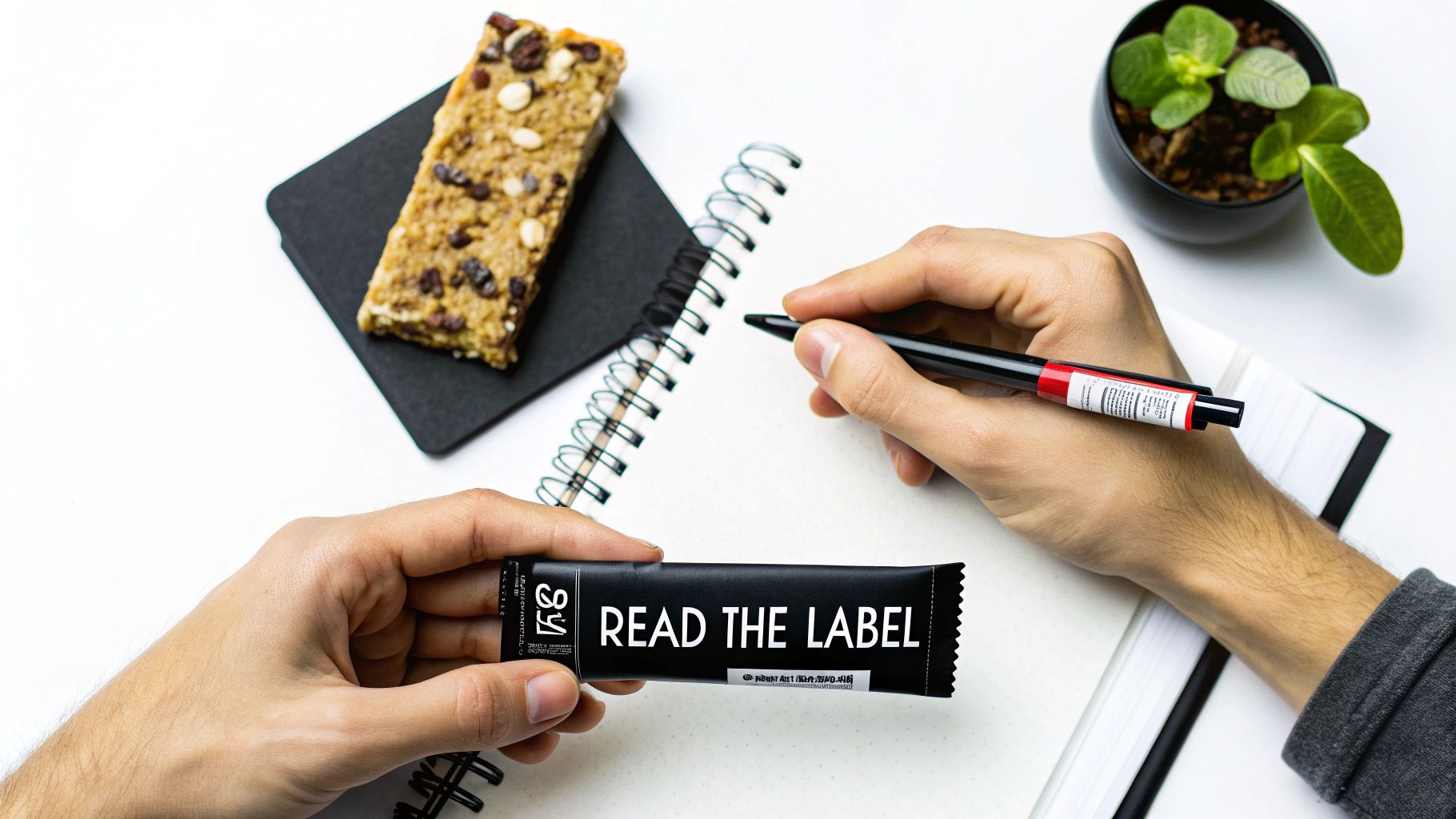
Start with the most important part: the protein source. Common plant-based options include pea, brown rice, hemp, and various nut butters, but they’re not all the same. Ideally, you want a bar built on a complete protein source, like pea protein, which contains all nine essential amino acids your body needs for muscle repair and growth.
Once you’ve confirmed the protein quality, your attention should shift to the macronutrient breakdown. It’s not just about chasing the highest protein number; it's about finding the right balance for what you need that day.
Analyzing the Macronutrients
A well-formulated bar has a smart ratio of protein, carbs, and fats. Here’s a quick cheat sheet for what to look for based on common goals:
- For Post-Workout Recovery: You’ll want at least 15-20 grams of protein to kickstart muscle protein synthesis. A decent amount of carbs is also helpful here to restore your glycogen stores.
- For Sustained Energy: Look for a balanced blend of protein, healthy fats (from nuts and seeds), and fiber. This trifecta slows down digestion, giving you a steady stream of energy without the dreaded sugar crash.
- For Weight Management: Protein and fiber are your best friends. These two nutrients work together to increase satiety, which is just a fancy way of saying they help you feel full and keep cravings in check.
Be careful of the "health halo." Many bars are marketed as healthy but are secretly packed with sugar. Always flip it over and check the "Added Sugars" line—try to stick to bars with less than 10 grams per serving.
Beyond the numbers, the ingredient list tells the real story. As a rule of thumb, a shorter list of ingredients you can actually recognize is a very good sign. It shows the brand is focused on whole foods, not processed fillers. For a deeper dive, our guide on how to read nutrition labels has even more pro tips.
Identifying Hidden Unwanted Ingredients
This is where things get tricky. A lot of bars use ingredients with healthy-sounding names to hide things you probably don't want. Spotting these is crucial for making a truly good choice.
Keep an eye out for:
- Sugar Alcohols: Things like erythritol, sorbitol, and xylitol are used to keep calorie counts low. While they might seem like a good idea, they’re notorious for causing digestive issues like bloating and gas in many people.
- Artificial Sweeteners: If you see sucralose or aspartame, you know you’re in for a chemical-like aftertaste. These just don't fit into a clean, whole-foods approach.
- Industrial Seed Oils: Soybean, corn, and canola oil are often used as cheap fillers and binders. It’s much better to choose bars that get their fats from whole sources like nuts and seeds, or from healthier oils like coconut or avocado oil.
At the end of the day, the best bar has a clean, transparent formula that gives you real nutrition without the hidden junk. Learning to look past the marketing and get comfortable with the nutrition panel empowers you to fuel your body with stuff you can actually trust.
A Practical Comparison of Plant Protein Sources
When you're hunting for the best dairy-free protein bar, it really boils down to the protein source inside. There are tons of options out there, but they are absolutely not created equal. To find what works for your body, your fitness goals, and your taste buds, you need to understand what makes each one tick. This isn't just about a simple pros-and-cons list; it's about knowing the specific situations where one protein clearly outshines another.
The market for these bars is exploding. Plant-based protein bars are on track to command a 36.3% share of the plant-based bar market by 2025, which is part of a massive US$9.4 billion industry. A huge driver of this growth is the fitness community's demand for high-protein fuel from sources like pea protein, which packs a complete amino acid profile. These bars are also a game-changer for the 30-50 million Americans who struggle with lactose and can't stomach traditional whey bars without digestive issues. For a deeper dive into these market trends, check out the data on persistencemarketresearch.com.
Pea Protein: The Allergen-Friendly Powerhouse
Pea protein has shot to the top of the plant-based world, and for very good reason. It’s extracted from yellow split peas and is naturally free of major allergens like dairy, soy, and gluten. This makes it an incredibly safe bet for almost anyone, especially those with food sensitivities.
But it's not just about what it's missing. Pea protein is one of the few plant sources that delivers a complete amino acid profile, meaning it has all nine essential amino acids your body needs to repair and build muscle. This makes it a fantastic choice for post-workout recovery. Another huge plus is its digestibility—pea protein isolate is usually smooth and far less likely to cause the bloating that some people get from other plant proteins. You can see how different options perform in our guide on the best plant protein for muscle gain.
Key Differentiator: The real magic of pea protein is its rare combination of being a complete, high-quality protein that's also hypoallergenic. It’s this unique blend that makes it a versatile and dependable foundation for performance-focused, gut-friendly snacks like Gym Snack.
Nut-Based Proteins: Whole-Food Nutrition with a Catch
Protein bars made with nuts—think almonds, peanuts, or cashews—offer a different kind of value. Instead of using a refined protein powder, they often rely on whole nut butters for their base. This approach gives you protein along with a dose of healthy fats and fiber, a trio that’s great for long-lasting energy and keeping you full.
The tradeoff, though, is a big one. Nut allergies are incredibly common and can be severe, which immediately rules these bars out for a lot of people. Even if you're not allergic, the higher fat content can make them feel heavy in your stomach, which isn't always ideal for a light pre-workout snack. From a texture standpoint, they're typically dense and chewy. While some find that satisfying, it also means they can get melty and oily in warm weather, making them less practical to carry around.
Scenario-Based Comparison
| Situation | Pea Protein Bar | Nut-Based Bar |
|---|---|---|
| Post-Workout Recovery | Ideal Choice. Delivers a complete amino acid profile for quick muscle repair without feeling heavy. | Good, but slower. Healthy fats can slightly slow down protein absorption. Better for sustained energy. |
| Allergy Concerns | Excellent. A safe harbor, free from the top allergens that affect most people. | High Risk. A non-starter for anyone with a nut allergy. |
| On-the-Go Snack | Very Practical. Tends to be more stable in different temperatures and won't turn into a mess. | Can be messy. Prone to getting oily or melting in your bag on a hot day. |
Soy Protein: The Economical but Controversial Choice
Soy protein has been a cornerstone of the plant-based market for decades, mostly because it’s cheap to produce and offers a complete amino acid profile. It's incredibly versatile and can be shaped into everything from isolates to crisps, which is why you see it in bars with all kinds of textures.
The problem is, soy comes with baggage. It's one of the top allergens, and there's an ongoing debate around its phytoestrogen content (though most research suggests moderate amounts are perfectly safe). On a more practical level, many people find soy hard to digest, and it has a distinct, sometimes "beany" flavor that's tough to cover up. While it's still a common ingredient, the arrival of better-tasting and more allergen-friendly options like pea protein has definitely shifted the tide.
The Rise of Savory Protein Snacks
Let's be honest. Have you ever stared at a wall of chocolate fudge and peanut butter cookie dough protein bars and just felt… over it? If so, you're definitely not alone. The market is absolutely flooded with dessert-flavored bars, creating a serious case of flavor fatigue. Sometimes, an overly sweet snack just doesn't cut it.
This has paved the way for something new and, frankly, much more satisfying. Welcome to the world of savory protein snacks. People are finally realizing that between-meal cravings aren't always for sugar. Often, what you really want is the rich, satisfying taste of a real meal, just packed into a convenient, high-protein snack.
Breaking Free From the Sugar Cycle
One of the biggest wins for savory snacks is their ability to help you escape the endless sugar cycle. Many sweet bars, even the "healthy" ones, are loaded with sugar alcohols or artificial sweeteners that can actually trigger more cravings for sweet things. Savory options offer a clean break from that.
They tackle your hunger head-on with bold, umami flavors that satisfy you without flicking on your brain's "sweet" switch. This isn't just a matter of taste; it’s a nutritional upgrade. Savory snacks tend to be made with whole-food ingredients and are far less likely to contain the strange fillers and sweeteners that are so common in dessert bars. The result is sustained energy, not a temporary sugar high followed by a crash.
The shift to savory protein snacks is a direct response to people wanting real food flavors. It’s about satisfying actual hunger with something salty and crunchy, not something that tastes like a candy bar.
Gym Snack: A Pioneer in Savory Fuel
Leading this savory charge is Gym Snack, a brand that totally gets it. Instead of creating another dessert knock-off, they focused on a crunchy, satisfying snack with bold cheesy flavors that genuinely crush cravings. With options like Cheddar Cheeze and Jalapeño Cheddar Cheeze, you get a powerful flavor punch that feels like an indulgence but is built for performance.
What really makes Gym Snack stand out is its commitment to clean, purposeful nutrition. Each bag is packed with high-quality pea protein, delivering over 15 grams per serving to help with muscle repair and keep you feeling full for hours. You won't find any soy, seed oils, or gluten—just a simple, allergen-conscious ingredient list you can trust. It’s the perfect post-workout refuel or midday bite to tide you over without the sugar. If you want to dive deeper into the benefits of savory options, check out this guide to high-protein savory snacks.
With its addictive crunch and robust flavor, Gym Snack proves that the best dairy free protein bars don't have to be bars at all—and they certainly don't have to be sweet.
Choosing the Right Bar for Your Specific Goal
It’s easy to grab any bar off the shelf, but not all of them are created equal. The best dairy-free protein bars for you will depend entirely on what you're trying to accomplish. Think about it: the fuel you need to power through a workout is worlds away from what your body needs to recover afterward.
The smartest way to cut through the noise is to start with your goal. Are you fueling up, recovering, or just trying to survive a busy afternoon? This simple shift in thinking turns a random snack into a strategic tool for your health. You’re no longer just eating; you’re eating with a purpose.
Pre-Workout Fuel
Before you hit the gym, the last thing you want is a heavy, dense bar sitting in your stomach. Your goal here is all about quick, accessible energy that won't weigh you down.
- What to Look For: Aim for a bar with a good dose of simple carbohydrates and a moderate amount of a fast-digesting protein, like pea protein isolate.
- Why It Works: Carbs are your body's go-to for immediate fuel, letting you push harder. A bit of protein helps protect your muscles from breaking down during intense exercise. Steer clear of bars loaded with fat and fiber right before a workout—they take too long to digest.
Post-Workout Recovery
Once you've finished your last set, the game changes completely. Your focus shifts from quick energy to serious muscle repair and replenishment. This is prime time for a high-protein, nutrient-dense bar.
Think of your muscles as sponges after a tough session, ready to soak up amino acids to rebuild and get stronger. Getting a solid hit of protein within an hour or two of finishing is key to making the most of this recovery window.
The post-workout period is when a high-quality, complete protein source is non-negotiable. Look for bars with at least 15-20 grams of protein from a source like pea protein to kickstart muscle protein synthesis effectively.
This is exactly where a savory option like Gym Snack really delivers. With 15g+ of protein per serving from clean pea protein, it gives your muscles the essential building blocks they're screaming for. Plus, its satisfying crunch and savory flavor crush that post-workout hunger without sending you on a sugar-fueled rollercoaster.
This simple decision tree can help you figure out what to reach for based on how you're feeling.
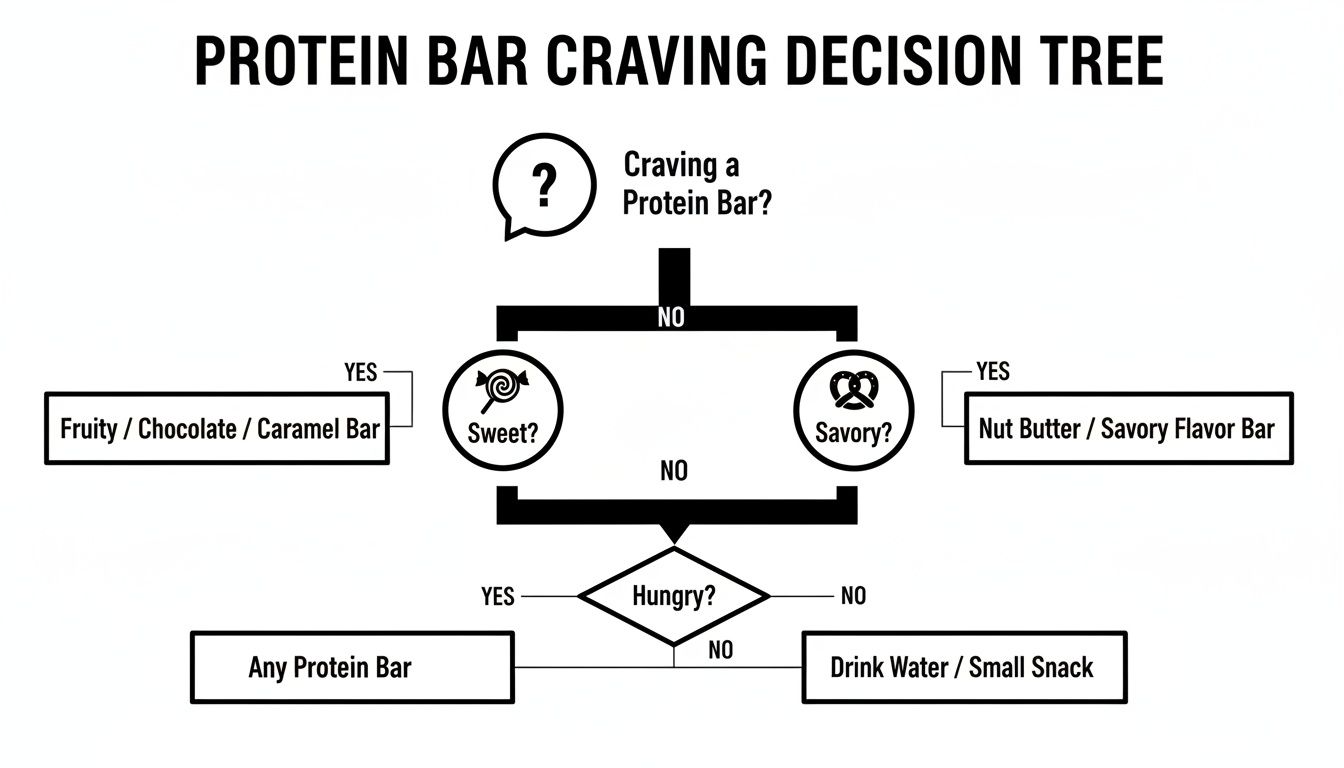
Sometimes the choice is as simple as knowing whether you want something sweet or savory to hit the spot.
On-the-Go Sustenance
What about those chaotic days when you're jumping between meetings and lunch is a distant dream? For those moments, you need a bar that’s built for sustained energy, not a quick spike and crash.
Look for a balanced macronutrient profile that checks all the boxes:
- Protein: To keep you feeling full and satisfied.
- Healthy Fats: Think nuts and seeds, which help slow down digestion.
- Fiber: For added fullness and to keep your blood sugar stable.
This trifecta provides a steady, slow release of energy that can carry you through the afternoon slump. A savory, high-protein snack like Gym Snack is perfect here, giving you that lasting fullness without the sugar overload you get from most sweet bars.
If you want to dig deeper into what works best for your body, exploring personalized nutrition and dietitian consultations can offer expert guidance tailored to your specific needs. By matching your bar to your goal, you’re turning a simple snack into a powerful part of your health and fitness strategy.
Got Questions About Dairy-Free Bars? We’ve Got Answers.
Stepping into the world of dairy-free protein bars can feel a little overwhelming. Are they actually good for you? When’s the best time to eat one? Let’s clear things up and tackle the most common questions we hear so you can choose your next snack with confidence.
Think of this as your straightforward guide to finding the right bar for your lifestyle.
Are Dairy-Free Protein Bars Actually Healthy?
That really comes down to what's inside the wrapper. A genuinely healthy bar is built on whole-food ingredients, not a long list of chemicals. It keeps added sugars low and avoids artificial sweeteners and sugar alcohols like erythritol, which can be tough on the gut for a lot of people.
The trick is to read the ingredient list. If you see things like pea protein, nuts, and seeds right at the top, you're on the right track. If it's loaded with weird-sounding fillers and processed syrups, it's probably just a candy bar trying to pass as health food.
A bar’s health benefits aren't just about what's left out (dairy), but what's put in. Aim for clean formulas with less than 10 grams of added sugar to make sure you're fueling your body, not just satisfying a sweet tooth.
When Is the Best Time to Eat a Protein Bar?
Timing is everything, and when you eat your protein bar can change how your body puts those nutrients to work. It all depends on what you're trying to accomplish.
- For Pre-Workout Fuel: Grab a bar 30-60 minutes before you start your session. This gives you a steady stream of energy without weighing you down. A bar with a good mix of carbs and a moderate amount of protein works best here.
- For Post-Workout Recovery: The "anabolic window" is real. Eating a bar within an hour after your workout kickstarts muscle repair and growth. This is the perfect time for a high-protein option packing 15-20 grams or more.
- As a Meal Replacement: Sometimes you're just in a jam. A well-rounded bar can fill in for a meal, but make sure it has a solid balance of protein, healthy fats, and fiber to actually keep you feeling full and satisfied.
Can Protein Bars Help with Weight Management?
They definitely can. Protein is your best friend when it comes to feeling full—it's the most satiating macronutrient out there. A high-protein snack helps you stay satisfied for longer, which can seriously cut down on cravings and prevent you from reaching for junk food between meals.
For the biggest impact, pick a bar that's high in both protein and fiber. We've found that savory, high-protein options are a game-changer here. They kill hunger pangs without kicking off a craving for more sugar, making it much easier to stick to your goals.
Ready to crush your cravings with a savory, high-protein snack that's clean, crunchy, and satisfying? Try Gym Snack and discover how delicious hitting your protein goals can be. Shop now at gymsnack.com.