

When you hear "macro-friendly," what comes to mind? For me, it's about finding that sweet spot: a snack that packs in high protein with the right amount of carbs and healthy fats to keep you feeling full and energized, but without a ton of extra calories. The perfect example? Something with 15g+ of protein that lands around the 200-calorie mark. That's a powerhouse for both muscle repair and keeping hunger at bay.
What Makes a Snack Macro-Friendly?
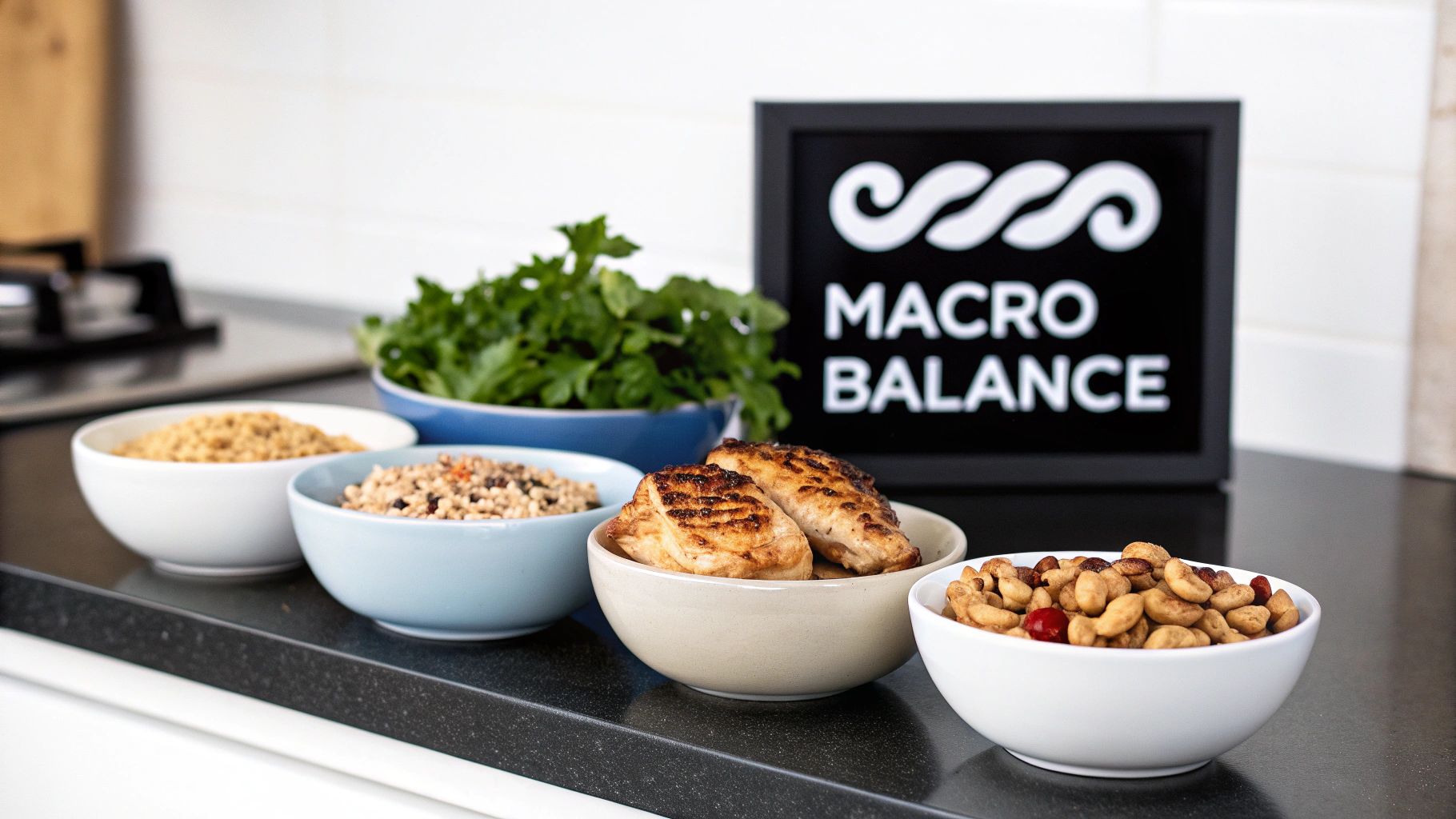
Let’s clear up the noise. "Macro-friendly" isn't just another buzzword for dieting. It’s about being smart with the fuel you give your body. Think of it like running a high-performance engine—each macronutrient has a specific job to do to keep things humming along.
Here's a simple way I like to break it down:
- Protein: This is your repair crew. It gets to work rebuilding muscle after a workout and keeps your metabolism running strong.
- Carbohydrates: This is your quick-access fuel tank, giving you the immediate energy you need for a tough workout or just getting through a busy afternoon.
- Fats: Think of this as your long-haul, slow-burning fuel source. It’s essential for hormone function and sustained energy.
A truly macro-friendly snack brings these three elements together in a way that serves your specific needs. It's not a one-size-fits-all deal.
Matching Macros to Your Goals
The "best" snack really depends on what you're trying to accomplish in that moment. Are you about to hit the gym? Recovering from a tough session? Or just trying to silence a rumbling stomach between meals? The ideal mix of protein, carbs, and fats will change with your goal.
A pre-workout snack, for example, should lean more on carbs for that instant energy boost. But afterward, you’ll want something heavy on protein to kickstart the muscle recovery process.
A great rule of thumb for a snack that will actually hold you over is to aim for at least 10-15 grams of protein while staying in the 150-300 calorie range. That ratio is fantastic for controlling hunger and supporting lean muscle.
When you start thinking this way, snacking stops being a mindless habit and becomes a powerful tool. It’s about making your calories work for you. Understanding this simple concept means you can easily build or choose snacks that give your body exactly what it's asking for, whether that's an apple with some string cheese, a cup of Greek yogurt with berries, or a grab-and-go high-protein option like Gym Snack.
In the end, it all comes down to fueling your body with intention. To see how this fits into the bigger picture, you might find these general nutrition tips for effective weight loss helpful. Once you get the hang of the fundamentals, making smarter choices that keep you satisfied and on track becomes second nature.
How to Decode Nutrition Labels Like a Pro
Ready to become a snack detective? The nutrition label is your best tool, guiding you straight to snacks that actually line up with your health goals. It’s about moving beyond just a quick glance at the protein count to make choices that truly fuel your body and keep you feeling full.
Think of it this way: calories are the total price tag, but the macros are the itemized receipt showing you exactly what you’re paying for. You want the most bang for your buck—in this case, high-quality protein and fiber without a ton of sugar or unhealthy fats.
This mindset is catching on, and it’s fueling a huge market. North America alone makes up about 45.2% of the global protein snack revenue, which comes out to roughly US$2.0 billion in 2024. This boom is driven by people just like you—gym-goers, busy professionals, and students—all looking for grab-and-go options that hit specific targets, like 15–20 g of protein with moderate carbs. If you're curious about the market data, you can check out the full protein snacks report from go2marketresearch.com.
Your Three-Step Label Checklist
When you pick up a potential snack, run it through this quick mental checklist. It cuts through the noise and helps you make a smart call in just a few seconds.
-
Check the Protein-to-Calorie Ratio: A good rule of thumb is to look for at least 1 gram of protein for every 10-15 calories. For instance, a 200-calorie snack packing 20g of protein is a fantastic choice. This ratio ensures the snack is built to support muscle and satiety, not just tack on empty calories.
-
Investigate the Carbohydrates: Don't just stop at the "Total Carbohydrates" number. Look deeper for "Dietary Fiber" and "Total Sugars." High fiber is your friend; it slows down digestion and keeps you feeling full. On the flip side, keep a close eye on "Added Sugars"—those are the ones that can lead to an energy crash later.
-
Assess the Fat Quality: Fat isn't the enemy, but the type of fat is what really matters. Aim for snacks with low saturated and zero trans fats. Healthy fats from whole sources like nuts or seeds are great, but for a lean, high-protein snack, you generally want this number to be on the lower side.
A simple formula for a solid macro-friendly snack? Look for 15g or more of protein, at least 3g of fiber, and less than 10g of added sugar. This combination is a proven winner for controlling appetite and delivering sustained energy.
Here's a quick guide to help you prioritize what to look for based on your specific goals.
Decoding the Nutrition Label for Macro Goals
| Fitness Goal | Protein Priority | Carbohydrate Focus | Fat Consideration |
|---|---|---|---|
| Build Muscle | High. This is your primary target. Look for 15-25g+ per serving to support muscle repair and growth. | Moderate to High. Focus on complex carbs for sustained energy, especially around workouts. | Low to Moderate. Prioritize healthy fats but keep the total low to save calories for protein/carbs. |
| Weight Loss / Fat Loss | High. Critical for satiety (feeling full) and preserving muscle mass while in a calorie deficit. | Low to Moderate. Prioritize fiber over total carbs to help with fullness and blood sugar control. | Low. Be mindful of total fat to help manage overall calorie intake. |
| Endurance / Performance | Moderate. Essential for muscle recovery, but carbs take center stage for fuel. | High. This is your main energy source. Look for easily digestible carbs before and during activity. | Moderate. Healthy fats are important for overall health and long-duration energy. |
| General Health / Satiety | Moderate to High. A balanced amount helps maintain muscle and keeps hunger at bay. | Moderate. Focus on fiber-rich sources and limit added sugars. | Moderate. Include healthy unsaturated fats from whole food sources. |
By learning what to look for, you can see past flashy marketing and focus on what really counts. To dive even deeper, you can learn more about how to read nutrition labels in our detailed guide. With this skill, you can confidently walk down any snack aisle and find options that perfectly match your macro targets and keep you on track.
The Best Macro Friendly Snacks for Any Situation
Theory is one thing, but putting it into practice is what gets results. Let's get into some real-world examples you can start using today. Think of this as your playbook for smart snacking, with plays designed for your specific goals and situations.
The best macro-friendly snacks aren't just about hitting your numbers; they're about smart timing and function. What you eat before hitting the gym should be totally different from what you grab afterward to kickstart recovery. The first is all about quick fuel, while the second is about sending in the protein-heavy repair crew. Getting this right is how you make your snacks truly work for you.
Fueling a Workout: Pre-Exercise Snacks
Before you train, your body is screaming for one thing: accessible energy. That means you want to prioritize carbohydrates, which are your body's go-to immediate fuel source. Pair them with a moderate amount of protein to help prevent muscle breakdown during your session.
- Greek Yogurt with Berries: This is a classic for a reason. You get simple carbs from the fruit for a quick energy lift and quality protein from the yogurt. A 3/4 cup serving is a great starting point.
- A Small Banana with a Tablespoon of Peanut Butter: The banana delivers fast-digesting carbs to get you going, while the peanut butter adds a touch of protein and healthy fat to sustain you through a tough workout.
- A Rice Cake with Sliced Turkey: This is a fantastic low-fat option that provides clean carbs and lean protein without sitting heavily in your stomach.
And while we're talking about smart food choices, it's always a good idea to incorporate cholesterol-lowering food recommendations into your overall diet for better heart health.
Speeding Up Recovery: Post-Workout Snacks
After your workout, the mission changes completely. Now, the number one priority is protein. You need it to repair and rebuild the muscle tissue you just worked so hard to break down. A good rule of thumb is to aim for a snack with at least 20 grams of protein within an hour of finishing your training.
- Hard-Boiled Eggs: Two large eggs give you around 12-14 grams of protein and are incredibly easy to prep ahead of time and grab when you need them.
- Cottage Cheese with a Sprinkle of Cinnamon: A single cup can pack over 25 grams of protein, making it a true muscle-repair powerhouse.
- A Savory Protein Snack: For something convenient and crunchy, a bag of Gym Snack delivers over 30g of plant-based protein, perfect for replenishing your muscles on the go.
The infographic below helps break down how to look at a food label and prioritize each macronutrient based on what you need at that moment.
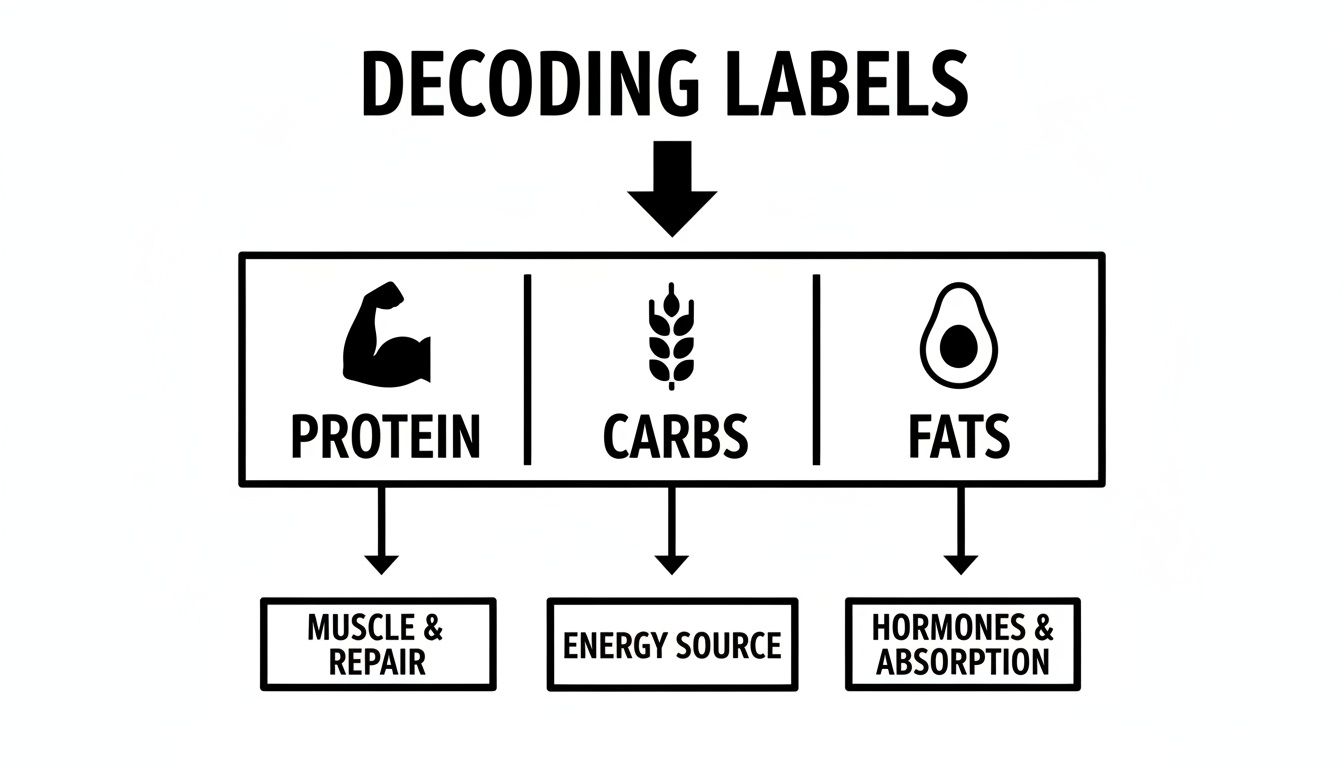
This visual guide simplifies your choices, helping you match your snack's macro profile to your immediate goal, whether that's fueling up or rebuilding.
Crushing Afternoon Cravings: Satiety-Focused Snacks
We’ve all been there—that 3 p.m. slump hits, and suddenly you're rummaging through the pantry for anything to eat. The right snack can stop those cravings in their tracks by focusing on two key things: protein and fiber. Together, they maximize fullness and keep you satisfied.
This isn’t just a hunch; it’s a trend we’re seeing across the market. For everyone from fitness enthusiasts and vegans to busy professionals, the ideal macro-friendly snack is starting to look very similar: high in protein (often 15g+ per serving), lower in saturated fat, and made with clean, plant-based ingredients.
A Strategic Approach to Cravings: Fight back by choosing a snack that combines a high-protein punch with a satisfying texture. The satiety signals from protein, combined with the psychological satisfaction of something crunchy, can be incredibly effective at holding you over until your next meal.
A handful of roasted edamame, a savory protein puff, or even celery sticks with hummus are all excellent choices that will keep you full and focused, minus the dreaded sugar crash.
The Science of Feeling Full: Protein and Appetite Control
Ever wondered why a handful of almonds keeps you satisfied for hours, while a sugary cookie has you raiding the pantry again in thirty minutes? It’s not your imagination. The answer lies in the powerful science of protein and its unique ability to manage your appetite.
This isn't just about filling your stomach; it’s about sending the right messages to your brain to signal that you’re genuinely full.
Think of your hunger like a complex communication system. Simple carbs are like a quick text message—they deliver a fast burst of energy, but the conversation ends quickly. Protein, on the other hand, is like a detailed email. It takes longer to process and keeps the lines of communication open, telling your brain you’re satisfied for a good while.
How Protein Sends the "I'm Full" Signal
When you eat protein, your body gets to work on a more demanding task than digesting simple carbs or fats. This process itself is known as the thermic effect of food (TEF), and it means your body actually burns more calories just breaking the protein down.
But the real magic happens at the hormonal level. Digesting protein triggers the release of specific satiety hormones from your gut that act as messengers.
- GLP-1 (Glucagon-like peptide-1): This is a heavy hitter. It travels directly to your brain's command center—the hypothalamus—and delivers a clear signal: "We're full and satisfied down here."
- PYY (Peptide YY): This hormone works in tandem with GLP-1. Its main job is to slow down how quickly your stomach empties, which physically keeps food in your stomach longer and extends that feeling of fullness.
This one-two punch of hormonal signals is precisely why the best macro friendly snacks are almost always built around a solid protein source. They don’t just fill a void; they actively communicate with your brain to shut down hunger cues.
When you choose a protein-rich snack, you're doing more than just eating. You're engaging in biological communication, telling your body it's been nourished and doesn't need to send out frantic hunger alarms anytime soon.
Using Snacks as a Strategic Tool
Once you understand this science, your whole approach to snacking can change. Instead of mindlessly grabbing whatever is available, you can choose snacks designed to keep you full, stabilize your energy, and help you avoid that dreaded blood sugar rollercoaster that fuels cravings.
This is a game-changer for tackling the afternoon slump or getting in some fuel before a workout without feeling bogged down.
A snack packed with 15-20 grams of quality protein can make a huge difference in how full you feel, helping you stick to your nutrition goals. To learn more about specific foods that excel at this, check out our guide on the best foods for appetite control.
By putting the science of fullness to work, your snacks stop being just a bridge between meals. They become a powerful tool for managing your energy and appetite all day long.
Choosing Clean Ingredients and Avoiding Common Allergens
Nailing your macros is a fantastic feeling, but it’s only half the battle when it comes to finding the best macro-friendly snacks. True well-being goes beyond the numbers on the nutrition label; it’s about the quality of what's inside. Where your protein, carbs, and fats come from matters just as much as how many grams you’re getting.
Have you ever eaten a snack that fit your macros perfectly, only to feel bloated, sluggish, or just "off" afterward? Chances are, the problem wasn't your macro split—it was probably some hidden irritants in the ingredient list.
Navigating Common Food Sensitivities
As more of us pay closer attention to how food makes us feel, we're getting a lot pickier about ingredients. It turns out that many popular protein snacks are built around ingredients that a lot of people just don't digest well.
Here are a few of the usual suspects to watch out for:
- Dairy (Whey and Casein): These are everywhere in the protein world, but they can cause major digestive issues for anyone with even a mild lactose intolerance.
- Soy: Another common allergen that often shows up as a cheap filler in processed foods and protein bars. Many people feel better when they avoid it.
- Gluten: A non-starter for anyone with celiac disease, but even people with a non-celiac sensitivity find it can cause inflammation and discomfort.
- Artificial Sweeteners: Things like sucralose and aspartame can be rough on the gut and lead to bloating for a surprising number of people.
This growing awareness is exactly why "clean label" snacks are taking over. People are tired of mystery ingredients and just want real, whole foods they can trust.
The Rise of Plant-Based Proteins
To get around these common problems, many of us are looking for high-quality, plant-based protein sources instead. Pea protein, in particular, has become a go-to choice because it’s both nutritionally powerful and incredibly easy on the digestive system.
Pea protein is a real game-changer. It's naturally free from dairy, soy, and gluten, which makes it a fantastic option for almost anyone. On top of that, it's easy to digest and loaded with iron—a huge plus for athletes and anyone eating a more plant-forward diet.
When you choose snacks built on clean, allergen-friendly ingredients, you're doing more than just hitting your macros. You're supporting your body from the inside out, promoting better gut health and overall energy. It’s a holistic approach that makes sure your snack is truly working for you.
To dive deeper, check out our ultimate guide to clean protein snacks and see just how much of a difference thoughtful ingredients can make.
Building Your Ultimate Macro-Friendly Snack Stash
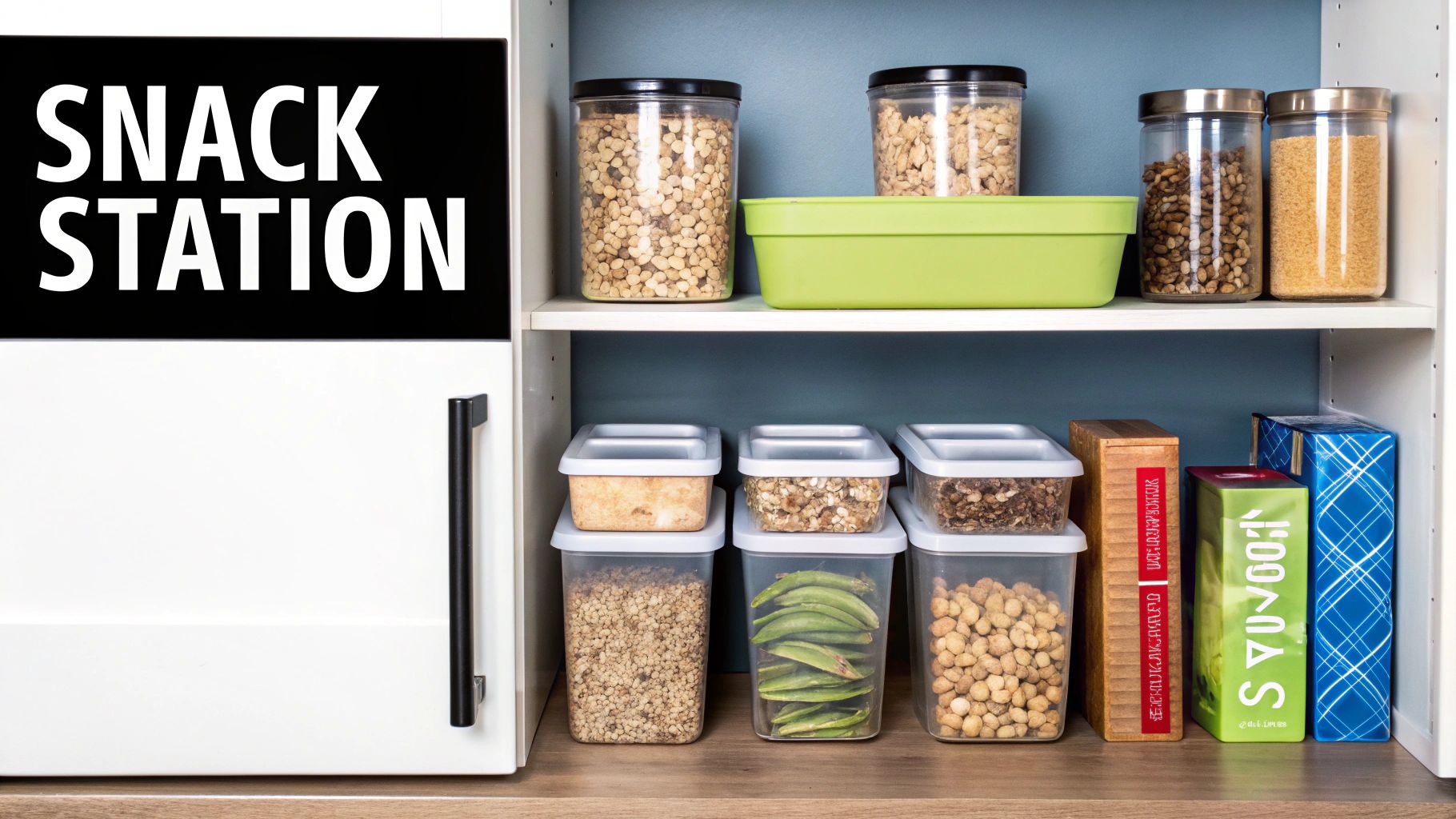
Let’s be honest, the secret to making healthy snacking a real, lasting habit is all about preparation. When a smart choice is also the easiest choice, you'll grab it every time. It’s about setting up your environment—your pantry, your desk, your gym bag—for success.
Instead of staring into the fridge wondering what fits your macros, you'll have a curated collection of go-to items ready to mix and match. The goal here is to completely remove decision fatigue when hunger hits.
Your Macro-Friendly Grocery Blueprint
Start thinking about your shopping list in terms of macronutrients. If you grab a few items from each of these categories, you’ll have the building blocks for countless balanced and satisfying snacks.
- Lean Protein Sources: Think Greek yogurt, cottage cheese, hard-boiled eggs, low-sodium jerky, canned tuna, and quality deli turkey. These are your powerhouse bases.
- Fiber-Rich Carbohydrates: This is where you grab fresh fruit like apples and berries, veggies like baby carrots and sliced bell peppers, and whole-grain crackers or rice cakes.
- Healthy Fats: Nuts, seeds, and avocados are perfect for sustained energy and that full feeling. Just remember, a little goes a long way, so keep an eye on portion sizes.
Here's a simple formula that works wonders: always pair a protein with a fiber source. This one-two punch is the ultimate hunger-crushing duo, giving you both immediate satisfaction and lasting fullness. Think an apple with a stick of string cheese—it's a classic for a reason.
Create Your Personal Snack Station
This is a game-changer. Set up a dedicated "snack station" at home or even at your desk. Use clear containers for shelf-stable options like roasted edamame, pre-portioned nuts, or high-protein savory snacks.
This kind of setup is especially helpful for GLP‑1 users and anyone watching their weight, as it combines structured macros with grab-and-go convenience. It makes managing portions feel effortless without giving up that satisfying crunch and flavor. You can find more insights on the exploding protein snack market and its benefits.
And for your gym bag? Stick to non-perishable powerhouses. A quality protein bar, a bag of jerky, or a crunchy, plant-based option like Gym Snack means you’re never without a solid post-workout refuel. A simple system like this makes smart snacking feel like an automatic part of your day.
Got Questions About Macro-Friendly Snacking? We've Got Answers.
Let's be real, the world of macros can feel a little confusing at first. It’s easy to get bogged down in the details. We're here to clear up some of the most common questions we hear, giving you straightforward answers so you can snack with confidence.
How Many Macro-Friendly Snacks Should I Eat Per Day?
There's no single magic number that works for everyone. For most people, 1-2 strategically-timed snacks a day is the sweet spot for keeping hunger at bay and nailing those protein targets.
Think of them as tools. A pre-workout snack can give you the fuel you need to perform your best. A mid-afternoon snack can be the perfect bridge to dinner, stopping you from showing up to the table ravenous. The real key is to tune into your body's hunger signals instead of just eating because the clock says it's "snack time."
Are Fruit Smoothies A Good Macro-Friendly Option?
They definitely can be, but it all comes down to what you put in the blender. A smoothie that's just fruit and juice is often a fast-track to a sugar crash. To turn it into one of the best macro-friendly snacks, you need to add two key players: a solid protein source and some healthy fat.
- Protein Power: A scoop of your favorite protein powder or a big dollop of Greek yogurt will do the trick.
- Healthy Fats: Try tossing in half an avocado, a tablespoon of chia seeds, or a spoonful of almond butter.
These simple additions completely change the game. They balance the macros, slow down digestion, and keep you feeling full and satisfied for hours, not minutes.
Can I Eat These Snacks While Trying To Lose Weight?
Absolutely. In fact, smart, high-protein snacks are one of your best allies for managing weight effectively. Protein is a powerhouse for satiety—that feeling of fullness and satisfaction. It's scientifically proven to help curb cravings and reduce the kind of mindless grazing that can sabotage your progress.
When you're in a calorie deficit, protein also helps protect your hard-earned muscle mass. This is critical for keeping your metabolism firing on all cylinders. Just make sure your snacks are portion-controlled and protein-forward, and they'll work with you, not against you.
Ready to make hitting your protein goals easier and more delicious? Gym Snack offers savory, crunchy, plant-based snacks with over 30g of protein per bag to crush cravings and fuel your body right. Find your new favorite flavor at https://gymsnack.com.