

You're standing in the kitchen at 5:40 a.m., trying to decide whether half a banana is enough before a 6 a.m. strength class. Or you're between meetings, already hungry, with a lunch-break spin session starting soon and no time for a proper meal. The wrong snack can leave you heavy, bloated, or distracted. The right one gives you usable energy without turning your stomach into the second workout.
The best pre workout snacks for women aren't chosen by trend, influencer routine, or protein content alone. They're chosen by how long you have before training, what the session demands, and what your digestion can handle. For sessions under 90 minutes, start with carbohydrates, then add a modest amount of protein when you have enough time to digest it.
Why Most Pre-Workout Snack Lists Miss What Women Need
Most snack roundups hand you a pile of foods and leave you to guess. Bananas, protein bars, oats, nut butter, yogurt, and smoothies appear as if they perform the same job at every point before training. They do not. A snack that works two hours before lifting can feel heavy 20 minutes before sprint intervals.
Portion size matters just as much. Many recommendations assume every woman has the appetite, body size, training volume, and digestion of a larger athlete. That leads to oversized bars, full yogurt bowls, and meals that compete with the workout. For sessions under 90 minutes, carbohydrate availability is usually the immediate priority, while protein plays a supporting role.
For a deeper breakdown of protein targets, see this high-protein snacks for women guide. Use it to plan protein across the day, not to justify forcing a dense protein snack into the final minutes before exercise.
The clock decides what helps
Set the timing rule before choosing the food: the less time you have, the simpler and more carb-forward your snack should be. A small amount of quick carbohydrate can support a short-notice workout. With more time, combine carbohydrates with moderate protein and a larger portion if your stomach handles it.
Women's sports-nutrition guidance recommends 1–4 g of carbohydrate per kilogram of body weight in the 1–4 hours before exercise, adjusted for training demand and timing, as outlined in this women-focused sports-nutrition review. That range is a planning guide, not a command to eat a huge meal before every gym visit. Match the choice to the gap since your last meal and the work ahead.
Your body may change the answer from day to day. Cycle phase, appetite, stress, and early-morning nausea affect what feels tolerable. Adjust texture, portion size, and timing instead of abandoning fuel. A banana, rice cake, or few crackers can work when a high-protein snack feels impossible.
Coach's rule: Don't ask, “What's the healthiest snack?” Ask, “What can I digest in the time I have, and what will support this session?”
A useful decision framework asks four questions: How many minutes remain? Is the workout conditioning, strength, or easy movement? Does your stomach prefer liquid or solid food? Have you eaten recently? Those answers determine whether you need quick carbohydrates, a fuller snack, or nothing beyond a few manageable bites.
Match Your Snack to the Clock on Training Day
A snack that works two hours before training can feel awful 30 minutes before it. Set the timing window first, then choose the food. Tufts guidance places a snack at roughly 100–200 calories when eaten about one hour before exercise, or around 200–300 calories when you have at least two hours to digest. As training approaches, reduce fat, fiber, and portion size.
The final 30 minutes call for bites, not a forced calorie target. A small banana portion, rice cake with honey, or a few dates can provide useful carbohydrate without leaving you full. For shorter sessions, aim for roughly 15–25 g of carbohydrate in the 30–60 minute window, adjusting to session length and intensity, as outlined in the pre-workout snack guidance from Tufts.
Pre-workout snack targets by timing window
| Time Before Training | Calorie Range | Carbs (g) | Protein (g) | Fat (g) | Example |
|---|---|---|---|---|---|
| About 30 minutes | Small, based on tolerance | About 15–25 g when needed | Little or none | Keep low | Banana portion, dates, or rice cake with honey |
| About 1 hour | 100–200 calories | Carb-forward | A little protein | Keep modest | Greek yogurt with berries or toast with a light topping |
| Two or more hours | About 200–300 calories | A substantial carbohydrate serving | Moderate protein | A little is usually manageable | Oats with fruit, or a rice and turkey wrap |
For sessions under 90 minutes, lead with carbohydrates. Protein has a role, but a large shake or protein bar cannot replace the quick fuel your working muscles can use. At the 30-minute mark, women often under-eat because of calorie anxiety, early-morning appetite, or the belief that fasted training is automatically better. If you feel flat, shaky, or unable to focus, eat a few bites of carbohydrate instead of forcing the workout.
At one hour, add a small amount of protein if your stomach handles it. At two or more hours, choose a small meal rather than pretending a tiny snack will do the same job. Sports-nutrition guidance recommends 0.32–0.38 g of protein per kilogram of body weight before and after exercise to support adaptation. For a fuller breakdown of protein timing, see how much protein before a workout. That target does not require a large protein serving before a short-notice session. Keep protein supportive, and leave room for the carbohydrate your workout demands.
Thirty minutes means light and carb-led. One hour allows a balanced snack. Two or more hours allows a small meal. Reduce the portion if reflux, nausea, or cramping tends to interrupt training.
How to Pick a Pre-Workout Snack That Sits Well
A good snack has to pass three tests before it earns a place in your routine:
- It feels light. You shouldn't start training with a heavy, sloshing stomach.
- It's familiar. Save experiments with new bars, powders, and recipes for a non-critical day.
- You can digest it in the time available. More time allows more ingredients. Less time demands simplicity.
The workout type changes the answer. HIIT, spin, running intervals, and fast circuits usually reward quickly available carbohydrate and low digestive volume. Strength sessions can handle a little more substance, especially if you're lifting after a long gap between meals. Early-morning training often calls for the smallest option you can tolerate, such as fruit, diluted juice, or a plain rice product.
Read the snack, not the marketing
High-fat foods digest slowly. Large amounts of fiber can also increase gastrointestinal discomfort close to exercise. That's why a large salad, bean-heavy wrap, generous nut-butter serving, or full-fat cheese plate can flop before sprints even though each food may fit comfortably elsewhere in your diet. The women's exercise nutrition guidance specifically highlights the value of easy-to-digest carbohydrate and cautions against high-fiber or high-fat foods immediately before training.
Check the ingredient list on packaged snacks. Sugar alcohols can upset some stomachs. A protein bar marketed as a “meal” may be too dense for a short-notice session. Stimulant-heavy drinks can also mask poor fueling, especially when a real carbohydrate snack and water would address the problem more directly.
Dairy deserves a personal test. Greek yogurt may be perfectly comfortable for one person and a poor choice for someone who's lactose-sensitive or training through reflux. The same applies to nut butter, oats, eggs, and high-protein plant foods. Don't label a food universally good or bad. Judge it by your response, the workout intensity, and the time remaining.
Digestive comfort beats nutritional perfection before training. A simple food you can use consistently is more valuable than an impressive snack you keep avoiding.
For plant-based athletes, choose based on texture and timing rather than trying to pack every nutrient into one bite. A small serving of fruit or rice may work before training, while edamame, oats, or a plant protein product fits better when you have more time. The closer you are to the first set, the less ambitious your snack should be.
Best Pre-Workout Snacks Worth Keeping in Your Gym Bag
The following options cover sweet, savory, dairy-based, and plant-based needs. Portions are practical starting points, not rules carved into stone. If you're sensitive to fullness, start smaller. If you have more time and a demanding session ahead, use the larger option in the table.
| Snack | Portion | Prep Time | Timing Window | Best For |
|---|---|---|---|---|
| Banana with almond butter | One medium banana with one tablespoon almond butter | None | About 30–60 minutes | Strength sessions and quick morning fuel |
| Greek yogurt with berries | A small bowl of Greek yogurt with a modest serving of berries | A few minutes | About 60 minutes | Carbohydrate plus protein before lifting |
| Rice cakes with honey | One or two rice cakes with honey | One minute | About 20–45 minutes | HIIT, spin, and sensitive stomachs |
| Overnight oats | Half a cup of oats soaked overnight with fruit | A few minutes the night before | About 60–90 minutes | Cardio or a longer morning session |
| Shelled edamame | A small serving with fruit or crackers | Minimal | About 90 minutes or more | Plant-based fueling with more staying power |
| Turkey and rice wrap | A small wrap with rice and lean turkey | Several minutes | Two or more hours | Substantial strength sessions |
| Hard-boiled egg with fruit | One egg with a piece of fruit | Prep ahead | About 60–90 minutes | Women who want protein with a light carbohydrate |
| Homemade energy bite | One small oat-based bite with nut butter and honey | Batch prep | About 60 minutes | Portable fuel when you've tested the recipe |
The fast options
A banana with almond butter is useful when you're hungry but don't want to cook. Keep the nut butter modest if you're eating close to training, because its fat content can make the snack feel slower. For a very short window, use the banana alone or choose rice cakes with honey.
Rice cakes are the cleanest gym-bag option in this group. They're light, portable, and easy to pair with honey or a thin spread. They're especially practical before conditioning work, when a bulky snack can make every burpee or sprint feel worse.
Dates, dried apricots, and other dried fruit can also work when you need a shelf-stable carbohydrate option. Keep the portion small and test it during ordinary training first. A practical guide to pre exercise snack portions can help you think about portion size without turning your pre-workout routine into calorie arithmetic.
The more substantial choices
Overnight oats belong farther from training. Use half a cup of oats soaked overnight with fruit when you have roughly 60–90 minutes and want a slower, more filling option. If oats feel too fibrous before cardio, swap them for toast, rice, or a smaller fruit serving.
Greek yogurt with berries gives you carbohydrate and protein in a cool, easy-to-eat format. It works best when you have about an hour and tolerate dairy. Add no extra granola or large handful of nuts right before a hard session. Those additions can turn a light snack into a dense meal.
For a serious evening lift, a small turkey and rice wrap is more appropriate than a protein bar eaten at the last minute. The rice provides the carbohydrate base, while turkey adds protein. Give it two or more hours, and don't make the wrap oversized.
Plant-based and portable choices
Edamame provides plant protein but is more substantial than fruit or rice cakes, so reserve it for a longer lead time. Pair a small serving with crackers or fruit when you need both protein and carbohydrate. A homemade energy bite can work too, but recipes vary widely in fat, fiber, and sweetness. Keep it small, use ingredients you already tolerate, and don't test it before an important class.
Gym Snack makes plant-based savory protein crisps that can fit a longer pre-workout window or an on-the-go eating plan. They're made with pea protein and are free from dairy, soy, and gluten, but they're still a protein-focused option, not a replacement for carbohydrate when you need immediate training fuel. For more portable ideas, this portable high-protein snack guide offers additional ways to organize food around a busy schedule.
The winning choice is the one that matches both the clock and your stomach. Don't choose overnight oats because they look wholesome if you're about to run intervals. Don't choose a dense protein snack when a banana would get you through the next hour more comfortably.
Sample Snack Plans for Morning, Lunch, and Evening Sessions
Your training time sets the snack plan. A woman heading into a dawn lift has a different digestion window from someone taking a lunch class or training after work. Use these schedules as starting points, then adjust portions according to hunger, tolerance, and workout intensity.
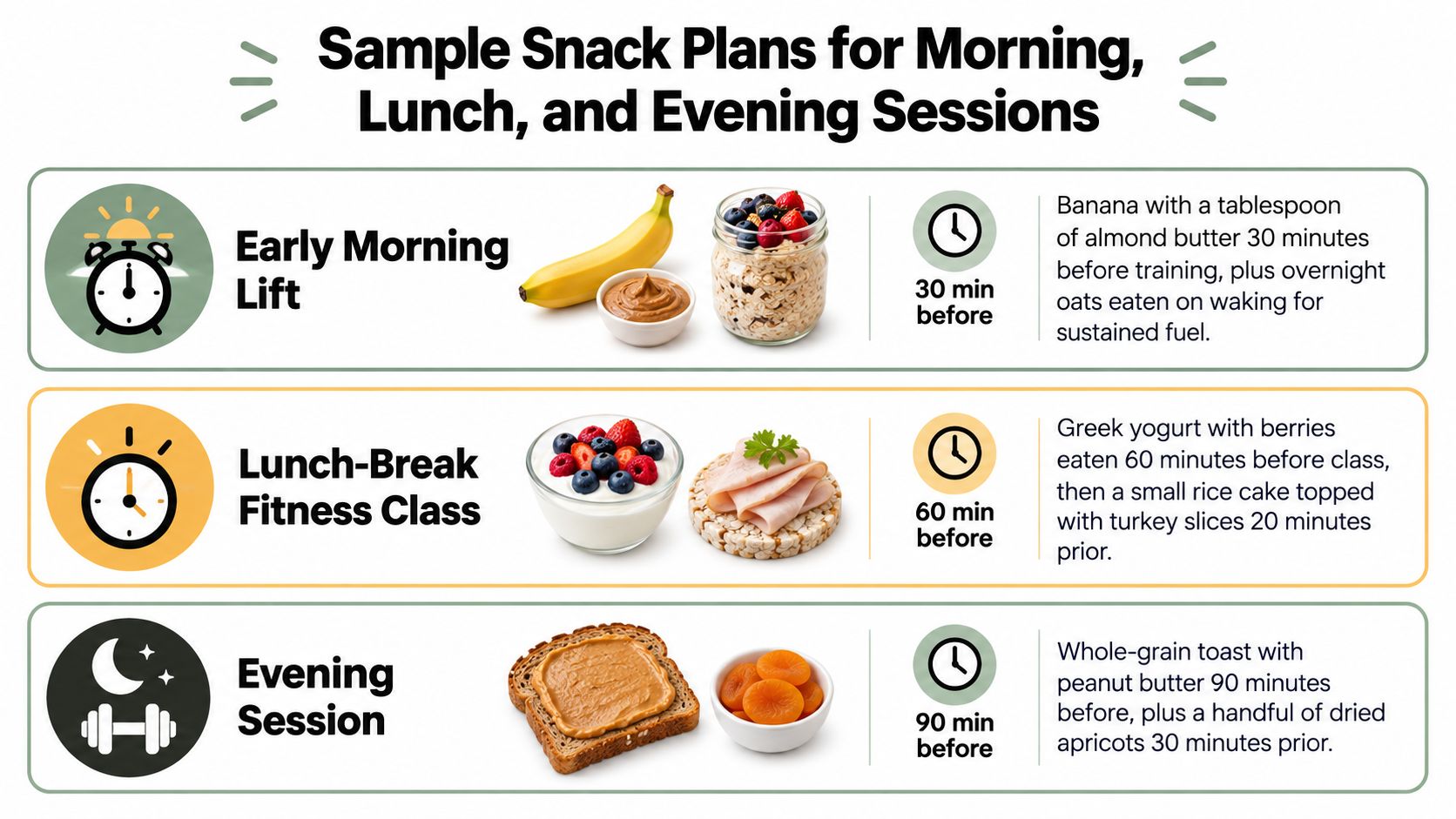
Early morning lift
5:40 a.m., about 10 minutes before training: Eat part or all of a banana. Add only a thin layer of almond butter if you already know fat sits well in your stomach at that hour. Water before leaving and small drinks during training are a better plan than arriving dehydrated.
6:00 a.m., training: Keep the first bite light when you lift soon after waking. The banana supplies accessible carbohydrate without turning your warm-up into a digestion test. For a session under 90 minutes, put carbohydrate first. Protein can wait for breakfast unless you are genuinely hungry and tolerate more food early.
7:15 a.m., after training: Have overnight oats with banana or berries and yogurt, or eat a full breakfast such as eggs with toast and fruit. Make this meal more substantial than the pre-workout bite, with clear portions of carbohydrate and protein rather than another small snack. The protein guidance described earlier applies here, so there is no need to repeat the calculation or add a second shake by default. Drink water with breakfast and continue according to thirst and sweat loss.
Lunch-break fitness class
11:15 a.m., about 90 minutes before class: Eat a rice cake with a modest amount of nut butter and a piece of fruit. This gives you more staying power than a last-minute bite while keeping the ingredients familiar and easy to portion.
12:10 p.m., about 20 minutes before class: If hunger remains, add a small amount of quick carbohydrate, such as a few bites of banana or a plain rice cake. Leave off the topping at this point. Sip water before class, then bring water if the studio permits it.
12:30 p.m., training: You should feel ready, not full. A short class does not require turning your snack into a protein-heavy meal. Eat lunch afterward, combining protein, carbohydrate, and fluids to support recovery. This guide to post-workout recovery foods 2024 provides more recovery-focused ideas.
Save this visual routine for the three scheduling patterns:
Evening training
4:30 p.m., two or more hours before training: Eat a small chicken and sweet potato bowl. Keep the serving comfortable rather than oversized, and include enough carbohydrate to prevent arriving at the gym ravenous.
6:00 p.m., about 30 minutes before training: Use a light top-up such as dried apricots, a few bites of fruit, or a rice cake with honey. Keep fat and fiber low this close to the first set. Drink water through the afternoon and take a few more sips before beginning.
6:30 p.m., training: The earlier bowl supplies the foundation, while the top-up covers the long gap. Afterward, eat a normal dinner instead of trying to compensate with an enormous shake or bar. Your best plan is the one that matches the clock and leaves your stomach calm.
Common Pre-Workout Snack Mistakes Women Make
More protein isn't automatically better. For sessions under 90 minutes, carbohydrate-first fueling is usually the more practical choice because it's easier to use quickly. A large protein bar can leave you full without giving you the light, accessible energy you wanted.
The mistakes that cause the most trouble
- Eating avocado or full-fat cheese right before sprints: These foods can feel heavy because fat digests slowly. Choose fruit, rice, or toast when the workout starts soon.
- Choosing a giant salad before HIIT: The volume and fiber may create bloating. Use a smaller, lower-fiber carbohydrate serving closer to training.
- Relying on a meal-sized protein bar: A bar designed to replace a meal may be too dense for a short-notice snack. Use a lighter option, or eat the bar earlier.
- Training on nothing because you fear calories: If you repeatedly feel weak or unfocused, a small carbohydrate serving is a sensible adjustment, not a failure.
- Eating a large meal too close to class: Move the meal earlier and use a small top-up later. Don't expect your stomach to process a full bowl during intense movement.
White rice can be a better choice than brown rice in a 30-minute pre-session window because it's lighter and lower in fiber. Nut butter can work earlier, but it isn't mandatory. The closer the first set gets, the less you should try to prove with your snack.
Your Quick-Reference Pre-Workout Snack Checklist
Pick your session time, then match the snack to the clock.
- Two or more hours out: Choose a small meal or substantial snack, such as oats with fruit or a rice and turkey wrap. Tufts guidance places this window around 200–300 calories.
- About one hour out: Use a lighter snack in the 100–200 calorie range, combining carbohydrate with a little protein when tolerated.
- About 30 minutes out: Keep it small and carb-forward. A banana portion, dates, or rice cake with honey can work.
- Under 90 minutes of training: Lead with carbohydrate. Protein is supportive, but it shouldn't crowd out the fuel you need immediately.
- Final 60 minutes: Avoid large amounts of fat, fiber, unfamiliar ingredients, and anything that has caused digestive trouble before.
- Before every session: Ask whether the snack feels light, familiar, and digestible in the time remaining.
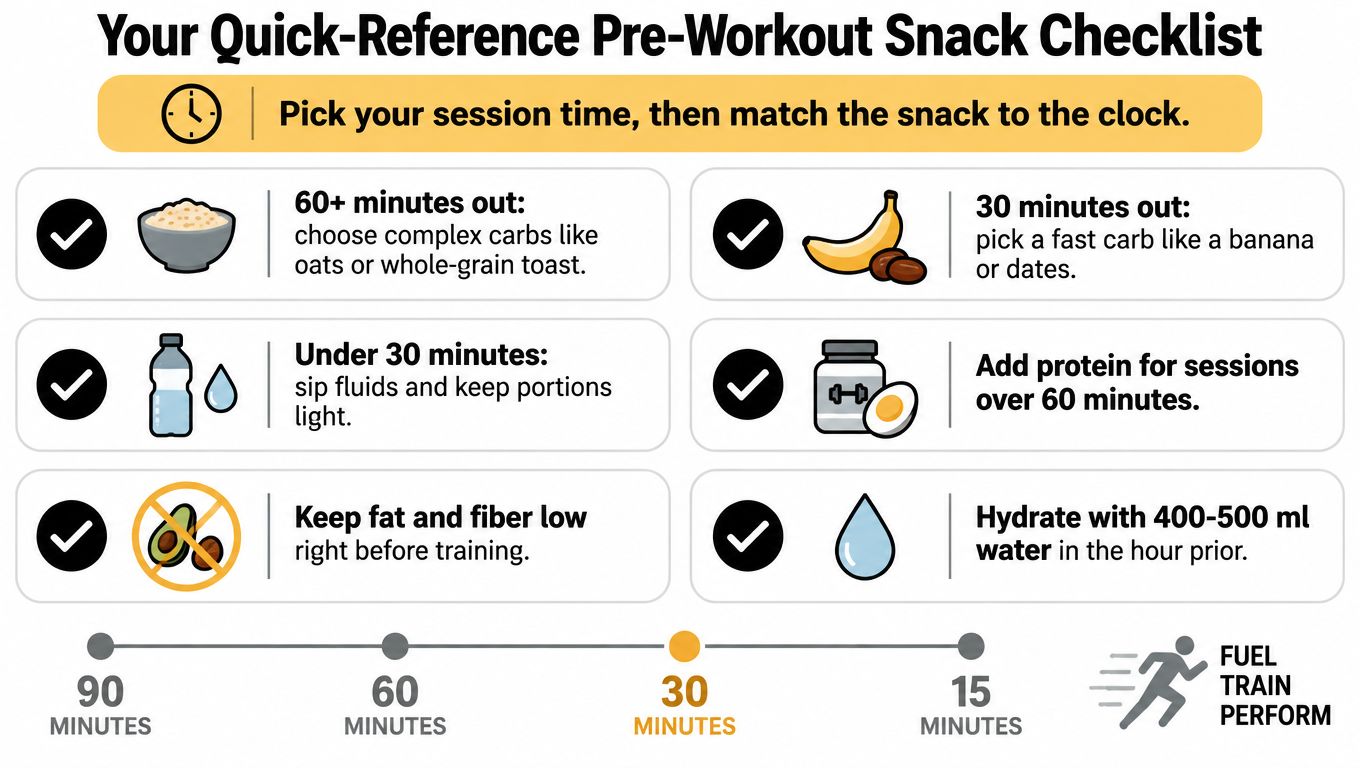
Choose one option from the 30-minute list and one from the one-hour list today. Put both in your bag before bed or before your first meeting, so your pre-workout decision is already made when the workout clock starts.
Gym Snack offers savory, plant-based pea-protein crisps for women who need a portable protein option before or after training, especially when a bar or shake doesn't appeal. Visit Gym Snack to explore the available flavors and build a gym-bag routine that pairs protein snacks with the carbohydrate-first fuel your workouts require.