

You're between meetings, your stomach is growling, and the only food within reach is a sugary bar that promises protein in enormous lettering. Or you've finished training, opened your gym bag, and found nothing that won't melt, leak, or leave you needing a real meal immediately.
That's the problem with most portable high protein snacks. They're designed either like miniature desserts or like gym-only supplements. Everyday eating needs something more practical: enough protein to support fullness, a format that survives a commute or carry-on, and ingredients that don't turn a “healthy” choice into candy with a fitness wrapper.
What Counts as a Portable High Protein Snack
A portable snack earns the label by solving three problems at once. It needs meaningful protein, a format that can travel without refrigeration or utensils when necessary, and a portion that matches the moment. A snack for a two-hour commute shouldn't have the same profile as a post-workout replacement for lunch.
A useful working floor is 10 grams of protein per serving, while 15 to 20 grams is a stronger target when the snack needs to carry you between meals. Independent nutrition guidance identifies 15 to 20 grams as a practical range for activating satiety pathways and potentially supporting roughly 2 to 4 hours of hunger control. Nutrition guidance on high-protein travel snacks supports that benchmark.
The three-part test
Protein first. Look at grams, not the percentage printed on the front. A product can boast a high protein percentage while still delivering too little total protein to make a noticeable difference. A small snack with 10 grams may work between meals, while a post-training option usually benefits from the higher end of the range.
Portable by design. Individually wrapped bars, jerky sticks, pouches, dry shaker cups, crunchy crisps, and single-serve nuts all work because they're portioned and contained. Portability means more than fitting in a bag. The food should survive movement, temperature changes, and a delayed eating schedule without leaking or becoming unpleasant.
Appropriate for the job. A dense nut packet may be excellent on a flight but too heavy before a run. A low-calorie shake may work between meetings but fail to satisfy after training. Protein without portability is a meal. Portability without enough protein is just a snack.
For practical examples of formats that work in real gym bags and workday routines, this grab-and-go protein snack guide is a useful starting point.
The Nutritional Benchmarks That Actually Matter
Front-of-package claims are designed to make you stop. The nutrition panel tells you whether the product deserves space in your bag. Start with protein, then check what comes with it.
For most portable options, 10 to 20 grams of protein is the useful working window. A product that delivers protein alongside fiber will generally be more satisfying than one built from isolated protein, sweeteners, and refined starch. Shelf-stable travel guidance also favors products with controlled moisture, low added sugar, and packaging that protects quality without refrigeration. Portable snack storage guidance explains why those details matter.
A fast label-scoring table
| Format | Typical Protein (g) | Saturated Fat (g) | Added Sugar (g) | Fiber (g) | Shelf-Stable |
|---|---|---|---|---|---|
| Protein bar | 10–20 | Check label | Check label | Often variable | Usually |
| Jerky or meat stick | 10–20 | Usually moderate | Often variable | Usually low | Usually |
| Savory protein crisps | 10–20 | Check label | Usually low | Variable | Usually |
| Ready-to-drink shake | 15–20 | Check label | Variable | Usually low | Depends on product |
| Nuts and seeds | Lower to moderate | Can be substantial | Usually low | Often useful | Usually |
| Plant-based protein snack | 10–20 | Check label | Usually low to moderate | Variable | Usually |
These ranges are practical screening tools, not guarantees. Always use the package panel for the actual product.
The numbers worth checking
- Protein: Aim for at least 10 grams for a regular snack, and move toward 15 to 20 grams when it needs to substitute for a small meal or support recovery.
- Fiber: Look for 3 grams or more when fullness matters. Fiber adds bulk and can slow the return of hunger.
- Added sugar: Keep it below 5 grams when possible. A high-protein bar with a dessert-like sugar load isn't automatically a smart choice.
- Saturated fat: A practical ceiling is under 5 grams per serving, with lower being preferable for frequent snacks.
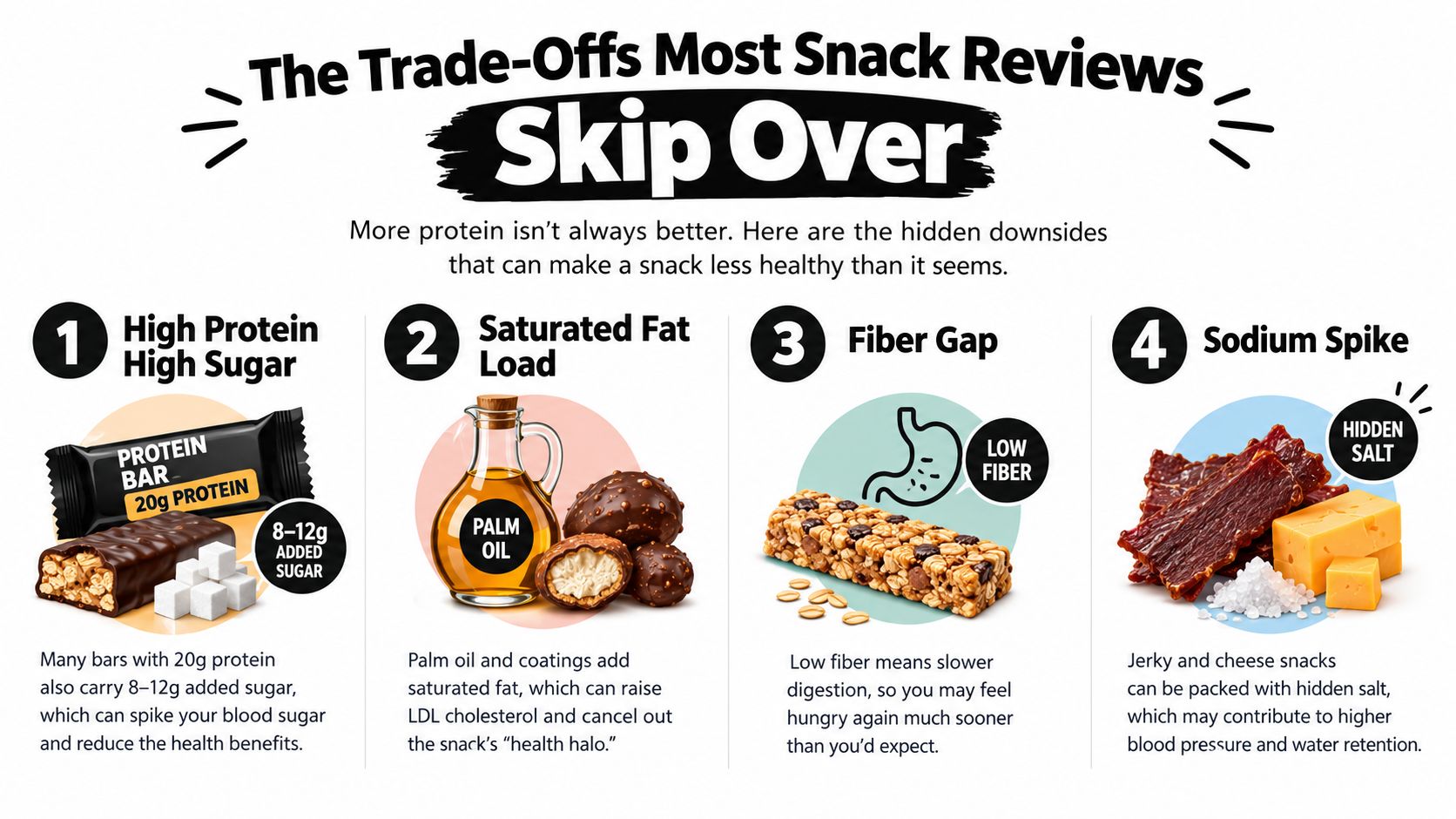
- Sodium: Jerky, meat sticks, cheese snacks, and savory puffs can become salt-heavy. Compare brands rather than assuming the format is healthy.
- Packaging: Single-serve, resealable, moisture-controlled packaging is more useful than a theoretically perfect food that spills through your bag.
For a deeper walkthrough of serving sizes, ingredients, and label math, use this guide on how to read nutrition labels.
Why Portable Protein Snacks Went Mainstream
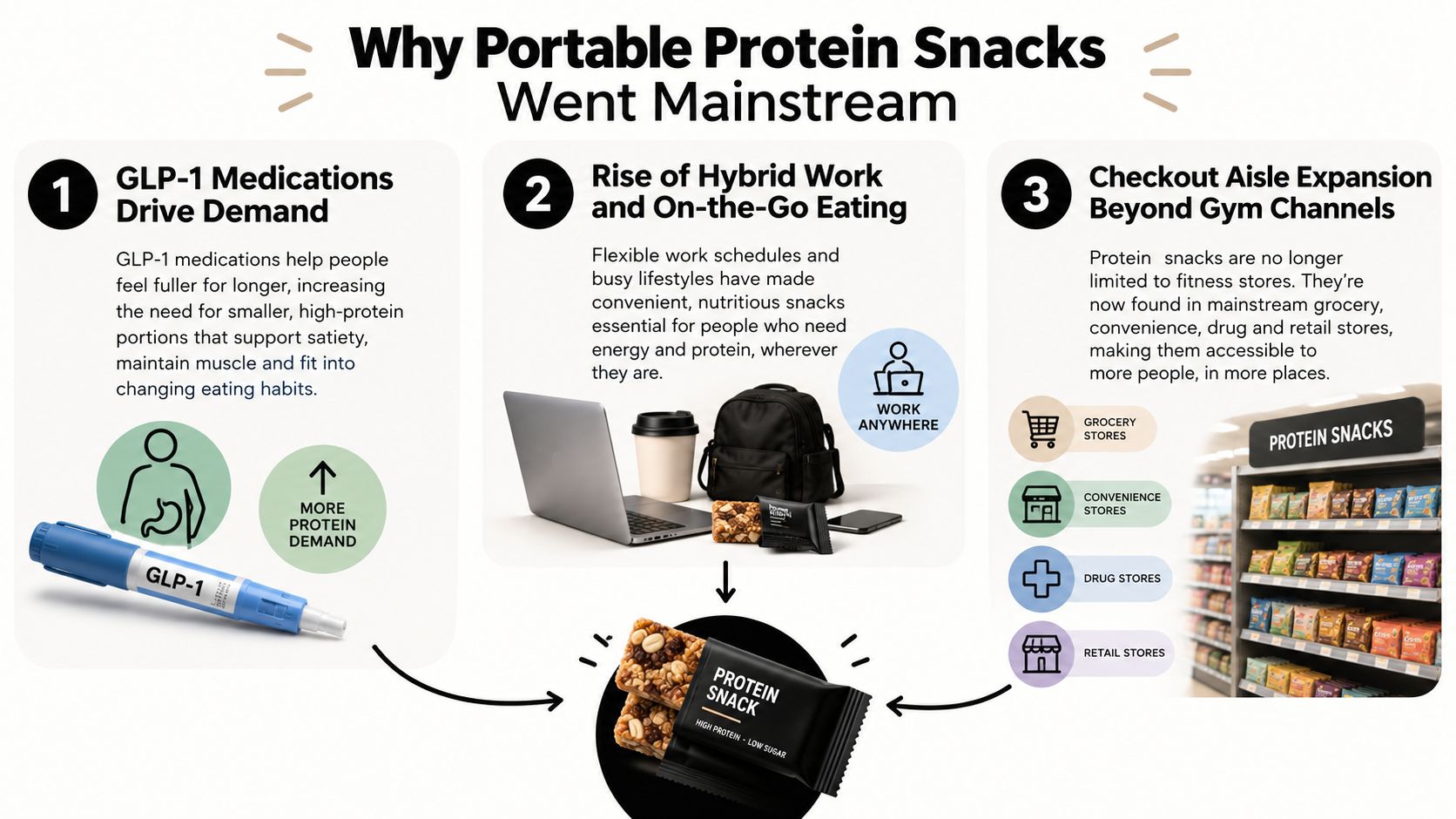
Protein snacks stopped being gym-bag territory because daily schedules stopped behaving like meal plans. People eat between meetings, in cars, at school breaks, during travel, and while managing smaller appetites. A compact portion that supplies protein can be more useful than a full meal when time, appetite, or access is limited.
The market reflects that shift. One estimate values the global protein snacks market at USD 34.44 billion in 2026, up from USD 32.01 billion in 2025, with a projection of USD 49.62 billion by 2031. The same report identifies North America as a leading regional market and Asia-Pacific as a frequently cited fast-growing region. Mordor Intelligence's protein snacks market estimate shows why the category now belongs in mainstream packaged food, not only sports nutrition.
Three forces changed the aisle
Smaller eating occasions. GLP-1 medications have made appetite, portion size, and protein preservation more visible parts of everyday nutrition conversations. A small, protein-forward snack can be easier to manage than a large meal for someone experiencing reduced appetite.
High-protein eating left bodybuilding behind. Consumers now seek protein for fullness, convenience, and general nutrition, not just muscle gain. Protein bars crossed USD 2.1 billion in sales in 2023, according to Emergen Research's protein snacks market report.
Retail channels expanded. Bars, jerky, pouches, shakes, and crunchy formats now appear in convenience stores, travel stops, office kitchens, and checkout aisles. The product answers a modern problem: replacing the default granola bar or chips with something more substantial without requiring a sit-down meal.
Comparing the Most Common Portable Formats
No single format wins every situation. Bars are easy to stash but often taste like confectionery. Jerky travels beautifully but can bring heavy sodium. Shakes deliver efficient protein but demand more attention to temperature and cleanup.
| Format | Typical Protein | Shelf Life | Mess Factor | Main Trade-Off |
|---|---|---|---|---|
| Bars | 10–20 g | Usually long | Low | Added sugar, coatings, and saturated fat can be high |
| Jerky and meat sticks | 10–20 g | Usually long | Low | Sodium can be substantial, and fiber is often minimal |
| Crunchy savory snacks | 10–20 g | Usually long | Low to moderate | Protein density varies, and some rely on refined starch |
| Ready-to-drink shakes | 15–20 g | Product-dependent | Moderate | Can leak, warm up, or require careful storage |
| Nuts and seeds | Lower to moderate | Usually long | Low | Calorie density and saturated fat can rise with coatings |
| Plant-based options | 10–20 g | Usually long | Low | Texture and flavor vary widely between products |
Bars
Bars remain the easiest emergency option. They fit a pocket, don't require utensils, and can provide a meaningful protein serving. The problem is that many use chocolate coatings, syrups, palm-based fats, and sweeteners to create a candy-bar texture. Convenience is real, but so is the trade-off.
Jerky and meat sticks
Jerky is excellent for a backpack or desk drawer because it doesn't melt and takes time to chew. Meat sticks are even easier to portion. Choose versions with a short ingredient list and compare sodium across brands. A product can be protein-rich and still be a poor everyday choice if every serving pushes your salt intake higher.
Crunchy savory snacks
Crisps and puffs solve a major gap. They provide texture without the sweetness that dominates bars and shakes. They're especially useful when you're tired of dessert-style protein products. Gym Snack's crunchy plant-based bites fit this savory, no-melt, lower-sugar use case with a format designed for bags, desks, and travel.
Best Portable High Protein Snacks by Use Case
The right snack depends less on your identity as a "fitness person" and more on what your body needs in that moment. A pre-workout snack should feel light. A post-workout snack should be substantial. A flight snack should be contained, shelf-stable, and easy to eat discreetly.
Before training
Thirty to 60 minutes before exercise, choose something that digests easily. A small ready-to-drink shake, Greek yogurt tube kept cold, or a modest protein serving with simple carbohydrates can work well. Don't force a huge protein portion right before movement, especially if fat and fiber tend to upset your stomach.
After training
The 15 to 20 gram protein target makes sense. A jerky stick, protein shake, or bar can work, but check the label rather than assuming every “recovery” product qualifies. A bar should provide at least 15 grams of protein and stay below 8 grams of added sugar if you're using it as a regular recovery option.
For a product-specific perspective before choosing a shake, read this Lean Body protein shake review. Use reviews to understand taste, texture, and convenience, then verify the nutrition panel yourself.
Long flights
Pick low-mess food that can survive a carry-on side pocket. Crunchy plant-based bites, single-serve nuts, sealed jerky, and dry protein snacks are easier than anything that needs refrigeration or a spoon. If sodium makes you thirsty or uncomfortable while traveling, prioritize unsalted or lower-sodium alternatives.
Desk snacking
The office calls for quiet packaging and a controlled portion. A soft bar with 10 to 15 grams of protein, a sealed shake, or a compact savory snack works better than something intensely crunchy during a video call. Pairing protein with fiber is useful when the next meal is still several hours away.
GLP-1 and weight-management days
The goal isn't maximum protein. It's satiety per calorie in a portion you can finish. Choose a small serving with 10 to 15 grams of protein, meaningful fiber, and a slow-eating texture. If appetite is consistently low or medication affects your intake, work with your clinician or dietitian rather than treating snack labels as a complete nutrition plan.
The Trade-Offs Most Snack Reviews Skip Over
More protein doesn't automatically make a snack better. A bar can carry an impressive protein claim while also delivering a heavy dose of saturated fat, added sugar, or sodium. A systematic survey found that 77% of high-protein bars examined were high in saturated fat and also a source of added salt and sugar, while evidence for extra benefit from extremely high protein intake was limited outside specific needs such as older adults at risk of sarcopenia. The Safefood protein bar report provides that important counterweight to protein marketing.
Ask three questions before buying
How much added sugar comes with each protein gram? A sweet coating, syrup, or candy-style filling can turn a snack into a dessert. The protein remains useful, but the overall package may not fit your goals.
Where does the protein come from? Whey, milk, egg, meat, soy, pea, and other sources can all work. The choice should match your dietary needs, digestion, and preferences. Protein isolates aren't necessarily bad, but a formula built almost entirely from isolates may leave out fiber and recognizable food ingredients.
Would you eat the ingredient list as food? You don't need to recognize every technical term, and “natural flavors” don't automatically make a product poor. Still, a long list of sweeteners, coatings, oils, and texture agents deserves more scrutiny than a short formula built around nuts, seeds, dairy, meat, legumes, or pea protein.
Practical rule: Judge the whole snack, not the largest number on the front.
“Keto” and “high-protein” labels can hide sugar alcohols that upset digestion, heavy coatings, or oils that increase saturated fat. Look for a savory option when sweet flavors leave you wanting more, and favor balanced macros over a product engineered to maximize protein at any cost.
Quick Recipes and Smart Packing Tips
The best portable snacks don't need elaborate meal prep. They need a container, a measured portion, and a plan for storage.
Three no-cook combinations
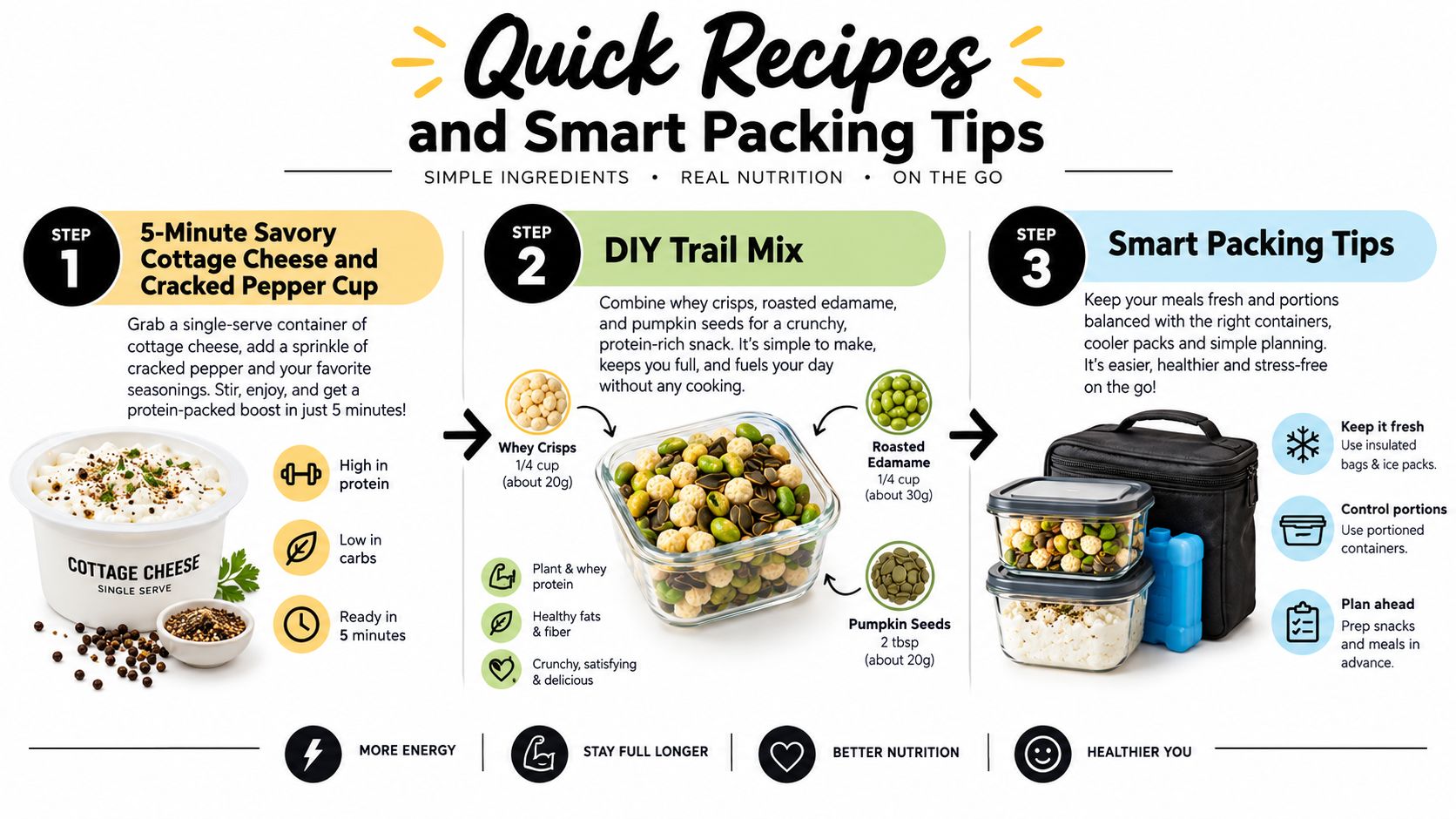
Savory cottage cheese cup: Put a single-serve cottage cheese container in an insulated lunch bag, add cracked pepper, and pack a small spoon. Use the protein amount printed on your container, because brands differ. Prep takes about 5 minutes, and it's best kept refrigerated until you leave.
Crunchy trail mix: Combine 10 grams whey crisps, 20 grams roasted edamame, and 10 grams pumpkin seeds in a small pouch. This makes a measured serving with crunch and complementary ingredients, but the final protein total depends on the labels of the products you use. Add the three package protein values before treating it as a recovery snack.
Plant-based crunch pack: Portion 30 grams of Gym Snack plant-based protein puffs into a zip bag and add apple slices separately. The puffs handle a backpack well, while the fruit needs refrigeration or an insulated pack if you're carrying it for an extended period.
For packing formats that won't become a stale, open-bag mess, use these resealable snack bag ideas.
Storage rules that prevent waste
Jerky generally works in a pantry for weeks when sealed according to its package instructions. Homemade cottage cheese cups and other refrigerated snacks shouldn't sit unrefrigerated for extended periods. Puffs and bars can usually handle a full day in a backpack, but heat can soften coatings and damage texture.
Pack shaker bottles dry, with powder already portioned inside. Add liquid only when you're ready to drink. A damp bottle left closed in a gym bag is an avoidable hygiene problem.
Use masking tape to label each homemade pouch with the packing date. Rotate older snacks to the front of your desk drawer, and stop the forgotten-snack graveyard before it becomes a collection of stale bags.
Your Portable Protein Snack Checklist
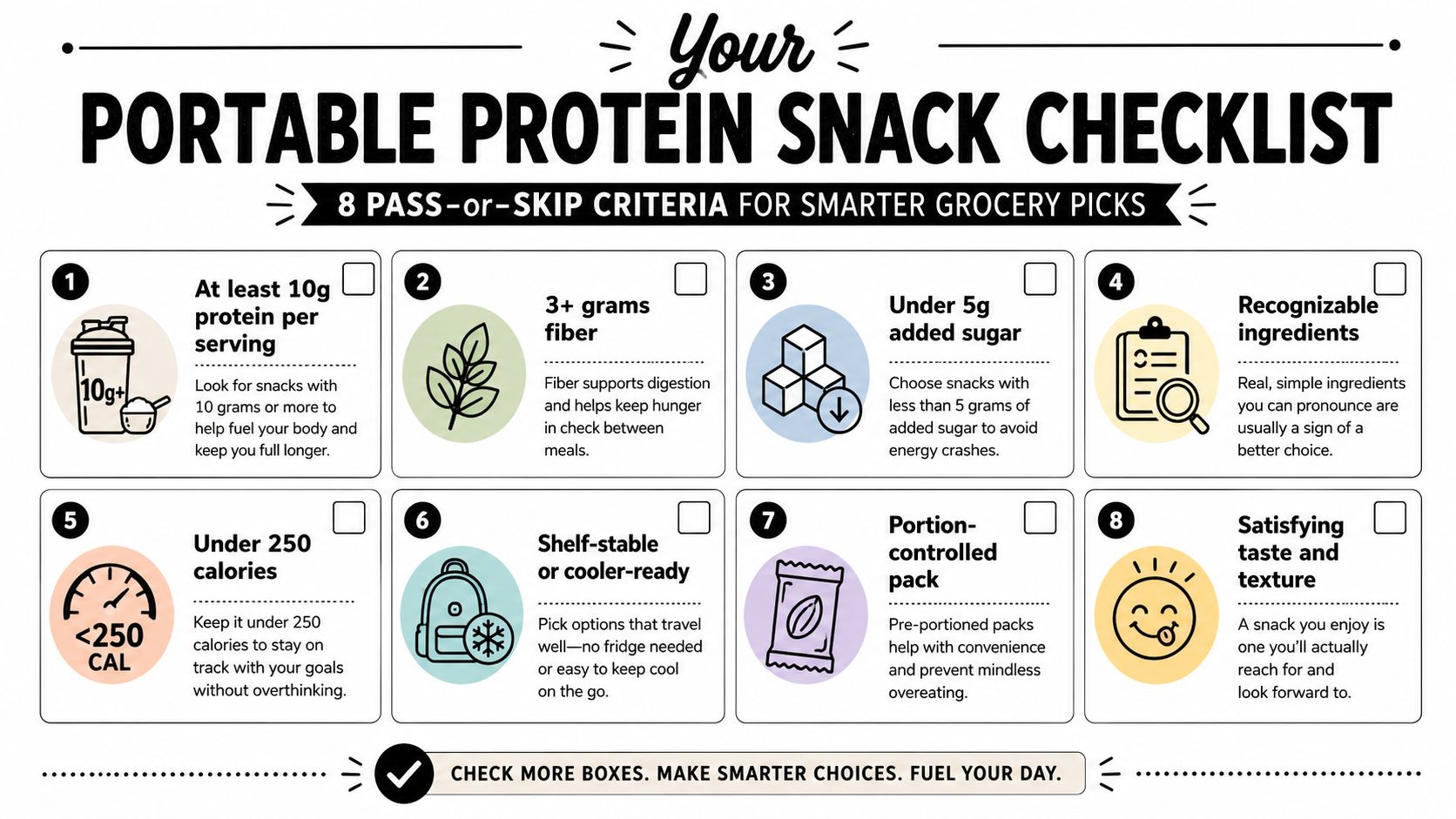
Save this list before your next grocery run. A product doesn't need to pass every preference, but it should pass the needs of the moment.
- Protein: At least 10 grams per serving.
- Fiber: 3 grams or more when fullness is the priority.
- Added sugar: Preferably below 5 grams.
- Saturated fat: Keep it below 3 grams for a frequent snack.
- Ingredients: Skip protein-fortified junk food built around wafers, coatings, and candy fillings.
- Portability: It fits a jacket pocket, desk drawer, gym bag, or carry-on side pocket.
- Storage: It can stay unrefrigerated for the time you need, or it's packed in a cooler.
- Use case: It makes sense for your commute, desk, workout, flight, or appetite that day.
Ignore the loudest front-of-package promise. Check the actual protein, fiber, sugar, fat, ingredients, and portion. Then choose the food that helps you feel satisfied and energized without forcing you into a flavor or format you don't enjoy.
Gym Snack offers plant-based savory protein snacks in crunchy formats, including options designed for portable portions and protein-forward eating. If you're tired of sweet bars and want a shelf-stable snack for your desk, gym bag, or commute, visit Gym Snack and choose a format that fits your routine.