

You're standing in front of the snack shelf after a workout, or maybe trying to survive the afternoon slump without wrecking dinner. One box says “high protein.” Another promises “low sugar.” A third looks like a bakery cookie wearing gym clothes. Most of them seem healthy at first glance. A lot of them aren't.
That's why finding the best protein cookie gets confusing fast. The label might highlight protein, but that doesn't tell you whether the cookie fits your goal. Some work as a convenient post-gym snack. Some are basically dessert with added protein. Some look clean on the front and get messy once you read the ingredient list.
The right way to judge a protein cookie is simple. Ask what job it's supposed to do. Is it helping you hit protein for the day? Is it keeping you full between meals? Is it a better travel option than a candy bar? Or is it just a treat with a fitness halo?
Your Guide to Navigating the Protein Cookie Aisle
I see the same pattern all the time. Someone wants a quick, better-for-you snack, picks up a protein cookie, and assumes the highest protein number wins. Then they eat it, still feel hungry, and wonder why a “healthy” cookie didn't do much beyond satisfy a sweet tooth for ten minutes.
That happens because the protein cookie aisle mixes very different products together. Some are built like sports nutrition products. Some are built like indulgent snacks with extra protein added. Some are convenient and useful. Some are expensive compromises that don't taste good enough to be a treat and don't perform well enough to be functional.
Practical rule: Don't ask whether a protein cookie is healthy in the abstract. Ask whether it matches the situation you're buying it for.
A cookie that works after lifting might not be the best pick for appetite control during a workday. A cookie that fits a low-sugar plan might not be the one you enjoy enough to keep buying. A plant-based option might check your dietary boxes but miss on texture if the formula isn't built well.
Here's the lens I use in practice:
- Purpose first: Decide whether the cookie is for recovery, convenience, a sweet craving, or hunger management.
- Label second: Check serving size, protein, sugar, fiber, and calorie load in that order.
- Ingredients third: Look for a formula that manages texture well instead of just stuffing in extra protein powder.
- Reality check last: If it eats like dessert, treat it like dessert, even if the wrapper says fitness.
That approach saves people from buying based on hype alone. It also makes it much easier to spot the best protein cookie for your own routine instead of chasing someone else's favorite flavor.
What Actually Makes a Protein Cookie Great
A great protein cookie earns its place in your routine. It does more than post a big protein number on the wrapper. It gives you enough protein to be useful, fits the job you need it to do, and still tastes good enough that you will eat it again.
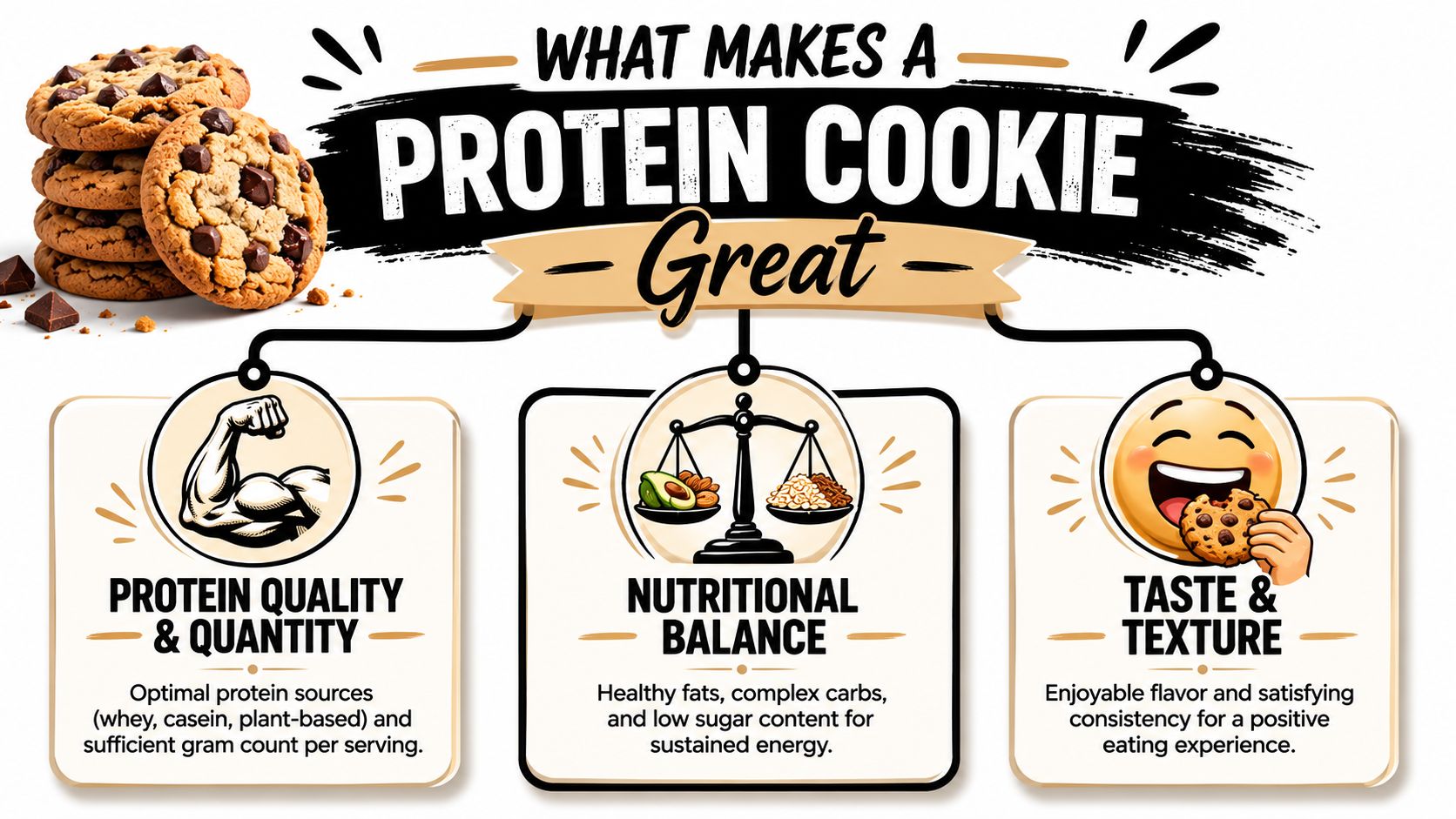
Protein quality and quantity
Protein matters, but context matters more. A cookie with a moderate protein dose can be perfectly fine if you are using it as a convenient snack between meals. That same cookie may be underpowered if you are relying on it after training or trying to raise your daily intake in a meaningful way.
What I look for first is protein density. How much protein are you getting for the calories, and what did the manufacturer have to do to get there? If a cookie adds a little protein but still behaves nutritionally like a standard dessert, it belongs in the treat category with a fitness label attached.
Protein source matters too. Dairy-based proteins usually give a better amino acid profile and texture than weaker blends padded out for marketing. Plant-based cookies can still work, but they need a better overall formula to avoid turning dry, gritty, or overly dense.
Nutritional balance
Many shoppers are often misled. A protein cookie can look strong on the front of the package and still be a poor fit for appetite control, calorie control, or steady energy.
A useful cookie has a balanced build. Protein should be high enough to matter. Calories should make sense for the role. Fiber helps. Sugar and fat are not automatic dealbreakers, but they should justify themselves. If a cookie is high in calories, low in fiber, and easy to overeat, it is closer to a dessert than a functional snack, even if it sits in the supplement aisle.
A peer-reviewed cookie formulation study showed that changing the formula with soy flour and a lower-sugar approach raised protein and lowered calories while keeping taste acceptable. That matters for one reason. Better nutrition and decent eating quality can exist in the same product when the recipe is built with some care.
Taste and texture
Taste drives repeat use. That makes it practical, not superficial.
I see this all the time with clients. They buy the cookie with the best-looking macros, force down one or two, then stop buying it because it feels chalky or oddly rubbery. On paper it looked efficient. In real life it failed.
The best protein cookie still needs to eat like a cookie. Soft or chewy usually works better than dense and dry. Sweetness should feel controlled, not artificial. A good product makes the trade-off clear. It may not match a bakery cookie, but it should feel satisfying enough to fill a real use case.
That last point is important. If you mainly want help staying full, a sweet protein cookie is often a weak tool compared with a higher-protein savory snack that gives more chewing, more salt, and less dessert momentum. A cookie can be great, but only if its function matches the moment.
Matching Your Cookie to Your Fitness Goal
The best protein cookie for one person can be a poor choice for another. A lifter trying to eat enough for the day needs something different from a person trying to stay full between lunch and dinner. Such individual differences often lead to shopping mistakes.
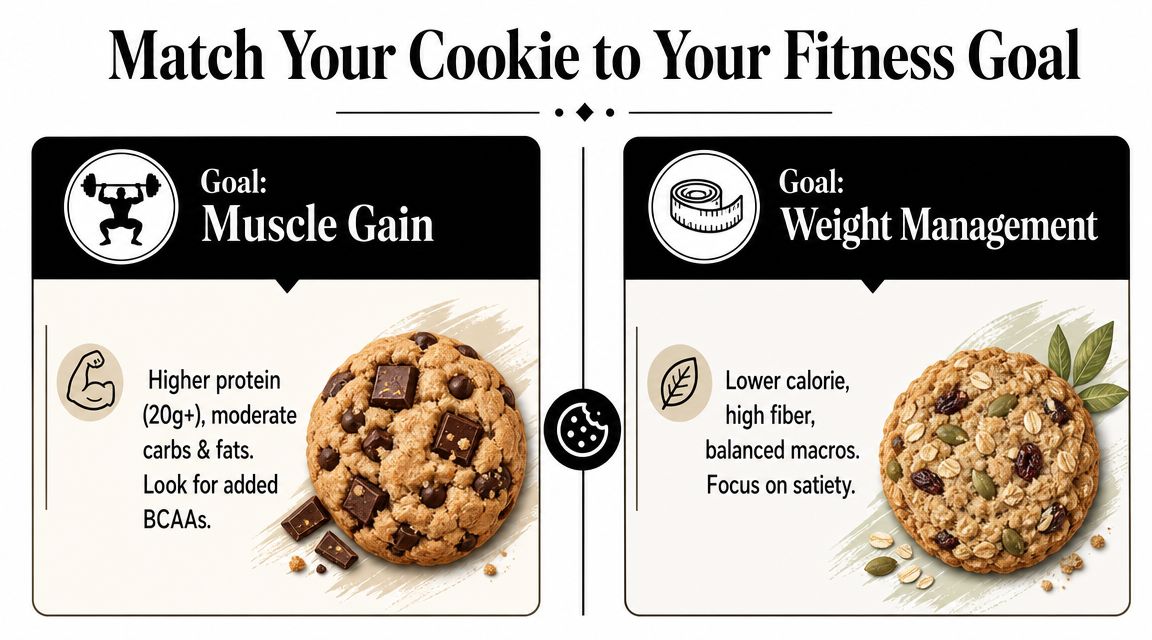
For muscle gain and recovery
If you're trying to build muscle, convenience matters. A protein cookie can be useful when you need something portable and easy to eat after training or between meals. In that case, a higher-protein cookie makes sense, especially if you struggle to hit your total daily intake.
What matters most isn't that the cookie is perfect. It's that it helps you stay consistent. If you're not sure what your daily target should look like, use a practical calculator like this guide to calculating daily protein needs before obsessing over one snack.
That said, don't let “post-workout” become an excuse to ignore the rest of the label. A cookie can support recovery, but it shouldn't replace balanced meals if meals are available.
For weight management
I frequently observe significant overbuying of protein cookies. People assume a protein cookie will control hunger because protein is on the front of the package. Sometimes it helps. Sometimes it just gives you a sweet, easy-to-overeat snack with a healthy label.
For weight management, the smarter choice is usually a cookie with solid protein, reasonable calories, low sugar, and enough fiber to give it staying power. If a cookie is extremely sweet, highly processed in texture, or easy to eat fast, it may not help much with appetite even if the protein number looks respectable.
If your main goal is fullness, a protein cookie has to compete with more boring foods that often do that job better.
If you pair your snack with coffee during a cut or a lower-carb phase, it also helps to understand what else is riding along in that routine. Cartograph Coffee's keto brew guide is a useful read for people trying to line up snacks and drinks with the same nutrition goal.
A short video can also help you think through fitness-snack tradeoffs in real-world terms:
For on the go convenience
Travel days, long work shifts, and back-to-back meetings are where protein cookies shine. They're tidy, shelf-stable, and easier to carry than many whole-food options. In those situations, “best” often means reliable and practical, not nutritionally flawless.
Use a simple checklist:
- Portable enough: It should survive your bag without melting or crumbling into dust.
- Easy to finish: Dense products can become a chore, especially if you're eating quickly between tasks.
- Predictable on digestion: Some people do fine with fiber blends and sugar alcohols. Others don't.
For allergies and dietary restrictions
This category gets harder fast if you need plant-based, dairy-free, or gluten-free options. Many formulas rely on whey, eggs, or yogurt to hold texture, which is one reason inclusive protein cookies are difficult to make well.
As noted in Sunkissed Kitchen's protein cookie guidance, many guides miss the challenge of creating plant-based, dairy-free, and gluten-free protein cookies that aren't dry or chalky. That's the key trade-off in this niche. If you have ingredient restrictions, don't just ask whether the cookie excludes allergens. Ask what the formula uses instead for moisture, binding, and chew.
How to Read a Protein Cookie Label
A good protein cookie can look bad if you read the label carelessly. A bad one can look good if the front panel does the talking for you. The fix is to read labels in the same order every time.
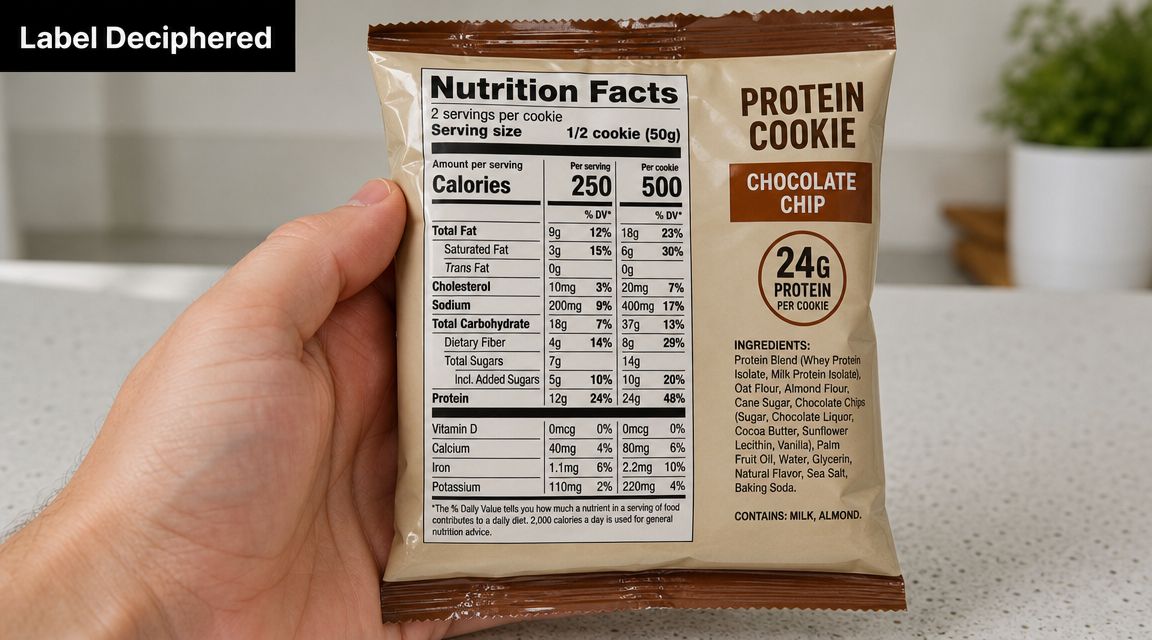
Start with serving size
The serving size tells you whether you're comparing products fairly. Independent review content has noted that many protein cookies are sold as 2-serving products and can climb past 400 calories per cookie, which is why true single-serve products matter so much in this category. If you eat the whole cookie, read the whole cookie.
That's one reason the benchmark product in the category gets so much attention. According to Quest Nutrition's Chocolate Chip Protein Cookie listing, one 59 g cookie contains 240 calories, 15 g of protein, 1 g of sugar, 2 g of net carbs, 9 g of dietary fiber, and 17 g of fat. Whether you love that macro split or not, it's clear and single-serve.
Then check the numbers in context
Don't just stare at protein. Look at how the rest of the label supports or fights that number.
A quick scan should answer these questions:
- How much protein am I getting? Enough to justify choosing this over a regular cookie?
- How much sugar comes with it? Low sugar can be useful, but only if you tolerate the sweetener system.
- What's the fiber doing? More fiber often helps with fullness, but it can also affect digestion.
- How calorie-dense is it? A cookie can fit your plan and still be too heavy for the role you want it to play.
If you want a broader label-reading refresher, this nutrition labels guide is a good practical companion.
Read the package from top to bottom, but make your decision from serving size downward, not from marketing claims upward.
Understand net carbs without getting distracted
Net carbs matter to some shoppers and barely matter to others. If you follow a lower-carb approach, they can be useful. If not, they're often less important than the total picture.
What matters more is whether the cookie fits your energy needs and keeps you satisfied. A lower-sugar label doesn't automatically make a cookie more filling, cleaner, or better for your goals. It only tells you one part of the story.
Decoding Ingredients and Spotting Red Flags
A cookie can look good on the nutrition panel and still be a poor buy once you read the ingredients. This is usually where marketing gets exposed.
Ingredient lists tell you what job the cookie is trying to do. Is it trying to act like a dessert with some added protein? Is it trying to replace a bar or mini meal? Or is it cramming in protein first and hoping flavor survives? That distinction matters, because a dessert-style protein cookie and a hunger-managing snack are not the same thing.
What solid formulas usually look like
A well-built protein cookie usually uses a mix of ingredients with clear functions. The protein source does the obvious work. Fat helps keep the bite from turning dry. Fiber or binding ingredients help create chew and structure. Sweeteners are often there to keep sugar lower without making the product taste flat.
That means a good ingredient list may look a little processed. That alone is not a red flag. A shelf-stable protein cookie has to solve texture, sweetness, and moisture at the same time.
What matters is whether those choices create a product that fits the role you want. If you want an occasional sweet protein snack after training, a more engineered formula may be perfectly reasonable. If you want something to control appetite between meals, a sweet cookie often does a worse job than the label suggests.
Where formulas usually break down
The most common problem is easy to spot after one bite. The cookie eats like compressed protein powder. It is dry, chalky, strangely dense, or gummy in the center. That usually means the brand pushed the protein claim harder than the eating experience.
A few red flags show up often:
- Multiple protein sources packed high in the list without enough fat or moisture support: This can leave a dusty aftertaste and a tough texture.
- Heavy use of sweeteners with no balance from salt, fat, or real flavor ingredients: The result is often overly sweet, cooling, or artificial.
- A long ingredient list that reads like patchwork: Length is not the issue. Random additives that do not seem to support texture, flavor, or shelf life usually signal a formula that needed too many fixes.
- Indulgent branding that does not match the product: If it promises bakery-cookie satisfaction but feels like dense diet food, it rarely satisfies the dessert craving or the hunger problem.
Some shoppers also learn the hard way that the "better macros" cookie is the one that upsets their stomach. Sugar alcohols, added fibers, and certain gums can be fine for one person and a bad fit for another. Tolerance matters more than label bragging rights.
Clean ingredients are not the whole story
A shorter ingredient list can look reassuring, but it does not guarantee a better product. I have seen plenty of "cleaner" protein cookies that taste dry, stale, or unfinished because the formula never solved the texture problem. On the other hand, a more engineered cookie may taste much better while being harder on digestion or less aligned with your food preferences.
That is the trade-off. The best choice is the cookie that does its job without creating a second problem.
If the job is a treat with some added protein, accept it for that. If the job is staying full and keeping intake under control, a sweet cookie is often the weaker option. In that case, a savory, higher-protein snack usually works better because it creates less dessert momentum and often manages hunger more effectively.
A good protein cookie formula should make sense on paper and in your mouth. If it only wins on the wrapper, keep walking.
The Homemade Protein Cookie Alternative
Homemade protein cookies appeal to people who want control. You choose the protein powder, the fat source, the sweetener, and the add-ins. That matters if you're avoiding specific ingredients or you don't want a shelf-stable packaged product.
The trade-off is that home recipes are less forgiving than people expect. The same qualities that make packaged protein cookies challenging also show up in your kitchen. Protein powder absorbs moisture quickly, and small changes in liquids or fats can turn a cookie from chewy to crumbly.
Where homemade works best
As shown in The Real Food Dietitians' protein cookie recipe guidance, successful homemade versions balance protein powder with fats such as nut butters and humectants such as honey or yogurt. They also warn that the wrong liquid adjustment can change the texture in the wrong direction. That's the core lesson of DIY protein baking.
If you cook often, homemade can be worth it because you can tweak the formula over time. If you don't, expect some misses before you land on a repeatable result.
A simple pros-and-cons snapshot helps:
| Homemade upside | Homemade downside |
|---|---|
| Full ingredient control | Texture is harder to nail |
| Easier to fit allergies and preferences | More prep and cleanup |
| Flexible sweetness and flavor | Shorter shelf life |
| Can be less processed in feel | Protein powders vary a lot in baking |
If you want to get better at using powders in recipes before diving in, Mise blog on protein powder is a useful starting point for understanding how cooking performance changes from one product to another.
Is a Savory Snack a Smarter Choice
You finish a workout, open your bag, and have two options. One is a chocolate-chip protein cookie that feels like a treat. The other is a savory, higher-protein snack that eats more like actual food. Both can fit. They just do different jobs.
That distinction matters. Plenty of people shopping for the best protein cookie are not looking for a cookie at all. They are looking for something filling, convenient, and easy to keep eating habits under control.
Sweet snacks don't always solve hunger well
A protein cookie can work well after training, during travel, or when you want a better substitute for a standard dessert. But it is still a sweet, dessert-style product, and that changes how people experience it.
Satiety is not just about the protein number on the front of the wrapper. Sweetness, texture, fiber, calorie density, and how quickly the snack goes down all affect whether it holds you over. As noted in Cheat Day Design's discussion of protein-cookie satiety trade-offs, protein helps, but fullness depends on more than protein alone. In practice, some people finish a sweet protein snack and still want something else ten minutes later.
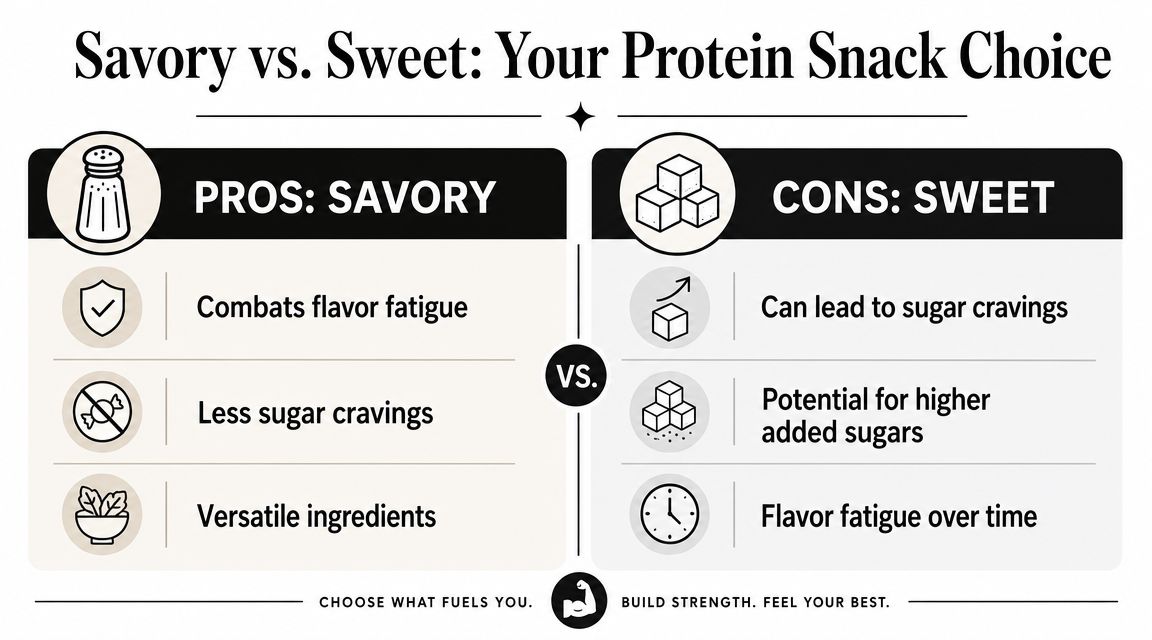
When savory often wins
Savory snacks usually create less of that dessert signal. For clients who are trying to cut back on grazing, that can make a noticeable difference.
They often make more sense in these situations:
- Appetite control matters most: Sweet flavors keep some people in a snacky mindset, even if the macros look solid.
- You want food that feels less processed: A savory option often reads more like a small meal and less like a reward.
- You are burned out on sweet fitness foods: After enough bars, shakes, and cookies, another chocolate or birthday-cake flavor gets old fast.
- You want steadier eating habits: Savory snacks tend to fit better between meals when the goal is staying level, not chasing a treat that happens to have protein added.
If you want more context, this guide on what savory snacks are and why they can work well for hunger management is a useful read.
The key point
The best protein cookie is not the one with the biggest protein claim. It is the one that fits the job. Sometimes that job is satisfying a sweet craving without going to a regular cookie. Sometimes it is a portable backup snack for a long afternoon or a travel day.
If your main goal is fullness, better portion control, or getting away from dessert-style "healthy" foods, a savory protein snack is often the smarter tool.
If you're tired of sweet protein snacks and want something that eats more like real food, Gym Snack is worth a look. It takes a different approach from the typical protein cookie by focusing on savory, crunchy, plant-based protein with chef-inspired flavor, clean ingredients, and an allergen-conscious profile that fits training, workdays, and in-between meals.