

A typical chocolate covered donut contains 204 to 290 calories, depending on its size and recipe. Most 57 g retail servings land between 270 and 290 calories.
That range is wide enough to disrupt a carefully tracked day. Two donuts can look nearly identical in a display case while differing by 86 calories, because the dough, portion weight, and chocolate coating change the final energy count. If you log a generic entry without checking the product, your food diary may be wrong before you take the first bite.
Calorie Range for Chocolate Covered Donuts
A chocolate-covered donut can contain 133 to 290 calories, depending on its size, dough, and coating. USDA-linked entries list a small 2-inch chocolate-coated or frosted doughnut at 133 calories, a cake-style version at 204 calories, and a medium 3-1/4-inch cake donut at 251 calories. A large chocolate-coated cake-type donut contains about 270 calories, while a 3-inch raised or yeast chocolate-covered donut contains about 272 calories. These comparisons come from USDA-linked chocolate-coated doughnut entries.
The retail comparison is just as important. A generic 57 g chocolate-covered donut contains 270 calories, while a Great Value chocolate-covered donut at the same serving weight contains 290 calories, according to the nutrition record for chocolate-covered donuts. That produces an 86-calorie difference between the 204-calorie cake-style entry and the 290-calorie retail entry. For someone tracking macros, that gap can erase the margin planned for a snack.
| Source / Brand | Weight | Calories | Type |
|---|---|---|---|
| USDA-linked small entry | 2 inches | 133 kcal | Chocolate-coated or frosted |
| USDA-linked cake entry | Not specified | 204 kcal | Chocolate-coated cake donut |
| USDA-linked medium entry | 3-1/4 inches | 251 kcal | Chocolate-covered cake donut |
| Generic retail entry | 57 g | 270 kcal | Chocolate-covered donut |
| Great Value retail entry | 57 g | 290 kcal | Chocolate-covered donut |
Use the product-specific listing whenever a package or bakery provides one. A generic database entry is a fallback, not a precise log. For comparisons with lighter baked options, this guide to low-calorie baked goods helps distinguish a lower-calorie choice from a smaller serving that only appears lighter.
Why similar-looking donuts log differently
Cake donuts have a denser crumb and a different fat balance than light yeast-raised donuts. A thicker chocolate dip adds energy without making the donut look much larger. Size also matters, but visual comparison remains unreliable when glaze thickness changes.
For tracking, start with 270 to 290 calories for a 57 g retail donut unless the label gives a better figure. A smaller cake donut may contain less, while a larger bakery donut may exceed that range. Weigh the item and log its actual product whenever possible.
Macro Breakdown and What It Means for Your Diet
As shown in the range table above, a 57 g chocolate-covered donut distributes its macros at roughly 55% fat, 42% carbohydrates, and 3% protein, with 12 g saturated fat and 17 g sugar. The split is useful for logging, but it should guide a decision rather than become another headline number.
Fat and carbohydrates account for most of the donut's energy. Protein contributes little, so the donut cannot replace a protein-focused meal or recovery snack. Its place in your diet depends on what you planned around it and which target the serving uses.
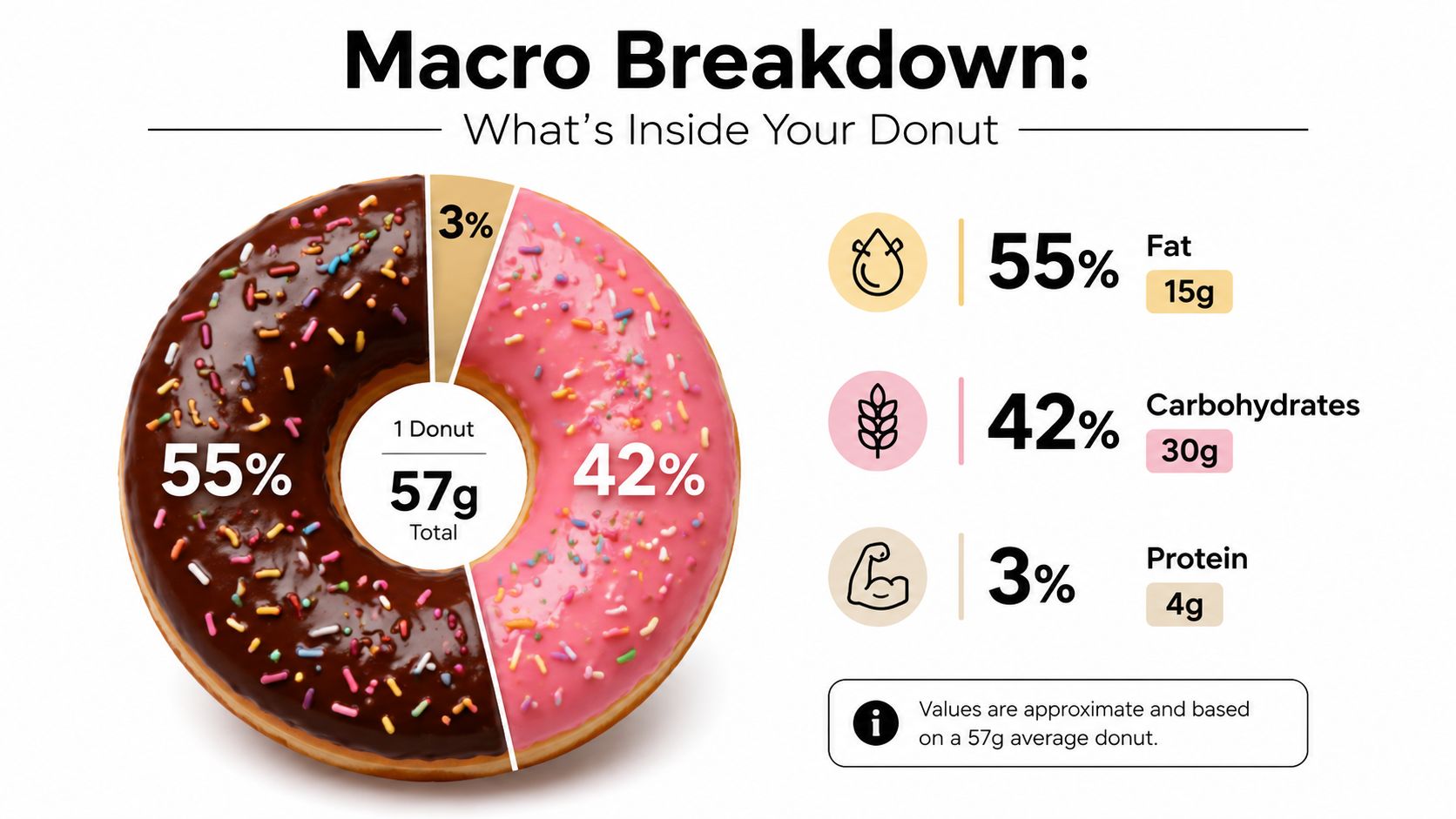
Read the macros, not just the headline calories
A fat-heavy treat can use a large share of your daily fat allowance before it feels like a substantial meal. Its carbohydrate content can fit a planned pre-training snack, but pair it with protein if recovery nutrition matters. Do not log the donut as though it covers both needs.
Use the Maximum Health Products macro guide to set the day's calorie, protein, carbohydrate, and fat targets before choosing where the donut fits. Then judge the trade-off clearly. The donut may replace part of a snack, but it should not displace the protein serving that supports fullness or recovery.
A useful log should capture the product, weight, dough type, and coating. That matters because two similar-looking donuts can differ by 86 calories, while a thicker glaze or different dough also changes the macro record. Treat the listed entry as a starting point, not proof that every donut matches it.
Practical rule: Log the donut as a dessert or carbohydrate-and-fat item, not as a recovery snack.
Record it before eating, include the coating, and adjust the rest of the day without trying to earn it through punishment. A structured macro-counting approach helps you see that trade-off while you can still change the rest of the meal.
Four Factors That Change the Calorie Count
Four variables drive the hidden 86-calorie gap between chocolate donuts that look nearly identical: size, dough type, filling, and glaze thickness. Treating them as interchangeable will undermine an otherwise precise food log.
Size sets the baseline
A small donut can look ordinary in a large bakery case, while a large-format version carries more dough and coating. The verified database entries, as shown in the calorie table above, list a 2-inch chocolate-coated or frosted doughnut at 133 calories and a medium 3-1/4-inch cake-type version at 251 calories. Portion size and formulation account for much of that spread.
Weighing beats eyeballing. More weight means more dough, absorbed frying fat, or topping, even when the diameter seems familiar. Record grams whenever the product is sold without a reliable label.
Dough type changes the energy profile
Cake and yeast-raised donuts need separate entries. A cake-type chocolate-coated donut is listed at 204 calories, while a raised chocolate-covered donut is about 272 calories for a 3-inch piece. Dough structure, recipe fat, and frying behavior all affect the result.
A dense cake donut may hold more fat in its batter. A yeast-raised version may carry more fried dough and coating. Do not assign one database entry to both styles just because the topping matches.
Fillings add a hidden layer
A ring donut and a filled donut can share the same chocolate surface while carrying different totals. Cream, custard, or chocolate filling adds calories inside the dough, where visual checks cannot detect them.
If the filling is unverified, log above the estimate for an unfilled ring. A sensible range is more useful than false precision, especially when the filling amount is unknown.
Glaze thickness finishes the calculation
A thin chocolate coating and a heavy dip may look similar at a glance. The heavier finish adds sugar and fat, and the difference grows with a second dip or extra decoration.
The coating is part of the food. Never log the dough while ignoring the chocolate.
Use the earlier verified entries as anchors: 204 calories for a cake-style entry, 251 calories for a medium cake donut, and roughly 270 to 290 calories for common retail servings. Adjust for size, dough, filling, and coating thickness. That approach exposes the silent sources of variance instead of forcing every chocolate donut into one generic calorie entry.
Why Calorie Density Makes Portion Control Hard
The earlier database entries confirm the gap between cake and yeast-raised styles. That difference matters because a chocolate-covered donut can look standard while its calorie density changes with dough type, size, and glaze thickness.
A retail chocolate-covered donut weighing 57 g provides approximately 4.9 to 5.1 calories per gram, based on entries showing 280 and 290 calories in this product-specific nutrition record. It is a compact, energy-dense food with little water and substantial fat and sugar. A slightly heavier donut can add meaningful calories without looking much larger.
| Food Item | Serving Weight | Calories | kcal per Gram |
|---|---|---|---|
| Chocolate-covered donut, retail example | 57 g | 280 kcal | About 4.9 |
| Chocolate-covered donut, retail example | 57 g | 290 kcal | About 5.1 |
The table does not establish one density for every donut. It shows why weight is the most useful control point for this category. A thicker glaze can raise the total while the ring keeps the same familiar shape, creating a hidden variance of 86 calories between seemingly similar donuts.
Use a scale to calibrate your eyes
Weigh one representative donut at home, then record its package or database calories. Compare that portion with the donuts you usually buy. This gives you a practical visual reference for bakery servings, though sight alone still cannot identify the exact calorie count.
Use that reference to adjust your tracking for size, dough structure, and coating thickness. Do not log a large, heavily glazed donut as a standard retail serving merely because it resembles one.
For appetite management, eat foods with more volume and protein before deciding whether dessert fits. These foods for appetite control can help you leave room for a treat without relying on willpower once hunger is high.
Smart Swaps and Portion Strategies for Active People
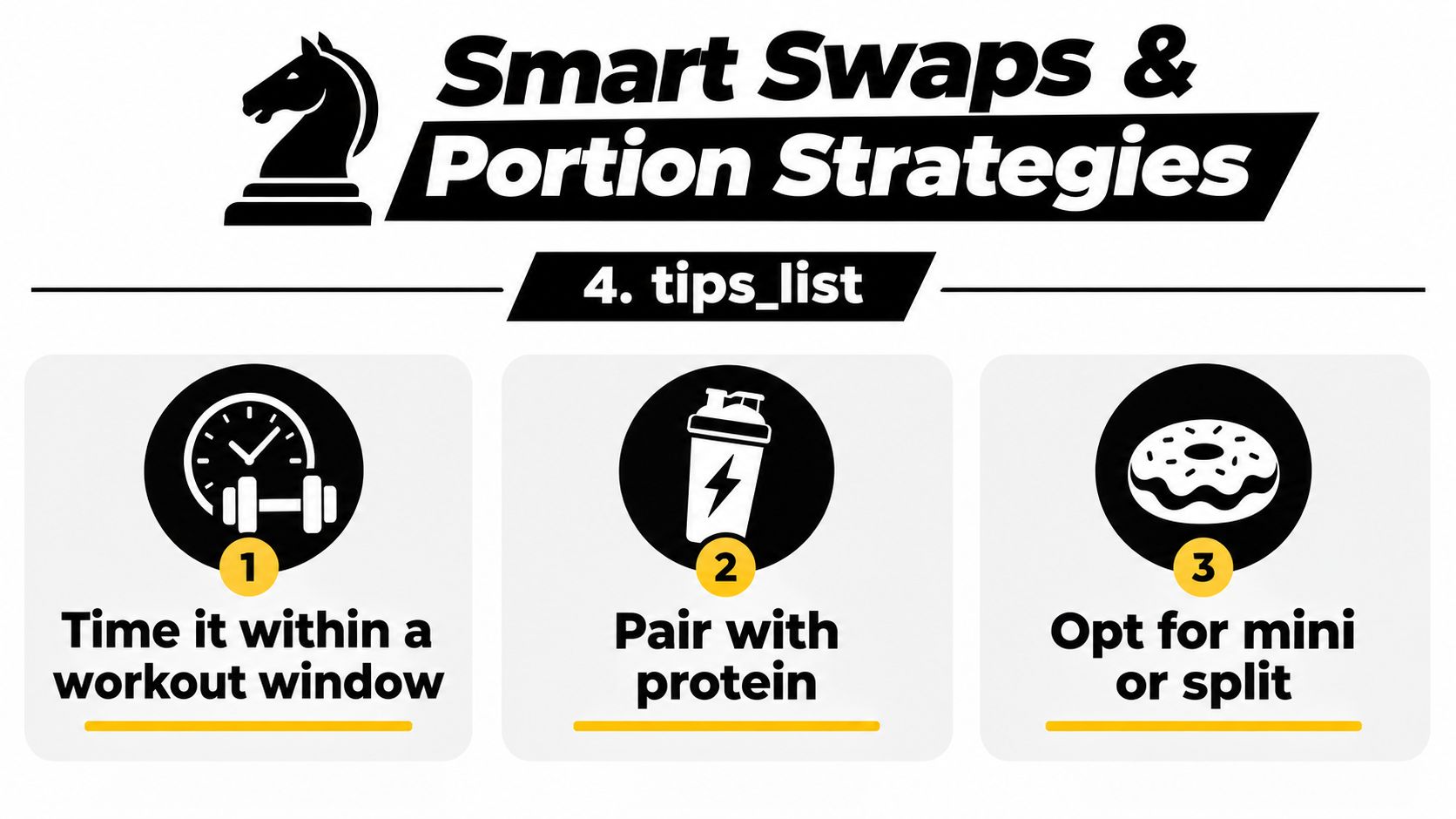
The hidden calorie swing between similar-looking chocolate-covered donuts can reach 86 calories. Size, dough type, and glaze thickness create that gap without changing the familiar ring shape, so active people should manage the portion rather than trust appearance.
Three practical strategies
- Match the donut to training. Eat it near a workout when its carbohydrates fit your planned energy intake. Timing helps organize the calories, but it does not reduce the donut's fat or total calories.
- Use half and add protein. Cut the donut in half, then pair that portion with a protein source. This reduces the immediate dessert portion and addresses the donut's low protein content. Log the donut and the protein separately. The added protein does not change the donut's calories.
- Choose a baked version only with verification. A baked chocolate donut may lower calories, but the recipe or nutrition label decides the result. Baking method alone proves nothing. Flour, sugar, butter, dough structure, and glaze thickness still determine the final count.
Choose savory food when your macros need it
Pick a protein-centered snack on a rest day, late in the day when you are close to your calorie target, or whenever your protein intake is short. A chocolate-covered donut supplies mainly fat and carbohydrates, so it is a poor fix for a protein deficit.
Use the donut when it fits the plan, not when hunger makes the decision for you. If your calorie or fat budget is tight, a savory high-protein option provides more nutritional value per serving. If you trained, have room in your intake, and want the donut, portion it, log it, and move on.
How to Estimate Calories When Labels Are Missing
Independent bakeries and coffee shops often provide no nutrition panel. Use a defensible range, then adjust it for size, dough, and coating instead of pretending the estimate is exact. The verified entries from the USDA database and retail nutrition records, covered earlier, provide useful anchors.
Start with the closest verified category
Identify the dough first. Cake-style donuts are denser and should be compared with cake entries. Yeast-raised donuts usually match raised-dough entries more closely. A small ring with a thin chocolate dip belongs near the lower end. A larger donut with a thick glaze belongs higher, even when both look like standard chocolate donuts.
Size drives the hidden variance. Two apparently identical donuts can differ by 86 calories because one uses more dough or carries a heavier coating. That difference can distort macro tracking when you log every item under one generic entry.
Use a visual and ordering check
Apply this quick reference before logging:
- Small cake donut: use a lower-range entry.
- Standard raised donut: use a middle-range entry.
- Large or filled donut: choose a higher-range entry.
- Thick glaze or full chocolate coating: add a conservative adjustment.
- Unclear bakery recipe: log above the closest plain reference.
Ask the seller three direct questions: Is the donut cake-style or yeast-raised? Is it filled? Was the chocolate applied as a light dip or a thick coat? If the answer is unclear, weigh the donut and select a database entry with a similar size and finish.
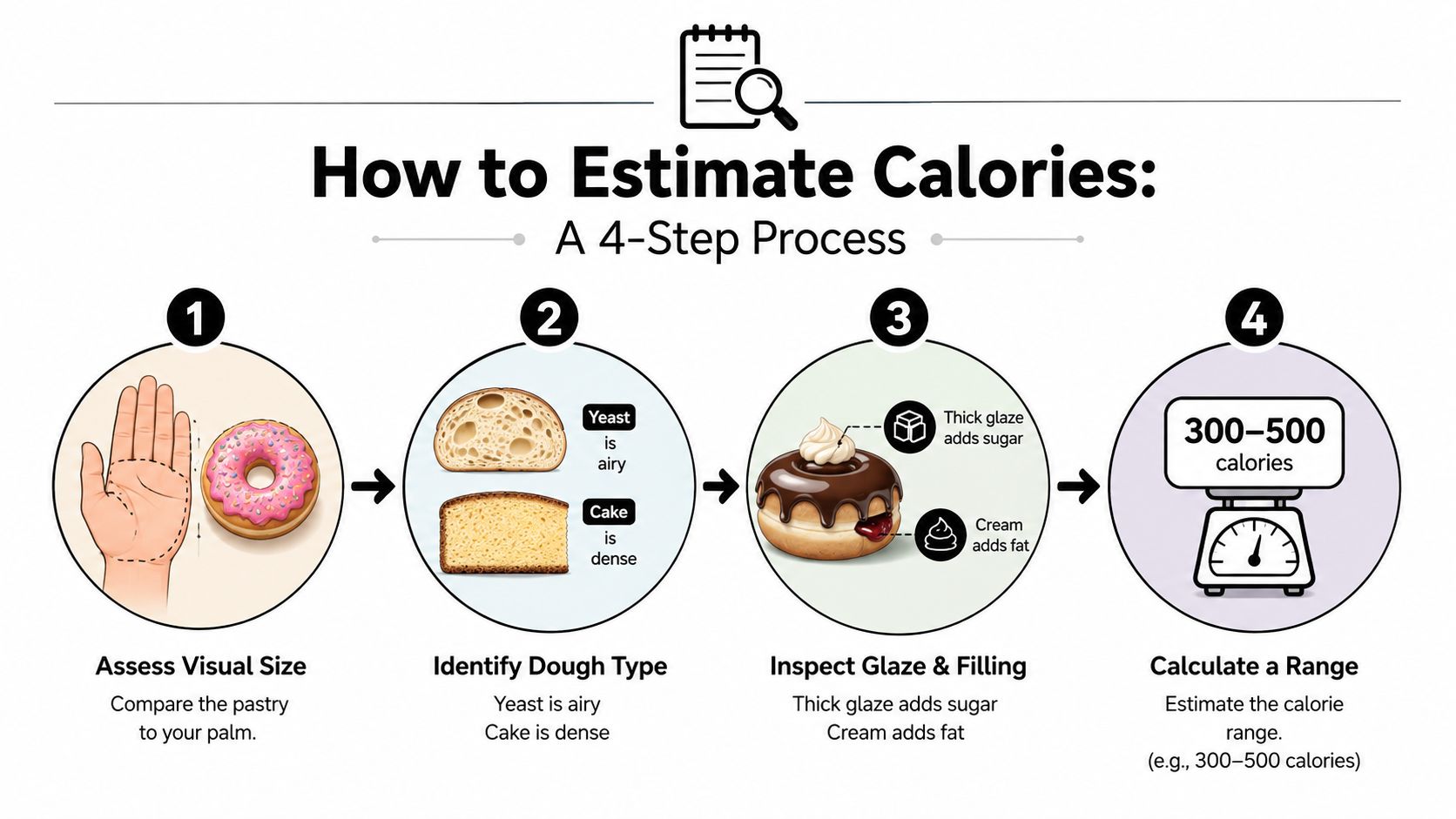
Save the chosen entry in your tracker and use the same method each time. Consistency matters more than false precision. Reserve the lowest estimate for a small, lightly coated donut, not for a large bakery piece that merely resembles one.