

A low-calorie label doesn't automatically make a baked item useful for weight management or a protein goal. The better question is whether the realistic serving delivers enough satisfaction for its role, with calories, fiber, protein, texture, ingredient tolerance, and meal context all considered together. A tiny brownie may work as dessert but fail as breakfast. A thin bread slice may save calories only when it replaces a standard slice, while a vegetable-based muffin can offer a familiar bakery experience without functioning like a high-protein snack.
The options below cover distinct jobs: dessert cakes and brownies, reheatable muffins, sandwich bread, toast, and vegetable-forward bread alternatives. Use the serving size printed on the package, decide in advance whether one serving will satisfy you, and pair dessert-style products with protein when they won't stand alone. When a sweet baked good can't provide enough protein, a savory option such as Gym Snack may fit the snack occasion better.
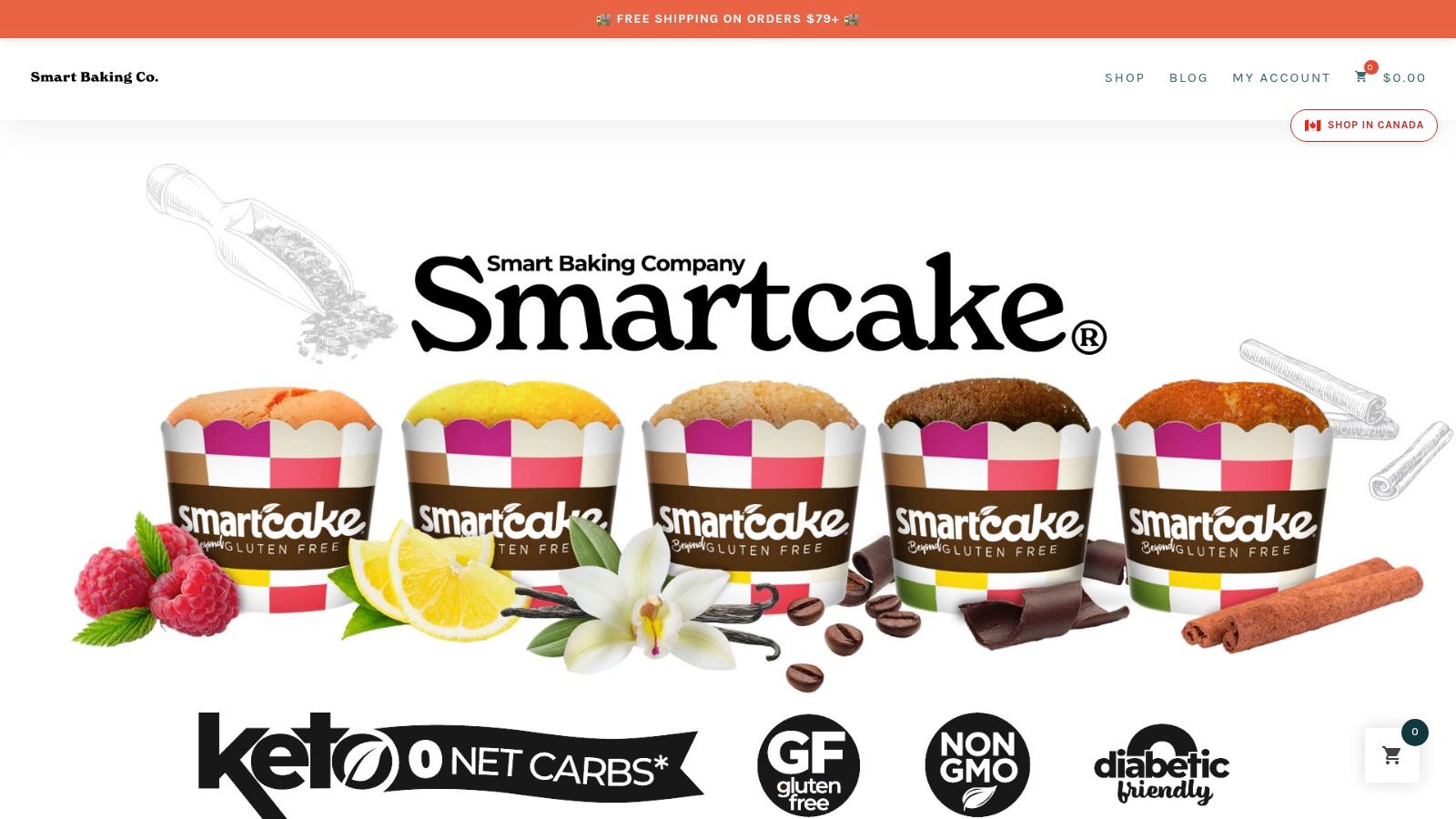
1. Smart Baking Company Smartcake
Smart Baking Company's Smartcake is the clearest choice when you want an actual cake format with very tight calorie control. Many current flavors list about 38 calories per cake, although the exact figure varies by flavor and batch, according to the Smartcake product page. Chocolate, Cinnamon, Vanilla Latte, Lemon, and Raspberry Cream give the product a broader flavor range than a single-purpose diet cake.
The cakes are gluten-free, sugar-free, starch-free, and non-GMO, with added fiber and some protein. They're sold as portion-controlled two-pack cakes, and microwaving can make them warmer and softer, which helps create a more dessert-like experience than eating them straight from the package.
Best role and trade-offs
Use Smartcake as a portion-controlled dessert, not as a meal replacement. It's among the lowest-calorie true cake options available, making it useful when you want sweetness and cake structure without turning dessert into a large calorie event. It won't taste or feel exactly like conventional bakery cake, and flavor performance can vary, so warming it is worth trying before judging the texture.
Availability is the main practical limitation. Smartcake is primarily sold direct to consumers, and local shelf availability is more limited than mainstream brownies or bread. The sugar-free formulation also means ingredient-sensitive shoppers should read the label rather than assuming that “sugar-free” means universally comfortable.
Practical rule: Treat Smartcake as the sweet part of a snack. If you need lasting fullness, add a separate protein source instead of expecting a very low-calorie cake to do both jobs.
Before buying, use this guide to reading nutrition labels to compare the full serving information, fiber, protein, and sweetener system.
2. Fiber One 70-Calorie Brownies
Fiber One's 70-Calorie Brownies are the strongest pick for easy, shelf-stable dessert access. Each fudge-style brownie contains 70 calories, and the product provides approximately 7 grams of fiber per brownie, as listed by the official Fiber One product information. That combination makes the brownie more substantial on paper than a very small cake, though fiber doesn't turn it into a high-protein food.
The brownies are widely stocked in grocery stores and big-box retailers, so they're practical for a pantry, office drawer, or travel bag. They also microwave well. A short warm-up changes the texture from compact and shelf-stable to softer and more fudge-like, which can make a small portion feel more intentional.
Read the fiber label carefully
Fiber One uses added fibers and sugar alcohols, and some people experience digestive discomfort from those ingredients. Start with the package serving rather than treating the high fiber figure as a reason to eat several, especially if you're not accustomed to concentrated fiber.
The portion is smaller than a traditional brownie. That's the central trade-off, not a flaw to hide. You're buying predictable calorie control and convenience, but you may need a complementary food if one brownie doesn't meet the occasion.
- Choose it for dessert: It works best after a meal or alongside a planned protein source.
- Keep it available: Its shelf stability makes it easier to manage unplanned sweet cravings.
- Test tolerance: Added fibers and sugar alcohols can affect people differently.
If you're building a snack around it, use this weight-loss cookie guidance as a reminder to judge the entire snack, not just the calorie number on the front of the box. Fiber One is a reliable dessert portion, but it isn't a substitute for a protein-focused snack.
3. Veggies Made Great Muffins
Veggies Made Great muffins are the best match for people who want a familiar muffin experience without baking from scratch. These frozen, heat-and-eat muffins use vegetables among their leading ingredients. Double Chocolate includes zucchini and carrots, while Birthday Cake includes squash and carrots, according to the Veggies Made Great product range.
Depending on flavor, muffins typically land around 80 to 110 calories each, with the exact amount shown on the package. Many varieties are gluten-free, and single-serve portions reheat quickly, with the brand describing a microwave preparation of roughly 35 seconds.
A better breakfast component than a complete breakfast
These muffins fit the breakfast or snack role better than the ultra-low-calorie cakes because they provide a more recognizable muffin portion. They're still dessert-leaning, and their vegetable ingredients don't automatically make them low sugar or high protein. Pair one with Greek yogurt, eggs, cottage cheese, or another protein food if you want breakfast to hold you longer.
Texture and flavor vary by SKU, and some flavors have been reformulated. That makes the freezer aisle a place to test specific varieties rather than assuming every muffin will perform identically. The texture can be moist and soft after heating, but it won't replicate a fresh bakery muffin with a crisp top.
Storage is convenient if you have freezer space. The product also arrives in packaging designed for frozen distribution, an important consideration for brands using frozen food packaging materials. Choose Veggies Made Great when you want a warm, recognizable muffin with modest calories, not when your primary target is maximum protein per bite.
4. Pepperidge Farm Very Thin Sliced Bread
Pepperidge Farm Very Thin Sliced White Bread is the most straightforward option for a lower-calorie sandwich or toast base. The Very Thin white loaf provides 40 calories per slice, according to the official product page. Unlike many specialty diet products, it aims to preserve the familiar taste of white bread, which matters if texture and flavor are the reason you reach for bread in the first place.
This is a serving-size substitution, but it isn't merely a miniature dessert. Two slices create a sandwich structure, and the calorie difference comes from the thinner slice rather than from turning bread into a radically different food. That makes it easier to use in ordinary meals.
Build the meal around the filling
The bread is best when paired with a substantial filling. Turkey, chicken, tuna, tofu, eggs, or another protein-forward ingredient can turn the slices into a real meal, while vegetables add volume and crunch. Thin slices are more delicate, so heavy or wet fillings may require careful assembly or toasting.
The Very Thin white loaf is widely distributed through grocery stores, and the brand provides a product finder for shoppers checking local availability. Don't assume every thin-sliced option has the same calorie profile. Thin whole-grain SKUs can run higher, at around 70 calories per slice, as described in the product notes, so compare the specific label before choosing.
The bread saves calories only if it replaces a higher-calorie bread serving. The sandwich filling still determines much of the meal's protein and satiety.
Choose Pepperidge Farm when you want normal bread behavior, reliable access, and a familiar white-bread taste. Choose something else if you need high fiber, extra protein, or a sturdy base for very wet fillings.
5. Nature's Own Life Keto Soft White and 40-Calorie Honey Wheat
Nature's Own Life gives supermarket shoppers two aggressive calorie-targeted bread formats. Keto Soft White lists about 35 calories per slice, while 40-Calorie Honey Wheat lists about 40 calories per slice, based on the respective product positioning from Nature's Own. The line also emphasizes high fiber, keto-friendly use, and soft texture.
That soft texture makes these breads useful for sandwiches, toast, and pressed meals. They're easier to find than many niche keto loaves, and the slices can work well when you want a low-calorie bread format without switching to a wrap or vegetable substitute. Certain SKUs are made without artificial colors, flavors, or preservatives, but shoppers should verify the exact loaf because formulations differ.
Choose by dietary priority
Keto Soft White is the clearer choice for shoppers prioritizing net-carbohydrate positioning. Honey Wheat makes more sense when you want a slightly more familiar wheat-style flavor while keeping the slice calorie target low. Neither should be confused with a traditional bakery loaf. High fiber and specialty formulations can change the chew, softness, and aftertaste.
The trade-off is value. These breads may cost more than standard loaves in some markets, and the taste may not satisfy someone seeking dense, crusty artisan bread. They also don't automatically solve a protein goal. Add a protein-rich filling rather than treating the bread's fiber claims as a substitute for protein.
For readers who want another bread comparison, this gluten-free protein bread guide can help separate bread texture, dietary restrictions, and protein priorities. Nature's Own Life is the practical supermarket choice when availability and soft sandwich texture matter more than a traditional loaf experience.
6. Hero Bread Sliced White and Seeded Breads
Hero Bread is the strongest option for a protein- and fiber-supporting sandwich base. Hero Classic White lists 45 calories per slice, with 0 grams of net carbs and 0 grams of sugar per slice. An example label for the White slice also lists 5 grams of protein and 11 grams of fiber, while Seeded Bread is about 60 calories per slice, according to the Hero Bread product page.
Those figures change the role of bread. A standard slice usually contributes structure first, but Hero is designed to contribute more fiber and protein while preserving a bread-like shape and texture. It can support a sandwich, toast, burger-style meal, or breakfast combination without requiring a separate low-carb wrap.
Best for macro-aware meals
Use Hero when fiber and protein are priorities, especially if you're assembling a meal around lean meat, eggs, tofu, cottage cheese, or another protein source. The bread won't make a low-protein filling high protein, but it can improve the overall macro profile compared with ordinary bread.
The product line includes White, Seeded, tortillas, and buns, so it can replace several bread formats. The cost and availability are less convenient than mainstream supermarket loaves. Hero is often sold direct to consumers in multi-packs, and retail access is still expanding, so it may require planning rather than an impulse purchase.
Seeded Bread offers a different texture and flavor from Classic White, with a more pronounced grain-and-seed profile. Pick White for familiar sandwiches, and pick Seeded when you want more texture and a heartier bite. This is the clearest bread choice in the roundup for someone asking, “How can my bread contribute to protein and fiber without becoming the entire meal?”
7. Outer Aisle PlantPower Cauliflower Sandwich Thins
Outer Aisle PlantPower Cauliflower Sandwich Thins are for people who want a vegetable-forward bread replacement, not a conventional loaf. The thins are made with cauliflower, egg, and Parmesan, and they're grain-free and gluten-free. Depending on flavor, one thin is typically about 50 to 60 calories and provides approximately 4 grams of protein, as described by Outer Aisle Gourmet.
Two thins can serve as the bun for a slider, breakfast sandwich, or wrap-style meal. That makes them useful when the goal is to reduce the bread component while keeping a handheld format. They're especially practical for shoppers who avoid grains or gluten but still want something baked and toastable.
Match the filling to the structure
Outer Aisle thins are softer and less sturdy than regular bread. They work best with moderate fillings and careful assembly. Very wet sauces, juicy vegetables, or oversized portions can make them bend or break, so toast or warm them first and keep the filling compact.
They're not vegan because the recipe includes egg and Parmesan. The ingredient deck may appeal to shoppers who prefer a short, recognizable list, but egg and dairy allergies immediately rule them out. Refrigerated or frozen storage also makes them less convenient than shelf-stable bread.
Use-case test: Choose Outer Aisle when the vegetable base and grain-free format matter more than matching the chew of sliced bread.
The calorie savings are most meaningful when one or two thins replace a larger bread serving. Fill them with eggs, chicken, turkey, tofu, or another protein source, and the product becomes a sandwich vehicle rather than a stand-alone snack.
7-Item Comparison of Low-Calorie Baked Goods
| Product | 🔄 Implementation / Prep Complexity | ⚡ Availability & Resource Requirements | ⭐📊 Expected Outcomes / Results | 💡 Ideal Use Cases | Key Advantages |
|---|---|---|---|---|---|
| Smart Baking Company – Smartcake | 🔄 Very low, microwave 2‑pack, portion‑controlled | ⚡ Moderate, primarily DTC, limited shelf presence | ⭐ Low‑calorie dessert, 📊 ~38–52 kcal per cake, sugar‑free, fiber/protein added | 💡 Warm single‑serve dessert, calorie‑controlled snack | Very low calories for a true cake; gluten‑free, sugar‑free |
| Fiber One – 70‑Calorie Brownies | 🔄 Very low, shelf‑stable, microwavable | ⚡ High, wide national retail distribution, budget‑friendly | ⭐ Good convenience, 📊 70 kcal, ~7 g fiber; predictable macros | 💡 Pantry staple for quick warm treat or portion control | Widely available, consistent nutrition, low cost |
| Veggies Made Great – Muffins (frozen) | 🔄 Low, heat‑and‑eat from freezer (~35s) | ⚡ High, widely stocked in freezer aisles (Target, supermarkets) | ⭐ Familiar muffin experience, 📊 ~80–110 kcal, veggie‑first ingredients | 💡 Freezer backup for muffins with added veg nutrition | Vegetable‑based ingredients, familiar bakery texture at modest cals |
| Pepperidge Farm – Very Thin Sliced Bread | 🔄 None, ready‑to‑eat, use as-is or toast | ⚡ Very high, national grocery distribution | ⭐ Reliable bread experience, 📊 40 kcal per slice (white Very Thin) | 💡 Low‑calorie sandwiches and toast to reduce meal calories | Consistent taste/texture with broad availability |
| Nature's Own Life – Keto Soft White / 40‑Cal Honey Wheat | 🔄 None, ready‑to‑eat, slices toast/press well | ⚡ High, strong supermarket availability | ⭐ Effective for low‑cal/keto positioning, 📊 ~35–40 kcal per slice, high fiber | 💡 Keto or reduced‑calorie sandwiches with softer texture | Keto‑marketed, high fiber, mainstream distribution |
| Hero Bread – Sliced White and Seeded Breads | 🔄 None, ready‑to‑eat; similar handling to regular bread | ⚡ Moderate, DTC with growing retail presence | ⭐ Very effective for low‑net‑carb goals, 📊 45–60 kcal per slice, high fiber/protein | 💡 Low‑carb sandwiches, buns, tortillas replacement | Near‑zero net carbs, high fiber/protein, multiple formats |
| Outer Aisle – PlantPower Cauliflower Thins | 🔄 Low, refrigerated/frozen, quick to toast or warm | ⚡ Moderate, refrigerated/frozen retail channels | ⭐ Good grain‑free alternative, 📊 ~50–60 kcal per thin, low net carbs | 💡 Bun substitute for sliders, wraps, breakfast sandwiches | Cleaner ingredient deck, substantial calorie savings vs two slices |
Build the Treat Around Your Goal
Choose the product by eating role first. Smartcake and Fiber One Brownies fit tightly portioned dessert occasions, but they need help if you want a filling snack. Smartcake is the more cake-like, extremely low-calorie choice. Fiber One is easier to find and offers concentrated fiber, though added fibers and sugar alcohols may not suit every digestive system.
Pick Veggies Made Great when you want a warm muffin that feels like breakfast or a bakery snack. It's a better match for a reheatable muffin craving than a tiny cake, but it remains dessert-leaning. Pair it with yogurt, eggs, cottage cheese, or another protein food if breakfast needs to carry you through a busy morning.
For sandwiches, Pepperidge Farm Very Thin provides the most familiar white-bread experience at a lower slice calorie count. Nature's Own Life makes more sense when keto positioning, high fiber, and supermarket availability are central. Hero Bread is the clear choice when you want the bread itself to contribute meaningful fiber and protein. Outer Aisle is the better fit for a cauliflower-based, grain-free format, particularly for breakfast sandwiches, sliders, and low-bread meals.
Keep these rules practical:
- Pre-decide the serving: Put one brownie, one cake, one muffin, or the planned bread portion on a plate before eating.
- Pair dessert with protein: A low-calorie sweet baked good isn't automatically a protein snack. Add a protein food when fullness matters.
- Check ingredient tolerance: Added fibers, sugar alcohols, eggs, dairy, gluten, and specialty sweeteners can all affect suitability.
- Compare replacement servings: Bread savings count when the product replaces the bread you would otherwise eat, not when you add it to the meal.
- Use texture appropriately: A thin slice, keto loaf, cauliflower thin, and conventional muffin serve different sensory purposes.
Lower sugar also doesn't guarantee fewer calories. A 2025 peer-reviewed analysis found no significant overall energy difference between baked goods with sugar-related claims and reference products. In its unsweetened baked-goods subgroup, 23 of 27 products, or 85%, had higher calorie content than their reference items, as reported in the peer-reviewed analysis of baked goods and breakfast cereals. Read the Nutrition Facts panel and judge the complete snack, not the front-of-pack promise.
When you need a more substantial savory, plant-based protein option alongside or instead of a sweet baked good, Gym Snack offers protein crisps with bold savory flavors. You can also use baked staples in a balanced pattern, such as the practical ideas in these low-calorie oatmeal recipes, while keeping protein and portion size visible.
Gym Snack makes chef-inspired, plant-based savory protein snacks built around pea protein, including Cheddar Cheeze and Jalapeño Cheddar Cheeze flavors. If a sweet baked good won't provide enough protein for your snack occasion, visit Gym Snack to explore bundles and custom packs.