

On the surface, a standard serving of cheese crackers seems harmless enough, usually clocking in at around 140-190 calories. But if you've ever found yourself at the bottom of a box wondering where they all went, you know that number doesn't tell the whole story. These snacks are a classic example of calorie density, offering very little nutritional bang for your caloric buck.
The Real Cost of Cheese Cracker Calories
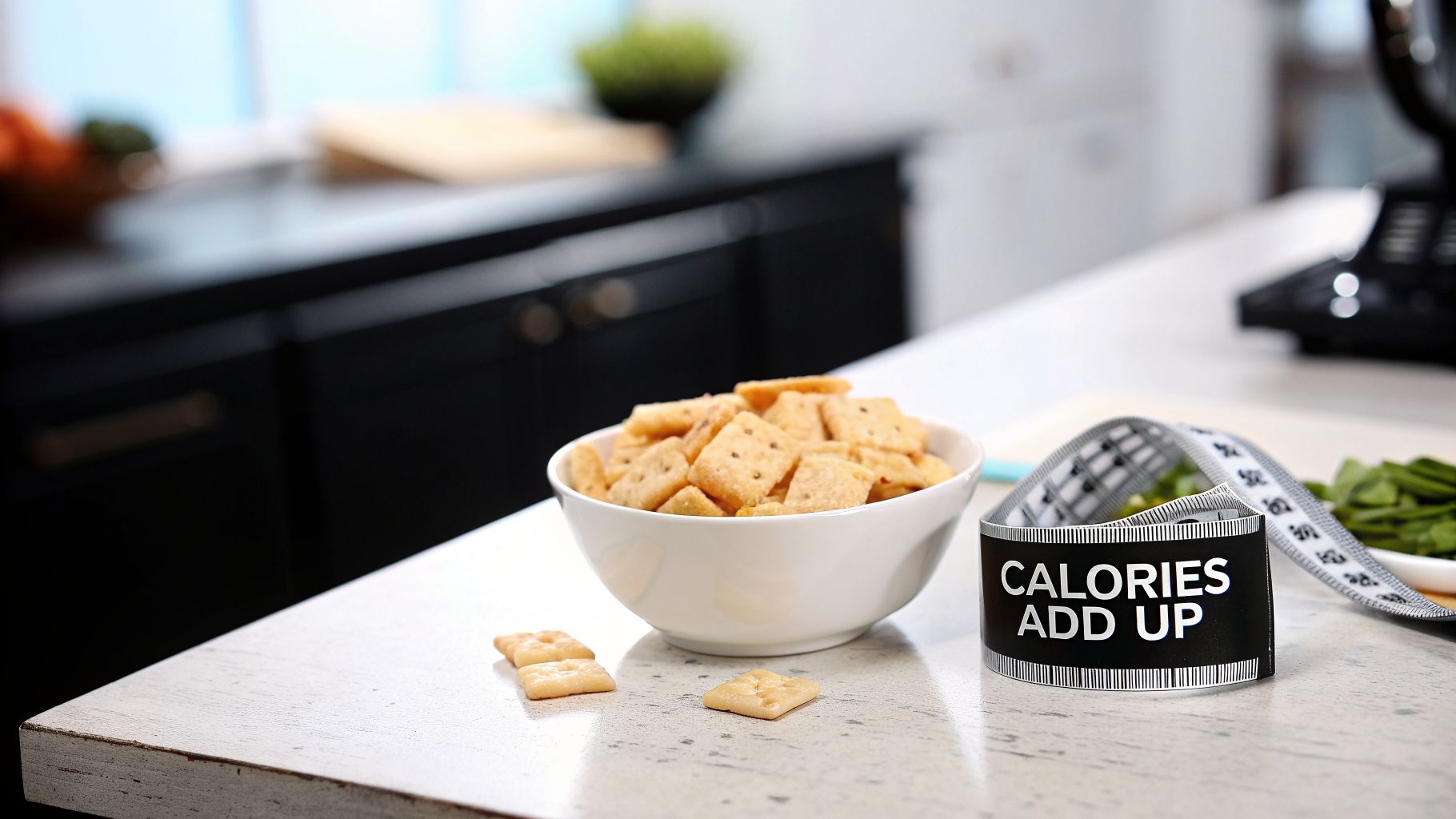
Let's be honest: cheese crackers can be a real landmine when you're trying to manage your diet. They're engineered to be irresistible, combining refined flour, processed cheese, and oils into a perfectly crunchy, salty bite. That hyper-palatable nature is precisely what makes them a "snack trap."
The calories stack up fast, but because they're low in protein and fiber—the two things that actually make you feel full—you're left wanting more.
Why Calories Accumulate So Quickly
The problem isn't the single cracker you eat; it's the handfuls that follow without a second thought. Take a single 39g package of Austin® Cheese Crackers with Cheddar Cheese. It contains 190 calories but only 3 grams of protein. That works out to a staggering 487 calories per 100g, which is right in line with most popular cheese cracker brands.
Because they don't satisfy your hunger, reaching for another handful (and then another) feels almost automatic. This is where understanding the difference between macros vs calories becomes critical for hitting your fitness targets.
The true cost isn't just the number on the nutrition label; it's the lack of fullness you get in return. This poor "satiety-per-calorie" ratio is what makes cheese crackers a tough fit for a goal-oriented diet.
This lack of satiety is a huge issue, especially if you're active. Protein is key for feeling full and supporting muscle, and cheese crackers just don't deliver. If you want to learn more about the science of staying satisfied, our guide on how to stay full longer breaks it all down.
Calorie Creep: How Mindless Snacking Adds Up
It's easy to lose track of just how many calories you're consuming. The table below shows how a few crackers can quickly turn into a significant portion of your daily calorie budget.
| Serving Size | Approximate Piece Count | Typical Calorie Count |
|---|---|---|
| A Few Crackers | 5-7 pieces | 45-60 Calories |
| Small Handful | 15-20 pieces | 140-160 Calories |
| Large Handful | 30-40 pieces | 280-320 Calories |
| Several Handfuls | 60-80 pieces | 560-640 Calories |
As you can see, what starts as a light snack can end up having the same calorie count as a full, nutritious meal—but without any of the lasting benefits.
Beyond Calories: What’s Really Inside Your Crackers?
It’s easy to glance at the calorie count on a bag of cheese crackers and think it’s not so bad. But the real story isn't just about the calories—it's about what those calories are made of. When you look closer, you’ll find a macronutrient profile that often works against your health and fitness goals.
Think of it like this: you’re putting cheap, low-octane fuel into a high-performance car. These snacks deliver a quick, unsatisfying burst of energy that disappears in a flash, leaving you hungry again almost immediately. To understand why, we need to pop the hood and look at the actual ingredients.
The Ingredients That Sabotage Satiety
The recipe for most cheese crackers seems almost perfectly designed to create a delicious, calorie-dense food that you can’t stop eating. Let's look at the usual suspects and what they do to your body.
-
Enriched Flour: This is just a fancy term for white flour that’s been stripped of its natural fiber and nutrients. A few vitamins are added back in, but without the fiber, your body digests it incredibly fast. This can cause your blood sugar to spike and then crash, triggering even more cravings.
-
Vegetable Oils: Crackers are often loaded with oils like palm, soybean, or canola. These pack in a ton of fat and calories but do next to nothing to help you feel full.
-
Cheese Powders & Seasonings: That savory "cheese" flavor usually comes from a highly processed powder. It's engineered for a long shelf life and an intense, addictive taste, not for its nutritional value.
This trifecta creates a snack that's dangerously easy to overeat. A small, single-serving bag (28g) of cheese crackers clocks in at around 137-141 calories. That might not sound like much, but how often do you stop at just one serving? A few handfuls while watching TV could easily push you past 800 calories—as much as a full meal.
The Low-Protein Problem
If there’s one fatal flaw in cheese crackers, it’s the almost complete lack of protein. For anyone who hits the gym or is trying to manage their weight, this is a huge red flag. Protein is the key macronutrient that helps you feel full and satisfied by signaling your brain that you've had enough to eat.
With only about 2.2g of protein per 100 calories, cheese crackers just don't have the staying power to keep hunger away. This is the main reason you can polish off a whole box and still not feel truly full, which often leads to a frustrating cycle of overeating.
Getting comfortable with reading food labels is the first step toward making smarter choices. If you want to become a pro at spotting these kinds of nutritional traps, our guide on how to read nutrition labels will show you exactly what to look for. At the end of the day, the low protein and high-carb profile makes cheese crackers a poor use of your daily calorie budget.
A Closer Look at Cracker Calories and Nutrition
Let's be honest, the snack aisle is a confusing place. You've got cheese crackers making all sorts of claims—"whole grain," "reduced fat," even "keto-friendly." But when you're trying to stay on track with your fitness goals, you have to wonder: are these really healthier, or is it just clever marketing?
The truth is, when you line them up and compare the nutrition facts, a clear pattern emerges. While some options might save you a handful of calories, they almost always miss the mark on what really matters for satiety and muscle support: protein.
The Numbers Don't Lie
When you start digging into the details, you see why a smart swap can make all the difference. Your standard, run-of-the-mill cheese crackers clock in at about 489 calories per 100g. If you reach for a whole-grain version, you might get that down to 412 calories per 100g—a small but not insignificant 15.7% dip.
But calories are only part of the story. Take a classic like Ritz Cheese Cracker Sandwiches. A single 1.35oz pack has 200 calories with a whopping 11g of fat and a tiny 2g of protein. This is a perfect example of the protein drought you’ll find in most traditional snacks. You can dive deeper into the stats for different brands over on FoodStruct.com to see for yourself.
This is what that nutritional breakdown typically looks like.
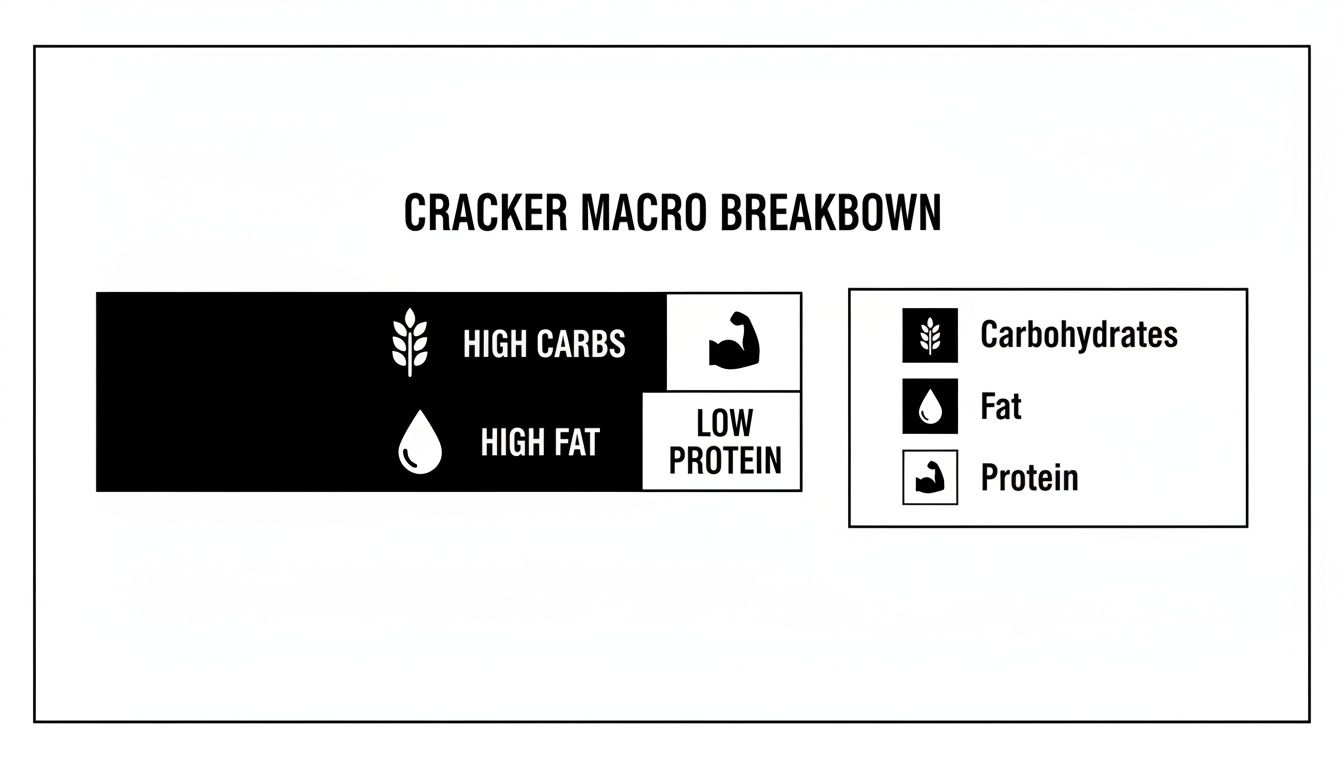
As you can see, you’re getting a snack that’s heavy on refined carbs and fats, with protein barely making an appearance. It's a recipe for a quick energy spike followed by an inevitable crash and more cravings.
Cheese Cracker Showdown: Regular vs. High-Protein
To really illustrate this, let’s compare some popular snacks side-by-side with a high-protein alternative like Gym Snack. This table makes the trade-offs crystal clear.
| Cracker Type | Serving Size (g) | Calories | Protein (g) | Total Fat (g) |
|---|---|---|---|---|
| Standard Cheese Cracker | 30g | ~150 | ~3g | ~8g |
| Gym Snack (High-Protein) | 30g | ~120 | ****~15g** | ~4g |
The difference is staggering, isn't it? For fewer calories, you get a snack that delivers five times the protein.
This isn't just a numbers game; it’s about what those numbers do for your body. The standard cracker gives you a quick hit of flavor but leaves you hungry again in an hour. The high-protein option, on the other hand, is built to fuel your muscles and keep you feeling genuinely full and satisfied. It's the difference between empty calories and functional fuel.
The High-Protein Swap That Changes the Game
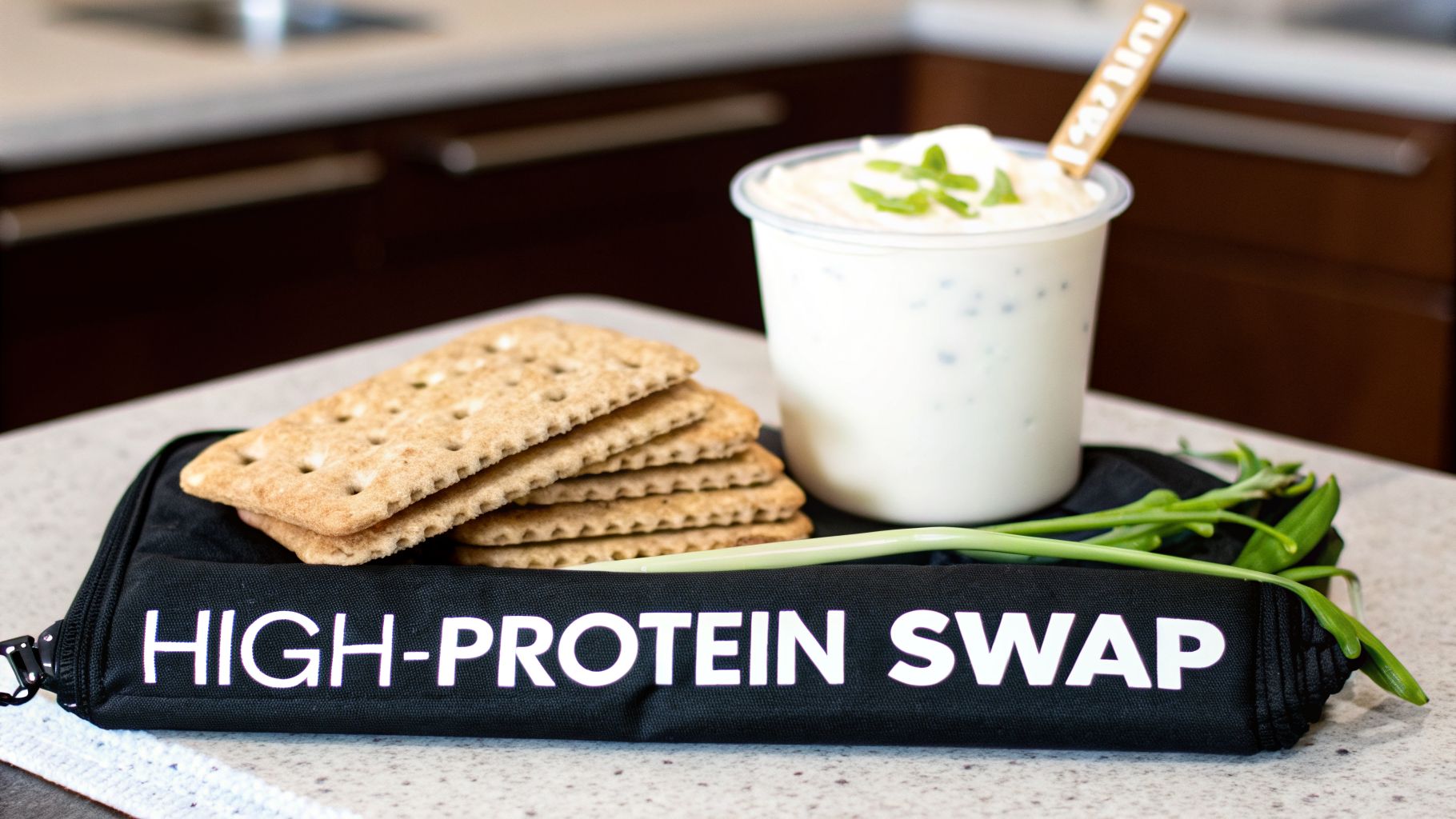
Let's be honest. After breaking down the nutrition facts, it’s pretty clear that most cheese crackers don't really align with a performance-focused lifestyle. They give you that satisfying crunch and flavor, but then leave you feeling hungry again almost immediately. It’s a frustrating cycle of empty calories and zero staying power.
But what if you could get that same cheesy, crunchy satisfaction without blowing up your calorie budget? It's time to talk about a smart swap designed to fix this exact problem.
The Macro-Friendly Solution
Gym Snack's Cheddar Cheeze and Jalapeño Cheddar Cheeze flavors were created to be that intelligent alternative. Instead of a snack that eats into your daily calories for very little return, you get something that actually works with your body to keep you full and energized.
This isn't about restriction; it's about upgrading. By switching to a snack that prioritizes protein, you satisfy cravings while actively supporting your body's needs for fullness and recovery.
Each serving packs 15g+ of plant-based protein, a massive leap from the tiny 2-3g you find in a typical serving of cheese crackers. This protein-first formula is what flips the script on snacking. It helps your body send out fullness signals, keeping you satisfied for hours, not just minutes. This makes it an incredible tool for athletes, busy professionals, and anyone trying to manage their weight. And if you're looking for more ideas, there are plenty of other great crunchy high-protein snacks out there that follow the same principle.
This smarter approach is a game-changer, especially for people on GLP-1 medications or anyone with a packed schedule who needs snacks that actually satiate. Gym Snack delivers a profile that cuts cheese cracker calories by 30-40% while dramatically boosting fullness. The secret is its pea protein base, which is also free of cholesterol and seed oils. Studies back this up, showing high-protein snacks can increase satiety by over 20%, making this swap a powerful move for appetite control. You can discover more insights about these food comparisons on FoodStruct.com.
A Snack That Works for You
When you choose a high-protein alternative, your snack stops being a "cheat" and starts being a functional part of your nutrition. It becomes a tool that helps you hit your protein goals, manage hunger, and keep your energy stable throughout the day. The benefits speak for themselves:
- Sustained Fullness: That high protein content keeps hunger locked away, helping you avoid overeating later.
- Macro-Friendly: It fits perfectly into a tracked diet without derailing your goals.
- Clean Ingredients: With no cholesterol or seed oils, it’s a snack you can feel genuinely good about eating.
At the end of the day, it's about making your calories count. This is how you satisfy a craving intelligently and turn your snack into an asset, not a liability.
Actionable Strategies for Smarter Snacking
Knowing that cheese crackers aren't exactly a superfood is one thing, but actually putting that knowledge into practice is a whole different ball game. So let's move past the obvious "just eat less" advice and get into some real-world strategies that help you enjoy your snacks without throwing your health goals off track.
The biggest and most effective change you can make is simple: stop eating directly from the box. We’ve all been there. It’s nearly impossible to eyeball a proper serving size that way, and it's how a 150-calorie snack accidentally becomes a 600-calorie binge. Instead, get in the habit of portioning out your crackers into small bags or containers ahead of time. This one small action creates a natural stopping point and makes you conscious of how much you're truly eating.
Mindful Munching Techniques
Another powerful approach is what I call "mindful munching." It’s all about tuning back into your body’s own hunger and fullness signals. Before you grab that box, pause and ask yourself: Am I actually hungry, or am I just bored, stressed, or reaching for them out of habit?
When you do decide to have a snack, slow down. Pay attention to the crunch, the cheesy flavor, and the texture. By focusing on the experience, you prevent that mindless hand-to-mouth cycle that so often happens in front of the TV or a computer screen. You'll probably find you feel just as satisfied with a much smaller amount.
Mindful snacking isn't about restriction; it's about awareness. It transforms snacking from a mindless habit into a conscious choice, empowering you to control your cheese cracker calories instead of letting them control you.
Boost Satiety by Pairing Foods
Look, if you're really craving that cheesy crunch, you don't have to give it up completely. The trick is to think of cheese crackers as an ingredient in your snack, not the main event. By pairing a small, controlled portion with something rich in protein or fiber, you can dramatically increase how full and satisfied you feel.
Give some of these powerful combinations a try:
- A few crackers with a side of Greek yogurt: The protein in the yogurt provides staying power that the crackers alone just can't deliver.
- Crackers used for dipping in hummus or a bean dip: You're adding valuable fiber and plant-based protein, making for a more complete and satisfying snack.
- A small serving next to a hard-boiled egg: This is a classic combo for a reason. It packs a serious protein punch for very few extra calories.
This approach lets you enjoy the texture and flavor you love while making sure your snack actually works for you by providing lasting energy. It’s about building a smarter snack, not fighting a craving.
Your Guide to Making the Healthier Choice
So, what's the bottom line after all this? If we've learned anything, it's that traditional cheese crackers don't give you much bang for your calorie buck. They're a classic case of empty calories—a quick hit of refined carbs and fats with barely any protein, which is a perfect formula for feeling hungry again in 30 minutes.
If you take just two habits away from this guide, let them be these. First, get in the habit of actually reading the nutrition label to see what you’re working with. Second, never, ever eat straight from the box. Portioning out a serving is a simple move that makes a huge difference for anyone trying to snack responsibly without sabotaging their goals.
The Power of a Purpose-Built Snack
This is where snacks designed for health and performance really shine. For anyone serious about managing their weight, building muscle, or just feeling full longer, high-protein options are a total game-changer. They directly solve the biggest problem with traditional snacks: they don't fill you up.
It's time to snack smarter, not harder. Making a conscious switch to a high-protein snack isn't just a trade-up—it's a strategic move that supports your body, fuels your fitness, and helps you conquer your goals.
This is exactly why snacks like Gym Snack exist. They're engineered to give you that savory crunch you're looking for, but they’re built on a solid foundation of protein. Each serving packs over 15g of plant-based protein, which is specifically designed to help you feel full and stay energized for hours. It’s how you satisfy a craving without the crash.
Beyond Snacks: A Holistic Approach
Of course, smart snacking is just one piece of the puzzle. Real, long-term health comes from looking at the bigger picture of your diet and exercise. Making truly healthier choices means understanding how different foods fuel your body and learning about improving athletic performance through nutrition. That kind of knowledge empowers you to build sustainable habits that extend far beyond what you grab from the pantry.
Ultimately, you're in the driver's seat. Whether that means mindfully pairing a small portion of crackers with a real protein source or upgrading entirely to a macro-friendly alternative, you now know what to look for to take control of your snacking.
Common Questions About Cheese Cracker Nutrition
Once you start looking at the nutrition labels on your favorite snacks, a lot of questions tend to pop up. Let's tackle some of the most common ones I hear about cheese crackers so you can feel more confident about your choices.
How Many Calories Are in a Handful of Cheese Crackers?
It’s the classic question, but the answer is tricky. A "standard" handful of cheese crackers—about one ounce or 30 grams—will typically set you back 140-150 calories.
But let's be honest: my handful and your handful are probably two very different things. It’s incredibly easy to grab a few handfuls while watching TV, and before you know it, you've accidentally eaten several hundred calories. That’s why weighing your snacks or using a measuring cup is always a better bet than just winging it.
Are Whole Wheat Cheese Crackers a Healthy Choice?
You might see "whole wheat" or "reduced fat" on the box and think you're making a healthier choice. While these versions might shave off a few calories, they run into the same old problem: they’re almost all carbs and fat, with very little protein.
This means that even if you're eating a "healthier" cracker, you won't feel full for very long. You're likely to be reaching for another snack sooner than you'd like.
A truly satisfying snack does more than just cut calories. To really make a difference in your fitness goals and keep hunger at bay, a snack needs to be built around high-quality protein and fiber. That's what gives you lasting energy.
Why Is a High-Protein Snack Better for Weight Management?
Think of it this way: simple carbs are like kindling on a fire—they burn up fast and leave you needing more fuel. Protein, on the other hand, is like a solid log. It burns slow and steady, keeping you satisfied for hours.
Scientifically speaking, protein is the most satiating macronutrient. It signals your body to release hormones that tell your brain you're full, which helps crush cravings and prevents you from overeating later. A snack with 15g or more of protein will actually work for you, unlike the empty calories in most crackers that just leave you wanting more.
Ready to swap out those empty calories for a snack that actually fuels your day? Gym Snack gives you that cheesy, satisfying crunch you love but packs in 15g+ of plant-based protein. It's the perfect way to crush hunger and power through your routine. Explore our flavors and build your perfect bundle today.