

You hear the term "clean protein snacks" a lot, but what does it actually mean? Put simply, it’s about choosing snacks made from whole, minimally processed ingredients. The ingredient list should be short, transparent, and easy to understand.
Think of it as choosing high-quality fuel—real, recognizable food—instead of something slapped together with a bunch of artificial additives and fillers.
What Exactly Are Clean Protein Snacks
Let's cut through the marketing jargon for a minute. "Clean" isn't some official, regulated term. Instead, it grew out of a powerful movement of people wanting better quality from their food. At its core, "clean eating" is just about choosing foods as close to their natural state as you can get them.
When you apply that idea to protein snacks, it means you're looking for options that truly nourish you, free from the junk that so often hides in packaged goods.
Here's an analogy: think about building a house. You could use sturdy, natural wood, or you could use cheap particle board held together with synthetic glue. They might look okay from a distance, but only one is built to last. Clean protein snacks are built with the good stuff.
The Core Principles of Clean Snacking
You don't need a nutrition degree to spot genuinely healthy options. It really comes down to a few simple principles that help you see the difference between a truly clean snack and a highly processed imposter. The goal is to get past the buzzwords and pick things that actually support your body.
A snack earns its "clean" label when it sticks to these rules:
- Minimal Processing: The ingredients are kept as close to their original, whole-food form as possible. For instance, roasted chickpeas are a lot less processed than a protein isolate that was created using heavy chemical extraction.
- Recognizable Ingredients: You should be able to scan the ingredient list and know what everything is without having to Google it. You want to see things like almonds, pea protein, and sea salt—not disodium phosphate or maltodextrin.
- No Artificial Additives: This is a big one. It means a clean snack steers clear of artificial sweeteners (like aspartame and sucralose), synthetic colors, and chemical preservatives that add zero nutritional value.
- Focus on Nutrient Density: The snack should give you more than just protein. It should also deliver valuable nutrients like fiber, healthy fats, vitamins, and minerals that come naturally from its whole-food ingredients.
A truly clean protein snack doesn't just add protein to your diet; it adds overall nutritional quality. It's about what the snack includes—whole foods and quality nutrients—as much as what it excludes—artificial junk.
Putting It All Together
At the end of the day, choosing clean protein snacks is about fueling your body with real food. It’s about becoming a smarter shopper who can look at a package and know exactly what's inside.
This simple shift helps ensure your snacks are actually working for you—providing sustained energy, supporting your muscles, and contributing to your overall well-being, instead of just hitting a craving with empty calories.
Why Your Body Thrives on Clean Protein

Knowing what makes a snack "clean" is one thing, but feeling the difference in your own body? That’s where the real motivation kicks in. Making the switch to clean protein snacks isn't just about dodging artificial junk; it's about giving your body the high-quality fuel it needs to feel and perform its best.
Think of your energy like a campfire. A sugary, processed snack is like tossing a piece of paper on the flames—you get a big, bright flare-up followed by a fast burnout. That's the dreaded afternoon crash.
A clean protein snack, on the other hand, is like adding a solid log to the fire. It provides slow, steady, and sustained heat, keeping you focused and productive for hours.
The Power of Sustained Fuel
This steady energy is the key to sidestepping those nagging hunger pangs and energy slumps. Because protein takes longer to digest than simple carbs, it helps keep your blood sugar from going on a rollercoaster ride. You get a consistent supply of fuel that supports both mental clarity and physical endurance.
If you lead an active life, the benefits run even deeper. Protein is the building block for your muscles, delivering the essential amino acids your body needs to repair and rebuild after a tough workout. Fueling up with a clean source of protein ensures your muscles get the best materials for recovery and growth. To learn more, check out these best foods for muscle recovery.
Boosting Satiety and Supporting Your Goals
One of protein’s biggest superpowers is satiety—that feeling of being genuinely full and satisfied. This makes clean protein snacks an incredibly powerful tool for anyone managing their weight. They help curb your appetite, making it easier to reduce your overall calorie intake without feeling like you're constantly fighting off hunger.
This is especially helpful for anyone on GLP-1 medications, who need nutrient-dense foods to maintain muscle mass and manage their appetite. A quality snack delivers crucial nutrients in a smaller, more satisfying package.
By choosing clean protein, you're not just eating a snack. You're making a strategic choice to manage hunger, fuel your muscles, and maintain stable energy—all of which directly supports your long-term health and fitness goals.
It's clear people are catching on. The global protein snacks market was valued at around USD 50.48 billion in 2024 and is expected to nearly double by 2032. This isn’t just a trend; it's a massive shift toward more conscious and healthy eating habits.
How to Read Labels Like a Nutrition Pro
Walking down the snack aisle can feel overwhelming. The shelves are packed with flashy wrappers and bold health claims, all competing for your attention. To find a genuinely clean protein snack, you have to learn to speak the language of the nutrition label.
Think of the label as the product's real story, not the marketing pitch on the front. Once you know what to look for, you can cut through the noise and make choices that actually support your health. It’s a skill that puts you in control.
The Ingredient List Is Your First Stop
Before you even glance at the calories or macros, flip the package over and find the ingredient list. This is where the real truth is.
A core principle of clean eating is simplicity. If the ingredient list is a mile long and filled with words you need a chemistry degree to pronounce, that's your first red flag. You're looking for whole foods, not a science experiment.
Ingredients are always listed by weight, from the most prominent to the least. If sugar (or one of its sneaky aliases like high-fructose corn syrup) is near the top of the list, you’re holding a candy bar in disguise.
A short, recognizable list is what you want to see. Things like almonds, pea protein, sea salt, or dates are green flags that signal a quality product.
Clean vs. Conventional Protein Snack Label Comparison
Let's make this crystal clear by putting two types of snacks side-by-side. The table below breaks down what you'd typically find in a truly clean protein snack versus a highly processed, conventional one. It’s a classic case of green flags vs. red flags.
| Attribute | Clean Protein Snack Example | Conventional Protein Snack Example |
|---|---|---|
| Protein Source | High-quality sources you recognize, like grass-fed whey isolate, pea protein, or whole nuts and seeds. | Cheaper fillers like soy protein isolate or gelatin, which are often highly processed. |
| Sweeteners | Natural options like monk fruit, stevia, or small amounts of real food sweeteners like dates. | Artificial sweeteners like sucralose and acesulfame potassium, plus high amounts of corn syrup or refined sugar. |
| Fats | Healthy fats from whole sources like nut butters, chia seeds, or avocado oil. | Inflammatory seed oils like palm kernel oil, soybean oil, or canola oil, sometimes listed as hydrogenated oils. |
| Additives | Minimal to none. You'll see things like natural flavors or a natural binder like tapioca fiber. | A long list of artificial colors, chemical preservatives, sugar alcohols, and emulsifiers like carrageenan. |
Looking at them this way, the difference is night and day, isn't it? The clean option is built from nutrient-dense, real food. The conventional bar often relies on cheap, synthetic ingredients to fake its taste and texture.
For more examples of what to look for, check out our guide to the best on-the-go protein snacks.
Once you get in the habit of using this simple green flag/red flag checklist, shopping becomes a breeze. You’ll be able to confidently pick out snacks that fuel your body right, every single time.
Navigating Plant-Based and Sustainable Choices
The world of clean protein snacks is getting bigger and better, and plant-based options are really at the heart of this movement. It's not just about personal health anymore; people are making conscious choices that are better for the planet, too.
This move toward plant-forward eating comes from a genuine desire for ingredients that are sourced ethically and have a smaller environmental footprint. We're all looking for snacks that fit our values without making us compromise on great taste or the fuel we need to perform.
Why Choose Plant-Based Proteins
When you grab a plant-based protein snack, you're getting so much more than just muscle fuel. These sources are naturally loaded with fiber, which is a game-changer for digestive health and that "full and satisfied" feeling that keeps you going.
Many plant proteins also come with a bonus: antioxidants and phytonutrients you just won't find in animal products. On top of that, they're naturally cholesterol-free and lower in saturated fat, making them a heart-smart pick for your daily routine.
Some of the best plant-based protein powerhouses include:
- Pea Protein: A fantastic source of iron and branched-chain amino acids (BCAAs). It's also super easy to digest and a great alternative for those with dairy or soy sensitivities.
- Hemp Protein: This one is a complete protein, meaning it has all nine essential amino acids. Plus, it's packed with healthy omega-3 and omega-6 fatty acids.
- Nuts and Seeds: Think almonds, pumpkin seeds, and chia seeds. They deliver a knockout combination of protein, healthy fats, and crucial minerals.
Choosing a plant-based snack is an effective way to increase your nutrient intake from whole-food sources while also supporting a more sustainable food system.
This isn't just a niche trend; it's completely reshaping the snack aisle. Plant-based protein snacks are quickly becoming a dominant force, growing faster than traditional options as more of us put health and sustainability first. The rise of vegan and flexitarian diets is a huge driver, pushing companies to innovate with things like allergen-free vegan protein gummies.
This decision tree gives you a simple framework for checking out new snacks. The key takeaway? Always start by looking for a short list of whole-food ingredients.
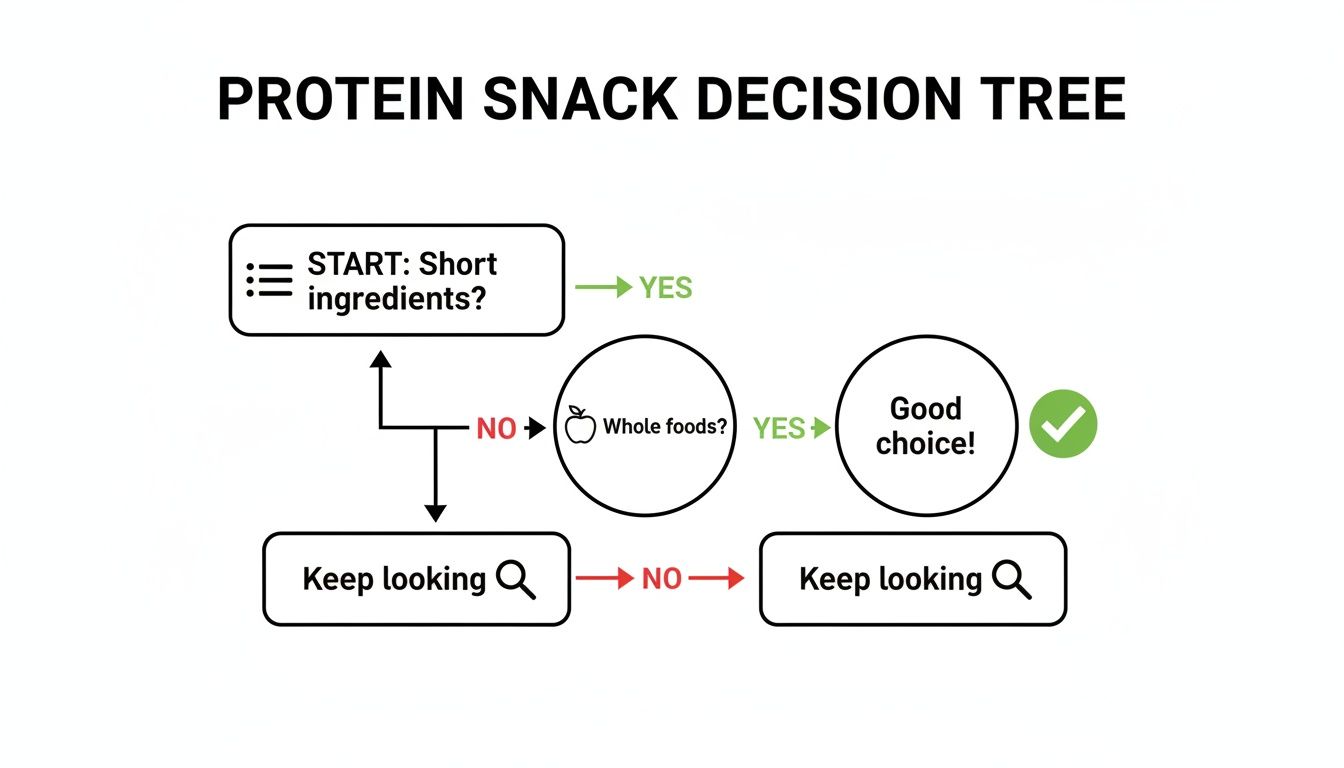
As you can see, the cleanest choices almost always begin with simple, recognizable ingredients. To explore this more, check out our guide to some of the best high-protein plant-based snacks on the market.
As you start thinking more about sustainable choices, it helps to understand the broader implications of sustainability across the entire food system. From your morning coffee to your afternoon protein boost, every choice we make has a ripple effect.
Timing Your Snacks for Maximum Impact

Choosing a high-quality, clean protein snack is only half the battle. Knowing when to eat it is how you really make it work for you. It's the difference between a snack that just fills a gap and one that genuinely boosts your performance.
Think of it this way: you wouldn't put fuel in your car after the trip is over. In the same way, strategically timing your snacks can make a huge difference in your energy, recovery, and ability to stay on track with your goals, whether you're at the gym or just trying to survive a long workday.
Fueling Your Workout Window
For anyone who works out, plays a sport, or just stays active, the pre- and post-workout windows are prime time for nutrition. This is where timing really counts.
Pre-Workout Fuel: Try to eat a snack about 30-60 minutes before you start moving. This tops off your glycogen stores, giving you immediate energy. The protein also helps protect your muscles from breaking down during the workout, so you can push harder for longer.
Post-Workout Recovery: After a tough session, your muscles are screaming for nutrients to start the repair process. Eating a protein-rich snack within an hour helps kickstart muscle protein synthesis, which is just a fancy way of saying it helps you rebuild faster, get stronger, and feel less sore tomorrow. If you want to dive deeper, check out some of the best post workout snacks that can help speed up your progress.
Strategic snacking isn't about adding extra meals; it's about making your existing calories work smarter for you. It turns your snack from a simple treat into a high-performance tool.
Conquering the Midday Slump and Beyond
Great snack timing isn't just for athletes. It's a game-changer for getting through the daily grind, especially when that dreaded 3 PM energy crash hits. A clean protein snack is your best defense.
The combination of protein and healthy fats provides a slow, steady release of energy. You get sustained focus without the sugar rush—and the inevitable crash—that comes from candy or other processed junk. That crash is what usually sends you running for another quick, unhealthy fix.
This same idea works wonders for managing hunger. A well-timed snack keeps your blood sugar stable and helps you feel full, which stops you from getting ravenously hungry and overdoing it at your next meal. This is particularly useful for anyone on GLP-1 medications, as smaller, protein-dense snacks can help preserve muscle mass while managing appetite throughout the day.
Here’s a simple cheat sheet for timing your snacks:
- Mid-Morning Boost: A snack around 10 AM can stave off that pre-lunch slump and keep you sharp.
- Afternoon Slump-Buster: Grab a protein snack between 2 PM and 4 PM to sail through the rest of the workday.
- Evening Craving-Crusher: A light, protein-forward snack can stop late-night munchies and support muscle repair while you sleep.
By syncing your clean protein snacks with your body's needs, you turn them from simple bites into powerful tools for your health.
Got Questions About Clean Protein Snacks? We’ve Got Answers.
When you start digging into healthier eating, it’s only natural for questions to pop up. Making clean protein snacks a regular part of your routine is a fantastic move, but you might still have a few things you're wondering about. Let's clear those up.
Think of this as your personal FAQ. We’ll tackle the most common questions we hear, from weight loss to making snacks at home, so you can feel confident in your choices.
Are Clean Protein Snacks Actually Better for Weight Loss?
Yes, they absolutely can be. The magic is in the high protein and fiber content, which are the one-two punch for satiety—that feeling of being comfortably full and satisfied. When you feel full, you’re far less likely to overeat, which naturally helps you manage your calorie intake without feeling like you're starving.
It's a world away from those highly processed snacks packed with refined sugars. Those sugary snacks send you on an energy roller coaster, leading to a crash and even more cravings. Clean options, on the other hand, provide a steady, reliable source of fuel. This keeps your metabolism humming along and makes sticking to your goals a whole lot easier.
How Much Protein Should a Good Snack Even Have?
For a snack to really do its job, you want to aim for something in the 10 to 20 gram of protein range. That’s the sweet spot for a few key reasons.
A snack with at least 10 grams of protein is usually enough to kick hunger to the curb and keep your blood sugar stable between meals. If you’re refueling after a tough workout or need something to hold you over for a longer stretch, pushing closer to 20 grams is an even better bet.
But remember, it's not just about the number. The source of that protein is what truly matters. Always look for snacks built on high-quality, whole-food ingredients to get the biggest nutritional bang for your buck.
Is It a Hassle to Make Clean Protein Snacks at Home?
Not at all! In fact, making your own snacks is one of the smartest things you can do. It gives you total control over every single ingredient, so you can dodge the artificial additives and hidden sugars that sneak into so many packaged goods. Plus, it's a great way to save some money.
A few super simple, no-cook ideas include:
- A bowl of Greek yogurt with a handful of fresh berries and a sprinkle of chia seeds.
- A handful of raw almonds paired with a crisp apple.
- A couple of hard-boiled eggs with a pinch of sea salt and pepper.
And if you’ve got a few minutes to spare, you can easily mix up a batch of homemade protein bars or energy bites with things like oats, a clean protein powder, and your favorite nut butter.
Are All Plant-Based Protein Snacks Considered Clean?
This is a great question, and the answer is no, not necessarily. While there are some fantastic plant-based options out there, the "plant-based" label on the front of a package doesn't automatically equal "clean." Many of these products are still heavily processed and can be loaded with refined sugars, unhealthy seed oils, and a laundry list of artificial ingredients.
The trick is to use the same skills we've been talking about: flip the package over and read the label. A genuinely clean, plant-based snack will have a short, simple ingredient list you can actually recognize. Look for protein from whole-food sources like nuts, seeds, and legumes—not a bunch of things that sound like they came from a science lab.
Ready to find a savory, crunchy, and satisfying snack that meets all these clean criteria? Gym Snack delivers over 15g of plant-based protein per serving with zero artificial ingredients or seed oils. Fuel your goals the clean and delicious way at https://gymsnack.com.