

At its heart, a cookies and cream protein bar is exactly what it sounds like: the classic, decadent dessert flavor packed into a bar that’s designed to deliver a solid hit of protein. It's become the go-to choice for anyone who wants a high-protein snack that honestly feels like a treat.
The Enduring Appeal of Guilt-Free Indulgence
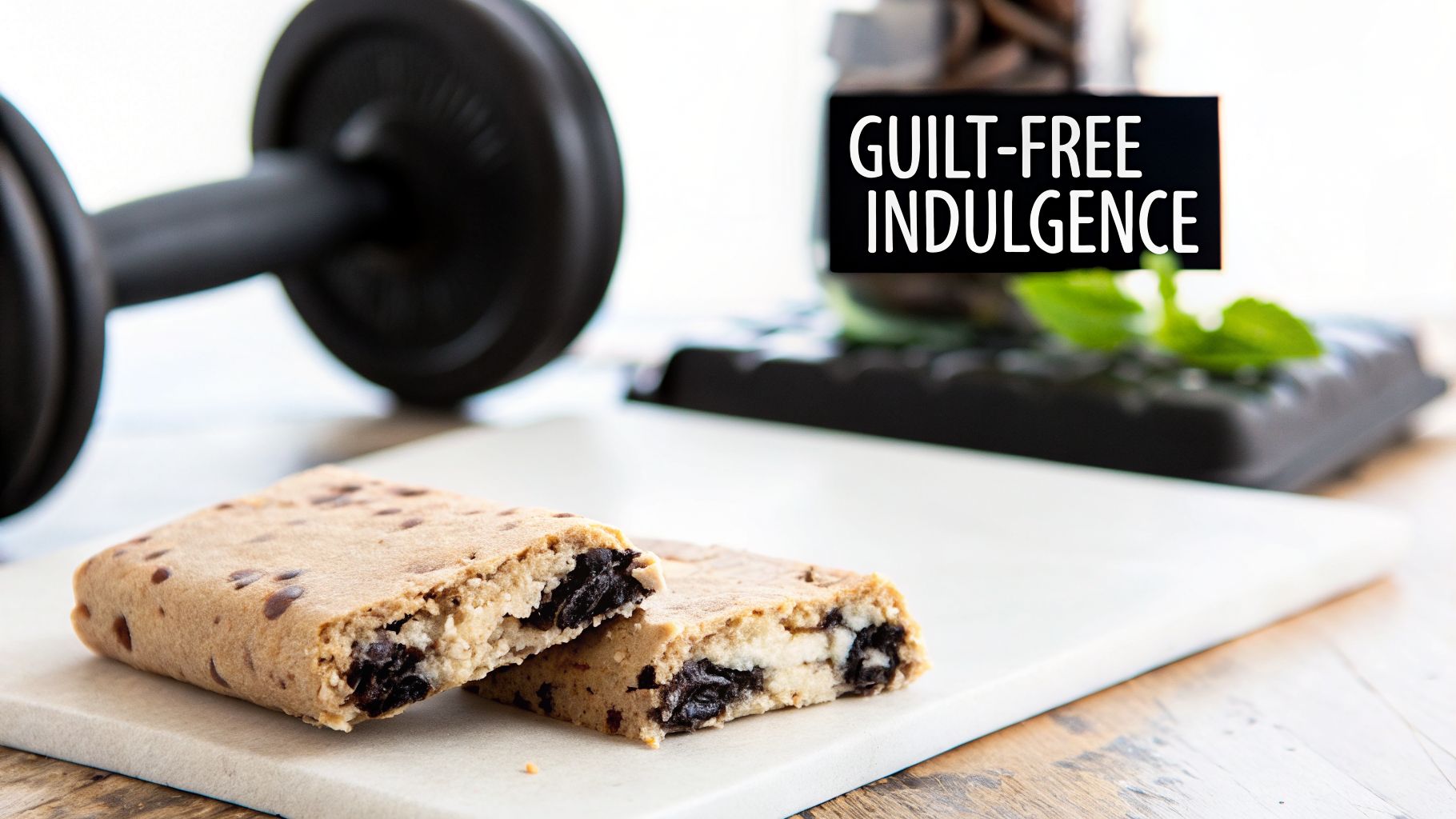
Let's be honest, the cookies and cream flavor is a superstar in the snack world. It’s pure nostalgic comfort. When you translate that into a protein bar, you're making a powerful promise: all the dessert satisfaction with none of the usual guilt. That simple idea is why it's one of the most popular options you'll find on store shelves.
This isn't just a niche trend, either. The entire protein bar market has absolutely exploded as more people look for easy, protein-rich snacks. In fact, projections suggest the global market could balloon to over $15 billion by 2026, with sports nutrition bars leading the way. Read more about the protein bar market's growth on Grandview Research.
Why This Flavor Dominates
So, what's the secret? The magic of a cookies and cream protein bar is that it scratches two different itches at the same time: the craving for something sweet and the need for real, functional nutrition. It's a psychological home run. You get that rich, creamy texture and crunchy cookie pieces, which your brain registers as a reward, while the nutrition label confirms you're still on track with your fitness goals.
It’s the perfect "best of both worlds" solution for anyone who is:
- Trying to crush sugar cravings with a smarter alternative.
- Needing a quick, rewarding protein boost right after a workout.
- Just looking for a convenient snack that doesn't taste like cardboard.
This guide is here to help you look past the tempting wrapper and figure out what’s really going on inside these bars. We'll break down everything from ingredients to nutrition facts, helping you decide if a cookies and cream bar is a smart addition to your routine or just another candy bar in a clever disguise.
What's Really Inside Your Protein Bar
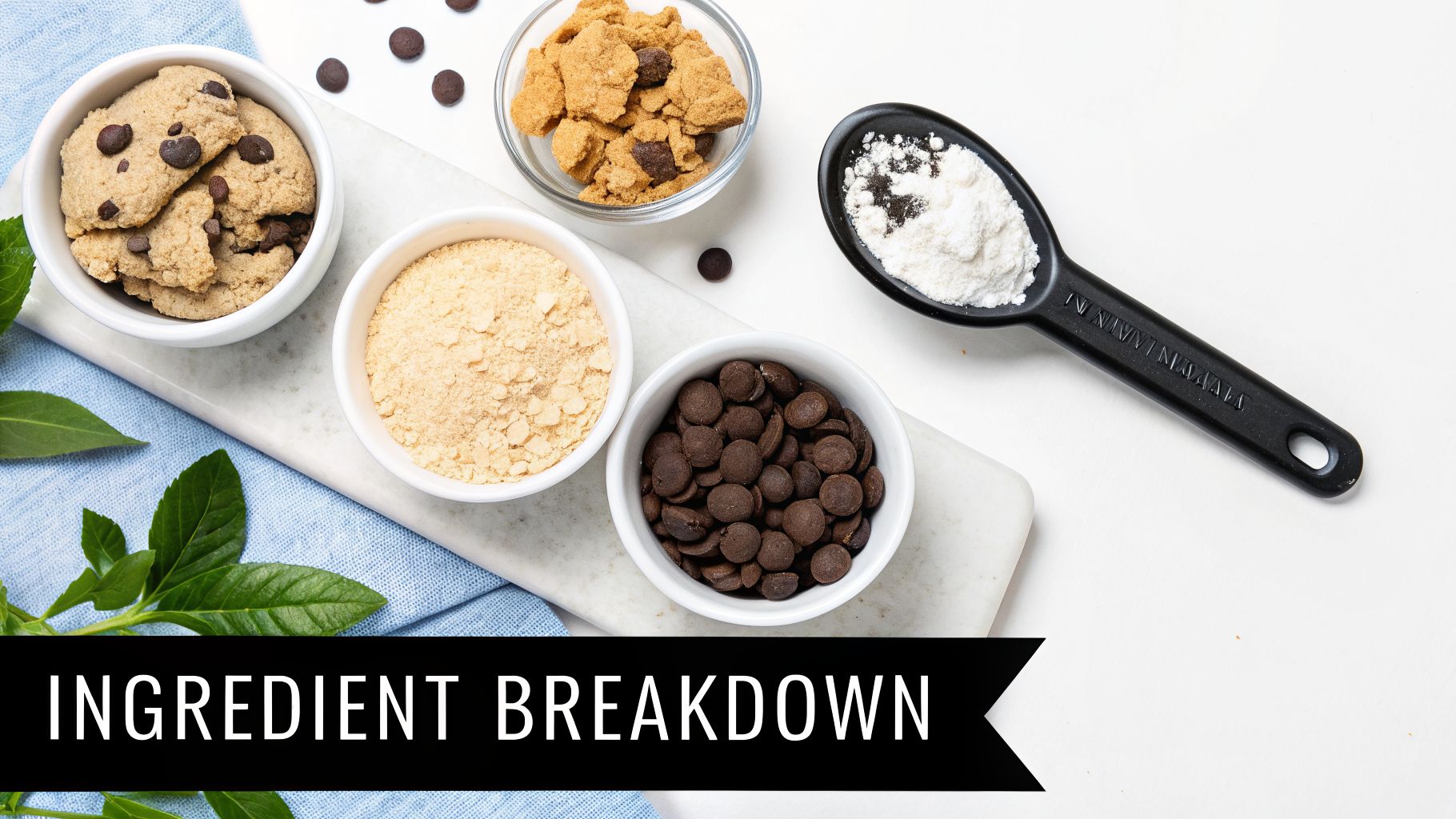
To figure out if a cookies and cream protein bar is actually good for you, we have to look past the slick wrapper and get real about the ingredients. Think of a protein bar like a house. The protein source is the sturdy foundation and frame, but the sweeteners, fats, and binders are the drywall, paint, and finishing touches. They can either make the house a functional home or just a pretty facade.
Let's start by looking at the most critical ingredient.
The Protein Foundation
The protein itself is the engine of the bar. It's what helps your muscles repair and grow. You'll typically find a few common sources on the label, each with its own job to do.
- Whey Protein: This is a dairy-based protein that digests quickly. It’s perfect for right after a workout when you want to rush amino acids to your muscles for fast repair.
- Casein Protein: The other big dairy protein, casein, is the slow-and-steady one. It releases amino acids over several hours, which is great for keeping you full and preventing muscle breakdown between meals.
- Plant-Based Blends: Usually made from a mix of pea, rice, or soy proteins, these blends are designed to provide a complete amino acid profile. They're a fantastic option if you’re vegan or can't do dairy.
While the protein does the heavy lifting, the other ingredients are what deliver that classic "cookies and cream" flavor and texture. And honestly, this is where you have to be a bit of a detective.
It's no surprise we love flavors like cookies and cream—they’re nostalgic and comforting. But the market is definitely changing. More and more people are looking for allergen-free and dairy-free options that don't skimp on flavor. As research on the growing demand for clean protein snacks shows, we now expect our favorite treats to come with quality nutrition and sustained energy, not just a sugar rush.
Decoding a Cookies and Cream Protein Bar Ingredient Label
Reading an ingredient list can feel like trying to decipher a secret code. This table breaks down what you're likely to see and what it actually means for your health.
| Ingredient Category | Common Examples | Its Role in the Bar | What to Look For |
|---|---|---|---|
| Protein Sources | Whey concentrate/isolate, casein, pea protein, soy isolate, rice protein | Provides the core muscle-building and satiety benefits. | Look for 20g or more of high-quality protein per bar. A blend often provides multiple benefits. |
| Sweeteners | Sugar, corn syrup, stevia, monk fruit, erythritol, maltitol, sucralose | Adds the sweetness you expect from a dessert-like flavor. | Prioritize natural sweeteners like stevia or monk fruit. Be cautious with sugar alcohols (like maltitol), which can cause bloating. |
| Fats | Palm oil, sunflower oil, almond butter, cocoa butter, canola oil | Creates a creamy texture, improves mouthfeel, and adds flavor. | Aim for bars with healthy fats from nuts and seeds. Try to avoid palm oil due to its high saturated fat content. |
| Fibers & Binders | Chicory root fiber, soluble corn fiber, tapioca fiber, glycerin, isomalto-oligosaccharides (IMOs) | Holds the bar together, adds chewiness, and increases fiber content. | Soluble fiber is great for gut health, but too much can cause digestive upset for some people. |
| Flavor & Texture | Natural flavors, cocoa powder, salt, chocolate cookie pieces, white chocolate chips | These create the signature "cookies and cream" experience. | Check where real cookie or chocolate pieces fall on the list. If they're near the top, the bar might be higher in sugar. |
Ultimately, the best bars use high-quality ingredients from each category to create a product that's both functional and delicious, without turning into a candy bar in disguise.
The Flavor and Texture Components
Getting that decadent, dessert-like experience requires a careful balance of sweeteners, fats, and binders. Unfortunately, this is the area where many brands go wrong, loading their bars with cheap fillers and sugar.
A genuinely healthy cookies and cream protein bar is one where the 'cookies and cream' part doesn't completely overshadow the 'protein bar' part. The goal is function first, flavor second.
Here’s a closer look at what creates that signature taste:
- Sweeteners: These can be anything from natural choices like stevia and monk fruit to sugar alcohols like erythritol and maltitol. Always scan the label for high amounts of added sugar or high-fructose corn syrup—those are red flags.
- Fats: Fats are essential for that creamy, satisfying mouthfeel. But not all fats are equal. It's best to avoid bars that rely heavily on less-desirable fats like palm oil, which is not only high in saturated fat but also comes with environmental concerns.
- Binders and Fillers: Ingredients like chicory root fiber or soluble corn fiber are used to hold the bar together and bump up the fiber count. While beneficial, be mindful that some people experience digestive discomfort if they consume these in large quantities.
Looking Beyond the Protein: How to Read the Nutrition Label
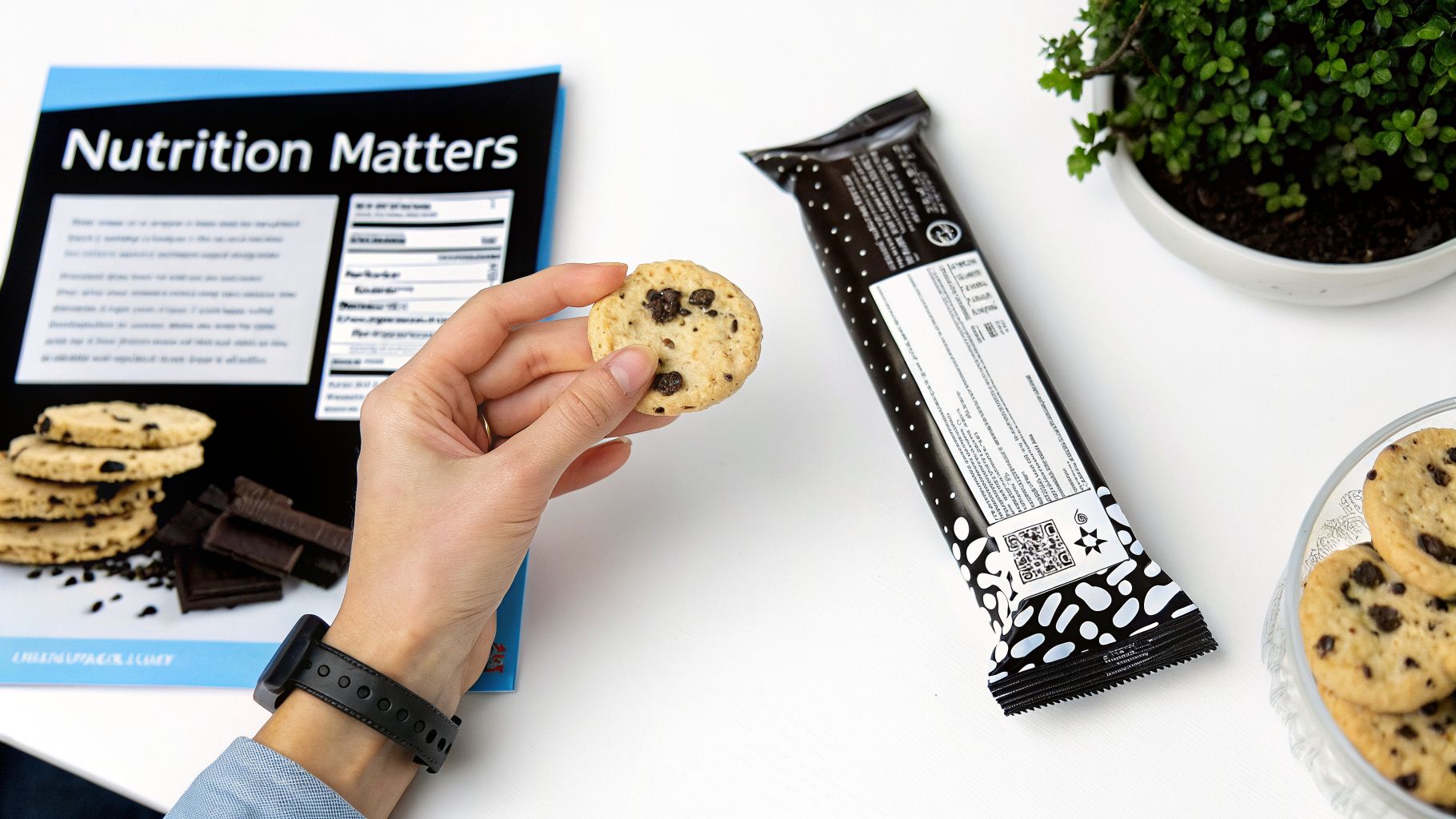
The ingredient list gives you the "what," but the nutrition facts panel tells you the "how much." This is where you separate a true performance snack from a candy bar playing dress-up. We’re all trained to look for that big protein number first, but stopping there is a rookie mistake. It’s like buying a car based only on its color—you’re missing everything that actually makes it run.
The first thing I check is the protein-to-calorie ratio. This is your best tool for figuring out if you're getting a lean protein boost or just a lot of extra energy you might not need. Think about it: a cookies and cream bar with 20g of protein for 200 calories is a fantastic choice for supporting lean muscle. But a bar with the same 20g of protein for 400 calories? That's a different beast entirely, closer to a meal replacement than a simple protein snack.
As a rule of thumb, a solid protein bar should deliver at least 1 gram of protein for every 10-15 calories. If you see a bar with calories way outside that range, you’re probably paying for a lot of sugar and fat.
Breaking Down the Carbs
Okay, once you've vetted the protein, your eyes should slide over to the carbohydrates. But don't just glance at the total. The real story is in the breakdown.
- Dietary Fiber: This is your friend. Fiber helps with digestion and keeps you feeling full and satisfied. More is usually better, though be warned—a massive dose can lead to some bloating if you're not used to it.
- Total Sugars: This is the big one. It includes both naturally occurring and added sugars. My personal cutoff is 10 grams. If a bar has more than that, I start thinking of it as dessert.
- Sugar Alcohols: You'll see ingredients like erythritol or maltitol listed here. They add sweetness without the calories, which sounds great. Just know that for some people, they can cause some serious digestive rumbles.
If you want to get really good at this, we put together a complete guide on how to read and understand protein bar nutrition facts. It’ll turn you into a label-reading pro.
Fact-Checking the Fat
Finally, let's talk about fat. It’s easy to ignore, but the creamy coatings and "cookie pieces" in these bars often come from sources you want to limit. Pay attention to both the total fat and, more importantly, the saturated fat. Some fats from whole sources like nuts are great, but high levels of saturated fat are a red flag—it often comes from cheap fillers like palm oil.
If you see a bar with more than 5 grams of saturated fat, it’s a pretty clear sign that flavor won out over nutrition. By looking at these three areas—the protein-to-calorie ratio, the type of carbs, and the fat sources—you can see right through the marketing and know for sure if that cookies and cream bar is actually helping you hit your goals.
The Best Time to Eat a Protein Bar
You’ve got your hands on a great cookies and cream protein bar. Now for the million-dollar question: when is the best time to actually eat it? It turns out that timing can make a huge difference in what you get out of that bar. Think of it less like a snack and more like a tool—when you use it matters.
The classic, and for good reason, is post-workout. After you’ve pushed your body hard, your muscles are primed and ready to soak up nutrients for repair and growth. A bar that delivers both protein and carbs is the perfect one-two punch. The protein gets to work mending those muscle fibers, while the carbohydrates rush in to restock your energy reserves.
This post-workout ritual is a big reason why protein bars, especially delicious ones like cookies and cream, have become such a staple. The industry has really taken off, with sports nutrition bars now making up nearly half of the global market. Most people are looking for that sweet spot of 15-30g of protein to fuel their recovery, a trend you can see in more detail in market analysis from Persistence Market Research. It’s not just for elite athletes anymore; everyday active people are getting in on it.
As a Snack or Meal Replacement
But what about outside the gym? A cookies and cream protein bar can be your best friend when those midday hunger pangs strike. The protein helps you feel full and satisfied for much longer than a sugary snack, which can be a total game-changer for avoiding that afternoon crash and staying on track with your goals.
Here’s the thing, though: you have to be careful about using one as a full meal replacement. While it's incredibly convenient in a pinch, most bars just don't have the volume, fiber, or wide range of vitamins and minerals you’d get from a well-rounded meal.
A protein bar is a supplement, not a substitute. It's designed to fill the gaps in your diet, not replace the whole-food meals that should be your foundation.
So, when does it make the most sense to reach for one?
- Post-Workout: Aim for within an hour after your session to kickstart muscle recovery.
- Midday Snack: The perfect bridge between lunch and dinner to keep hunger at bay.
- On-the-Go Fuel: A lifesaver when you're traveling or just too swamped for a real meal.
- Before Bed: If you have a casein-based bar, it can provide a slow, steady release of amino acids while you sleep.
While grabbing a bar after your workout is a solid strategy, what about before? We put together a whole guide on the pros and cons of having a protein bar before a workout and how to time it perfectly.
Sweet Indulgence vs. Savory Fuel
For a long time, the protein snack aisle was basically a candy aisle in disguise. If you wanted a protein boost, your options were overwhelmingly sweet, with the classic cookies and cream protein bar leading the charge. It felt like a treat, a way to have your cake and eat it too. But the game has changed, and now we have a real choice to make: sweet indulgence or savory, functional fuel?
Which one you should grab really boils down to your goal for that moment. Is your sweet tooth screaming for a fix? A dessert-style bar is designed to hit that spot. On the other hand, if you're looking for clean, lasting energy without the sugar crash, a savory snack like high-protein puffs is built for a completely different purpose.
Think of it this way: the right snack at the right time can make all the difference.
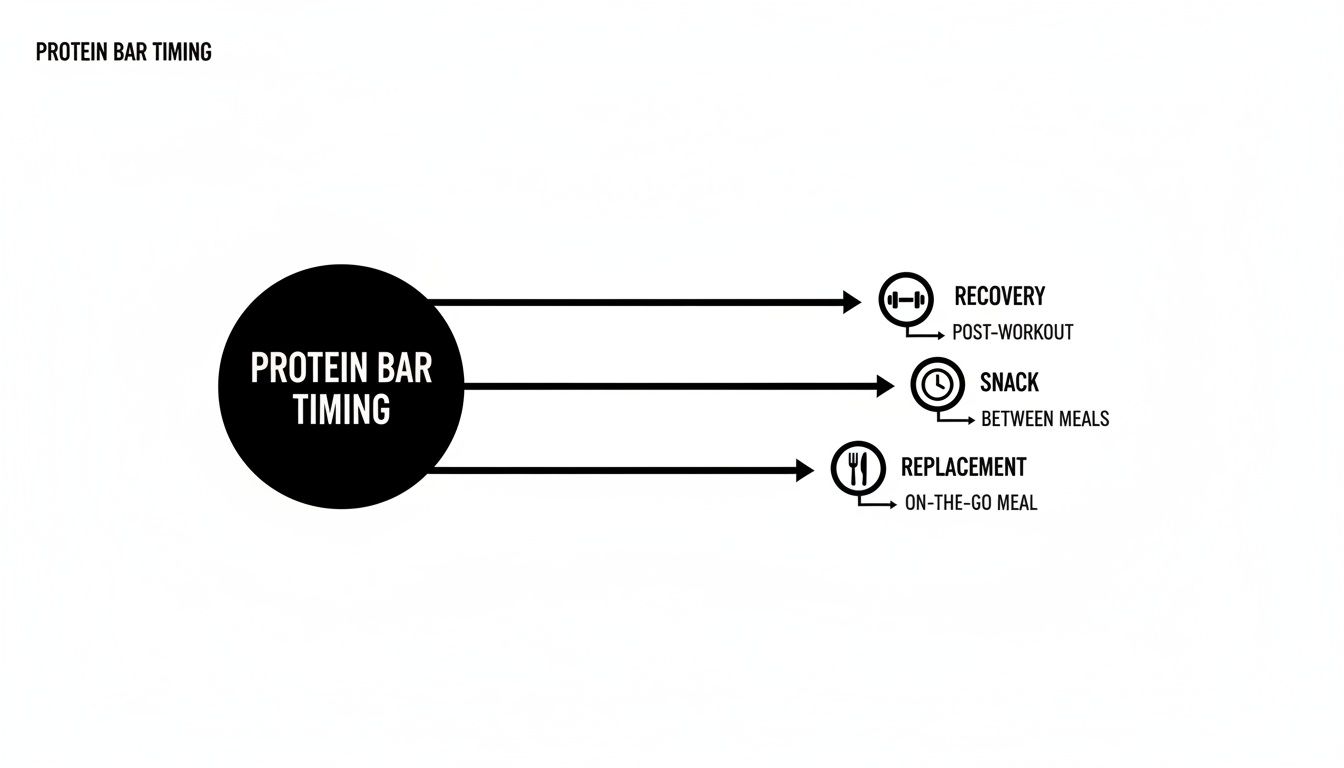
As you can see, timing is everything, which is exactly why the type of snack you choose matters so much.
A Tale of Two Ingredient Lists
When you flip over a typical cookies and cream bar and compare it to a savory snack like Gym Snack, the difference in philosophy is night and day.
Sweet bars are often a complex science experiment. They lean on protein blends that mix dairy (whey and casein) with soy. While these can be effective for muscle-building, they're a minefield for anyone with allergies or sensitivities. To get that signature sweetness, they're also loaded with sugar alcohols like maltitol or sucralose, which are notorious for causing bloating and digestive upset in a lot of people.
Savory protein puffs, however, usually start from a much cleaner place. By using a single-source plant protein like pea protein isolate, they immediately create an allergen-friendly foundation that's free from dairy, soy, and gluten. The entire approach is built around digestibility and gut health. Flavor doesn't come from sugar or artificial sweeteners; it comes from real spices and seasonings.
The table below breaks down this fundamental difference in a head-to-head comparison.
Sweet Protein Bar vs Savory Protein Snack
| Feature | Typical Cookies and Cream Bar | Savory Protein Puff Snack |
|---|---|---|
| Primary Goal | Satisfy sweet cravings, dessert alternative. | Provide sustained energy, promote satiety. |
| Protein Source | Often a blend of whey, casein, and/or soy. | Typically a single-source plant protein (e.g., pea). |
| Sweeteners | Sugar alcohols (maltitol, sucralose), sugar. | None. Flavor from spices and seasonings. |
| Common Allergens | Dairy, soy, gluten. | Often free from major allergens. |
| Sugar Content | Varies, but can be high or use substitutes. | Typically zero sugar. |
| Gut Health | Sugar alcohols can cause digestive distress. | Designed for easy digestion, no common irritants. |
As you can see, the choice goes far beyond just flavor. It’s about how the snack makes you feel long after you've finished it.
The Sugar and Allergen Divide
This ingredient-level difference creates a huge gap in how these snacks actually perform for your body. To taste like a cookie, a bar has to be sweet. This either means a high sugar content or a heavy dose of artificial sweeteners, both of which can send you on an energy rollercoaster that ends in a crash. Plus, the widespread use of dairy and soy simply makes many of these bars a no-go for a huge number of people.
A savory snack completely sidesteps the sugar trap. By leaning into bold, satisfying flavors like cheddar or jalapeño, it delivers that crunchy satisfaction with zero sugar and a clean allergen profile. This makes it a far better choice for steady energy and happy gut.
This isn't about giving up taste for the sake of function. It's about finding a snack that delivers on both without compromise. And if you’re a fan of dessert-style bars but are curious about how other flavors compare, take a look at our breakdown of a close relative, the cookie dough protein bar, to see how it stacks up.
How to Choose a Genuinely Healthy Protein Bar
Let's be honest, the protein bar aisle is a confusing place. Every package flashes promises of muscle gain, fat loss, and pure health. The truth is, many of them are just candy bars with a protein-powder facelift.
But once you know what to look for, you can see right through the hype. Forget the flashy marketing and focus on what’s actually inside. All it takes is a quick, four-step check of the nutrition label to tell if that cookies and cream bar is a smart choice or a sugar bomb in disguise.
The Four-Step Label Check
Think of this as your cheat sheet for picking a winner. Start here every time you grab a new bar.
-
Check the Protein Content First off, a protein bar needs to deliver on its main promise. Look for one with at least 15-20 grams of protein. This is the sweet spot for feeling full and giving your muscles the fuel they need to recover and grow. Make sure it comes from a quality source like whey, casein, or a good plant-based blend like pea protein.
-
Scrutinize the Sugar This is where most bars fail. Your goal is to find a bar with under 10 grams of total sugar. Many brands sneak in cheap sugars to make their bars taste better. Also, keep an eye out for sugar alcohols like maltitol or sorbitol—while they don't count as sugar, they can cause some serious digestive upset for a lot of people.
-
Analyze the Fats Not all fats are created equal. A quick glance at the saturated fat content can tell you a lot. If you see more than 5 grams, it's often a red flag that the company used cheaper fats like palm oil to get that creamy texture. You're better off with bars that get their fats from whole-food sources like nuts and seeds.
-
Look for a Short Ingredient List This one is simple: the shorter, the better. If you can recognize most of the ingredients, you're on the right track. If the list is a mile long and reads like a chemistry textbook, it’s probably best to put it back on the shelf.
The goal is to find a bar where the nutrition facts actually line up with your needs. A high-calorie, carb-loaded bar might be perfect for a cyclist mid-ride, but a leaner, lower-sugar option is what most of us need for everyday fullness.
By running through this quick check, you can make sure the cookies and cream protein bar you choose is actually working for you. It’s a simple habit that makes all the difference.
Frequently Asked Questions
It's only natural to have a few questions when you're looking at a snack that sounds as good as a cookies and cream protein bar. Are you really making a smart choice, or just falling for a cleverly disguised candy bar? Let's clear up the confusion and get you some straight answers.
Are Cookies and Cream Protein Bars Actually Healthy?
This is the million-dollar question, and the honest-to-goodness answer is: it completely depends on the brand. Let's be real, a lot of them are packed with so much sugar and junk that they're nothing more than a candy bar with a protein sticker slapped on.
A genuinely healthy bar won't try to hide behind flashy packaging. Here’s what to look for on the nutrition label:
- A solid protein-to-calorie ratio. A good rule of thumb is at least 1g of protein for every 15 calories.
- Minimal added sugar, ideally less than 10 grams.
- A clean, short ingredient list that isn't full of fillers like palm oil.
My advice? Always flip the bar over and read the label. Don't let the marketing on the front fool you.
Can I Eat a Protein Bar Every Day?
Even though they're incredibly convenient, making a processed bar a daily habit isn't your best move. Your diet should always be built on a foundation of whole foods.
Relying on bars every single day, especially the ones loaded with sugar alcohols, can also lead to some unpleasant digestive issues like bloating and gas.
Think of them as a useful tool in your nutritional toolkit, not the whole kit. They're perfect for those crazy-busy days, a quick post-workout refuel, or when you’re traveling. But they shouldn't become a replacement for a real meal. For a daily snack, you're better off reaching for something cleaner and based on whole foods.
Do Protein Bars Help With Weight Loss?
They absolutely can, but you have to be smart about which one you choose. The high protein content is fantastic for boosting satiety—that feeling of fullness that helps you control cravings and manage your calorie intake.
The catch is that the wrong bar can completely derail your progress. Many are surprisingly high in calories and sugar, which works directly against your weight loss goals. If you're trying to manage your weight, look for a cookies and cream bar with a lean profile: high protein, low sugar, and a moderate calorie count.
If you're looking for a snack built for satiety without all the sugar, consider Gym Snack. Our savory, plant-based protein puffs deliver a serious crunch and bold flavor, making it easy to hit your protein targets and stay full without the junk. You can check out our high-protein snacks to see the difference.