

So, what exactly are dairy-free cheese snacks? Forget those bland, rubbery substitutes from years past. We're talking about genuinely delicious, savory snacks crafted entirely from plant-based ingredients like nuts, seeds, and starches, designed for anyone who loves that cheesy flavor without the dairy.
They’ve quickly become a go-to for health-conscious folks, vegans, or anyone with lactose intolerance looking for satisfying, on-the-go nutrition.
Why Dairy-Free Cheese Snacks Are Taking Over
Step into the surprisingly diverse and exciting world of dairy-free cheese. What was once a niche item tucked away in a specialty aisle has exploded into the mainstream, becoming a gourmet snack in its own right. This isn't just a trend; it's a movement driven by people who want food that truly fits their life, whether for health, ethical, or dietary reasons.
The "why" behind their popularity is pretty straightforward:
- Dietary Needs: Millions of people deal with lactose intolerance or dairy allergies. For them, these snacks are a game-changer, offering a safe and tasty way to enjoy flavors they’d otherwise miss out on.
- Health and Wellness: Many are consciously cutting back on dairy to reduce inflammation, lower their saturated fat intake, or simply lean into a more plant-forward lifestyle.
- Ethical Choices: With the rise of veganism, more and more consumers are seeking out animal-free products that align with their personal values.
Think of this guide as your roadmap to navigating the world of dairy-free cheese. We'll break down everything from the core ingredients and nutritional facts to helping you pick the perfect option for your specific fitness goals. For even more ideas, check out our guide to the best vegan protein snacks.
This shift is clearly reflected in the market. The entire cheese snacks category—including both dairy and plant-based options—is projected to hit a staggering USD 118.8 billion by 2032. Dairy-free alternatives are a huge piece of that pie, feeding the growing hunger for convenient, healthier, and allergen-friendly snacks.
In this guide, we'll walk you through how to read labels, find options that fit your health goals, and even whip up your own at home. Get ready to discover your next favorite snack.
What Goes Into Plant Based Cheese Snacks?
Ever wonder how a handful of cashews or a humble potato can transform into something that tastes and feels like cheese? It’s a fascinating bit of food science. Think of the core ingredients like an artist's primary colors; each one creates a completely different experience on your palate. Understanding these building blocks is the real secret to finding dairy-free cheese snacks you'll actually crave.
This isn't some tiny niche market anymore, either. The global vegan cheese sector is set to explode, projected to more than double from USD 3.8 billion in 2025 to a staggering USD 8.9 billion by 2035. This massive shift is all thanks to people like you and me looking for lactose-free, sustainable, and plant-forward foods. You can get the full scoop on this growth from the market analysis by Future Market Insights.
Nut and Seed Bases: The Creamy Foundation
For many of the best artisanal-style dairy-free cheeses, nuts and seeds are the starting point. They bring healthy fats and that rich, satisfying mouthfeel that we often miss from traditional dairy.
- Cashews: These are the undisputed champions of creaminess. When blended, they create an incredibly smooth, luxurious texture perfect for dips, spreads, and soft "cheeze" blocks. Their flavor is mild and just a little sweet, making them a fantastic blank canvas.
- Almonds: If you're looking for something with more structure, almonds are a go-to. They create a slightly grainier texture and lend their distinct nutty flavor, which works beautifully in sliceable blocks and shredded varieties.
This diagram really nails the main drivers behind the switch to dairy-free cheese snacks. It's a mix of health goals, ethical choices, and very real dietary needs.
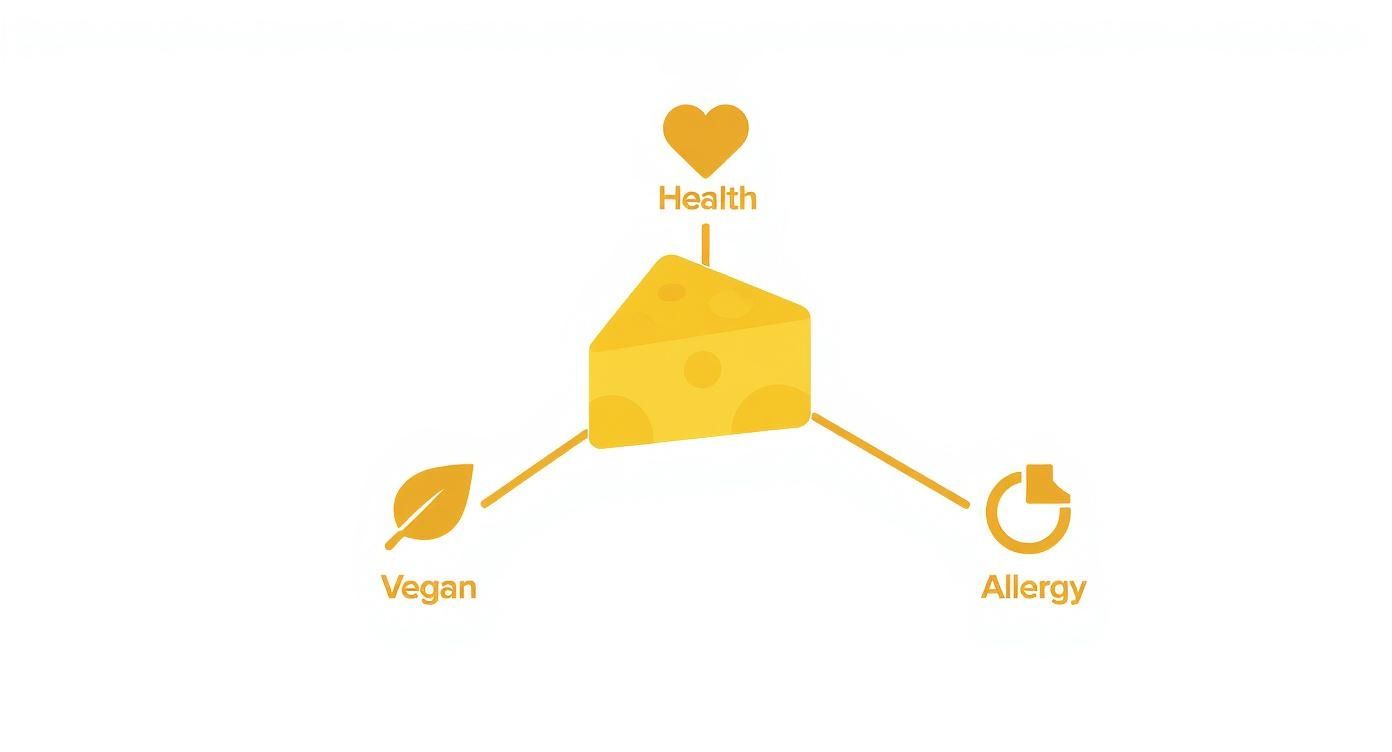
As you can see, this isn't just a trend. It's a conscious move toward foods that align with personal health, lifestyle values, and the necessity of avoiding allergens.
Starches and Oils: The Texture Architects
While nuts and seeds provide the body and flavor, starches and oils are the secret weapons. They're the reason your vegan pizza gets that gooey, stretchy pull.
These ingredients are the key to mimicking what makes dairy cheese, well, cheese. Without them, you’d have a delicious nut spread, but you wouldn’t get that satisfying melt on a quesadilla or a grilled cheese sandwich.
Here are the most common texture-enhancers you'll see on ingredient labels:
- Tapioca Starch: This is the MVP for creating stretch and elasticity. It’s the magic behind vegan mozzarella shreds that pull and melt so convincingly.
- Potato Starch: Often used to add softness and a slightly crumbly texture, potato starch helps firm up cheese blocks so they can be sliced without falling apart.
- Coconut Oil: Because it’s a saturated fat that’s solid at room temperature, coconut oil is essential for creating a firm texture that melts beautifully when heated. It adds richness, though you might notice a very subtle coconut flavor in some products.
A Quick Guide to Dairy Free Cheese Ingredients
With so many options out there, it helps to have a quick reference. This table breaks down the most common plant-based ingredients to help you understand what to expect in terms of flavor and texture, and which snacks they're best suited for.
| Ingredient Base | Typical Texture | Common Flavor Profile | Best For These Snacks |
|---|---|---|---|
| Cashews | Ultra-creamy, smooth, rich | Mild, slightly sweet, buttery | Dips, creamy sauces, soft spreads, dessert "cheesecake" |
| Almonds | Firmer, slightly grainy | Distinctly nutty, earthy | Sliceable blocks, firm wheels, shredded cheese |
| Coconut Oil | Firm when cool, melts smoothly | Rich, can have a mild coconut taste | Slices, shreds, blocks designed for melting |
| Tapioca Starch | Stretchy, gooey when heated | Neutral | Mozzarella-style shreds, pizza cheese, queso dips |
| Soy | Soft, melts well | Mild, sometimes described as "beany" | Sliced sandwich "cheese," shreds for casseroles |
| Potato/Carrot | Soft, saucy, sometimes watery | Savory, slightly sweet, vegetable-like | Allergen-free cheese sauces, nacho dips |
Choosing the right base really comes down to what you're making. A cashew cream is perfect for a dip, but you’ll want something with tapioca starch and coconut oil for that perfect grilled cheese melt.
Other Key Plant Ingredients
The innovation doesn't stop with nuts and starches. A few other key players have carved out their own space in the dairy-free cheese world, each bringing something unique to the table.
Soy, for example, is a protein-packed and cost-effective base that melts incredibly well, which is why you see it so often in commercial slices and shreds. At the same time, creative new recipes are popping up using whole-food bases like potatoes, carrots, and even chickpeas. These are fantastic for creating sauces and spreads that are naturally lower in fat and free from top allergens like nuts and soy. This incredible variety means there's truly a dairy-free cheese snack out there for everyone.
Decoding the Nutrition Label on Your Snack
Let's be honest, the snack aisle is designed to be overwhelming. Bright, shiny packages scream for your attention. But to find a snack that actually fits your health goals, you have to become a bit of a detective and learn to read the nutrition label. It’s the only way to see what’s really going on behind the marketing hype and understand the key differences between dairy cheese and its plant-based counterparts.
Right off the bat, one of the biggest trade-offs you'll notice is the protein content. Real dairy cheese is a protein powerhouse, typically packing 7-8 grams per ounce. Many dairy-free versions, especially those made from starches and oils, fall way short, sometimes offering just 1-2 grams for the same amount. If getting enough protein is important to you, keep an eye out for snacks specifically fortified with pea or soy protein.
Fats and Sodium
Next up are the fats. It’s easy to assume that "plant-based" automatically means "healthier," but it's not that simple. While these snacks don't have dietary cholesterol, some are still very high in saturated fat, thanks to ingredients like coconut oil which helps create that firm, cheese-like texture. Your body processes plant-derived saturated fats differently than animal fats, but it's still something to be mindful of.
And then there's the sodium. Processed snacks of all kinds—dairy or not—can be loaded with salt, which can leave you feeling bloated and impact your blood pressure over time. When you’re comparing two packages, a quick glance at the sodium content can make the decision for you.
Choosing a snack isn't just about what's left out (like dairy); it's about what's put in. Pay close attention to fats, sodium, and fortification to ensure your snack is truly nourishing.
The type of oil used is also a huge deal. A lot of highly processed snacks rely on refined seed oils that are known to be inflammatory. Learning how to spot these on an ingredient list can make a massive difference in how you feel. For a complete breakdown, our guide on how to avoid seed oils is a great resource.
Fortification and Allergens
Since you’re skipping the dairy, you’re also skipping its natural calcium and vitamin B12. Smart dairy-free brands know this, so they fortify their products to fill that gap. Always check the label for these added nutrients—they’re essential for bone health and keeping your energy levels up, particularly if you eat a mostly plant-based diet.
Finally, and this is a big one, always scan for hidden allergens. Just because a label says "dairy-free" doesn't mean it's free from everything else. The base ingredients can be major triggers for some people.
- Nut Allergies: High-end, artisanal cheese alternatives often use cashews or almonds.
- Soy Allergies: Soy is a go-to for many commercial brands because it’s cheap and melts well, so you’ll see it in a lot of slices and shreds.
- Gluten Sensitivities: It’s less common, but you'll sometimes find wheat starch or other fillers that contain gluten.
Once you get comfortable decoding the label, you can walk down that snack aisle with confidence, knowing you can pick out a dairy-free cheese snack that actually supports your body and tastes fantastic.
Snacking Smarter for Your Health Goals
This is where the rubber meets the road—connecting your snack choices to your actual wellness goals. It's one thing to know what’s in a snack, but it’s another to use that knowledge as a powerful tool. Dairy-free cheese snacks aren't a one-size-fits-all solution; they're a diverse group of foods you can use strategically, whether you're trying to manage your weight or build muscle.
The real trick is to look past the "dairy-free" label and start asking what that snack can do for you.
Let's say weight loss is your main focus. The name of the game is finding snacks that are low in calories but high in satiety—that satisfying feeling of fullness that keeps you from raiding the pantry an hour later. Plant-based snacks often have a natural edge here because they're packed with fiber from ingredients like nuts, seeds, and legumes. Fiber slows down digestion, helping you feel fuller, longer.
Aligning Snacks with Fitness Goals
So, how do you pick the right one? It all starts with getting clear on your primary objective. The perfect snack for someone trying to shed a few pounds looks very different from what an athlete needs for muscle repair after a tough workout.
- For Weight Management: Stick to snacks where whole foods are the star ingredients. You'll want to prioritize options that are lower in oils and starches but rich in that all-important fiber. A snack that fills you up without packing on the calories is your best friend here.
- For Muscle Building: Protein is absolutely essential. The good news is that many dairy-free cheese snacks are now fortified with powerful plant-based proteins like pea or soy isolate, making them just as effective as their dairy-based cousins. They’re an ideal post-workout bite to kickstart muscle recovery and growth.
This more intentional approach to snacking is a huge reason why the cheese alternatives market is set to explode, growing from an estimated USD 2.78 billion in 2025 to a massive USD 7.63 billion by 2034. People aren't just looking for alternatives; they're looking for better options.
Smart Snacking Takeaway: The goal isn't just to replace dairy; it's to upgrade your snack. Match the nutritional profile—protein, fiber, and calories—to what your body needs to achieve your specific health and fitness goals.
Considerations for GLP-1 Users and Protein Intake
For anyone using GLP-1 medications, getting enough protein is especially important to help preserve lean muscle mass during weight loss. High-protein, savory snacks are a fantastic way to hit your protein targets without adding a lot of sugar or unnecessary calories.
A snack like Gym Snack, which uses a pea protein base, can be a great fit. It helps support the very same fullness-signaling hormones that these medications work with, making it a satisfying choice that aligns perfectly with your goals.
Figuring out how to get enough protein from plants can feel like a puzzle, but it's totally doable with the right strategy. For a deeper dive, check out our guide on how to get enough protein on a plant-based diet.
As you build smarter snacking habits, remember that it's all part of a bigger picture. Incorporating a variety of healthy food choices for heart health can create a well-rounded diet that truly supports your active lifestyle.
How to Serve and Store Your Snacks
Alright, you've done the hard part—you navigated the grocery store and picked out some promising dairy-free cheese snacks. Now, let's make sure they stay fresh and delicious from the first bite to the last.
Proper storage is a bigger deal than you might think. Plant-based ingredients just don't act like dairy, and their carefully crafted textures can go south pretty quickly if you don't store them right.
Most of the firmer blocks and shreds do best when left in their original packaging. Once you open them up, the game changes. Wrap any leftovers tightly in parchment paper and then pop that into an airtight container. This little trick keeps them from drying out but still lets them "breathe" a bit, which is key to holding onto their flavor and texture. For the softer, cream-cheese-style spreads, just keep them sealed in their container to avoid them soaking up any weird fridge smells.
Simple and Creative Serving Ideas
Keeping them fresh is one thing, but the real fun starts when you figure out all the ways to eat them. It’s time to move beyond just plopping a slice on a cracker. With a little imagination, you can weave these snacks into your meals and make everything a little more interesting.
Here are a few ideas to get you started:
- Build a Better Snack Plate: Grab a firm, almond-based block and slice it up. Arrange it on a plate with some crisp apple slices, a handful of walnuts, and your favorite gluten-free crackers. You get that perfect savory-sweet-crunchy combo that always hits the spot.
- Get Your Melt On: Those shreds made with coconut oil are your best friend for anything that needs to be gooey and melted. They are literally designed for it. Think next-level vegan grilled cheese or a super-fast quesadilla.
- Upgrade Your Salads and Bowls: Crumble some feta-style cheese over a big Greek salad or a warm quinoa bowl. That tangy, salty punch is exactly what you need to take a simple dish from "good" to "great."
Here's a pro tip: The best way to serve a dairy-free cheese almost always comes down to its base. A creamy cashew spread is made for dipping veggies, while a firm block made from almonds or coconut oil is perfect for slicing onto a snack board.
Once you get the hang of storing and serving your dairy-free cheese snacks, you'll unlock their true potential. It's how you make sure every single bite is as good as the first, turning a simple snack into a truly satisfying part of your day.
Easy Homemade Dairy-Free Cheese Spread Recipe
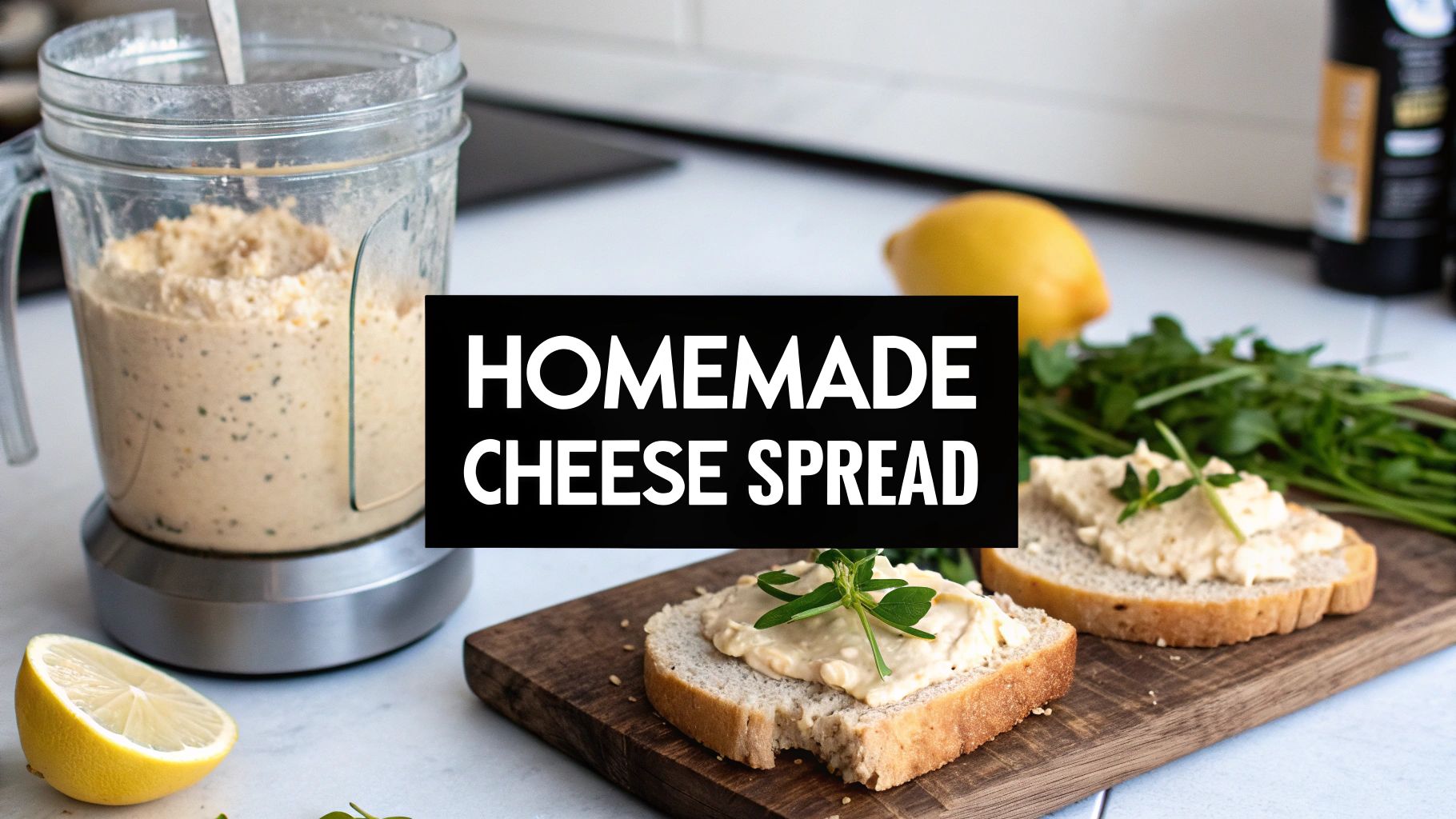
Sometimes, the best snacks are the ones you make yourself. Whipping up your own dairy-free cheese is way less intimidating than it sounds, and the payoff is huge.
With just a blender and a handful of simple ingredients, you get total control over what goes into your food. You can dial in the salt, ditch the preservatives you see in some store-bought brands, and play around with flavors until it’s perfect for you. Plus, it's a seriously satisfying process to turn a few humble ingredients into something so creamy and delicious.
Simple Blender Cashew Cheese Spread
This recipe is all about getting maximum flavor with minimum fuss. It creates a rich, tangy spread that’s fantastic on crackers, with fresh-cut veggies, or slathered on a sandwich.
Ingredients:
- 1 cup raw, unsalted cashews (soaked in hot water for at least 2 hours, then drained)
- 3 tablespoons nutritional yeast (this is the secret to that "cheesy" flavor!)
- 2 tablespoons fresh lemon juice for a bright, tangy kick
- 1 small garlic clove, roughly chopped
- 1/4 cup of water, plus a little more if needed for blending
- 1/2 teaspoon of salt, or to your personal taste
Instructions:
- Toss the soaked and drained cashews, nutritional yeast, lemon juice, garlic, salt, and 1/4 cup of water into a high-speed blender.
- Blend on high for 1-2 minutes. You'll probably need to stop and scrape down the sides a couple of times to make sure everything gets incorporated.
- If it's too thick, add more water one tablespoon at a time until you hit that perfectly smooth, creamy consistency.
- Give it a taste and adjust the seasoning if you like. You can dive in right away, but it's even better if you let it chill in an airtight container for at least an hour to firm up.
This homemade spread stays fresh in the fridge for up to five days. When you make your own snacks, you know exactly what you’re eating—no mystery ingredients.
If you love making your own plant-based staples from scratch, check out this homemade vegetarian hot dogs recipe for more kitchen inspiration.
Common Questions About Dairy Free Cheese
It's totally normal to have a few questions when you start exploring the world of dairy free cheese snacks. As these plant-based options have exploded in popularity, you might be wondering how they really compare to the dairy versions you grew up with. Let's tackle some of the most common questions so you can pick your next snack with confidence.
Think of this as your go-to FAQ for all things dairy free cheese.
Does Dairy Free Cheese Actually Melt Like Real Cheese?
The short answer is: a lot of them do! But it all boils down to what they're made of. The secret to getting that perfect, gooey stretch usually comes from a combination of starches—like tapioca or potato—and specific fats, most often coconut oil. These are the ingredients that create that amazing melt.
If you're making pizza, nachos, or a classic grilled "cheese," your best bet is to look for products sold as "shreds" or a "melty blend." Those are specifically designed for that job. On the other hand, the firmer, nut-based blocks are usually meant for slicing onto a cracker, so don't expect them to melt the same way.
Are Dairy Free Cheese Snacks Automatically Healthier?
Not always. The word "healthier" really depends on what you're looking for in your diet. While most dairy free cheese snacks have zero cholesterol and are lower in saturated fat, some of the more processed versions can be loaded with sodium, refined oils, and fillers.
The most important thing you can do is flip the package over and actually read the nutrition label and ingredient list. This is the only way to know if a product truly fits your goals, whether you're trying to add protein, cut back on sodium, or avoid certain fats.
Plus, you’ll often find they have a lot less protein than dairy-based cheese. It’s all about comparing the labels and picking the snack that aligns with what your body needs.
Can I Eat These Snacks If I Have a Nut Allergy?
Yes, absolutely! You just need to be a careful label-reader. While creamy cashews and almonds are a go-to base for many artisanal-style products, the market is full of incredible nut-free options.
Many brands now use bases like:
- Soy protein to get a creamy, meltable texture.
- Coconut oil and starches for creating firm slices and shreds.
- Oats or potatoes to make smooth, allergen-free sauces and dips.
If you have a nut allergy, it's so important to check labels for both the ingredients and any cross-contamination warnings. The safest choice is to look for snacks that are certified nut-free, which means they were made in a dedicated facility.
For a savory, crunchy snack that’s built on clean pea protein and is always free from dairy, soy, and nuts, check out Gym Snack. Find your new favorite high-protein, allergen-friendly option at the official Gym Snack website.