

You finish a hard session, reach into your gym bag, and find the same protein bar that used to work perfectly. Now it leaves you bloated, the label reveals whey or milk derivatives, or a recent celiac diagnosis means the “healthy” oat blend isn't safe enough. You still need practical protein, but digestive comfort and cross-contact risk now matter as much as the macro panel.
The smart choice isn't just “plant-based.” It's choosing between single-source isolates, amino-acid-balanced blends, and ready-to-eat savory formats, then judging each by protein density, digestibility, ingredient transparency, and the situation in which you'll really eat it.
| Option | Main advantage | Main limitation | Best fit |
|---|---|---|---|
| Single-source isolate | Simple formula and predictable digestion | May have an amino-acid gap | Home shakes and controlled nutrition |
| Pea and rice blend | Broader amino-acid balance | More ingredients and possible texture issues | Daily training and endurance |
| Ready-to-drink shake | Immediate convenience | Less control over ingredients and calories | Post-workout emergencies |
| Savory pea snack | Portable, crunchy, no mixing | Usually less protein than a full shake | Between meals and travel |
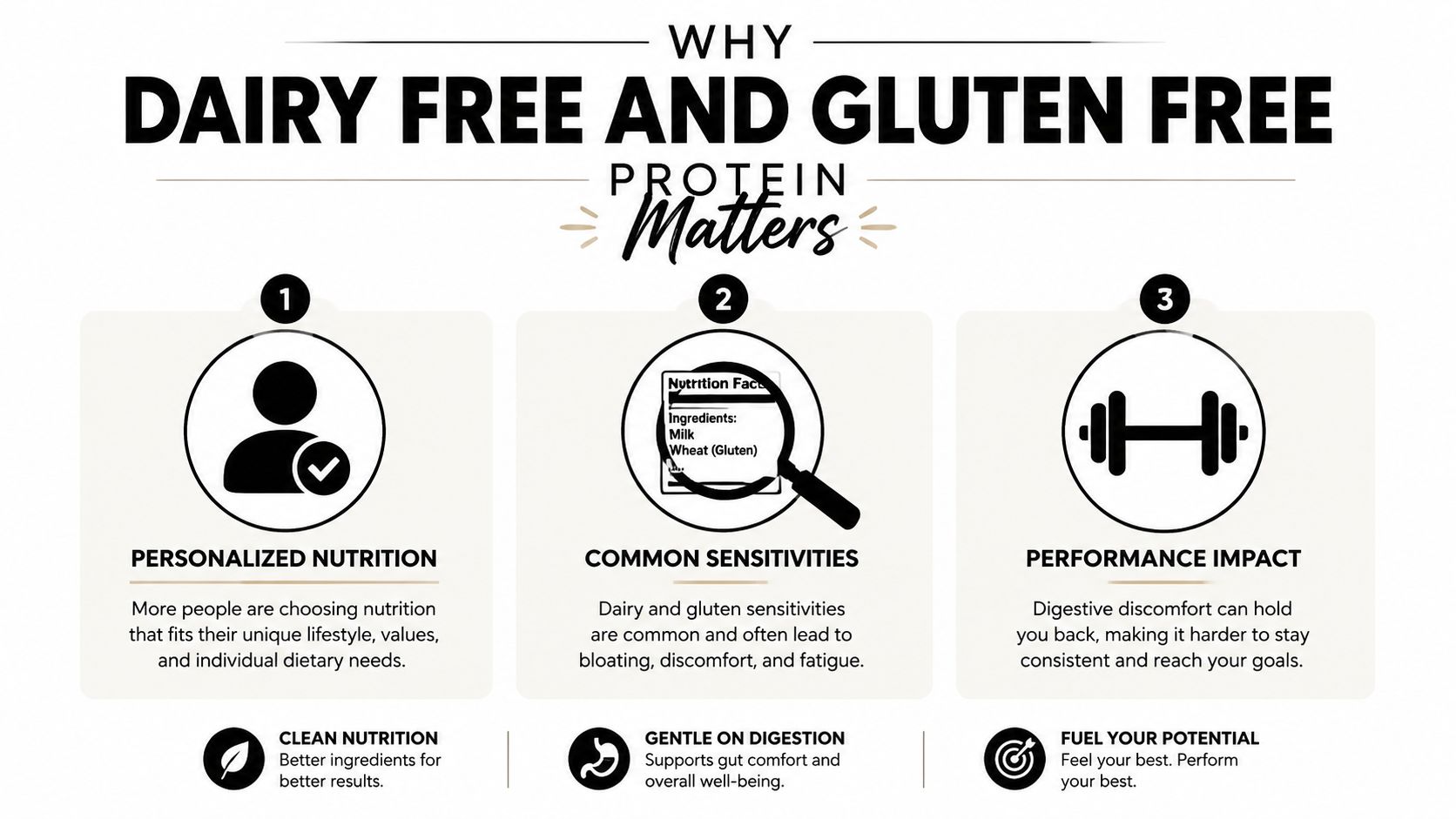
Why Dairy Free and Gluten Free Protein Matters
The first step is separating dairy free from lactose free. A dairy-free protein product must exclude milk ingredients, including whey, casein, milk protein concentrate, and sodium caseinate. Lactose-free products can still contain milk proteins, so they aren't automatically suitable for someone avoiding dairy because of an allergy, intolerance, or personal choice.
Gluten free requires a different check. Wheat, barley, and rye are the obvious sources, but cross-contact can happen during harvesting, processing, or manufacturing. Oats deserve extra attention because they can be exposed to gluten-containing grains unless the product carries credible gluten-free verification. For anyone with celiac disease, a vague “no gluten ingredients” statement isn't as reassuring as a tested, certified claim.
The medical reason for taking gluten avoidance seriously is substantial. A 2018 systematic review and meta-analysis estimated worldwide celiac disease prevalence at 1.4% based on serology and 0.7% based on biopsy-confirmed cases, with an estimated 40 to 60 million people affected globally (systematic review of worldwide celiac disease prevalence). The same review reported geographic variation across major regions, which helps explain why gluten-free protein products serve a broad market rather than a narrow dietary niche.
Read the label before judging the protein
Start with the ingredient list, not the front-of-pack protein claim. Look for a clearly named source such as pea protein isolate, brown rice protein, hemp protein, or a defined blend. “Plant protein blend” tells you far less about digestibility, amino-acid balance, or flavor than a transparent formula does.
The category also has commercial momentum. A Canadian government industry analysis projected the global plant-based protein market would reach USD 10.8 billion by 2022, with a 6.7% CAGR, while plant-based dairy revenue was projected to reach USD 34 billion in 2024 (Canadian analysis of plant-based protein and dairy markets). Those projections show why gym-goers now have more dairy-free formats to choose from, but a crowded shelf makes label literacy more important, not less.
Comparing Pea, Rice, Hemp, and Blended Proteins
Pea isolate is the strongest all-rounder for most athletes. It has a mild flavor, mixes reasonably well, and provides useful protein without dairy or gluten. Human and animal data report real ileal amino-acid digestibility of approximately 93.6% to 96.8%, with a DIAAS of 1.00 in healthy adults and 0.88 in a rat model under baseline conditions (pea protein digestibility and DIAAS data). The catch is sulfur amino acids, particularly methionine, so a blend can improve the overall amino-acid pattern.
Brown rice protein is a useful partner rather than an automatic winner on its own. It tends to have a lighter mouthfeel and can suit people who dislike the earthier character of pea protein, but its amino-acid profile works better when paired with another source. Hemp brings a different proposition, with more whole-food character and naturally occurring nutrients, but its lower protein concentration makes it less efficient when your priority is maximum protein from a small serving.
Blends usually deserve the daily-driver slot. Pea and rice complement one another, reducing the weakness of relying on either source alone. They can also produce a more balanced sensory profile, although some blends become gritty when manufacturers add too many fibers, gums, or flavor systems. For a deeper muscle-building comparison, use this plant protein guide for muscle gain.
| Protein Source | Protein Density (%) | Amino Acid Completeness | Iron (mg per 30g) | Saturated Fat | Best Use |
|---|---|---|---|---|---|
| Pea isolate | Product-dependent | Strong, but sulfur amino acids can limit quality | Check label | Usually low | Shakes, baked snacks, savory crisps |
| Rice protein | Product-dependent | Better when blended with pea | Check label | Usually low | Gentle-tasting blends |
| Hemp protein | Lower than isolates | Broad plant profile, less protein-dense | Check label | Usually low | Whole-food smoothies and snacks |
| Pea and rice blend | Product-dependent | Better overall balance | Check label | Usually low | Daily training and endurance |
Don't treat “complete” as a simple pass-or-fail badge. Protein quality depends on amino-acid amounts, digestibility, serving size, and the rest of your diet. Pea can perform well, but blends often make the practical job easier.
Powders, Bars, Shakes, and Crunchy Savory Formats
Protein powder wins on control. You choose the liquid, portion size, flavor, and whether to add fruit or fiber. It's also the easiest format to use in oatmeal or baking, but it demands a shaker, preparation, and somewhere to clean up. A glass bottle can be useful if plastic taste or material preferences bother you. This overview of AloeCure shaker materials gives context for comparing shaker construction before you buy another bottle.
Ready-to-drink shakes solve the preparation problem, especially when you're leaving the gym for work. Their tradeoff is less flexibility over calories, sweeteners, texture, and allergen controls. Bars are more dependable in a desk drawer or backpack, but their ingredient lists often combine plant protein with syrups, oats, nut ingredients, or dairy-derived proteins.
Crunchy savory formats fill the gap that sweet products leave open. They require no mixing, feel more like food than a beverage, and can break the cycle of chocolate bars and vanilla shakes. The protein amount may be lower than a full shake, but the format can be more useful when you need something between meals rather than a liquid meal replacement.
| Format | Portability | Prep Needed | Calories (typical) | Protein (g) | Allergen Risk |
|---|---|---|---|---|---|
| Powder | Moderate | Mixing required | Varies | Varies | Depends on formula and facility |
| Ready-to-drink shake | High | None | Varies | Varies | Check milk, soy, oats, and facility statements |
| Protein bar | High | None | Varies | Varies | Often includes dairy, nuts, or oats |
| Crunchy savory snack | High | None | Varies | Varies | Check seasoning and cross-contact statements |
The right format depends on friction. A technically excellent powder won't help if you leave it at home, while a modest savory snack can be valuable because you'll carry and eat it.
Satiety, Protein Density, and Iron Tradeoffs
A large protein number doesn't automatically make a snack satisfying. Protein density, meaning protein relative to total calories, gives you a more useful comparison than scoop size. A small snack with a solid protein-to-calorie ratio may work better between meals than a larger shake that feels too heavy.
Fiber matters too. A controlled crossover study of a gluten-free snack found that a 110-calorie roll containing 5.0 to 5.6 grams of protein and 3.3 to 4.6 grams of fiber produced a clear trend toward greater fullness than a no-protein control, although the researchers stopped short of a definitive satiety claim (controlled crossover study of a gluten-free protein snack). The practical lesson is simple: pair protein with fiber when the use case is hunger management.
The nutrition panel still decides
Plant protein sources also differ in micronutrients. Pea and hemp can contribute meaningful iron, while rice protein may contribute little, depending on processing and fortification. Dairy free doesn't automatically mean iron-rich, so check the mineral panel instead of assuming a plant-based product covers the gap.
Saturated fat deserves the same scrutiny. A product can avoid whey and still rely heavily on coconut-derived ingredients, which may raise saturated fat enough to undermine the reason you chose a lighter plant-based snack. Check the full panel, not just protein and calories.
Practical rule: Divide protein grams by total calories. A result above 0.25 is a strong starting point for a satiety-focused snack, but fiber, portion size, and personal tolerance still matter.
| Source | Protein per 100 cal | Iron (%DV) | Fiber (g) | Sat Fat (g) |
|---|---|---|---|---|
| Pea isolate | Calculate from label | Check label | Check label | Check label |
| Rice protein | Calculate from label | Check label | Check label | Check label |
| Hemp protein | Calculate from label | Check label | Check label | Check label |
| Savory whole-food protein snack | Calculate from label | Check label | Check label | Check label |
Use this table as a method, not a substitute for a label. Products within the same category can differ sharply because of oils, binders, added fiber, and serving size.
How to Read Labels and Avoid Hidden Allergens
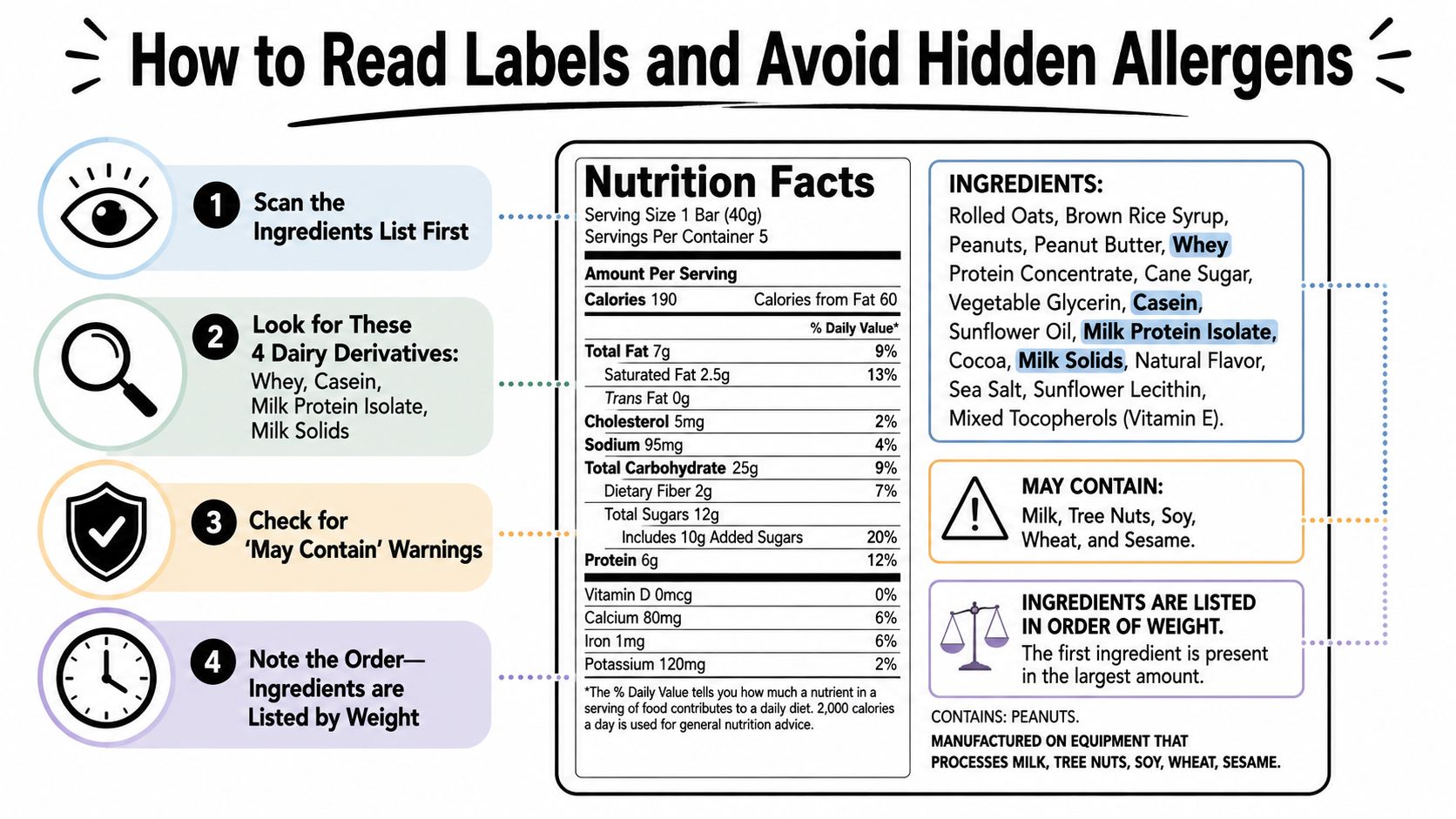
A “non-dairy” front label doesn't end the investigation. Scan the ingredient list for whey, casein, milk protein concentrate, and sodium caseinate. These ingredients can appear in products positioned around plant-based eating, especially in flavor systems, creamers, coatings, or protein blends.
Gluten requires a separate process. A regulated gluten-free claim in the United States is associated with a limit of less than 20 parts per million, while “made without gluten ingredients” doesn't provide the same testing assurance. Look for a recognized certification, then inspect warnings such as “may contain” or shared-facility statements. Those warnings matter most for people with celiac disease or a serious wheat allergy, not only for shoppers avoiding gluten by preference.
Use a 60-second label scan
- Read the allergen statement first. Check whether it declares milk and whether the product identifies shared equipment or facilities.
- Inspect the ingredients. Search for dairy derivatives, wheat, barley, rye, and ambiguous flavor or coating components.
- Confirm the source. A named pea or rice protein is more useful than an unexplained “protein blend.”
- Check certification marks. GFCO can support gluten-free verification, Certified Vegan can confirm the absence of animal-derived ingredients under its standard, and NSF Certified for Sport addresses banned-substance testing.
The allergy-friendly protein bar guide is useful for comparing portable products, but you should still verify every package because formulas and manufacturing conditions can change.
The short video below can help reinforce the visual habit of scanning an ingredient panel before buying.
Matching Protein Sources to Real Use Cases
A good protein product earns its place by solving a specific problem. Don't choose a source because it wins an abstract ranking. Choose the format that fits the time, appetite, equipment, and risk level of the moment.
| Use Case | Top Format | Why It Works | Watch Out For |
|---|---|---|---|
| Post-workout at home | Pea isolate or pea and rice powder | Easy to portion and combine with other foods | Texture, added gums, and ingredient tolerance |
| Between meals | Savory protein snack | Portable and easier to eat as a small portion | Lower total protein than a full shake |
| GLP-1 medication routine | Small, protein-dense snack | Supports intake when large portions feel difficult | Saturated fat and excessive volume |
| Travel day | Shelf-stable bar or crunchy snack | No refrigeration or mixing required | Cross-contact and unclear ingredient blends |
| Endurance training | Pea and rice blend | Broader amino-acid coverage over longer sessions | Added sugars and stomach tolerance |
Post-workout, a powder is practical if you can mix it immediately and tolerate the texture. The supposed need for a rigid “anabolic window” is less important than having a reliable routine, but fast, simple preparation still helps athletes who struggle to eat after training.
Between meals, savory formats often beat another sweet product because they provide a different sensory experience and can be portioned without turning into a full meal. For users taking Mounjaro, Zepbound, or semaglutide protocols, the priority is even more practical: choose a small serving with high protein density and modest saturated fat rather than forcing down a large shake.
Travel exposes weak products quickly. A container that leaks, a powder that needs a blender, or a refrigerated shake you can't keep cold becomes dead weight. Packaged formats with clear allergen labeling are usually the sensible choice.
Pick by situation, not by source loyalty. The best protein is the one that meets your nutrition needs and survives your actual schedule.
Why Pea-Based Savory Snacks Stand Out
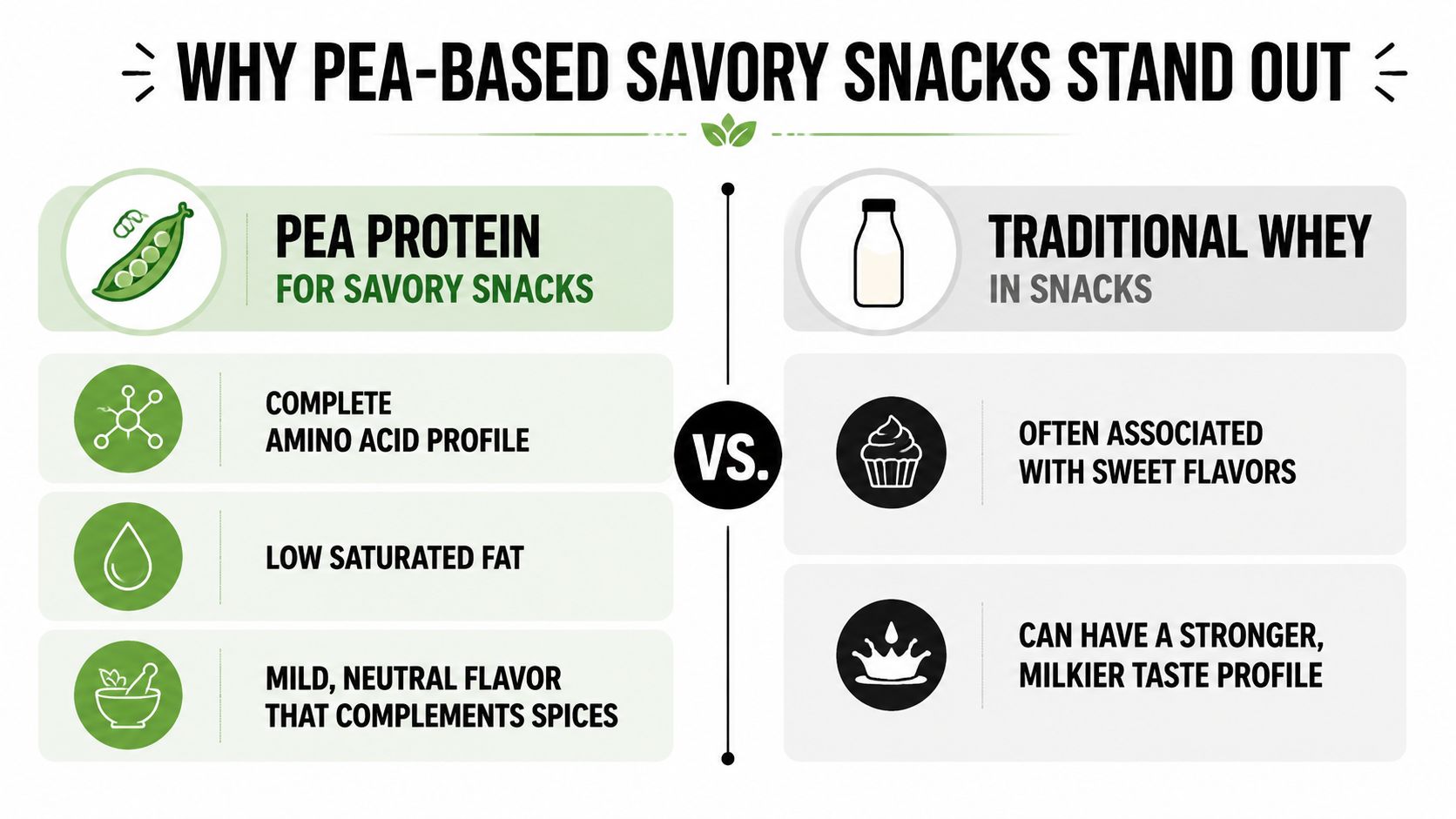
Pea protein makes sense in savory snacks because it has a relatively neutral base flavor, works without dairy, and can support a protein-first recipe. Compared with sweet shakes and bars, savory crisps also give athletes a way to vary texture and flavor without adding another dessert-style product to the gym bag.
Manufacturers can use extrusion and baking to create a crunchy structure, then season it with flavors such as cheddar-style cheese alternatives, jalapeño, herbs, or spices. The process changes texture, not the underlying reason to check the label. You still need to review the final protein amount, fiber, oil, sodium, and allergen statements.
Why the format works in a gym bag
Savory snacks solve three common adherence problems:
- Flavor fatigue: A crunchy, seasoned bite gives you an alternative to vanilla shakes and chocolate bars.
- Preparation friction: You don't need a shaker, liquid, refrigeration, or a blender.
- Portion control: A smaller serving can bridge the gap between meals without pretending to replace lunch.
Iron can also be a useful differentiator in pea-based products, but don't assume every pea snack contains the same amount. Processing, fortification, and serving size determine the actual mineral contribution, so the nutrition panel remains the authority.
Gym Snack fits this format with plant-based savory bites built around pea protein. Its published product information describes dairy-free, soy-free, and gluten-free snacks in Cheddar Cheeze and Jalapeño Cheddar Cheeze varieties, making the pea protein snack range relevant for shoppers who want a portable alternative to sweet protein products.
The blunt recommendation is to use savory pea snacks for adherence, not as a universal replacement for powders. A shake may be more efficient when you need a larger protein serving, while a crunchy snack is often more realistic when you need something you'll enjoy eating at your desk, in the car, or after a session.
Choosing the Right Option for Your Routine
Use four questions before you buy:
- Where will you eat it? Home gives you access to a shaker and kitchen. Commutes and travel favor sealed, ready-to-eat formats.
- How much protein density do you need? If calories are tightly managed, compare protein with total calories rather than selecting the biggest package.
- Which allergens are essential? Dairy avoidance, gluten avoidance, celiac disease, and general digestive sensitivity require different levels of label scrutiny.
- Will you consume it consistently? A product that tastes acceptable once but becomes boring after several uses isn't a good routine choice.
| Priority | Best Format | Why It Works |
|---|---|---|
| Maximum control at home | Powder | You control serving size, liquid, and additions |
| Predictable workday snack | Bar | Shelf-stable and easy to store |
| Immediate post-workout convenience | Ready-to-drink shake | No preparation required |
| Between-meal hunger and flavor variety | Crunchy savory snack | Portable, portionable, and not dessert-like |
| Broad amino-acid coverage | Pea and rice blend | Combines complementary plant sources |
| High allergen scrutiny | Certified, clearly labeled option | Makes ingredients and manufacturing claims easier to verify |
For someone managing lactose intolerance, gluten sensitivity, and reduced appetite while using a GLP-1 medication, start with a small, protein-dense format that has low saturated fat and a short, transparent ingredient list. For someone training at home, a pea or pea and rice powder offers more control. For endurance athletes, a defined blend is more sensible than relying on one source all day.
My hierarchy is straightforward: choose certified and clearly labeled products first, then judge digestibility, then compare protein density, flavor, and convenience. A slightly less impressive lab profile that you tolerate and eat consistently beats a technically superior formula that sits unused in your cupboard.
Gym Snack offers dairy-free, gluten-free savory pea protein snacks for gym bags, commutes, and between-meal hunger, with Cheddar Cheeze and Jalapeño Cheddar Cheeze options described on its product materials. If you want a crunchy alternative to another sweet bar or shake, visit Gym Snack and compare the available snack packs for your routine.