

Think you can't hit your protein goals without dairy? Think again. The secret isn't about restriction; it's about shifting your focus to the powerhouse protein sources found in plants—like legumes, soy, nuts, and seeds.
Going dairy-free opens up a whole new world of nutrient-dense foods that can seriously fuel your fitness journey.
Your Quick Guide to Powerful Dairy-Free Proteins
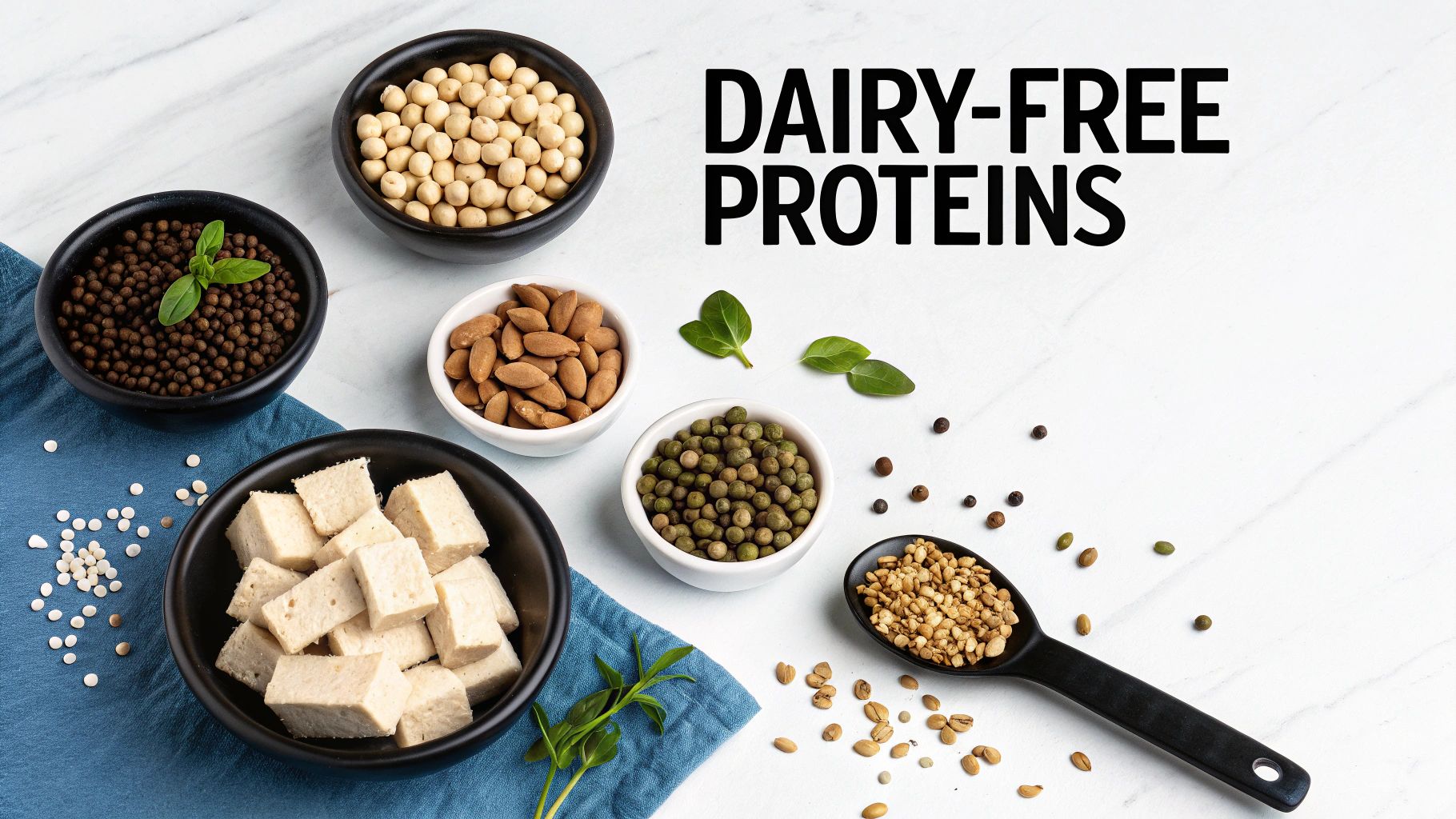
Stepping away from dairy doesn't mean your protein intake has to take a nosedive. In fact, you'll discover a huge variety of effective and easy-to-find dairy-free high-protein foods that are perfect for building muscle, keeping you full, and boosting your overall health. It’s less about losing options and more about expanding your nutritional toolkit.
A solid dairy-free protein plan really comes down to a few key food groups. The best part? Each one brings its own unique blend of amino acids, vitamins, and minerals to the table, so variety is your best friend here.
- Legumes: We're talking lentils, chickpeas, black beans, and peas. They're loaded with protein and also packed with fiber, which is fantastic for digestion and keeping you feeling satisfied.
- Soy Products: Tofu, tempeh, and edamame are true superstars because they're complete proteins—meaning they have all nine essential amino acids your body can't make on its own. Plus, they're incredibly versatile in the kitchen.
- Nuts and Seeds: Think almonds, hemp seeds, chia seeds, and pumpkin seeds. These are fantastic sources of both protein and healthy fats, making them an easy, nutrient-rich addition to any meal or snack.
- Plant Protein Isolates: You'll find concentrated sources like pea and soy protein in many high-protein snacks and supplements. They're a super direct and efficient way to up your daily intake.
Top Dairy-Free High-Protein Foods at a Glance
To make it even easier, here's a quick look at some of the most powerful options out there. This chart shows you exactly how much protein you get from a standard serving, helping you plan your meals for maximum impact.
For even more convenient ideas, especially for active families, this parent's guide to fun non-dairy protein snacking has some great inspiration.
| Food Source | Serving Size | Approximate Protein (g) |
|---|---|---|
| Lentils (cooked) | 1 cup | 18g |
| Tempeh | 1 cup (166g) | 34g |
| Firm Tofu | 1/2 cup (126g) | 22g |
| Hemp Seeds | 3 tablespoons | 10g |
| Edamame (shelled) | 1 cup | 18g |
| Chickpeas (cooked) | 1 cup | 15g |
| Almonds | 1/4 cup | 8g |
As you can see, a well-planned, dairy-free diet is anything but low in protein. By mixing and matching these foods, you can easily meet—and even crush—your protein targets to build muscle, recover faster, and stay energized all day long.
Why Going Dairy-Free With Your Protein Can Be a Game-Changer
Choosing dairy-free protein isn't just a simple dietary swap. For a lot of people, it's a deliberate move toward feeling better, digesting food more easily, and even getting more out of their workouts. The reasons are personal and varied, from managing a sensitive stomach to fine-tuning athletic recovery.
Let's start with the most common culprit: lactose intolerance. A huge slice of the world's population—up to 68%, in fact—has trouble digesting the sugar in milk. The result? Uncomfortable bloating, gas, and cramps. Simply cutting out dairy can bring immediate relief and let your gut get back to business.
But the benefits don't stop at digestive comfort.
Level Up Your Workouts and Recovery
If you're active, you know that food is fuel. For years, whey protein has been the go-to for gym-goers, but many are now realizing that plant-based proteins pack a serious punch, often without the side effects that can come with dairy.
A big advantage here is dialing down inflammation. Some studies suggest dairy can trigger an inflammatory response in certain people, which is the last thing you want when you're trying to repair muscle and recover from a tough session.
Think of it this way: by choosing dairy-free proteins, you might help your body calm down that internal fire. This can lead to faster recovery and less of that "day after" soreness, freeing up your body's resources to focus on what matters—rebuilding and getting stronger.
It’s a smart switch for anyone serious about optimizing their training and feeling ready for the next challenge.
More Than Just Muscle: The Bigger Health Picture
The ripple effects of a dairy-free lifestyle extend far beyond the gym. Many people see significant improvements in their overall wellness, especially when it comes to heart health. It’s well-documented that plant-forward diets can help lower LDL (the "bad") cholesterol and reduce the risk of heart disease—by as much as 24%.
Why? Because dairy-free high protein foods like beans, lentils, nuts, and seeds are naturally cholesterol-free and low in saturated fat. They’re also loaded with things your heart loves, like fiber and healthy unsaturated fats, which help support good blood pressure and keep arteries clear.
This isn't just a niche trend; it's a massive shift. The market for dairy-free products is on track to hit an incredible USD 79.17 billion by 2034, driven by people actively seeking cleaner, more powerful nutrition. If you want to dig into the numbers, you can find more insights on the global demand for dairy-free products.
Busting the Myth: Can You Really Build Muscle Without Dairy?
Let's clear this up once and for all: the idea that you can't build serious muscle without whey or other animal proteins is completely outdated. It’s a myth.
High-quality plant proteins from sources like soy, peas, and hemp deliver all the essential amino acids your body requires for muscle protein synthesis—the scientific term for the process of repairing and building new muscle.
Today's plant protein powders and whole foods can easily provide a complete amino acid profile, going toe-to-toe with their dairy counterparts. By eating a good mix of dairy-free high protein foods, you're giving your body everything it needs to build strength and crush your fitness goals. It’s not about what you’re cutting out; it’s about what you’re gaining: a cleaner, smarter way to fuel your body.
Alright, you know why going dairy-free for your protein fix is a game-changer. Now, let's get into the how. Finding the best plant-based protein sources isn't about some secret, hard-to-find food; it’s about knowing which staples pack the biggest punch and how to use them.
Think of it like building a championship team. You need your star players, your reliable defenders, and your versatile utility players. Let's meet the lineup.
The Humble Powerhouses: Legumes
Don't sleep on beans and lentils. Seriously. These guys are the unsung heroes of the plant-based world, offering a one-two punch of protein and gut-friendly fiber that keeps you full and fueled.
A single cup of cooked lentils gives you a solid 18 grams of protein. That's a fantastic foundation for a hearty soup, a filling salad, or a satisfying plant-based chili. Chickpeas are right there with them, offering around 15 grams of protein per cup. They’re perfect for whipping up your own hummus, roasting into a crunchy snack, or tossing into a curry. Black beans are another go-to, delivering a similar amount of protein plus a nice dose of iron and magnesium.
The Complete Protein Kings: Soy Products
When it comes to the quality of plant protein, soy is in a class of its own. Why? Because foods like tofu, tempeh, and edamame are complete proteins. This means they have all nine essential amino acids your body can't make on its own—the very building blocks needed for muscle repair and growth. It’s the closest you’ll get to the amino acid profile of animal protein, without any of the dairy.
- Tempeh: This is a true protein heavyweight. Made from fermented soybeans, tempeh delivers an incredible 34 grams of protein per cup. Its firm, nutty texture makes it a killer meat substitute for stir-fries, sandwiches, or crumbled into pasta sauce.
- Tofu: A kitchen classic for a reason. A half-cup of firm tofu contains about 22 grams of protein and soaks up flavor like a sponge. You can scramble it like eggs, grill it like chicken, or blend it into a creamy, protein-packed sauce.
- Edamame: Sometimes, simple is best. These young soybeans offer 18 grams of protein per cup and are the perfect grab-and-go snack. A little steam and a sprinkle of sea salt are all you need for a quick post-workout refuel.
The Nutrient-Dense Dynamos: Nuts and Seeds
Nuts and seeds are your secret weapon for effortlessly bumping up your protein intake throughout the day. They’re not just about protein, either—they’re loaded with healthy fats, vitamins, and minerals that support overall health.
Hemp seeds are a real standout, giving you 10 grams of protein in just three tablespoons, along with a perfect balance of omega-3 and omega-6 fatty acids. Almonds, pumpkin seeds, and chia seeds are also fantastic choices. Sprinkle them on your morning oatmeal, blend them into a smoothie, or toss them into a salad for some extra crunch and a serious nutritional boost.
Comparing Top Dairy Free Protein Sources
To see how these powerhouses stack up, it helps to put them side-by-side. Each has its own unique strengths, whether it's pure protein density, its amino acid profile, or the extra micronutrients it brings to the table.
| Protein Source | Protein per 100g | Complete Amino Acid Profile? | Key Nutrients |
|---|---|---|---|
| Tempeh | 19g | Yes | Iron, Magnesium, Probiotics |
| Lentils | 9g | No (low in methionine) | Fiber, Iron, Folate |
| Firm Tofu | 17g | Yes | Calcium, Manganese, Iron |
| Hemp Seeds | 31g | Yes | Omega-3s, Omega-6s, Magnesium |
| Pea Protein Isolate | ~80g | Near-complete (low in methionine) | Iron, Arginine |
Understanding these differences helps you build a well-rounded diet that's not just effective for your fitness goals but also incredibly diverse and enjoyable. For a deeper dive, check out our complete high-protein vegan foods list to get even more ideas.
The Concentrated Boosters: Protein Isolates
For those days when you’re chasing a high protein target or need something quick and easy, plant-based protein powders are your best friend. These isolates—made from sources like peas, soy, or brown rice—give you a pure, concentrated hit of protein without a lot of extra carbs or fat.
Pea protein, in particular, has become a favorite in the fitness community, and for good reason. The entire plant-based protein market, valued at a whopping USD 27.48 billion in 2025, is fueling this innovation. We’re now seeing snacks that deliver 30g+ of protein per bag, powered by clean sources like pea protein that pack 25g of protein per 30g scoop. That’s a profile that rivals whey, but without any of the lactose issues. For busy people, this is a game-changer—a way to stay full and hit your macros, backed by studies showing plant proteins match animal sources for muscle gains in 78% of cases.
The infographic below really drives home how these benefits stack up, touching on everything from mental clarity to physical performance.
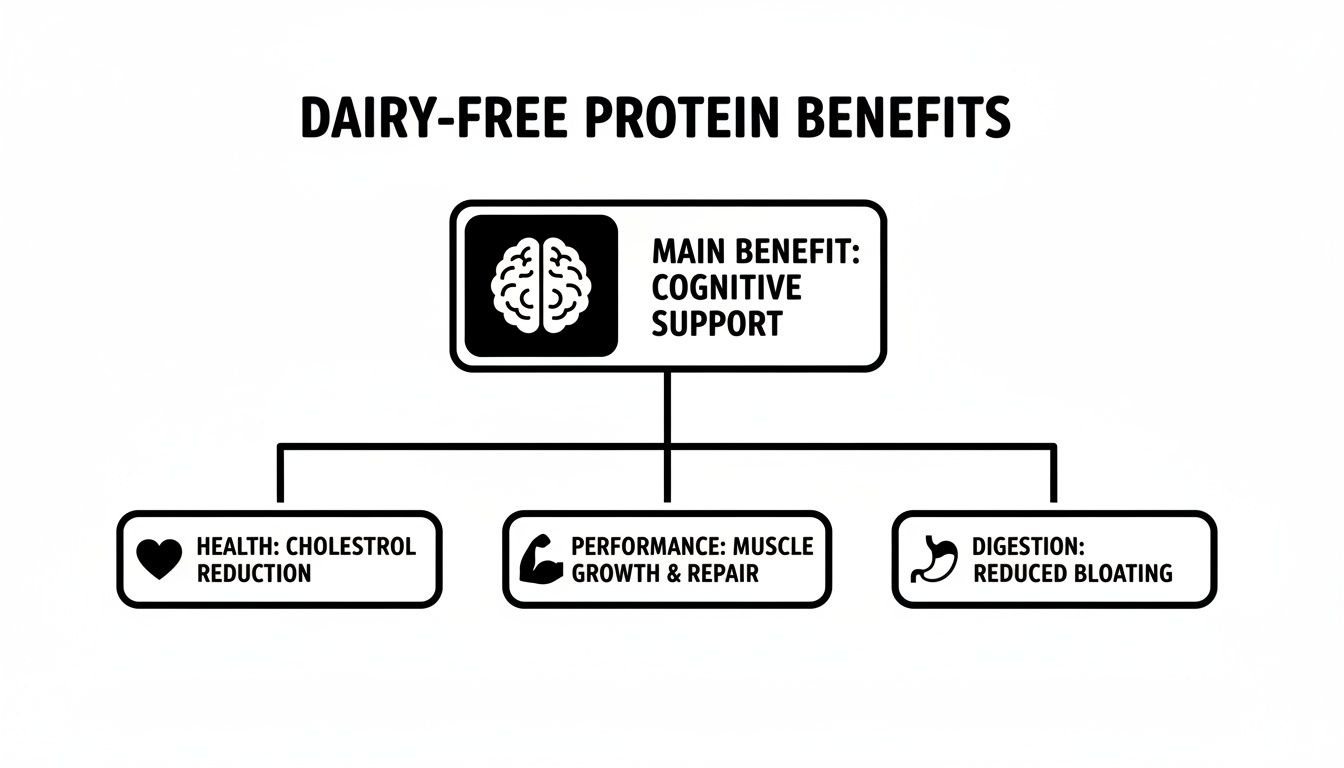
It’s clear the advantages go way beyond just building muscle. We're talking about supporting your brain, your heart, and your digestive system all at once.
How to Build Your High Protein Dairy Free Meal Plan
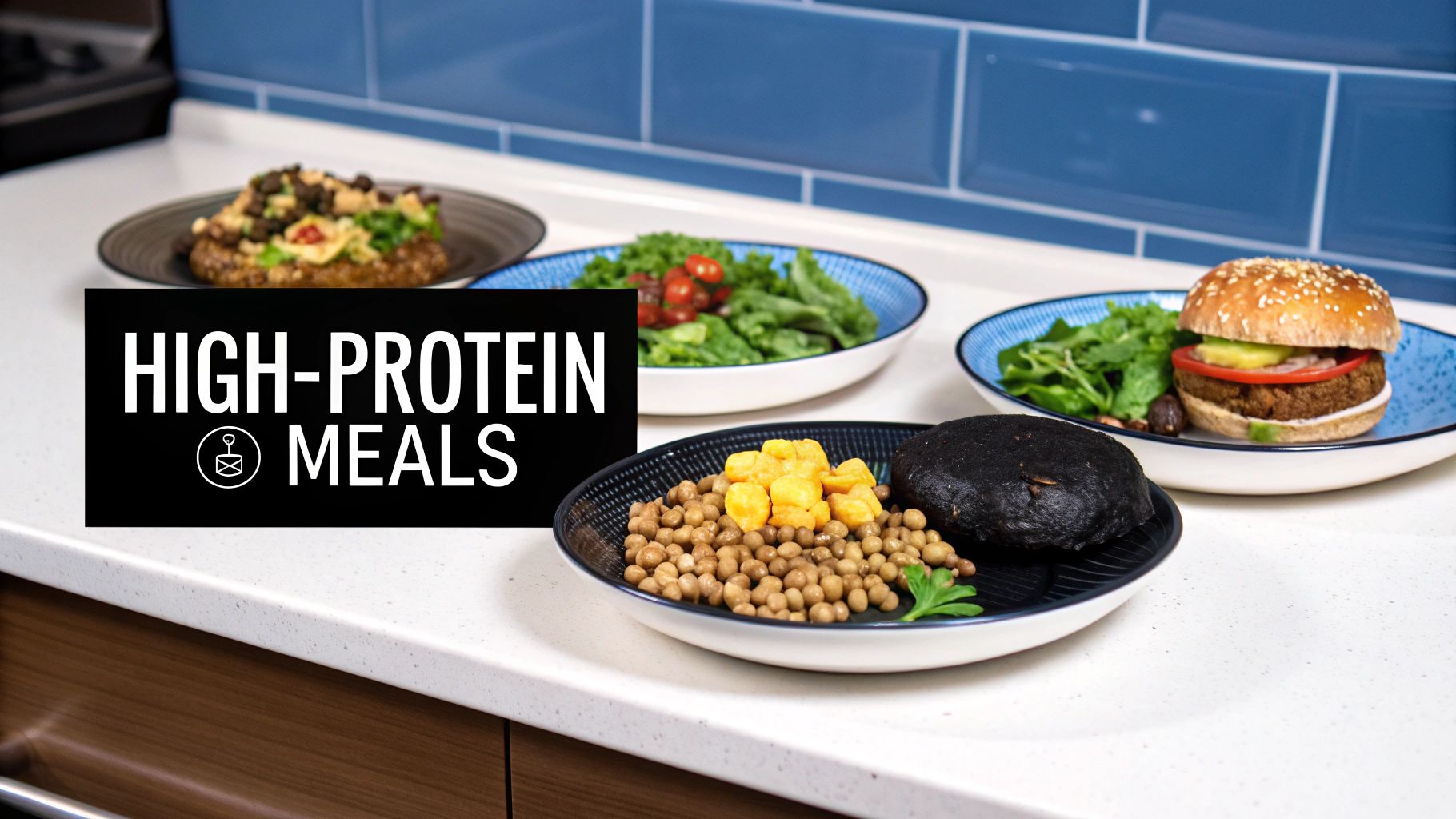
Knowing which foods are packed with dairy-free protein is a great start. But the real game-changer is learning how to weave them into a meal plan that actually sticks. A good plan isn't about spending hours in the kitchen or following complicated recipes; it’s about creating a simple, sustainable blueprint that fits your life.
The whole point is to make hitting your protein goals feel automatic, not like a constant struggle. With just a little bit of structure, you can make sure every meal and snack is working for you, keeping you energized, satisfied, and on track with your fitness goals. Let's map out a plan that makes high-protein, dairy-free eating both easy and genuinely enjoyable.
Crafting Your Core Meals
The backbone of any effective meal plan is your three main meals: breakfast, lunch, and dinner. Each one is a prime opportunity to load up on quality protein and fuel your body for the hours ahead. The key here is to keep it simple.
Breakfast Ideas to Start Strong
- Tofu Scramble: Who needs eggs? Just crumble a block of firm tofu and sauté it with turmeric, black salt (for that classic eggy flavor), and veggies like spinach or bell peppers. You'll easily get over 20g of protein.
- Protein Oatmeal: Give your morning oats a serious upgrade by stirring in a scoop of your favorite plant-based protein powder and a tablespoon of hemp or chia seeds. Top it off with some berries and almonds for a meal that will keep you full all morning.
- High-Protein Smoothie: For a quick start, blend silken tofu or a scoop of pea protein with a banana, a handful of spinach, and some unsweetened almond milk. It’s a nutrient-packed breakfast you can take on the go.
Lunch and Dinner Power Plays
For lunch and dinner, the goal is to build a balanced plate. A good rule of thumb is to include a primary protein source, a big serving of vegetables, a complex carb, and a source of healthy fat. This simple formula ensures you're getting the right mix of macros and micronutrients.
- Lentil and Quinoa Bowls: Combine cooked lentils and quinoa, then load it up with roasted broccoli, avocado, and a drizzle of lemon-tahini dressing. This is a true powerhouse of protein and fiber.
- Black Bean Burgers: Whether you make them yourself or buy them, black bean patties on a whole-wheat bun with all the fixings are a satisfying and classic meal.
- Tempeh Stir-Fry: Cube up a block of tempeh and toss it in a stir-fry with a colorful mix of veggies and a simple tamari-ginger sauce. Serve it over brown rice for a complete, protein-rich dinner.
Smart Snacking for Peak Performance
Snacks are more than just a way to curb hunger—they’re a secret weapon for hitting your protein targets, especially around your workouts. The right snack can bridge the gap between meals, stop an energy crash in its tracks, and give your muscles the fuel they need to repair and grow. This is where having convenient, protein-rich options on hand is a lifesaver.
As you map out your meal plan, think about including convenient low sugar protein snacks to keep your energy stable. Whether it's for post-workout recovery or a mid-afternoon pick-me-up, a reliable go-to snack is non-negotiable.
A well-timed snack can make all the difference between feeling drained and feeling powerful. It’s the small adjustment that keeps your metabolic engine running smoothly, helping you avoid the overeating that often comes from letting yourself get too hungry.
It’s no surprise that plant-based dairy alternatives are the fastest-growing part of the USD 30.41 billion plant-based food market of 2025. This lines up perfectly with the demand for effective dairy-free protein sources. Pea protein, in particular, is a standout, delivering 15g+ of protein per 30g serving in savory snacks that nail cheesy flavors without any dairy. For anyone focused on fitness, these foods also help boost fullness hormones—a huge win on busy days. This trend is exactly why brands have found success with convenient formats, proving that savory, crunchy, high-protein snacks like Gym Snack's cheddar cheeze are a perfect fit for this nutritional shift.
To build a plan that truly works, you have to know your numbers. If you're not sure where to start, our guide on how to calculate daily protein needs walks you through the process step-by-step. It will help you customize every meal and snack to your unique goals, making sure all your hard work pays off.
Navigating Common Challenges and Misconceptions
Making the switch to a high-protein, dairy-free lifestyle is a powerful move, but let's be real—it can bring up a few questions. There's a lot of old-school noise out there, so let's clear the air and tackle these myths head-on.
One of the biggest misconceptions I hear all the time is that you just can't get enough protein without meat or dairy. That's just flat-out wrong. As we've already covered, powerhouses like tempeh, lentils, and quality pea protein are loaded with the stuff. Hitting your muscle-building goals is more than possible; it just requires a smart plan.
Then there's the whole "incomplete protein" scare. This one causes way too much stress, but a little bit of food science puts it to rest for good.
The Myth of Incomplete Plant Protein
The argument goes that most plant-based foods don't have all nine essential amino acids we need to get from our diet. And while it's true that some foods are lower in certain amino acids—for example, beans are a bit lower in methionine—it doesn't mean they're useless. Not even close.
Think of it like building something with LEGOs. Maybe you have one kit full of red bricks (beans) and another with a ton of blue bricks (rice). By themselves, they have limitations. But put them together, and suddenly you have all the colors you need to build a masterpiece. Your body is just as resourceful.
Throughout the day, your body creates a pool of amino acids from everything you eat. As long as you're eating a good mix of different protein sources—grains, legumes, nuts, and seeds—your body will have every single building block it needs to repair and build muscle.
You don't even have to obsessively combine them in the same meal. Your body is smart and will pull from the amino acid pool as needed. If you want to dive deeper, our guide on what complete protein sources are breaks it down even further.
Practical Hurdles and How to Overcome Them
Okay, myths aside, there are a few real-world bumps in the road. But with a few simple strategies, they're easy to smooth out.
- Spotting Hidden Dairy: Dairy is sneaky. It can show up in salad dressings, bread, and even some so-called "healthy" protein bars. Your best defense is becoming a master label-reader. Keep an eye out for words like whey, casein, lactose, and milk solids. Thankfully, allergen labeling makes this much easier—if milk is in there, it has to be listed clearly.
- Dining Out Confidently: Going out to eat shouldn't feel like navigating a minefield. Most restaurants today are happy to help with dietary requests. Never hesitate to ask your server about ingredients or see if they can make a simple swap. A dish with grilled tofu or a hearty bean chili is almost always a safe, satisfying bet.
- Getting Key Micronutrients: When you drop dairy, you do need to pay a little extra attention to nutrients like calcium and vitamin B12. The good news? You can get plenty of calcium from fortified plant milks, tofu set with calcium sulfate, and dark leafy greens. Vitamin B12 is mostly in animal products, so if you're eating fully plant-based, a B12 supplement or fortified foods are a must.
By busting these common myths and planning for the real-world hurdles, you can make your journey with dairy free high protein foods a total success.
Your Top Questions About Dairy-Free Protein, Answered
Any time you make a big change to how you eat, a few questions are bound to pop up. And when you're zeroing in on high-protein, dairy-free foods, getting the details right is key to making it all work. Let's tackle some of the most common things people ask, so you can move forward with total confidence.
Think of this as a quick-fire round to clear up any last-minute doubts. Once these are sorted, you can stop wondering and start focusing on what really matters: feeling amazing and hitting your goals.
How Much Protein Do I Actually Need?
Here’s the good news: your protein needs don’t magically change just because you’ve gone dairy-free. The math is still based on your body weight, how active you are, and what you’re trying to achieve. It’s a universal requirement for building and repairing muscle, no matter where the protein comes from.
The standard recommendation for someone who isn't very active is about 0.8 grams of protein per kilogram of body weight. But for those of us hitting the gym, aiming to build muscle, or just trying to recover faster, that number climbs to 1.6–2.2 grams per kilogram. That might sound like a lot, but it's completely doable with plant-based foods.
For instance, a 70kg (154lb) person looking to build muscle should aim for 112–154 grams of protein a day. You can easily hit this by building meals around things like tofu, lentils, and tempeh, and filling in the gaps with smart, high-protein snacks.
Are Dairy-Free Proteins Harder to Digest?
This is probably one of the biggest myths out there, and for the most part, it’s just not true. Sure, if you suddenly load up on high-fiber foods like beans and your body isn't used to it, you might feel a little bloated at first. But many dairy-free proteins are actually incredibly easy on the gut.
In fact, a lot of people find the exact opposite happens. When they ditch dairy, they report feeling way better digestively—less bloating, less discomfort. Clean plant protein isolates, like the pea protein in our snacks, are specifically designed for easy digestion, making them a fantastic choice if you have a sensitive stomach but still need a serious protein hit.
It's rarely the plant food itself that's the problem. It usually comes down to how it's prepared or how quickly you introduce it. Soaking beans before you cook them or choosing a highly digestible protein powder can make all the difference.
Will I Miss Out on Calcium if I Stop Eating Dairy?
Nope, not at all. It's a fair question, but a well-planned, dairy-free diet can easily cover all your calcium needs. The trick is simply being intentional about including calcium-rich plant foods every day.
You'd be surprised how many great non-dairy sources of calcium there are. By eating a variety of them, you can meet—or even beat—your daily target without a single drop of milk.
- Fortified Plant Milks: Many almond, soy, and oat milks are fortified with calcium, often containing just as much (or more) than cow's milk.
- Tofu: Check the label for tofu made with calcium sulfate. It’s a huge bonus.
- Leafy Greens: Veggies like kale, bok choy, and collard greens are packed with it.
- Other Powerhouses: Don't forget about broccoli, almonds, and tahini. They all add up!
What Should I Look for in a Packaged Dairy-Free Protein Snack?
When you’re busy, a good packaged snack can be a total game-changer. To make sure you’re picking a winner, just flip over the package and take a quick look at the nutrition panel and ingredient list.
First, you want a clean, simple list of ingredients you can actually recognize. Then, check the protein content. A snack with 15 grams or more of protein per serving is a great benchmark—that's enough to keep you full and support your muscles.
Finally, look for what’s not on the label. The best snacks are free of junk like tons of added sugar, inflammatory seed oils, and artificial flavors. Make sure it also fits any other needs you have, like being gluten-free or soy-free, so it’s a perfect match for you.
Ready to make hitting your protein goals both simple and delicious? Gym Snack offers savory, crunchy, plant-based snacks packed with over 15g of clean pea protein per serving. With bold Cheddar Cheeze and Jalapeño Cheddar Cheeze flavors, you can finally crush your cravings and your macros without any of the junk. Check out our craveable, dairy-free options.