

You're standing in a grocery aisle with three “plant-based” bars in your hand. One contains milk ingredients, another uses soy lecithin in its chocolate coating, and the third looks clean until you notice that most of its calories come from dates and syrup. None feels like the reliable, protein-forward snack you wanted for training.
That's the problem with dairy free soy free snacks. Finding something without obvious milk or soy is only the first filter. You also need to evaluate protein quality, sugar placement, saturated fat, sodium, fiber, and manufacturing warnings. A snack can be technically plant-based and still be a poor choice for fullness, gut comfort, or gym recovery.
The category is expanding quickly. One forecast projects the global plant-based snacks market at USD 45.7 billion in 2026 and USD 100.5 billion by 2036, with an estimated 8.2% CAGR, while another estimates US$13.7 billion in 2024 and US$22.1 billion by 2030 (market outlook for plant-based snacks). More products are arriving, but more products don't automatically mean better formulas.
Why Dairy Free Soy Free Snacks Deserve a Smarter Approach
A coach working with clients who have allergies or sensitive digestion learns quickly that “plant-based” isn't a safety guarantee. The front of a package might emphasize vegan ingredients, protein, or indulgent flavor, while the back reveals soy-derived emulsifiers, vague seasoning language, or a facility warning that makes the product unsuitable for someone with clinical sensitivity.
This is why I don't recommend shopping from a simple list of approved foods. A list gets outdated the moment a manufacturer changes a coating, seasoning system, or supplier. Label evaluation is the durable skill.
The demand behind these products is also broader than a temporary diet trend. U.S. allergen-labeling rules made milk and soy easier to identify on packaged foods, beginning with the Food Allergen Labeling and Consumer Protection Act in 2004. The framework later expanded when the FASTER Act was signed in 2021, adding sesame as a major allergen effective in 2023. Those regulatory milestones helped make allergen-conscious shopping more practical for consumers.
The commercial market reflects that shift. One forecast projects the allergen-free food market from USD 51.6 billion in 2026 to USD 103.5 billion by 2036, with bakery and snacks accounting for 28.0% of product-category demand in 2026 (allergen-free food market forecast). Another outlook estimates the market at USD 54.91 billion in 2025 and USD 106.89 billion by 2035, reinforcing that dairy-free and soy-free development now sits inside a mainstream food category.
The three standards I use
Protein-first macros come before branding. A snack should contribute meaningfully to your daily protein intake rather than just provide a sweet bite with a plant-based label.
Savory satiety deserves more attention. Crunchy chickpea, lentil, seed, mushroom, or pea-protein formats can feel like food, not a disguised dessert.
Label literacy protects both your health and your budget. You need to recognize hidden soy, understand facility warnings, and separate a useful snack from a product that only looks clean from the front.
Coach's rule: If the package sells indulgence first and nutrition second, assume you need to inspect the back carefully.
Reading Labels Without Getting Played
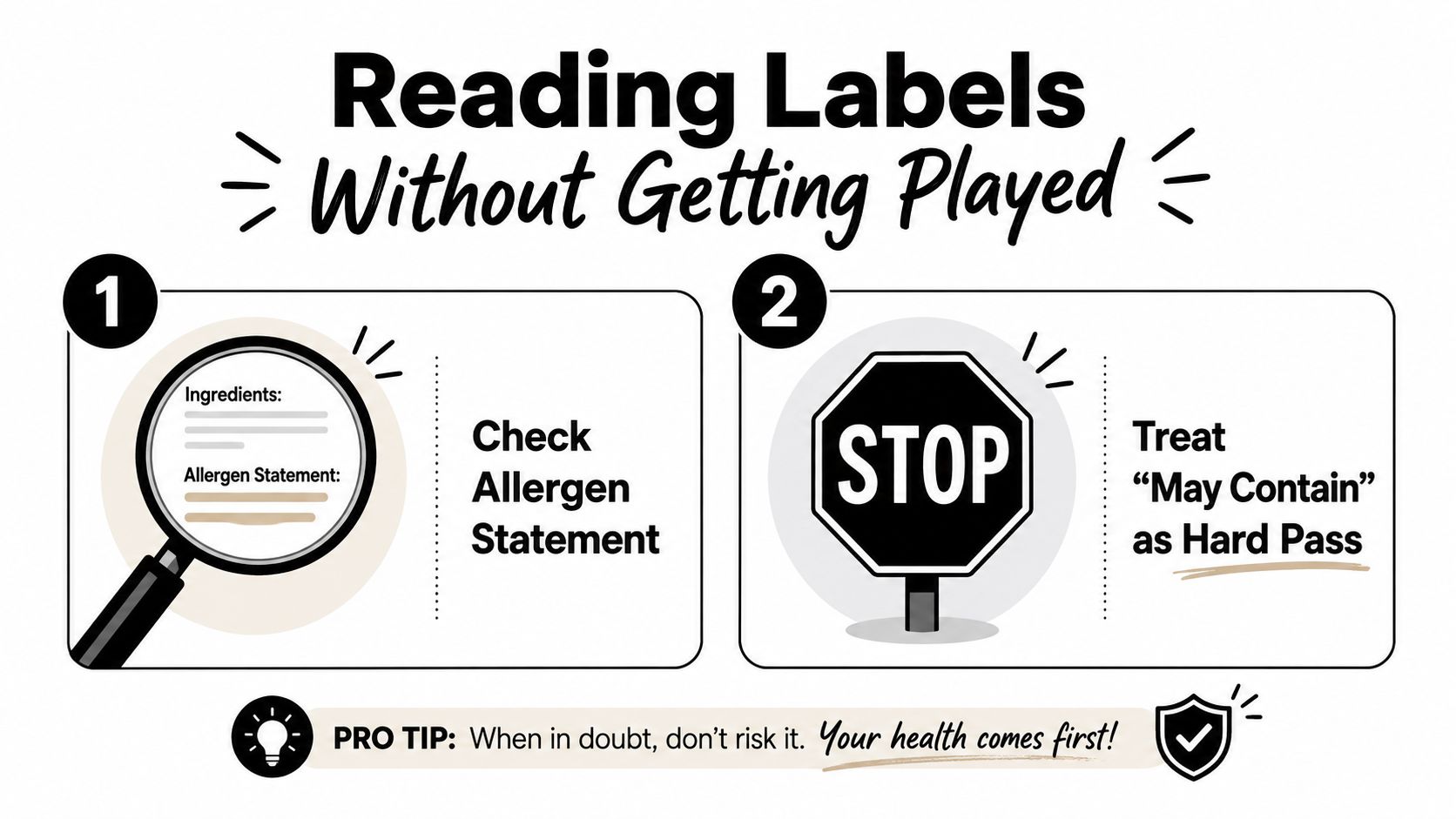
Use a strict two-step check every time. Don't rely on a green leaf, “plant-based” badge, or dairy-free wording on the front panel.
Step one, read the allergen statement
Look for “Contains” and “May Contain” language. If you have a diagnosed allergy or serious clinical sensitivity, treat a “May Contain” warning as a hard pass. That warning signals possible cross-contact, and the ingredient list alone can't rule out exposure.
Facility information matters because soy can enter a product through shared equipment, shared storage, or a seasoning supplier. Independent allergy guidance also warns that soy may appear in products through ingredients such as soy lecithin, soy protein isolate, hydrolyzed soy protein, “natural flavor,” or “seasoning blend” (allergy-focused dairy-free and soy-free snack guidance).
Step two, scan every ingredient
Search for dairy terms such as whey, casein, butter, ghee, lactose, milk solids, and milk protein. Then check soy-related terms, including:
- Soy lecithin: Common in chocolate coatings and used as an emulsifier.
- Soy protein isolate: A concentrated protein ingredient that immediately disqualifies a soy-free product.
- Textured vegetable protein or TVP: Often soy-based, especially in savory meat alternatives.
- Hydrolyzed soy protein: Frequently used for flavor or seasoning.
- Soybean oil: May appear in coatings, dressings, and seasoning systems.
- Mono- and diglycerides: These can be soy-derived, so contact the manufacturer if the source isn't identified.
- Natural flavors and seasoning blends: Vague terms that may require confirmation from the manufacturer.
For a fast grocery-store screen, use this rule: if several ingredients require a dictionary, skip the product. Certified labels such as Certified Gluten Free or the Vegan Society mark can add another audit layer, but they don't replace reading the allergen statement.
For a deeper explanation of serving sizes, daily values, and ingredient order, use this guide on how to read nutrition labels.
The video below can also help you recognize the visual sections of a nutrition panel before you shop.
The Nutrient Priorities That Actually Matter
A dairy-free, soy-free snack should still earn its place in your gym bag. I grade it through four practical lenses: protein, saturated fat, sodium, and fiber.
Protein comes first. For a snack intended to support fullness or training, I prefer a clearly meaningful protein contribution rather than a token amount. Check the serving size before judging the number. A package may advertise a high protein total for the entire bag while presenting a much smaller serving on the nutrition panel.
Saturated fat needs a ceiling. Coconut oil, palm oil, and rich nut coatings can push a snack from useful to calorie-heavy without adding much protein. If saturated fat is high relative to protein, the product is probably engineered for richness rather than performance.
Sodium needs context. Savory food needs seasoning, and a modest amount can make a protein snack enjoyable enough to repeat. But a very salty single-serve bag can leave you thirsty and crowd out better choices, especially if the rest of your day already includes packaged foods.
Fiber rounds out the formula. Legumes, seeds, and some vegetable-based ingredients can support a more substantial texture and help a snack feel less like refined starch. Fiber also matters for people who are trying to build a consistent eating pattern around gut comfort, although individual tolerance varies.
| Nutrient | Keep If | Pass If |
|---|---|---|
| Protein | It makes a meaningful contribution to your daily target | It's mostly a carbohydrate or fat snack with a protein claim |
| Saturated fat | It stays modest relative to the protein provided | Coconut or palm fat dominates the formula |
| Sodium | The seasoning supports flavor without overwhelming the serving | The bag tastes aggressively salty or the label shows a heavy sodium load |
| Fiber | Legumes, seeds, or other whole-food ingredients provide substance | The snack is mostly refined starch, syrup, or coating |
The nutrition panel can't tell you everything about digestion, but it quickly exposes weak trade-offs. I'd rather choose a plainly seasoned crisp with a solid protein base than a glossy bar that combines syrup, oil, and a small protein addition.
How Protein Quality Drives Real Satiety
A snack can carry a “high protein” claim and still leave you hungry. Dose and digestibility matter. Human research on replacing carbohydrate with protein at breakfast found higher post-meal GLP-1 and PYY, plus lower self-rated hunger. Reviews also describe amino acids stimulating appetite-reducing peptides that may slow gastric emptying and reduce appetite (review of protein and satiety signaling).
Savory, protein-forward snacks usually give you a better starting point than dessert-style bars built around dates, syrup, and chocolate flavor. Crunchy legumes or pea protein can make a serving feel substantial, while the label still needs close inspection. Check the protein source and the full ingredient list, not just the front-of-pack claim.
Why pea protein deserves attention
Pea protein works well in dairy-free, soy-free formulas. One study reported 93.6% real ileal amino acid digestibility for pea protein versus 96.8% for casein, with no significant difference in overall bioavailability (research on pea protein digestibility). A review reported pea PDCAAS values around 0.78 to 0.91 and DIAAS values from 0.66 to 1.00, depending on the source and processing.
You do not need to calculate either score in a store. PDCAAS and DIAAS are research tools for evaluating how effectively the body can use amino acids from a protein. On the package, look for a meaningful protein amount, a recognizable plant source, and, when listed, a complementary blend instead of a formula relying on one weaker protein. For a plain-language explanation of amino-acid completeness, read what complete protein sources are.
Processing affects digestibility too. Cooking, soaking, pressure cooking, and heating can improve legume digestibility. Research on pea protein found digestibility rising from about 52% to 65% after heat treatment at 100°C. Read the ingredient structure and preparation method alongside the protein source, especially if two snacks show similar protein numbers.
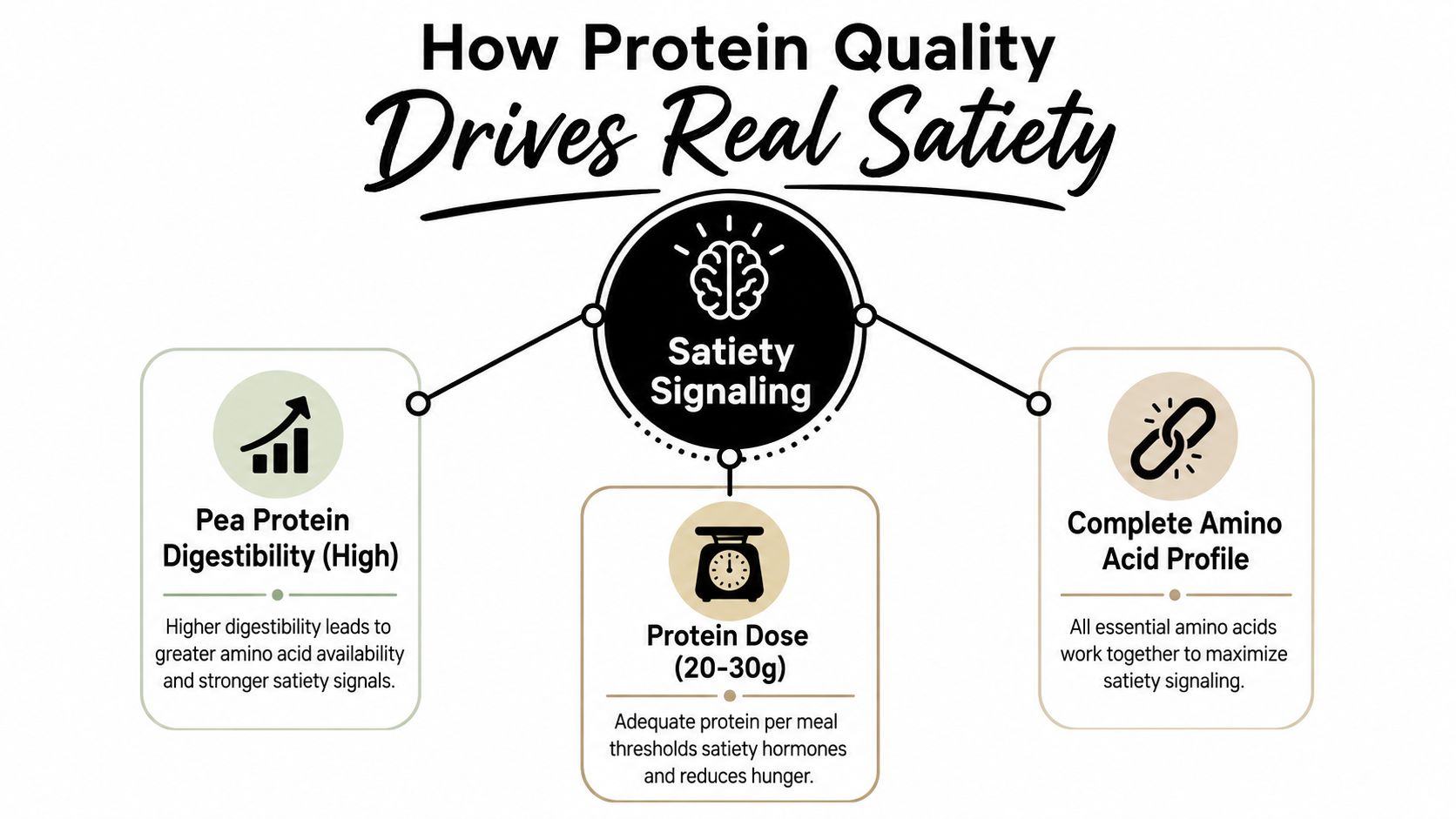
The practical rule is simple: choose enough protein to matter, then favor a well-processed source with a credible amino-acid profile. That approach beats choosing a sweet bar solely because its package highlights protein.
Comparing Snack Formats Side by Side
Different formats solve different problems. Bars are portable, but dessert-style bars often prioritize chewiness and sweetness over protein density. Chickpea puffs and crisps provide crunch and can fit a savory brief, although the final nutrition depends heavily on the protein base and added oils.
Jerky can be highly protein-forward, but it may bring considerable sodium, and its saturated fat depends on the cut and preparation. Mushroom jerky usually offers a different texture and flavor profile, but it shouldn't automatically be treated as a high-protein replacement.
Roasted chickpeas and lentils are attractive because the ingredients are recognizable. Seed and nut mixes can be satisfying, yet they often deliver more fat calories than protein. Edamame-style products require special attention from soy-free shoppers because the source itself is soy.
| Snack Format | Protein per Serving | Saturated Fat | Sodium | Ingredient Transparency |
|---|---|---|---|---|
| Dessert-style bar | Often mixed, inspect the panel | Can rise with chocolate or coconut coatings | Usually varies by formula | Syrups, coatings, and emulsifiers require careful review |
| Chickpea puffs or crisps | Can be useful when protein is concentrated | Usually manageable if oils are controlled | Depends on seasoning | Strong when the base and seasoning are clearly listed |
| Beef jerky | Commonly protein-forward | Depends on the cut and preparation | Can be substantial | Meat, curing agents, and flavorings need review |
| Mushroom jerky | Often lower than a protein snack format | Usually modest | Depends on marinade | Read marinades and flavor systems carefully |
| Roasted chickpeas or lentils | Moderate, tied to serving size | Usually modest | Easy to control in plain versions | Often straightforward |
| Seed or nut mix | Protein may lag behind total calories | Can rise with coconut or coated ingredients | Depends on seasoning | Transparent when oils and flavorings are named |
| Pea-protein crisps | Designed around a concentrated plant protein | Strong option when the formula limits added oils | Check the seasoning panel | Clear formulas are easier to audit |
For a broader list of protein-forward choices that includes snack formats beyond bars, GLP-1 friendly snack options from Weight Method can help you compare ideas. My preference remains a savory pea-protein crisp when the label confirms dairy-free and soy-free status, the ingredients are understandable, and the serving supports your actual protein goal.
Building Your Own Bag at Home
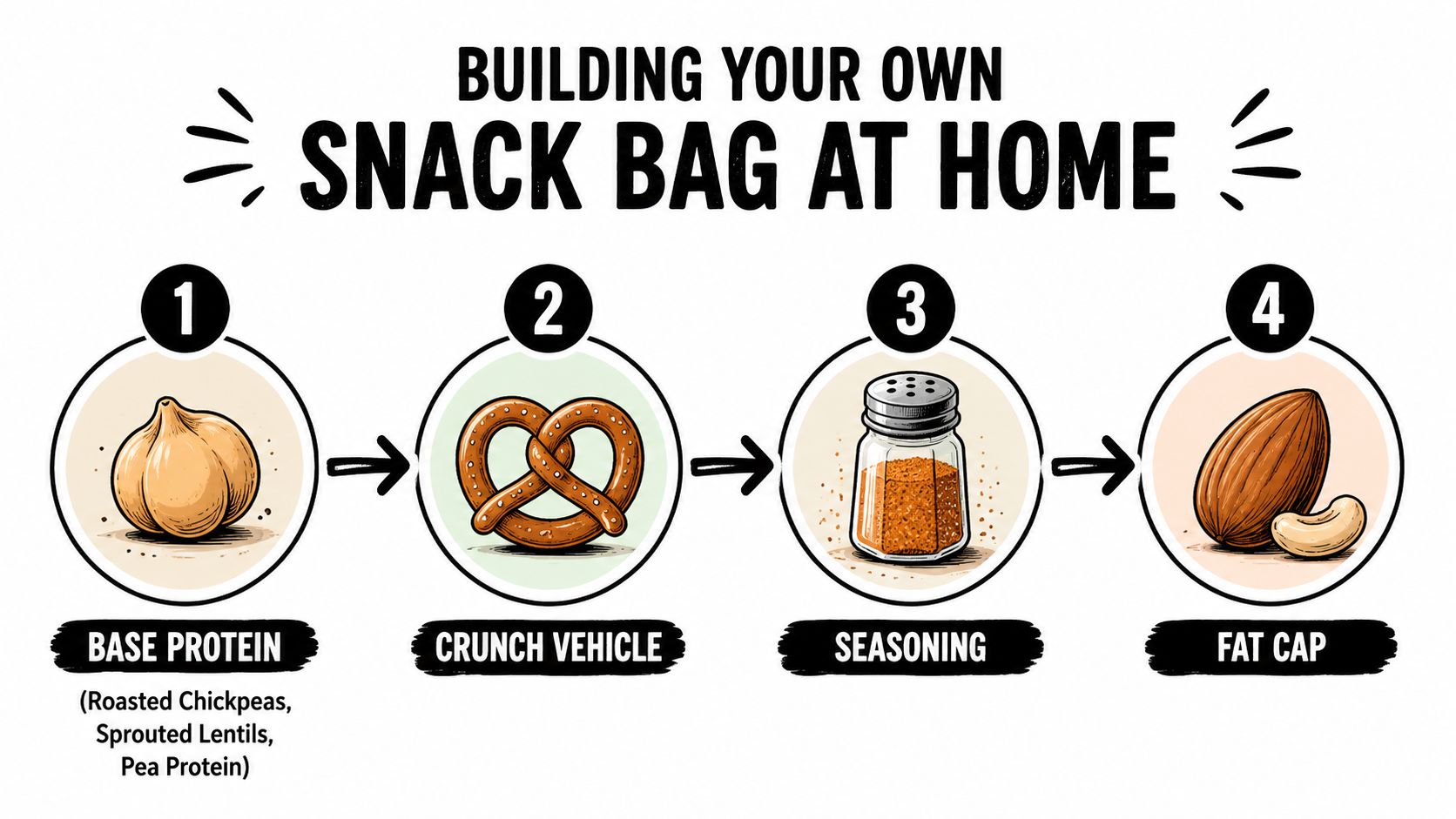
A homemade snack bag doesn't need specialty equipment. Build it from four parts:
- Base protein: Use roasted chickpeas, sprouted lentils, or a commercial pea-protein crisp. Choose the base that gives the snack its nutritional purpose.
- Crunch vehicle: Add toasted seeds, cassava crisps, or air-popped sorghum for texture. Keep this part smaller than the protein base.
- Seasoning: Use smoked paprika, garlic powder, nutritional yeast labeled dairy-free, or a soy-free za'atar blend.
- Fat cap: Add a controlled amount of avocado or olive oil. Don't pour freely. Measure it.
The fat cap matters because healthy oils still contain calories, and an unmeasured drizzle can turn a lean snack into a dense one. If you have a specific allergy, verify every seasoning blend and check the facility statement on packaged ingredients.
A practical assembly method
Start with a prepared pea-protein crisp or roasted legume base. Add a small portion of toasted pumpkin seeds and cassava crisps, then toss everything with smoked paprika, garlic powder, and a little nutritional yeast. Use a measured oil mist or a small amount of oil to help the seasoning adhere.
I won't pretend an exact calorie and protein total can be guaranteed without the nutrition panels for each ingredient. A recipe advertised as a specific 200-calorie, 18-gram protein bag requires brand-specific quantities and labels, so calculate your version from the products you buy. The assembly itself takes about ten minutes, but the accuracy comes from weighing ingredients and adding their panels together.
For a recipe-style approach to crunchy protein snacks, use this protein chips recipe. The point isn't to reject every packaged product. It's to understand how a clean-label snack is constructed, so you can judge store-bought versions with confidence.
Busting the Allergen Free Snack Myth
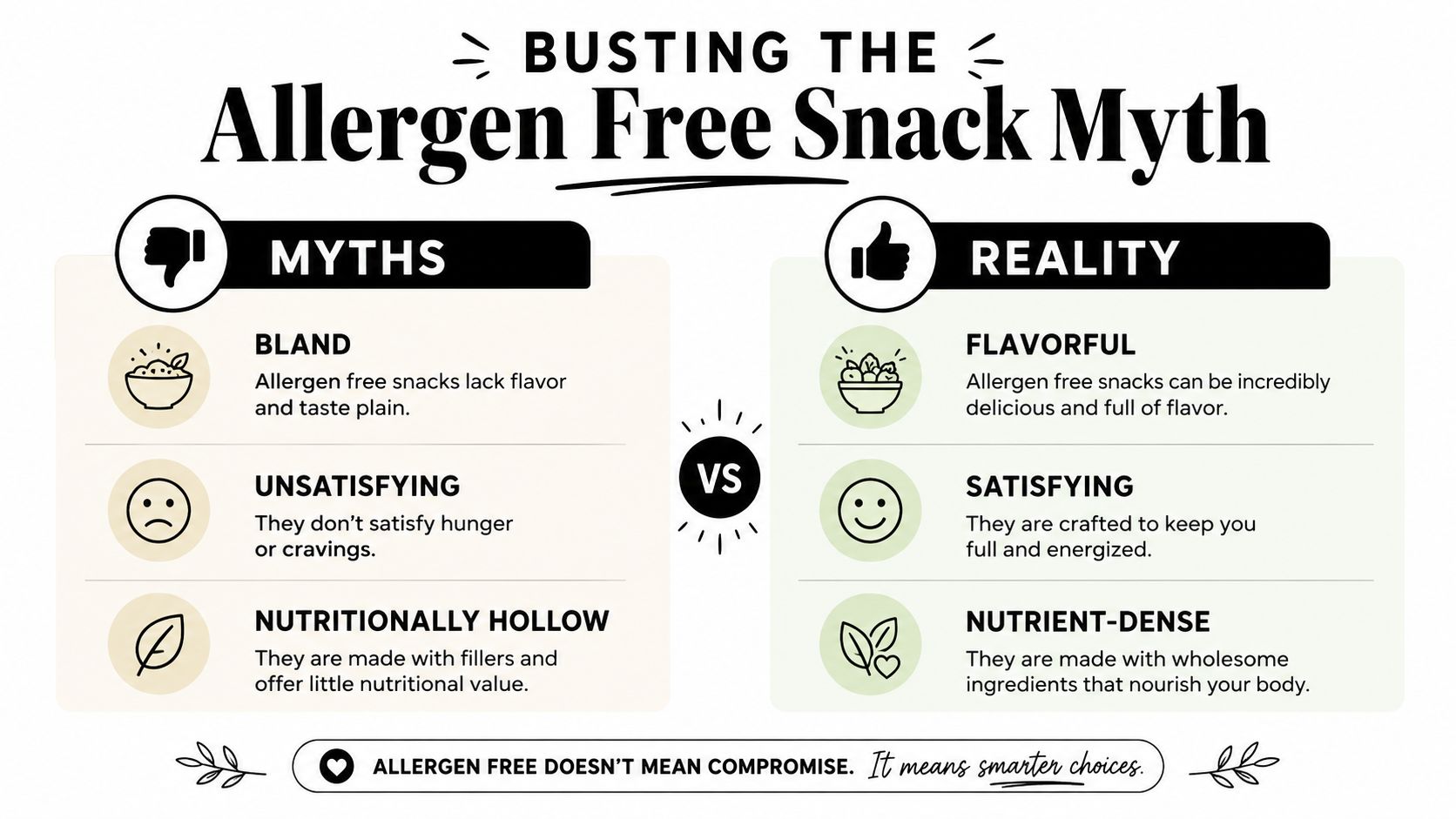
The claim that allergen-free snacks must be bland or nutritionally hollow is outdated. The issue is that many shoppers have been shown too many sweet formats, so they assume removing dairy and soy leaves only sugary granola, rice cakes, or plain fruit.
Savory formats offer a stronger solution. Roasted chickpeas, lentil crisps, seed crackers, and pea-protein snacks can deliver crunch and seasoning without butter, whey, or soy isolates. Legumes and seeds also give developers more ways to create texture without relying on dairy-based coatings.
Myth versus reality
- Myth, “Allergen-free means bland.” Reality, smoked paprika, garlic, chili, vinegar, nutritional yeast, and za'atar can create a bold savory profile.
- Myth, “You need soy isolate for protein.” Reality, pea, chickpea, lentil, and complementary plant-protein formulas can support a protein-first snack.
- Myth, “Low dairy and soy means high sugar.” Reality, a snack can use savory seasoning and a crunchy legume base instead of date paste or syrup.
- Myth, “A short ingredient list guarantees safety.” Reality, facility warnings and vague terms still matter, especially for serious allergies.
Savory plant-based snacks are also receiving more attention than the old bar-and-dessert conversation suggests. Coverage of the category describes savory as the dominant flavor profile in Europe, representing about 60% of plant-based snack demand in 2025 (prepared-foods snack and product trend coverage). That shift makes sense for gym-goers. They don't need another candy-like snack marketed as recovery fuel. They need something crunchy, portable, and substantial.
For broader guidance on managing food allergies around meals and snacks, these allergy nutrition tips provide useful context. Still, use your own medical plan for diagnosed allergies, and contact a manufacturer when the label leaves a safety question unanswered.
Your 30 Second Snack Decision Checklist
A smart snack evaluation takes less time than scanning a loyalty card. Use the same filter in every aisle, whether you're choosing a bar, crisp, jerky, roasted legume, or seed mix.
- Confirm the allergen statement. Look for clear dairy-free and soy-free information. If the package says “May Contain” an allergen that creates a clinical risk for you, put it back.
- Search for hidden soy. Scan for soy lecithin, soy protein isolate, TVP, hydrolyzed soy protein, soybean oil, and unclear flavor or seasoning terms.
- Check meaningful protein. I want at least 10 to 15 grams per serving for a snack positioned around fullness or training, but compare that number with the actual serving size.
- Control saturated fat. Prefer products under 3 to 4 grams per serving, especially when the protein contribution is modest.
- Keep sodium reasonable. For a savory snack, I prefer 250 to 400 milligrams, and I treat anything above 600 milligrams in a single-serve bag as excessive. These thresholds are practical coaching preferences, not universal medical limits.
- Choose a savory format. Crunchy, seasoned foods usually make a better bridge between meals than dessert-coded products built around syrup and coating.
- Apply the sugar disqualifier. If sugar appears in the first two ingredient positions, put the package back unless you deliberately want a sweet treat rather than a performance snack.
A snack can still be enjoyable without checking every box perfectly. But if it fails the allergen screen, hides its protein behind a tiny serving, or leads with sugar, it isn't the right tool for the job.
Run this filter before your next grocery trip. You'll quickly separate dairy-free, soy-free snacks that support fullness and training from products that borrow the language of fitness.
Gym Snack makes plant-based savory protein snacks built around pea protein, with products described as free from dairy, soy, and gluten and available in Cheddar Cheeze and Jalapeño Cheddar Cheeze flavors. If you want a ready-to-evaluate option for your gym bag, visit Gym Snack, check the current ingredient and allergen information, and apply the same label standards before ordering.