

You grab a bag that says gluten free. Then you turn it over and spot milk powder. The next one is dairy free, but it's fried in an oil you've been trying to avoid. The third looks clean until the ingredient list turns into a chemistry quiz.
That's the main problem with gluten free dairy free chips. It isn't that there are too few options. It's that there are too many options pretending to fit the job.
For a fitness-focused shopper, “free from” isn't enough. A chip can be gluten free and dairy free and still do very little for fullness, recovery, or steady energy. If you care about protein, satiety, ingredient quality, and how a snack fits your day, you need a better filter than front-of-pack claims.
The Modern Snack Aisle Challenge
The snack aisle used to make the decision easy. If you avoided gluten or dairy, your choices were limited and usually tucked into a small “special diet” section. Now you'll see tortilla chips, lentil chips, chickpea puffs, cassava chips, potato chips, and puffed protein snacks all claiming some version of clean, plant-based, allergen-friendly, or better-for-you.
That sounds like progress, and in one sense it is. The global dairy-free snacks market was valued at USD 6.39 billion in 2025 and is projected to reach USD 12.56 billion by 2033, with a CAGR of 8.80% according to Data Bridge Market Research on the dairy-free snacks market. Gluten free dairy free chips sit inside that wider shift.
The hard part is that shelf growth doesn't automatically create label clarity.
A bag can look perfect from the front and still miss on the details that matter to someone training regularly, managing hunger, or trying to avoid ingredients that upset their gut. A lot of shoppers end up doing what I see all the time in practice. They buy based on one headline claim, then realize later they traded one problem for another.
Why more choice can feel worse
More brands mean more formulations. Some are built around corn or rice. Some use pea protein. Some rely on dairy-style flavor systems without dairy. Others are technically compliant on allergens but still loaded with ingredients that don't align with a performance mindset.
Practical rule: Don't ask only, “Is this allowed?” Ask, “Will this actually help me feel and perform better?”
That question changes everything. It moves you away from passive avoidance and toward intentional selection.
The goal is better criteria
When you know how to evaluate chips, the aisle gets simpler fast. You stop getting distracted by trendy packaging and start scanning for the details that matter. Ingredient quality. Protein value. Fat source. Cross-contamination standards. Whether the snack will hold you over or just trigger a second snack twenty minutes later.
That's the difference between buying a snack and choosing fuel.
Decoding Labels for Hidden Gluten and Dairy
A “gluten free” or “dairy free” stamp is useful, but it shouldn't be the end of your label reading. It should be the start.
For processed snacks, gluten usually means proteins from wheat, barley, or rye. Dairy means ingredients derived from milk, especially lactose and casein. In chips, the obvious offenders are easy to catch. Wheat flour, cheese powder, whey. The less obvious ones are where people get tripped up.
What the standard actually means
For gluten-free status, effective separation requires a residual gluten threshold of less than 20 ppm, as defined by Codex Alimentarius. For dairy-free status, manufacturers must strictly exclude lactose and casein derivatives, often replacing them with hydrolyzed pea protein or vegetable-based flavor carriers.
That matters because “made without gluten ingredients” is not the same as tightly controlled production. If a facility also handles wheat-based products, cross-contact becomes a real issue unless they follow strong separation and cleaning protocols.
If you react strongly, the front of the bag should never be your only checkpoint. The ingredient panel and allergen statement matter just as much.
Ingredient names that deserve a second look
This is where label literacy pays off. A chip can avoid obvious dairy and still hide milk-derived compounds inside flavor blends. It can also avoid wheat flour and still include ingredients that deserve extra scrutiny if you're highly sensitive.
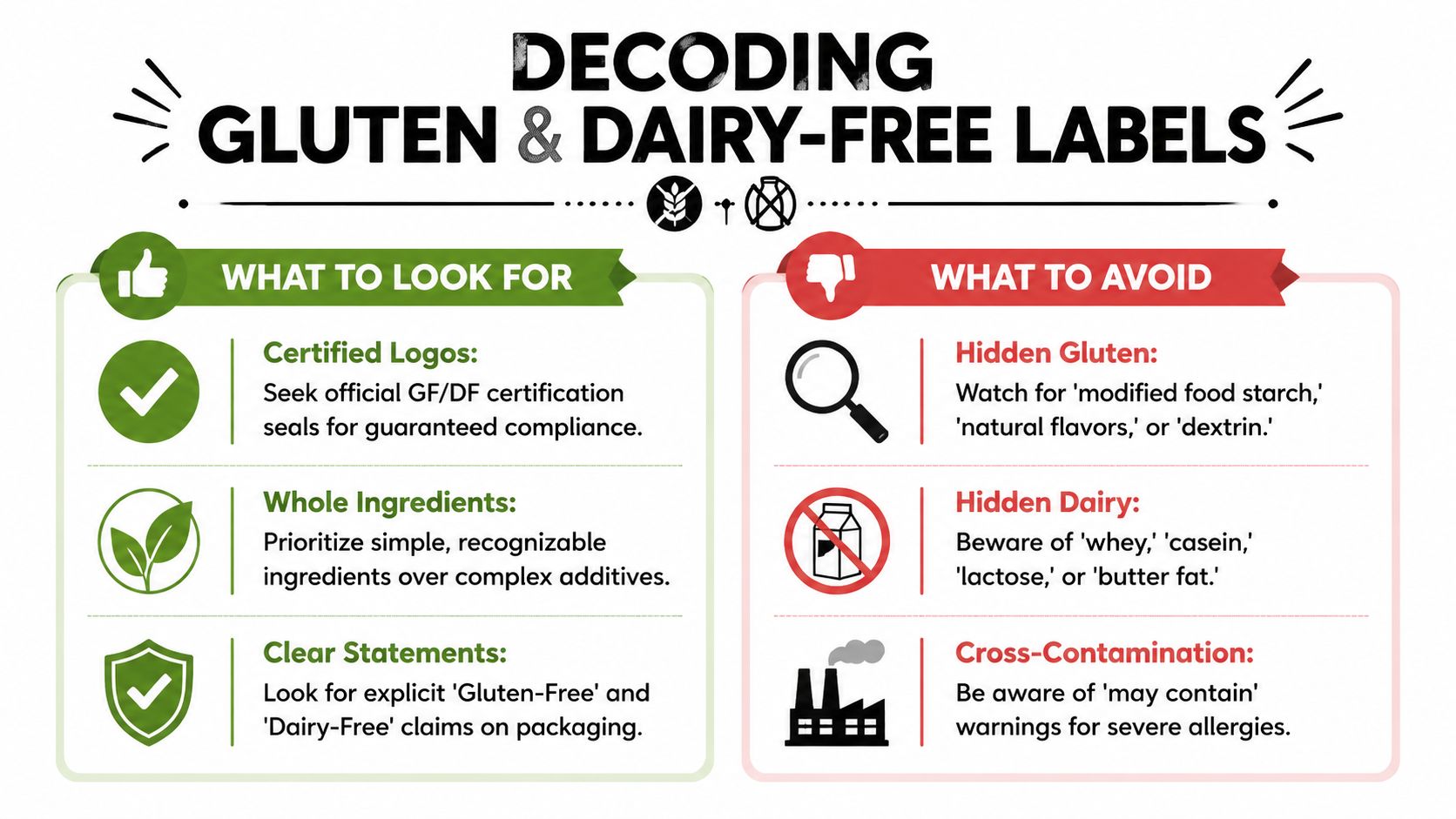
| Allergen to Avoid | Potential Hidden Names |
|---|---|
| Gluten | modified food starch, natural flavors, dextrin |
| Dairy | whey, casein, lactose, butter fat |
Not every one of these terms automatically means the product contains gluten or dairy. The point is to slow down and verify, not guess.
A faster way to read the bag
When I'm checking a label, I use a simple order:
- Start with the claim. If the package clearly says gluten free and dairy free, that saves time, but it's only the first screen.
- Go to the allergen statement. This often catches milk quickly and may flag shared manufacturing concerns.
- Read the flavor system. Seasoned chips are where hidden dairy shows up most often.
- Scan for processing clues. “May contain” statements matter more if you have a medically necessary reason to avoid contamination.
If you want a broader primer on label-reading habits, this guide on how to read nutrition labels is a useful companion to allergen checking.
Why ingredient simplicity still matters
Even if a product clears your allergen requirements, a long ingredient list can still be a sign to pause. That doesn't mean every packaged snack is automatically a poor choice. It means the burden is on you to know what each ingredient is doing there.
People trying to clean up their overall diet often benefit from reading more about processed foods for weight management, especially if they've been relying on “health halo” snacks that don't keep them full.
A short, recognizable ingredient list won't guarantee a great chip, but it usually makes it easier to spot the ones that don't belong in your cart.
Nutrition Beyond Allergens for Peak Performance
Once a chip is safe for your diet, the next question is simple. Is it doing anything useful for your body?
That's where most gluten free dairy free chips separate into two camps. One group is basically a standard snack with allergen-friendly packaging. The other is designed more like a functional food, with enough protein and the right structure to support fullness and better eating control.
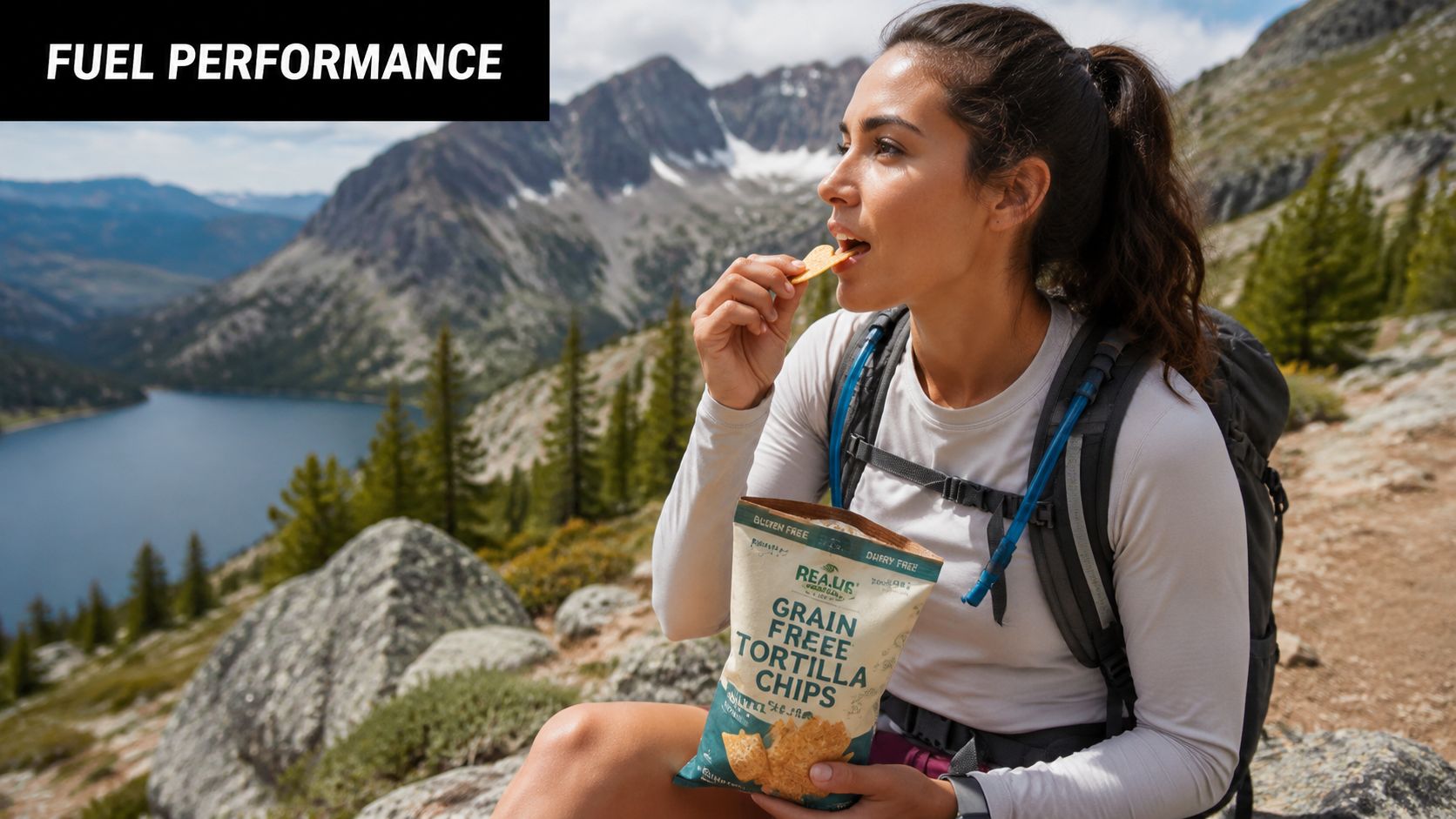
Protein changes the job of the snack
Traditional chips are easy to overeat because they're built for taste and texture, not satiety. They're usually quick to eat, light on protein, and not very effective at holding you between meals.
Modern formulations can work differently. High-protein chip products now use puffing or extrusion, where moisture is rapidly vaporized under high pressure. That allows manufacturers to incorporate 15g+ of pea protein per serving while keeping saturated fat below 1g and preserving crunch.
That's a serious shift. It means a chip doesn't have to be nutritionally empty just because it's crunchy and savory.
Texture matters more than people think
A satisfying snack needs resistance. If it disappears too fast, it often doesn't register as a real eating event. Crunch helps slow eating down and makes a snack feel substantial enough to count.
That's one reason puffed and extruded protein snacks can work well for active people. You get a familiar chip experience, but the structure can carry more protein and a lower saturated fat profile than many standard fried options.
A good performance snack doesn't just fit your macros on paper. It needs to feel filling enough that you stop looking for another snack right after.
Fat source matters too
This is the part many “best chip” roundups skip. They focus on gluten and dairy exclusion but barely touch the oil source. For a lot of fitness-focused buyers, that's not a small detail.
A cleaner chip profile usually means checking what the product is cooked in or flavored with. Some people are comfortable with common seed oils. Others are intentionally avoiding them and would rather choose options made with alternatives like avocado or olive oil. That's a legitimate buying criterion, especially if you already know certain oils don't sit well with you.
For readers who want more ideas in this category, these gluten-free high-protein snacks are worth reviewing alongside chip options.
Carbs still have a role
Not every chip has to be a protein product. Corn, rice, and similar bases can still make sense if you're using chips as a carb source before training or as part of a larger snack with protein added on the side.
The key is honesty about the role. If the bag is mostly there for crunch and carbs, pair it accordingly. If you want it to act as a standalone snack, it needs enough staying power to do the job.
Smarter Snacking Strategies and Pairings
A useful snack isn't defined only by the label. Timing and pairing decide whether it helps or hurts your day.
The good news is that allergen-friendly options are far easier to find than they were before. The availability of gluten-free and dairy-free chips has increased by several hundred percent over the last five years, moving from niche stores into mainstream retail, as noted by Whole Food for 7's overview of gluten-free dairy-free snacks. That gives you more flexibility, but you still need a plan.
Before training
If you train soon after work or between errands, chips can work as a convenient pre-workout carb source. Go lighter on fats here if you want something that feels easier to digest. Plain tortilla-style chips or a simpler grain-based option can do the job.
Keep the portion sensible and avoid turning this into an unplanned meal. The point is quick fuel, not a heavy stomach.
After training
Post-workout is where many chips underdeliver. If the snack is low in protein, it's not enough on its own.
Two practical fixes work well:
- Choose a protein-forward chip if you want one item that covers more of the job.
- Add a protein side if you're using a standard allergen-friendly chip. Hummus works well. A bean dip can work too.
Between meals
Pairings matter most. A bag of chips by itself can be too easy to finish without much fullness. Add texture, fiber, or protein and the whole snack changes.
Some combinations that tend to work better:
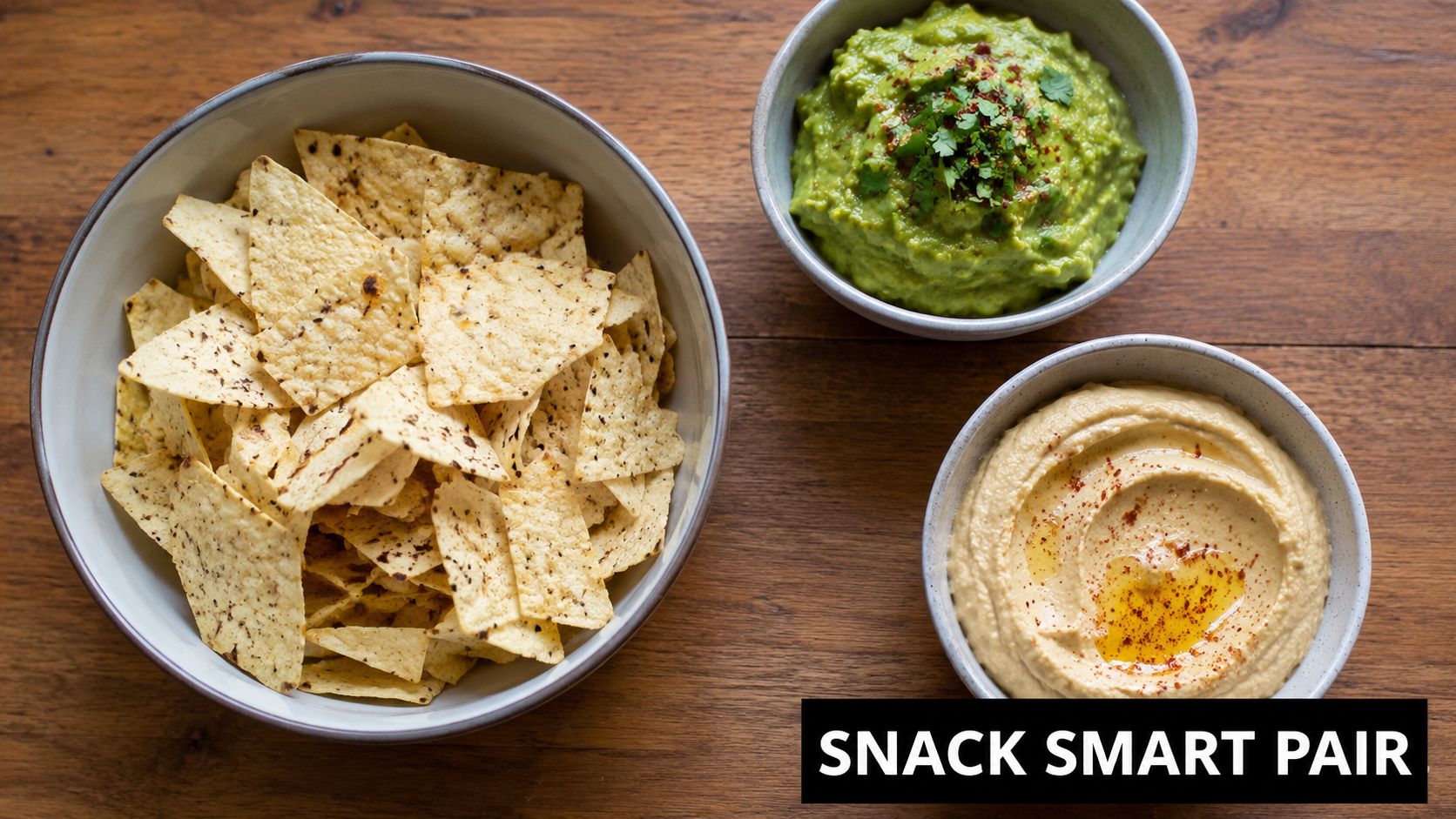
- Chips with guacamole for more staying power and a slower eating pace.
- Chips with hummus when you want a more balanced savory snack.
- Chips with salsa plus a protein source on the side if you want volume without making the snack too heavy.
Homemade pairings beat “diet snacks” that look virtuous but leave you hungry an hour later.
When homemade makes sense
If you've got specific ingredient standards, homemade chips or baked wraps can give you more control over oils and seasonings. That said, convenience matters. A store-bought option that fits your criteria is often more useful than a perfect homemade idea you never get around to making.
That's the practical lens I'd use. Build a few pairings you can repeat. Make them easy enough that you'll stick with them.
A Practical Framework for Buying Better Chips
Most shoppers need a filter, not another giant brand list.
The cleanest way to choose gluten free dairy free chips is to run every bag through the same short checklist. If a product fails early, put it back. If it clears each step, it earns a closer look.
The five-point screen
- Check the allergen claim first. Look for a clear gluten-free and dairy-free statement, then verify it against the ingredient list and allergen panel.
- Read the seasoning ingredients. Flavored chips are where whey, casein, milk powders, and vague flavor systems tend to show up.
- Look at the protein value. If the chip is supposed to function as a filling snack, it should offer more than just crunch.
- Identify the oil source. Advanced shoppers use this to separate products that merely avoid allergens from products that fit a cleaner ingredient standard.
- Decide the snack's role. Is this fuel before training, recovery support after training, or just a social snack? Buy accordingly.
The seed oil gap most guides miss
A major blind spot in this category is oil quality. A 2025 report says 55% of health-conscious consumers are actively avoiding seed oils, yet 80% of the top recommended gluten-free dairy-free chips on popular lists still rely on them, according to Endless Distances on dairy-free and gluten-free snacks on the go.
That's why so many shoppers feel like they're doing the homework and still not finding what they want. The usual lists stop at allergen exclusion. They don't address the ingredient nuance that a lot of wellness-focused buyers care about.
What “better” usually looks like
A stronger chip choice tends to have:
- A short ingredient list you can understand quickly
- A clear protein purpose if it's meant to hold you over
- A fat source you're comfortable with
- No hidden milk ingredients
- No ambiguity about gluten handling
If you want a benchmark for this category, it helps to compare against examples from high-protein chips rather than generic snack lists. Even if you buy something else, that standard sharpens your eye.
Your Fuel Your Choice
The snack aisle gets easier when you stop shopping for permission and start shopping for purpose.
That means reading past the front label. It means knowing where gluten and dairy can hide. It means treating protein, satiety, and oil source as real decision points instead of optional extras. And it means being honest about whether a chip is helping your training and appetite management, or just wearing a healthy costume.
You don't need a perfect diet to make better choices. You need repeatable standards.
That same mindset shows up in bigger health goals too. If you're trying to build habits that last, this piece on sustainable weight loss diet and exercise is worth reading because it keeps the focus where it belongs: consistency, not extremes.
Use the aisle differently next time. Read the label. Check the oils. Decide whether the product earns a place in your routine. A chip can absolutely fit a performance-focused diet, but only if you choose it like fuel.
If you want a snack that lines up with those standards, Gym Snack is built for exactly that job. It delivers chef-inspired, plant-based savory crunch with 15g+ protein per serving, low saturated fat, no cholesterol, and no seed oils, while staying naturally free of dairy, soy, and gluten.