

You're standing in the snack aisle after work, hungry, trying to find something that won't wreck your stomach, blow up your macros, or leave you hungry again in 20 minutes. One bag says plant-based. Another says gluten-free. A third says dairy-free, but the ingredient list reads like a chemistry exam and still sneaks in vague flavoring terms.
That's the main problem with most advice on gluten free dairy free snacks. It treats snacking like an allergy checklist instead of a performance decision. Safe matters, obviously. But if your snack has no staying power, barely any protein, and tastes like cardboard, you won't stick with it.
You don't need another recycled list of apples, baby carrots, and plain rice cakes. You need snacks that work in actual life. Stuff you can throw in a gym bag, keep at your desk, eat before a lift, or use to stop the late afternoon crash without spiraling into vending machine junk.
Good gluten free dairy free snacks should do three jobs well. They should be easy on your gut, satisfy cravings, and help you hit a real nutrition goal like fullness, recovery, or steadier energy.
That means reading labels harder, caring more about protein, and being pickier about processed “healthy” snacks. It also means understanding that savory snacks, especially cheese-flavored plant-based ones, need extra scrutiny. Those are often where hidden gluten, dairy derivatives, or cross-contact issues show up.
Your Guide to Smarter Snacking Starts Here
A lot of people start gluten free and dairy free eating with good intentions and bad snacks.
They grab fruit, popcorn, nut mixes, or basic crackers because those feel safe. Then the same pattern hits. Hunger comes back fast. Training feels underfueled. Cravings get louder at night. The issue isn't a lack of discipline. The issue is weak snack design.
I see this with gym-goers constantly. They're trying to avoid gut issues before training, cut back on heavy dairy, or stay away from gluten because it leaves them bloated. But their snack rotation still looks like convenience-store nutrition dressed up as wellness food. Sweet bars, low-protein chips, and “free-from” products that are technically compliant but useless for satiety.
Practical rule: If a snack only solves avoidance, it's incomplete. A good snack should also support energy, fullness, or recovery.
The fix is simple, but it requires a mindset shift. Stop asking only, “Is this gluten free and dairy free?” Start asking, “What is this snack doing for me?”
What a strong snack actually does
A strong snack earns its place when it helps with one of these:
- Bridges a long gap between meals so you don't show up ravenous.
- Supports training when you need something light, portable, and easy to tolerate.
- Improves recovery by giving your body useful protein after a session.
- Controls snack attacks by delivering enough substance to quiet hunger.
That's why savory, protein-forward options usually beat sugary “health snacks.” They tend to satisfy longer, fit better into a macro-conscious plan, and feel more like real food.
The standard I want you to use
When you evaluate gluten free dairy free snacks, use this filter:
| Question | Why it matters |
|---|---|
| Is it clearly safe for your needs? | Hidden gluten and dairy show up in processed foods more often than people think. |
| Does it provide meaningful protein? | Low-protein snacks rarely help with fullness or recovery. |
| Is it convenient enough to repeat? | If it's too complicated, you won't keep it in rotation. |
| Does it actually taste good? | Compliance matters. Cravings don't disappear because a label says “healthy.” |
That's the standard for the rest of this guide. Better snacks, less guesswork.
Decoding Gluten and Dairy Free Labels
The front of the package is marketing. The back is where the truth lives.
That matters even more with savory snacks. Existing content on gluten free dairy free snacks often skips the messy part: processed seasonings, cheese-style flavor systems, starches, and coatings. A 2023 review of gluten contamination in gluten-free processed foods highlighted that flavorings, seasonings, and coatings, particularly in savory snacks, were frequent sources of unexpected gluten, even in products labeled gluten-free.
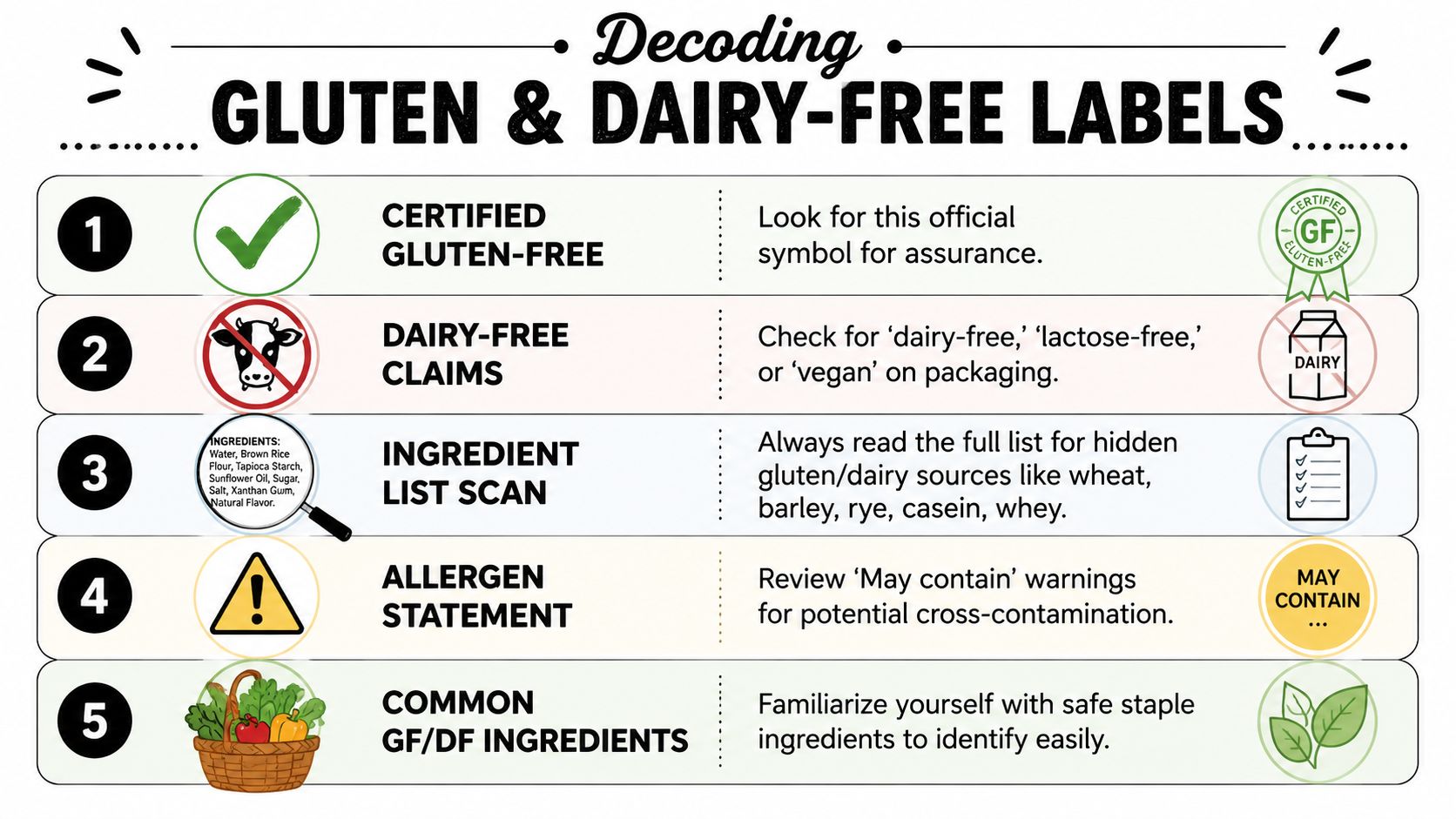
Don't stop at the front label
A “gluten-free” or “vegan” callout helps, but it shouldn't end your inspection. If you buy flavored crackers, puffs, chips, or protein snacks, read all three of these:
- The product claim on the front
- The full ingredient list
- The allergen or cross-contact statement
If you want to get sharper at this, this guide on how to read nutrition labels is worth using alongside your next grocery run.
What to check on savory snacks
Cheese-style and ranch-style products deserve extra attention because they often use complex flavor blends.
Look closely for:
- Obvious gluten sources like wheat, barley, rye, and malt.
- Milk-derived ingredients such as whey, casein, milk powder, butter solids, or cheese powder.
- Vague flavor systems like natural flavors or seasoning blends that need a second look in context.
- Cross-contact warnings that suggest shared lines or shared facilities.
If a snack sounds clean on the front and confusing on the back, trust the back.
“Made without” isn't the same as low risk
Some products are made without gluten ingredients but still carry cross-contact risk. That distinction matters if you're highly sensitive or need stricter avoidance.
The same goes for dairy. “Non-dairy” doesn't always mean free of milk proteins. If your goal is complete dairy avoidance, don't assume. Verify.
Here's the fast screen I recommend:
| Label detail | What I think |
|---|---|
| Certified gluten-free | Strong signal |
| Dairy-free or vegan, plus clear ingredients | Usually stronger than “non-dairy” alone |
| Long seasoning blend with unclear carriers | Proceed carefully |
| Shared equipment warning on a savory processed snack | Higher caution |
My blunt advice
If you're shopping for gluten free dairy free snacks and the product leans heavily on flavor powders, coatings, or “cheezy” branding, become more skeptical, not less. Savory snacks can absolutely fit your diet, but they're not the place to get lazy with label reading.
The cleaner the ingredient deck and the clearer the allergen messaging, the better. That's not fear-mongering. It's efficient shopping.
Prioritize Protein for Fitness and Satiety
If your snack has almost no protein, it's probably not helping much.
That sounds harsh, but it's true for most active people. A lot of gluten free dairy free snacks are built around carbs and convenience. They may be easy to digest, but they don't do much for recovery, fullness, or keeping your energy stable.
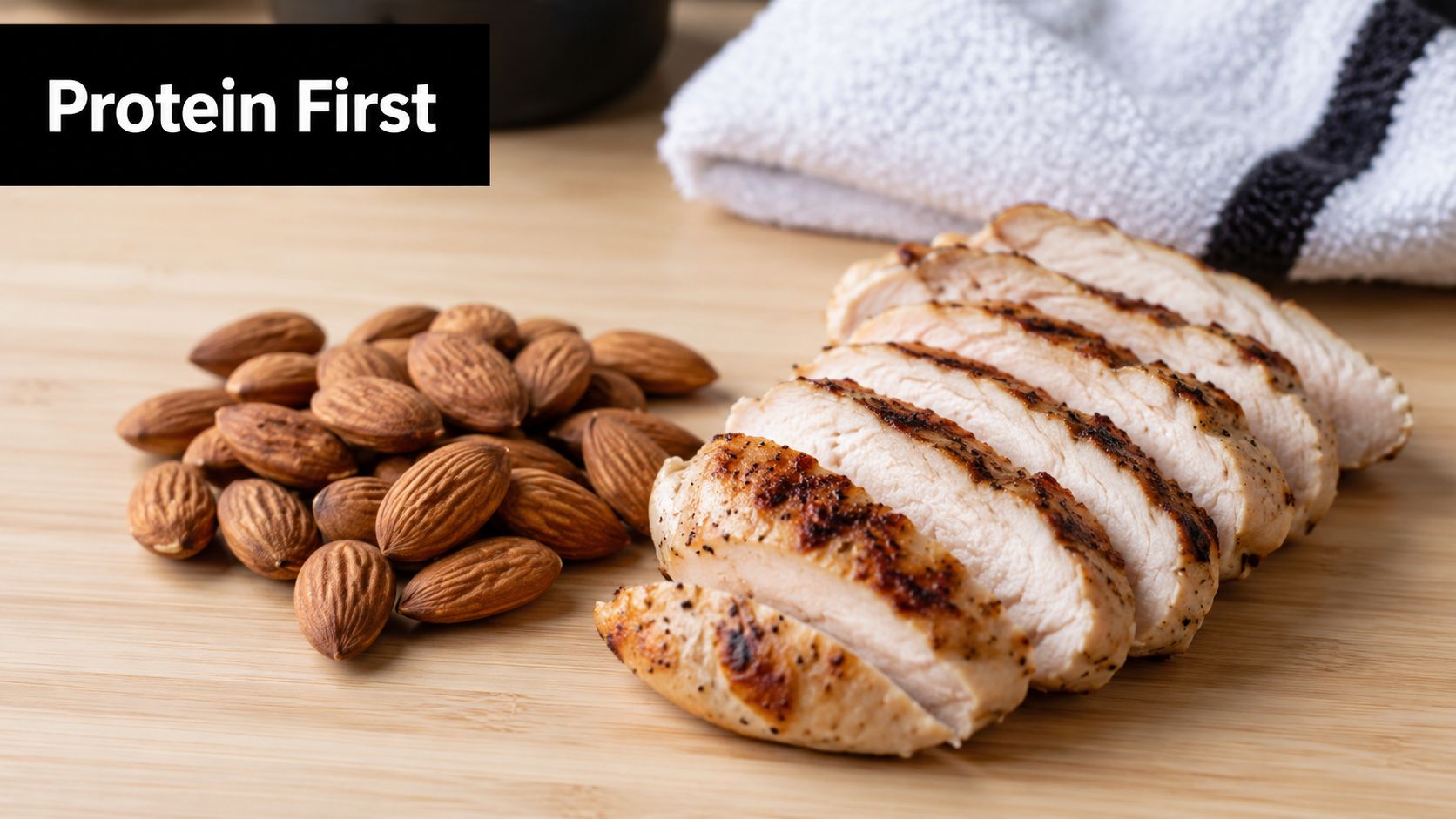
Protein changes what happens after you eat
Here, snack quality separates itself from snack marketing.
Randomized crossover trials show that protein-rich snacks delivering more than 15 g of protein can increase post-prandial secretion of GLP-1 and PYY by about 20 to 40 percent over 3 to 4 hours compared with isocaloric carbohydrate-only snacks, according to this summary on dairy-free snacks and satiety hormones. In plain English, protein-forward snacks tend to keep you fuller and make it easier to stop chasing more food an hour later.
That matters whether your goal is cutting, weight maintenance, appetite control on GLP-1 support, or not demolishing dinner after work.
What I'd choose instead of the usual low-protein options
Compare these two real-world snack patterns:
- Rice crackers and dried fruit: fast to eat, easy to digest, but often leaves you hungry again.
- A savory snack built around legumes or pea protein: more useful for satiety, steadier energy, and post-workout support.
That doesn't mean carbs are bad. It means snacks need a job. If you're using one to hold you over, improve recovery, or curb appetite, protein should lead.
A snack with substance beats a snack with good branding.
A simple target that works
For fitness-minded people, I like a simple rule: choose snacks that give you a clearly meaningful amount of protein, especially if you're eating between meals or around training. You don't need a dessert bar every time. Savory works better for many people because it feels more satisfying and doesn't keep your sweet cravings switched on.
If you're trying to fine-tune post-workout choices, Zing Coach's advice on recovery protein is a useful practical reference. It's a good reminder that recovery nutrition doesn't need to be complicated, but it does need enough protein to count.
You can also make your day easier by building more of these snacks into your routine instead of trying to “catch up” later. This guide on how to increase protein intake is helpful if you're always finishing the day short.
My coaching take
The best gluten free dairy free snacks aren't the ones that merely avoid ingredients. They're the ones that help you stay full, keep training well, and avoid random grazing.
If your snack doesn't help with any of those, it's filler.
The Best Store-Bought Snack Options
The market for gluten-free food reached about USD 8.1 to 8.5 billion in 2025, and snacks and ready-to-eat items held about 24% of the market share, according to Fortune Business Insights on the gluten-free food market. That's why the shelf is crowded. Demand is real. Quality still varies a lot.
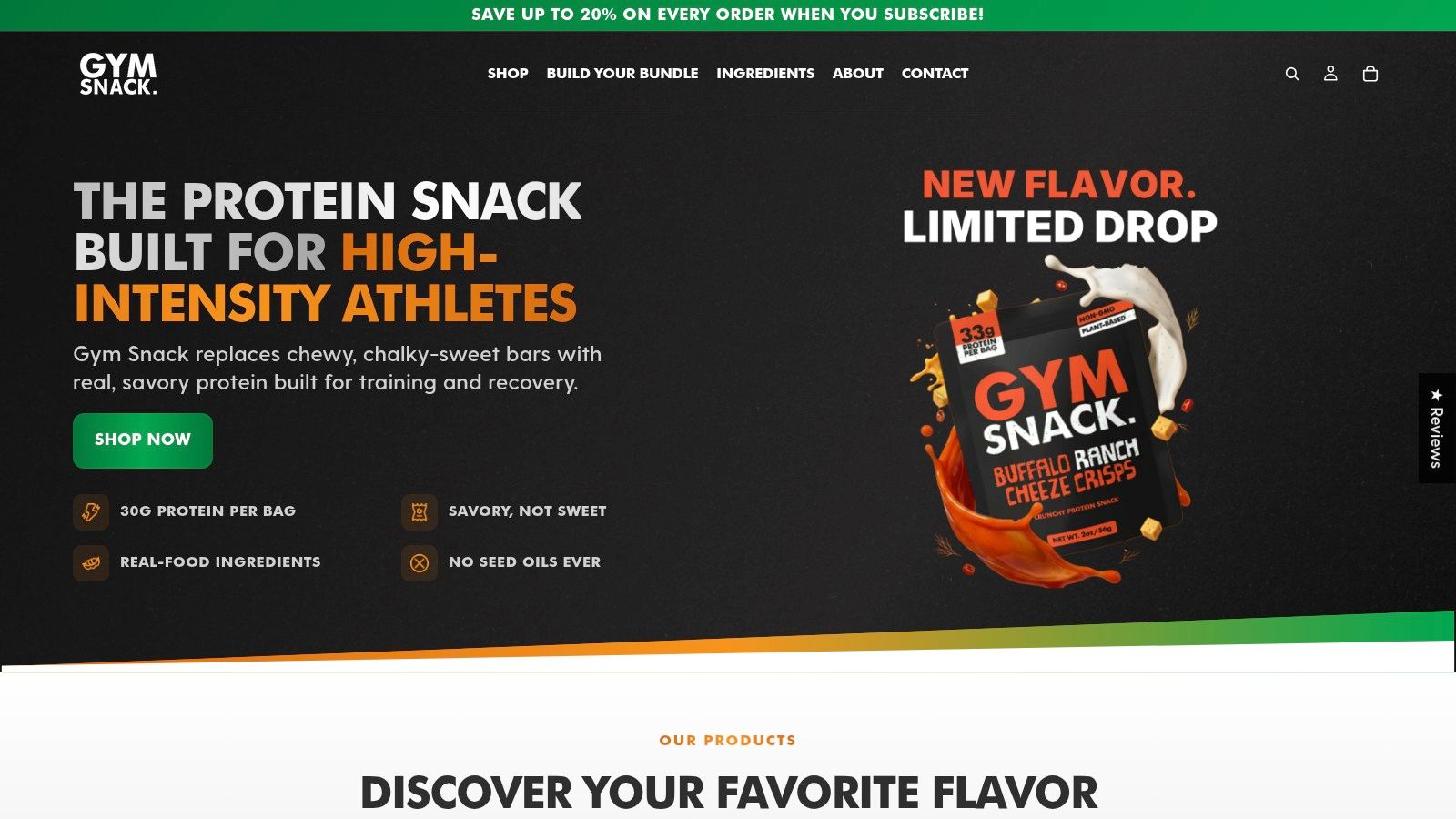
Most packaged options fall into a few clear buckets. Some are useful. Some are just expensive ways to stay hungry.
Savory protein snacks
This is the strongest category for people who care about satiety, gym performance, and fewer blood sugar swings. Think roasted legumes, pea-protein crisps, lentil-based puffs, and other crunchy savory formats that deliver substance.
Why they work:
- They scratch the salty-crunchy itch that sweet bars don't.
- They fit better around work and training when you don't want a sugar-heavy snack.
- They tend to feel more meal-like, which helps with compliance.
What to watch:
- Flavor systems can get messy fast.
- Ingredient lists can bloat with starches, oils, and vague seasonings.
- Not every “high protein” claim means a useful serving.
Protein bars
Protein bars are convenient, but they're often overused.
A good bar is a tool. A bad bar is candy with macros. If you want examples of what a more performance-focused option looks like, these high-performance energy bars show the kind of category I'd reserve for travel days, long work blocks, or backup fuel when whole-food options aren't available.
Here's my rule: bars are best as insurance, not a personality.
If you need a better lens for evaluating this category, this breakdown of gluten-free protein bars is useful.
Whole-food staples
These are still valuable, just not magical.
Good options include:
- Nuts and seeds when you need portability and crunch
- Fruit plus nut butter when you want quick energy with a little staying power
- Hummus with vegetables or gluten-free crackers when you want something more substantial
- Edamame or roasted beans when you want a better protein profile
The downside is convenience. Whole-food snacks are great at home or with prep. They're less reliable when your day gets chaotic.
Veggie and cracker style snacks
These include popcorn, rice crackers, veggie chips, cassava chips, and grain-free crackers. They're fine if they fit a meal or you pair them with protein.
On their own, though, they're usually weak.
Don't confuse “light” with “smart.” Most airy snack foods disappear fast and do very little for fullness.
That's why pairing matters. Crackers with bean dip can work. Plain crackers usually won't.
A quick product demo helps if you're visual and want to see how this category is evolving:
My ranking for real life
| Category | Best use | My take |
|---|---|---|
| Savory protein snacks | Midday hunger, post-workout, travel | Best overall |
| Protein bars | Backup option, long days | Good, but easy to over-rely on |
| Whole-food snacks | Home, office, planned eating | Strong with prep |
| Crackers, popcorn, chips | Add-on or craving management | Weak alone |
If you want one principle to remember, it's this: store-bought gluten free dairy free snacks should make your day easier, not just look healthy in your cart.
Easy High-Protein DIY Snack Recipes
Store-bought snacks are convenient. Homemade snacks give you more control.
That matters when you're trying to keep ingredients simple, avoid mystery seasonings, and get better texture than the usual limp “healthy” recipes. The upside is that you don't need chef skills. You need a few repeatable formulas.
Savory roasted chickpeas
This is one of the best cheap, portable options you can make.
Studies on plant-based snack extrudates show that lowering water activity below 0.35 with staged hot-air drying at 60 to 80 °C helps preserve texture and shelf-life in gluten-free, dairy-free snacks, according to Schär's overview of gluten-free dairy-free snack principles. At home, the practical lesson is simple: dry thoroughly if you want crunch.
How to make them
- Start with dry chickpeas: Pat cooked or canned chickpeas very dry.
- Season lightly: Use salt, smoked paprika, garlic powder, or nutritional yeast if it fits your diet.
- Roast in stages: Bake until crisp, then let them cool fully before sealing.
- Store smart: Don't trap steam in the container.
If they soften overnight, they weren't dry enough.
No-bake pea protein bites
These work when you want a compact snack with a more obvious protein hit.
Try this mix:
- Pea protein powder as the protein base
- Nut or seed butter for binding
- Gluten-free oats if tolerated
- Chia or flax for texture
- A small amount of maple syrup or date paste if you want sweetness
Roll into small balls and refrigerate. Keep the sweetness modest. These should eat like fuel, not dessert.
White bean herb dip
This is one of the most underrated gluten free dairy free snacks because it works as both a snack and a mini-meal component.
Blend:
- White beans
- Olive oil
- Lemon juice
- Garlic
- Parsley or dill
- Salt
Eat it with sliced peppers, cucumbers, or gluten-free crackers. It's simple, savory, and more filling than another handful of dry snack food.
Batch one savory option every week. It cuts down on random snacking better than buying five “healthy” products you don't actually enjoy.
My DIY rule
Always keep one crunchy option and one creamy option ready. Crunch handles cravings. Creamy dips help you build a more satisfying snack plate. Together, they stop the “I have nothing to eat” problem before it starts.
Build Your Perfect Snacking Plan
A snack strategy should fit your day, not fight it.
That's especially true if you train regularly or deal with gut sensitivity. A 2024 sports nutrition survey found that 62% of gym-goers sought gluten-free or dairy-free snacks for gut comfort, while only 28% could easily find savory, higher-protein options with more than 12 g per serving that matched their macro or energy goals. That gap is exactly why random snacking doesn't cut it.
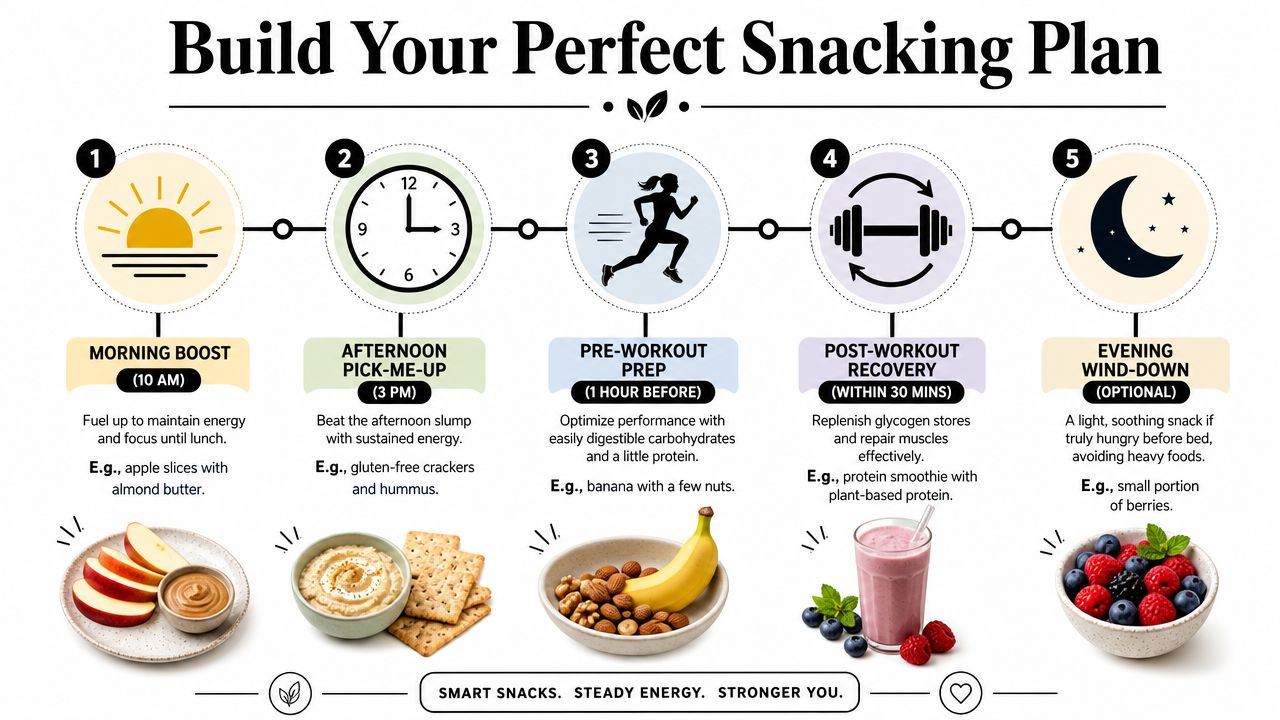
For the gym-goer
Training changes the job of the snack.
Before a workout, keep it light and easy to tolerate. After a workout, push protein higher and stop pretending plain fruit is enough if recovery matters to you.
What I'd do
- Pre-workout: Banana with a few almonds, or gluten-free toast with a thin layer of nut butter
- Post-workout: A higher-protein savory snack, or a plant-protein smoothie if that's easier to get down
- Later in the day: Something crunchy and protein-forward so hunger doesn't rebound hard
For the busy professional
Desk drawers and commute bags decide more nutrition outcomes than people admit.
If your plan depends on making perfect choices while starving at 4 PM, it's a bad plan. Keep one shelf-stable protein option at work, one in your bag, and one at home.
A practical office rotation:
- Monday to Friday desk setup: roasted chickpeas, a savory protein snack, a backup protein bar
- Meeting-heavy days: something quiet and non-messy
- Late commute days: snack before you leave work so you don't walk into dinner ravenous
The best snack plan is the one you can follow on your busiest day, not your most disciplined day.
For weight management and appetite control
A frequent error is choosing tiny, low-protein snacks because they look “light.” They then keep eating.
A better move is to choose snacks that create a clear stop signal.
Try this framework:
| Goal | Better choice | Why |
|---|---|---|
| Kill afternoon hunger | Savory protein snack | More staying power |
| Avoid late-night grazing | Protein plus fiber combo | Helps control rebound hunger |
| Manage cravings | Crunchy, salty, portionable snack | Feels satisfying, easier to repeat |
| Stay within macros | Pre-portioned protein-forward option | Less guesswork |
Three timing rules I actually recommend
-
Snack because there's a gap, not because you're bored.
If the next meal is far away, earn the snack with purpose. -
Use carbs strategically around training.
Keep them easier to digest when performance matters. -
Use protein strategically between meals.
That's when it shines for satiety and control.
A sample day that makes sense
A useful day of gluten free dairy free snacks might look like this:
- Mid-morning: fruit with almond butter if breakfast was light
- Pre-training: a small carb-forward option that won't sit heavy
- Post-training or mid-afternoon: a savory high-protein snack
- Evening if needed: a small protein-and-fiber choice instead of random sweets
That isn't rigid. It's just organized. And organized eating usually beats “intuitive” snacking when you're underfed, overbooked, and trying to train well.
Snack Smarter Not Harder
The point of gluten free dairy free snacks isn't restriction. It's precision.
You don't need to settle for bland “safe” foods that leave you unsatisfied. You need snacks that are clearly labeled, useful, and built around what your body needs. Read labels like a skeptic. Treat savory processed snacks with extra care. Put protein ahead of marketing. Match the snack to the job.
That's the difference between eating around your goals and eating for them.
If you want better satiety, better recovery, and fewer chaotic food decisions, stop filling your cart with snacks that only look healthy. Choose options that help you train, work, and stay in control of hunger.
Simple beats perfect. Repeated beats ideal. A handful of reliable, protein-forward snacks will do more for your progress than an endless search for trendy “free-from” products.
If you want a savory option that fits this standard, take a look at Gym Snack. It's built for people who want crunchy, cheesy-tasting, plant-based protein without gluten, dairy, soy, or seed oils. That makes it a practical choice for gym-goers, busy professionals, and anyone tired of sweet bars pretending to be a complete snack.