

If you've ever grabbed a protein bar and felt bloated or just plain off afterward, you're not alone. The search for protein bars gluten free options isn't just a trend—it's about finding fuel that actually makes you feel good. These bars are made without gluten, a protein found in wheat, barley, and rye that, for many people, can be surprisingly tough on the digestive system.
Why "Gluten-Free" Is More Than Just a Buzzword
Ever finish a snack and feel more sluggish than you did before you ate it? For a growing number of us, the problem isn't the snack itself, but the hidden gluten inside. Choosing protein bars gluten free is less about dieting and more about fine-tuning your body's performance and comfort, day in and day out.
For someone with a gluten sensitivity, eating it is like sending the wrong kind of fuel to your engine. It can clog things up, leading to that all-too-familiar bloating, discomfort, and even brain fog. This becomes a real problem post-workout, right when your muscles are screaming for clean, easy-to-digest protein to start repairing and rebuilding.
The Real-World Benefits of Ditching Gluten
Making the switch to a gluten-free protein bar can feel like taking the express lane instead of sitting in traffic. When you remove that common irritant, your body can get down to business and absorb nutrients the way it's supposed to. It's a small change that can make a big difference.
- Feel Better, Faster: No more post-snack bloating or stomach cramps that kill your focus and productivity.
- Soothe Your System: For sensitive individuals, gluten can trigger inflammation, which gets in the way of muscle recovery and just feeling your best.
- Get More Out of Your Food: A happy gut is an efficient gut. It can absorb the essential amino acids from protein, plus all the other good stuff, much more effectively.
It's not just a small group of people, either. An estimated 13% of adults deal with some level of gluten intolerance. For those with celiac disease or non-celiac gluten sensitivity, avoiding it is non-negotiable for staying healthy.
At the end of the day, a gluten-free protein bar is designed to work with your body, not against it. It paves the way for smoother digestion, letting you get the full punch of protein and nutrients from every bite. That means better energy, better workouts, and a much faster bounce-back.
Understanding the Protein Inside Your Bar
When you grab a gluten-free protein bar, what you're really interested in is what's in it, not just what's left out. The protein source is the star of the show, and it's what fuels your body for recovery and growth.
Think of it this way: different proteins are like different types of fuel for your car. Some give you a quick burst of speed, while others are designed for long-haul efficiency. Knowing the difference is how you pick the bar that’s truly right for you. The protein world really breaks down into two main camps: animal-based and plant-based. Both have some fantastic, high-quality options to help you build muscle, bounce back from a tough workout, and keep hunger at bay.
Animal-Based Protein Powerhouses
Animal-based proteins are often called "complete" proteins. This just means they contain all nine of the essential amino acids your body needs but can't make on its own. They're the traditional go-to in the fitness world for a reason—they work.
- Whey Protein: This is the fast-acting superstar, derived from milk. Your body absorbs it quickly, making it the perfect choice for that post-workout window when your muscles are screaming for nutrients.
- Casein Protein: Also from milk, casein is whey's slow-and-steady counterpart. It digests over several hours, feeding your muscles a gradual stream of amino acids. This makes it great for staying full or for overnight muscle repair.
- Egg White Protein: A fantastic dairy-free option for those who want to avoid lactose. Egg white protein is easy on the stomach and has a stellar amino acid profile that supports solid muscle growth.
The Rise of Plant-Based Proteins
You’ve probably noticed that plant-based proteins are everywhere now, and it’s not just a trend. They're often easier to digest, fit vegan lifestyles, and are a more sustainable choice for the planet.
This shift is making huge waves. Within the nutritional bar market, protein bars hold a massive 54.1% market share in 2025, largely because people are actively seeking out gluten-free, plant-powered snacks. In fact, plant-based proteins now make up 30% of that segment—a huge jump from just 10% back in 2018. Millions are choosing cleaner, more sustainable options.
Here are a few of the most popular and effective plant proteins you'll find:
- Pea Protein: This is a top-tier choice for muscle building. It’s loaded with branched-chain amino acids (BCAAs), is naturally hypoallergenic, and is usually much gentler on the stomach than dairy.
- Rice Protein: Often paired with pea protein to create a complete amino acid profile, brown rice protein is another excellent gluten-free and hypoallergenic option.
- Hemp Protein: Hemp is a true nutritional powerhouse. It's not only packed with protein but also healthy fats and fiber, supporting your overall wellness right alongside muscle recovery.
The chart below shows why getting the "gluten-free" part right is the critical first step for so many people.
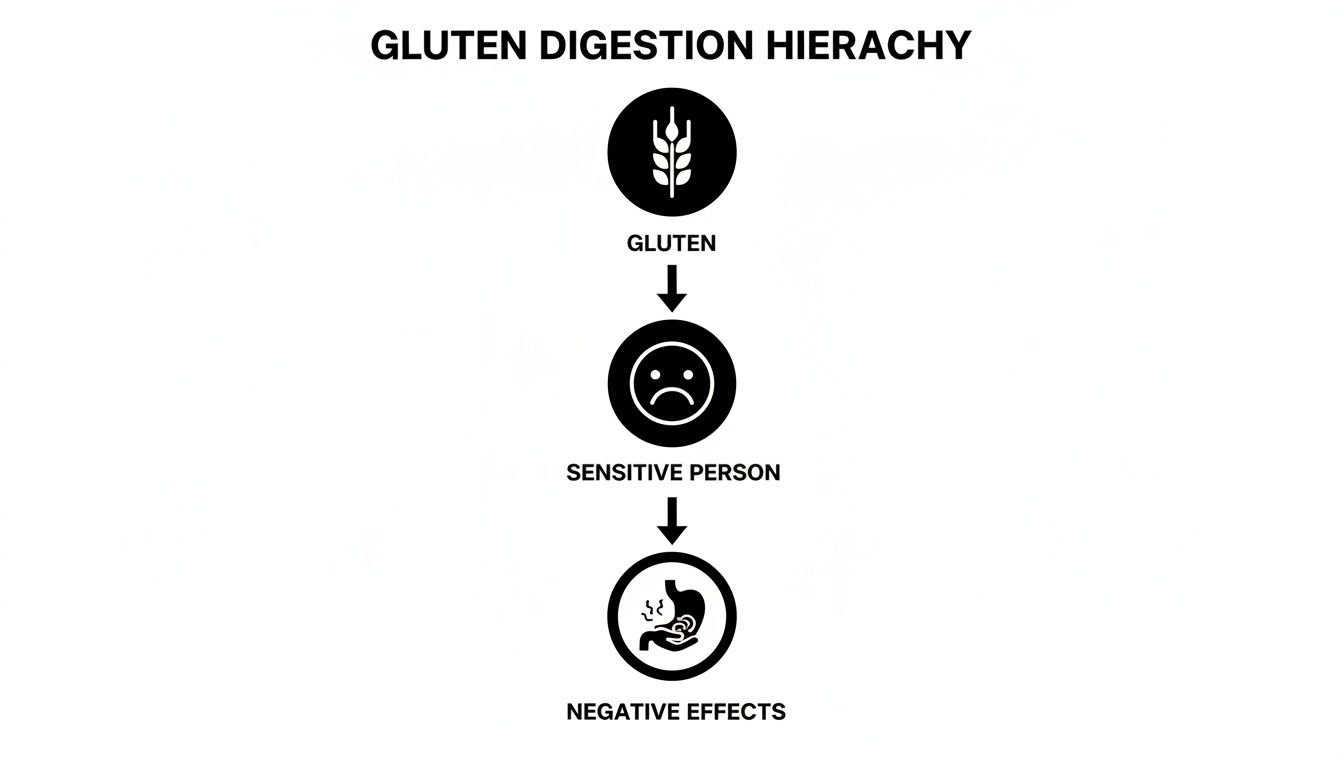
This simple flow illustrates how, for someone with a sensitivity, gluten can directly trigger digestive issues. It's a clear reminder of why starting with a gluten-free foundation is so important. You can dive deeper into the science in our complete guide to gluten-free protein.
To make things even easier, here’s a quick comparison to help you find your perfect protein match.
A Quick Guide to Gluten-Free Protein Sources
Compare popular gluten-free proteins to find the perfect match for your fitness goals and dietary preferences.
| Protein Source | Type | Key Benefits | Best For |
|---|---|---|---|
| Whey Protein | Animal-Based | Fast absorption, high in BCAAs, complete protein | Post-workout recovery, rapid muscle repair |
| Casein Protein | Animal-Based | Slow digestion, sustained amino acid release | Lasting satiety, pre-bedtime snack |
| Egg White Protein | Animal-Based | Dairy-free, complete protein, easily digestible | Lactose intolerance, all-day protein source |
| Pea Protein | Plant-Based | Hypoallergenic, rich in BCAAs, easy to digest | Muscle building, vegan diets, sensitive stomachs |
| Rice Protein | Plant-Based | Hypoallergenic, good source of cysteine | Combining with other plant proteins, vegans |
| Hemp Protein | Plant-Based | Contains omega-3s, fiber, and all 9 amino acids | Overall wellness, balanced nutrition |
Ultimately, the best protein source for your bar comes down to what your body needs, what your goals are, and what aligns with your personal values. Whether you go with a classic like whey or a plant-based powerhouse like pea protein, you've got great options.
How to Spot Hidden Gluten on Any Label
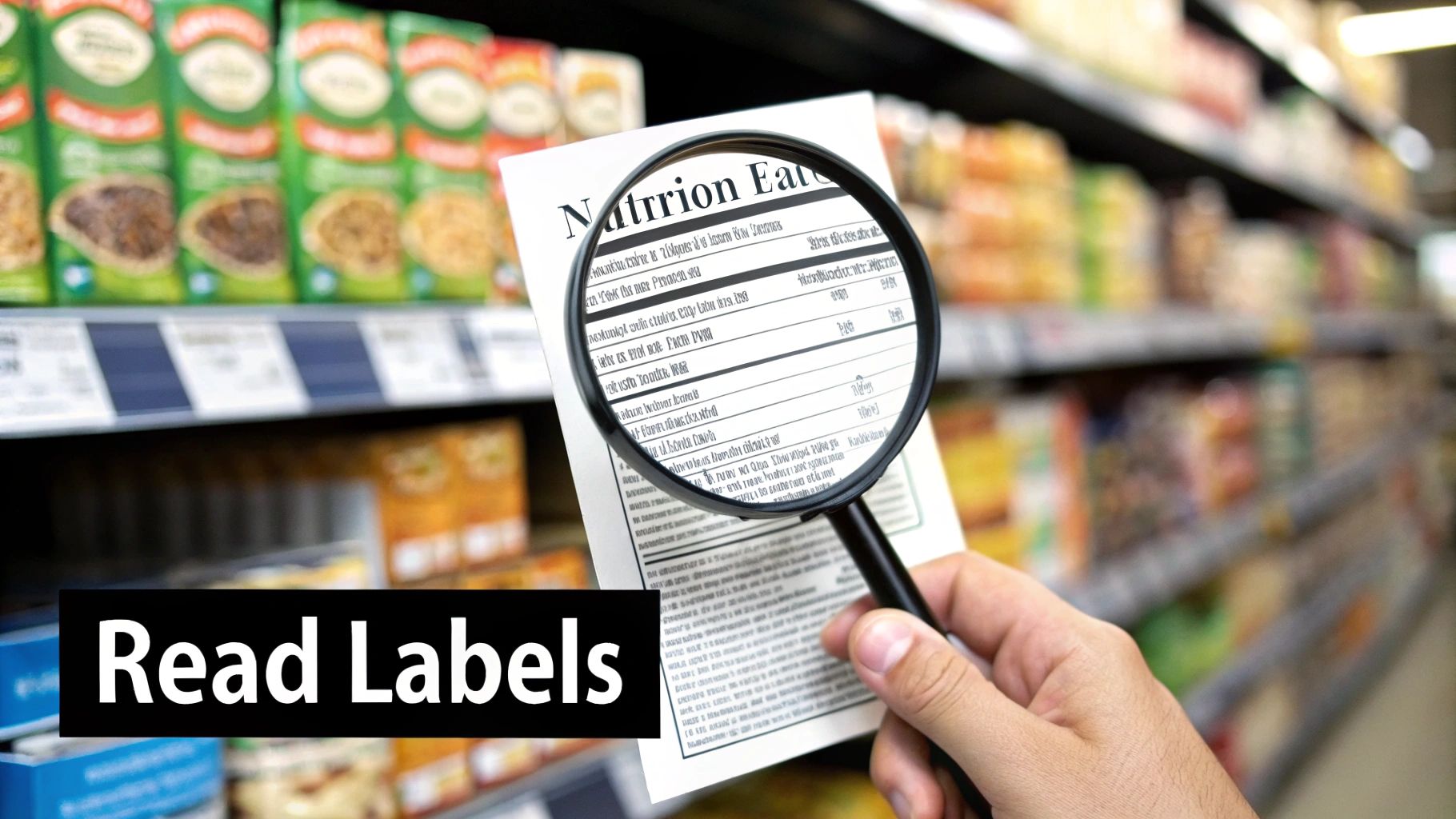
Seeing a big "Gluten-Free" claim on the front of a protein bar is a good start, but it’s not the whole story. To really be sure, you have to become a bit of a label detective and learn to spot where gluten likes to hide.
Think of an ingredient list like a "Where's Waldo?" puzzle. Most of the ingredients are what they seem, but gluten can be sneaky. It often masquerades under names that don't even hint at "wheat," making it incredibly easy to overlook if you don't know what you're looking for.
Common Hiding Spots for Gluten
Aside from the obvious culprits like wheat, barley, and rye, gluten often lurks in processed ingredients used for flavor, texture, or even just as a binder. Knowing these tricky terms is your best defense in the snack aisle.
- Malt in Disguise: Watch out for anything with "malt," like malt extract, malt syrup, or malt flavoring. These are almost always made from barley and are a common sweetener in snack bars.
- Brewer's Yeast: While nutritional yeast is usually safe, brewer's yeast is often a byproduct of making beer, which means it can be contaminated with gluten from the barley used in the process.
- Vague Starches: Be wary of generic terms like "food starch" or "modified food starch." If the label doesn't specify that it comes from a gluten-free source (like corn, potato, or tapioca), there's a good chance it's from wheat.
Key Takeaway: Real peace of mind comes from reading the entire ingredient list, not just trusting the flashy claims on the front. A brand that’s upfront with simple, recognizable ingredients is usually a much safer bet.
The Importance of Third-Party Certifications
So, how can you be confident a product is safe without needing a degree in food science? That's where third-party certifications come in. These little seals on the packaging are more than just marketing fluff; they’re a guarantee that the product has passed strict, independent testing.
A "Certified Gluten-Free" seal from an organization like the Gluten-Free Certification Organization (GFCO) means the product is verified to contain less than 10 parts per million (ppm) of gluten. That's actually a higher standard than the FDA's requirement of 20 ppm. It adds a layer of trust that a simple "gluten-free" claim can't match. You can dive deeper into this in our guide on how to read nutrition labels.
Why Cross-Contamination Matters
Here’s something many people forget: a protein bar can be made with 100% gluten-free ingredients and still not be safe. If it’s produced in a factory that also handles wheat, cross-contamination can happen, where tiny gluten particles end up in the "gluten-free" product.
This is why choosing a brand that manufactures in a dedicated gluten-free or at least an allergen-conscious facility is so important. For someone with celiac disease or a high sensitivity, this isn’t just a nice-to-have—it's absolutely essential. When looking beyond bars, it's always smart to find the best gluten-free supplement by paying attention to these same details. At the end of the day, a truly safe product is about both the ingredients and the environment where it was made.
Choosing a Bar for Fitness and Weight Management
The right protein bars gluten free options are more than just a quick bite—they're a strategic part of hitting your health goals. Whether your focus is building muscle or managing your weight, what’s inside that bar really does make a difference.
Imagine your muscles after a tough workout. They're like a construction site, full of tiny micro-tears that need to be repaired to build back stronger. Protein is the crew that shows up with the building blocks (amino acids) to get the job done right. A clean, easy-to-digest protein source not only speeds up this muscle repair but also helps cool down post-workout inflammation, meaning you feel less sore and get back to it faster.
Fueling Satiety and Managing Cravings
If you're focused on weight management, you need to understand the science of feeling full. This is where high-protein snacks really shine. They have a remarkable ability to make you feel satisfied and keep you that way for hours. It’s not just in your head; it’s a powerful hormonal reaction.
When you eat a protein-rich snack, your body releases hormones like PYY (Peptide YY) and GLP-1 (Glucagon-like peptide-1). These act like messengers, telling your brain you’ve had enough. This is what puts the brakes on hunger and helps stop you from overeating.
This is especially important for the growing number of people using GLP-1 agonists, with prescriptions jumping by 300% between 2022 and 2024. For them, a satisfying gluten-free protein bar that works with these natural fullness signals is perfect for bridging meals and keeping energy steady. With e-commerce now making up 28% of all sales, it's clear there's a huge demand for brands that deliver clean, satisfying ingredients.
The Power of Savory and Crunch
Let's be honest, the sensory experience of a snack is a huge part of its appeal. A lot of us have "flavor fatigue" from the endless parade of overly sweet, dessert-flavored bars. Switching things up with something savory and crunchy can be a total game-changer.
Here’s why it works so well:
- Crushes Cravings: A satisfying crunch and bold, savory flavor can knock out a craving for salty chips or other junk food.
- Prevents Sugar Crashes: Instead of the short-lived energy spike and subsequent crash you get from a sugary treat, a savory protein snack offers steady, reliable energy.
- Enhances Satisfaction: When your healthy snack actually feels like a treat, you're much more likely to stick with your plan long-term.
No matter your specific fitness goals, a thoughtfully chosen gluten-free protein bar can be a key player in your overall plan for optimal pre and post-workout nutrition. It’s all about getting the right fuel, right when you need it most.
Looking Beyond Gluten-Free for a Truly Healthy Snack
Seeing "gluten-free" on the wrapper is a good first step, but it's far from the whole story. Let's be honest, a lot of products that clear the gluten hurdle are still just candy bars in disguise, packed with stuff that can easily derail your health goals. It's time to raise the bar—pun intended—from simply avoiding an ingredient to actively choosing high-quality fuel.
Think of it this way: just because a car is painted your favorite color doesn't mean it has a good engine. That gluten-free label is the paint job. Under the hood, you might find a clunker loaded with junk fillers, nasty sugar alcohols that wreck your gut, or inflammatory seed oils that do you more harm than good. The real secret is to flip the bar over and actually read the ingredient list.
The Power of a Clean Label
A genuinely healthy snack almost always has one thing in common: a clean label. That means a short, simple list of ingredients you can actually pronounce. This kind of transparency is a huge green flag, showing the brand has nothing to hide behind complicated chemical names. You want to see whole-food ingredients that bring real nutritional value to the table.
And it’s not just a niche preference; people are demanding this. A 2024 Mintel survey found that a whopping 62% of fitness enthusiasts now seek out 'clean label' products, looking for things like no cholesterol and low saturated fat. This shift is especially noticeable in the meal replacement bar market, which happens to be the fastest-growing segment at a 7% CAGR and often relies on gluten-free formulas to attract busy, health-focused people. You can dive deeper by checking out the full market report on protein bar trends.
So, what should you be looking for on that label? It's all about a balanced profile that actually works for you.
- Healthy Fats: Look for sources like nuts and seeds. These are worlds better than the highly processed seed oils (think soybean or canola oil) found in so many snacks.
- Low Sugar Content: Be wary of bars that boast low sugar but are loaded with sugar alcohols like maltitol or erythritol. For many people, these are a one-way ticket to bloating and digestive misery. Minimal added sugar and natural sweeteners are the way to go.
- Quality Protein: Make sure the protein source is high-quality and easy for your body to use, like pea or egg white protein.
A great snack shouldn't just be "not bad" for you; it should be actively good for you. When you start looking beyond the gluten-free claim, you're demanding more—more nutrients, cleaner ingredients, and ultimately, better results for your body.
The Savory Solution to Snack Fatigue
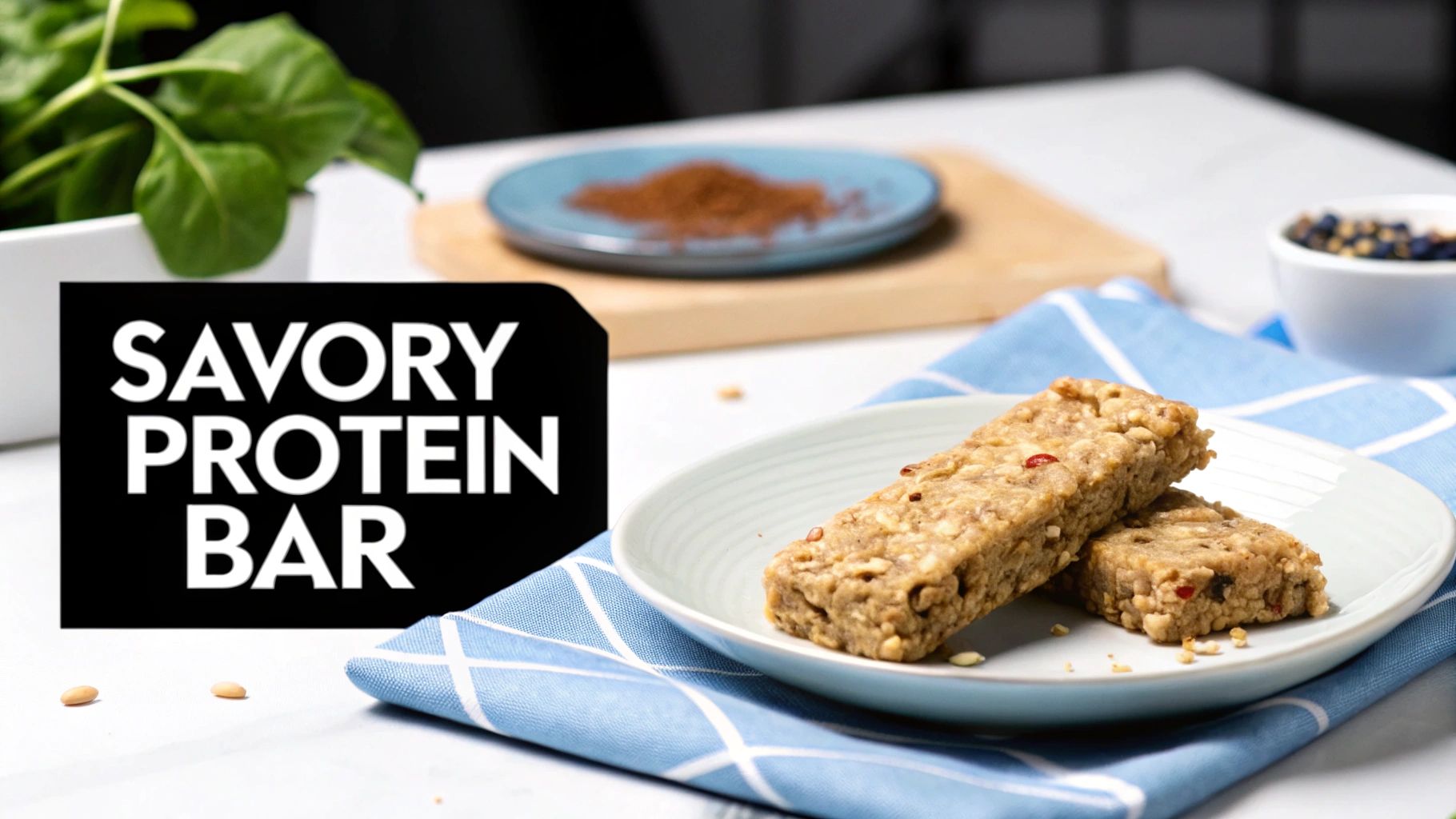
So, you've learned how to read the labels and sift through ingredient lists. You know what makes a good protein bar. But let's be honest—most of them taste like dessert. Finding one that meets high nutritional standards and breaks the monotony of endless sweet flavors can feel impossible. That’s where a savory, crunchy option completely changes the game.
We created Gym Snack to solve this exact problem. It all starts with a clean, powerful foundation of pea protein. We picked it specifically because it's easy on the gut and has a fantastic amino acid profile that helps muscles repair and grow. It’s a plant-based powerhouse that works with your body.
More Than Just a Snack, It's a Strategy
The real difference, though, is the flavor. Instead of another chocolate or peanut butter bar, Gym Snack hits you with bold, cheesy flavors that satisfy a totally different craving. This savory profile is a deliberate move to fight "flavor fatigue," giving your taste buds a much-needed break from all that sugar.
A satisfying crunch is a powerful tool for curbing cravings. It provides the sensory feedback that makes you feel full and content, preventing mindless snacking on less healthy alternatives like chips or crackers.
This focus on savory satisfaction is backed by a solid macro-friendly profile. Each bar is designed to keep you feeling full and provide sustained energy, making it the perfect choice for a bunch of different situations.
- Pre-Workout Fuel: Get steady energy without the sugar crash.
- Post-Workout Recovery: Deliver clean protein to help your muscles bounce back.
- On-the-Go Snack: A convenient, no-mess option to keep you full between meals.
The demand for better snacks is undeniable. In North America, the market for gluten-free protein bars grew 12% annually between 2018 and 2023, blowing past the growth of the general category. More and more, this growth is being driven by plant-based options like Gym Snack as people look for cleaner, more effective fuel. You can dive deeper into the trends shaping the protein bar market if you're curious.
By bringing together a clean, gluten-free ingredient list with a unique savory crunch, we've created a genuinely satisfying solution. For more ideas, check out our guide on other savory high-protein snacks.
Got Questions About Gluten-Free Protein Bars? We’ve Got Answers.
When you're sorting through the endless options for gluten-free protein bars, a few questions always seem to pop up. Let's clear the air with some straight-up answers so you can snack with total confidence.
Are All "Healthy" Protein Bars Gluten-Free?
Nope, and it's a trap many people fall into. A bar can be loaded with "natural" or "healthy" sounding ingredients but still use things like wheat protein, barley malt for sweetness, or oats that aren't certified gluten-free.
The only way to be sure is to look for a clear "gluten-free" certification right on the label. Assuming a bar is safe just because it looks healthy is a risky game, which is why brands that are upfront about allergens offer serious peace of mind.
Is Plant Protein Actually Good for Building Muscle?
You bet it is. High-quality plant proteins, like the pea protein we use, are complete proteins. That means they have all the essential amino acids your body needs to effectively build and repair muscle.
It's common to find plant-based bars packing 15-20 grams of protein per serving, putting them right on par with whey-based bars. Plus, many people find them much easier on the stomach, which is a huge win.
Globally, gluten intolerance isn't a niche issue—it affects an estimated 13% of adults. This has driven 40% of protein bar buyers to specifically look for gluten-free certifications, especially in the fitness world where gut health is so closely linked to performance. This shift is powering a market projected to reach a massive USD 9.7 billion by 2030. You can dig into the full protein bar market report here.
Do Gluten-Free Bars Taste Like Cardboard?
Not anymore! The early days of gluten-free snacks earned them a bad rap for being dry and bland, but that's ancient history. Modern gluten-free bars are crafted to deliver a seriously good eating experience. The final taste and texture come down to the quality of all the ingredients, not just the lack of gluten. And honestly, innovative options—especially savory and crunchy ones—prove that gluten-free can be way more satisfying than the old-school sweet bars.
Ready to ditch the chalky, sweet bars for something savory, crunchy, and genuinely satisfying? Gym Snack delivers 15g+ of clean pea protein per serving with bold, cheesy flavors and zero junk.