

So, what exactly is gluten-free protein? Put simply, it’s any protein source—whether it's from an animal, like chicken, or a plant, like pea protein powder—that doesn't contain gluten. Officially, for a product to be certified gluten-free, it must contain less than 20 parts per million (ppm) of gluten.
This isn't just a niche category for people with celiac disease anymore. It’s where two massive dietary trends collide: the drive for high-protein foods and the growing awareness of how gluten affects the body.
Why Is Gluten-Free Protein Suddenly Everywhere?
Think about how your car sputters and struggles when the fuel filter is clogged. For a lot of people, gluten acts like that clog in their digestive system, leading to bloating, inflammation, and just a general feeling of sluggishness.
When you switch to gluten-free protein, it’s like putting in a clean filter. Your body can absorb nutrients more efficiently and run smoother. This simple idea is why so many people are making the change, even without a formal gluten sensitivity diagnosis.
It’s not just about cutting out the protein found in wheat, barley, and rye. It's about giving your body the best possible fuel to perform, digest well, and keep inflammation in check. This movement sits right at the intersection of two powerful health trends: the demand for high-protein diets to build muscle and manage weight, and a broader understanding of gluten's impact on well-being.
The Search for Cleaner Fuel
This shift is much bigger than a passing fad; it's a fundamental change in how we think about food. People are reading labels more carefully than ever, looking for clean ingredients that help them reach their goals without the junk. This consumer-led demand is reshaping the entire food industry.
The image below gives you a great visual of what a typical gluten-free plate looks like.
As you can see, a healthy, gluten-free diet is built around whole foods that are naturally compliant—meats, fish, vegetables, fruits, and dairy. It’s a great reminder that this lifestyle is less about restriction and more about making smarter nutritional choices.
A Market Powered by Health and Knowledge
This growing interest has created a booming market. The global demand for gluten-free protein shakes, for example, is surging. It was valued at around USD 144 million in 2023 and is expected to more than double, hitting approximately USD 318 million by 2032. If you're interested in the data, you can read the full research about gluten-free market trends to see how consumer habits are driving this growth.
Ultimately, this trend highlights a crucial insight: what you take out of your diet can be just as impactful as what you put in. For many, a gluten-free protein is the perfect way to fuel their body, support their fitness journey, and keep their gut happy—no compromises needed.
Getting to Know Your Plant-Based Protein Sources
If you’re exploring the world of plant-based protein, it can feel like there are almost too many options. Each one has its own personality and brings something different to the table. Let's break down some of the heavy hitters so you can figure out what works best for you and your goals.
At its core, the idea is simple. You're looking for foods that hit two key criteria: they are completely free of gluten, and they are genuinely high in protein.
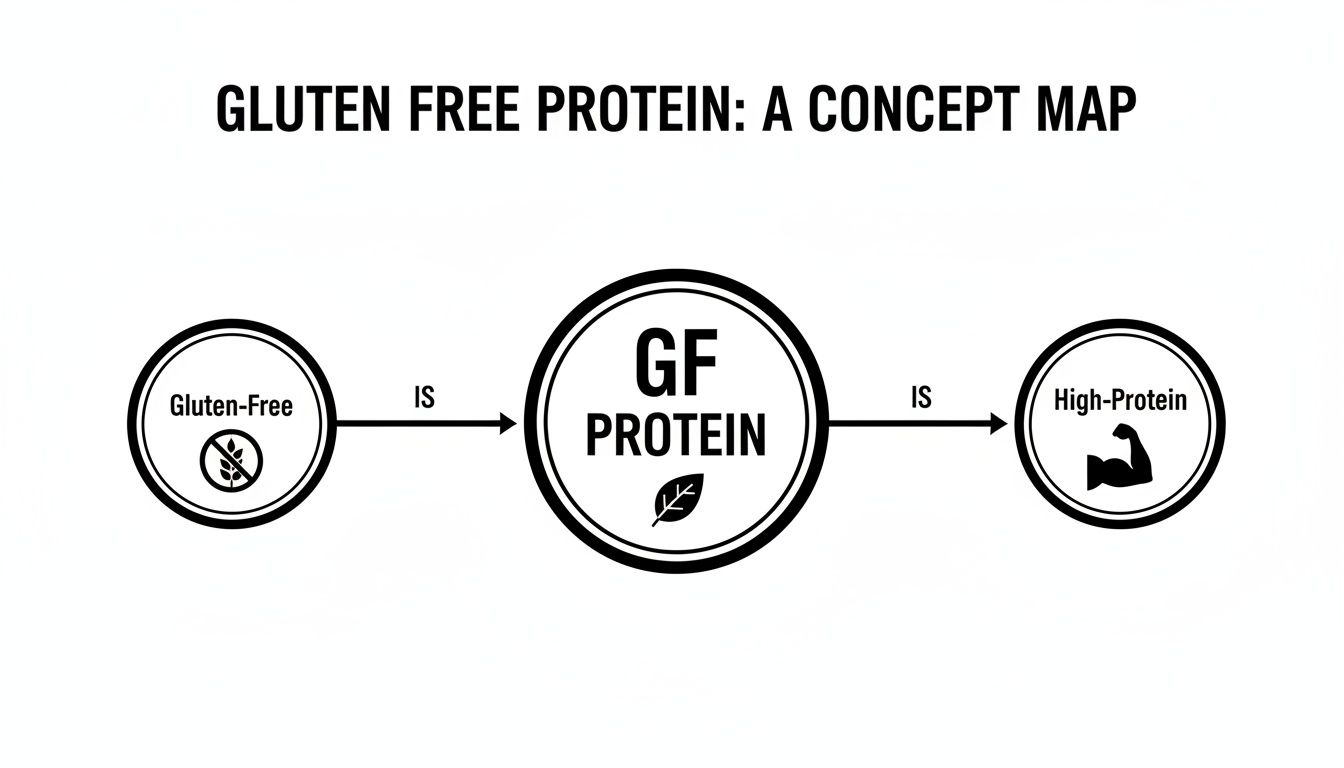
This dual-focus approach is what makes gluten-free protein such a smart choice for anyone serious about their health and performance. Now, let’s see which plants are leading the charge.
Pea Protein: The Muscle-Building Powerhouse
There's a reason pea protein has exploded in popularity. Made from humble yellow split peas, it's a fantastic source of branched-chain amino acids (BCAAs)—leucine, isoleucine, and valine—which are the building blocks your muscles need to repair and grow.
Beyond its muscle-friendly profile, it's also incredibly gentle on the stomach and one of the most hypoallergenic options out there. This makes it a go-to for athletes and a key ingredient in performance-focused products like Gym Snack.
Brown Rice Protein: The Perfect Complement
Brown rice protein is a solid choice on its own, but its true magic is revealed when you pair it with pea protein. It has a great amino acid profile but is a little low in one called lysine. And guess what? Pea protein has lysine in spades.
Think of it this way:
Pea and rice protein are like two puzzle pieces. Separately, they're incomplete. But when you snap them together, they form a "complete protein" with the full spectrum of essential amino acids your body needs to thrive.
This powerful duo creates a protein blend that can go toe-to-toe with animal-based sources like whey. To learn more about how this combination fuels muscle growth, take a look at our guide on the best plant protein for muscle gain.
Hemp Protein: The All-in-One Nutrient Boost
Hemp is so much more than just a protein source. It’s a true nutritional workhorse, delivering all nine essential amino acids, a healthy dose of omega-3 and omega-6 fatty acids, and plenty of fiber.
This makes it an amazing option for supporting your overall wellness, not just your gym performance. Its slightly nutty, earthy flavor works wonderfully in smoothies or baked goods where it can blend with other ingredients.
Lentils & Chickpeas: The Whole-Food Heroes
Often enjoyed in their natural state, lentils and chickpeas are also ground into protein-packed flours and powders. Lentils, in particular, are loaded with protein and fiber, helping you feel full and satisfied while supporting good digestion.
Chickpeas offer a similar profile, providing sustained energy and a wealth of nutrients. These are perfect for adding a gluten-free protein kick to everything from soups and curries to homemade veggie burgers, proving you don't always need a powder to get the job done.
To make it easier to see how these stack up, here’s a quick comparison.
Comparing Plant-Based Gluten Free Protein Sources
This table gives you a side-by-side look at some of the most popular plant-based proteins, highlighting what makes each one unique.
| Protein Source | Avg. Protein per 30g | Key Nutritional Highlight | Best For |
|---|---|---|---|
| Pea Protein | ~24g | Rich in BCAAs (Leucine, Isoleucine, Valine) | Muscle repair, post-workout shakes, high-protein snacks |
| Brown Rice Protein | ~22g | Hypoallergenic and easily digestible | Blending with pea protein for a complete amino acid profile |
| Hemp Protein | ~15g | Contains Omega-3s, fiber, and all essential amino acids | Overall wellness, smoothies, adding to baked goods |
| Lentil Protein | ~24g | High in fiber and iron, very satiating | Soups, stews, savory baking, whole-food meals |
| Nuts & Seeds | ~9g (Almonds) | Source of healthy fats, vitamins, and minerals | On-the-go snacking, adding texture to meals |
As you can see, each source offers a distinct advantage. The key is to find the right one—or the right combination—to support your specific health and fitness needs.
Fueling Your Fitness and Wellness Goals
Knowing what gluten-free protein is is one thing, but the real magic happens when you understand how to put it to work for your specific goals. Whether you’re an athlete trying to build muscle or you’re focused on weight management, high-quality protein is your best friend.
Imagine your muscles after a tough workout. They’re filled with tiny micro-tears, like a construction site that needs a top-notch repair crew. Protein, and more specifically its amino acids, is that crew. It gets to work rebuilding those muscle fibers, making them stronger and more resilient than they were before.
A steady supply of gluten-free protein makes sure this repair process is fast and efficient. This means less soreness and a quicker recovery, so you can get back to training sooner and see the results you’re working for.
More Than Just Muscle Building
The benefits of gluten-free protein go way beyond the gym. It's an absolute powerhouse for weight management and overall wellness, too. Foods rich in protein are incredibly satiating, which is just a fancy way of saying they help you feel full and satisfied for much longer.
This is because protein triggers the release of hormones like PYY and GLP-1, which are the messengers that tell your brain, "Hey, we're full down here!" When you keep hunger in check, you’re far less likely to mindlessly snack between meals, which makes sticking to your calorie goals a whole lot easier.
Many people use protein powder for weight loss for exactly this reason, taking advantage of its ability to satisfy hunger while protecting muscle. This strategy helps create a sustainable calorie deficit without that nagging feeling of deprivation that can sabotage so many health journeys.
Protecting Your Metabolic Engine
Speaking of weight management, preserving your lean muscle mass is critical. Muscle is your body's metabolic engine—it burns calories even when you’re just sitting on the couch. A diet rich in protein helps protect this precious tissue, keeping your metabolism humming along nicely.
By prioritizing gluten-free protein, you're not just feeding your muscles; you're supporting a healthy metabolic rate. This dual-action benefit makes it an essential component for anyone looking to build a leaner, stronger physique while effectively managing their weight.
This isn’t just about losing weight; it’s about changing your body composition for the better—keeping the muscle and losing the fat. It's simply a smarter, more effective way to fuel your body for long-term success.
How to Decode Protein Powder Labels
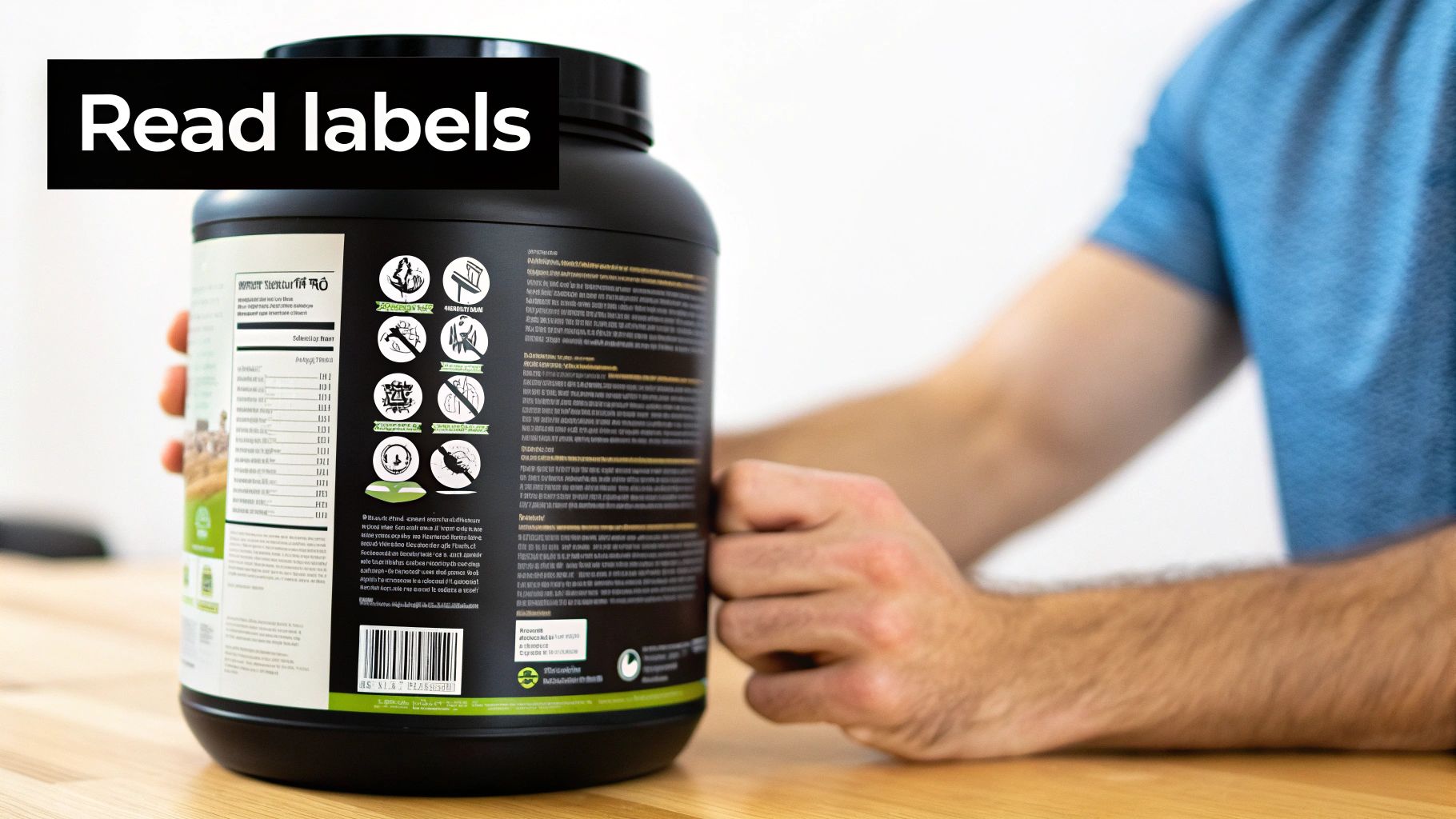
Walking down the supplement aisle can be pretty overwhelming. You're faced with a wall of tubs, all screaming about their benefits. If you want to find a genuinely good gluten-free protein, you have to become a label detective. That means ignoring the flashy marketing on the front and getting down to the nitty-gritty on the back.
The first thing you should always hunt for is a third-party certification. This is your non-negotiable proof that what's inside the tub is safe and legitimate.
Look for a seal like "Certified Gluten-Free" from a reputable group like the Gluten-Free Certification Organization (GFCO). This seal is your guarantee that the product has passed strict testing and contains less than 20 parts per million (ppm) of gluten. It’s a crucial safeguard against cross-contamination, which is a real risk in facilities that also handle wheat.
For anyone with celiac disease or a serious sensitivity, this certification is everything. It's the difference between a product that's just "made without gluten" and one that's been independently verified as safe.
Spotting Hidden Gluten and Additives
Once you've found the certification, it's time to scan the ingredient list for red flags. Some ingredients are sneaky hiding spots for gluten, and others are just unnecessary junk you don't want.
Keep an eye out for these common culprits:
- Malt or Maltodextrin (from wheat): Often used to improve flavor and texture, these can be derived from barley or wheat.
- "Natural Flavors": This is a frustratingly vague term that can sometimes conceal gluten-containing ingredients like barley.
- Hydrolyzed Wheat Protein: You won't see this one often in protein powders, but it's a direct source of gluten and a definite no-go.
- Excess Sugars and Artificial Sweeteners: So many powders are packed with fillers and sweeteners that can completely derail your health goals.
The demand for cleaner products is booming. The gluten-free protein powder market is growing fast and is expected to hit USD 191 million by 2032, which just shows how many people are reading their labels more carefully.
Understanding Protein Types
Finally, you’ll run into terms like "concentrate," "isolate," and "hydrolysate" on labels. Knowing what they mean will help you choose the best fit for your goals and your wallet.
- Concentrate: This is the most basic form of protein powder. It’s the least processed, usually containing 70-80% protein along with some naturally occurring fats and carbs. It's a fantastic, budget-friendly starting point for many people.
- Isolate: This type goes through extra filtering to strip out most of the fats and carbs. The result is a much purer product that’s 90% or more protein, making it a great choice if you want maximum protein per scoop.
- Hydrolysate: Think of this as a "pre-digested" protein. The protein chains are broken down into smaller pieces (peptides) so your body can absorb them faster. It’s a highly specialized option and usually comes with the highest price tag.
Getting a handle on the comparisons between whey, plant, and isolate proteins can really help you navigate the options. And for a head-to-head breakdown of two of the most popular choices, check out our guide on https://gymsnack.com/blogs/gym-alpha/pea-protein-vs-whey-protein.
Mastering the Art of Gluten-Free Protein Snacking
Keeping your protein intake consistent is the real secret to maintaining energy and hitting your fitness goals. And the best way to do that? Smart snacking.
Working gluten-free protein into your day doesn't have to be a chore. It’s all about having a few simple, effective plays in your book to keep you fueled and satisfied between meals. This could be as easy as grabbing a handful of almonds or roasting up a batch of chickpeas with some smoked paprika for a crunchy, savory fix. The trick is simply to think ahead and have these options on hand before hunger really kicks in.
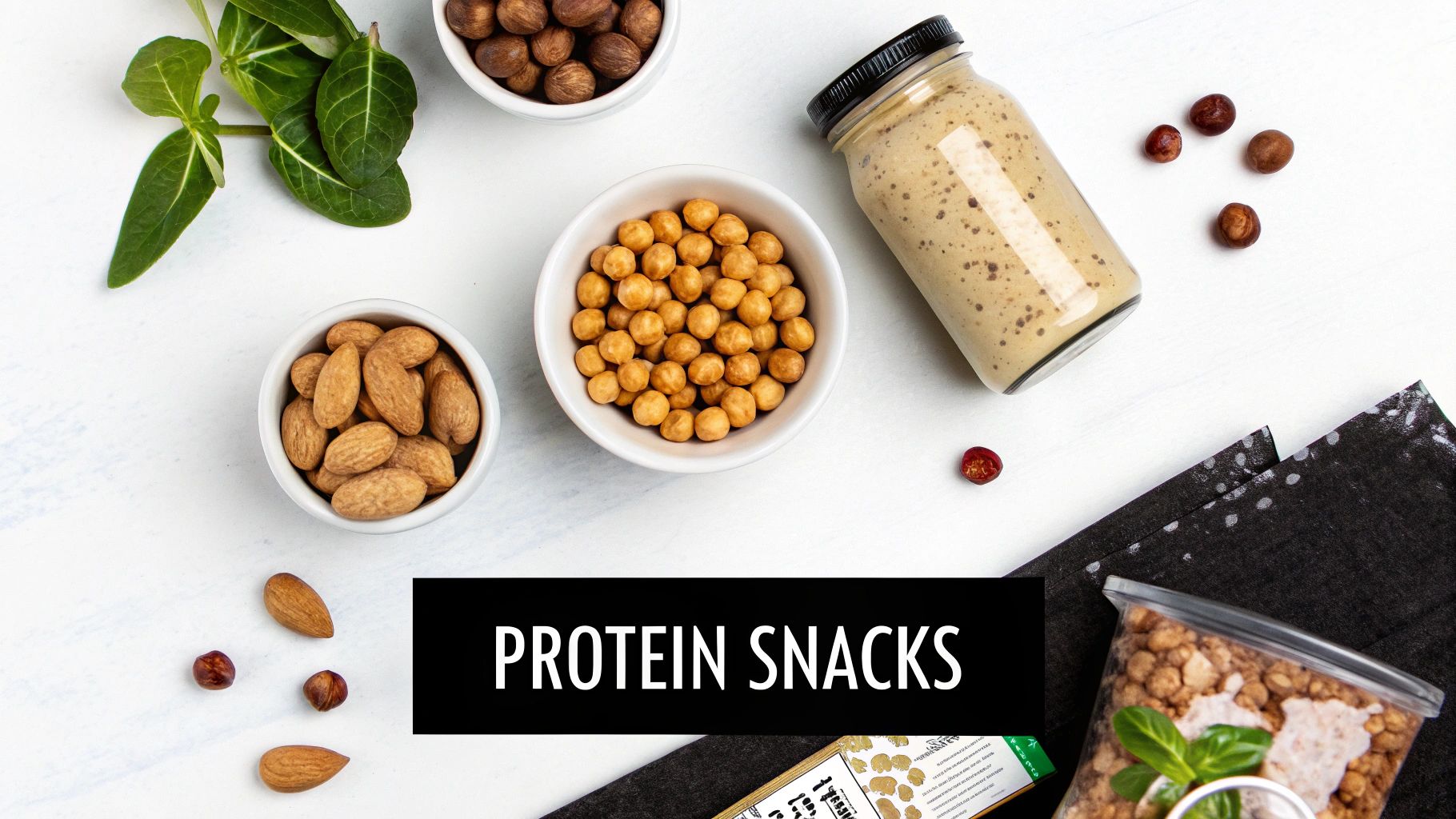
When it comes to packaged snacks, however, you need to be a savvy shopper. Research has shown that many packaged gluten-free products, protein snacks included, can actually be higher in calories and sugar while containing less fiber and protein than the versions with gluten. This makes reading the label an absolute must. For a deeper dive, check out the findings on the nutritional composition of gluten-free foods at news.clemson.edu.
Creating Balanced and Satisfying Snacks
The best snacks aren't just about protein; they combine it with other macronutrients to give you a well-rounded source of energy. When you pair protein with healthy fats or fiber-rich carbs, you slow down digestion. This is key for keeping you feeling full and your blood sugar stable, helping you dodge that dreaded afternoon crash.
Here are a few powerhouse gluten-free protein pairings to try:
- Protein + Healthy Fats: A handful of walnuts with a few slices of turkey breast, or a scoop of almond butter with some celery sticks for dipping.
- Protein + Fiber-Rich Carbs: Plain Greek yogurt topped with fresh berries and a sprinkle of chia seeds, or some roasted chickpeas tossed into a quinoa salad.
- Protein + Convenience: A high-quality, plant-based protein bar that delivers a balanced macro profile without being loaded with sugar or weird fillers.
This isn’t just about managing hunger—it’s a strategic move to keep your body in a muscle-building state and your mind sharp all day long.
The goal of snacking isn't just to silence a rumbling stomach. It's to strategically bridge the nutritional gap between your main meals, ensuring your body has a constant supply of the building blocks it needs to repair, recover, and thrive.
Grab-and-Go Solutions for a Busy Lifestyle
Let’s be real: while whole foods are fantastic, life gets hectic. This is where well-made, convenient options can be a total lifesaver. Products like Gym Snack were designed with exactly this in mind, offering a serious dose of clean pea protein in a crunchy, savory format that’s perfect for when you're on the move.
Unlike those sugary bars that send your energy levels on a rollercoaster, a savory, protein-forward snack provides satiety that actually lasts. Choosing a certified gluten-free, plant-based option takes all the guesswork out of it, giving you a reliable way to hit your protein targets, whether you're heading to the gym or just stuck in back-to-back meetings. If you need more inspiration, take a look at our complete guide to gluten free high protein snacks.
By mixing your own whole-food prep with a few trusted packaged products, you can build a versatile snacking arsenal that keeps you energized, satisfied, and right on track with your goals.
Got Questions About Gluten-Free Protein? Let's Clear Things Up.
Even after you've got the basics down, a few tricky questions always seem to pop up when you're navigating the world of gluten-free protein. Let's tackle some of the most common ones so you can feel completely confident in what you're eating.
Is Whey Protein Always Gluten-Free?
This is a great question, and the answer is a little more complex than a simple yes or no. Pure whey protein itself—the concentrate or isolate—comes from milk, not grains, so it starts out gluten-free. The problem isn't the whey; it's what gets added to it and how it's handled.
Many whey protein powders, especially the flavored ones, are packed with additives, thickeners, and flavor systems that can be a sneaky source of hidden gluten. The even bigger issue is cross-contamination. If the powder is made in a facility that also handles wheat, barley, or rye, there's a serious risk.
To be absolutely sure, you have to look for a "Certified Gluten-Free" seal on the label. This is your only guarantee that the product has been independently tested and is safe, especially if you have celiac disease or a high sensitivity.
Can I Really Get Enough Protein on a Gluten-Free Vegan Diet?
Absolutely, you can. It’s a common worry, but you can easily meet—and even crush—your protein goals on a diet that’s both vegan and gluten-free. The secret isn't finding one single "superfood" but embracing variety.
A well-rounded diet that pulls from a wide range of powerful plant sources will give you all the essential amino acids your body needs to thrive. Make these foods your go-to staples:
- Lentils, chickpeas, and other beans
- Tofu and tempeh (made from naturally gluten-free soy)
- Quinoa (a rare plant-based complete protein)
- Nuts, seeds, and their butters
- Plant-based protein powders from pea, rice, or hemp
Think about combining sources throughout your day, like pairing rice with beans or sprinkling hemp seeds over your oatmeal. This simple strategy ensures you're building a complete and robust protein profile that supports everything from muscle repair to overall health.
Are All Plant Proteins Gluten-Free by Default?
No, and this is a critical misunderstanding that can trip people up. While many of the most popular plant proteins like pea, rice, hemp, and soy are naturally free of gluten, not all of them are.
The biggest one to watch out for is seitan, a high-protein meat substitute made directly from vital wheat gluten. It’s basically pure gluten and a definite no-go. You’ll also find that many veggie burgers, plant-based sausages, and other meat alternatives use wheat flour or wheat protein as a cheap binder. The only way to know for sure is to read the ingredient list, every single time.
Never assume "plant-based" also means "gluten-free." Always check the ingredients and look for a certification seal, especially if avoiding gluten is a medical necessity for you.
What Actually Makes a Good Gluten-Free Protein Bar?
Seeing "gluten-free" on the wrapper is just the first step. A truly great bar needs to deliver on a few other key things to make sure it's actually helping you, not holding you back. First, what’s the protein source, and how much is in there? You should be aiming for at least 15 grams to make it a worthwhile protein snack.
Next, flip it over and look at the sugar content. So many bars are just candy bars in disguise, loaded with added sugars that will send you on an energy roller-coaster. From there, check for a decent amount of dietary fiber, which helps with digestion and keeps you feeling full. A short, simple ingredient list filled with whole foods you can actually recognize is always a great sign.
If you're looking for a snack that nails all of this, Gym Snack offers a savory, crunchy alternative. Our snacks are built on clean pea protein, are certified gluten-free, and pack over 15g of protein per serving with zero junk. It's time to fuel your goals the right way. Check us out at https://gymsnack.com.