

You're in the snack aisle after work, trying to buy something that will help. One wrapper says “meal replacement.” Another says “muscle fuel.” A third promises clean ingredients, but the first few items on the label read like dessert.
That's the problem with high calorie bars. They're convenient, portable, and sometimes useful. They're also easy to misuse. A bar can be a smart training tool, a backup meal, or a pricey candy bar wearing gym clothes.
The category is getting bigger for a reason. The global protein bar market, which includes high-calorie bars, was valued at USD 15.8 billion in 2025 and is projected to reach USD 24.2 billion by 2033 according to Grand View Research's protein bar market report. More people are using bars as practical fuel, not just as diet products.
Still, the wrapper doesn't tell you whether a bar will keep you steady, leave you hungry, or add a lot of hidden sugar to your day. That's where most shoppers get tripped up. They look at total calories first and assume more calories means more useful energy and better fullness.
It doesn't work that neatly.
Beyond the Wrapper An Introduction to High Calorie Bars
A high calorie bar is best thought of as a compact nutrition tool. It's food designed to do a job in a small package. Sometimes that job is to help you eat enough when your schedule is chaotic. Sometimes it's to give you portable fuel on a hike. Sometimes it's a practical way to support muscle gain when your appetite lags behind your training.
The catch is simple. Convenience and quality are not the same thing. Two bars can have similar calories and very different outcomes. One might deliver a balanced mix of protein, carbs, and fats that supports training and keeps hunger under control. Another might lean heavily on sweeteners and fast-digesting ingredients that taste good, spike intake, and still leave you looking for more food an hour later.
That's why I don't put bars into “good” or “bad” buckets. I ask a more useful question. What job is this bar being hired to do?
Practical rule: If you can't explain why you're buying a high calorie bar, you probably don't need that specific bar.
Some people need dense, portable calories. Others are better off with a regular meal, fruit plus yogurt, or a savory protein snack. The right choice depends on timing, appetite, activity, and ingredient quality. Once you know how to judge those pieces, the aisle gets a lot less confusing.
Who Actually Needs a High Calorie Bar
A high calorie bar earns its spot when real food is hard to carry, hard to store, or hard to finish.

The key question is not just, “Who needs more calories?” It's, “Who needs dense calories without creating a bigger hunger rebound later?” That matters because plenty of bars are heavy on syrups, crisps, and sweet coatings. They drive calories up fast, but if protein is too low, they often do a poor job of keeping you full. That satiety gap is where people get misled.
The hardgainer
Lifters trying to gain size often have a real intake problem. They train hard, hit some meals, then stall because appetite drops before total calories catch up. A bar can help here, especially between meals or after training when cooking is not happening.
The useful version is a bar that adds calories and still gives enough protein to make the snack stick. Protein helps with fullness signals, including GLP-1, so a bar with a decent protein dose usually holds up better than one that gets most of its calories from sugar and fat alone. If you need more ideas beyond sweet bars, this guide to high-protein snacks to gain weight is a smart place to start.
The endurance athlete and the hiker
Long sessions change the rules. On a hike, long ride, or all-day event, compact calories can be practical fuel, even if the ingredient list is not perfect.
Here, portability and digestion matter as much as nutrition quality on paper. A bar that is a little higher in quick carbs may be useful during extended effort. A dense, fatty bar with lots of fiber may sit too heavy if eaten right before movement. Context decides whether a high calorie bar is helpful or a brick in your stomach.
The time-crunched professional
Busy workdays create a different use case. A nurse on a long shift, a salesperson on the road, or a parent bouncing from work to the gym may need something they can keep in a bag and eat in five minutes.
That still does not make every high calorie bar a good daily default. If the bar eats like candy and leaves you hungry again soon after, it is solving convenience while creating an appetite problem. In that case, a yogurt cup, jerky, cheese, nuts, or a savory protein snack often does a better job.
Who should be cautious
People with regular meals, moderate activity, and no clear need for portable calories usually get the least benefit from this category.
This is the group most likely to be fooled by health branding. A wrapper can say “protein,” “energy,” or “meal replacement” while the bar itself is mostly sweeteners and added sugars with a token amount of protein. High calorie does not automatically mean better fuel. Sometimes it just means easier overeating.
My coaching rule is simple. If the bar fits a specific job, use it. If you are buying it because it looks healthy, slow down and check whether you need calories, or whether you really need a more filling snack.
Decoding the Nutrition Facts A Look Inside
A high calorie bar can look impressive on the wrapper and still act like a dressed-up candy bar once you eat it. The label is where you find out whether those calories are likely to hold you over, support training, or leave you chasing food again an hour later.
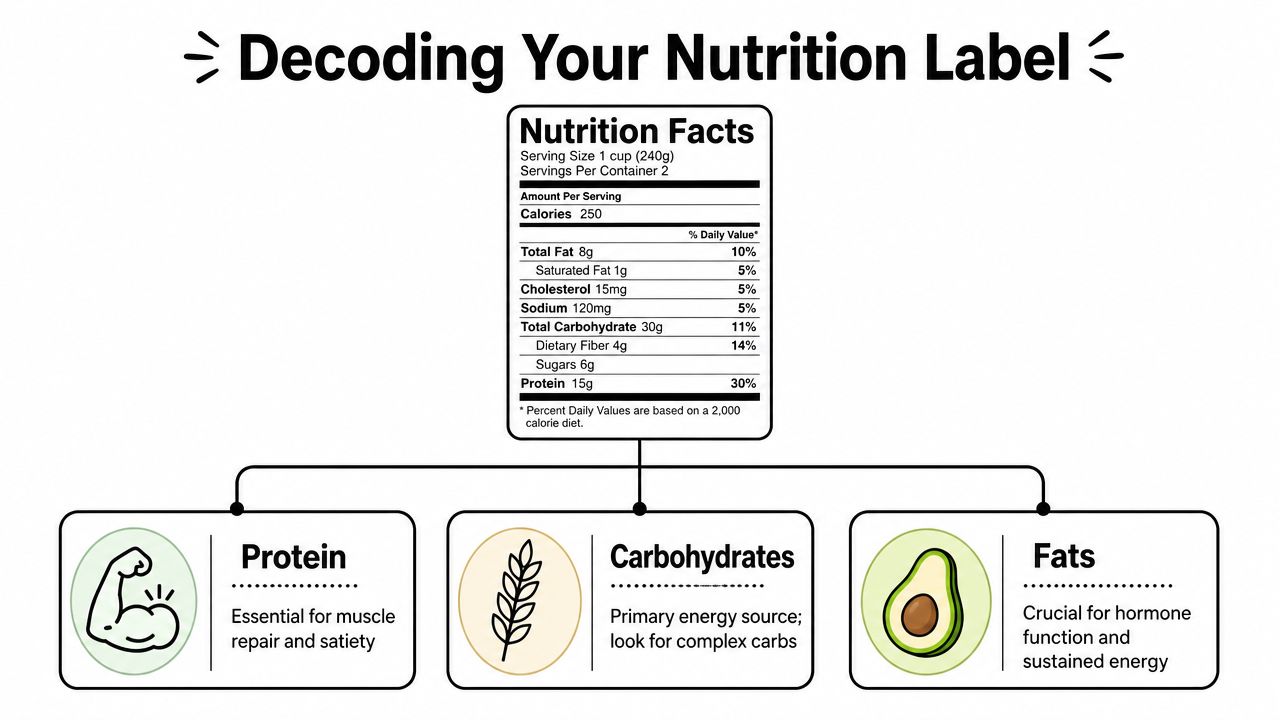
Start with calories, then ask what is creating them
A useful benchmark for many high calorie bars is roughly 300 to 400 calories, often with 15 to 25 grams of protein, 25 to 40 grams of carbohydrates, and 10 to 20 grams of fat, based on this nutrition breakdown from BiteKit.
That calorie range can work well. The bigger question is what is doing the work. A bar can hit the same calories in two very different ways. One gets there with enough protein, some fiber, and fats from nuts or seeds. Another gets there by stacking syrups, chocolate coatings, and added sugars. On paper, both are high calorie. In practice, they do not eat the same.
Bars that push past 400 calories usually make more sense when you need dense portable fuel. Otherwise, they can create a satiety gap. You get plenty of calories, but not much fullness.
| Bar profile | What it usually does best |
|---|---|
| Higher carb, moderate protein | Better for pre-workout energy or long activity |
| Higher protein, balanced fat | Better for recovery or a more filling snack |
| High fat, lower carb | Slower energy release, sometimes heavier before training |
If you want a clearer framework for scanning labels fast, this guide on how to read nutrition labels is useful.
Protein is the first number I check
Protein changes how satisfying a bar feels. It supports muscle repair, but it also helps close the gap between “ate a bar” and “still hungry.” That matters because protein tends to do more for fullness signals, including GLP-1, than a bar built mostly from sweeteners and refined carbs.
This is one of the biggest marketing traps in the category. A bar can be high calorie and still weak on satiety if protein is low and sugar is doing most of the heavy lifting. Plenty of people assume more calories means better fuel. Often it just means more energy packed into a small package, without the staying power they expected.
When I scan a label, I want to see whether protein is pulling its weight or just there so the brand can print “protein” on the front.
Carbs and fats tell you how the bar will feel
Carbohydrates affect speed. Fats affect staying power and heaviness. The source of each matters.
A bar built around oats, nuts, seeds, and dried fruit usually feels steadier than one built around syrup blends and sugar alcohol sweetness. A lower-fat bar is not automatically better either. Some low-fat bars compensate by leaning hard on sugars to keep texture and flavor acceptable. At the other end, very high-fat bars can sit too heavy before training even if the ingredient list looks clean.
Added sugar deserves special attention here. A sugary bar may give quick energy, but it often falls short as a satisfying snack or meal stand-in. That is why two bars with similar calories can produce very different outcomes. One keeps you productive through the afternoon. The other makes you hungry again fast.
A quick scan should answer three questions:
- Is the calorie level matched to what I need
- Is protein high enough to make this filling
- Are the carbs and fats coming from ingredients that fit how and when I plan to eat it
If those answers are shaky, the bar probably is too.
The Ingredient List What to Look For and Avoid
The nutrition facts panel tells you the totals. The ingredient list tells you how the bar was built. That is more significant than commonly recognized.
A common trap is assuming that anything marketed as natural must be healthier. In reality, sweeteners can hide behind names that sound wholesome. Concentrated fruit juices, honey, syrups, and similar ingredients can still load a bar with added sugar.
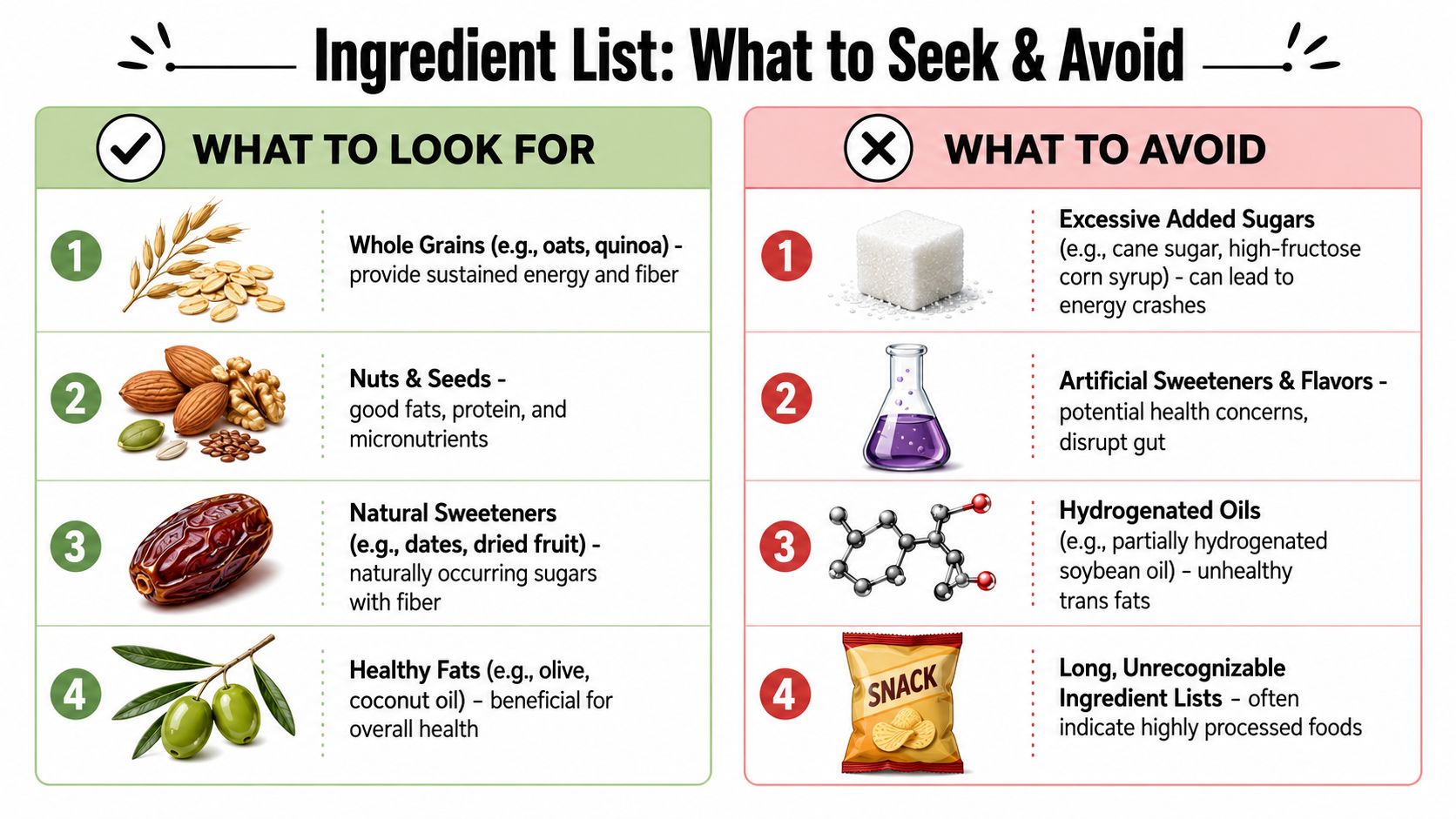
Green light ingredients
These usually signal a bar that's closer to actual food:
- Oats and whole grains help create a steadier energy base.
- Nuts and seeds add fats, texture, and staying power.
- Nut butters can improve both calories and satiety.
- Dried fruit can make sense when it's part of the whole recipe, not the main event.
- Shorter ingredient lists are often easier to evaluate quickly.
A bar doesn't need to be perfect or minimalist to be useful. But when the first few ingredients sound like foods you'd keep in your kitchen, that's often a good sign.
Red light ingredients
Some ingredients deserve a closer look:
- Multiple forms of sugar near the top of the list
- Long strings of syrups and concentrates
- Bars that read more like confectionery than food
- Sweeteners that leave you bloated or send your appetite swinging later
The sugar issue is bigger than many labels make it seem. Research summarized in a West Virginia University thesis on protein bar consumer priorities and formulation concerns noted that 80% of consumers prioritize protein, yet many high-protein bars contain up to 17g of added sugar, often from ingredients marketed as natural.
Reality check: “Natural sweetener” doesn't tell you how a bar will affect hunger, intake, or your total sugar load for the day.
A side-by-side filter
Use this quick comparison when you're holding two bars:
| Better signs | Caution signs |
|---|---|
| Oats, nuts, seeds, nut butter | Several sugar sources listed early |
| Protein appears central to the formula | Protein feels secondary to sweetness |
| Ingredient list reads like food | Ingredient list reads highly engineered |
| Flavor comes from cocoa, spices, nuts, fruit | Flavor depends heavily on syrups and sweeteners |
Shoppers are most often fooled. They compare bars by calories and protein only. The better move is to compare calories, protein, and what's creating those calories.
How to Choose the Right Bar and When to Eat It
A good bar at the wrong time is still the wrong bar. You need a match between the product and the job.
Match the bar to the moment
If you're eating before training, a bar that digests comfortably matters more than one with the biggest calorie number. Too much fat or too much density can sit in your stomach like a brick. For pre-workout use, many people do better with a bar that leans more toward carbohydrate and keeps the texture lighter.
If you're eating after training, recovery becomes the priority. A more protein-forward bar makes more sense here, especially if your next full meal isn't close.
If you need a meal replacement, the standard should be higher. You want enough calories to matter, enough protein to hold you over, and ingredients that feel like a real-food compromise rather than candy in a protein wrapper.
Use a simple three-step screen
-
Define the goal
Are you fueling activity, supporting recovery, covering a missed meal, or trying to raise daily intake for muscle gain? One bar won't be best for all four. -
Check the macro pattern
Look at the calorie level first, then ask whether the protein, carbs, and fats fit the moment. Higher-carb bars often suit activity better. Higher-protein bars usually fit recovery or hunger control better. -
Read the first few ingredients
Here, you can identify bars that look athletic on the front but act like candy bars in practice.
Timing matters more than hype
People often overcomplicate timing. You don't need a stopwatch. You need common sense.
- Before activity choose something you can digest comfortably.
- After activity lean toward protein and a balanced mix.
- Between meals use a bar only if it helps your day, not because the package says “fit.”
If a bar leaves you hungry soon after, that's useful feedback. It may be calorie-dense, but it isn't doing the job you bought it for.
That's why I tell clients to judge bars by outcomes, not branding. Energy, fullness, digestion, and consistency tell you more than marketing language ever will.
Fueling Smarter With DIY Recipes and Savory Protein Snacks
You eat a 400-calorie bar at 3 p.m., and by 4:30 you are back in the kitchen looking for something salty. That pattern is common. A bar can be high in calories and still do a poor job of controlling hunger.
Research discussed in this ScienceDirect paper on protein bar intake and satiety outcomes found that daily protein bar ingestion increased energy intake by 7% to 13% and body fat mass by 3% in one week, without reducing appetite scores. That is the satiety gap. More calories did not automatically create more fullness.
Protein matters here because it influences satiety signals such as GLP-1 and PYY. In plain terms, a bar with decent calories but weak protein, lots of sweeteners, and a dessert-style texture can be easy to eat fast and easy to want again soon after. That is great for someone in a deliberate mass-gain phase who struggles to eat enough. It is a poor fit for someone who wants steadier appetite control.
This is why I often steer clients toward savory, protein-forward options. They usually feel more like food, create less sweetness fatigue, and reduce the “healthy candy bar” problem that shows up in this category all the time.
DIY bars give you more control
Homemade bars let you control the two things packaged bars often overdo first: sweetness and sticky binders. You can keep the calories useful without turning the snack into a sugar-delivery system.
A few simple builds work well:
-
Oat, peanut butter, and seed bars
Mix oats, peanut butter, pumpkin seeds or chia, and just enough honey or dates to hold it together. You get calorie density, some fiber, and better texture than many packaged bars. -
Trail mix bars with nuts and dried fruit
Use chopped nuts, oats, dried fruit, and nut butter for a denser option that travels well. These make sense for long hikes, work bags, or days when refrigeration is not practical. -
Protein oat squares
Combine oats, nut butter, and a protein source you tolerate well. Keep the sweetness modest so the bar supports appetite instead of waking up cravings.
If you want more homemade ideas, this roundup of easy high-protein snack recipes is a solid place to start.
Savory protein snacks deserve more credit
A lot of active adults do not need one more chocolate-peanut-butter bar. They need protein that travels well and keeps hunger quieter for longer.
Savory snacks often do that better. Jerky, meat sticks with a piece of fruit, roasted edamame, cottage cheese packs, cheese with whole-grain crackers, hard-boiled eggs, or a turkey wrap can give you a stronger satiety return than a syrupy bar with similar calories. The trade-off is convenience. Bars win on shelf stability and portability. Savory foods usually win on fullness and lower sugar load.
If you need to raise calories around breakfast or a lighter snack, pairing protein with a calorie-dense drink can work better than reaching for another sweet bar. A rich, frothy brew recipe is one example some people use when higher intake is the goal.
Here's a useful demo on building better high-protein snacks at home:
A high calorie snack should solve a specific problem. If hunger rebounds fast, the calories were easy to eat but not very effective.
Use that standard with bars, DIY recipes, and savory snacks alike. Calories matter, but the better question is whether the food keeps you satisfied, supports your protein target, and fits the job you need it to do.
Putting It All Together Your Next Steps
High calorie bars aren't good or bad on their own. They're useful when they match a real need and built poorly when they rely on sweetness, hype, and convenience alone.
The biggest mistakes are predictable. People buy bars for the word “protein,” ignore the ingredient list, assume more calories means more fullness, and use calorie-dense bars as casual snacks when a normal meal or a more satisfying protein option would fit better.
Use this checklist the next time you shop:
- Check the calorie target against your actual goal. Muscle gain, hiking fuel, and meal replacement aren't the same job.
- Look for meaningful protein so the bar supports recovery and satiety, not just energy intake.
- Read the first five ingredients to see whether the bar is built from recognizable foods or stacked sweeteners.
- Treat hidden sugars as a red flag when the wrapper sells health but the formula reads like dessert.
- Ask whether a savory protein snack might work better if your real goal is steadier energy and better fullness.
That's the practical takeaway. Don't judge a bar by branding or calorie count alone. Judge it by context, ingredients, and how it performs in your actual day.
A smart purchase isn't the bar with the loudest claims. It's the one that fits your training, appetite, and schedule without creating new problems.
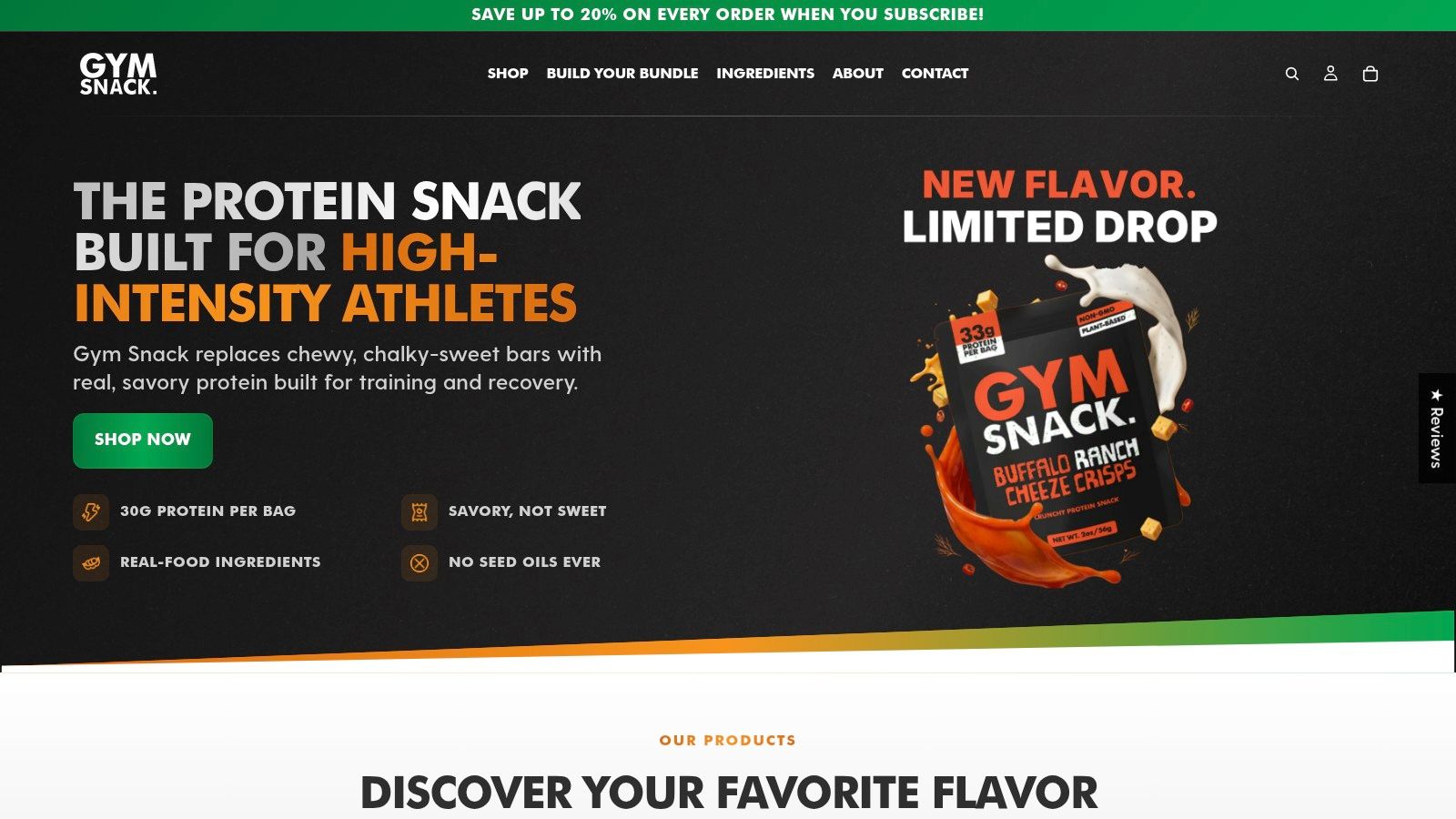
If you're tired of sweet, dessert-style protein options and want something that supports fullness with a savory crunch, Gym Snack is worth a look. It's built around plant-based pea protein, clean ingredients, and chef-inspired cheesy flavors, giving you a convenient way to hit protein goals without relying on sugar-heavy bars.