

You're standing in front of the pantry at 3 p.m., hungry enough to eat anything, but not in the mood for another sweet protein bar. A shake sounds boring. Chips sound good, but they won't keep you full for long. You want something salty, crunchy, and satisfying that helps your goals instead of just filling the gap until dinner.
That's where high protein cheese snacks make sense. They sit right in the middle of convenience and nutrition. You get the savory bite commonly craved, plus a meaningful amount of protein that can support fullness, training, and steadier eating through the day.
The category is getting a lot more attention for a reason. The global cheese snacks market was valued at USD 81.72 billion in 2025 and is projected to reach USD 136.54 billion by 2033, growing at a 6.7% CAGR, with demand driven by convenient, on-the-go, high-protein options according to Grand View Research's cheese snacks market report. If you're also trying to keep calories in check, pairing this article with a practical guide to best low calorie snacks can help you build better options for different hunger levels.
The Search for the Perfect Savory Protein Snack
Most fitness snack advice still leans sweet. Protein bars taste like dessert. Shakes can work after training, but they don't always satisfy the urge to chew something crunchy. That's why people keep circling back to savory foods, especially when they want a snack that feels more like real food.
High protein cheese snacks solve a very specific problem. They give you texture, flavor, and protein in one package. That matters more than people think, because a snack you enjoy is one you'll keep around and use consistently.
Why savory often feels more satisfying
Sweet snacks can fit a healthy routine, but they don't always hit the same hunger cues as salty, crunchy foods. A cheese-based snack often feels more substantial because it combines protein with a denser bite. For a lot of active people, that makes it easier to stop rummaging through the kitchen ten minutes later.
Practical rule: If your snack leaves you still hunting for “something crunchy,” it probably didn't solve the real craving.
There's also the convenience factor. You need snacks that can live in a desk drawer, gym bag, car, or work fridge without turning into a project. Some high protein cheese snacks are shelf-stable. Others need refrigeration. Knowing which type fits your routine is half the battle.
Where people get tripped up
Many shoppers assume “cheese snack” automatically means “high protein.” It doesn't. Some options are mostly fat. Some are tiny portions that look protein-rich until you check the serving size. Others are marketed like health foods but don't do much for fullness.
A better way to think about it is simple:
- Start with purpose: Are you trying to curb hunger, recover after training, or replace ultra-processed chips?
- Match the format: Crisps, sticks, puffs, and cottage-cheese-based snacks all behave differently.
- Read beyond the front label: “Protein” on the package doesn't tell you enough by itself.
That's when the category becomes useful instead of confusing.
What Makes a Cheese Snack Genuinely High Protein
A high-protein snack does more than sprinkle a little protein on top of a crunchy food. It provides enough protein to matter in the context of your day. As a simple benchmark, many people do well choosing snacks that land around 10 to 15 grams of protein per serving or more, especially when the portion is realistic and easy to eat on the go.
Consider a car. Calories are the fuel. Protein is the repair crew. You need fuel, but if your training, recovery, or appetite control matters to you, the repair crew needs to show up too.
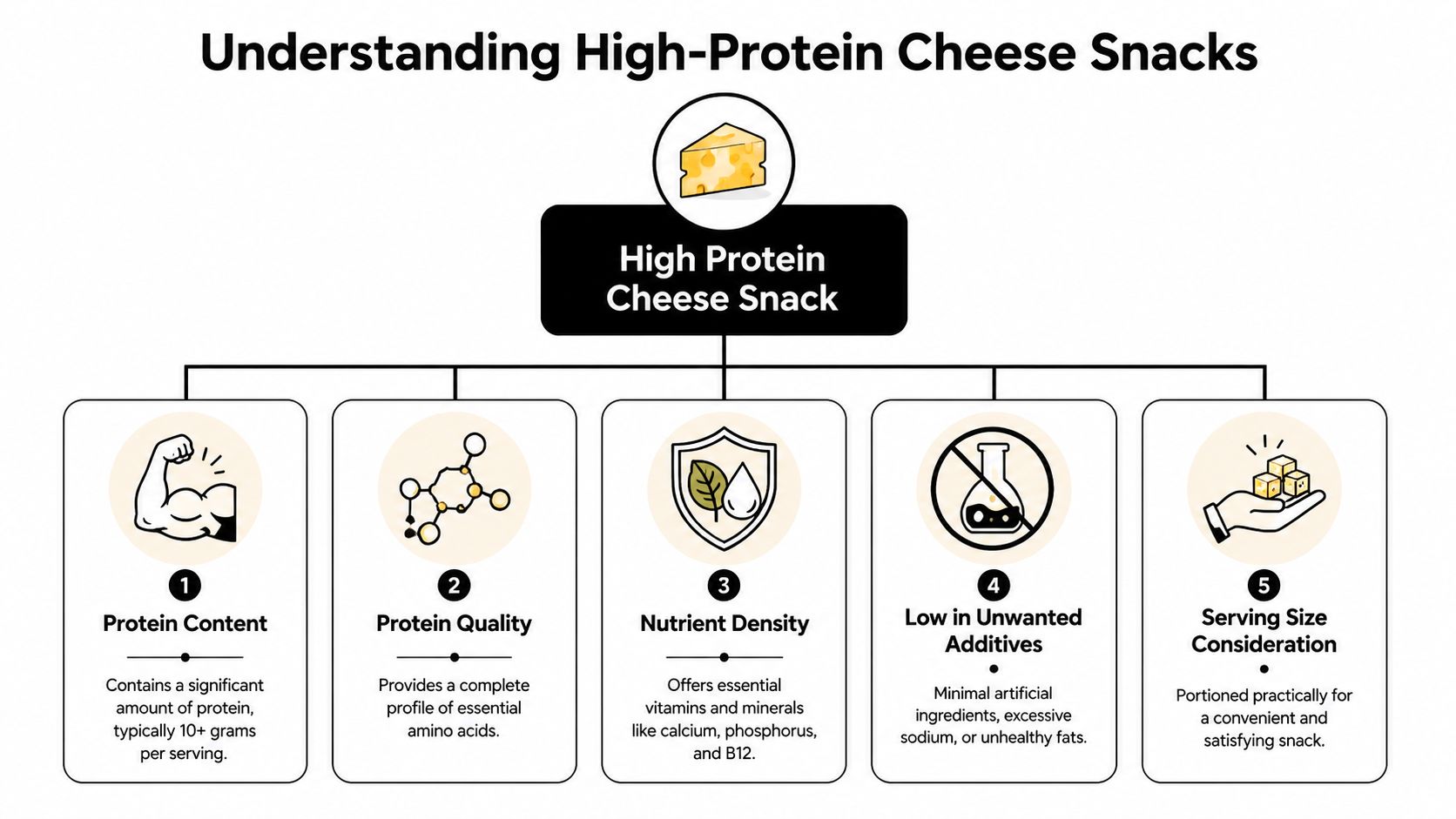
The five things that matter most
The infographic above gives you a quick filter. In practice, these are the questions worth asking in the store:
- Protein amount: Does the serving deliver enough protein to hold you over?
- Protein quality: Dairy naturally offers complete protein. Many modern plant-based snacks are also built to be protein-forward.
- Nutrient density: Cheese-based snacks may also contribute calcium and other useful nutrients.
- Ingredient quality: Shorter ingredient lists are often easier to evaluate.
- Portion fit: A snack should be easy to carry and easy to finish without guessing what counts as one serving.
The main types you'll see
Dairy-based options come in a few familiar buckets. Hard cheese crisps are intensely savory and crunchy. String cheese and stick cheese are less crunchy, but portable and reliable. Cottage cheese can be turned into a crisp snack at home if you want a more hands-on option.
Plant-based versions are different. Older versions of dairy-free “cheese” snacks often leaned heavily on starch or fat and didn't bring much protein to the table. Newer options aim to copy the cheesy flavor profile while putting protein first.
The label “cheese snack” tells you the flavor direction. The nutrition panel tells you whether it fits your goals.
That's the key distinction. The snack isn't “high protein” because it tastes cheesy or sits in the healthy aisle. It's high protein only if the numbers and ingredients back it up.
How to Decode Nutrition Labels Like a Pro
When you pick up a cheese snack, don't stop at the protein number on the front. Turn the package over. The back label tells you whether you're getting a snack that supports your goals or one that only sounds healthy.
A good quick scan starts with the protein, then moves to serving size, fat, saturated fat, sodium, and ingredients. You don't need to become a dietitian in the snack aisle. You just need a repeatable system.
Start with protein efficiency
The fastest question is this: How much protein am I getting for the amount I'm eating? A snack can look strong on protein, but if the serving is large or the fat load is high, it may not be the most efficient option for your situation.
One real-world example is Kraft Natural Cheese Protein Mild Cheddar stick cheese. It uses part-skim milk and delivers 17g protein per 56g stick with 50% less fat than standard cheddar, but it still contains 5g saturated fat (25% DV), which is exactly why reading the full panel matters, as shown on Kraft Natural Cheese Protein Mild Cheddar.
What to prioritize on the label
Use this as a fast grocery-store checklist:
| Nutrient | Goal (per serving) | Ideal Snack Example | Less Ideal Snack Example |
|---|---|---|---|
| Protein | Meaningful amount for hunger and recovery | Double-digit protein in a practical serving | Small protein amount dressed up as “protein-rich” |
| Serving size | Easy to understand and realistic | One pack, one stick, one clear portion | Tiny serving that few people actually follow |
| Saturated fat | Moderate for your overall diet | Balanced relative to protein | High saturated fat with only modest protein |
| Sodium | Reasonable for how often you eat it | Fits your daily pattern | Very salty snack you'll eat several times a day |
| Ingredients | Easy to recognize and compare | Straightforward protein-focused formula | Long list with fillers doing most of the work |
If you want a broader primer on this skill, the guide on how to read nutrition labels is useful before your next grocery run.
A grocery aisle decision rule
When two products look similar, compare them in this order:
- Protein first: Which one gives more meaningful protein per serving?
- Then trade-offs: How much saturated fat and sodium come with it?
- Then convenience: Will you carry, store, and eat it consistently?
That last point matters. The perfect label doesn't help if the snack melts in your car, needs constant refrigeration, or never makes it into your bag.
If a snack gives solid protein but also brings nutritional trade-offs, that doesn't make it “bad.” It just means you should use it on purpose, not by accident.
That mindset keeps you from chasing buzzwords. You're not buying packaging. You're buying a tool.
The Booming World of Plant-Based Cheese Snacks
Plant-based eaters have dealt with a frustrating trade-off for years. They could find crunchy snacks. They could find vegan cheese flavors. They could find protein snacks. Finding all three in the same product was much harder.
That gap is bigger than many shoppers realize. Over 60% of plant-based fitness enthusiasts report struggling to find convenient, crunchy, savory snacks that match the protein density of dairy cheeses, highlighting demand for options with 15g+ protein per serving without dairy, soy, or gluten, according to Baylor Scott & White Health's discussion of high-protein snacks.
Why older plant-based snacks often missed the mark
A lot of dairy-free snacks were built around crunch first. Protein came second, if it showed up at all. That left active people with snacks that tasted fine but didn't do much for fullness or recovery.
The other issue was ingredient fit. Many people shopping for plant-based foods also care about allergens, digestion, and ingredient simplicity. If a snack avoids dairy but leans heavily on other ingredients they're trying to skip, it doesn't solve much.
What newer options do better
The newer wave of savory protein snacks is trying to close that gap with more protein-forward formulas and more familiar snack textures. This matters for people who want something that feels like a chip or crisp, not a compromise food.
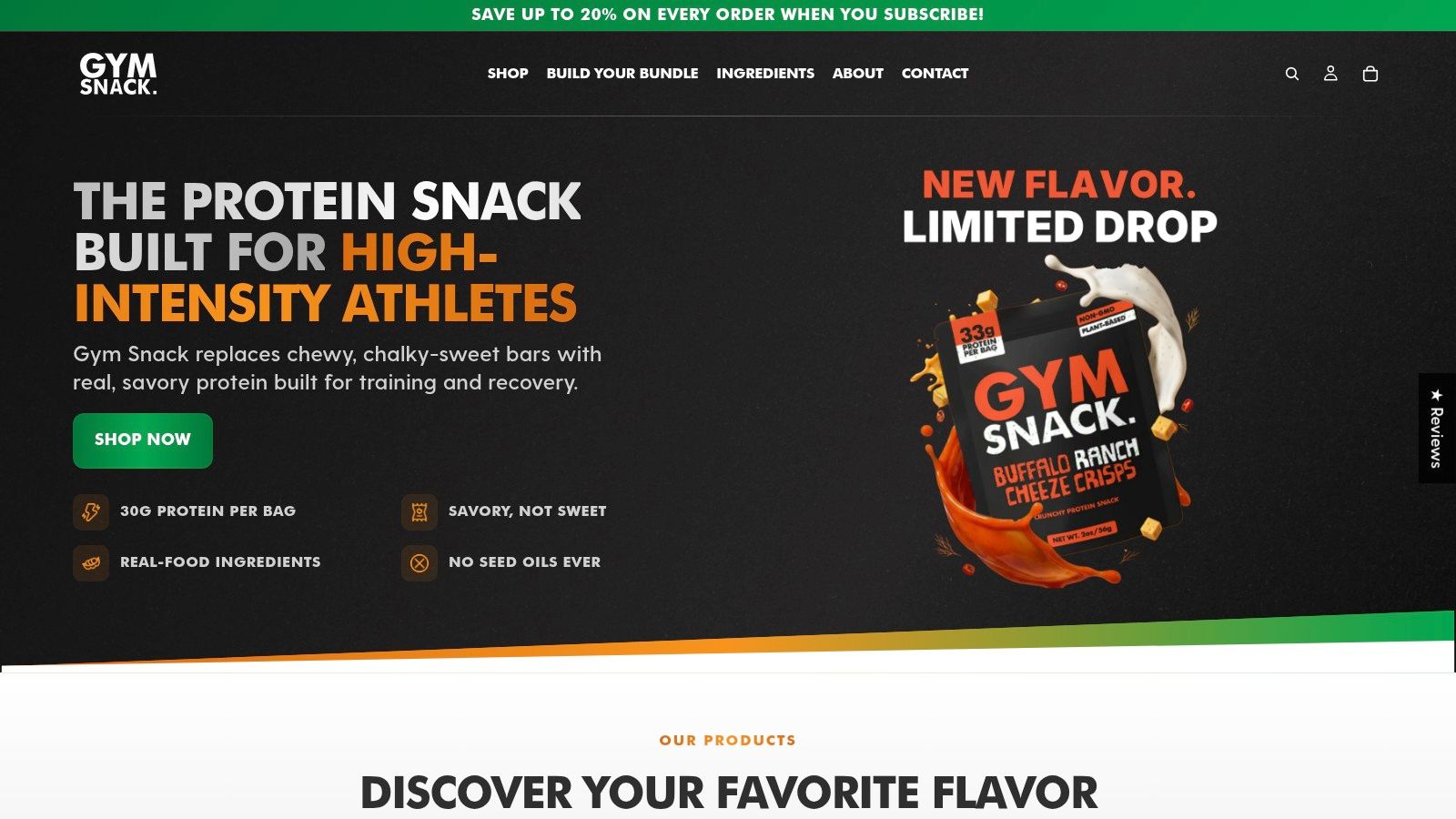
One example is dairy-free cheese snacks, including products such as Gym Snack, which uses pea protein and offers a crunchy, cheesy format with 15g+ protein per serving while being free of dairy, soy, and gluten, based on the publisher information provided for this article. That makes this category especially relevant for vegan athletes, dairy-sensitive eaters, and anyone who wants a shelf-stable savory option without relying on traditional cheese.
Plant-based doesn't automatically mean low protein anymore. You still have to choose carefully, but the options are catching up.
This shift is useful even if you eat dairy. Some people want variety. Others want a snack that can sit in a gym bag without refrigeration. Some feel better rotating between dairy and non-dairy protein sources during the week.
Fuel Performance and Master Hunger Cues
A good snack should do more than patch over hunger. It should help you train, recover, and make the next eating decision easier. That's where protein earns its place.
A protein-forward savory snack can work before training when you need something light but steady. It can also help after training, when you want something convenient and less sweet than a shake. The exact timing depends on your stomach, your workout, and the rest of your meals, but the principle is simple. Protein gives a snack more staying power.
Why fullness feels different with protein
This isn't just about willpower. It's also about appetite signals. An estimated 61% of consumers say they want snacks high in protein, and that preference lines up with how protein supports fullness-signaling hormones like GLP-1 and PYY, according to this high-protein snacks market analysis featuring Sally Lyons Wyatt's consumer insight.
In plain language, those hormones help tell your brain that you've eaten enough. That doesn't mean one snack “switches off” hunger forever. It means protein-first choices often make hunger feel calmer and more manageable than a snack built mostly on refined carbs.
Where this helps in real life
If your afternoons are a mess, a crunchy protein snack can make a noticeable difference. It can reduce the “snack, snack again, then overeat at dinner” pattern because it gives both chewing satisfaction and a stronger fullness signal.
Here are common moments where high protein cheese snacks fit well:
- Before a workout: Helpful when you need something portable and savory, especially if sweet foods feel heavy.
- After training: Useful when you're not ready for a full meal but want a more substantial option than plain crackers.
- At work: Better than grazing on random office snacks that never really satisfy.
- At night: A protein-forward snack can feel more controlled than drifting into a bag of chips.
Hunger isn't a character flaw. Sometimes it's just a sign that your earlier snack didn't have enough protein to do its job.
This is also why many people trying to manage appetite, including some GLP-1 users, prefer protein-first foods. The goal isn't to eat less through force. The goal is to make eating patterns feel easier and steadier.
Smart Snack Recipes and Storage Strategies
High protein cheese snacks work best when they're easy to use. If they only live in your fridge behind leftovers, they won't help much. If they're ready to grab, they become part of your routine fast.
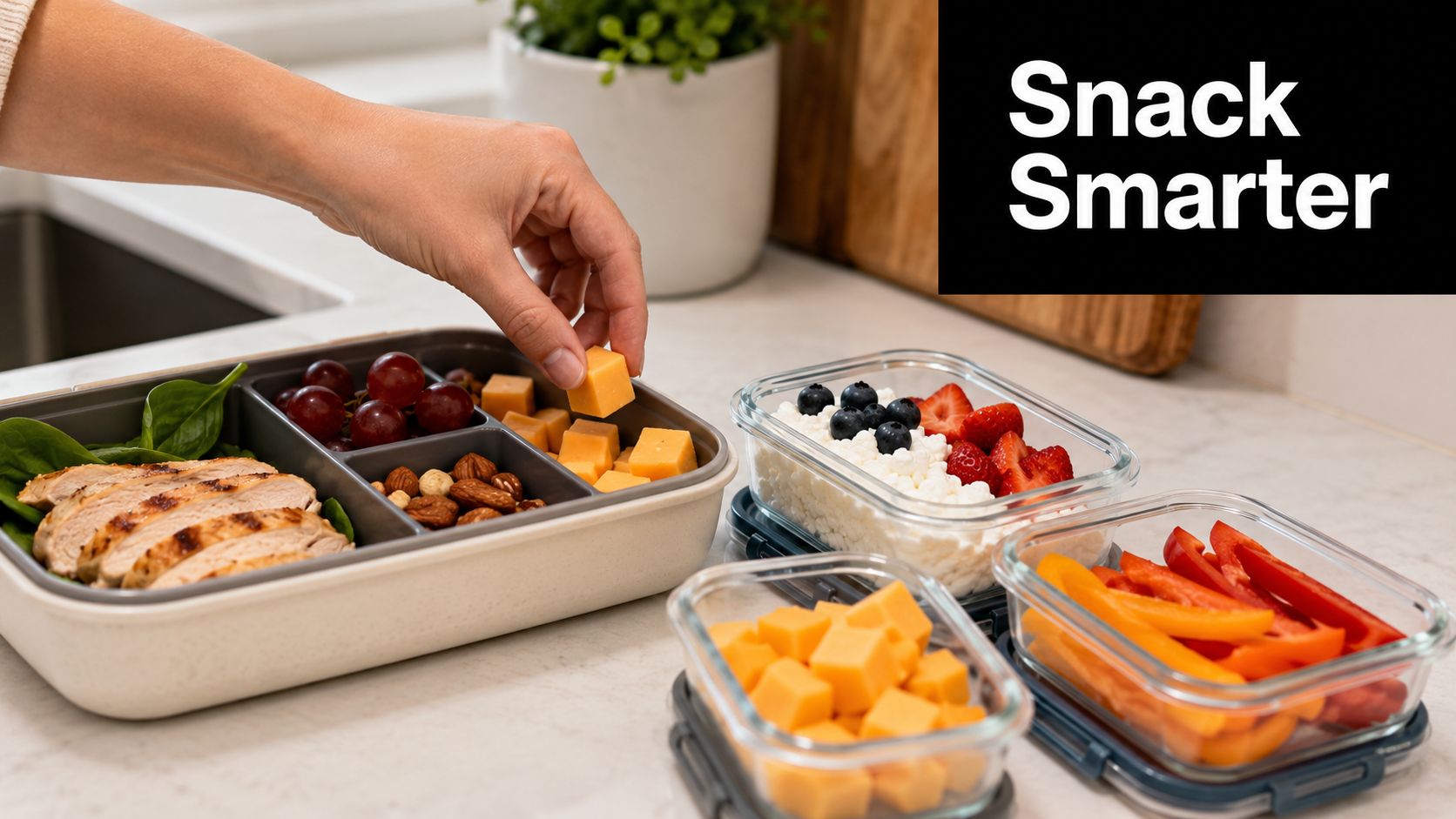
Easy ways to use them beyond straight out of the bag
Try a few simple upgrades:
- Crunch topper: Crush savory protein crisps over soup or salad for texture.
- Balanced snack box: Pair string cheese with fruit and something fibrous like cucumber or carrots.
- Protein dip setup: Use cottage cheese as the creamy part of a veggie snack plate.
- Desk drawer backup: Keep shelf-stable savory protein snacks where hunger usually hits.
For more practical combinations, this roundup of easy high protein snack recipes can spark ideas without overcomplicating things.
DIY works too if you like cooking
Homemade cottage cheese chips are a good example of how protein can change texture. A crisp, chip-like bite happens through extended dehydration, where the protein matrix collapses into a rigid, crunchy network, as explained in Kirbie's Cravings' cottage cheese chips recipe.
If you want to see that idea in action, this video is a helpful visual:
Storage makes the habit stick
Dairy-based snacks often need refrigeration, and that's fine if you prep ahead. Shelf-stable options are easier for cars, work bags, and travel days. Neither is automatically better. The right pick is the one that matches where you're most likely to get hungry.
A simple rule works well: keep one refrigerated option at home, and one shelf-stable option where life gets busy.
If you want a savory protein option that fits gym bags, desks, and travel better than many refrigerated cheese snacks, take a look at Gym Snack. It offers plant-based crunchy savory protein snacks with cheesy flavors, 15g+ protein per serving, and formulas made without dairy, soy, or gluten, which can make it a practical fit for people who want an allergen-conscious alternative.