

Most athletes ask, “How much protein do I need?” The better question is, “Which protein fits the training session, the schedule, and the stomach?” That gap matters more than people think. Hitting a daily target on paper is one thing. Building meals and snacks you'll eat, digest well, and repeat under real-life pressure is another.
For athletes, protein drives repair, adaptation, and recovery, but quality, timing, and convenience decide whether a plan works. Strength athletes generally need 1.6 to 2.0 grams of protein per kilogram of body weight per day, with intake spread through the day in roughly 25 to 30 gram servings every 3 to 5 hours. That's why random “healthy snacks” often fall short. They may be clean, but they're not always effective.
I like to judge high protein foods for athletes on three filters. Protein quality. Convenience. Athlete use case. A grilled chicken bowl may win on quality but lose when you're leaving work for a late lift. A shaker of whey may be useful after training but less appealing when you want real food. And if you train plant-based, the old assumption that only animal protein can build muscle just doesn't hold up as neatly as people claim.
If you play field sports, train for hypertrophy, or stack hard conditioning with lifting, your nutrition should reflect the demands of the sport. If you need a broader framework, this guide to a footballer's peak performance diet is a smart companion read. For now, here are the foods I'd keep in rotation.
1. Pea Protein
Pea protein has moved from “backup option for vegans” to a legitimate staple in performance nutrition. That shift is deserved. It's practical, easy to formulate into clean products, and much easier for many athletes to tolerate than dairy-heavy options.
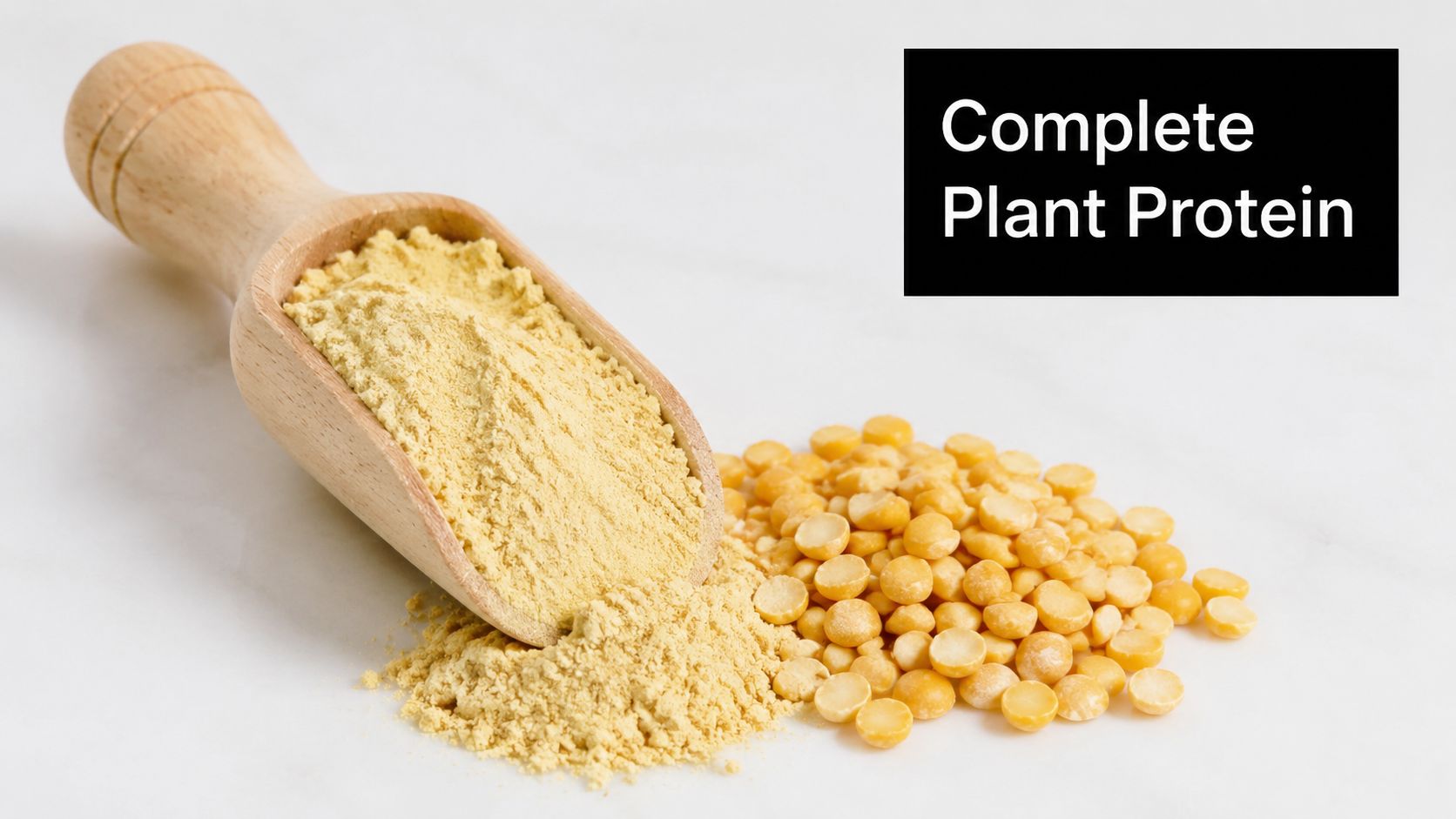
What changed the conversation is muscle protein synthesis. A sports nutrition review aimed at athletes notes that pea protein, when used in equivalent doses and paired with resistance training, can support muscle protein synthesis comparably to whey, while also highlighting practical serving guidance in the 20 to 25 gram range for plant-based athletes trying to meet daily targets (TeamBuildr's athlete nutrition review).
Best use in real life
Pea protein works best when it solves a problem. Powders like Orgain fit a fast post-lift shake. Ripple products help athletes who want protein in a dairy-free breakfast. Crunchy formats can work even better for athletes who are tired of sweet shakes and bars.
I'm especially high on savory applications because they feel more like food than supplementation. Nutritional yeast, cheddar-style seasoning, and jalapeño-style spice all pair naturally with pea protein. That's part of why products like Gym Snack's Cheddar Cheeze and Jalapeño Cheddar Cheeze make practical sense.
Practical rule: If an athlete struggles to hit protein because they're burned out on sweets, a savory pea-protein snack often gets better compliance than another vanilla shake.
For athletes comparing formats, this breakdown of pea protein vs whey protein is useful. On my scorecard, pea protein ranks high on convenience, high on digestibility, and high on versatility.
2. Chicken Breast
Chicken breast is still the benchmark. It's lean, familiar, and easy to build meals around. If an athlete wants a dependable whole-food protein, this is usually where I start.
A lot of physique athletes rely on it because it's easy to portion and easy to repeat. It also plays well with rice, potatoes, wraps, pasta, and vegetables, which matters because protein alone doesn't fuel training well. Endurance and hybrid athletes especially need carbohydrates in the picture.
Here's a simple plated example athletes use:
Where it shines and where it doesn't
Chicken breast shines at lunch and dinner. It loses points on portability and prep burden. Rotisserie chicken can close that gap, and meal-prepped grilled chicken bowls are still one of the easiest ways to keep a busy athlete on track.
What doesn't work is pretending plain, dry chicken is somehow superior because it's “disciplined.” Food has to be edible. Poaching, baking, or grilling with enough moisture keeps texture better and makes the meal sustainable. And when chicken fatigue inevitably sets in, rotating in a few of these quick high-protein dinners built around shrimp, turkey, salmon, and lentils keeps you hitting that 25 to 30 gram target without eating the same bowl every night.
- Best use case: Batch-cooked lunches, post-training meals, and high-protein dinners.
- Main drawback: It requires prep, storage, and a proper meal setting.
- Chef move: Season aggressively, then pair with grains and vegetables instead of eating it as isolated “clean protein.”
If you're trying to build more structure around daily intake, this guide on how to increase protein intake pairs well with a chicken-first meal prep approach.
A quick cooking demo helps if you've been ruining it in the pan:
3. Greek Yogurt
Need a protein source that works at breakfast, after training, or as a fast evening snack without pulling out a pan? Greek yogurt earns its place because it delivers high-quality dairy protein in a form athletes will eat consistently.
What I like most is the mix of protein quality and convenience. It is rich in complete protein, easy to portion, and far more practical than a full cooked meal when time is tight. That makes it different from chicken breast, which wins on lean protein density but asks for prep, storage, and a proper meal. Greek yogurt is the faster option. It also gives athletes a whole-food alternative to shakes when they want recovery nutrition that feels like real food.
Where it shines and where it doesn't
Plain Greek yogurt is the smarter buy. Fage, Chobani, and Siggi's are dependable starting points if you read the label and choose versions without a pile of added sugar. The common mistake is turning a solid protein food into dessert. Sweetened yogurt, oversized granola pours, honey, and nut butter can push the bowl toward a calorie-dense snack that still misses the mark for performance.
I'd rather see athletes build it with intention. Use plain Greek yogurt, add fruit, then choose one accent ingredient such as chopped nuts, seeds, or a measured spoonful of granola.
Greek yogurt also has range beyond the bowl. Stir it into overnight oats, blend it into smoothies, or use it in a savory sauce with lemon, garlic, and herbs for potatoes, rice bowls, or roasted vegetables. That savory angle matters, especially for athletes who are tired of sweet protein foods and want cleaner options that still feel convenient.
The trade-off is tolerance. Greek yogurt is strained, so it is often easier on the stomach than regular yogurt, but dairy still does not suit every athlete. If it leaves you bloated, gassy, or heavy before sessions, save it for later in the day or skip it entirely.
- Protein quality: Excellent. Complete dairy protein with strong recovery value.
- Convenience: Very good. No cooking, easy to pack, easy to portion.
- Best use case: Breakfast, post-training snacks, and higher-protein mini meals.
- Main drawback: Dairy tolerance and the tendency to overload it with sugary toppings.
Greek yogurt is one of the better middle-ground proteins on this list. It is less portable than a crunchy savory protein snack, less protein-dense than chicken or whey scoop for scoop, and more versatile than either in everyday eating. For athletes who tolerate dairy well, that balance is hard to beat.
4. Eggs (Whole and Egg Whites)
Eggs remain one of the most complete and versatile proteins in an athlete's kitchen. Scrambled, boiled, poached, baked into muffins, or folded into rice, they offer options that fit breakfast, snacks, and even quick dinners.
Whole eggs and egg whites serve different purposes. If you want a leaner protein hit, egg whites make it easy. If you want a more complete food with better flavor and satiety, use the whole egg. Athletes often overcorrect here and end up eating joyless white-only breakfasts that don't keep them full.
The smart way to use them
Hard-boiled eggs are useful when you need grab-and-go convenience. Omelets and scrambles are better when you have time and want a more complete meal. Liquid egg whites help athletes boost protein without changing the flavor profile much.
The downside is obvious. Eggs aren't ideal for everyone, especially athletes limiting cholesterol-containing animal foods or those who need something more portable and less perishable. They also get boring quickly if you don't vary preparation.
- Protein quality: Excellent.
- Convenience: Good at home, fair on the go.
- Best use case: Breakfast, light meals, and post-training meals when you can sit down and eat.
- What often fails: Overcooking them until they're rubbery or building a meal with eggs but no meaningful carbohydrate source.
I'd rather see athletes eat fewer, better-prepared eggs with toast, potatoes, or fruit than force down another dry scramble out of obligation.
5. Lentils and Legumes
Lentils, chickpeas, black beans, and edamame deserve more respect in athlete nutrition. They aren't flashy, but they do real work. They bring protein, fiber, minerals, and staying power to meals that need substance.
They're especially valuable for athletes who want to rely less on animal foods without living on powders. A lentil soup with bread, a chickpea grain bowl, black bean chili, or hummus with pita all give you useful building blocks. The catch is that whole legumes usually aren't the easiest option right before training.
Use them as meal protein, not emergency protein
That distinction matters. Lentils and beans excel in planned meals. They're less effective as a fast locker-room fix. Fiber can also be a blessing or a problem depending on the timing.
Before training, lighter legume formats tend to work better than giant bean-heavy meals. Hummus in a wrap or a modest chickpea bowl may sit better than a huge lentil stew. After training, they're excellent when paired with a carbohydrate source.
Most athletes don't fail with legumes because the food is weak. They fail because they use it at the wrong time of day.
A chef's trick helps here. Build flavor with garlic, cumin, smoked paprika, herbs, citrus, and olive oil instead of treating legumes like punishment food. If it tastes good, you'll eat it consistently. That's what makes a protein source useful.
6. Whey Protein Powder
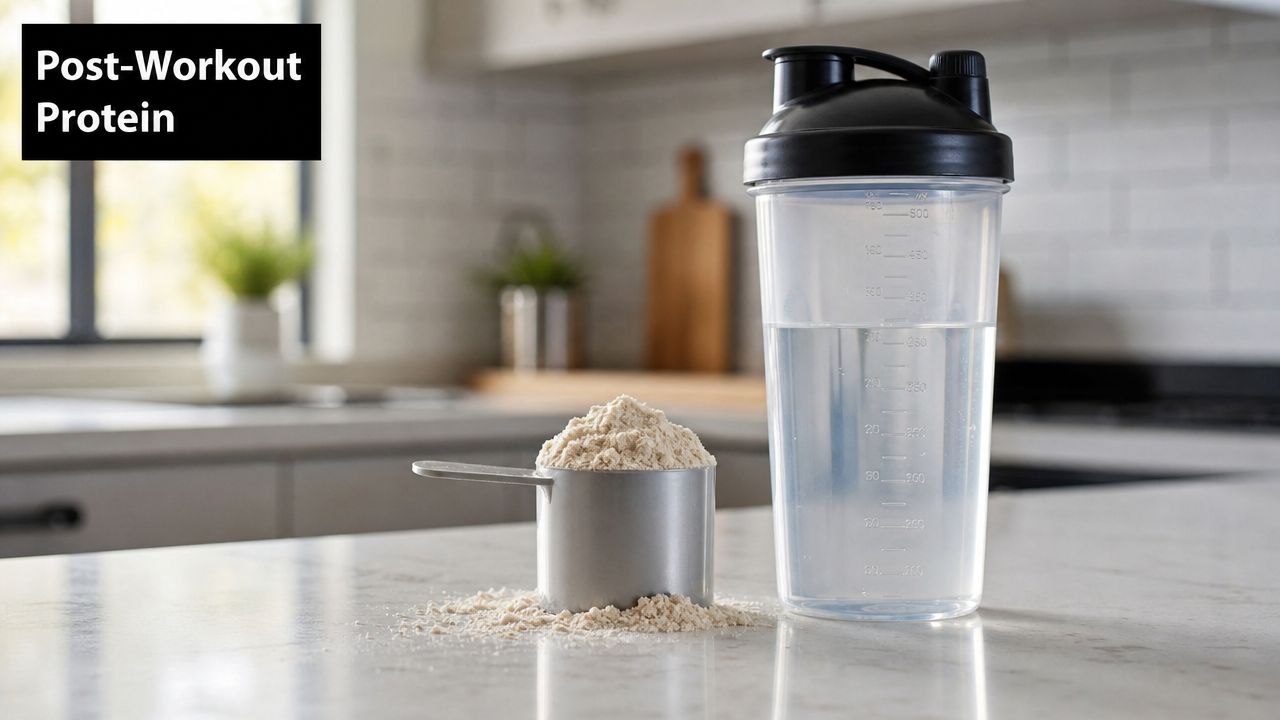
Need protein in the hour after training and do not have time to cook? Whey still earns its place. It delivers high-quality protein, digests quickly, and asks almost nothing from you except a shaker bottle and water.
That speed matters most after lifting or hard field sessions, especially when appetite is flat. Research on post-exercise feeding has found that whey hydrolysate can stimulate muscle protein synthesis more effectively than some other protein options in that narrow recovery window, including soy and casein in certain comparisons, as reviewed in the Journal of the International Society of Sports Nutrition. Protein quality is excellent. Convenience is excellent. The trade-off is obvious. Powder is useful, but it is still powder.
Where whey fits, and where it starts to fail
I use whey as a tool, not a meal philosophy. It works best when recovery speed, portability, and predictability matter more than the eating experience. Post-workout is the obvious use case. Travel days, double-session days, and early mornings also make sense.
Problems start when athletes build their whole protein strategy around sweet shakes and bars. That usually lowers meal quality, reduces variety, and leaves people less satisfied than they expect. If every protein feeding comes from a tub, “convenient” starts to work against you.
Clean-label matters here too. A shorter ingredient list, a protein source you can identify, and a flavor you can tolerate repeatedly are worth paying attention to. Many athletes also do better with unflavored or lightly flavored whey because the very sweet options get old fast.
- Protein quality: Excellent, especially for leucine content and rapid digestion.
- Convenience: Excellent.
- Athlete use case: Best for post-workout recovery, travel, low-appetite situations, and days when whole food is not practical.
- Less ideal for: Dairy-sensitive athletes, anyone with GI issues from whey concentrates, or athletes burned out on sweet products.
Good picks include whey isolate or hydrolysate products from brands such as Optimum Nutrition Gold Standard Whey, Isopure Zero Carb, and MyProtein Impact Whey. I prefer athletes to treat whey like a precision tool. Use it to fill gaps, not to replace real meals you could have eaten.
7. Cottage Cheese
Cottage cheese has made a comeback because it checks several boxes at once. It's high in protein, fairly versatile, and more filling than many athletes expect. It also fits both sweet and savory meals, which is a big reason it's more useful than many people give it credit for.
Brands like Good Culture and Breakstone's have made it easier to find better texture and cleaner ingredient lists. That matters. Bad cottage cheese is watery and miserable. Good cottage cheese is creamy, salty, and satisfying.
Best timing for cottage cheese
This is one of the better options when an athlete wants slower-digesting protein. Evening use makes sense for that reason, but it's also solid as a desk lunch with fruit, tomatoes, cucumbers, cracked pepper, or everything bagel seasoning.
What doesn't work is forcing it on athletes who hate the texture. There's no medal for suffering through a food you dread. Blend it into dips or bowls if needed, or choose another protein source that you'll eat consistently.
- Protein quality: Strong.
- Convenience: High if you tolerate dairy.
- Athlete use case: Evening snack, light lunch, or add-on to a meal that needs more protein.
I prefer savory cottage cheese setups over sweet ones. Tomato, herbs, cracked pepper, and a little olive oil make it feel like food instead of diet food.
8. Hemp Seeds
Hemp seeds are not a primary protein for most athletes, but they are an excellent supporting player. They add texture, healthy fats, and extra protein to meals that need a boost.
That distinction is important because athletes often buy hemp products expecting a miracle. What they really provide is nutrient density and flexibility. Sprinkle them over oats, yogurt alternatives, smoothie bowls, or roasted vegetables, and they subtly improve the meal.
Where hemp fits
Hemp seeds work best as an add-on, not the anchor. They can help a lower-protein breakfast become more balanced, and they can give plant-based meals more body. They're also useful for athletes who want variety beyond the usual soy, pea, and bean rotation.
A simple way to use them is to layer them into breakfast or recovery bowls where the texture matters. That's often the difference between a meal you tolerate and one you enjoy. If you want a broader food-first primer, it's worth discovering hemp hearts with HempWell USA.
The limitation is concentration. Hemp seeds won't replace a dedicated protein source when your goal is to reach athlete-level intake. They complement a plan well, but they rarely carry it on their own.
9. Nutritional Yeast
Nutritional yeast is one of my favorite performance kitchen ingredients because it fixes a common problem with plant-based eating. It adds savory depth where many high-protein foods feel flat. That sounds like a small thing, but flavor decides compliance.
Athletes using legumes, tofu, pea protein, or grain bowls often need more than protein. They need meals that feel craveable enough to repeat. Nutritional yeast brings that cheesy, nutty, umami note that makes roasted vegetables, popcorn, pasta, and sauces more satisfying.
Think of it as a protein helper
This isn't a primary protein in the way chicken, eggs, or whey are. It's better used to support total intake and improve meal quality. Sprinkle Bragg or Red Star over popcorn, blend it into sauces, or use it to season roasted chickpeas and savory oats.
That matters even more as savory protein snacks grow. Market research projects the global protein snacks market will reach US$ 72.2 billion by 2033, with savory chips and crisps as the fastest-growing product type from 2026 to 2033. Nutritional yeast fits naturally into that savory shift because it helps deliver the flavor profile athletes want.
Flavor isn't a luxury in sports nutrition. It's what keeps an eating pattern alive after the first week.
Use nutritional yeast like a chef, not like a supplement. That's where it shines.
10. Plant-Based Protein Snacks (Crunchy Savory Format)
This is the category more athletes should be paying attention to. Not because whole foods stopped mattering, but because real schedules are messy. There's a huge difference between the meal you'd like to eat and the snack you can eat between meetings, class, commuting, and training.
Plant-based savory protein snacks answer a gap bars and shakes never solved well. Many athletes don't want another sweet, sticky product. They want crunch, salt, flavor, and a protein source that doesn't feel like dessert. That's exactly why savory formats are gaining traction.
Why this format works
The broader plant-based snack space is projected to reach USD 100.5 billion by 2036, growing at an 8.2% CAGR from 2026 to 2036, with savory plant-based formats such as protein crisps and pretzels seeing strong growth. That trend makes sense from a sports nutrition standpoint. Savory snacks are easier to fit into daily life, especially for athletes tired of sweet products.
There's also a practical timing angle. Guidance on pre-event fueling often emphasizes limiting fat and fiber to reduce GI distress, but there's very little specific advice on how savory, non-dairy protein snacks fit into that window, especially for athletes looking for allergen-conscious options with meaningful protein (UW Health's guidance on eating for peak athletic performance). That's one reason I like clean, lower-heaviness formats here.
Gym Snack is a strong example because it's built around pea protein and savory flavor rather than a candy-bar model. If you want more options in this lane, these high-protein plant-based snacks are worth exploring.
- Protein quality: Strong when built around pea protein.
- Convenience: Excellent.
- Athlete use case: Commuting, pre-lift snacking, desk drawer backup, and post-training bridge snack.
- What works: Clean ingredients, bold flavor, and a texture that feels like actual food.
10 High-Protein Foods for Athletes: Comparison Guide
| Item | Implementation Complexity 🔄 | Resource Requirements ⚡ | Expected Outcomes ⭐ | Ideal Use Cases 📊 | Key Advantages 💡 |
|---|---|---|---|---|---|
| Pea Protein | Moderate, requires isolation/processing for powder/snacks 🔄 | Moderate input; sustainable crop, moderate cost ⚡ | ⭐⭐⭐⭐, complete amino acids, high BCAAs; supports muscle recovery | Plant-based sports nutrition, savory protein snacks, post/pre-workout | Hypoallergenic, sustainable, high leucine, good satiety |
| Chicken Breast | Low, simple cooking/meal prep 🔄 | Higher environmental footprint; low cost per protein ⚡ | ⭐⭐⭐⭐⭐, high protein density and bioavailable amino acids | Meal prep, bulk muscle-building meals, whole-food recovery | Very high protein-per-calorie, versatile, affordable |
| Greek Yogurt | Low, ready-to-eat; refrigeration needed 🔄 | Dairy supply + refrigeration; moderate cost ⚡ | ⭐⭐⭐, complete protein + probiotics; gut support | Smoothies, snacks, recovery with probiotic benefits | Protein + live cultures; calcium-rich; creamy texture |
| Eggs (Whole / Whites) | Low, quick cook; minor food-safety steps 🔄 | Requires refrigeration; inexpensive ⚡ | ⭐⭐⭐⭐, complete amino acids; very high bioavailability | Breakfasts, meal prep, convenient portable snacks (hard‑boiled) | Reference amino acid profile, micronutrients (choline, lutein) |
| Lentils & Legumes | Moderate, soaking/cooking time; meal prep 🔄 | Very low cost; highly sustainable ⚡ | ⭐⭐⭐, moderate protein density; high fiber and micronutrients | Plant-based meals, bulk cooking, combined with grains for complete protein | Affordable, high fiber, cardiovascular benefits, iron/folate |
| Whey Protein Powder | Low, mix-and-consume; minimal prep 🔄 | Dairy-derived supply chain; widely available, low cost per g ⚡ | ⭐⭐⭐⭐, rapid absorption; proven for post-workout anabolism | Immediate post-workout shakes, quick protein top-ups | Fast absorption, research-backed, convenient dosing |
| Cottage Cheese | Low, ready-to-eat; refrigeration required 🔄 | Dairy supply + refrigeration; moderate cost ⚡ | ⭐⭐⭐, high casein content for sustained amino acids; satiating | Before-bed protein, GLP-1 focused satiety meals, snacks | Slow-digesting casein, high protein-to-calorie ratio, satiating |
| Hemp Seeds | Low, sprinkle/use whole; minimal prep 🔄 | Relatively expensive; calorie-dense, sensitive to oxidation ⚡ | ⭐⭐, complete plant amino acids but low protein density | Smoothie bowls, toppings, supplemental omega-3 source | Complete plant protein, beneficial omega-3/omega-6 ratio, minerals |
| Nutritional Yeast | Low, seasoning-level use; shelf-stable 🔄 | Minimal resources; low cost per serving ⚡ | ⭐⭐, complements meals with B vitamins and umami; limited protein | Flavor enhancement, B12 fortification for vegans, garnish | Cheese-like umami, fortified B-vitamins, low calorie |
| Plant-Based Protein Snacks (Crunchy) | Low for consumer; moderate product development 🔄 | Requires pea isolate processing; premium positioning ⚡ | ⭐⭐⭐⭐, 15g+ protein/serving, high satiety, allergen-conscious | On‑the‑go pre/post‑workout, GLP‑1 users, macro‑focused snacking | Convenient, zero cholesterol, bold savory flavors, clean label |
Your Action Plan for Smarter Protein Fueling
The best high protein foods for athletes aren't the ones with the loudest marketing. They're the ones you can use repeatedly, digest comfortably, and match to the right moment. That's the filter that separates useful sports nutrition from noise.
Start with your training week, not your supplement shelf. Look at where your current routine breaks down. Maybe breakfast is too low in protein. Maybe your post-workout option is fine, but your afternoon snack leaves you underfueled before evening training. Maybe your protein target is reasonable, but everything you rely on is sweet and dairy-heavy, so you're already tired of it by Wednesday.
Then build a small rotation. Keep one whole-food anchor like chicken, eggs, Greek yogurt, lentils, or cottage cheese. Keep one fast recovery option like whey or a well-built plant protein. And keep one portable, savory option for the moments when life gets chaotic. That last piece is where a lot of athletes improve quickly, because convenience tends to be the weakest link.
I'd also get more intentional about timing. Spreading protein through the day generally works better than trying to cram it all into dinner. Recovery matters, but so does the rest of the day. If you only think about protein after you train, you're already missing easier opportunities at breakfast, lunch, and snacks.
Clean fuel, in my view, means a few things. The ingredient list is understandable. The food supports performance without wrecking digestion. It fits the athlete's ethics and preferences. And it doesn't depend on constant willpower. A nutrition strategy should feel disciplined, but it still has to feel livable.
Traditional proteins still deserve their place. Chicken breast is still useful. Eggs still work. Greek yogurt and cottage cheese can be excellent if dairy sits well. Whey still has a clear role after training. But modern plant-based options have closed the gap in a meaningful way, especially when they're formulated around pea protein and delivered in formats athletes enjoy.
If you want one immediate upgrade, audit your most unreliable snack window. That's usually the commute, the office afternoon slump, or the pre-workout hour when you need something fast but don't want a sugar bomb. Swapping that weak spot for a smarter, savory protein option can make your whole day more consistent. For many athletes, that's the easiest win on the board.
If you want a cleaner, more satisfying way to hit your protein without another sweet bar or chalky shake, Gym Snack is worth a spot in your rotation. Its chef-inspired, plant-based savory protein snacks are built for athletes who care about macros, ingredient quality, and taste, with crunchy pea-protein bags that fit pre-workout, post-workout, and on-the-go fueling.